
Machine tool loading and unloading
Industrial robot machine tool loading and unloading processes: application points, process essentials, and practical cases
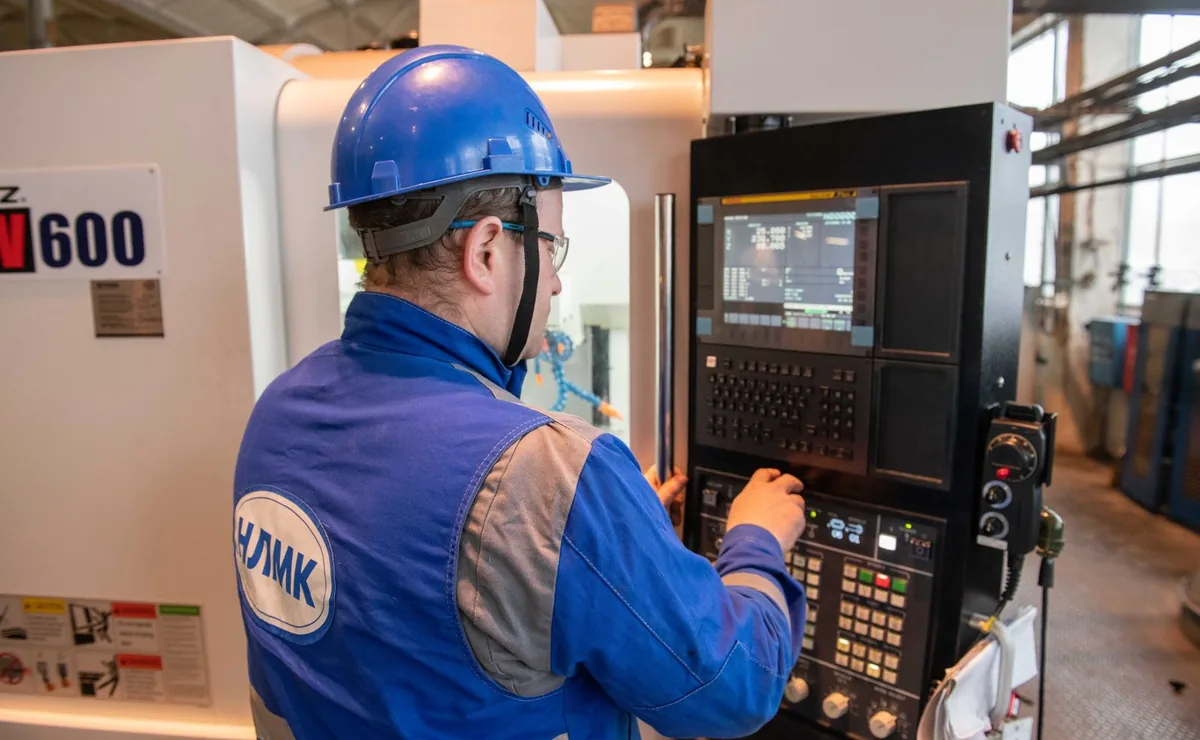
Application Overview
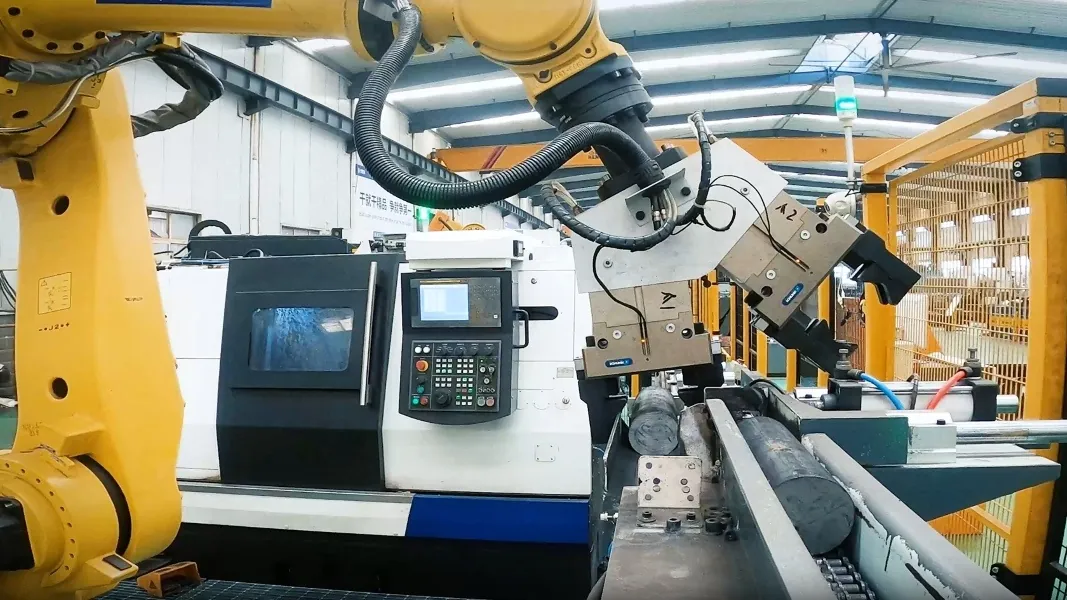
Machine tool loading and unloading are currently the most widely used scenarios for industrial robots in China—CNC lathes, machining centers, grinders, and stamping equipment are loaded and unloaded by robots, enabling continuous production with minimal or even unmanned operations. Loading and unloading itself does not add value to the product, but it determines equipment utilization: during manual loading and unloading, machine tools and others operate; robots keep the equipment running continuously 24 hours a day. Overall equipment utilization usually increases from about 60% to over 85%, fully unleashing night and holiday capacity.
Key points of application
Compiled from official brand application materials, source has been annotated.
Process validation, workstation solutions, programming and teach-in and production ramp-up support, and turnkey delivery of robot applications.
Learn more → Sales of new industrial robotsAuthorized-style sales of brand-new mainstream robots with selection support for new production lines and capacity expansion.
Learn more → Research and development of automation equipmentResearch, development, integration, and delivery of end-effectors, conveyor positioning, safety peripherals, and complete control systems.
Learn more → Research and development of algorithms and control systemsMotion planning, machine vision, and PLC/SCADA system development to address takt-time bottlenecks, accuracy, and data interconnection.
Learn more → Robot rentalShort-term rental, long-term rental and lease-to-own for in-stock models, long-term rental, and lease-to-purchase transfer, including transportation, installation, commissioning, and lease-term maintenance.
Learn more → Software and hardware upgrade servicesController retrofits, software and firmware upgrades, mechanical refurbishment, and safety upgrades restoring performance to older equipment.
Learn more → Maintenance and repairOn-site inspection, fault diagnosis and repair, and annual maintenance contracts covering 1,310 models from 21 brands.
Learn more → Used & in-stock robot salesWe buy back used robots and handle inspection, refurbishment and resale; every unit ships with inspection records and a warranty, and trade-ins can offset new purchases.
Learn more →Typical application scenarios for automated machine tool loading and unloading
Below are representative automated machine tool loading and unloading scenarios from the Henghuan team and industry practice (client names omitted by convention), structured by "background pain points → implementation plans → implementation results" for enterprises with similar needs to evaluate and reference.
| Scene | Background and pain points | Implementation plan | Implementation results |
|---|---|---|---|
| A motorcycle parts factory in Chongqing · One-to-three CNC turning line | Three CNC lathes operate two shifts of manual loading and unloading, night shift recruitment is insufficient, equipment utilization is below 65%, and order delivery deadlines are tight. | One six-axis robot paired with a seventh-axis ground rail serves three machine tools, dual grippers for parallel loading and unloading, a silo capacity of 200 pieces, supporting 4 hours of unmanned operation. | Night shift unmanned operation has increased equipment utilization to 88%, with one operator inspecting and managing the entire line, increasing annual production capacity by about 40%. |
| An aviation parts factory in Chengdu · Precision milling for loading and unloading | Aluminum alloy structural parts require high precision, with manual clamping force and position inconsistent, resulting in a defect rate of about 3%. | The robot is equipped with a quick-change fixture for zero-point positioning and incoming material arrival detection, linked with the on-machine measurement system for automatic tool correction over error. | Scrap rate has been reduced to below 0.5%, the first-piece inspection cycle has been shortened, and clamping consistency meets the requirements of the aviation quality system audit. |
| A heavy equipment company in Deyang · The stamping line automatically feeds the material | Manual feeding on the 800-ton press line poses safety risks to mold area operations, and the cycle time is affected by fluctuations in manual operation. | The heavy-duty robot features zoned magnetic ends and dual-station turntables, fully interlocked with the press safety signal, and a grating to protect the feeding area. | Completely eliminates the risk of manual feeding in the mold area, with cycle fluctuations below 5%, passing safety evaluations and safety supervision inspections. |
Industries that commonly use this process
Click to view the overall robot application plan for the industry.
Machine tool loading and unloading: a practical path where one person manages a single line
The most direct labor dilemma in the machining industry is this: it is difficult to recruit CNC operators, night shifts are challenging, and turnover is high. The value formula for robot loading and unloading is simple—one robot manages 2–4 machine tools, replaces two shifts of 2–3 operators, and the payback period is generally 12–24 months. This is also part of the automation transformation of machining enterprises in Southwest ChinaHighest proportion and fastest resultsscene.
The technical key is not the robot itself, but the key pointInterface for integration with machine tools: Consistency between clamping reference and machine tool fixture positioning, silo capacity and changing cycle, handshake signals with machine tool PLC (door opening, chuck tightening, machining completed), reliability protection in chip and coolant environments.
| Configuration plan | Applicable scenarios | Silo type | Investment level |
|---|---|---|---|
| Single machine, single workstation | One machine tool per operation | Material trays/racks | 80,000–150,000 yuan |
| One to two or one to four | Multiple machines operate at the same process | Rotary silo / dual channel | 150,000–300,000 yuan |
| Articulated robots + ground rails | Long-distance service for machine tool groups | Three-dimensional warehouse + logistics integration | 300,000–600,000 yuan |
| Truss manipulator | The machine tool comes with a built-in truss interface | Feeding channel/tray | Configured according to machine tools |
Five key points in engineering design
Clamping solution:For blanks, pneumatic jaws clamp the outer circle/end face; when the finishing surface is formed, use soft jaws + positioning pins to avoid collisions; For multi-variety mixed-line selection, choose quick-change grippers or adaptive grippers. The clamping force must resist cutting vibration without deforming the workpiece; this is the primary factor in the success rate of loading and unloading.
Machine tool interfaces:Standardized interaction signals with machine tools — robot requests door opening, machine confirms chuck clamping, machining completion notification, abnormal alarm linkage, and signal meters are handed over with the project; For old machine tools without PLC interfaces, install an intermediate relay board without using the original machine tool's program.
Silo and Material Replacement:The silo capacity is designed to "meet one shift per load," reducing manual intervention frequency; The repeatability of channel positioning and robot gripping posture is ensured by positioning blocks, not by operator placement.
Environmental protection:In environments with chips, coolant, or oil mist, the robot provides positive pressure protection or fits protective clothing, with the wrist and flange sealed for anti-chip protection; Regular cleaning of ground rails and guide rails should be included in the maintenance procedures.
Safety Fencing:Machine tool door, robot workspace, and manual material changing port are interlocked in three zones. The changing port uses a combination of grating + door lock, allowing entry to slow down and stop the machine.
Craft Q&A
Our machine tool brands are mixed; can we connect them uniformly?
Yes. Mainstream CNC systems such as Guangsu, Frank, Siemens, Mitsubishi, and Xindai all have standard loading and unloading interfaces (IO or bus). Our signal meter templates cover common systems; Some older systems use hard wiring schemes, which have low retrofit costs and do not change machine tool parameters.
Is frequent model changeover suitable for automation?
Suitable, but choose the right plan: use the program formula for up to 10 varieties + quick gripper change, and change the shape for 10–15 minutes; When there are more varieties and more variety, it is recommended to use "silo + visual positioning" or retain some manual feeding. We will calculate the balance between model replacement frequency and return on investment using data during the planning phase.
Is unmanned night shift operation realistic?
In reality, three conditions are met: silo capacity for the entire shift, contingency plans for handling abnormalities (detection and automatic recovery of stuck materials, SMS alarms), and a first-to-last item sampling inspection system. Our delivered machining clients generally operate 6–10 machines under single supervision during night shifts, further advancing unmanned operations step by step according to customer management foundations.
In-depth analysis of machine tool loading and unloading processes
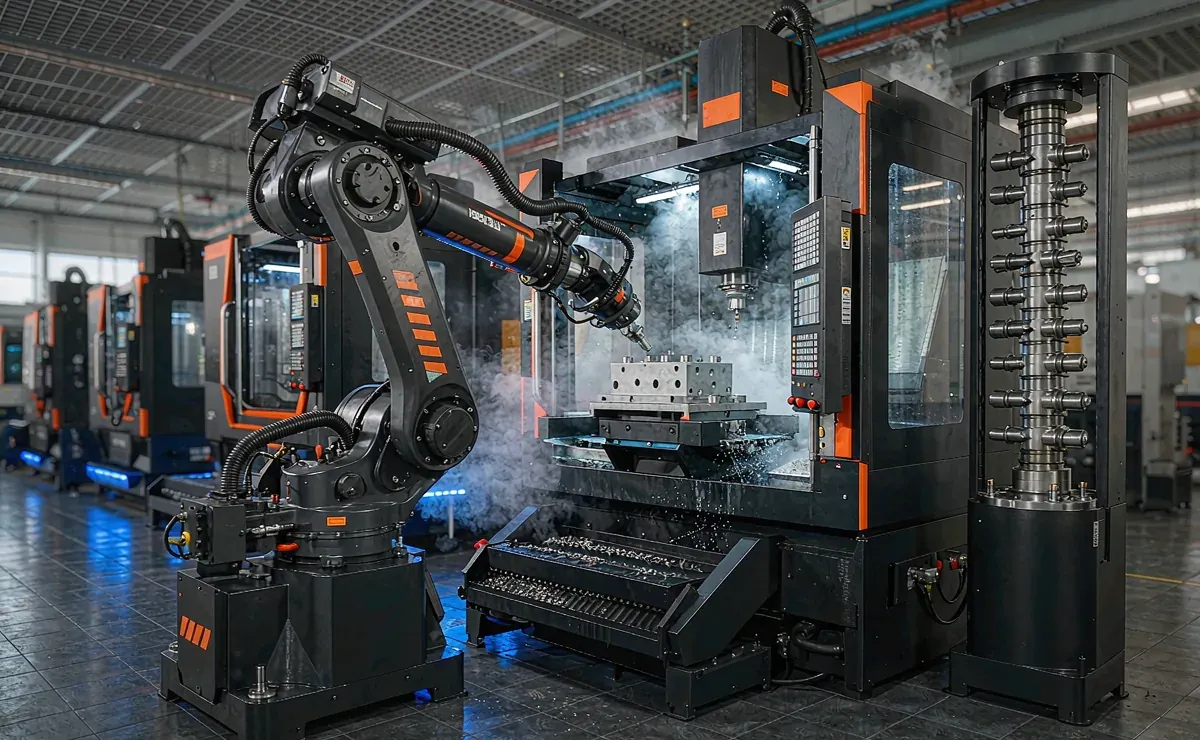
The core design of the loading and unloading station is cycle matching and unmanned reliability: the robot's single loading and unloading cycle must be less than the machine tool's processing cycle, otherwise the robot becomes a bottleneck. Dual gripper or dual-station design allows for parallel pickup and unloading of parts; The silo capacity determines the duration of unattended operation (usually designed for 2–4 hours); The chip and coolant environment require the body's protection level and sealing strengthening; The handshake logic for machine tool interface signals (door locks, clamping rings, emergency stop interlocks) is the first step in safety compliance and must be confirmed in both directions rather than triggered in one direction.
Henghuan has established a large number of loading and unloading workstations in the Southwest machining cluster: single machine and single robot, one-to-multiple (guide rail type), and mixed truss and six-axis lines, covering machine tool interface modification, gripper design and manufacturing, silo customization, and line commissioning, as well as automated installation of existing machine tools and rapid deployment of used robots.
The technological evolution of automated machine tool loading and unloading and the Southwest market
Trends in automated loading and unloading: First,Pulling one or more has become mainstream— Robots serve 2–4 machine tools via ground rails or gantry rails, with a significantly lower investment per unit after allocation compared to single-machine, single-robot solutions, and more flexible production scheduling; SecondVisual and flexible feeding— Random incoming material in the material frame is captured by 3D visual recognition, eliminating the need for manual material placement and enabling unmanned full-process operations from the blank warehouse to the machine tool; Third,Collaborative robotic arms enter small-batch scenarios— Multi-variety small-batch workshops use collaborative arms for rapid deployment without fences, with model changes completed by operators, but cycle time and load boundaries require objective evaluation; FourthData interconnection— The loading and unloading station also collects data on machine tool status, machining counts, and tool life, becoming the lowest-cost data entry point for the digital workshop.
The automation demand for loading and unloading in Southwest Machining industries (Chongqing Auto & Motorcycle Parts, Chengdu Aviation Parts, Deyang Equipment Manufacturing) is concentrated, with obvious signs of stock transformation—a large number of CNC machine tools in use hope to integrate automation with minimal investment. The second-hand robot + prefabricated workstation model is popular for its fast delivery and low investment, with over 1,300 models in Henghuan's inventory capable of selecting and delivering within one week.
Key engineering points and operation and maintenance management of machine tool loading and unloading workstations
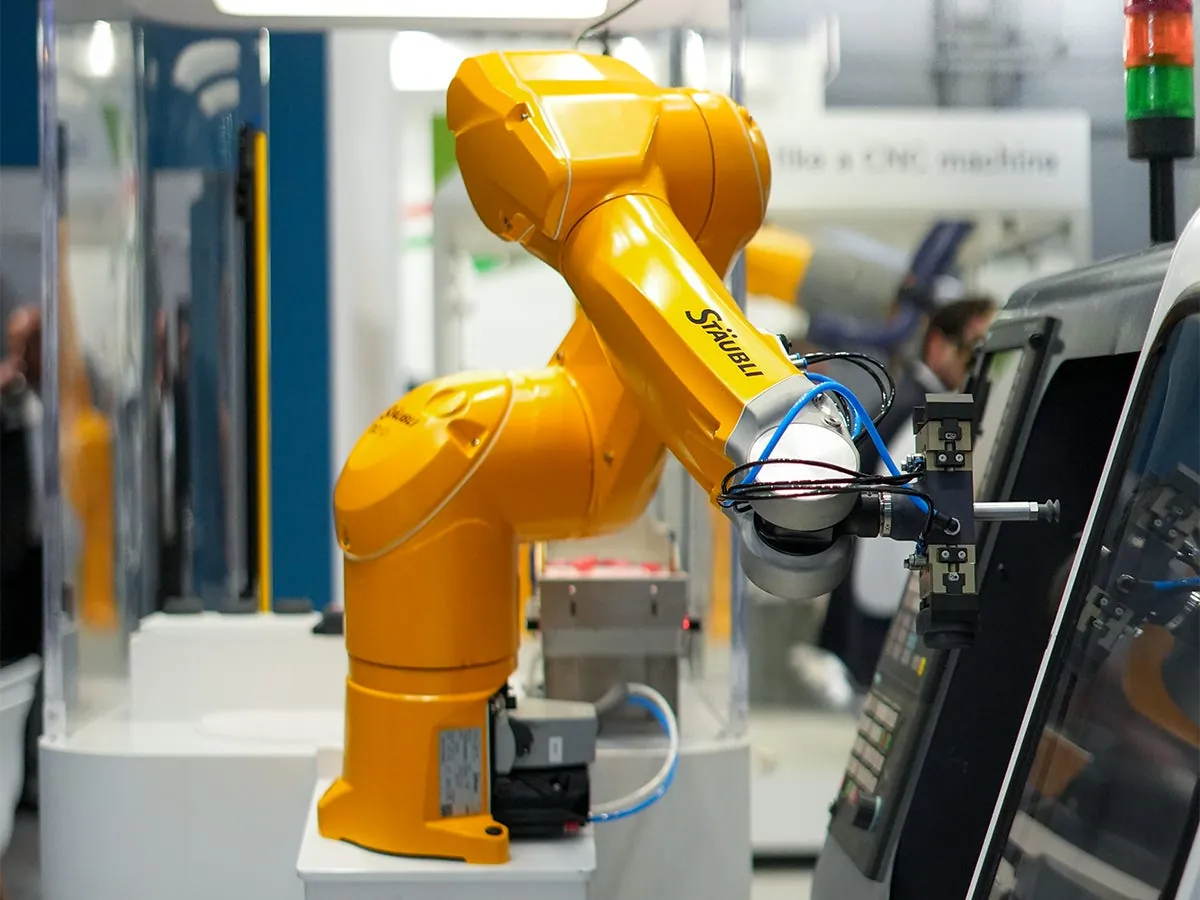
The three main sources of failure at the loading and unloading stations: First,Chip and coolant intrusion— Oil mist and chip in the machine tool environment accelerate wrist sealing and cable aging, and robots with insufficient protection levels or damaged protective kits have a multiplier rate of failure; The countermeasure is IP67 model + positive pressure protection + bellows kit, and the sealing condition is included in the weekly inspection. SecondClamping positioning drift— Wear of jaws or fluctuations in air source pressure causing workpiece positioning deviations, leading to tool collisions or machining errors; The countermeasure is a triple guarantee of positioning pin design + clamping detection + air pressure monitoring. Third,Handshake signal failure— Interference with the interface signal with the machine tool PLC or aging of the door lock switch can cause frequent accidental stops or even safety hazards; The countermeasure is to block signal shielding and ensure the wiring and safety loops are independent from ordinary I/O.
The four key reliability elements of unmanned operation: incoming material arrival detection, material shortage detection, automatic error retry logic (e.g., alarms after two failed retries instead of immediate shutdown), and abnormal remote push notifications (SMS/app alerts allow on-duty personnel to intervene promptly). These four factors determine whether the loading and unloading stations can truly be unattended. Henghuan has made these four logics standard for workstation delivery and provides training on duty systems and emergency plans.
Need a localized solution for machine tool loading and unloading processes?
Whether it's selecting new project solutions, upgrading production lines, or operating and maintaining in-service equipment, Henghuan can provide third-party technical support for machine tool loading and unloading applications. Please tell us about material specifications, production cycles, and the on-site environment, and we will provide targeted solution recommendations.
Contact Henghuan View all application processes