Seal with adhesive
Industrial robot glue coating and sealing process: application points, process essentials, and practical case studies
Application Overview
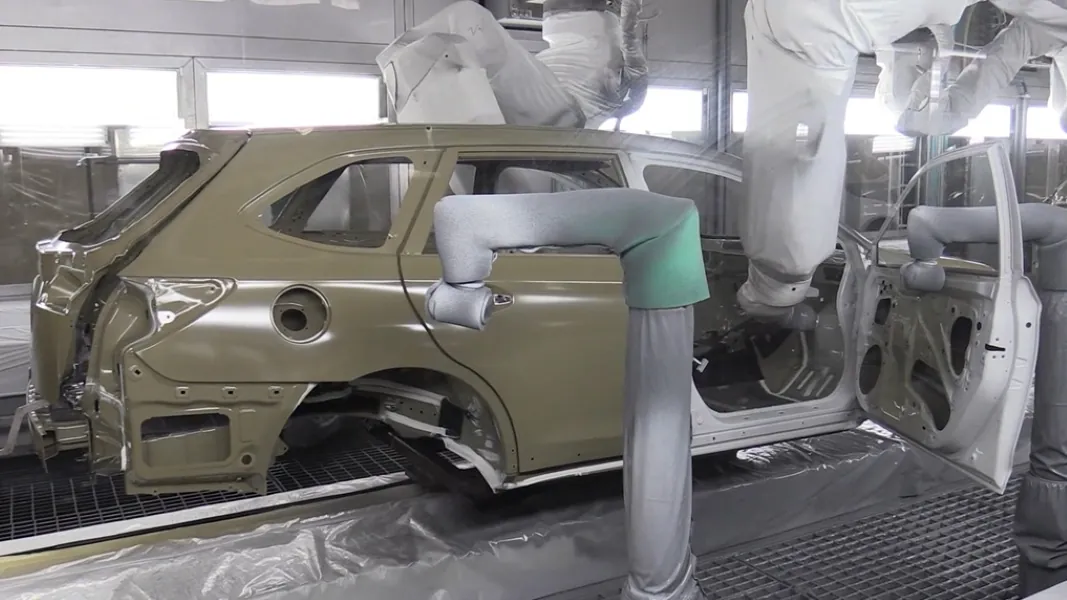
Glue sealing shares the same origin as the dispensing process but focuses differently: dispensing pursues precise quantification (nanoliters to milliliter level), while glue sealing pursues long, continuous, and uniform trajectories (consistent cross-section, no breakage, no bubbles). Automotive windshield and body sealing, building curtain wall structural adhesive, home appliance panel waterproof sealing, electronic casing potting, new energy battery pack sealing—wherever you need to "seal or seal both sides," there is a sealing process for gluing.
Key points of application
Compiled from official brand application materials, source has been annotated.
Process validation, workstation solutions, programming and teach-in and production ramp-up support, and turnkey delivery of robot applications.
Learn more → Sales of new industrial robotsAuthorized-style sales of brand-new mainstream robots with selection support for new production lines and capacity expansion.
Learn more → Research and development of automation equipmentResearch, development, integration, and delivery of end-effectors, conveyor positioning, safety peripherals, and complete control systems.
Learn more → Research and development of algorithms and control systemsMotion planning, machine vision, and PLC/SCADA system development to address takt-time bottlenecks, accuracy, and data interconnection.
Learn more → Robot rentalShort-term rental, long-term rental and lease-to-own for in-stock models, long-term rental, and lease-to-purchase transfer, including transportation, installation, commissioning, and lease-term maintenance.
Learn more → Software and hardware upgrade servicesController retrofits, software and firmware upgrades, mechanical refurbishment, and safety upgrades restoring performance to older equipment.
Learn more → Maintenance and repairOn-site inspection, fault diagnosis and repair, and annual maintenance contracts covering 1,310 models from 21 brands.
Learn more → Used & in-stock robot salesWe buy back used robots and handle inspection, refurbishment and resale; every unit ships with inspection records and a warranty, and trade-ins can offset new purchases.
Learn more →Typical application scenarios for automated glue coating sealing
Below are representative automated glue coating and sealing scenarios from the Henghuan team and industry practice (customer names are usually omitted), organized by "Background Pain Points → Implementation Plan → Implementation Results" for reference and evaluation by enterprises with similar needs.
| Scene | Background and pain points | Implementation plan | Implementation results |
|---|---|---|---|
| A car lighting company in Chongqing · Lampshade sealed with adhesive | The sealing between the headlight cover and lamp housing requires continuous glue wires without breaks (waterproof rating IPX7). Manual glue breakage and bubbles can lead to high repair rates due to seal failure. | SCARA is equipped with screw valve and visual positioning, corner adhesive compensation algorithm, and online visual inspection after glue application to ensure glue type continuity, with automatic separation of defective products. | The first-pass seal pass rate has increased from 91% to 99.7%, the airtightness test failure rate has dropped by 85%, and the test data is complete and traceable. |
| A battery company in Yibin · Apply glue to the battery pack sealing ring | The glue application perimeter of the sealing ring on the battery pack upper cover exceeds 4 meters, and the adhesive type must have a consistent trapezoidal cross-section; manual glue application cannot guarantee joint quality. | The six-axis robot is equipped with a plunger valve and a closed loop for laser height measurement, with specially optimized joint parameters and online monitoring of two-component ratios. | The cross-sectional pass rate of the adhesive wire exceeds 99.5%, the joint position quality is stable, and the pass rate of the entire package airtightness test in one attempt has increased by 6 percentage points. |
| A home appliance company in Chengdu · Washing machine panel waterproof glue | Mixing glue application for multiple panel models leads to long manual machine adjustment times during model changeover, resulting in significant glue waste. | The gluing robot is equipped with a quick-change glue valve and automatic program adjustment by scanning codes, with models and parameters bound, and standardized glue quantity sampling inspections. | Change time has been reduced from 40 minutes to 5 minutes, glue waste is reduced by about 25%, and mixed-line production does not require dedicated machine adjusters. |
Sealing and Gluing: The "Waterproof Lifeline" of the Automotive and Home Appliance Industry
The core indicators of sealant processes (body weld sealing, headlight sealing, appliance cabinet waterproofing, controller housing sealing) are:The continuity of the rubber strip and the consistency of its cross-section: Broken glue, bubbles, or poor lapping can all lead to water and air leaks, and sealing failures are often only exposed during vehicle/machine testing or user use, resulting in very high repair costs. This is also why the automotive industry implements dual control of sealed workstations under "online full inspection + destructive sampling inspection."
Technical combination for robotic sealing and gluing:Metering glue supply system(Gear pump/plunger pump quantitative output, two-component polyurethane/silicone adhesive ratio metering),Glue coating valve(Flat nozzle/round nozzle/shaped nozzle determines the cross-section of the rubber strip),Trajectory planning(Corner constant rubber quantity, lap bevel cutting, rubber start and stop control),Solidified management(Surface drying time and process coordination).
| Control elements | Management methods | Consequences of losing control |
|---|---|---|
| Rubber strip cross-section (width × height) | Profiling nozzle selection + pressure/speed matching, first-piece inspection | Insufficient cross-section→ seal failure; Excessive → glue overflow contamination |
| Lap joint quality | Overlap position beveled transition, pressure gradient procedure | Poor lap → leakage starting point |
| Bubbles and broken glue | Glue supply system exhaust, glue level monitoring, pressure closed-loop | Bubbles/broken glue → directly at the failure point |
| Hardened windows | Complete the closing process and record temperature and humidity within the meter drying time | Premature curing → poor adhesion; If too slow→ process backlog |
| Substrate cleanliness | Plasma/primer treatment before glue application, cleanliness spot check | Insufficient adhesion → strip peeling |
Implementation of sealed workstations
Trajectory Programming and Profiling:The sealing trajectory is mostly spatial curves (door frames, lamp housing circumferences). Maintaining a constant angle between the glue gun and the normal of the workpiece surface is a key process discipline for the six-axis robot; Complex trajectories are corrected using offline programming + actual parts, and deceleration and glue stacking at corners are eliminated with forward-looking speed planning.
Glue supply system configuration:For single-component adhesive, use a plunger pump + pressure regulating valve; for two-component (polyurethane/silicone), use a ratio pump for closed-loop metering, with a mixing accuracy within ±1%; The glue drum follows the pressure plate and liquid level monitoring to ensure continuous glue supply, with drum changes uninterrupted.
Quality Inspection Closed-loop:Online visual inspection of strip width and continuity (laser profilometer or 2D vision), real-time alarms for deviations, and position recording; The automotive industry conducts process capability statistics (Cpk) and periodic destructive sampling according to IATF 16949 requirements.
Cleaning and Maintenance:The cleaning program for the glue gun and pipelines is automatic, the mixing pipe is forcibly replaced according to curing time, and spare parts (seals/nozzles) are managed by life counting—the stable operation of the sealing station depends half on craftsmanship and half on maintenance discipline.
Craft Q&A
We have many types of workpieces with different sealing trajectories—is switching them troublesome?
Formula-based solution: Each variety has its own track program and parameter formula, automatically recalled by scanning for recognition; Trajectory is pre-generated with offline programming, and the introduction cycle for new varieties is usually 3–5 days (including first-piece validation). For production lines with frequent model changes, we provide parametric management tools, allowing customer engineers to maintain them themselves.
How can the quality of gluing be ensured online?
Three-layer defense line: pressure/flow closed-loop (source) of the glue supply system, constant robot trajectory and speed (process), and visual online detection of the rubber strip cross-section (results). For key components (headlights, water-related components), it is recommended to perform a full inspection with a laser profiler, and the inspection data should be linked to the product code for traceability.
How to tell if the ratio of two-component glue is wrong?
Ratio pump closed-loop metering + regular gel sample curing testing (ratio deviation can cause poor curing; cut the strip and look at the core to judge); Our maintenance services include calibration of the glue supply system, quarterly formulation validation, and pump body maintenance.
In-depth analysis of the glued sealing process
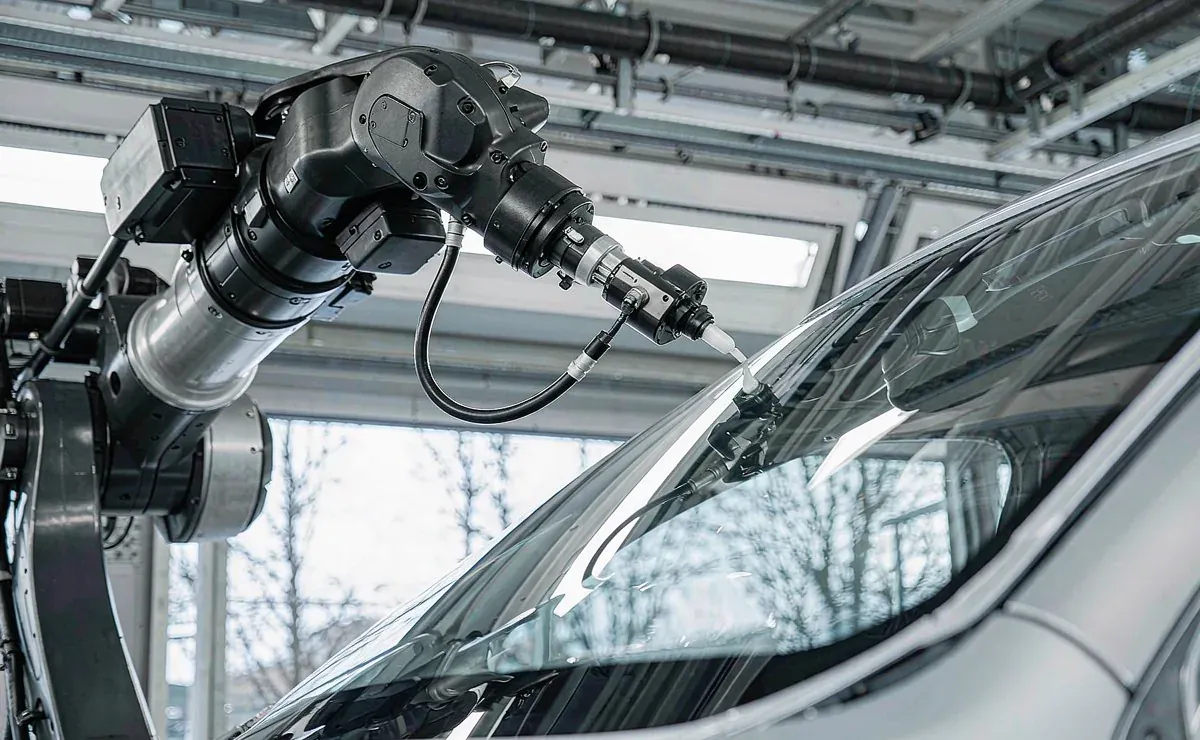
Glue quality is determined by a combination of five factors:Glue amount and type— The ratio of the glue discharge speed to the robot's trajectory speed determines the glue line cross-section; trapezoidal, circular, and triangular rubber profiles are selected according to sealing requirements;Trajectory continuity— If the speed at the corner does not decrease, the glue line becomes thinner, so trajectory speed smoothing and corner rubber compensation must be performed;Start-stop control— The timing parameters of early opening and delayed closing determine the quality at the start and end points; drawing and stacking are common defects;Surface pretreatment— Substrate cleanliness and primer treatment determine bonding strength; gluing robots are often connected to plasma cleaning or primer processes;Solidified management— The applicable periods and curing conditions for single-component moisture curing and two-component chemical curing differ; the process window design must match the material characteristics.
Henghuan provides adhesive sealing process services: rubber valve selection (pneumatic valves/screw valves/plunger valves matched by viscosity and glue amount), trajectory and parameter commissioning, integrated glue quantity testing (laser height measurement/weighing sampling inspection), maintenance of gluing robots, and major overhauls of glue valves.
The technological evolution of automated glue sealing and the Southwest market
Trends in glued sealing: FirstAutomotive lightweighting is driven— The amount of adhesive used for car bodies continues to rise as adhesive replacement welding and structural adhesive applications increase, with the average amount of glue per vehicle growing from over ten kilograms ten years ago to several dozen kilograms, and the number of gluing stations has increased in tandem; SecondClosed-loop detection— Immediate online inspection after glue application (visual adhesive type recognition + laser height measurement), defects are intercepted before curing and locally repaired, evolving from "spot check after application" to "immediate inspection after application"; Third,Diverse materials— Polyurethane, silicone, MS-modified silane, acrylic acid, and other material systems each have their own process characteristics; material changes require redeveloping process parameters, highlighting the value of integrators with multi-material process libraries; FourthNew energy explosion— Battery pack sealing (waterproof and dustproof IP67/IP68) and cell potting (thermal conduction and insulation) have been the fastest-growing gluing markets in the past three years.
Southwest Auto Parts (sealing strip glue application, headlight glue injection) and new energy industry clusters are seeing rapid growth in glue application. Upgrading existing gluing lines in the home appliance and building materials industries (including installation of testing closed-loop and two-component system upgrades) is also an active market. Henghuan's small and medium-sized six-axis and SCARA models in the warehouse are suitable for lightweight configurations in gluing stations.
Key engineering points and operation and maintenance management of the glued sealing workstation
High-frequency issues and countermeasures at gluing stations:Uneven thickness of the glue wire— Fluctuation in trajectory speed (angle deceleration, re-acceleration after idle stroke) or unstable glue supply pressure; The countermeasure is speed forward-looking smooth control + pressure stabilization glue supply system + glue volume closed-loop.Bubbles and broken glue— Air caught in the barrel during replacement, pipeline seal failure, improper valve suction parameters; The countermeasures are barrel replacement exhaust procedures + regular pipeline leak detection + calibration of suction parameters.Brushing contamination— Rubber wire dragging contaminates the non-glued surface of the workpiece; The countermeasures are suction function + glue retraction trajectory design (decelerating early, fixed-point gun retraction) + regular nozzle cleaning.Curing valve blocks— The two-component adhesive cures for too long inside the mixing tube, causing valve body scrapping; The countermeasures are timekeeping management during the application period + institutionalization of automatic flushing procedures + replacement of mixing tubes according to their lifespan.
Process management system for the glue coating station: Glue batch traceability (FIFO + batch number records), temperature and humidity control (affecting viscosity and curing speed), glue valve cleaning and maintenance procedures, glue volume sampling records (weighing or cross-sectional measurement), and version management of glue application parameters. Only when these systems are documented and properly implemented can gluing quality be stable over the long term. When Henghuan delivers the coating station, it provides a complete set of system templates and team training.
Need localization solutions for glue and sealing processes?
Whether it's selecting new project solutions, upgrading production lines, or operating and maintaining in-service equipment, Henghuan can provide third-party technical support for adhesive sealing applications. Please tell us about material specifications, production cycles, and the on-site environment, and we will provide targeted solution recommendations.
Contact Henghuan View all application processes