
Multi-joint robotic arm (six-axis robotic arm)
Commonly known as a six-axis robotic arm or manipulator—composed of six rotating joints—it is the most widely used form of industrial robot that is closest to the flexibility of a "human hand." This page explains its structural principles, key parameters, applicable processes, and advantages and disadvantages, along with an index of 933 models in our database.
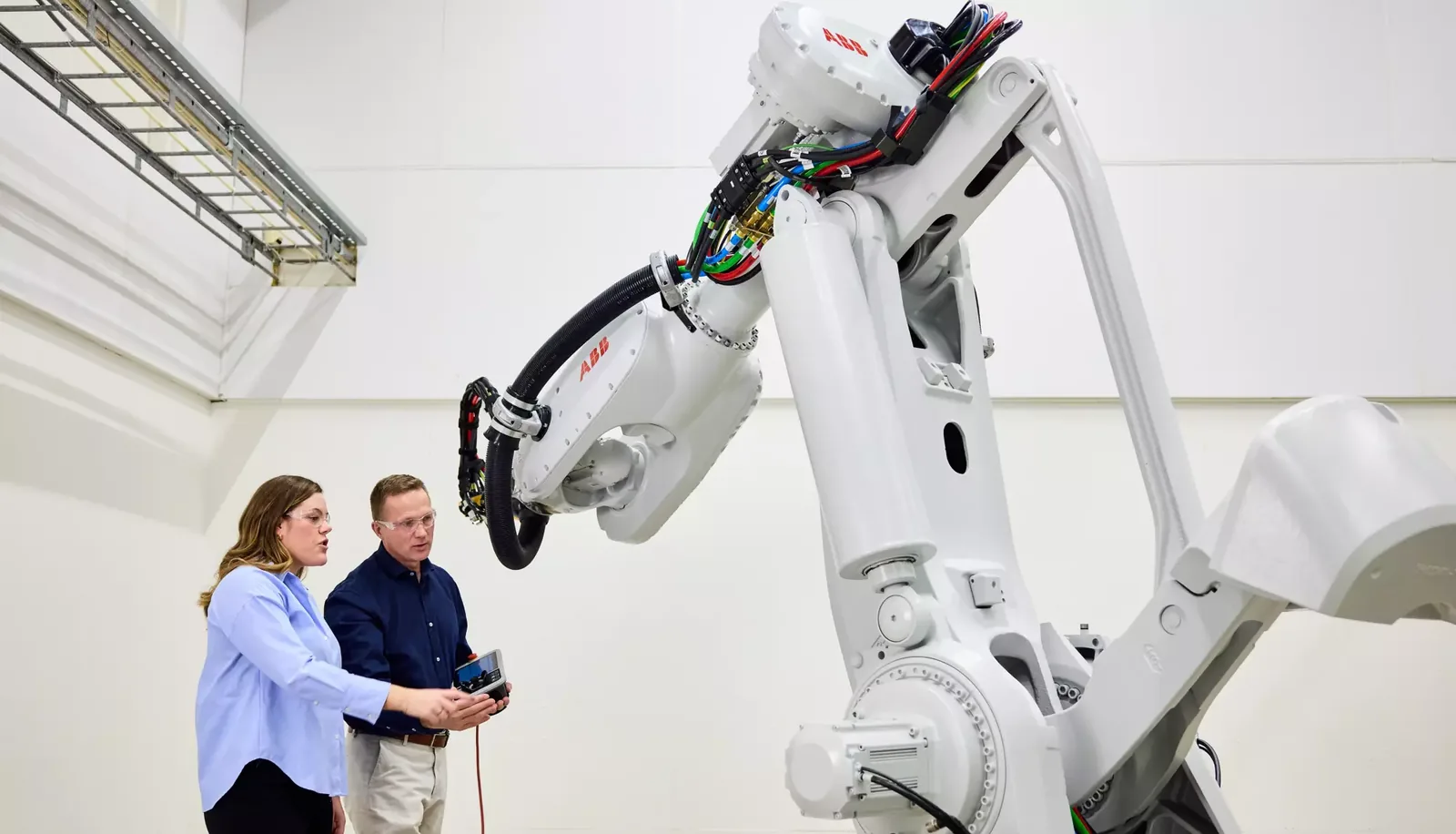
Six rotating joints simulate the full degrees of freedom of the human arm
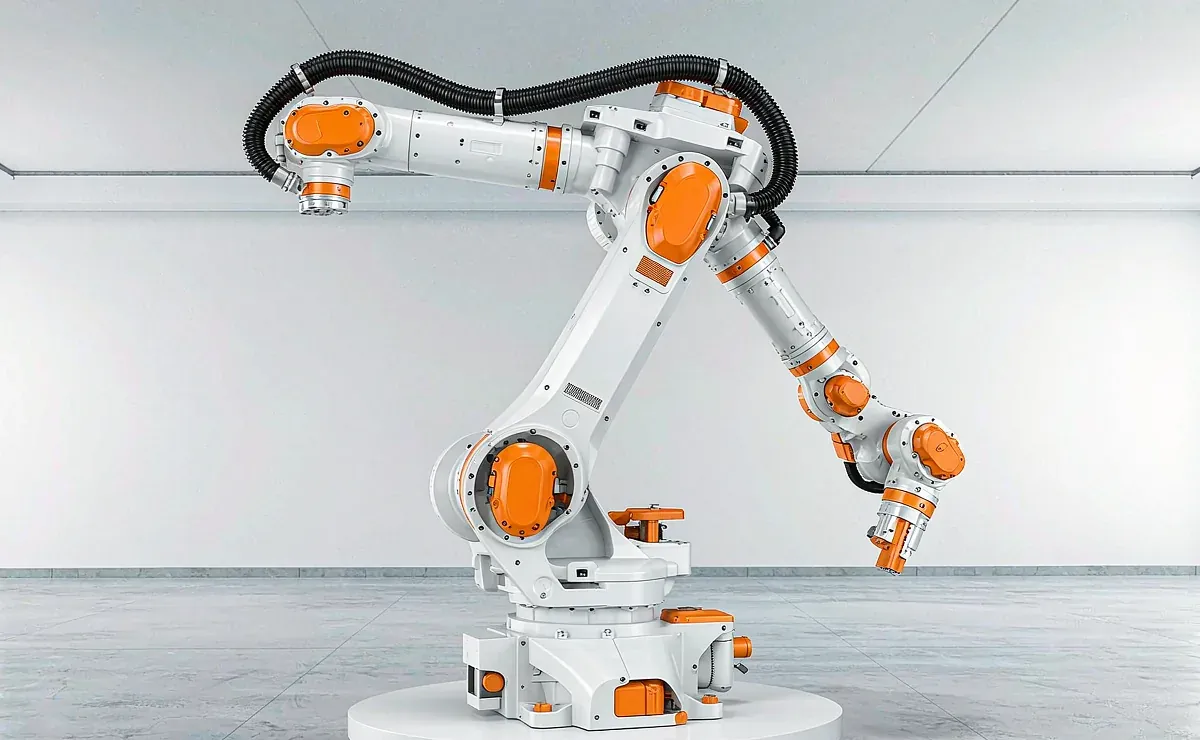
What is a multi-joint robotic arm (six-axis robotic arm)?
The multi-joint robotic arm is the most mainstream and classic form of industrial robots—the common impression of a "moving robotic arm." It is made up of 6 rotating joints (axes)Formed in series, kinematically simulating the shoulders (axes 1–3), elbows, and wrists (axes 4–6): the first three axes determine the "where" (position) of the end, while the last three determine the "posture" (orientation) of the end. Six degrees of freedom allow it to reach any position and work in any orientation within a spherical workspace, offering the highest flexibility among all structures.
Because of this "hand-like" versatility, the six-axis robotic arm has become the most widely used industrial robot: welding, handling, palletizing, assembly, spraying, grinding, and loading and unloading are almost all capable. When customers refer to "robotic arms," "manipulators," and "robotic arms," they basically mean this by default. Among the 933 models in our database, the vast majority are six-axis configurations.
| Parameters | Typical range | Engineering meaning |
|---|---|---|
| Degrees of freedom (number of axes) | 6 Axes (Mainstream) | 6 axes = arbitrary spatial orientation; 4 axes = limited orientation but faster and more economical (dedicated for palletizing) |
| Rated load | 3kg – 700kg+ | End-flange static payload; the selection must include the tooling weight and off-center load inertia |
| Radius of motion (reach) | 500mm – 3500mm+ | Determine the radius and reachable range for workcell layout |
| Repeatability | ±0.02 – ±0.1mm | Consistency in repeated identical instructions is a key indicator for precision assembly |
| Body weight | 20kg – 2000kg+ | Determine the rigidity requirements for foundation load-bearing and installation |
| Protection rating | IP54 – IP67 | Dusty/wash-down/foundry environments require IP65 or above or protective kits |
Advantages and limitations
Advantages:Maximum flexibility, large workspace with no blind spots, capable of completing complex spatial trajectories; One device can perform multiple tasks by swapping the terminal and program, making it highly versatile; It has the most comprehensive load range, with models ranging from 3kg to 700kg.
Limitations:complex structure and relatively high cost; Absolute positioning accuracy (non-repeatable accuracy) is affected by joint clearance and gravity sagging, causing rigidity to decrease in large overhang postures; High-speed flat sorting scenarios are not as economical as SCARA/Delta. These limitations can be greatly improved through calibration compensation, force control, external shafts, and other technologies.
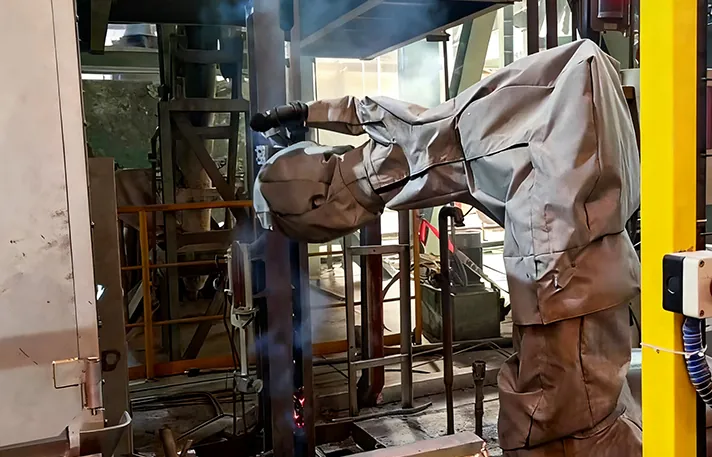
The main battlefield of the six-axis robotic arm
| Application process | Recommended configuration | Technical Points |
|---|---|---|
| Arc welding / spot welding | Six-axis + welding torch/welding tongs + positioner | Trajectory accuracy and orientation control, weld tracking |
| Machine tool loading and unloading | Six axes + gripper + material silo | Shake hands with the machine tool PLC and match the beat |
| Handling and palletizing | Six-axis/four-axis palletizing type + suction cup gripper | Load inertia matching and pallet type programmization |
| Assemble and tighten | Six-axis + force control + electric screwdriver | Alignment accuracy, torque monitoring |
| Spraying and applying adhesive | Explosion-proof six-axis + spray gun/rubber valve | Trajectory-speed coupling, explosion-proof certification |
| Sand to remove burrs | Six-axis + force-controlled grinding head | Constant force adaptation, dust protection |
| Visual inspection | Six axes + camera/probe | Hand-eye calibration, multi-angle shooting |
Four-axis palletizing type: a specialized branch of the six-axis family
Among multi-joint robotic arms, there is a type of specialized form—Four-axis palletizing robotic arm: It eliminates the two rotating axes on the wrist, leaving only four axes needed for spatial positioning, offering higher speed, greater load, and a simpler structure, specifically designed for palletizing and unstacking bags. Most of the dedicated palletizing machines in our inventory (such as various brands of PAL/PL/RMD series) fall into this category; see details for detailsPalletizing robotsDedicated page.
Frequently Asked Questions
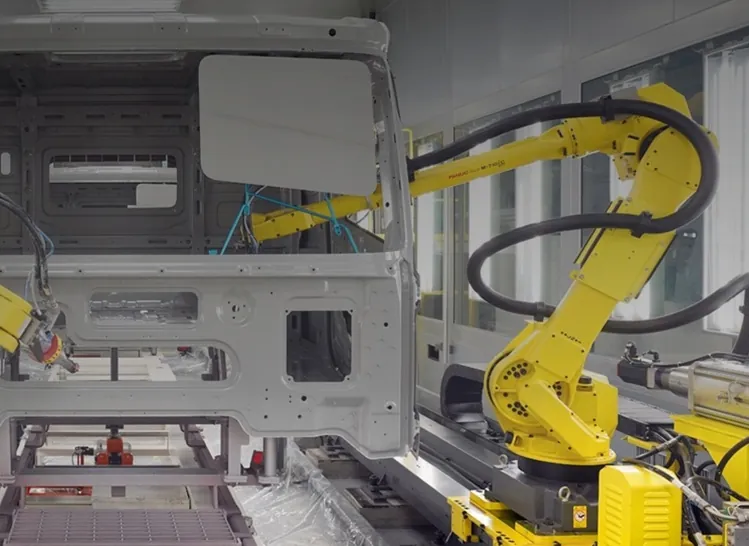
Are six-axis robotic arms and "manipulators" the same thing?
In everyday contexts, this can basically be equated—when customers refer to "manipulators" or "robotic arms," they usually mean the six-axis robotic arm itself. Strictly speaking, "manipulator" sometimes specifically refers to the gripper at the end (hand grip). This site uniformly labels "robotic arm (manipulator)" on product pages, balancing search habits with professional accuracy.
Is a six-axis always better than a four-axis one?
Not necessarily, it depends on the craftsmanship. Requires any spatial orientation (welding, complex assembly) with six axes; Only flat palletizing and handling are done; the four-axle is faster, more economical, and more reliable. Two more axles means two more gearboxes, two more fault points, and higher costs—just enough is enough, not the number of axles.
Repeatability ±0.03mm—is positioning really that accurate?
Two concepts need to be distinguished: repeatability refers to "consistency that returns to the same point multiple times," ±0.03mm means it stably returns to this tiny range each time; Absolute precision is the "deviation between the actual reached position and the theoretical position," usually several times greater than repeatability. When precision assembly requires absolute accuracy, it should be combined with vision or external measurements for closed-loop compensation.
How many years does a six-axis robotic arm last?
The design lifespan is usually 8–120,000 hours (about 10 years with three shifts). The actual lifespan depends on operating conditions (load rate, dust temperature) and maintenance (lubrication, battery, cables). This site offers robotic arm refurbishment and control system upgrades, allowing old six-axis systems to last 5–8 years.
This site offers Kudo joint robotic arms (six-axis robotic arms) (933 models)
Browse by brand
Below are the representative models of this structural form in our database. Click to view specifications, technical interpretation, and maintenance points. For the complete model list, please see each brand's page.
FANUC (97 models)
ABB (37 styles)
Yaskawa (85 models)
KUKA (349 models)
Kawasaki (69 models)
Stäubli (22 models)
Nachi Fubietsu (14 models)
Comau (24 models)
Panasonic (10 models)
Epson (30 models)
Inovance Technology (25 styles)
Estun (46 models)
EFORT (26 models)
SIASUN (14 models)
Guangzhou CNC (19 models)
HSR Robotics (17 models)
QJAR Robotics (40 titles)
TOPSTAR (9 models)
Need robot selection, maintenance, or application solutions?
Tell us about workpieces, procedures, beats, and budgets. Local teams in Nanchong will connect with us, and on-site inspections are available in Sichuan, Chongqing, Yunnan, and Guizhou. Robotic arm (manipulator) selection, second-hand purchase and sale, maintenance and repair all in one place.
Contact usView all varieties