Arc welding
Industrial robot arc welding process: application points, process essentials, and practical cases
Application Overview
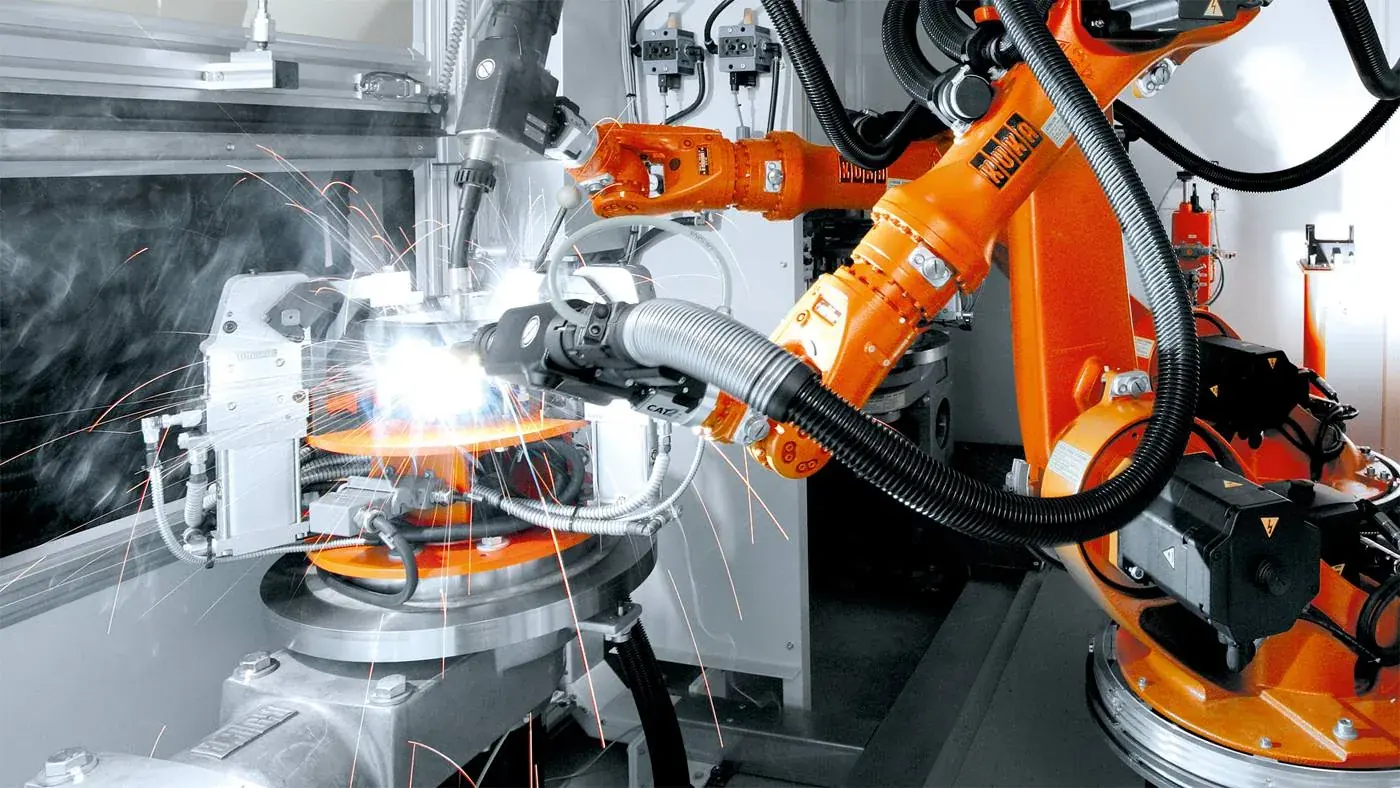
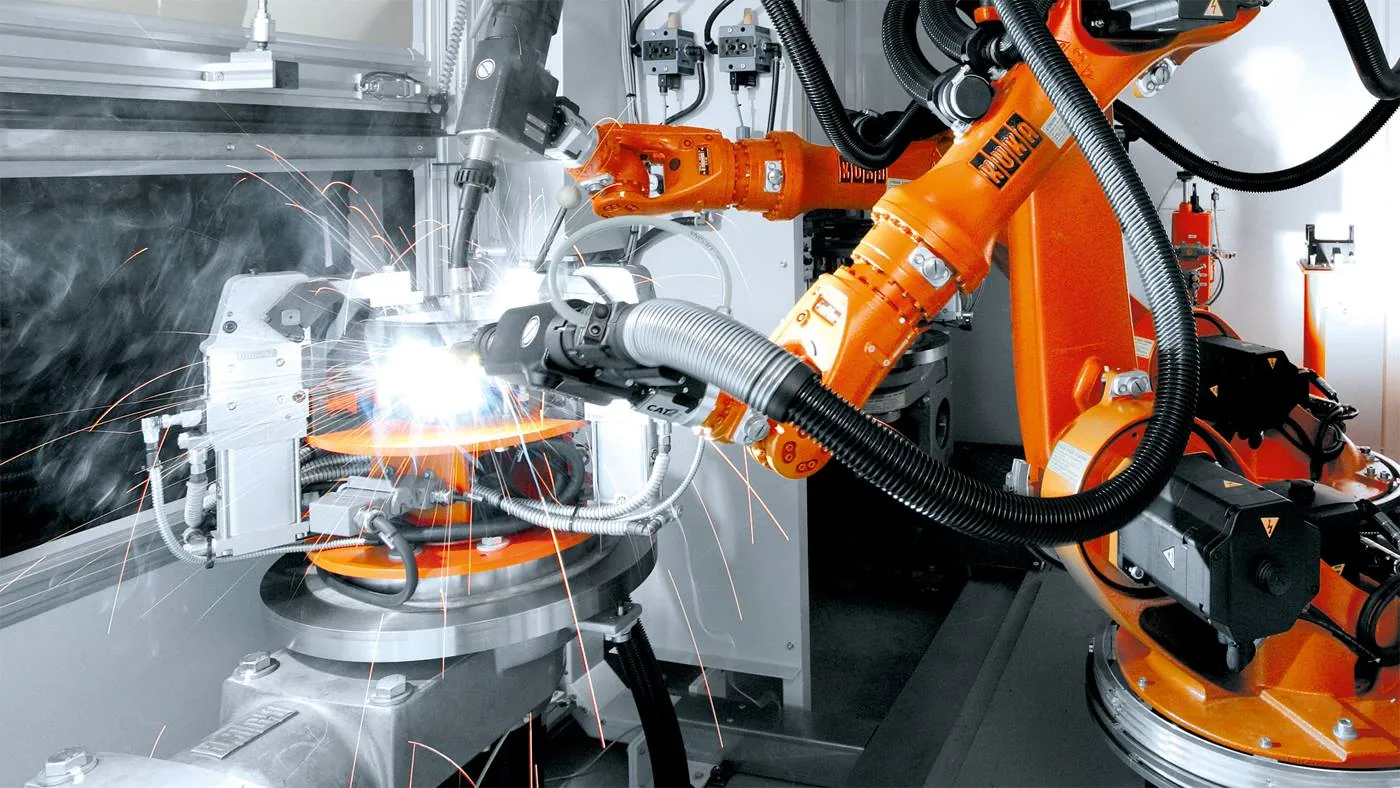
Arc welding is one of the processes with the highest robot penetration rate in industrial automation. The essence of arc welding automation is to solidify the welder's tactile experience into a reproducible spec window—current, voltage, welding speed, gas flow, and dry elongation. After process evaluation, the robot executes with millisecond-level consistency, ensuring that the weld quality of 10,000 workpieces is exactly the same.
Key points of application
Compiled from official brand application materials, source has been annotated.
Process validation, workstation solutions, programming and teach-in and production ramp-up support, and turnkey delivery of robot applications.
Learn more → Sales of new industrial robotsAuthorized-style sales of brand-new mainstream robots with selection support for new production lines and capacity expansion.
Learn more → Research and development of automation equipmentResearch, development, integration, and delivery of end-effectors, conveyor positioning, safety peripherals, and complete control systems.
Learn more → Research and development of algorithms and control systemsMotion planning, machine vision, and PLC/SCADA system development to address takt-time bottlenecks, accuracy, and data interconnection.
Learn more → Robot rentalShort-term rental, long-term rental and lease-to-own for in-stock models, long-term rental, and lease-to-purchase transfer, including transportation, installation, commissioning, and lease-term maintenance.
Learn more → Software and hardware upgrade servicesController retrofits, software and firmware upgrades, mechanical refurbishment, and safety upgrades restoring performance to older equipment.
Learn more → Maintenance and repairOn-site inspection, fault diagnosis and repair, and annual maintenance contracts covering 1,310 models from 21 brands.
Learn more → Used & in-stock robot salesWe buy back used robots and handle inspection, refurbishment and resale; every unit ships with inspection records and a warranty, and trade-ins can offset new purchases.
Learn more →Typical application scenarios for arc welding automation
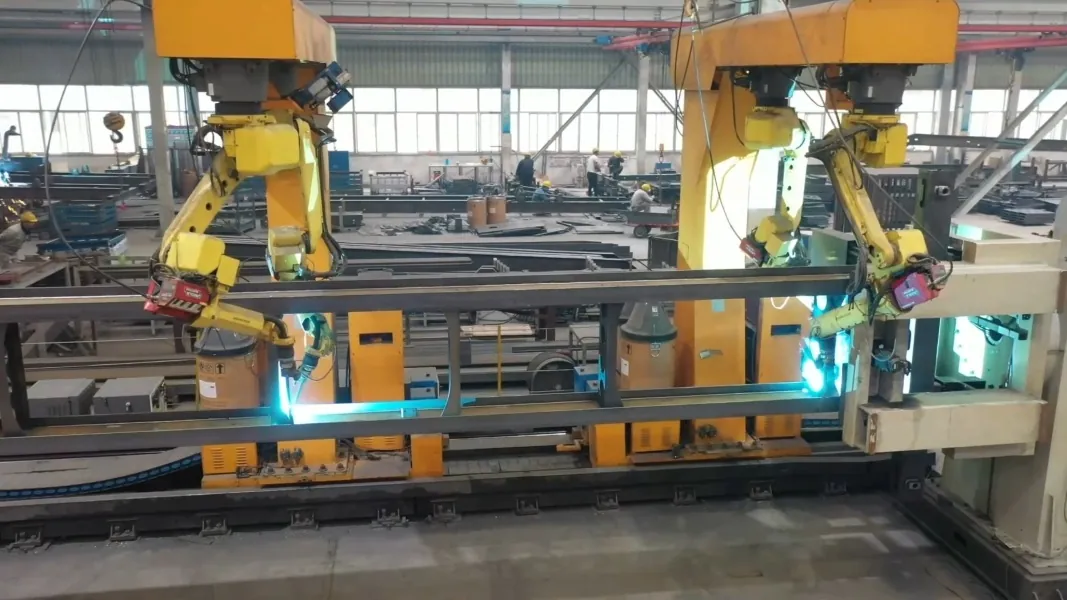
Below are representative arc welding automation scenarios from the Henghuan team and industry practice (client names omitted by convention), structured by "Background Pain Points → Implementation Plan → Implementation Results" for reference and evaluation by enterprises with similar needs.
| Scene | Background and pain points | Implementation plan | Implementation results |
|---|---|---|---|
| A motorcycle company in Chongqing · Frame welding line modification | Six frame models are mainly welded with mixed wires, with large fluctuations in manual welding quality, a repair rate of about 8%, severe loss of skilled welders, and limited production capacity. | Two six-axis arc welding robots equipped with dual-axis positioners and laser weld seam tracking, six models establish a unified process parameter database, and scanning codes to adjust the program takes about 10 minutes to change models. | The first-pass weld pass rate has increased to over 99%, the rework rate has dropped to below 1%, single-shift output has increased by about 35%, and the project investment payback period is about 14 months. |
| An agricultural machinery company in Nanchong · Welding of the gearbox body ring seam | There are more than 40 ring seams on the gearbox body, welding posture is high, manual welding deformation is significant, and subsequent flame correction is required. | The six-axis robot interpolates in conjunction with the single-axis head and tail frame positioner, maintaining the ship-shaped weld position throughout the ring seam, and controlling heat input with pulse MIG technology. | Welding deformation of workpieces is halved, flame correction steps are eliminated, and the cost per weld is reduced by about 20%. |
| A metal furniture factory in Sichuan · Second-hand sites are rapidly deployed | With small order batches and limited budgets, welding capacity needs to be quickly established within two months. | Henghuan provided a refurbished second-hand six-axis robot paired with a brand-new digital welding machine and prefabricated workstation base, completing product demonstration and process parameter adjustment within a week. | The total investment is about 60% of that of a brand-new station, with a production cycle of less than one month. Welding speed and quality reach levels comparable to new machines, and a 12-month warranty is included. |
Industries that commonly use this process
Click to view the overall robot application plan for the industry.
Technical essentials of arc welding processes: The parameter window determines weld quality
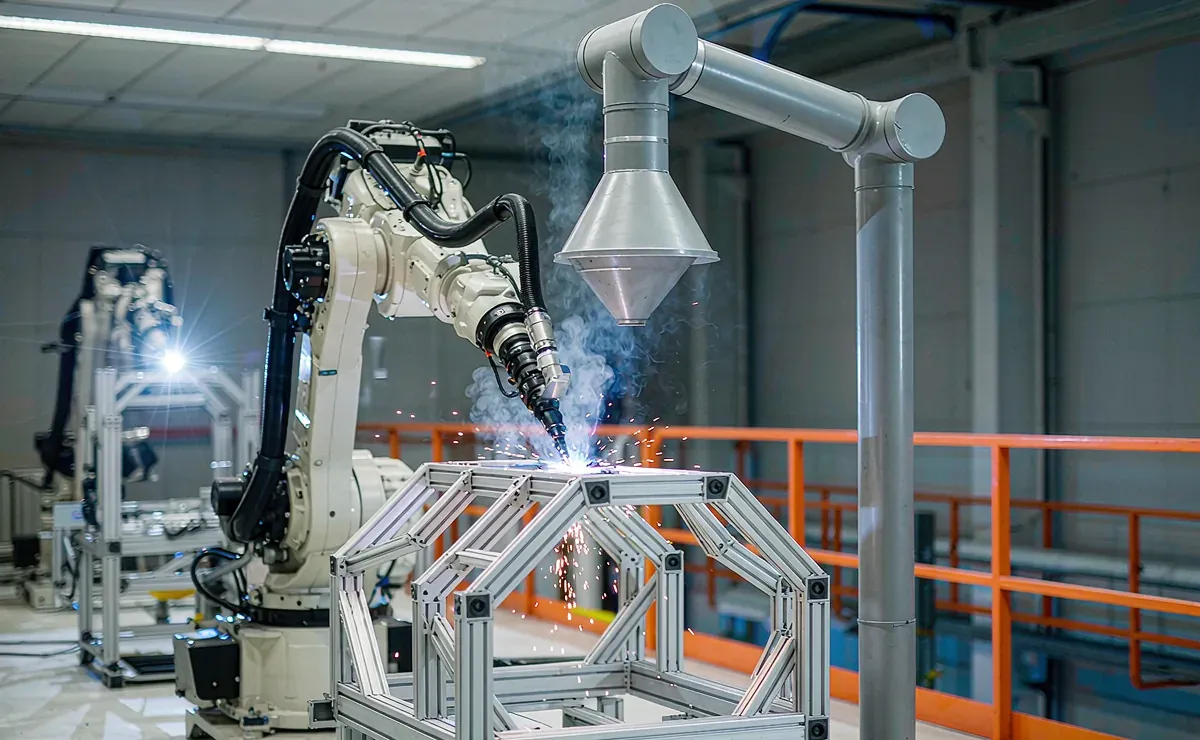
The core of robotic arc welding is to turn the welder's experience into a reproducible window of parameters: welding current, arc voltage, welding speed, gas flow rate, and dry elongation are coupled together. Any deviation will be reflected in the weld formation. The industry commonly uses CO₂ gas-shielded welding (GMAW) and pulse welding (Pulse-MIG) for melting electrodes. Thin plates (1–3mm) use short-circuit transitions to control heat input, while medium-thick plates (above 4mm) use jet transitions to ensure penetration depth.
The three major advantages of robotic arc welding over manual welding are being validated by more manufacturing enterprises in Southwest China:Consistency— Under the same parameters, weld forming is stable, with the pass rate increasing from 90%–95% by manual to over 98%;Efficiency— Robots do not clean slag or replace personnel; arc welding time accounts for over 75%, while manual welding usually accounts for less than 40%;Traceable— Real-time recording of welding parameters, combined with weld tracking and arc sensing, ensures complete and verifiable quality data.
| Plate thickness range | Welding methods | Current range | Voltage range | Welding speed reference |
|---|---|---|---|---|
| 1–2mm thin plate | Short-circuit transition CO₂/MAG | 80–150A | 16–20V | 40–80cm/min |
| 3–6mm medium plate | Short-circuit/particle transition MAG | 150–260A | 20–28V | 35–60cm/min |
| 6–12mm thick plate | Pulse MIG/MAG multi-layer, multi-channel | 200–350A | 24–32V | 25–50cm/min |
| 12mm or more | Submerged arc/pneumatic vertical welding or multiple bevel sections | 300–500A | 28–38V | Designed according to the slope |
Key points for workstation configuration
Positioner Collaboration:The boat-shaped weld position is the optimal weld quality posture—the single-axis/dual-axis positioner moves the weld to the flat weld position, and the weld pool is evenly formed by gravity. The dual-axis positioner and robot interpolation can keep the ring weld in optimal posture at all times, a level that manual welding cannot achieve.
Cleaning and Cutting Threads and Splash Prevention:After a certain number of welding passes, the automatic cleaning station cleans nozzle splashes, cuts off spherical molten droplets at the wire end, and sprays anti-splash fluid. This is a key auxiliary step to ensure arc stability and gas protection and cannot be omitted.
Weld Tracking:When deviations exist in the workpiece group, the combination of contact sensing (finding) + arc sensing (tracking) compensates the deviation in real time to the trajectory; Interlayer tracking in multilayer welding of medium and thick plates especially relies on arc sensing.
Safety and Environmental Protection:The arc welding area is equipped with standard light-blocking fences and dust removal interfaces, with centralized collection and treatment of welding smoke and dust; The safety circuit interlocks the positioner, robot, and dust removal system, and any abnormality can be synchronously shut down.
| Defects | Causes of occurrence | Strategies |
|---|---|---|
| Stomata | Poor gas protection, oil stains and rust on workpieces, improper gas flow rate | Clean the workpiece before welding, check the air circuit and flow rate (15–20L/min), and take wind protection measures |
| Edge | Excessive current, too fast welding speed, or improper torch angle | Lowering current, optimizing the torch posture angle (forward tilt 10–15°), and adjusting swing parameters |
| Not fused | Insufficient heat input, improper groove design, or misalignment of gun movement | Increase current and voltage, correct bevel angle, and enable arc tracking |
| Excessive splashing | Mismatch of short-circuit transition parameters and excessive dry elongation | Switch to pulse welding, optimize inductor parameters, and control dry elongation of 15–20mm |
| Weld through | Excessive heat input and uneven clearance on thin plates | Lower current, increase welding speed, pulse welding + group gap control |
Craft Q&A
Our workpiece group has unstable gaps. Can we weld them?
Yes, but the sensor solution that needs to be paired: within a gap of 2mm, arc sensing tracking and adaptive adjustment; When gap fluctuations are large, it is recommended to first address the set fixtures (tack welding fixtures). Welding automation cannot compensate for the dispersion in feeding—this is also a key item for verification during the process evaluation phase.
What is the approximate level of investment for arc welding stations?
Single-station (one six-axis robot + welding power supply + cleaning station + single-axis positioner + fence dust removal) is usually between 250,000 and 450,000 yuan, with dual-station or dual-axis positioner configurations rising accordingly; If your budget is limited, you can choose a combination of a used robot body + a brand-new welding power supply. We provide specific configurations and quotes.
What brand of welding machine should be used?
Select by process: We have performed robot communication docking (DeviceNet/EtherNet/IP/Profinet) for mainstream welding power supplies such as Aotai, Fanus, EWM, Panasonic, OTC, etc. The initiation and closing of the collaborative welding machine and parameter calls are uniformly scheduled by the robot program.
In-depth analysis of arc welding technology
Compared to manual welding, the benefits of robotic arc welding can be quantified: the arc rate (the proportion of actual welding time in shift time) can increase from less than 40% by hand to over 75%, the first-pass pass rate of welds increases from 90%–95% to over 98%, and welding material waste is reduced by 15%–25%. More importantly, in today's world where skilled welders are increasingly scarce and young people are reluctant to enter, arc welding robots are no longer an option but a key variable determining production capacity and delivery times.
The Henghuan team has established multiple arc welding workstations in the Sichuan-Chongqing region for industries such as automotive parts, construction machinery, two-wheel frames, and metal furniture, providing full-process services including process evaluation, workstation design, programming and commissioning, weld seam tracking integration, and subsequent maintenance. They also offer rapid deployment solutions for used arc welding robots.
The technological evolution of arc welding automation and the Southwest market
Currently, arc welding technology is evolving in three directions: First,Low-splash technology is becoming widespread— Digital inverter power supplies combined with pulse MIG and cold metal transition processes reduce splatter during thin plate welding by over 80%, heat input is about 30% lower than traditional short-circuit transitions, and the welding quality of thin plates and galvanized sheets is significantly improved; SecondSensing closed-loop has become standard— The combination of laser weld tracking and arc sensing allows the robot to adapt to deviation compensation for assembly deviations, reducing reliance on tooling and fixture accuracy and reducing fixture input; Third,Workstation integration— The standardized prefabricated workstation combining robot + positioner + gun cleaning station + dust removal shortens delivery cycles, allowing small and medium-sized enterprises to adopt welding automation with a relatively low barrier to entry.
From a market perspective, the penetration rate of welding robots in two-wheelers, agricultural machinery, and construction machinery in Southwest China is rapidly catching up with coastal levels; At the same time, a large stock of manual welding lines faces labor recruitment difficulties, and the demand for old welding robots to be equipped with weld tracking and digital modification of analog welding machines is also strong. Henghuan not only delivers new stations but also undertakes sensing and digital transformation of existing welding wires.
Key points and operation and maintenance management of arc welding workstations
High-frequency faults at arc welding stations are concentrated in three areas: First,Wire feeding system— Wear of the wire feeding tube, wear of the wire feeding wheel groove, and poor wire straightening lead to unstable wire feeding and wire sticking during burning, manifesting as an increased arc initiation failure rate; SecondWelding torch consumable parts— Splashing accumulation between the conductive nozzle and nozzle increases with welding time, and failure of the cleaning station can directly lead to poor protection and weld porosity; Third,Body protection— In splash environments, wrist cables and bellows are easily burned through, and the cable lifespan of models without protective sleeves may be reduced to one-third of the normal value.
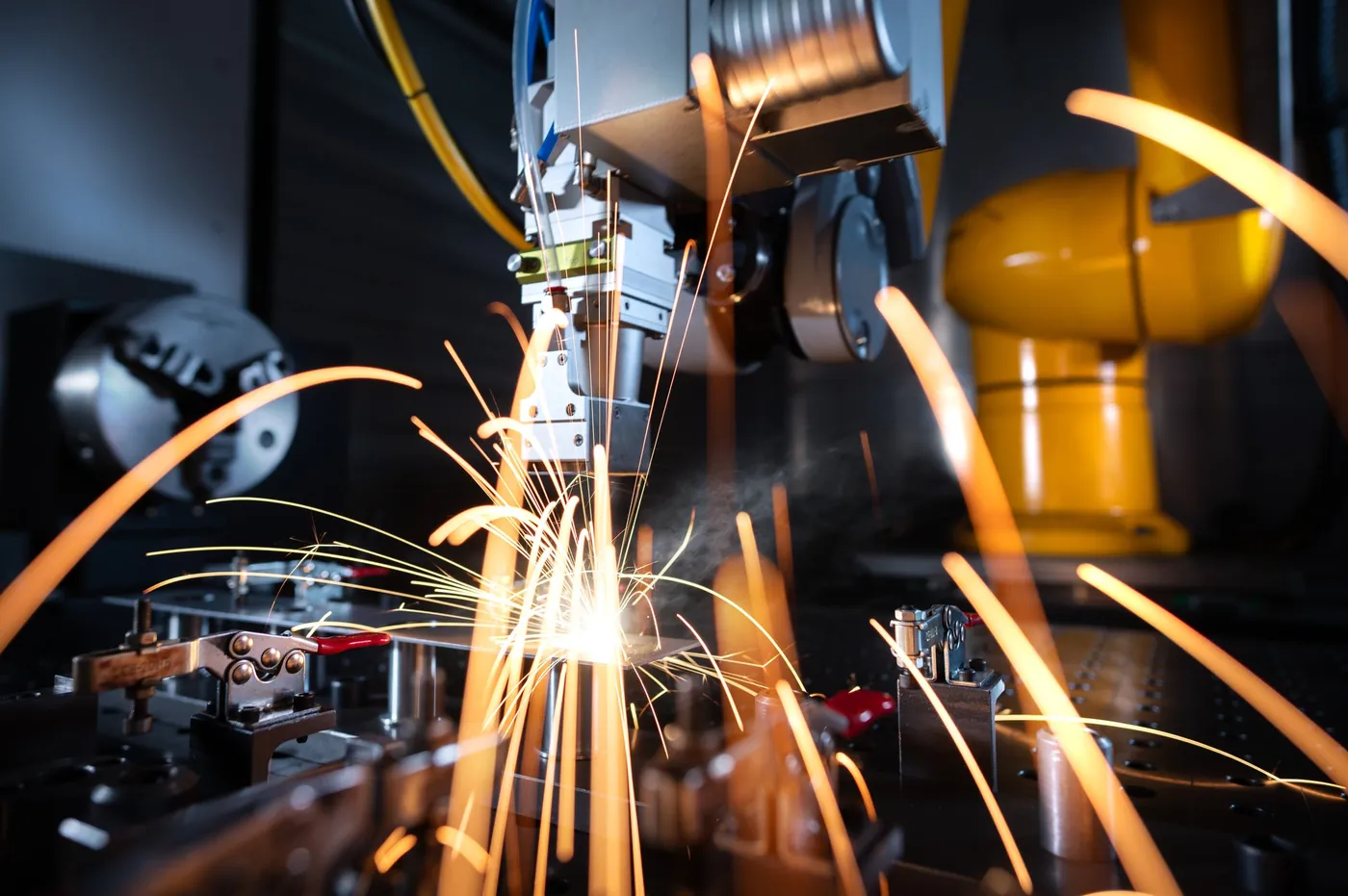
Henghuan recommends that arc welding station clients establish a three-level maintenance system: daily (splatter removal, loss parts inspection, nuclear gas flow rate 15–20L/min), monthly (wire feeding hose and wheel inspection, reducer grease sampling inspection), and annual (body precision calibration, overall cable kit evaluation and replacement). Our annual maintenance contract covers all the above items, with the Sichuan-Chongqing region committed to same-day response and Yunnan-Guizhou on-site within 48 hours.
Need localization solutions for arc welding processes?
Whether it's selecting new project solutions, upgrading production lines, or maintaining in-service equipment, Henghuan can provide third-party technical support for arc welding applications. Please tell us about material specifications, production cycles, and the on-site environment, and we will provide targeted solution recommendations.
Contact Henghuan View all application processes