
Sorting
Industrial robot sorting process: application points, process essentials, and practical cases
Application Overview
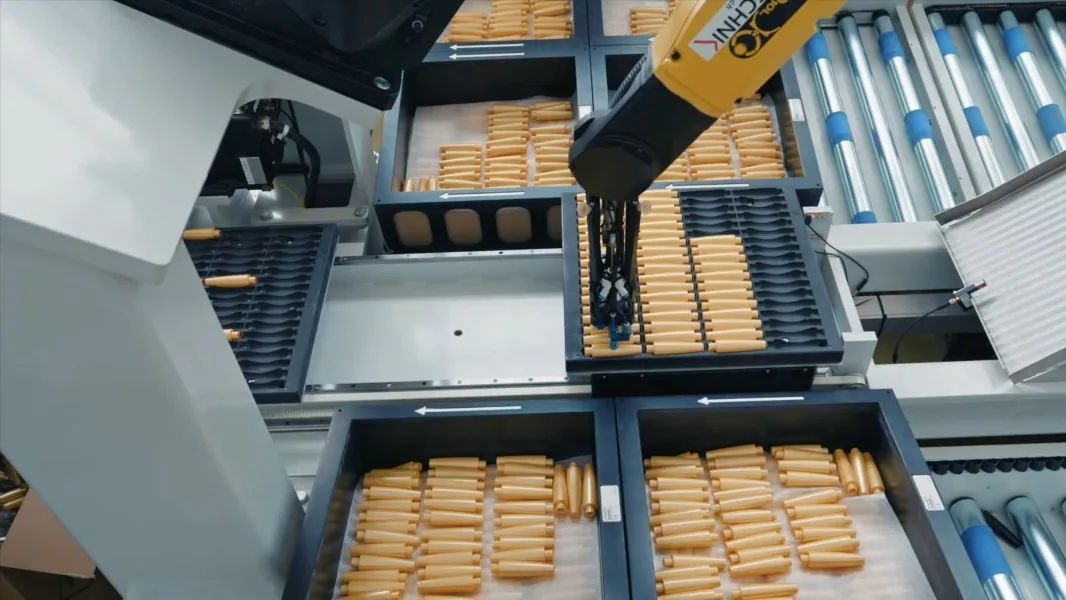
Sorting (pick-and-place) refers to high-speed pick-and-place applications—identifying targets from conveyor belts, pallets, and vibrating pans, quickly picking them up and placing them in designated positions. It is the most demanding robot application in terms of cycle: food cartoning at speeds of 120–300 pieces per minute and electronic component sorting at 60–120 times per minute, making Delta parallel robots and high-speed SCARA the two main structures in this field.
Key points of application
Compiled from official brand application materials, source has been annotated.
Process validation, workstation solutions, programming and teach-in and production ramp-up support, and turnkey delivery of robot applications.
Learn more → Sales of new industrial robotsAuthorized-style sales of brand-new mainstream robots with selection support for new production lines and capacity expansion.
Learn more → Research and development of automation equipmentResearch, development, integration, and delivery of end-effectors, conveyor positioning, safety peripherals, and complete control systems.
Learn more → Research and development of algorithms and control systemsMotion planning, machine vision, and PLC/SCADA system development to address takt-time bottlenecks, accuracy, and data interconnection.
Learn more → Robot rentalShort-term rental, long-term rental and lease-to-own for in-stock models, long-term rental, and lease-to-purchase transfer, including transportation, installation, commissioning, and lease-term maintenance.
Learn more → Software and hardware upgrade servicesController retrofits, software and firmware upgrades, mechanical refurbishment, and safety upgrades restoring performance to older equipment.
Learn more → Maintenance and repairOn-site inspection, fault diagnosis and repair, and annual maintenance contracts covering 1,310 models from 21 brands.
Learn more → Used & in-stock robot salesWe buy back used robots and handle inspection, refurbishment and resale; every unit ships with inspection records and a warranty, and trade-ins can offset new purchases.
Learn more →Typical application scenarios for sorting automation
Below are representative sorting automation scenarios from the Henghuan team and industry practice (customer names are usually omitted), organized by "background pain points→ implementation plans, → implementation results" for reference and evaluation by enterprises with similar needs.
| Scene | Background and pain points | Implementation plan | Implementation results |
|---|---|---|---|
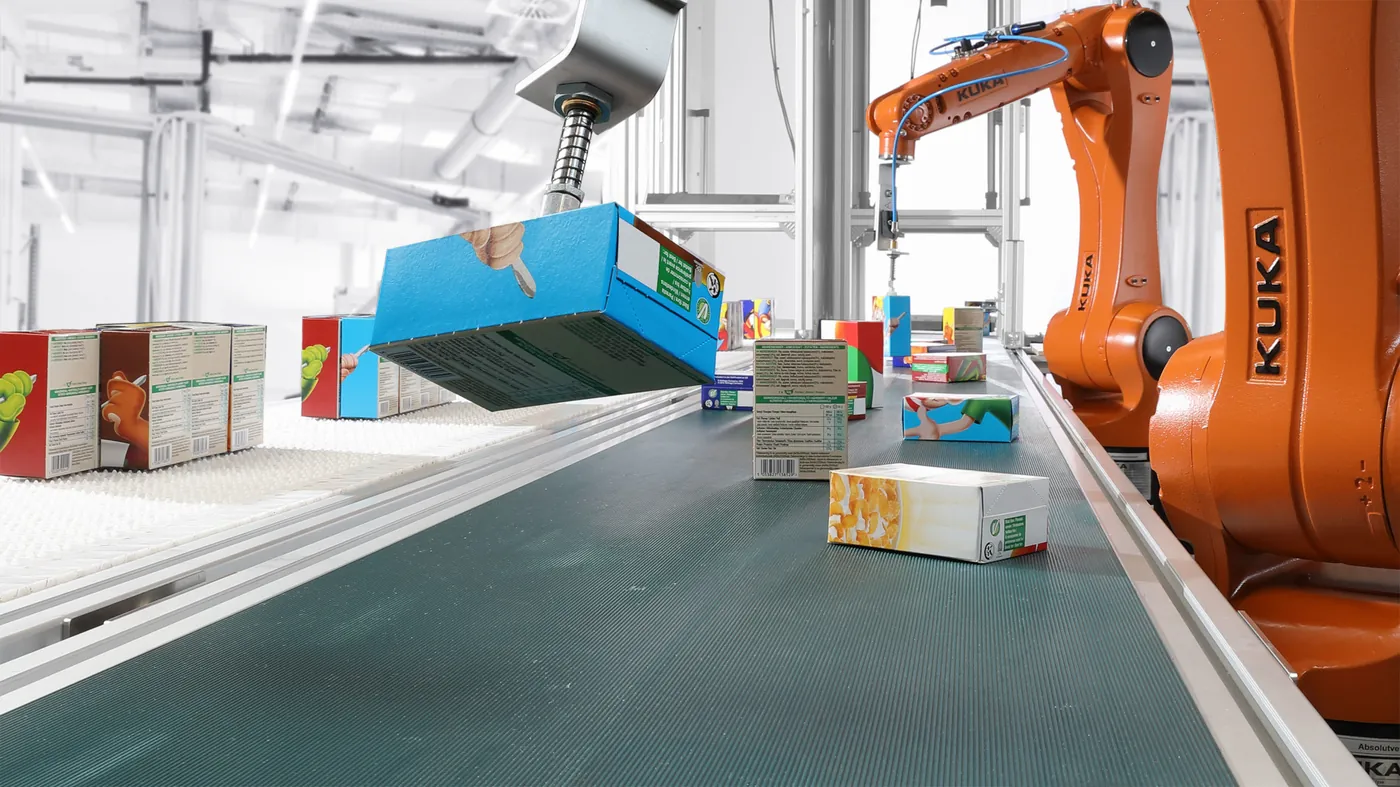
| A food factory in Chengdu · Biscuit boxing and high-speed sorting | Biscuits are placed manually from the oven cooling line to boxing, which is slow and poses high hygiene risks, making it difficult to recruit workers for night shifts. | The Delta robot features vision and conveyor belt tracking, food-grade suction cup zoned control, removing broken products and cartoning them according to arrangement requirements. | Sorting speed is 180 pieces per minute, 100% consistency in cartoning arrangement, unmanned food contact surfaces, and HACCP audited. |
| A pharmaceutical packaging factory in Deyang · Medicine boxes are palletized and sorted | During high-speed flow of medicine boxes, manual sorting has a high error rate, and batch traceability requires scanning each box for verification. | High-speed SCARA features visual recognition and box-by-box scanning, automatically removing non-compliant boxes and uploading data to the drug traceability system. | Sorting speed is 90 boxes per minute, with zero error rate and 100% completeness of traceability data, passing GMP on-site inspection. |
| A 3C company in Chongqing · Sorting of incoming electronic components | Mixing of multiple small components leads to slow manual sorting and incorrect material causing feeding accidents. | Deep learning multi-category recognition model, SCARA equipped with vacuum suction needles sorts by tray position, and the part number is verified by binding to position. | Sorting accuracy is 99.95%, speed is 70 pieces per minute, feeding errors are zero, and new material numbers are completed and model training is completed and launched within a week. |
Industries that commonly use this process
Click to view the overall robot application plan for the industry.
High-speed sorting: the home turf of Delta and SCARA
Pick-and-Place is the most demanding handling scenario for the time cycle: biscuit/candy carton on food production lines, small item sorting in the electronics industry, blister packaging in pharmaceuticals, where the pick-move-place cycle is often compressed to 0.5–1 second. The choice of model for this type of operating condition is highly differentiated—Delta parallel robot(3–6kg load, 100–300 picks per minute, food-grade clean design) dominates lightweight, high-speed sorting;SCARA(High-speed flat surface, good vertical rigidity) Suitable for precision sorting and insertion of small parts; The six-axis robot provides repositioning when flipping posture or heavy load sorting is required.
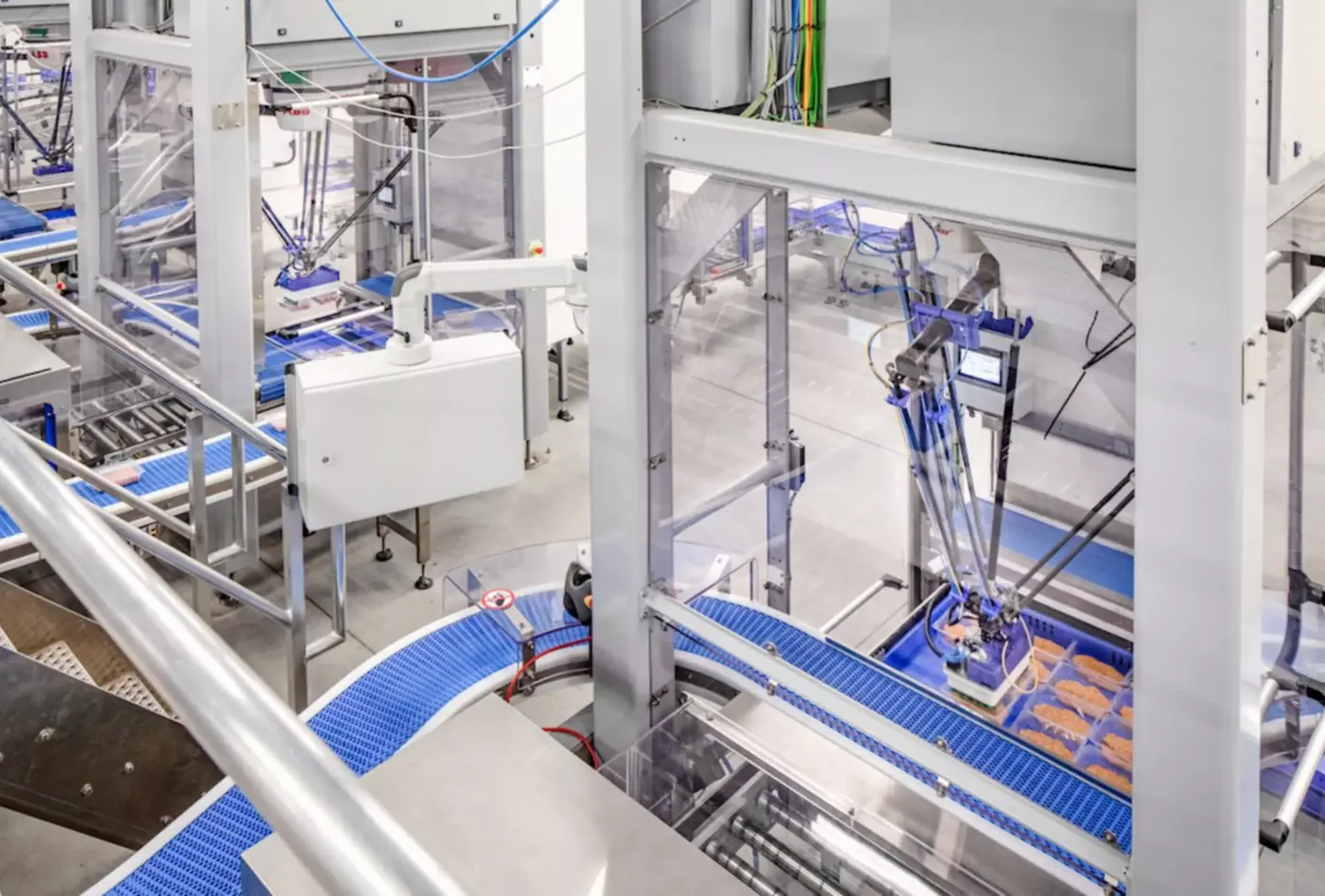
The technical bottleneck for high-speed sorting has never been the robot itself, but ratherCoordination between vision and conveyance: The vision system must complete photography, recognition, positioning, and queue management in milliseconds; the conveyor encoder tracks the workpiece position in real time; the robot dynamically captures the workpiece in queue order (Conveyor Tracking)—synchronizing clocks among all three allows the sorting line to produce the nominal beat.
| Model | Load | Rhythmic ability | Typical applications |
|---|---|---|---|
| Delta parallel | 1–8kg | 120–300 beats per minute | Fast sorting of food boxes and small items |
| SCARA | 1–20kg | 60–150 beats per minute | Electronic plug-in, screw sorting, dispensing + sorting compounding |
| Six axes + vision | 5–50kg | 20–60 beats per minute | Packing and mixed variety sorting require flipping postures |
| Collaborative robots | 3–16kg | 15–40 beats per minute | Human-machine mixed-line sorting and flexible multi-station deployment |
Four key points in sorting line design
Compiled materials:The upper limit of sorting efficiency is determined by incoming materials—scattered and piled materials are first processed by vibratory plates, sorting lines, or manual pre-finishing, making them visually "visible and grasping"; If the overlap and blocking rate exceeds 15%, the grasping success rate drops sharply.
Vision and Queue:The recognition algorithm outputs three elements: workpiece position, posture, and category. The queue manager allocates grabbing tasks according to the FIFO and shortest path principles; Visual frame rate matches conveyor speed, and the time spent on high-speed line workpieces in the field of view may be less than 100ms.
Lightweight ends:At high speeds, every additional 100g at the end results in considerable cycle loss—vacuum suction cups are installed at the end with a small solenoid valve (response <10ms) rather than inside the cabinet, the gripper is lightweight pneumatic, and the number of suction cups is optimized according to workpiece distribution rather than being overloaded.
Exclusion and Exception Flow:Workpieces that fail to identify, grab, or place are sent through the rejection channel without blocking the main line; Real-time reporting of abnormal statistics, continuously optimizing identification models and incoming material quality.
Craft Q&A
Can our materials be sorted for irregular shapes (agricultural products/irregular parts)?
It can be assessed. The key to sorting irregular materials lies in visual algorithms (deep learning is effective at recognizing irregular parts) and end adaptability (flexible suction cup groups/adaptive grippers). First, we conduct identification and grasping tests on 100 samples, then produce a success rate report before discussing the entire line.
How to accept the sorting line takts?
Acceptance is based on "continuous 8-hour comprehensive efficiency" rather than instantaneous speed: actual sorting volume / theoretical sorting volume of ≥85% (including incoming material fluctuations and abnormal rejection) is the industry standard standard, with specific indicators quantified in the contract.
The food industry has hygiene requirements—how should equipment be handled?
The Delta model features food-grade design (IP67 protection, stainless steel end, food-grade lubrication, and washable structure); The conveyor belt is made of food-grade PU material, and the contact surface structure avoids sanitary dead corners. We have delivery experience in the food industry, configured according to HACCP and factory audit requirements.
In-depth analysis of sorting processes
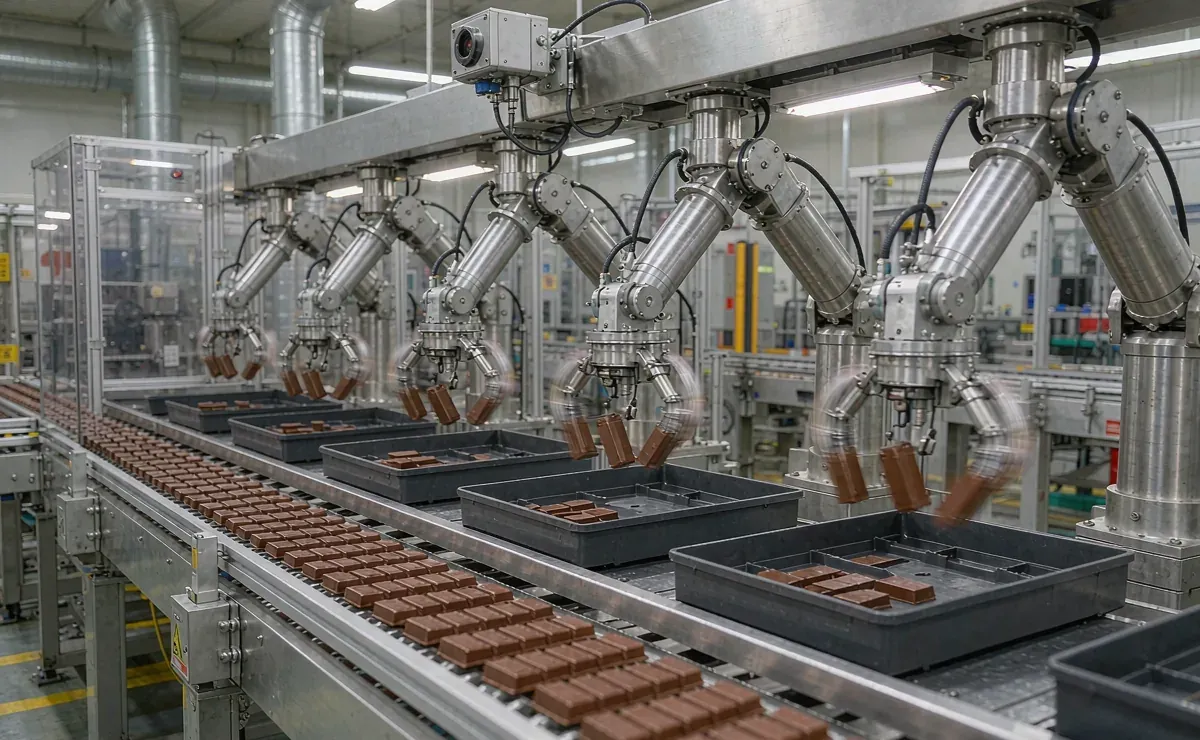
The technical architecture of the sorting station is:Vision + conveyor tracking + robotsTrinity: The vision system detects incoming material position and posture above the conveyor belt in milliseconds; the encoder tracks the conveyor belt movement in real time; and the robot dynamically grabs the conveyor belt in line according to the moving conveyor belt (Conveyor Tracking technology)—this is the core technical threshold of the sorting system. Without tracking functions, robots can only grasp fixed positions, making speed advantages impossible. Incoming material management is equally crucial: vibrating tray orientation, distributed sorting mechanisms, early removal of defective products, so robots only handle qualified incoming materials that can be grasped. Multi-category recognition (shape, color, defect determination) relies on deep learning visual models.
Henghuan offers comprehensive sorting line solutions: Delta/SCARA selection, conveyor belt tracking integration, visual algorithm development (including multi-category recognition models), material sorting mechanism design, and high-speed specialized maintenance for sorting robots.
The technological evolution of sorting automation in the Southwest market
Trends in Sorting Automation: First,Intelligent vision— Deep learning enables the recognition and capture success rate of over 99% for disorderly incoming materials, mixed categories, and deformed soft packages (food bags, express packages). Scenarios that previously required manual preprocessing are gradually being handed over to robots; SecondFlexible quick exchange— End-of-use quick-change devices and suction cup zoning logic make it possible for a sorting line to distribute food during the day and daily products at night, diluting investment across multiple categories in parallel; Third,Speed and precision continue to climb— The new generation Delta beat breaks through 300 beats per minute, SCARA standard cycle time enters the 0.25-second range, and the widespread adoption of direct-drive motors and carbon fiber arms is the hardware foundation.
Southwest Food (Chengdu, Meishan), pharmaceuticals (Chengdu Wenjiang, Deyang), and 3C Electronics (Chongqing, Chengdu) have strong demand for automated sorting operations. The upgrade of high-speed sorting lines (visual upgrades, algorithm optimization, tap time tapping) is also an important market—many production sorting lines are not outdated equipment, but rather have extensive algorithms and incoming material management, with optimization potential exceeding 20%.
Key engineering points and operation and maintenance management of sorting workstations
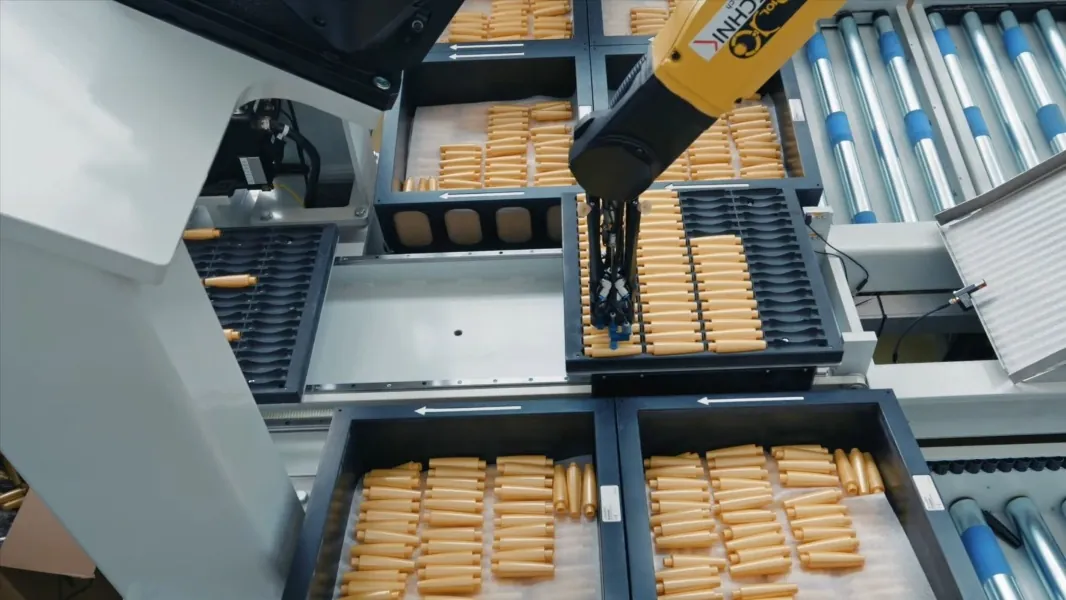
Key points for the stability of the sorting line:Visual window management— Overlap between recognition and grasping areas, lighting consistency (shading and constant flow light sources), incoming material spacing control (sorting mechanism ensures minimum spacing to avoid overlapping obstruction);Robust queue logic— The exception handling logic for missing incoming materials, visual misidentification, and grasp failure must be thorough; single failure cannot block the entire queue;Mechanical maintenance for high-speed operating conditions— Delta's ball hinges and rod end bearings are high-frequency wear parts and should be replaced regularly according to operating hours (recommended for comprehensive inspection every 8,000–12,000 hours). SCARA belt tension and reducer lubrication are maintained periodically.
Efficiency audit method for sorting lines: Identify bottlenecks through statistical indicators such as recognition success rate, grasping success rate, and queue waiting time—if recognition fails, modify visual solutions; if grasping fails, modify end and vacuum solutions; if waiting time is long, adjust material sorting to match conveyor belt speed. Henghuan provides efficiency audit services for existing sorting lines, typically extracting 10%–25% of capacity without replacing hardware.
Need localization solutions for sorting processes?
Whether it's selecting new project solutions, upgrading production lines, or operating and maintaining in-use equipment, Henghuan can provide third-party technical support for sorting applications. Please tell us about material specifications, production cycles, and the on-site environment, and we will provide targeted solution recommendations.
Contact Henghuan View all application processes