
Material handling
Industrial robot material handling process: application points, process essentials, and practical cases
Application Overview
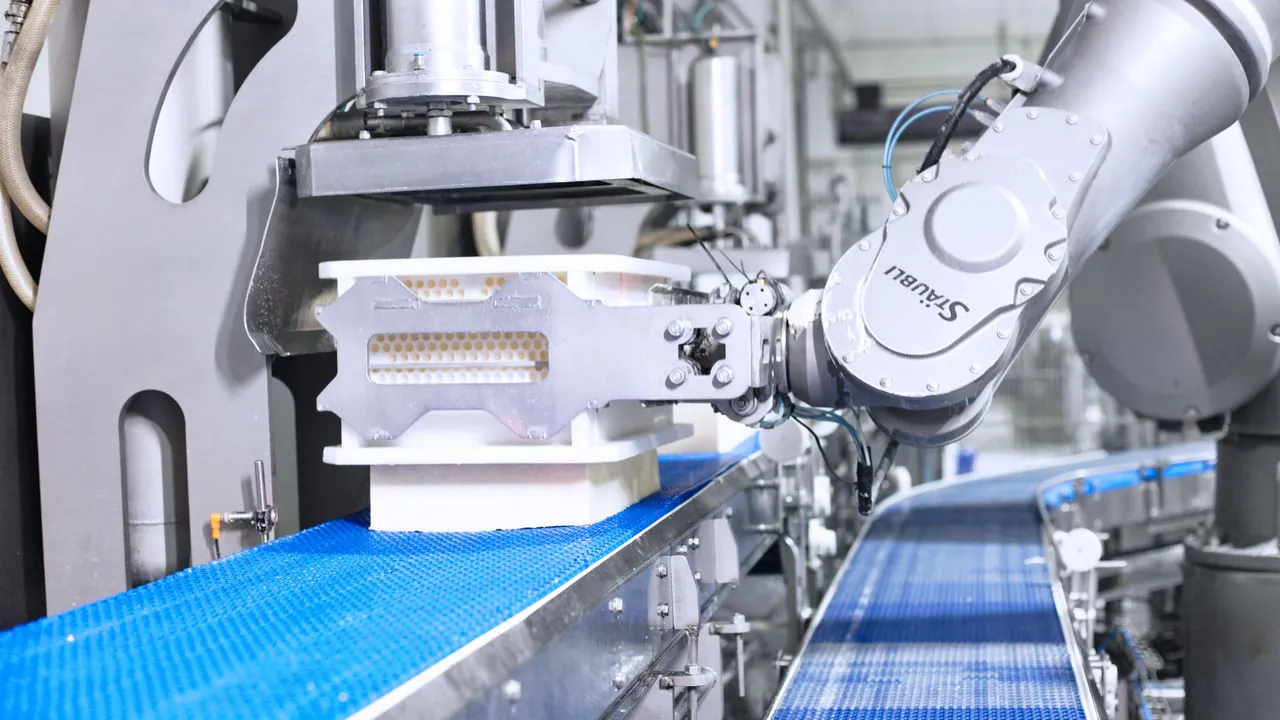
Material handling is the most widely used category in robotics—from transferring workpieces between processes, supplying materials at the edge of the line, to finished product transfer, box flipping, and material dumping, almost every manufacturing and logistics link has handling needs. The value of automated handling is threefold: replacing repetitive heavy physical labor (handling is a high-risk occupational injury and disease), improving efficiency (24-hour continuous fatigue-free operations), and protecting quality (eliminating bumps and misplacement of materials during manual handling).
Key points of application
Compiled from official brand application materials, source has been annotated.
Process validation, workstation solutions, programming and teach-in and production ramp-up support, and turnkey delivery of robot applications.
Learn more → Sales of new industrial robotsAuthorized-style sales of brand-new mainstream robots with selection support for new production lines and capacity expansion.
Learn more → Research and development of automation equipmentResearch, development, integration, and delivery of end-effectors, conveyor positioning, safety peripherals, and complete control systems.
Learn more → Research and development of algorithms and control systemsMotion planning, machine vision, and PLC/SCADA system development to address takt-time bottlenecks, accuracy, and data interconnection.
Learn more → Robot rentalShort-term rental, long-term rental and lease-to-own for in-stock models, long-term rental, and lease-to-purchase transfer, including transportation, installation, commissioning, and lease-term maintenance.
Learn more → Software and hardware upgrade servicesController retrofits, software and firmware upgrades, mechanical refurbishment, and safety upgrades restoring performance to older equipment.
Learn more → Maintenance and repairOn-site inspection, fault diagnosis and repair, and annual maintenance contracts covering 1,310 models from 21 brands.
Learn more → Used & in-stock robot salesWe buy back used robots and handle inspection, refurbishment and resale; every unit ships with inspection records and a warranty, and trade-ins can offset new purchases.
Learn more →Typical application scenarios for automated material handling
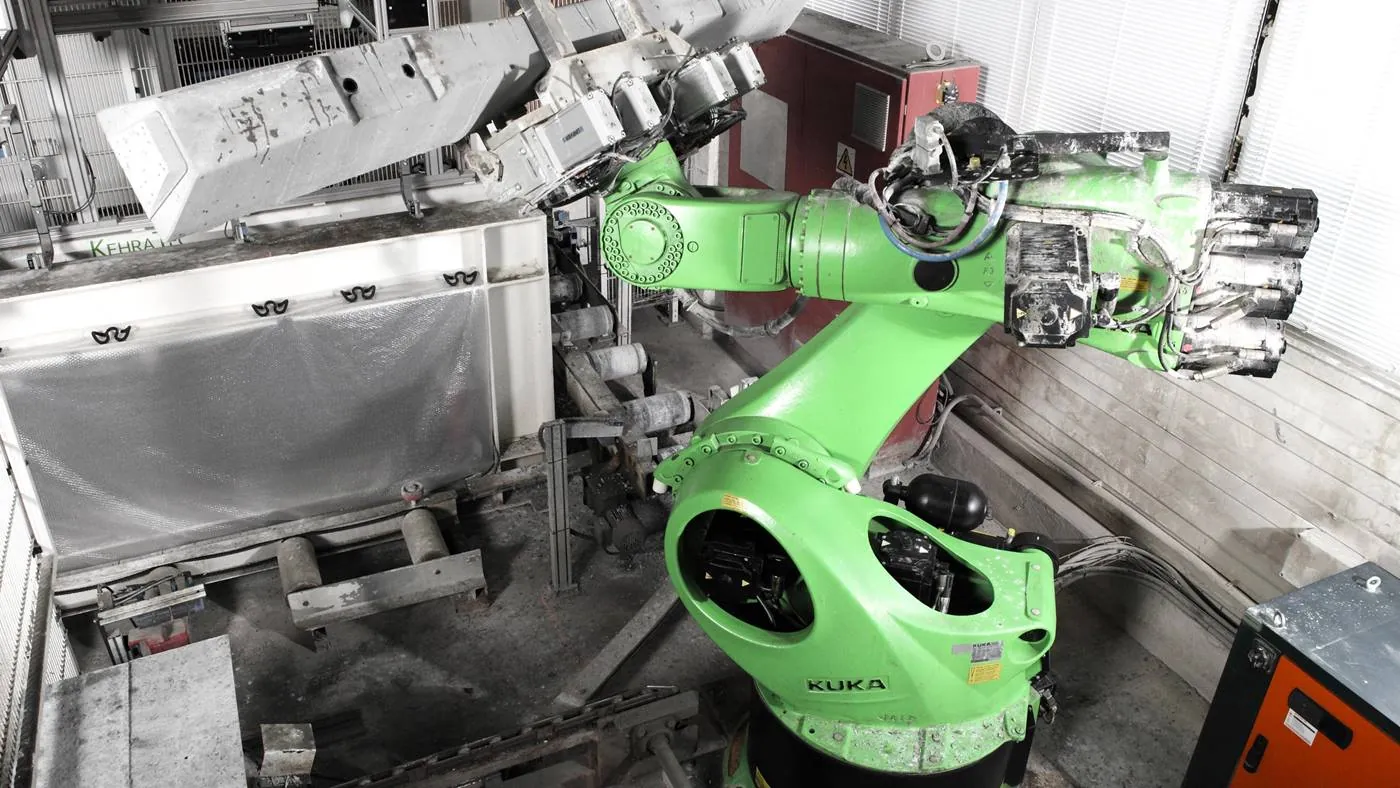
Below are representative material handling automation scenarios from the Henghuan team and industry practice (client names omitted by convention), organized by "background pain points→ implementation plans, → implementation results" for reference and evaluation by enterprises with similar needs.
| Scene | Background and pain points | Implementation plan | Implementation results |
|---|---|---|---|
| A logistics park in Chengdu · Sorting centers handle container handling and refringing | Line-side supply for multi-specification transfer boxes relies on manual handling, resulting in high labor intensity and labor shortages during peak periods, resulting in frequent damage and bumps to the container body. | The six-axis robot is equipped with a box turner gripper and 3D visual recognition, randomly picking mixed specifications, and automatically assigning stack positions. | Replacing 3 handlers at a single station, reducing container damage rate by about 80%, and new container types can be identified and handled without re-teaching. |
| A building materials factory in Chongqing · Heavy-duty transfer of bagged materials | The transfer of 50kg bagged materials from the packaging line to the stacking station relies on manual labor, resulting in high labor intensity, high mobility, and a prominent risk of heatstroke in summer. | The heavy-duty handling robot is equipped with a dedicated bag clamping end, linked with the packaging line signal, with a cycle rate of 600 bags per hour. | Unmanned transfer positions completely eliminate the risk of injury during heavy manual labor, significantly enhancing the continuous operation capacity of the production line. |
| An electronics factory in Mianyang · Transfer between cross-floor processes | Multi-process cross-floor circulation relies on manual carts, resulting in inventory-in-process inventories that are opaque and lead to hidden damage during handling and bumps. | Robot loading and unloading are linked with AGV horizontal transport and automatic elevator calls, with the dispatch system managing task queues in a unified manner. | Work-in-progress inventory between processes is reduced by about 40%, handling personnel are halved, and the entire material flow is recorded and traceable by the system. |
Industries that commonly use this process
Click to view the overall robot application plan for the industry.
Material Handling: The most widely used robot scenario
Handling is the "basic foundation" of industrial robots—transferring between production lines, connecting processes, and transporting finished products off the line. Loads range from small items weighing 3kg to heavy loads of 700kg, with corresponding models. The value of handling automation lies not in "saving a porter," but inCertainty of the logistics cycle: The time cost of waiting for materials on the production line, bumps and injuries during manual handling, and safety risks from heavy loads are all hidden but real losses.
The first principle of handling solution design is "load and inertia matching": rated load does not equal the load capacity—the end fixture's self-weight + workpiece weight + uneven load inertia jointly determines the actual model selected. For conditions with high uneven load (long rods, multiple pieces simultaneously), inertia ratio must be checked. Choosing a smaller model saves money in terms of vibration and lifespan.
| Moving scenes | Load range | Recommended model directions | Key configurations |
|---|---|---|---|
| High-speed transfer of small items | 3–20kg | High-speed six-axle / SCARA / Delta | Lightweight end + visual positioning |
| Pallet transfer between processes | 20–100kg | with six axles bearing the load in the middle | Pallet positioning tooling + safety fence |
| Box turnover | 50–200kg | Heavy-load six-axle setup | Vacuum/clamping end + stacking program |
| Heavy-Duty Transfer (Molds/Large Parts) | 200–700kg | Heavy-load six-axle/truss | Foundation load verification + dual-circuit braking |
| Machine tool/press wiring | Determined by workpiece | Six axes + ground rail extension | Hand-linked with the main PLC |
Reliability design of handling systems
End-of-Failure Safety:Vacuum adsorption equipped with an energy storage tank and vacuum degree monitoring; during gas and power cutoffs, workpieces do not fall or fall into the controlled area; Jaws are properly equipped for detection and pressure holding circuits; missing parts during transport can cause safety incidents and beat killers.
Pathways and Interference:Handling routes avoid personnel passages and equipment maintenance surfaces, with multi-machine sharing areas interlocked as interference zones; When the ground rail/suspension rail extends its stroke, the bending radius and lifespan of the cable drag chain are checked by the number of round-trip cycles.
Logistics information flow synchronization:Handling instructions are linked with WMS/MES—task issuance, arrival confirmation, and abnormality reporting form a closed loop, avoiding information gaps where "robots wait for orders, production lines wait for materials."
Ease of maintenance:Lubrication points are centrally arranged, status detection (vibration/temperature) interfaces are reserved, and the list of consumable parts is handed over with the system, minimizing downtime and maintenance time.
Craft Q&A
If the carrying distance is long, how can robots cover it?
Three expansion methods: ground rail (linear travel 2–30m, high precision), truss (spanning multiple machines, good rigidity), AGV + robotic arm (mobile handling, highest flexibility but lower cycle time). Selection is based on travel time, beat, and budget, with layout simulation during the planning phase.
Mixed varieties are handled visually or with workwear?
Limited varieties (within 10 types) prioritize tooling + program formulations, low cost and high reliability; There are many varieties with random locations using 2D/3D visual positioning. The two are often combined: coarse visual positioning + precision tooling positioning.
How long will it take to stop production of handling robots on old production lines?
Using "off-site pre-installation + window switching": robots and tooling are pre-installed and commissioning off-site, connected during weekends or planned downtime, with single-station switching usually taking 1–2 days. Logistics route renovation and ground construction were completed ahead of schedule, without occupying the switching window.
In-depth analysis of material handling processes
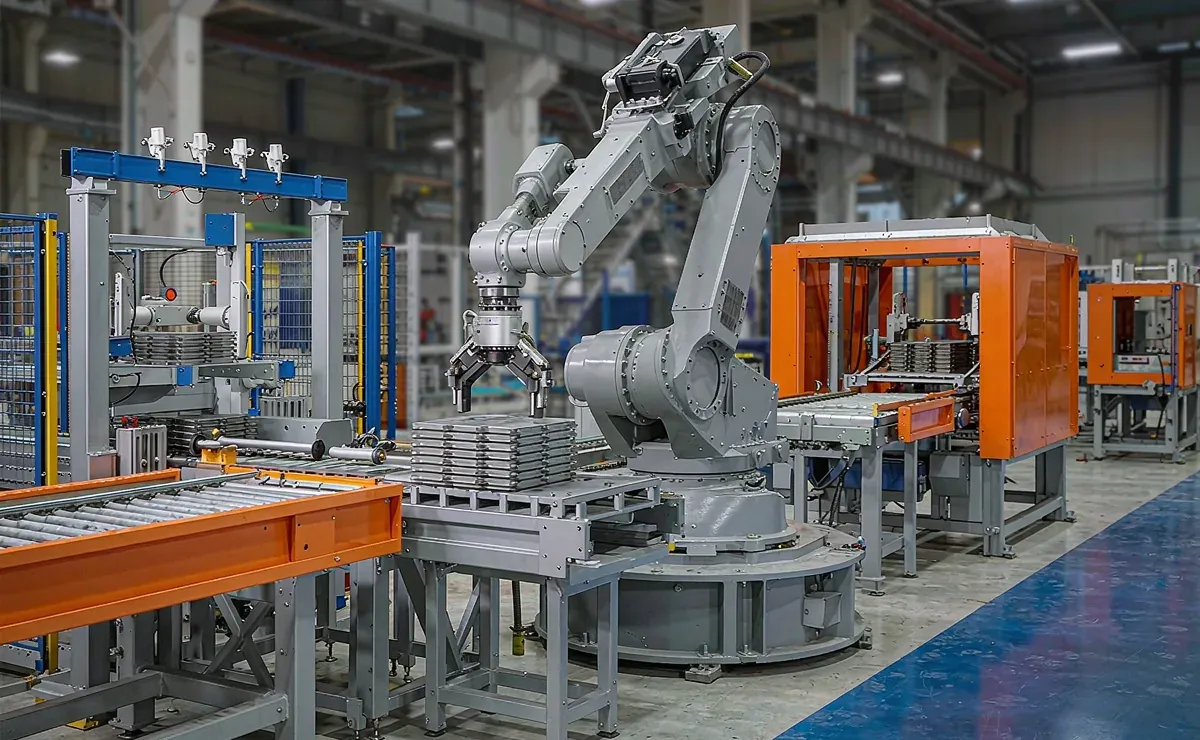
Four key elements of handling station design:Load matching— Workpiece weight + end self-weight + dynamic load, with a 20%–30% allowance for rated load; inertia must also be calculated under off-load conditions;Span-wide coverage— Spatial accessibility of all pick-and-place points, including attitude accessibility (not just positional reach), and adding ground rails to extend travel when necessary;Beat-time accounting— Motion trajectory optimization + parallel signal processing; transport cycles usually account for more than 30% of the station's cycle, making it worth refined optimization;Security layout— Fences, gratings, and door locks are designed according to ISO 10218 and GB 11291 standards. Human-machine mixed traffic areas require risk assessments and maintain safe distances.
Henghuan undertakes various handling station solution designs and integrations: single-station handling, multi-station wiring, mixed flow systems for robots and conveyor lines/AGVs, including solution simulation, on-site installation and commissioning, and personnel training, as well as full lifecycle maintenance.
The technological evolution of material handling automation and the Southwest market
Trends in handling automation: FirstIntegration of robots and mobile robots— Six-axis robotic arms handle workstation operations, AGV/AMR handle horizontal transport, and the dispatch system assigns tasks uniformly. Workshop logistics flexibility is greatly improved, and production line layout adjustments are no longer limited by fixed conveyor lines; Second3D vision random grasping— From fixed-position pickup to random recognition and grabbing of material frames, solving the last-mile loading challenge of automated handling; Third,Load polarization— The 3kg collaborative arm for handling small parts and the 700kg class for heavy load handling are both increasing, with more refined selection for mid-spec standard models—carefully calculate based on real working conditions before buying, without paying for excess performance.
The popularization of handling robots in the food, building materials, and logistics park industries in Southwest China has accelerated significantly, with a high demand for upgrading existing heavy-duty handling and high-speed sorting equipment. Henghuan's 21 brands and over 1,300 models in inventory cover all handling load ranges from 3kg to 700kg. Used handling robots can be delivered within a week after preparation, with load and precision inspection reports attached.
Key engineering points and operation and maintenance management of material handling workstations
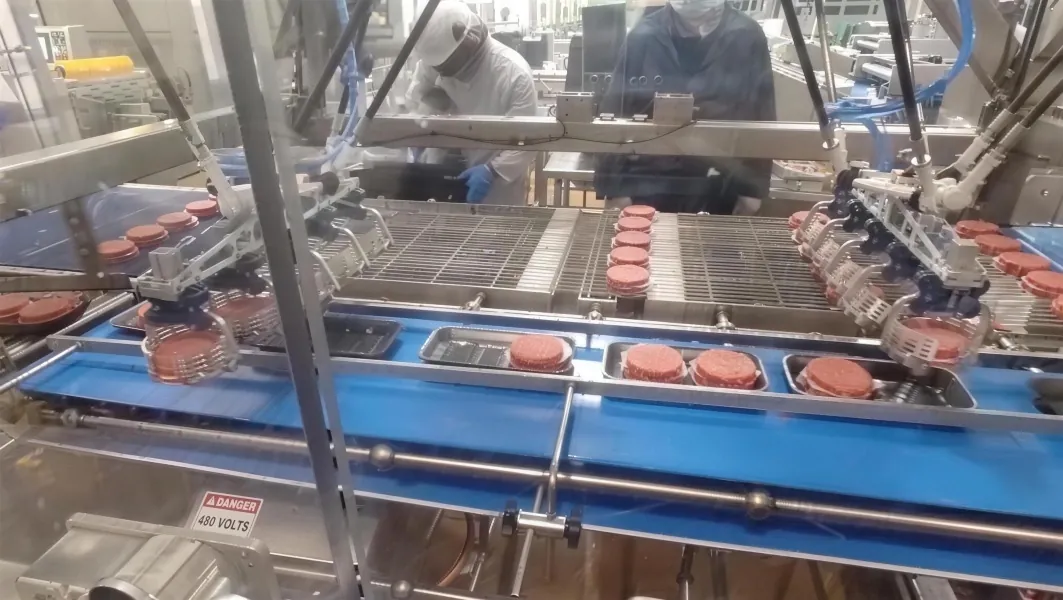
Common issues with handling stations: First,Trajectory collision— The spatial relationships of multi-station layouts are complex, and the trajectories left by on-site teaching may collide after model changes or tooling changes; The countermeasure is offline simulation verification + regular soft limit review + trajectory review system after model change. SecondThe rhythm is off— Motion parameters are not optimized (acceleration conserved), signal serial processing wastes time; The countermeasure is motion instruction optimization (smooth transitions, early triggering) and parallelization of I/O, which typically extracts 10%–20% of the beat reserve. Third,Insufficient foundation rigidity— Vibration of the base of high-speed handling robots affects accuracy and reducer lifespan. The foundation design must be calculated based on overturning torque and dynamic load, and vibration damping treatment should be applied if necessary.
Maintenance of handling robots is managed by work intensity: stations operating continuously 24 hours a day are recommended for quarterly grease sampling (to assess gear gear wear trends) and annual accuracy calibration; Stations with interval operations can be extended to six months for maintenance. Cable kits are the most vulnerable parts during handling (continuous bending fatigue). It is recommended to replace them preventively based on operating hours rather than emergency repairs after interruption. Henghuan's maintenance contracts are customized with frequency and project requirements based on actual working conditions.
Need a localization solution for material handling processes?
Whether it's new project solution selection, production line renovation, or ongoing equipment operation and maintenance, Henghuan can provide third-party technical support for material handling applications. Please tell us about material specifications, production cycles, and the on-site environment, and we will provide targeted solution recommendations.
Contact Henghuan View all application processes