Assembly
Industrial robot assembly process: application points, process essentials, and practical cases
Application Overview
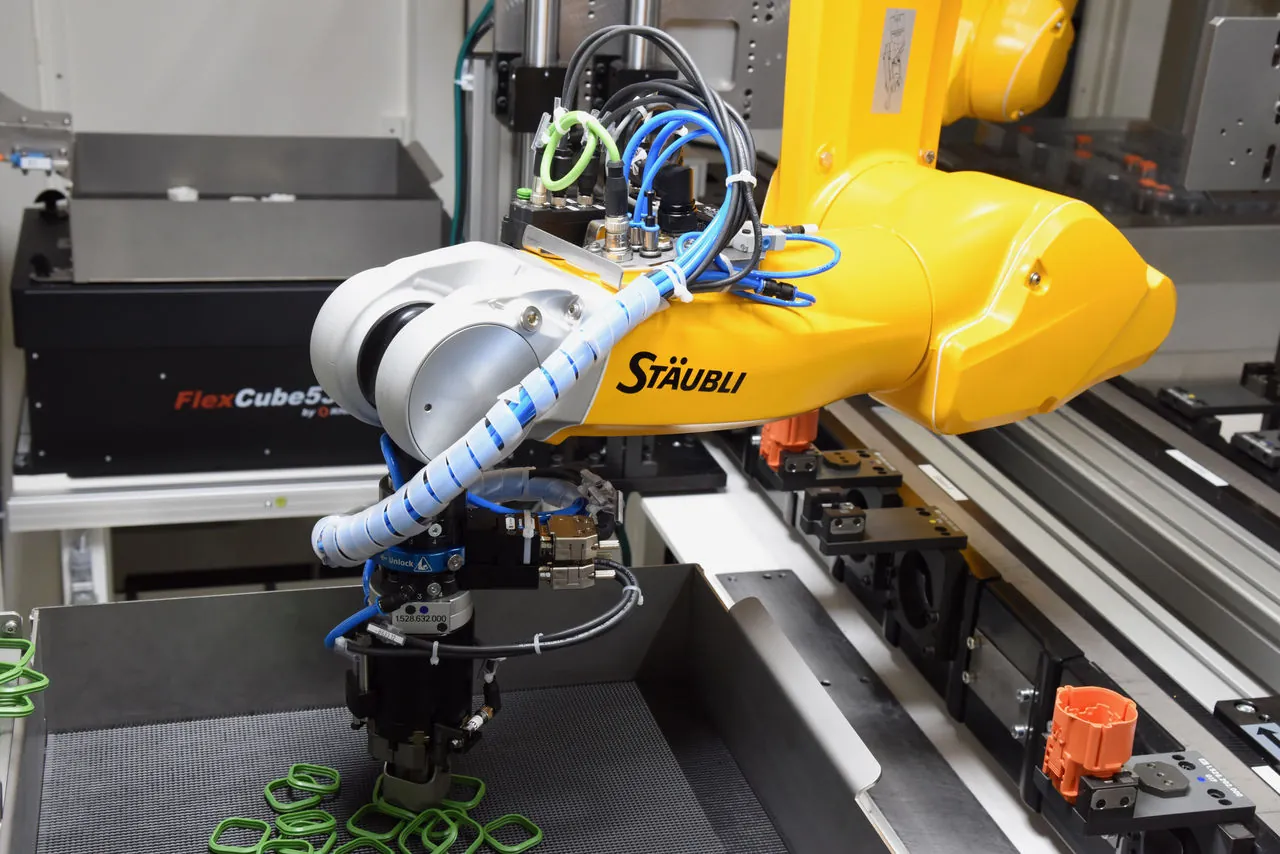
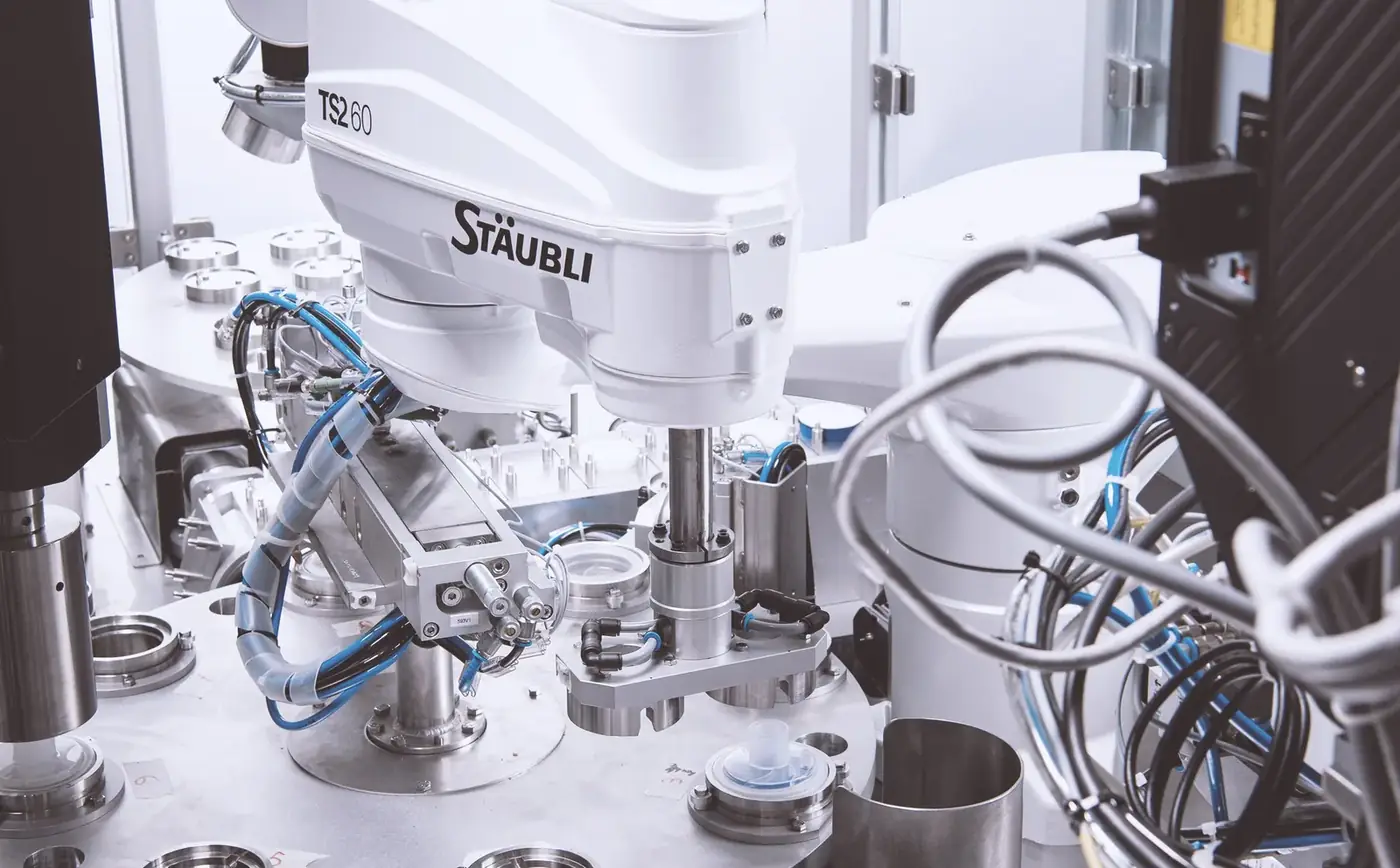
Robot assembly is the process that best showcases flexible manufacturing capabilities—from plugging connectors for 3C electronics, tightening bolts in automotive assemblies, to installing snap-fit appliances, assembly labor hours account for more than 30% of total manufacturing time. Unlike welding and handling, assembly requires both precision and force control: parts must align accurately, insert properly, and tighten securely—rigid assemblies that rely solely on positional control are prone to jamming and damage to parts.
Key points of application
Compiled from official brand application materials, source has been annotated.
Process validation, workstation solutions, programming and teach-in and production ramp-up support, and turnkey delivery of robot applications.
Learn more → Sales of new industrial robotsAuthorized-style sales of brand-new mainstream robots with selection support for new production lines and capacity expansion.
Learn more → Research and development of automation equipmentResearch, development, integration, and delivery of end-effectors, conveyor positioning, safety peripherals, and complete control systems.
Learn more → Research and development of algorithms and control systemsMotion planning, machine vision, and PLC/SCADA system development to address takt-time bottlenecks, accuracy, and data interconnection.
Learn more → Robot rentalShort-term rental, long-term rental and lease-to-own for in-stock models, long-term rental, and lease-to-purchase transfer, including transportation, installation, commissioning, and lease-term maintenance.
Learn more → Software and hardware upgrade servicesController retrofits, software and firmware upgrades, mechanical refurbishment, and safety upgrades restoring performance to older equipment.
Learn more → Maintenance and repairOn-site inspection, fault diagnosis and repair, and annual maintenance contracts covering 1,310 models from 21 brands.
Learn more → Used & in-stock robot salesWe buy back used robots and handle inspection, refurbishment and resale; every unit ships with inspection records and a warranty, and trade-ins can offset new purchases.
Learn more →Typical application scenarios for assembly automation
Below are representative assembly automation scenarios from the Henghuan team and industry practice (customer names are usually omitted), structured by "Background Pain Points → Implementation Plans → Implementation Results" for enterprises with similar needs to reference and evaluate.
| Scene | Background and pain points | Implementation plan | Implementation results |
|---|---|---|---|
| A laptop supporting company in Chongqing · Connector assembly line | Connector assembly precision is required (fit tolerance ±0.05mm), manual sorting and alignment efficiency is low, and quality fluctuation is large. | SCARA is equipped with a visual guidance and force-controlled press-fitting module, with the connector vibrating plate automatically feeding and orienting, and the press-pull force-displacement curve determined online. | Assembly cycle time is 1.8 seconds per piece, with a first-pass pass rate of over 99.5%. One line replaces 4 operators, reducing pressure damage to zero. |
| An auto parts factory in Chengdu · Subframe tightening station | The subframe has 24 tightening points divided into three torque levels. Manual tightening cannot provide traceable torque records, and OEM inspections fail standards. | The six-axis robot is equipped with a floating spindle and intelligent electric screwdriver, with three-stage torque and corner window monitoring. Tightening data is uploaded by piece to the MES system bound to the VIN. | 100% tightening pass rate, complete and traceable quality records, successfully passing OEM process audits, and shortening time per piece by 40%. |
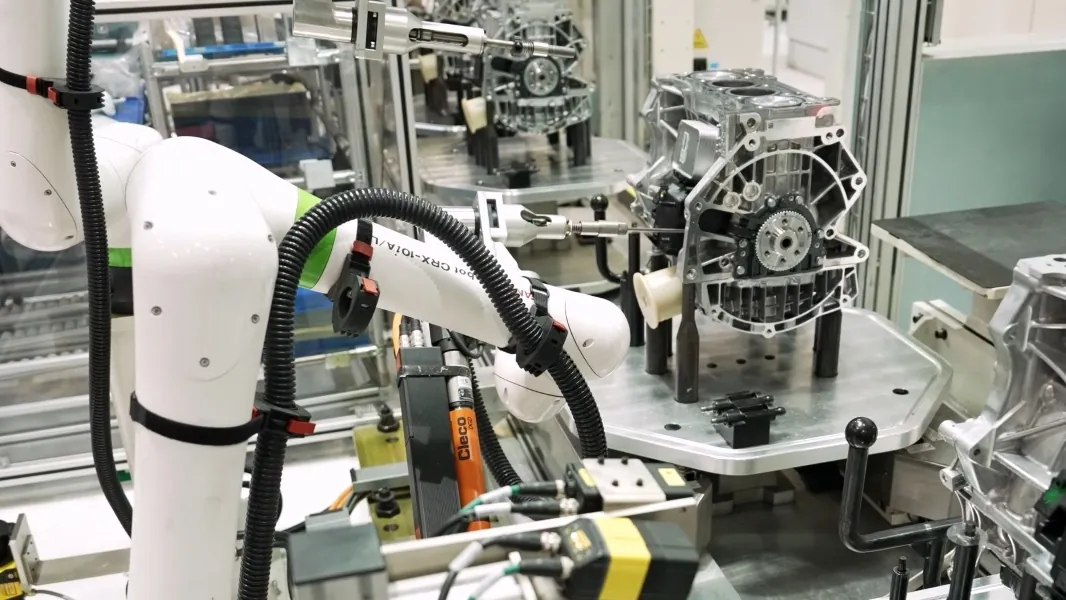
| A home appliance company in Mianyang · Collaborative arm mixed current assembly | More than 30 models are produced in mixed production, with small batches and frequent model changes, making the investment in traditional specialized machine automation solutions unrecoverable. | Two collaborative robotic arms handle compressor tightening and main control board installation, while flexible parts are still assembled manually, with automatic program switching by scanning product barcodes. | Change times have been reduced to under 10 minutes, assembly line staff have been reduced by one-third, and the payback period is about 16 months. |
Industries that commonly use this process
Click to view the overall robot application plan for the industry.
Assembly automation: Industry transition from "rigid special machines" to "flexible robots."
Assembly is the most complex step in manufacturing: grabbing, alignment, pressing, fastening, clamping, greasing, and inspection are often completed continuously within seconds. In the past, high-volume assembly relied on rigid special machines, while many varieties and small to medium-sized batches relied on manual labor; As force-controlled sensing, visual guidance, and flexible fixtures mature,Robot assembly is eating into the middle ground between the two— Variety switching relies on program recipes, rhythm through overlapping optimization, and quality through process monitoring.
The technical watershed for assembly robots is "precision + perception": repeatability ±0.02mm-level, meeting most pressing and fastening requirements; For situations requiring assembly clearance compensation (shaft hole assembly, gear meshing), six-dimensional force control or visual servo must be introduced; relying on "force" can damage the workpiece.
| Assembly process | Core technology | Quality control points | Commonly used at the end |
|---|---|---|---|
| Press-fitting (bearings/bushings/pins) | Dual closed-loop monitoring of force-displacement | Pressing the curve window is determined; if the limit is exceeded, stop immediately | Servo indenter + force sensor |
| Threaded locking | Torque/angle dual monitoring | Torque accuracy ±3%, missing lock and incorrect lock detection | Multi-axis lock attachment head / handheld automatic nail feeding |
| Snap-in and plug-in | Smooth control + posture fine-tuning | Insertion force mutation monitoring and confirmation of the locked signal in place | Flexible finger/RCC compliance device |
| Grease application and sealing assembly | Quantitative coating + trajectory control | Glue Consistency CV≤5% | Metering pump + glued valve |
Design logic of flexible assembly production lines
Standardization:The upper limit of assembly accuracy is determined by the positioning reference—the reference system for workpiece trays, robot grippers, and press-fitting fixtures must be designed in a closed-loop manner, and any reference drift in any link will accumulate to the assembly gap.
Feed Beat-Matching:The bottleneck for assembly robots often lies in feeding: the feeding rhythm and stability of vibratory plates, silos, and trays must match the main machine, feeding stuck content accounts for more than half of the flexible assembly line downtime, and reliability verification of the feeding solution cannot be neglected.
Data Traceability:Each product's press-fit curve, torque value, and test data are bound to the product code and uploaded to the MES — a mandatory requirement in the automotive and medical device industries, and also serves as a chain of evidence for ordinary manufacturing to handle customer complaints.
Human-Machine Division of Labor:Complex judgment and flexible actions are left to humans, while repeated, high-precision actions are left to robots; Collaborative robots co-station with humans in small assembly scenarios, occupying little space and deploying quickly, making them a practical choice for multi-variety, small-batch applications.
Craft Q&A
The assembly gap is only a few threads—can the robot fit them in?
By situation: gap ≥0.1mm with chamfer guidance, high-precision robots + precision positioning tooling can be assembled directly; Smaller gaps or no chamfers require six-dimensional force-controlled search algorithms or visual servo guidance. We have corresponding process solutions and successful cases, so we first conduct sample verification.
How to switch between multi-variety mixed lines?
Formulated programs + quick end change: Variety recognition (scanning code or vision) automatically adjusts the program, and end quick change is completed within 30 seconds; The fixture design is compatible with multiple positioning reference types. Write the model change time indicators into the plan acceptance standards.
Can the locked data be integrated with our MES?
Yes. Smart electric screwdriver/servo tightening shafts generally support Open Protocol, Profinet, and EtherNet/IP communication. Torque and angle curves are uploaded in real time and can be connected according to your MES interface protocol. If MES is not available, we provide a local database + Kanban solution.
In-depth analysis of assembly processes
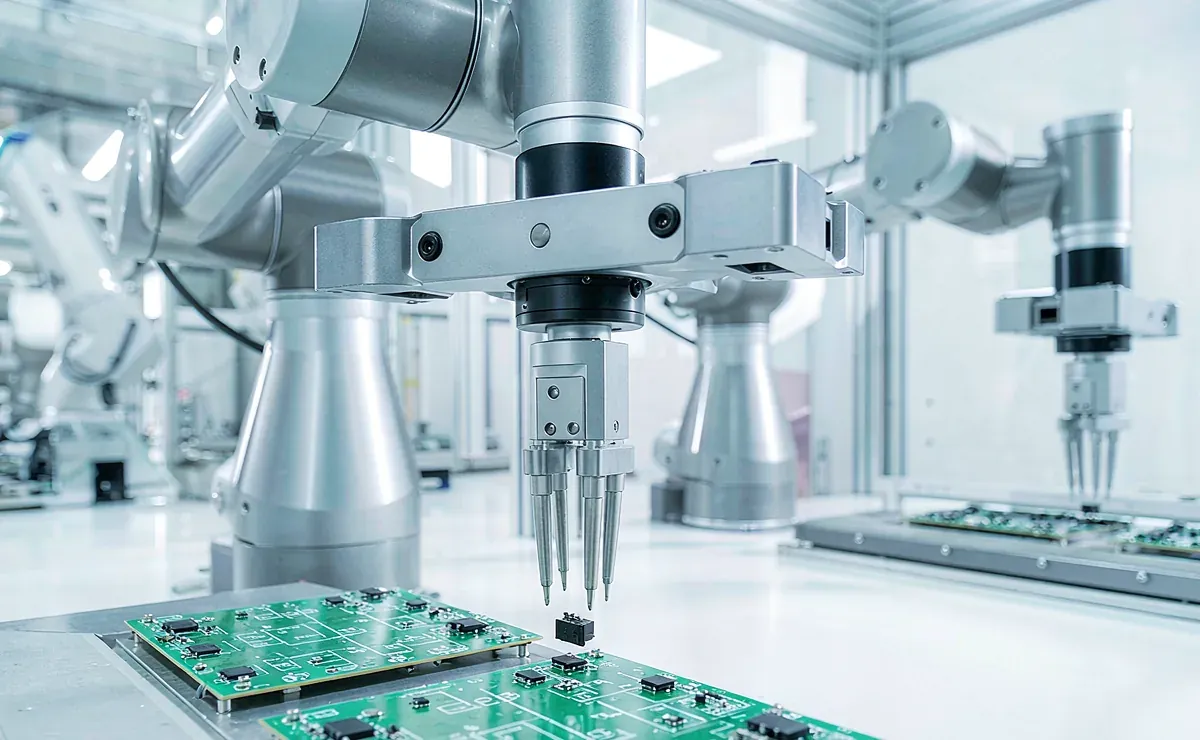
The technological watershed for assembly automation is force sensing: six-axis force sensors (resolution up to 0.1N level) enable robots to perform search-insertion assembly, and the tolerance for incoming material position tolerances has been relaxed from ±0.02mm to ±0.2mm; Intelligent electric screwdriver torque-corner monitoring, allowing traceability of the tightening curve of every screw; The architecture of visual guidance coarse positioning + force-guided precision assembly is currently the standard solution for precision assembly. SCARA and collaborative robotic arms quickly penetrate small to medium-batch multi-variety assembly scenarios due to their ease of use and low cost.
Henghuan provides comprehensive assembly process solutions for manufacturing enterprises in Southwest China: Likong assembly station design, multi-axis tightening systems, integration of vision and force sensing, assembly program development, as well as robot selection, programming training, and maintenance services for assembly robots.
The technological evolution of assembly automation and the Southwest market
Assembly automation shows three trends: First,Efforts to control the popularization of the people— The collaborative robotic arm joint has a built-in torque sensor, enabling force control assembly without the need for external six-axis force sensors, significantly reducing deployment costs and significantly lowering the automation threshold for small and medium-sized assembly scenarios; SecondFlexible tightening——The intelligent electric screwdriver supports multi-program groups, torque-corner window monitoring, and data upload. Different tightening strategies on the mixed-flow assembly line can be automatically switched by scanning a QR code, enabling zero model changeovers. Third,Human-machine hybrid wiring— Complex flexible parts such as wiring harnesses and soft trims are still assembled manually, while robots undertake precise, heavy-load, and repetitive processes. The optimal balance of overall efficiency and investment is replacing the obsession with full automation.
From an industry distribution perspective, 3C electronic assembly is the main battleground for SCARA and small six-axis models, while automotive parts assembly mainly uses medium and heavy load six-axis + Likong, and the fastest penetration is in the home appliance assembly line with collaborative robotic arms. In Southwest China, demand for automation assembly in notebook supporting (Chongqing) and display and smart hardware industrial clusters is steadily increasing, and the transformation of assembly lines by traditional automotive and equipment companies is also accelerating.
Key engineering points and operation and maintenance management of assembly workstations
There are three common failure modes when installing an assembly station: First,Couldn't match— Visual calibration drift or fixture positioning pin wear causing assembly failure rates to rise; a periodic hand-eye calibration verification system must be established (it is recommended to use standard parts weekly for recheck); SecondScrews are unqualified— Threaded hole deviation causes thread slippage and floating locks; the floating spindle (Z-direction floating mechanism) combined with torque-corner window monitoring can effectively intercept; Third,Press-fit sticking— If the pressure force is too high or the angle deviates to damage the part, force-displacement monitoring must be installed, and if a sudden force change is detected, a retraction alarm must be triggered immediately.
The core of the assembly station's operation and maintenance is calibration management: weekly hand-eye calibration inspections, monthly torque inspections of tightening tools (calibrated and archived with torque testers), and quarterly calibration of press-fit force sensors. Assembly programs and process parameters must be managed in a versioned manner—every modification of the change program, torque strategy, and press-fit curve should be traceable. Henghuan's assembly station maintenance contract includes all calibration items and data recording templates.
Need localization solutions for assembly processes?
Whether it's selecting new project solutions, upgrading production lines, or maintaining in-use equipment, Henghuan can provide third-party technical support for assembly applications. Please tell us about material specifications, production cycles, and the on-site environment, and we will provide targeted solution recommendations.
Contact Henghuan View all application processes