
Logistics, warehousing, and e-commerce
Industry Robot Application Solutions · 9 Brands Coverage · 4 types of typical processes
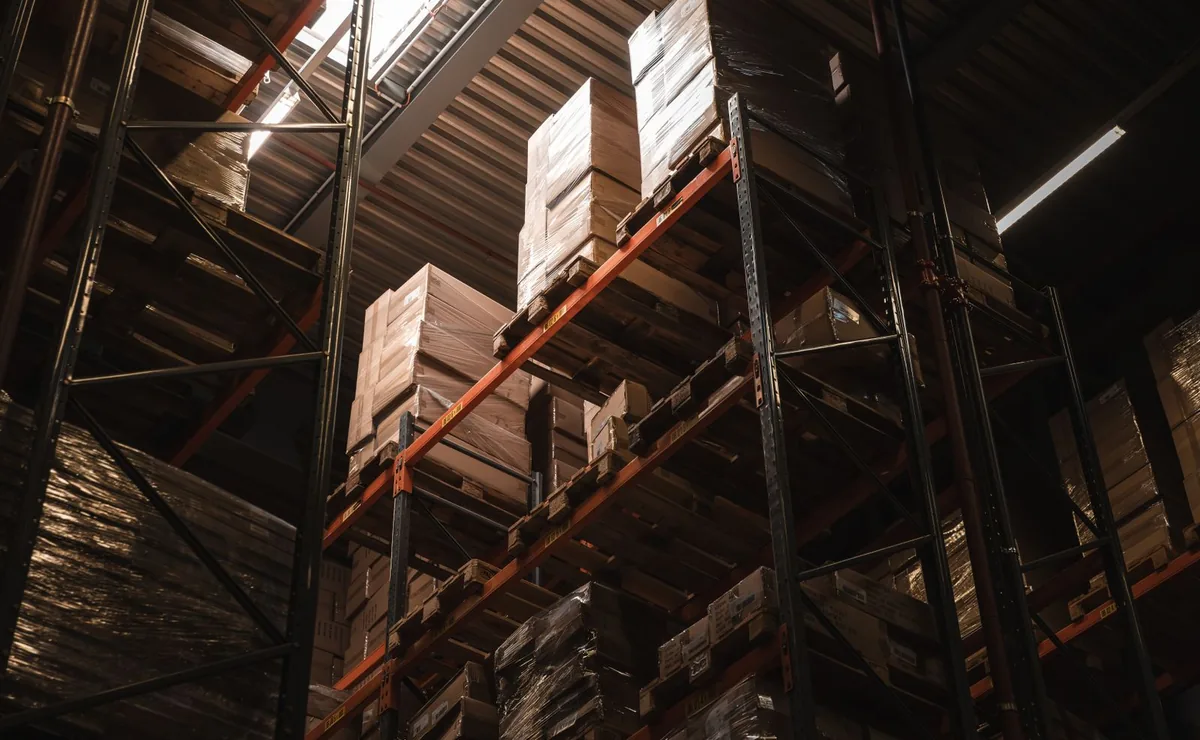
Applications of robots in logistics, warehousing, and e-commerce industries
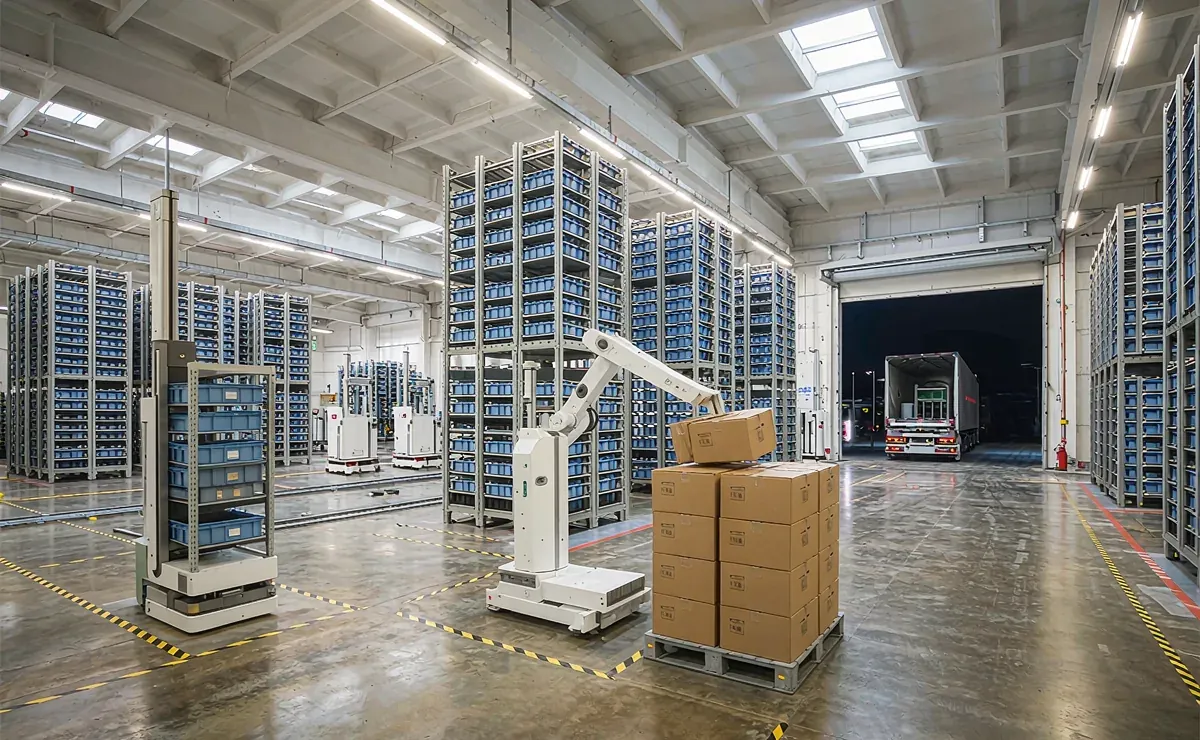
Robots in the logistics industry focus on palletizing, depalletizing, and sorting as core processes, with heavy-load models (FANUC M-410iC, KUKA KR QUANTEC pallet, Yaskawa MPL series) as the main force; Order sorting in e-commerce warehouses uses high-speed Delta and SCARA. In this industry, equipment operates continuously and rhythmically at a tight pace, and Henghuan offers preventive maintenance plans and rapid fault response.
Typical automated processes
Common robotic processes in this industry—click to view key application points, customer cases, and applicable brands.
Optimize your end-of-line operations and boost productivity with collaborative robotic palletizing solutions. No matter how the product changes, repetitive tasks can be performed consistently and accurately. …
View process details → SortingSorting involves first grabbing small parts or food that move at high speed on a conveyor belt before sorting them, requiring high-speed movement. Kawasaki's YF series sorting robots can achieve high-precision, high-speed movements. It can be combined with the visuals developed by our company...
View process details → Material handlingReducing labor costs through automation Material Handling (MH) utilizes the simple capabilities of robots to transport objects. By fitting the robot with the appropriate end-of-arm tooling (for example, a gripper), the robot can efficiently and accurately transfer products from a position...
View process details → GraspRobotic grasping is an automated program that uses a robotic arm to fully control an object. Kawasaki leverages robotic products to reduce manufacturing cycle times and offer greater automation flexibility. …
View process details →Covering branded equipment
Robot brands within Henghuan's service scope that have practical applications in logistics, warehousing, and e-commerce industries. Click to enter the brand page to view series and model specifications.
 ABB45 models
 Yaskawa85 models
 Kawasaki75 models
 KUKA456 models
 Stäubli30 models
 Universal Robots9 models
 Comau30 models
 JAKA19 models
 AUBO24 models
Henghuan can provide services for the logistics, warehousing, and e-commerce industries
All six core businesses can be procured independently or in combination.
Process validation, workstation solutions, programming and teach-in and production ramp-up support, and turnkey delivery of robot applications.
Learn more → Sales of new industrial robotsAuthorized-style sales of brand-new mainstream robots with selection support for new production lines and capacity expansion.
Learn more → Research and development of automation equipmentResearch, development, integration, and delivery of end-effectors, conveyor positioning, safety peripherals, and complete control systems.
Learn more → Research and development of algorithms and control systemsMotion planning, machine vision, and PLC/SCADA system development to address takt-time bottlenecks, accuracy, and data interconnection.
Learn more → Robot rentalShort-term rental, long-term rental and lease-to-own for in-stock models, long-term rental, and lease-to-purchase transfer, including transportation, installation, commissioning, and lease-term maintenance.
Learn more → Software and hardware upgrade servicesController retrofits, software and firmware upgrades, mechanical refurbishment, and safety upgrades restoring performance to older equipment.
Learn more → Maintenance and repairOn-site inspection, fault diagnosis and repair, and annual maintenance contracts covering 1,310 models from 21 brands.
Learn more → Used & in-stock robot salesWe buy back used robots and handle inspection, refurbishment and resale; every unit ships with inspection records and a warranty, and trade-ins can offset new purchases.
Learn more →Industry Status: E-commerce-driven warehouse automation is expanding downward
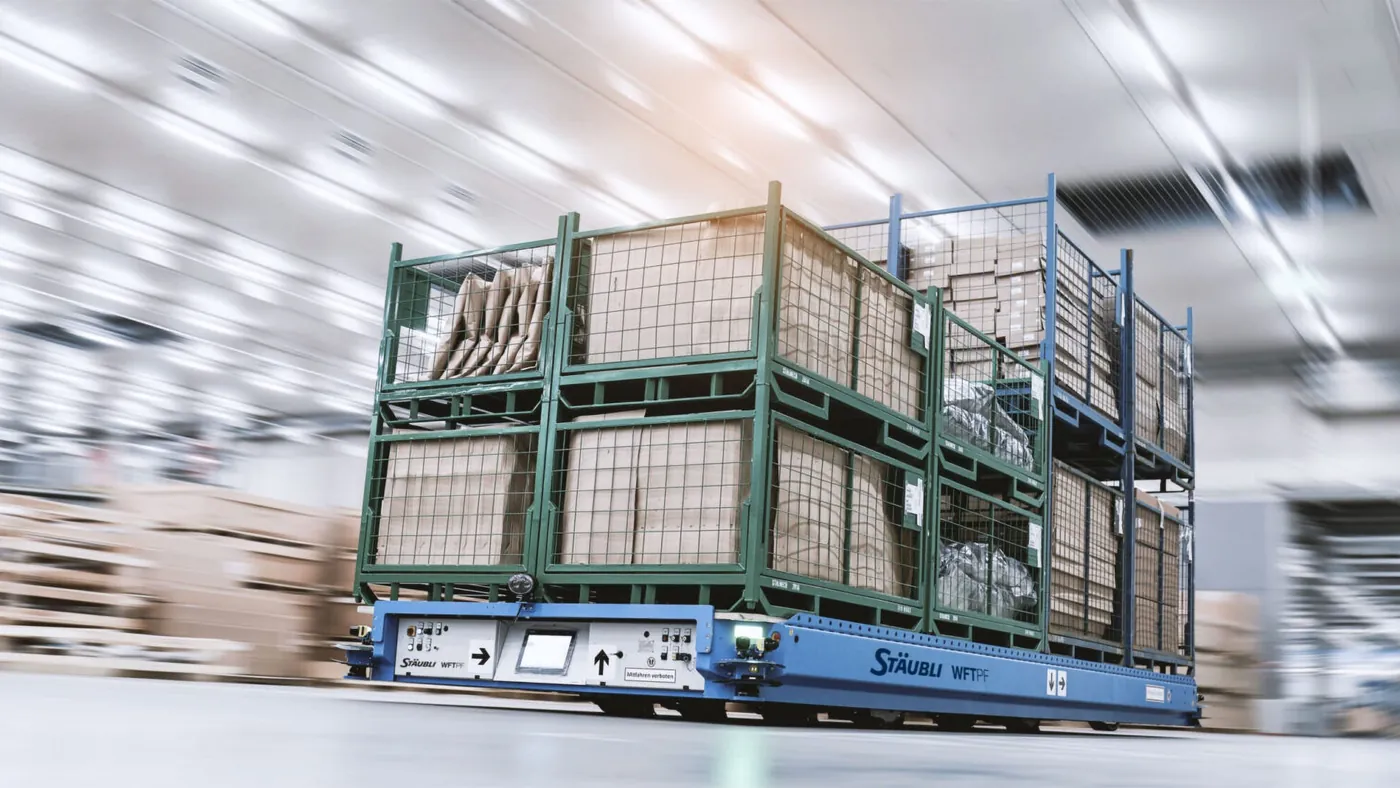
Logistics warehousing automation has gone through a downward transition from "exclusive to large distribution centers" to "widespread adoption of small and medium-sized warehouses": continuous growth in express delivery volume (annual hundreds of billions of parcels), peak elastic demand during e-commerce promotions, and rising warehouse rent and labor costs, all jointly driving the penetration of robots in sorting, palletizing, and loading/unloading processes. In terms of technical landscape,Goods-to-Person System(AMR lifting racks + picking workstations),Parcel sorting line(Cross belt/balance wheel + reception table),Robotic arm unstacking(Intelligent Grabbing of Hybrid SKUs) Three main lines are developing in parallel.
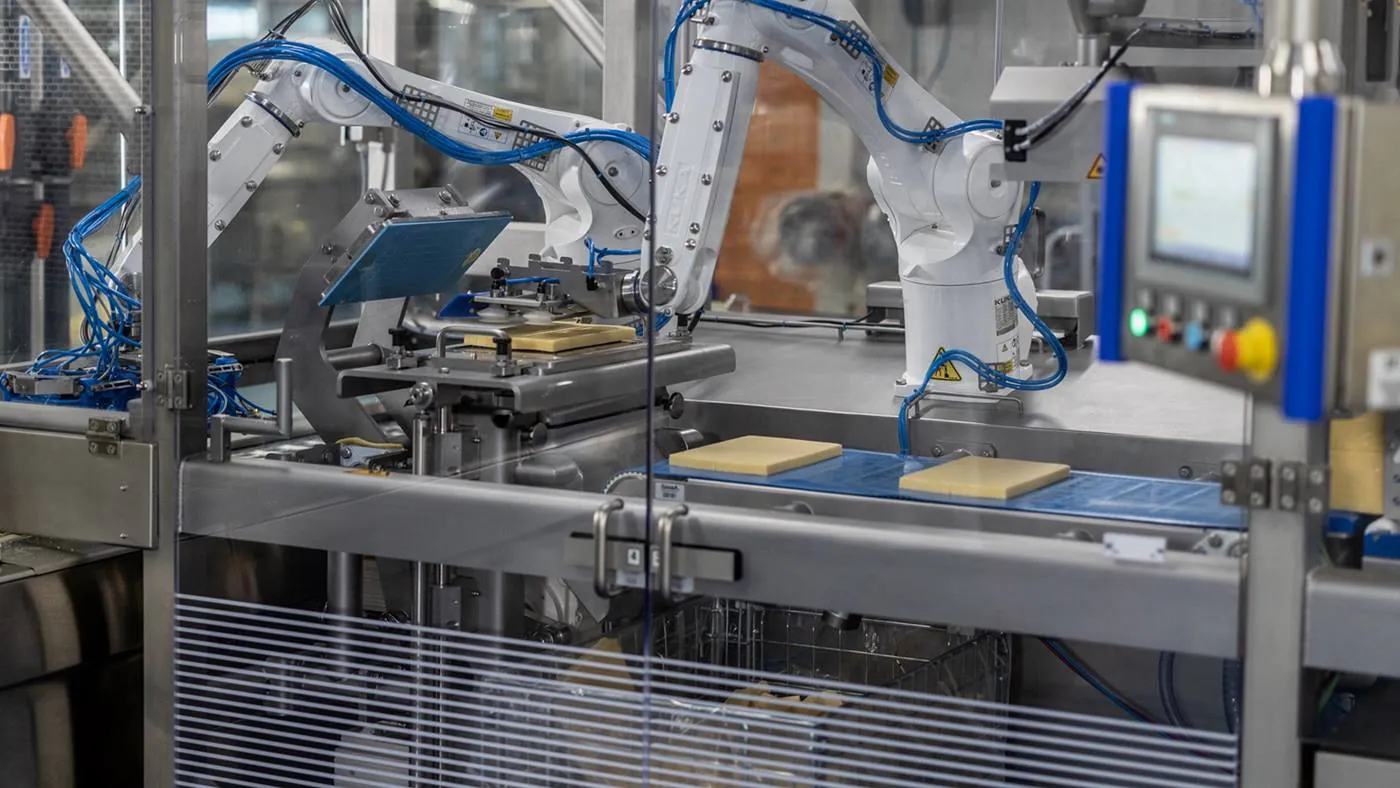
Logistics infrastructure in Southwest China is catching up: the construction of the Chengdu-Chongqing national logistics hub and the rollout of county-level e-commerce express co-distribution systems have shifted local warehousing automation demand from "whether it is fast enough" and "is it cost-effective enough." For equipment service providers, the characteristics of logistics scenarios are:Rhythm-sensitive, peak elasticity, mixed load— During major promotions, equipment must hold up while daily expenses must be evenly spread. This is precisely the value of leasing and flexible allocation.
| Link | Equipment type | Technical Specifications |
|---|---|---|
| Mixed SKU depalletizing | Six-axis + 3D vision + composite end-of-use | 600–1200 pieces/hour, recognition success rate ≥98% |
| Parcel supply and sorting | Delta/six-axis + visual scanning | Package beat time: 1–2 seconds/piece, code reading rate ≥99.9% |
| Pallet palletizing | Palletizing robot + winding and online operation | 20–40 tors/hour (stacking type) |
| Loading and unloading vehicles | Telescopic belt conveyor + palletizing robot | There are two options: autonomous navigation inside the carriage and fixed systems |
| Goods-to-person picking | AMR + picking workstation + robotic arm assistance | Picking efficiency: 300–500 pieces/hour/station |
| Moving large appliances and furniture | Heavy-duty six-axis + custom fixtures | Load capacity 100–500kg, anti-impact control |
Eight major business areas in the logistics industry
Research and development of algorithms and control systemsCore competitiveness: 3D visual recognition and grasping planning for hybrid SKUs, scheduling integration with WCS/WMS systems, and multi-device collaboration (AMR + robotic arm + conveyor line) paths and task allocation—logistics automation is half hardware and half software algorithms. Our R&D line covers vision algorithms and scheduling system development.
Robot rentalPerfectly matching peak and valley fluctuations: during major promotions (Double 11/618/New Year Goods Festival), palletizing and sorting equipment is rented in the first two months and returned after the promotion; For express delivery outlets and e-commerce warehouses, leasing turns peak equipment investment into monthly operating expenses, significantly improving asset efficiency.
Maintenance and repairEnsuring timely fulfillment: Logistics equipment downtime directly translates into delayed fulfillment and compensation. 7×24 response and spare parts pre-processing (key spare parts consignment customer warehouse) is the industry standard—our maintenance contracts are customized according to logistics customers' SLA requirements, with special preventive maintenance before peak seasons.
Industry Q&A
What is the success rate of depalletizing mixed SKUs?
Recognition and grabbing success rate for standard box types (standard cartons/turnover boxes) ≥99%; Soft packaging (express bags), shaped parts, and transparent film wrapping are the main challenges, with an overall success rate of 95%–98% in the industry. Our approach is "automation as the main + manual backup": identifying low-confidence parcels and transferring them to manual workstations, optimizing anomaly statistics and returns, not pursuing 100% nominal efficiency but overall system efficiency.
Will warehouse renovations be halted?
Phased implementation by zone: first renovate one operation area and open it up, then rotate and advance the entire warehouse without stopping; Conveyor lines and racks are installed at night or off-season windows. Before the renovation, a "Phased Implementation and Rollback Plan" was issued, with each stage having independent acceptance and rollback points.
Can the equipment scheduling system be integrated with our WMS?
Yes. Mainstream WMS (self-developed/commercial) all have API or database interfaces. WCS receives tasks by order batch and returns execution status; For customers without a WMS, we offer lightweight inventory and task management modules to get up and running, standardizing interfaces for future seamless upgrades.
Do logistics warehousing and e-commerce industry equipment require technical support?
Tell us your brand model, processes, and equipment status. Henghuan offers logistics, warehousing, and e-commerce robot maintenance, servicing, second-hand purchase, sales, and selection advice. Rooted in Yilong, focused on Sichuan and Chongqing, serving the vast Southwest.
Contact Henghuan View all industries