Research and development of automation equipment
Developed and delivered automation equipment for robot workstations: fixture ends, conveyor positioning, safety fences, and complete control systems.
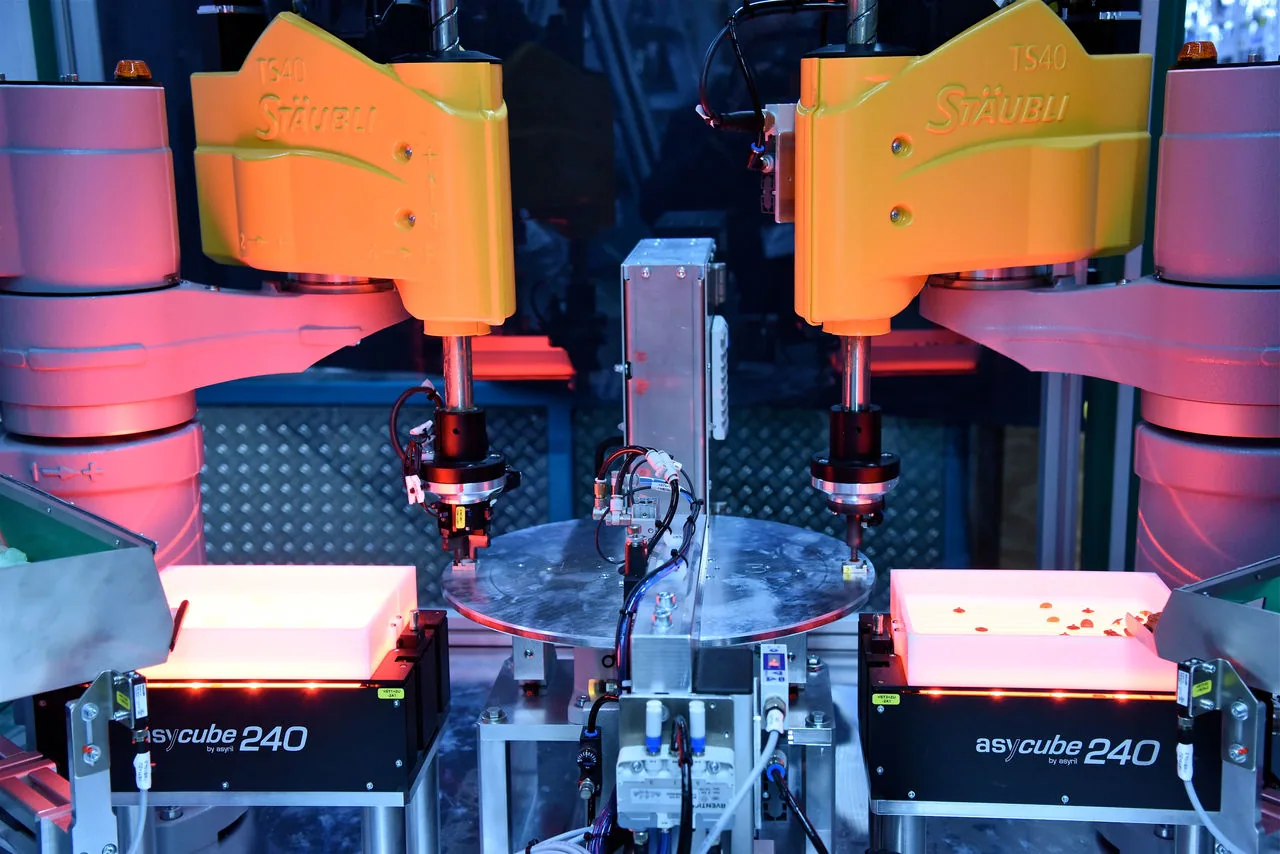
The robot itself is a standard product; what truly determines whether the production line works well is the surrounding automation equipment: whether the clamping is secure, the positioning is accurate, and the interlock with the main machine is reliable. We handle the R&D and processing of fixtures and end points ourselves, as well as integrated electrical control and commissioning of the entire line. We complete the team closed-loop from drawing, processing, assembly, to commissioning.
Scope of R&D delivery
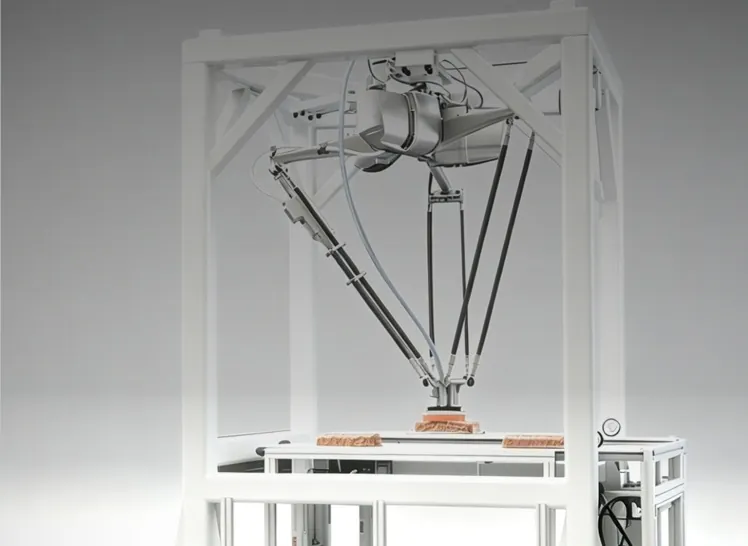
- Tooling fixtures and end effectors: pneumatic grippers, vacuum suction cups, magnetic attachment, quick-change devices, and specialized fixtures for welding/palletizing
- Conveying and positioning mechanisms: drum/belt conveying, lifting positioning, rotary indexing, trusses, and slides
- Safety and periphery: safety fences, light screens, door lock interlocks, audible and visual alarms, and emergency stop circuits
- Electrical control system: PLC program, HMI screen, frequency converter and servo commissioning, and robot IO/bus coordination
Three research directions
From workpiece drawings to finished fixtures, including gripping force verification and quick-change design.
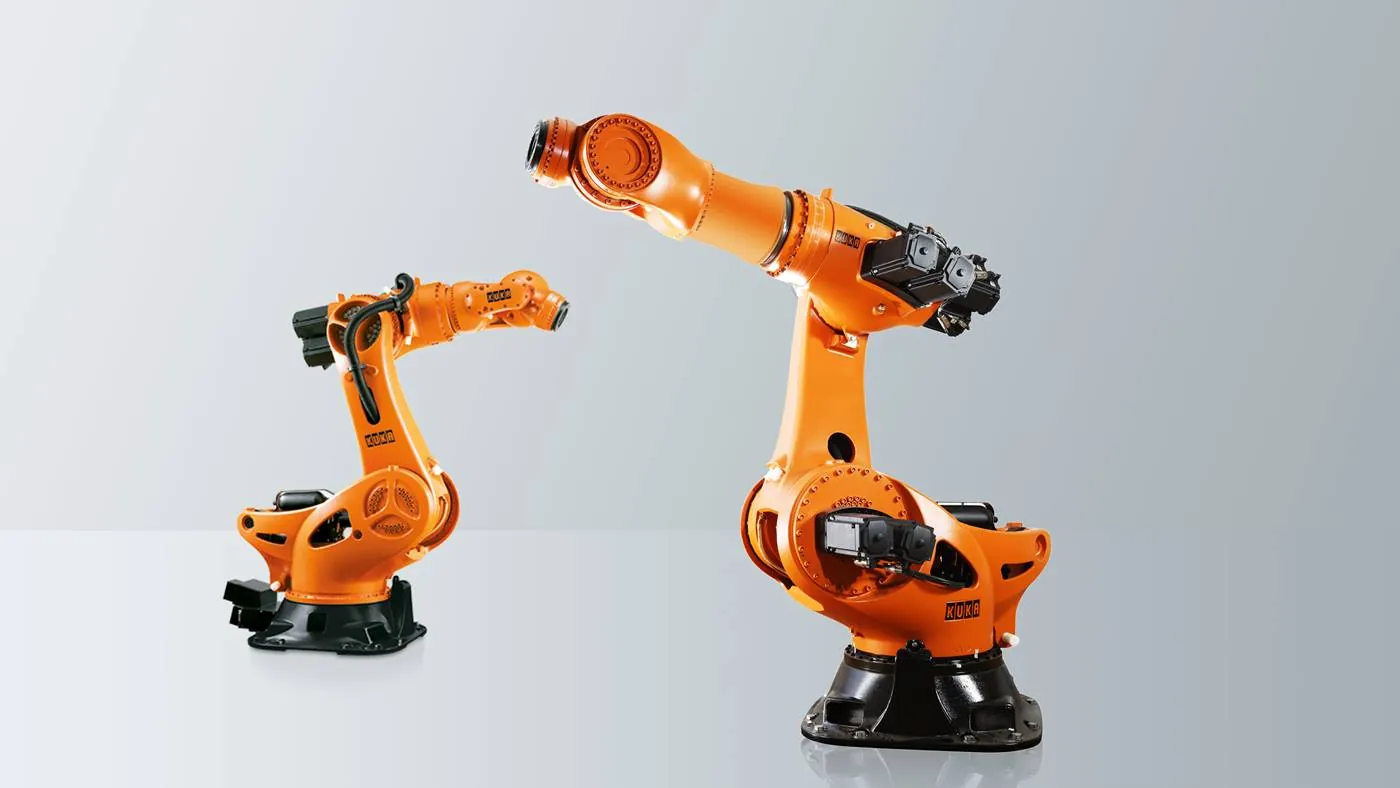
Loading and unloading, conveying, and interlocking with machine tools, injection molding machines, and stamping equipment.
View details → Development of non-standard specialized machinesNanchong Henghuan · Local deliveryCustom development of specialized equipment for tightening, labeling, inspection, and press-fitting.
View details →R&D process
- 01Requirements and workpiece analysis
Drawings, cycle time, production capacity, site conditions
- 02Plans and quotations
3D layout, key parts list, budget range
- 03Design and processing
Drawing output, outsourced processing, assembly, and in-house pre-adjustment
- 04On-site installation and commissioning
Online joint commissioning, beat verification, and operational training
- 05Quality Assurance and Iteration
Free adjustments during the warranty period, and upgrades possible for process changes
Industry Status: The R&D capability of non-standard automation determines the depth of integration
Standard robots address "general actions," but many of the processes on real production lines are non-standard: reliable gripping of irregular parts, multi-station beat matching, collaboration between specialized machines and robots, and digital transformation of old equipment. These demands lack ready-made shelf products, which tests the marketMechanical design, electrical control, and process understanding are integrated into oneR&D capabilities.
There are three main industry trends currently: First,End-effector is being refined— With the popularization of collaborative robots and flexible production lines, fixtures have evolved from "clamping" to "clamping accurately, quick replacement, and surface safety"; SecondProduction-level integration— Single-station automation is evolving from full-line logistics and information flow integration, with interlock designs for robots and conveyor lines, warehouses, AGVs, and MES becoming standard; Third,Specialized machines replace purely manual workstations— For many processes, using specialized machines is more economical than using robots; the key is to identify "where robots should be used, where dedicated machines should be used, and where human-machine mixed" should be used.
| Research and development direction | Capability boundaries | Typical project examples |
|---|---|---|
| Fixtures and End Effectors (EOAT) | Design and manufacturing of vacuum/pneumatic/electric/magnetic grippers, flexible fingers, quick-change devices, and force-controlled terminals | Stress-free gripping for easily deforming sheet metal parts, quick-change ends for multi-variety mixed-line production, and heat-resistant grippers for high-temperature castings |
| Production line integration and logistics linkage | Interlock design and overall control of robots with conveyor lines, positioners, silos, AGVs, and vertical warehouses | Centralized loading and unloading, palletizing-winding-warehouse wiring, and multi-station cycle balance modification for machine tool clusters |
| Development of non-standard specialized machines | Specialized equipment for single processes: press-mounting, inspection, coating, fastening, and visual sorting | Bearing quantitative pressing machines, automatic sealing ring coating machines, and multi-axis linkage screw locking machines |
R&D process: a seven-step closed loop from requirement clarification to batch delivery
(1) Clarification of requirements:Translate "want automation" into quantifiable technical metrics—cycle time, precision, pass rate, changeover time, footprint, budget range. Unclear demand is the primary reason for R&D projects to spiral out of control, and we won't skip this step.
(2) Scheme design and simulation:Three-dimensional layout, mechanical solutions, and electrical architecture are carried out simultaneously; Key mechanisms are simulated for motion and beat simulation, but interference and bottlenecks are exposed during the drawing stage and only discovered on site.
(3) Design Review:Internal reviews focus on three points—whether rigidity is sufficient, inconvenience for maintenance providers, and whether costs are over-designed. The client reviews and confirms the plan is frozen, after which the process is changed through a written process.
(4) Manufacturing and Assembly:Outsourced machining parts + self-assembly, standard parts preferred from mature supply chains; Photos and archives are taken during assembly, and key dimensional inspection records are handed over with the equipment.
(5) In-house Pre-Acceptance (FAT):Equipment is continuously tested at our site, with customers present or video witnesses; If the pre-acceptance fails, the factory will not leave the factory, avoiding passing commissioning costs onto the customer's site.
(6) On-site Installation and Joint Commissioning (SAT):Integration with existing production lines, signal interlocking, safety testing, and trial production; Closed loops item by item according to the problem list.
(7) Document handover and training:Complete sets of mechanical drawings, electrical schematics, IO sheets, program source codes, spare parts lists, and operation and maintenance manuals are handed over, training customers until they can independently complete daily maintenance and handle first-level faults.
Quality discipline in R&D projects
- Key mechanism rigidity check: The fixture's deformation under maximum load is controlled within one-third of the positioning tolerance
- Standard parts preferred: cylinders, guide rails, lead screws, etc. should be selected from mainstream brand models to ensure subsequent spare parts can be procured
- Open program handover: PLC and robot programs are delivered with annotated source code, without encryption or locking to customer devices
- Safety compliance: Safety circuits, protective fences, and emergency stop layouts are executed according to GB/T 36008 / ISO 10218, with test records kept
- After-sales Commitment: Free repairs for non-human faults within 6 months of delivery, lifetime provision of spare parts and technical support
Frequently Asked Questions
What is the minimum order amount for non-standard R&D projects?
There are no hard barriers. A single set of fixtures starts at tens of thousands of yuan, and for dedicated machines, starting at over a hundred thousand yuan. Full-line integration is quoted according to the plan. For small projects, we also follow the full process, but the documentation is correspondingly streamlined.
How to estimate the R&D cycle?
Fixtures take 3–6 weeks, special machines 8–16 weeks, and production line integration takes 3–6 months. Provide a milestone schedule at signing; If the delay is confirmed in writing due to changes in requirements, the delay caused by our reasons will be liable for breach of contract according to the contract.
Will you provide the drawings and the program source code?
Grant. All project deliverables include mechanical drawings (PDF + editable format), electrical diagrams, PLC and robot program source code and comments. We don't make money by securing customer equipment; we win repeat purchases through delivery quality.
Once the equipment is ready, are you responsible for installation?
Responsible. After the FAT, our engineers install it on-site, conduct joint commissioning, and training, until SAT acceptance is passed. The Sichuan-Chongqing installation team is locally dispatched, making travel costs far lower than those of coastal integrators.
Tell us your production line requirements
Process, cycle, budget, site conditions—the more specific you are, the more executable the plan. Local teams in Nanchong will be coordinated, and on-site inspections will be available in Sichuan, Chongqing, Yunnan, and Guizhou.
Contact usView all services