
Grasp
Industrial robot grasping process: application points, process essentials, and practical cases
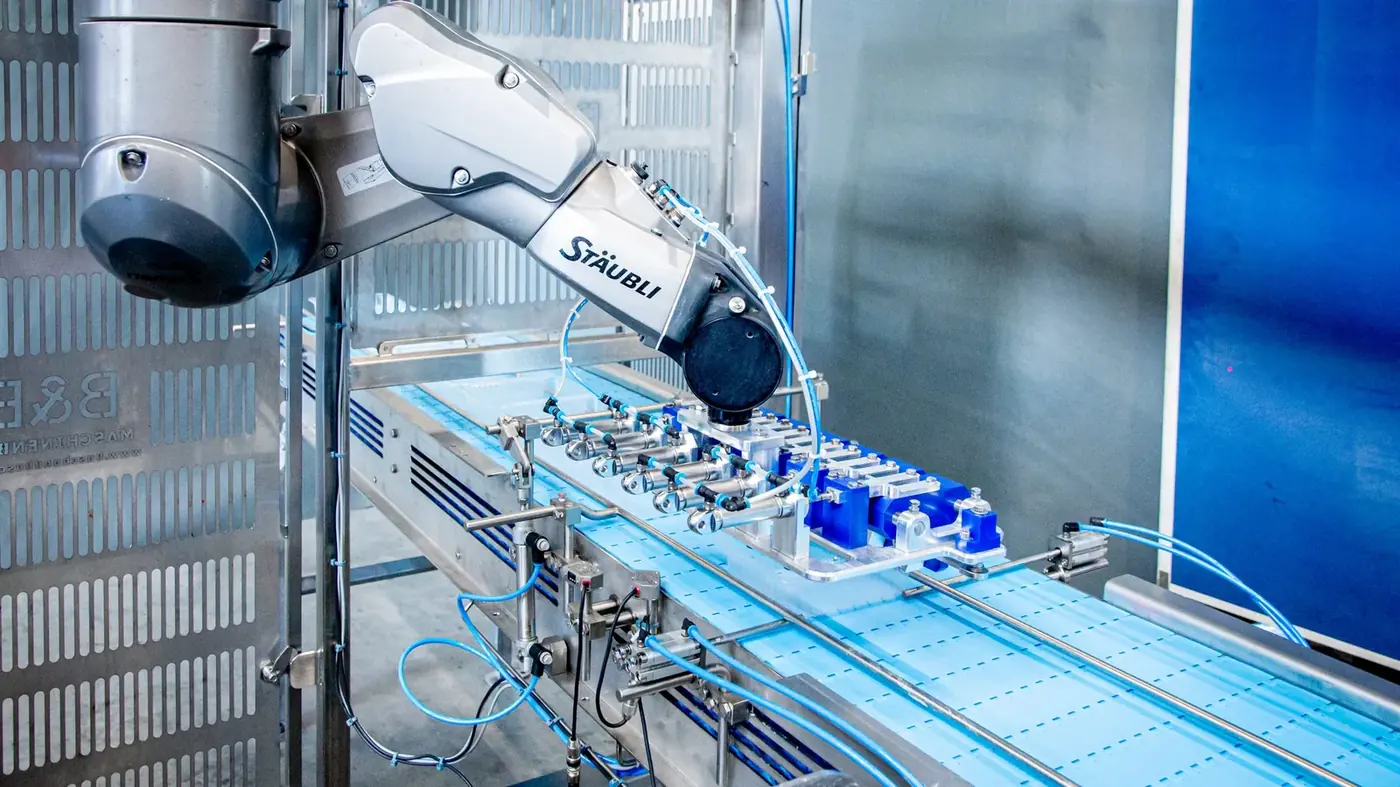
Application Overview
Grabbing is the last centimeter in all handling, sorting, and unloading applications—whether a robot can stably pick up and lower workpieces depends on the design of the end effector (EOAT). Industry experience shows that about 60% of handling automation project failures stem from improper terminal selection and design, not issues with the robot itself. The design level of the grasping process directly determines the success rate of the entire automated workstation.
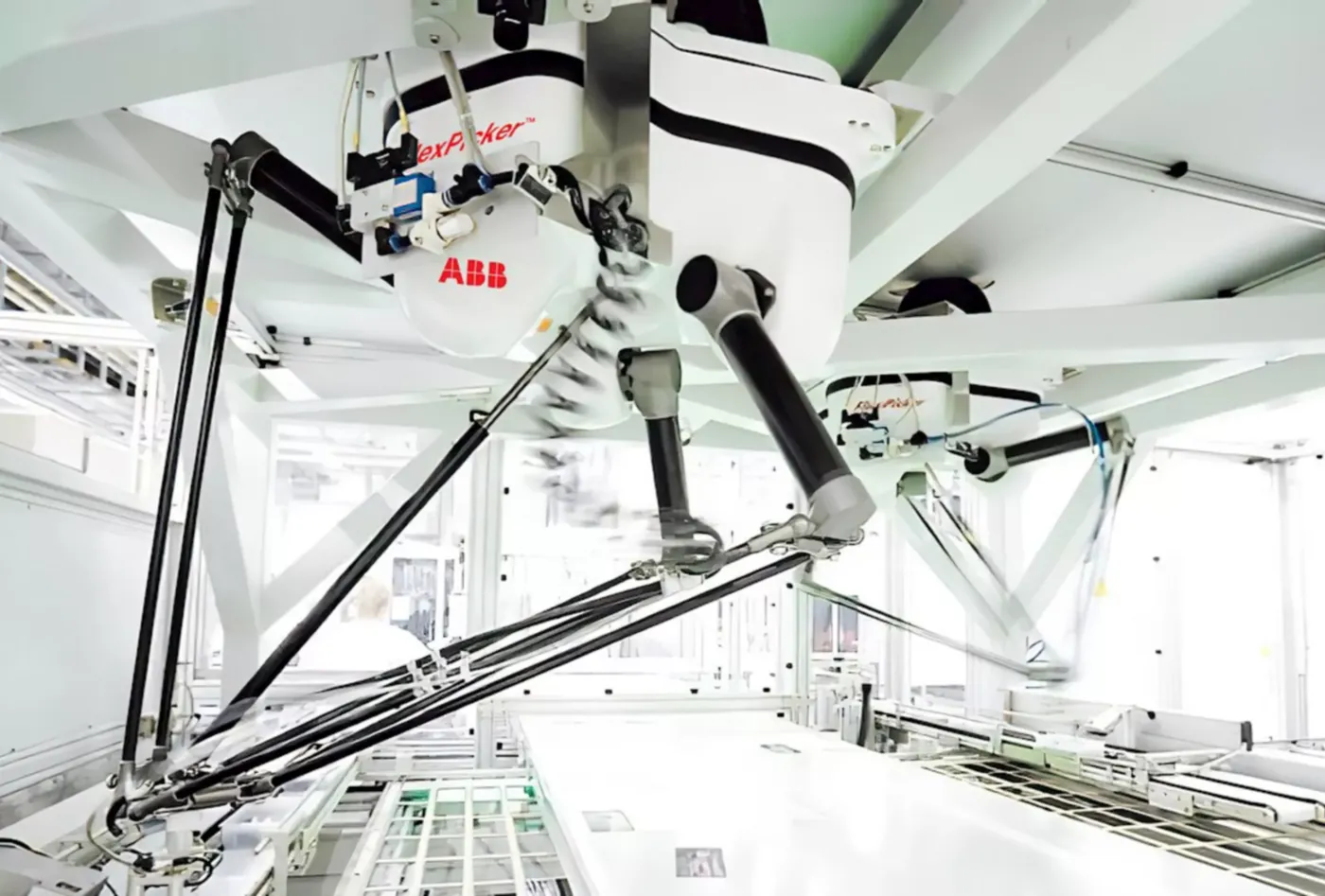
Key points of application
Compiled from official brand application materials, source has been annotated.
Process validation, workstation solutions, programming and teach-in and production ramp-up support, and turnkey delivery of robot applications.
Learn more → Sales of new industrial robotsAuthorized-style sales of brand-new mainstream robots with selection support for new production lines and capacity expansion.
Learn more → Research and development of automation equipmentResearch, development, integration, and delivery of end-effectors, conveyor positioning, safety peripherals, and complete control systems.
Learn more → Research and development of algorithms and control systemsMotion planning, machine vision, and PLC/SCADA system development to address takt-time bottlenecks, accuracy, and data interconnection.
Learn more → Robot rentalShort-term rental, long-term rental and lease-to-own for in-stock models, long-term rental, and lease-to-purchase transfer, including transportation, installation, commissioning, and lease-term maintenance.
Learn more → Software and hardware upgrade servicesController retrofits, software and firmware upgrades, mechanical refurbishment, and safety upgrades restoring performance to older equipment.
Learn more → Maintenance and repairOn-site inspection, fault diagnosis and repair, and annual maintenance contracts covering 1,310 models from 21 brands.
Learn more → Used & in-stock robot salesWe buy back used robots and handle inspection, refurbishment and resale; every unit ships with inspection records and a warranty, and trade-ins can offset new purchases.
Learn more →Capture typical automation application scenarios
Below are representative scraping automation scenarios from the Henghuan team and industry practice (client names are usually omitted), structured by "Background Pain Points → Implementation Plan → Implementation Results" for enterprises with similar needs to reference and evaluate.
| Scene | Background and pain points | Implementation plan | Implementation results |
|---|---|---|---|
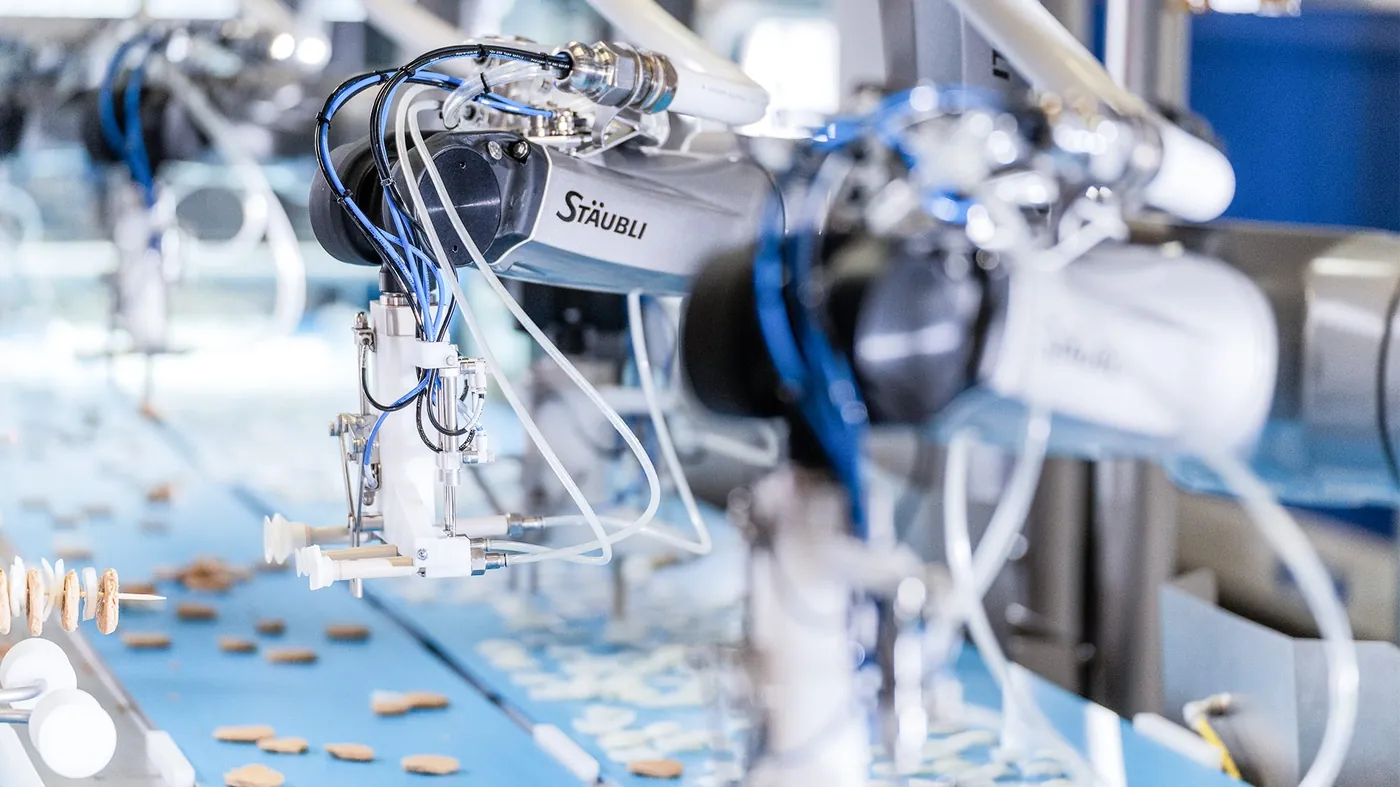
| A food factory in Chengdu · Sorting ingredients for bagged bread | Bagged bread is easily deformed and damaged, manual sorting is slow, and there are risks of hygiene contact. | The Delta robot is equipped with a zoned vacuum suction cup array and visual positioning, with a gentle handling and placement trajectory plan, using food-grade material suction cups. | Sorting speed is 120 pieces per minute, with a breakage rate below 0.3%. After passing the food production hygiene audit, the material sorting workstation reduced 3 people. |
| A stamping factory in Chongqing · Sheet material feeding prevents double sheeting | 1.5m ×0.8m stamping plate feeding relies on cranes and manual assistance, posing safety risks; occasional double-sheet feeding damages the mold. | The six-axis robot is equipped with a zoned magnetic end, and the single-sheet detection sensor (magnetic field characteristic changes during double sheets) automatically intercepts and interlocks with the press signal. | The feeding station is unmanned, double sheet errors are reduced to zero, and the cycle is stable to match the press with 8 pieces per minute, preventing mold damage accidents. |
| A liquor company in Luzhou · Upgrading the end of the packaging line bottle grab | The existing packaging line gripper design is unreasonable, with a glass bottle damage rate of about 1.2%, and frequent shutdowns to clean broken glass. | Redesigned flexible finger pads and clamping force control parameters, added visual detection for bottle breakage and automatic rejection logic. | The damage rate has dropped below 0.2%, the overall efficiency of the production line has improved by about 8 percentage points, and the renovation investment has been less than 100,000 yuan. |
Industries that commonly use this process
Click to view the overall robot application plan for the industry.
Grasping technology: The combined art of end-effectors and perception
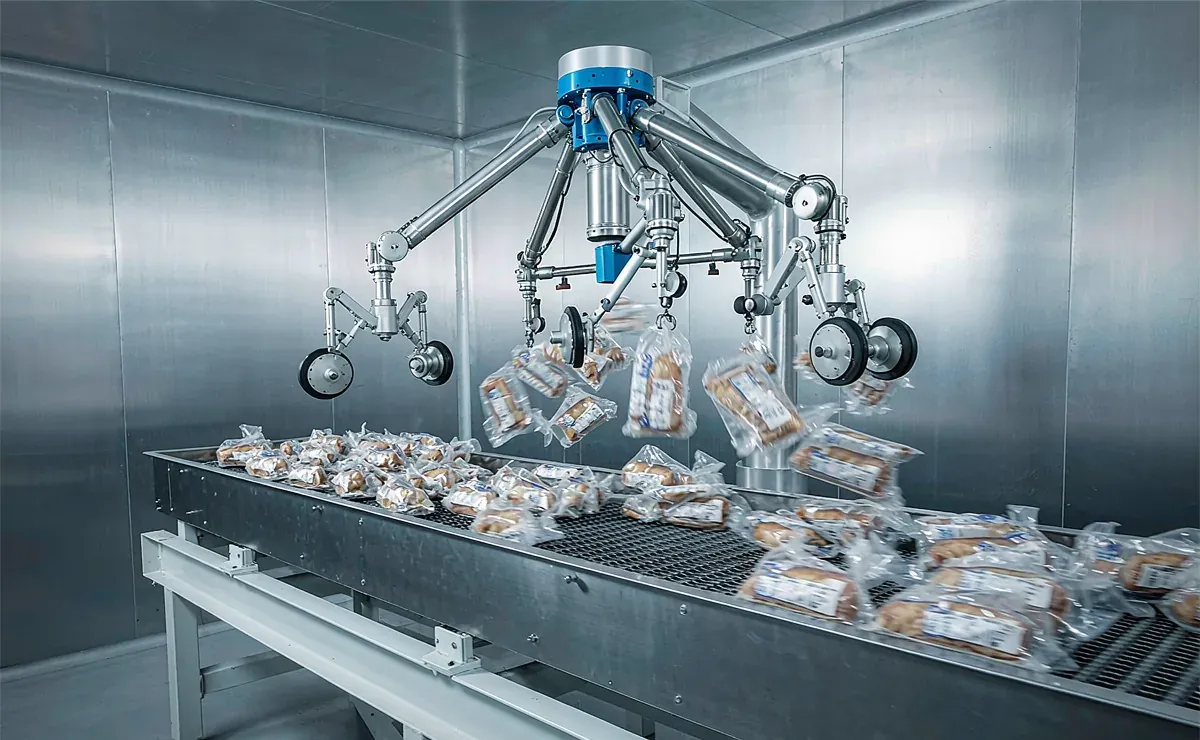
Grasping/Picking is the underlying capability for all handling, sorting, and assembly applications, and its reliability is determined by three key factors:End effector(Contact method with workpiece),Perception system(Where the workpiece is located, what posture),Grasp planning(Where to focus, how to enforce, and how tightly to grasp). In the industry, "grasping failures" can most likely be attributed to design flaws in one of three factors, rather than insufficient capabilities of the robots themselves.
Currently, there are four main lines of end-of-product technology: vacuum suction (preferred for flat surfaces, lowest cost), mechanical gripper (pneumatic parallel/three-finger, main component for regular parts), magnetic attachment (heavy load of magnetic components), and flexible gripping (silicone finger/pneumatic finger, a new direction for irregularly shaped wear parts); The composite end (vacuum + gripper combination) is suitable for mixed working conditions.
| Workpiece characteristics | Recommended end | Perception configuration | Key Risks and Countermeasures |
|---|---|---|---|
| Flat rigid parts (plate/carton) | Vacuum suction cup set | 2D visual positioning | Multiple adhesion → air blowing separation + single sheet detection |
| Regular Rotating Parts (Shaft/Sleeve Types) | Pneumatic claw | Incoming material guidance is sufficient | Damaged surfaces → polyurethane fingertips + pressure adjustment |
| Irregularly shaped wear parts (fruits, vegetables/soft packaging) | Flexible fingers / soft grippers | 3D vision | Grasping force is uncontrollable→ sensing and limiting force |
| Scattered and stacked small pieces | Vacuum + 3D vision | 3D camera + grasp point algorithm | Barriers and collisions → layered recognition + obstacle avoidance planning |
| High-temperature/oil-stained parts (castings) | High-temperature resistant gripper / magnetic attachment | High-temperature resistant shield +2D | Harsh environment→ positive pressure protection + regular inspections |
The technical threshold of bin picking
The disorderly grasping of scattered stacked workpieces is the "crown" of grasping technology, and the project must pass four hurdles:3D perception— Structured light/laser contour camera generates point clouds; reflective and dark surfaces require spraying of image reagents or selective reflective algorithms;Identify segmentation— Deep learning splits stacked point clouds into individual workpieces and estimates posture;Grasp planning— Select grab points according to priority to check the collision between the finger and the material box wall or adjacent workpieces;Failed recovery— Detection and retry strategies for missing spots, slipping down, and double grabbing.
Pragmatic expectations management: The current mature disorderly picking solution achieves a success rate of 99%+ for regular geometry parts (machined parts, castings and forgings), and about 95% for pouch and high-reflectivity special-shaped parts—so we insist on "test first, promise later": perform 500 consecutive grab tests using customers' real workpieces and material boxes, only sign the contract if the success rate meets the standard; if not, the semi-ordered solution (vibrating plate sorting/manual initial pendulum + positioning grabbing) is returned, and the production line is not used for experiments.
Craft Q&A
How to choose an end effector without pitfalls?
Three matching principles: contact method matches surface condition (rough and porous surfaces with sudden drop in vacuum efficiency, switch to mechanical clamping), clamping force matches workpiece strength (thin-walled parts count as deformation critical force), and cycle match response speed (vacuum generator response <20ms to keep up with high-speed sorting). Our fixture design lines are based on these three criteria when selecting models, not based on intuition.
How is the crawling success rate defined and accepted?
Industry standard standard: continuous production for 8 hours, (number of successful grabs / number of times to be grabbed) ≥99%, and failure can automatically restore without line jamming. Acceptance testing uses customers' real workpieces and actual incoming material status; we do not use "pre-arranged workpieces" to demonstrate data.
If there is oil or water on the workpiece surface, can a vacuum hold it?
Vacuum adsorption efficiency on oily surfaces decreases but can be used: large suction cup + high-flow vacuum generator + oil-resistant fluororubber suction cup combination can handle most machined oil surfaces; For heavy oil or water film operating conditions, it is recommended to switch to mechanical clamping or magnetic attraction (magnetic conductive parts). During the sampling stage, test with real oil contamination conditions; no need to wipe clean samples.
In-depth analysis of the grasping process
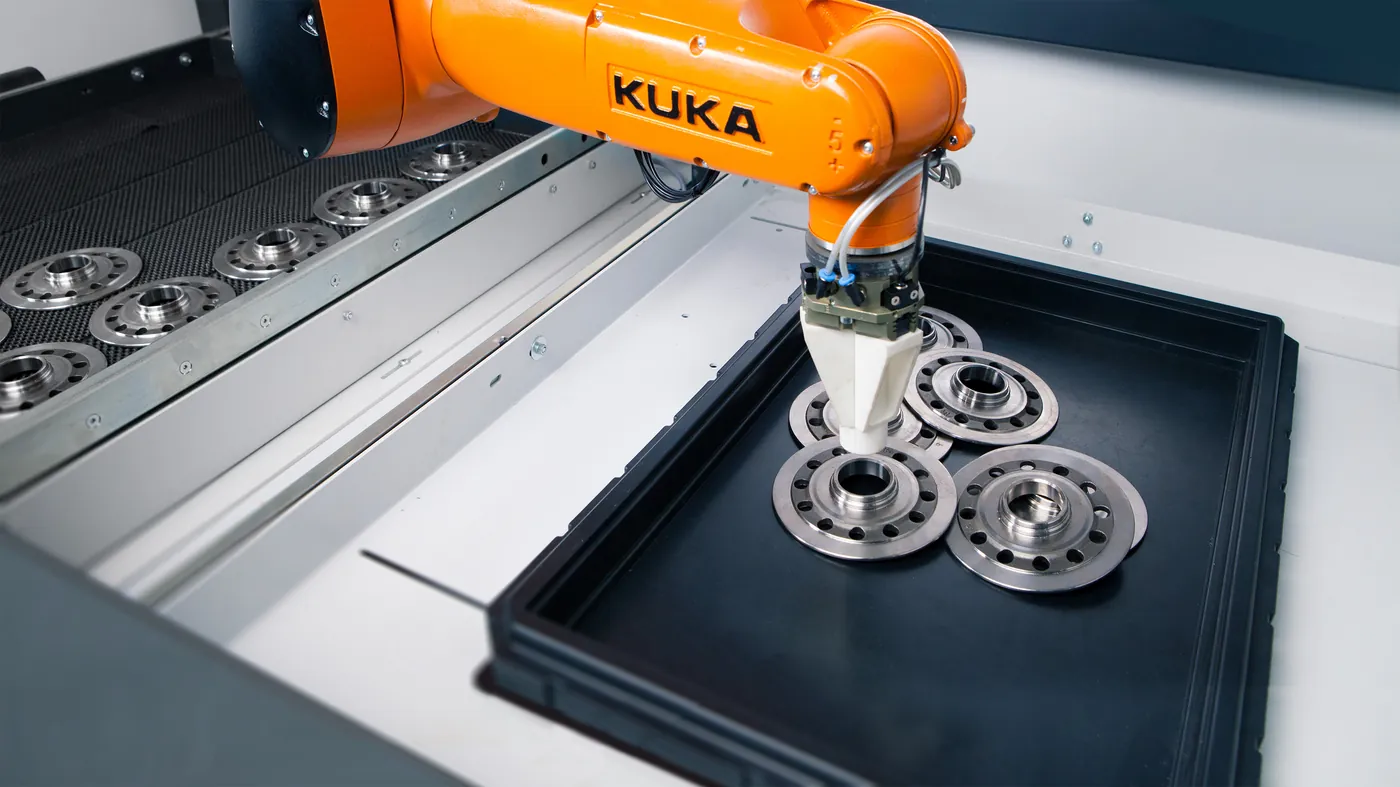
Mainstream grabbing methods each have clear applicable boundaries:Vacuum suction cupSuitable for large flat objects such as boards, cartons, and bagged items, requiring surface flatness and sufficient adsorption area;Pneumatic grippers / electric grippersSuitable for regular parts with clamping edges, offering high repeatability;Magnetic endSuitable for ferromagnetic stamped parts and sheets, with residual magnetic demagnetization required;Flexible gripper gripper(Soft fingers, adaptive claws) Address irregular and easily damaged items such as food and agricultural products;Mechanical fingers + force controlDesigned for heavy-duty or high-precision applications. Multi-piece picking at once, dual-station grippers, and quick-change devices are the three main methods for beat optimization.
Henghuan's automation equipment R&D line offers custom design and manufacturing of end effectors—delivering vacuum circuits, gripper mechanisms, quick-change interfaces, and in-place sensing integrated delivery, as well as handling process verification and lightweight retrofitting of existing ends.
Grasping automation technology evolution and the Southwest market
Directions for grasping technology evolution: FirstFlexible— Soft gripper and adaptive gripper allow one end to cover multiple product categories, adapting to scenarios such as e-commerce logistics and food sorting; SecondIntelligent— Integration of tactile sensing and vision, grasping planning automatically selects adsorption zones and pressure levels based on object shape, material, and weight, achieving a grasping success rate of over 99.5% in complex scenarios such as mixed palletizing; Third,Lightweighting— Carbon fiber and topology optimization reduce the weight of the end by 30% to 50%, significantly improving the robot's dynamic performance and beat time under the same load, and reducing energy consumption simultaneously.
For manufacturing enterprises in Southwest China, grasping retrofits often start with small details: replacing old, heavy grippers with lightweight designs, installing vacuum detection switches to prevent material dropouts, adding quick-change devices to achieve multi-product co-production—each item typically requires several thousand to tens of thousands of yuan, yet it often solves the long-standing issues of material drop and jams on production lines. Henghuan not only designs the entire station but also undertakes terminal optimization and renovation of these small and fast smart devices.
Grasp the key points of workstation engineering and operation and maintenance management
High-frequency failure modes and countermeasures for grasping systems:Vacuum system— Suction cup wear and aging, pipeline vacuum leakage causing suction to fall off, vacuum generator clogged by dust causing suction weakening; The countermeasures are zoned vacuum circuit design + independent vacuum switch detection for each zone + regular cleaning of the filter silencer.Gripper mechanism— Air source pressure fluctuations cause unstable clamping force, and jaw wear leads to accumulated positioning deviations; The countermeasures include air circuit pressure stabilization and regular inspection and replacement of the jaws.Magnetic end— Residual magnetism causes workpiece adhesion and difficulty releasing, with multiple thin plates simultaneously being lifted; The countermeasure is to ensure dual protection through degaussing circuits and single-sheet inspection (thickness sensing or weighing).
Three principles of gripping system reliability design:There is detection— Vacuum switch, magnetic gripper switch, weighing sensor, allowing full confirmation of material pickup and release status;Failure safety— During gas and power cutoffs, workpieces do not fall (check valve pressure holding, power-off holding solenoid), protecting personnel and workpieces;Easy to maintain— Quick-change design for easily worn parts such as suction cups, claws, and seals, ensuring continuous maintenance. Henghuan treats these three items as standard inspection items for all final delivery.
Need a localization solution for grabbing processes?
Whether it's selecting new project solutions, upgrading production lines, or maintaining in-service equipment, Henghuan can provide third-party technical support for grasping applications. Please tell us about material specifications, production cycles, and the on-site environment, and we will provide targeted solution recommendations.
Contact Henghuan View all application processes