Applied technology services
From process validation, tooling fixtures, programming and teaching to production ramp-up support, we provide turnkey robot application implementation services for manufacturing enterprises.
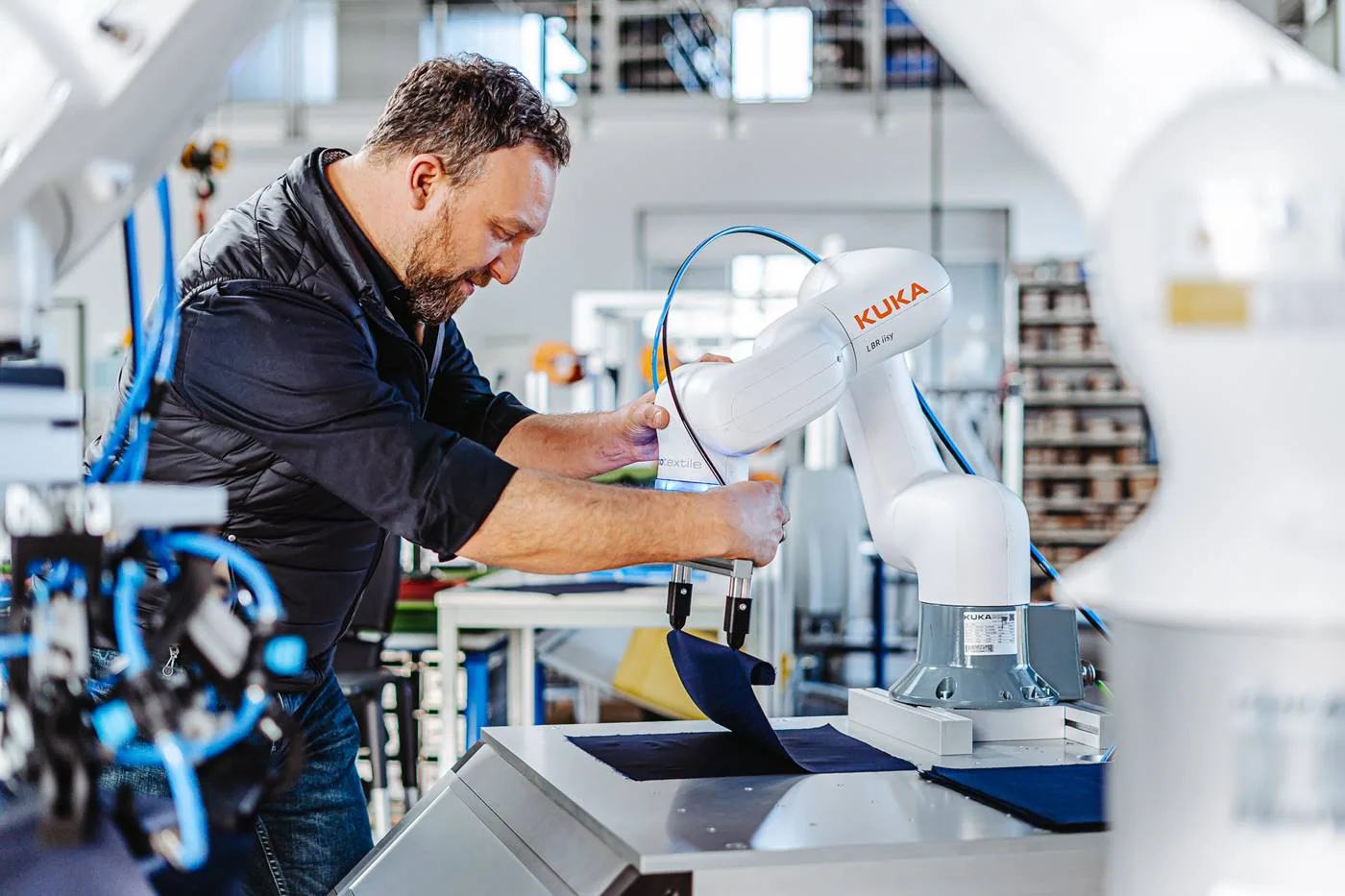
Buying robots is just the beginning; whether they can consistently deliver beats, weld qualified welds, and hold every workpiece securely depends on how solid the applied engineering is. We break down the application implementation into acceptable stages: first verify process feasibility, then determine workstation and fixture solutions, followed by programming and teaching, trial production accompanying, until the production line is delivered stably.
Apply the five-step implementation method
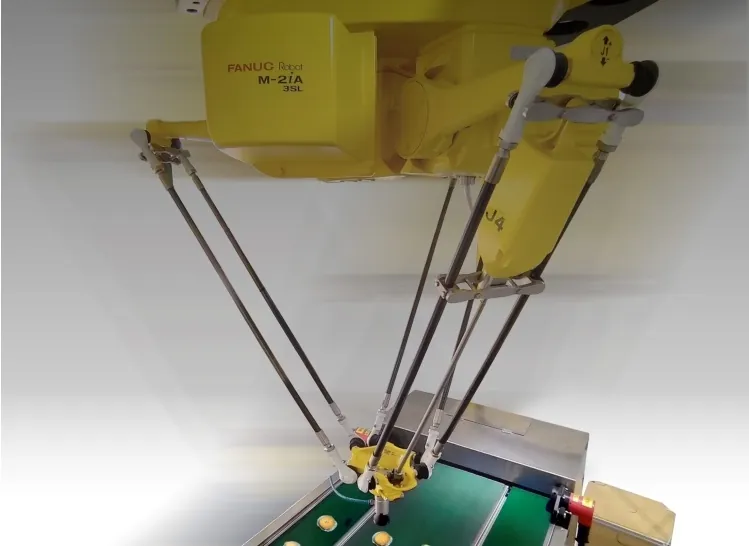
Each project proceeds according to the same process, with clear deliverables and acceptance standards at every step, avoiding "finishing and leaving without finding the person when problems arise."
- 01Process evaluation
Sample making, cycle time calculation, risk list
- 02Solution design
Workstation layout, fixtures and terminals, safety planning
- 03Programming and teaching
Trajectory optimization, process parameters, IO, and peripheral joint commissioning
- 04Trial delivery accompanying them
Small-batch validation, closed-loop problem-solving, and beat compliance standards
- 05Acceptance and handover
Operation training, maintenance manuals, spare parts lists
Common application directions
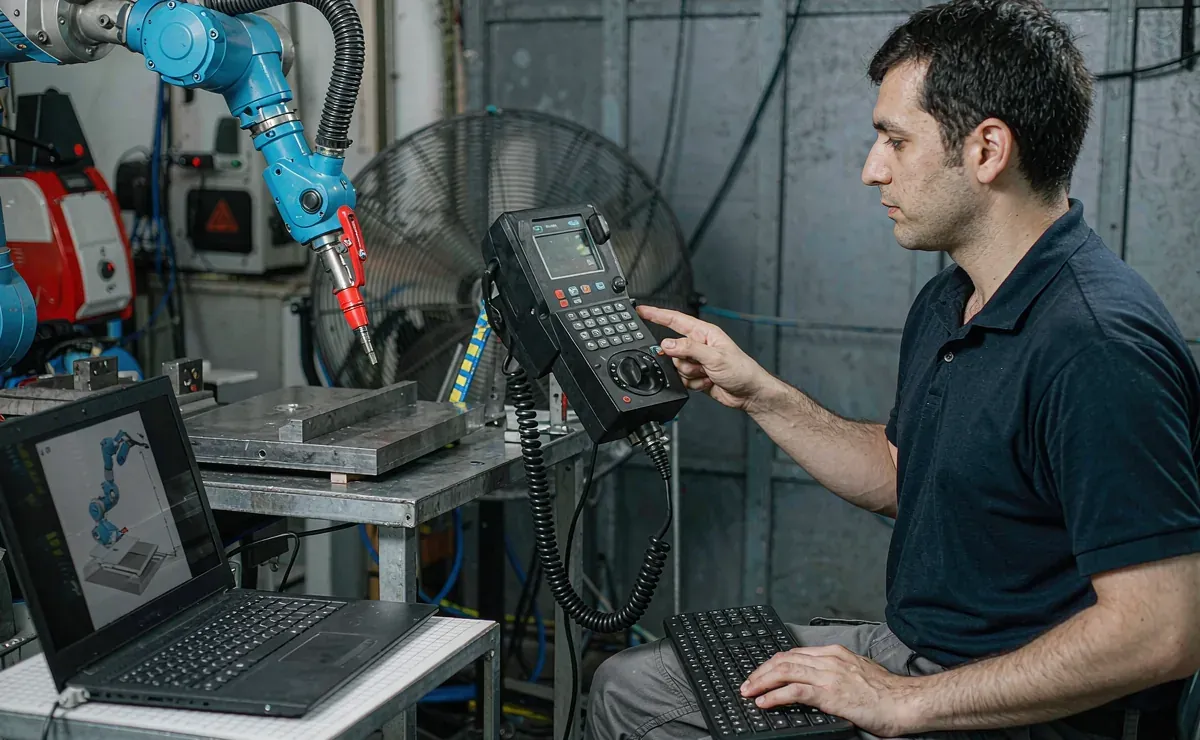
The following areas all have mature cases and process accumulation. Click to enter the corresponding details page to view key process points and applicable industries.
Welding of structural components from thin plates to medium and thick plates, weld forming and deformation control.
View details → Handling and palletizingNanchong Henghuan · Local deliveryStacking, depalletizing, and transferring of box bags and barrel materials between production lines.
View details → Machine tool loading and unloadingNanchong Henghuan · Local deliveryAutomatic loading, unloading, and online connection for turning, milling, grinding, injection molding, and other equipment.
View details → Assembly and tighteningNanchong Henghuan · Local deliveryComponent picking, alignment, pressing, and tightening processes.
View details → Seal with adhesiveNanchong Henghuan · Local deliveryTrace coating and glue amount control for sealants and structural adhesives.
View details → Visual inspectionNanchong Henghuan · Local deliveryPositioning guidance, dimensional measurement, and surface defect detection.
View details →Renovation of old production lines and construction of new production lines
We initiate new production lines from the layout stage to avoid rework later on; Renovation of old production lines begins with on-site surveys and shutdown window evaluations, maximizing the use of existing fixtures and peripheral equipment to control renovation costs. Both scenarios first issue a "Statement of Feasibility and Budget Range for Renovation," clearly listing the parts that can benefit the old and which must be done new.
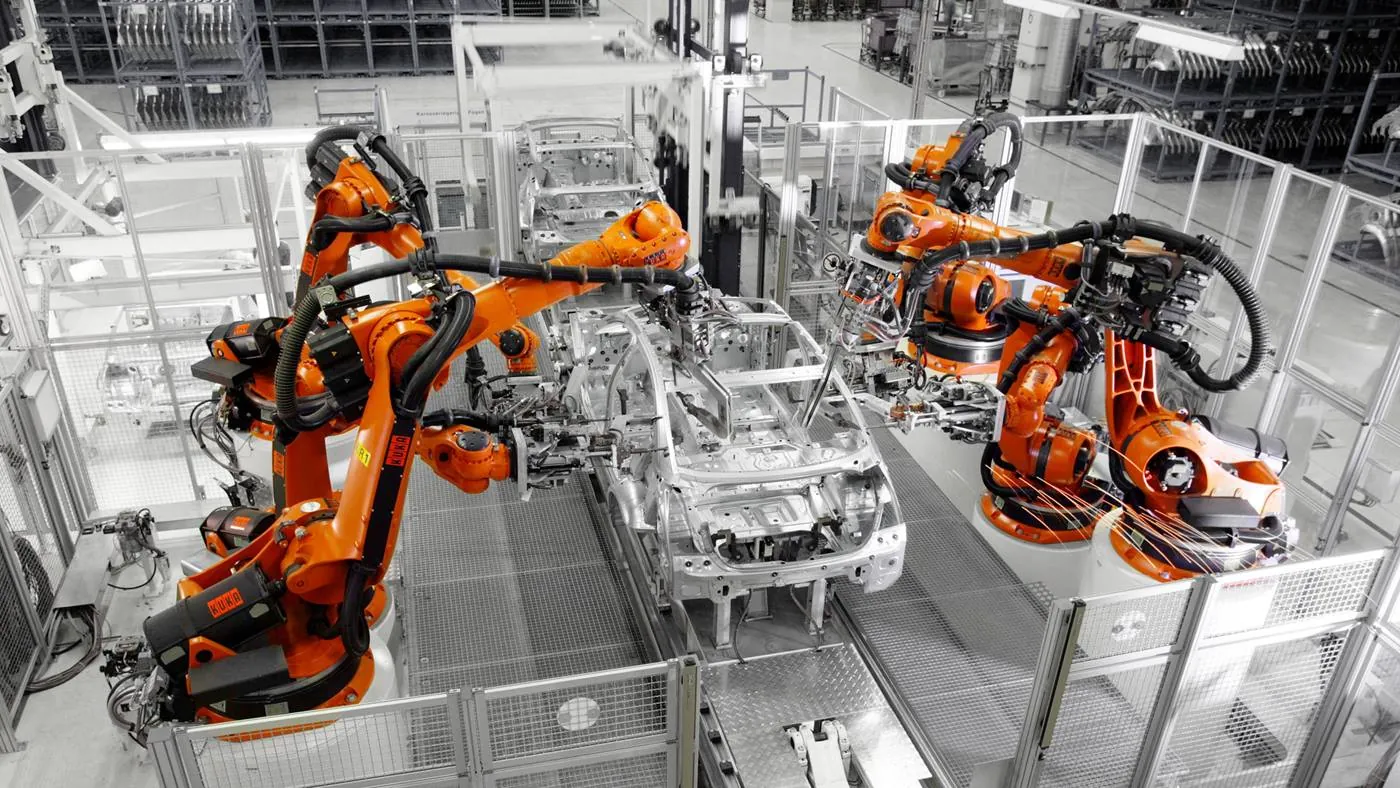
- New production lines: layout planning, equipment selection, cycle simulation, joint commissioning and delivery
- Old line renovation: on-site inspection, aging evaluation, shutdown window scheduling, and segmented switching
- Process outsourcing: a per-piece billing contract welding and manufacturing cooperation model
Frequently Asked Questions
Do you take projects that are immature or unfamiliar?
Connected, but will first conduct sample verification. Only after passing the sample can we discuss the whole line. If the sample fails, we will directly tell you the current process boundary and will not take it rigidly.
Is there a separate fee for model selection consultation?
Simple model selection is recommended without charge; If a complete proposal, beat simulation, or fixture drawings are required, the project quotation will be applied, and the cost can be deducted in subsequent implementation contracts.
Industry Status: Applied engineering capabilities are the dividing line between the success and failure of automation implementation
There is a consensus in the industry: the robot itself accounts for only 30% of the project value, while the other 70% goes into application engineering—process validation, tooling design, trajectory programming, beat tuning, and production startup support. Many automation project failures are not due to equipment quality issues but rather shortcuts in the application process: stepping onto the entire line without process prototyping, insufficient fixture rigidity leading to excessive welding deformation, insufficient margin for cycle calculations, and no one adjusts parameters after equipment delivery.
As "Robot+" applications penetrate general manufacturing, the proportion of new customers launching automated production lines for the first time has risen significantly, leading to a growing demand for "turnkey" application services. Customers don't want a moving robot, but rather a moving robotConsistently produce qualified products, meet the promised beats, and allow workers to operate independentlyProduction units.
| Application directions | Core process essentials | Typical acceptance indicators |
|---|---|---|
| Arc welding / spot welding | Welding parameter windows (current, voltage, speed, gas flow), welding gun posture and reachability, thermal deformation control, wire cleaning and cutting rhythm | Weld forming pass rate is ≥98%, with single piece beats meeting standards, and spatter and undercut within drawing tolerances |
| Handling and palletizing | Load and inertia matching, gripper type (vacuum/gripper/magnetic), stack-type programmable, safety grating interlock | The palletizing cycle matches the production line, with no tipping or collision, and 72 hours of continuous failure performance |
| Machine tool loading and unloading | Silo/channel design, unified positioning references, handshake signals with machine tool PLC, chip breaking, and fixture interference avoidance | Single-machine supervision of more than 2 machine tools, model change time ≤15 minutes, zero collision rate |
| Assemble and tighten | Alignment accuracy and smoothness control, tightening sequence and torque monitoring, error and omission detection (vision/sensors) | Torque curve is fully controlled and traceable, assembly pass rate ≥99.5% |
| Seal with adhesive | Coupling glue volume and trajectory speed, control of glue start and stop, management of glue temperature and viscosity, overlap and disconnection handling | Strip width uniformity within ±0.5mm, no breakage or buildup, stable beat |
Our applied engineering methodology: breaking down "implementation" into acceptable stages
Step one: Process validation comes first.For every project, we first conduct sample testing: verify process feasibility using the customer's real workpiece, and issue a sample report. If you can weld out, hold up, and fit in, then discuss the whole line; If the sample fails to meet standards, we directly inform the process boundaries and do not take on the project forcefully. This step absorbs the biggest technical risks before signing.
Step two: Leave some margin in the plan.Cycle time calculations are based on 80% of the equipment's rated cycle time as the design reference, leaving margin for later wear, mold changes, and material fluctuations; After actual picking weight plus end tools, the load does not exceed 85% of the rated load, and the inertia ratio is kept within the recommended range—these two rules avoid a lot of rework that "looks good but shakes when run."
Step three: solid on-site engineering.Fixture design prioritizes ensuring consistency between rigidity and positioning references; Electrical wiring should be shielded and grounded according to brand standards to prevent communication interference and other "mystical faults"; The safety circuit is designed according to GB/T 36008 and ISO 10218, with emergency stop, grating, and door lock tested and archived item by item.
Step four: Steady runner-up to stability.During the trial production phase, engineers are stationed on site, closing the loop item by item according to the problem list, and only withdraw after continuous production meets standards; Before dismantling, complete operational training, maintenance briefings, and spare parts list handover to ensure the client team can operate independently.
Applied Technology Service Boundaries and Commitments
- If the process validation fails, no contract is signed: prototyping is the prerequisite for cooperation, risks are shared but not forced
- The proposal clearly states acceptance standards: takt time, pass rate, and continuous operating time are written into the contract, without vague wording
- Complete handover of programs and drawings: no technical barriers, any subsequent integrator can take over maintenance
- Follow-up 3 months after commissioning: Track equipment status and process stability; follow-up visits are free of charge
- Cross-brand unified scheduling: robots from multiple brands on a single production line are managed by the same application team
Frequently Asked Questions
Is there a fee for process validation (prototyping)?
Free feasibility sampling of conventional workpieces, validating process paths with our testing equipment; For prototyping requiring specialized fixtures or special processes, material and labor cost fees will be charged and fully deducted after contract signing.
How long is the project duration?
Single-workstation projects (one robot + fixture + peripherals) usually take 4–8 weeks; Full-line integration project takes 3–6 months. Before signing, a schedule including milestones will be provided, and key milestones (plan freeze, pre-acceptance, final acceptance) will be confirmed by both parties.
Our factory is in the county town. Is it convenient for engineers to come here?
The center is located in the Yilong County E-commerce Industrial Park, with engineers stationed in Nanchong, allowing same-day access to Sichuan-Chongqing. This is our core advantage compared to coastal integrators and OEM outlets. In Yunnan-Guizhou regions, on-site delivery within 48 hours; remote support responds within 2 hours.
Can we just buy equipment and not let you make apps?
Yes, but we will provide a written warning about the application risks upon delivery. We also recommend the "Equipment + Application" package: process parameters, program backups, and equipment archives for application projects are managed by us in a unified manner, making subsequent maintenance and repair data retrievals faster.
Tell us your production line requirements
Process, cycle, budget, site conditions—the more specific you are, the more executable the plan. Local teams in Nanchong will be coordinated, and on-site inspections will be available in Sichuan, Chongqing, Yunnan, and Guizhou.
Contact usView all services