
Spraying
Industrial robot spraying process: application points, process essentials, and practical cases
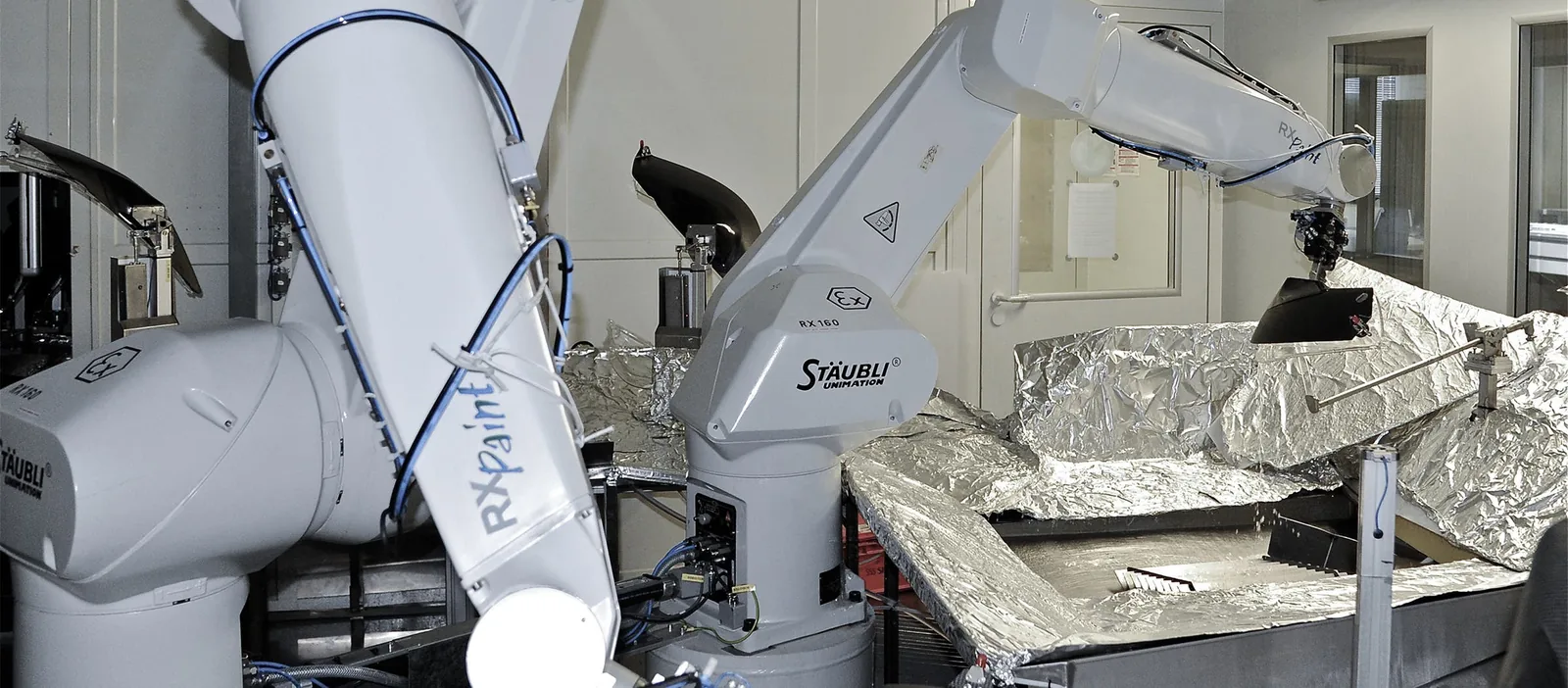
Application Overview
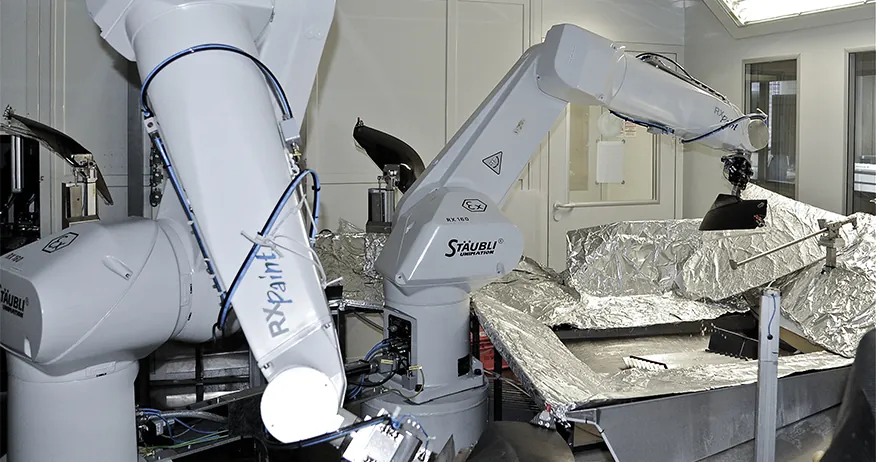
Robotic spraying is the mainstream form of automated coating—for surface painting and coating application of complete vehicles and parts, furniture, home appliances, and construction machinery, only robotic spraying can stably meet the requirements for uniform film thickness, gloss consistency, and paint utilization. The core logic of the spray station is to parameterize the tactile feel of the experienced craftsman: trajectory speed, paint dispensing volume, atomization pressure, fan width, and electrostatic voltage. The coupling of five elements determines the quality of the paint film. The value of the robot is to fully reproduce this set of parameters on ten thousand products.
Key points of application
Compiled from official brand application materials, source has been annotated.
Process validation, workstation solutions, programming and teach-in and production ramp-up support, and turnkey delivery of robot applications.
Learn more → Sales of new industrial robotsAuthorized-style sales of brand-new mainstream robots with selection support for new production lines and capacity expansion.
Learn more → Research and development of automation equipmentResearch, development, integration, and delivery of end-effectors, conveyor positioning, safety peripherals, and complete control systems.
Learn more → Research and development of algorithms and control systemsMotion planning, machine vision, and PLC/SCADA system development to address takt-time bottlenecks, accuracy, and data interconnection.
Learn more → Robot rentalShort-term rental, long-term rental and lease-to-own for in-stock models, long-term rental, and lease-to-purchase transfer, including transportation, installation, commissioning, and lease-term maintenance.
Learn more → Software and hardware upgrade servicesController retrofits, software and firmware upgrades, mechanical refurbishment, and safety upgrades restoring performance to older equipment.
Learn more → Maintenance and repairOn-site inspection, fault diagnosis and repair, and annual maintenance contracts covering 1,310 models from 21 brands.
Learn more → Used & in-stock robot salesWe buy back used robots and handle inspection, refurbishment and resale; every unit ships with inspection records and a warranty, and trade-ins can offset new purchases.
Learn more →Typical application scenarios for automated spraying
Below are representative spraying automation scenarios from the Henghuan team and industry practice (customer names are usually omitted), organized by "Background Pain Points → Implementation Plan → Implementation Results" for enterprises with similar needs to reference and evaluate.
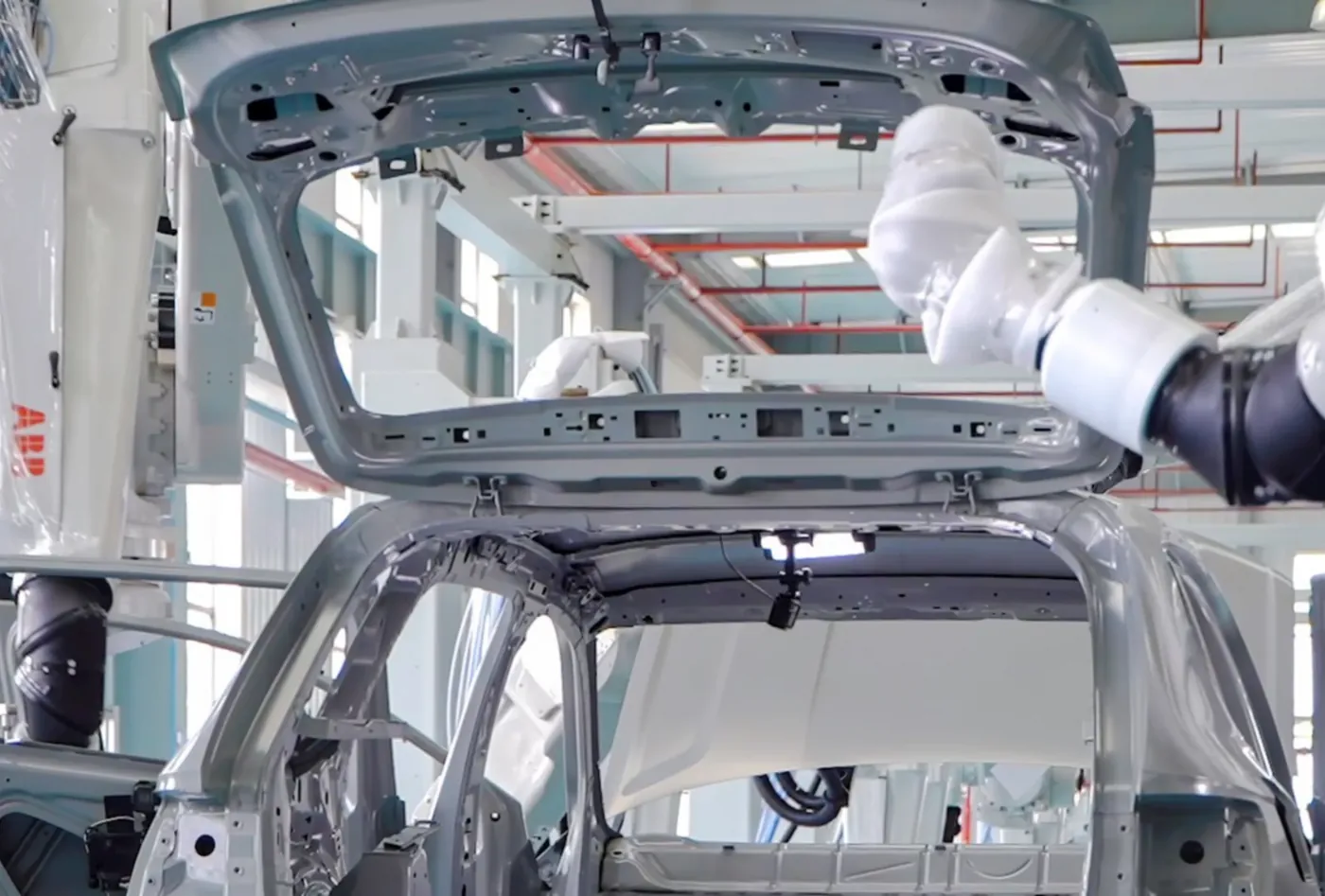
| Scene | Background and pain points | Implementation plan | Implementation results |
|---|---|---|---|
| A furniture company in Chongzhou · Water-based paint spraying line for panel furniture | Environmental renovations require switching to water-based paints, uneven film thickness during manual spraying, and large amounts of paint mist waste, making it increasingly difficult to recruit painters. | Two explosion-proof spraying robots are equipped with air spray guns and a dedicated water-based paint supply system, with reciprocating trajectory programming and film thickness sampling and calibration parameters. | Paint utilization rate increased by about 35%, film thickness uniformity met acceptance standards, spraying station reduced staff by 4, and passed VOCs emission acceptance. |
| A motorcycle parts company in Chongqing · Electrostatic spraying of wheel hubs | The aluminum alloy wheel rim exterior topcoat requires high gloss, no sagging, and manual spraying quality fluctuates greatly with a high rate of backspray. | The spraying robot is equipped with electrostatic rotary cups, and the flipping tooling ensures full coverage of both inner and outer surfaces, with film thickness being checked and adjusted through a closed loop through online sampling. | The first-pass pass rate has increased from 85% to 98%, with minimal reduction in paint and labor waste, and gloss consistency meeting the main machine's matching standards. |
| A construction machinery factory in Chengdu · Primer spraying for structural components | Large structural parts have low manual rolling efficiency, unstable coating thickness, and inadequate corrosion protection period, affecting quality assurance. | The heavy-duty spraying robot is equipped with an airless spraying system, expanding the working range of the ground rail, and setting film thickness parameters according to anti-corrosion standards. | Coating efficiency is improved by about three times, with all dry film thicknesses within the specified window and passing third-party anti-corrosion coating testing. |
Industries that commonly use this process
Click to view the overall robot application plan for the industry.
Spraying automation: explosion-proof, trajectory, and film thickness are three key thresholds
Spraying is one of the scenarios with the highest entry barriers in robot applications:Explosion-proof certification— The atomization environment for solvent-based coatings is an explosive hazard area; the robot and the entire paint supply system must meet explosion-proof ratings (positive pressure explosion-proof for the body, Ex p, area division according to GB 3836/ATEX);Trajectory craftsmanship— The distance, angle, and overlap rate between the spray gun and the workpiece directly determine the uniformity of film thickness. Trajectory planning for complex curved surfaces (such as automotive bumpers and furniture shaped parts) is an experience-intensive step;Film thickness control— Wet film/dry film thickness is monitored online or randomly, with paint utilization (transfer efficiency) directly linked to cost.
The industry trend is driven by a dual drive of "eco-friendly coatings + intelligent spraying": water-based paints and high-solids coatings replace solvent-based types (driven by VOC emission regulations), with corresponding atomization parameters and rheological characteristics completely different, and old process parameters cannot be directly transferred; Electrostatic bell technology increases transfer efficiency to over 85%, saving 30% paint compared to air spraying, and topcoats for automobiles and home appliances have already been widely adopted.
| Parameters | Impact | Control methods |
|---|---|---|
| Spraying distance (150–300mm) | Hanging too close or dry spraying too far causes paint mist to disperse | Offline trajectory programming + surface normal constant |
| Overlap Rate (1/3–1/2) | Insufficient visible stripes, excessive hanging, and excessive paint waste | Track spacing is programmatic, verifying the thickness of the first piece |
| Nebulization pressure and flow rate | Determines particle fineness and paint application rate | Proportional valve closed-loop, set according to the coating TDS |
| Coating viscosity and temperature | Viscosity fluctuations directly change the film thickness | Constant temperature circulation system + online viscosity monitoring |
| Electrostatic parameters (rotary cup) | High pressure affects wrapping and paint application rate | Zoned according to workpiece shape, grounding detection interlock |
Safety and engineering design of spraying lines
Explosion-proof zoning design:The interior of the spray booth is a hazardous zone in Zone 1/Zone 2. The robot body is positive pressure explosion-proof + spray booth ventilation interlock (spraying prohibited if wind speed is insufficient), static electricity grounding monitoring, combustible gas concentration detection with linked power cut-off—the safety interlock checklist is the first document for spraying project acceptance.
Paint supply system:Central paint supply (circulation pipeline + paint mixing room) is suitable for large batches of single colors; For scenarios with frequent color changes, a rapid color change valve group (solvent cleaning + color block isolation) reduces color change time from hourly to minute level; For water-based paint systems, pay attention to pipeline material compatibility and anti-freeze protection.
Trajectory Generation:Rule Workpieces are programmed offline to generate constant-distance, constant-angle trajectories according to CAD models; For older products without models, use teach pendants + surface fitting; For high-demand scenarios (automotive exterior panels), use specialized spraying software to simulate film thickness, calculating first and then spraying.
Environmental Facilities:Paint mist treatment (hydrospinning/dry cartons), VOC treatment (RCO/RTO or activated carbon adsorption and desorption) are designed synchronously with spraying lines, with environmental impact assessments requiring prior confirmation to avoid equipment installation and environmental protection issues.
Craft Q&A
Is there a big difference in spraying schemes between water-based and oil-based paints?
Significant differences: Water-based paint has strong conductivity, while electrostatic spraying requires isolating the charge system (IBH) or abandoning static electricity; Higher viscosity temperature sensitivity and stricter constant temperature control; There are requirements for pipeline material (mainly stainless steel). Before modification, process verification must be redone according to the coating supplier's TDS and oil-based paint parameters cannot be reused.
Can the irregularly shaped curved surfaces of furniture/hardware be sprayed well?
Yes, but with process requirements: stable workpiece hanging posture, trajectory planned according to the normal direction of the surface, and programmatic overlap rate. The first commissioning cycle for special-shaped parts is longer than that for flat parts (usually 1–2 weeks). We conduct a film thickness profile inspection and appearance review for the first piece, and after meeting standards, we undergo a curing process for mass production.
How to verify explosion-proof certification for spraying robots?
Look at two items: the explosion-proof certificate of the robot body (Ex marks and grades, such as Ex p ib IIB T4) and the explosion-proof evaluation report for the entire system. All spraying solutions and equipment we provide come with corresponding certification documents, which are handed over along with the documents during acceptance; Upgrading spray booths without certification is a major safety hazard, so we do not do it.
In-depth interpretation of the spraying process
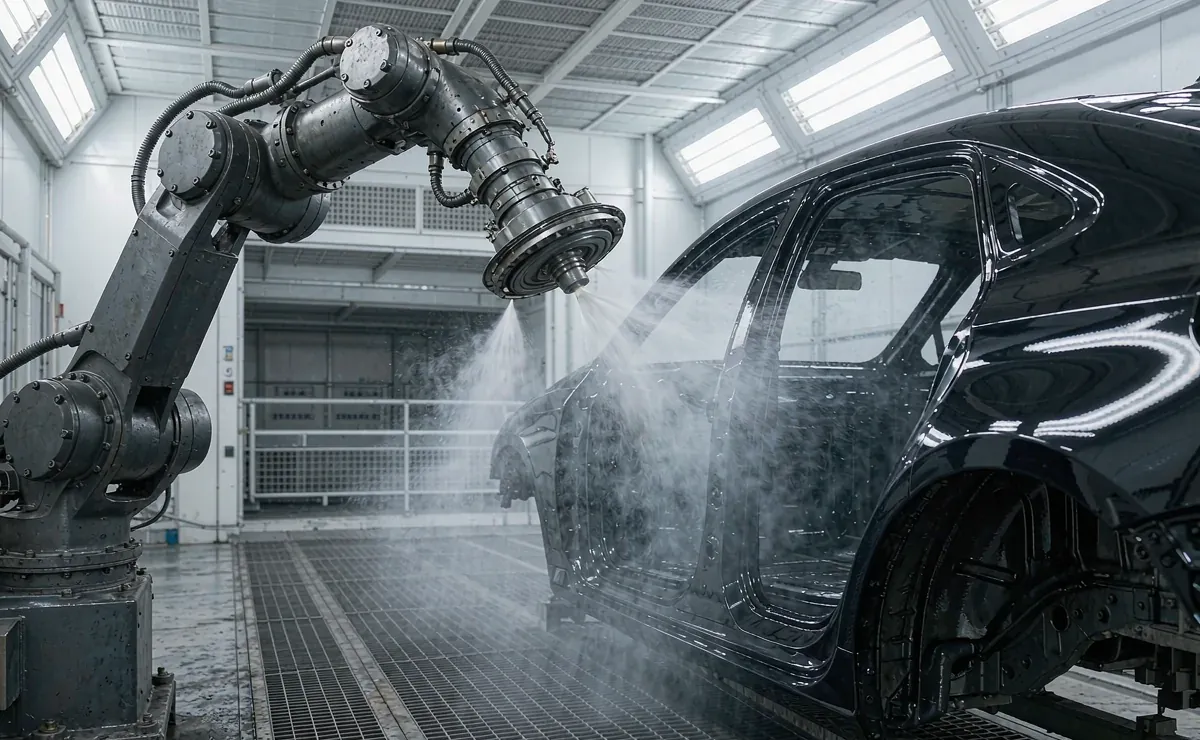
The spraying system consists of explosion-proof robots and atomization processes. Atomization methods are classified by output and quality:Air spray gunFlexible, fast color change, low investment, suitable for small to medium batch and cavity spraying;High-speed spinning cupElectrostatic atomization, paint utilization rate can reach over 85% (air spraying only 30%–50%), and the paint film appearance grade is high, making it the standard configuration for large-scale surface coatings. The pressure stabilization accuracy of the paint supply system, the switching speed of the color-changing valve group, and the closed-loop flow measurement together determine the consistency of film thickness. Explosion-proof certification is a strict threshold—the spraying area is an explosive hazardous environment, and the explosion-proof system (commonly Exp positive pressure type) cannot be compromised with the flash point matching of the coating.
Henghuan provides solution design and process services for spray painting stations: selection of explosion-proof machine models, configuration of rotary cups and spray guns, profile programming and film thickness adjustment, integration of paint supply systems, as well as specialized maintenance of spraying robots (major repairs of atomizers, positive pressure system repairs, and cleaning of paint scale on the main body) and verification and sales of second-hand explosion-proof machines.
The technological evolution of spray automation and the Southwest market
Four trends in spray painting automation: First,Water-based and high-solids coatings— Environmental regulations (VOCs emission limits) drive a switch in coating systems, and the conductivity of water-based paints places new demands on electrostatic rotary cups, requiring process parameters to be redeveloped, and there is a high need for adaptation and modification of existing spraying lines; SecondThick membrane closed loop— Online film thickness detection (magnetic/eddy current/infrared) feedback adjusts paint output, evolving from empirical settings to result-based closed loops, significantly reducing paint waste; Third,No intermediate coating process required— Advances in coating technology have made it possible to form a film of primer and topcoat in one go (from 3C1B to B1B2), shortening the coating line and reducing energy consumption; FourthSmall parts are flexible spraying— Multi-variety small-batch parts use robots + rapid color change systems to replace manual spray booths, reducing color switching from hourly to minute-level changes.
Southwest Furniture (Chengdu and Chongzhou industrial clusters) and automotive and motorcycle coating (Chongqing) are the two major existing markets for spray painting robots. Environmental upgrades and recruitment difficulties (high occupational health thresholds for painters, reluctance among young people) continue to drive automation. Henghuan Special Reminder: Ordinary robotic arms cannot be used in spraying areas—explosion-proof compliance is the safety bottom line, and second-hand machines must be verified for explosion-proof integrity.
Key points and operation and maintenance management of spraying workstations
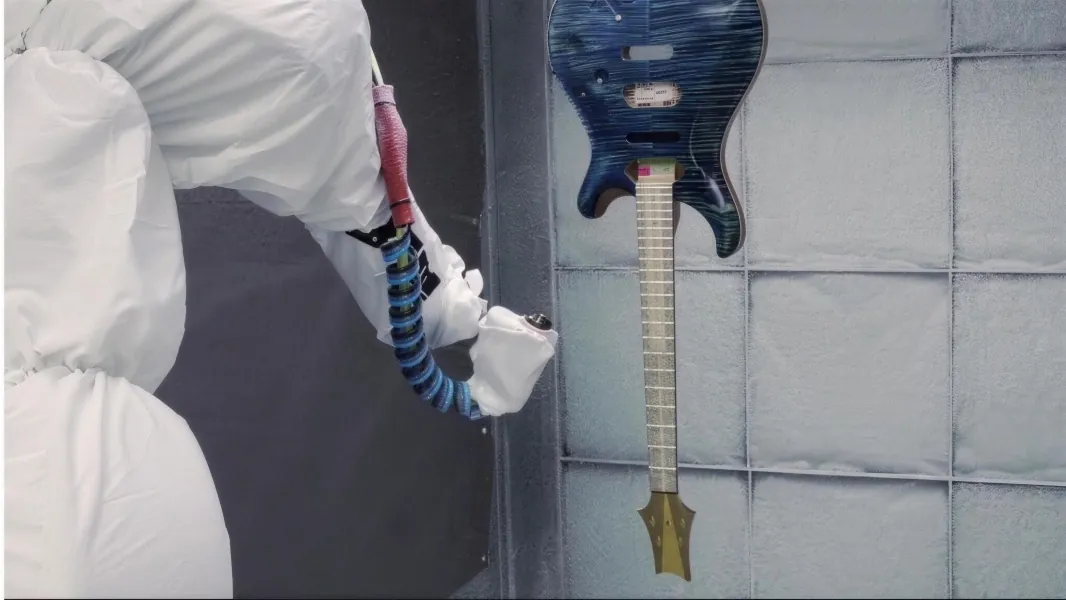
High-frequency faults and countermeasures at spray painting stations:Nebulizer malfunction— Wear of the rotary cup bearing causing uneven atomization and poor forming, requiring regular bearing replacement and dynamic balance calibration according to operating hours;Paint delivery pipelines are blocked— Coating curing or filtration failure, accumulation of color change residue; Countermeasures include standardizing flushing procedures, replacing filters periodically, and thoroughly cleaning pipelines before shutting them down;Positive pressure explosion-proof system alarm— Aging of seals causes the cabinet's positive pressure to be unmaintained, causing the robot to stop frequently; Countermeasures include annual inspection and replacement of seals and calibration of positive pressure testing units;Static electricity fault— High-voltage generator attenuation or cable moisture causing reduced paint application rate and paint mist dispersion.
Special features of spray robot maintenance: The accumulation of paint scale on the body affects joint heat dissipation and sealing, requiring regular professional cleaning (solvent and process selection must balance explosion-proof surface protection); Explosion-proof surfaces (explosion-proof joints) must not be touched or scratched; maintenance must be carried out according to explosion-proof standards and recorded; Lifespan management of specialized components such as rotary cups, electrodes, and high-voltage cables. Henghuan's sprayer maintenance team holds relevant explosion-proof operation qualifications and issues explosion-proof integrity verification records after repairs.
Need localization solutions for spraying processes?
Whether it's new project solution selection, production line upgrades, or ongoing equipment operation and maintenance, Henghuan can provide third-party technical support for spray coating applications. Please tell us about material specifications, production cycles, and the on-site environment, and we will provide targeted solution recommendations.
Contact Henghuan View all application processes