Food and beverages
Industry Robot Application Solutions · 16 Brands Covered · 4 types of typical processes
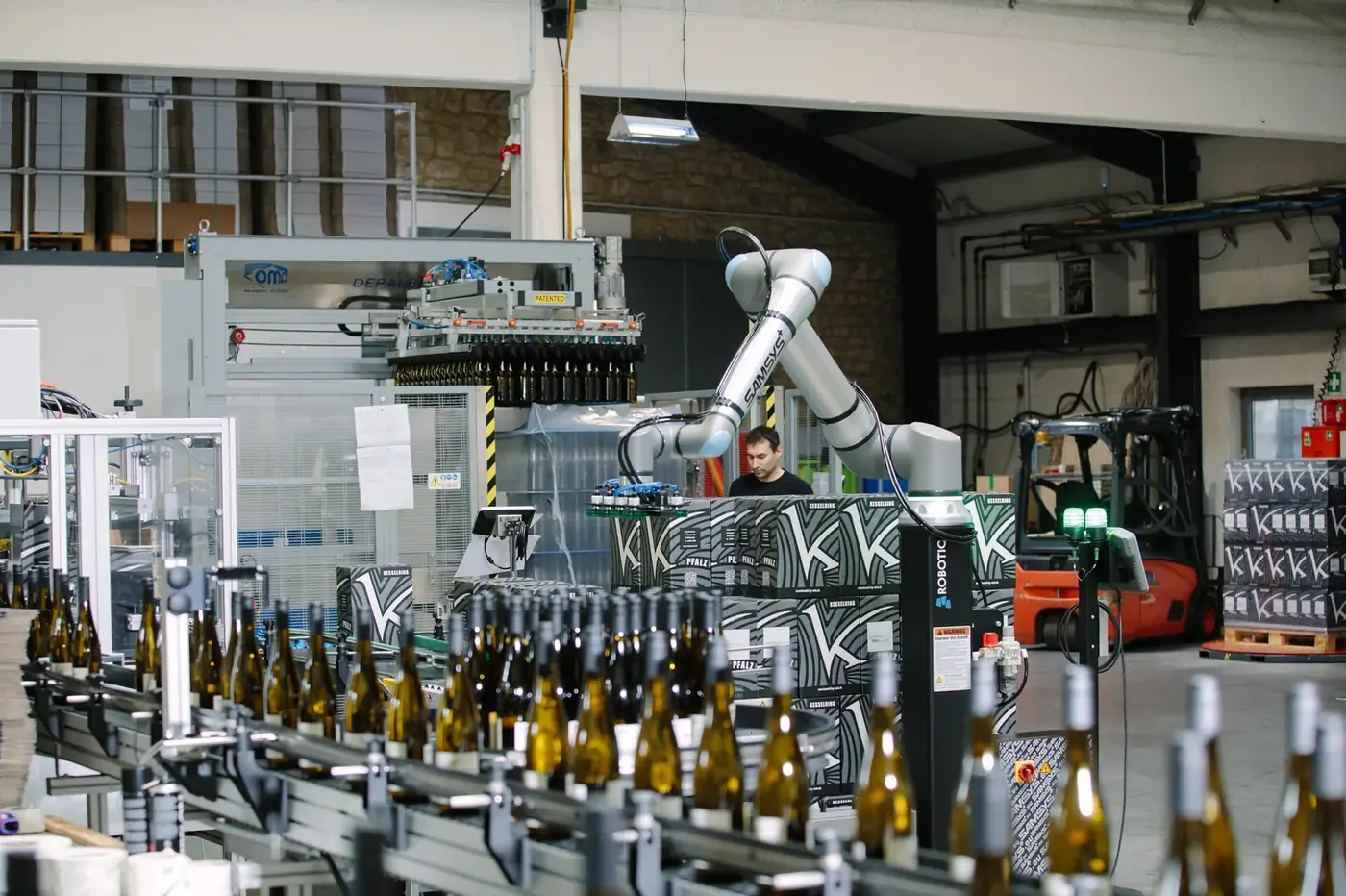
Robotic applications in the food and beverage industry
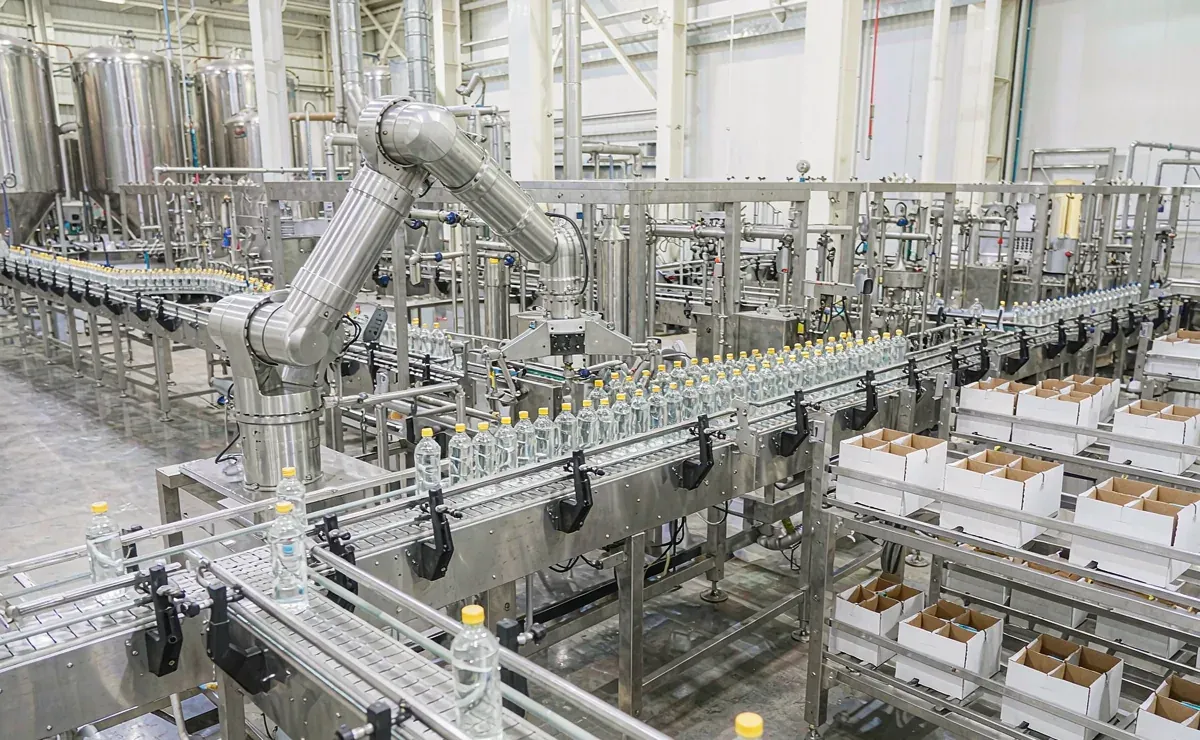
Robots in the food and beverage industry are mainly used for palletizing, packaging, and sorting, while also meeting cleanliness and hygiene requirements (food-grade lubrication and wash-resistant protection). The FANUC DR/3 and DR/6 series feature acid- and alkali-resistant surface treatments, and the ABB IRB 360 FlexPicker is a classic model for high-speed sorting. Henghuan provides food factories with palletizing robot maintenance, fixture modification, and second-hand equipment selection.
Typical automated processes
Common robotic processes in this industry—click to view key application points, customer cases, and applicable brands.
Optimize your end-of-line operations and boost productivity with collaborative robotic palletizing solutions. No matter how the product changes, repetitive tasks can be performed consistently and accurately. …
View process details → SortingSorting involves first grabbing small parts or food that move at high speed on a conveyor belt before sorting them, requiring high-speed movement. Kawasaki's YF series sorting robots can achieve high-precision, high-speed movements. It can be combined with the visuals developed by our company...
View process details → Material handlingReducing labor costs through automation Material Handling (MH) utilizes the simple capabilities of robots to transport objects. By fitting the robot with the appropriate end-of-arm tooling (for example, a gripper), the robot can efficiently and accurately transfer products from a position...
View process details → AssemblyAutomation of challenging assembly processes using Kawasaki's latest technology. Advances in automation control technology enable robots to complete complex assembly processes that were previously impossible. Over the past 40-plus years, Kawasaki has continuously improved its technology to meet the high...
View process details →Covering branded equipment
For robot brands within Henghuan's service scope with practical applications in the food and beverage industry, click to enter the brand page to view series and model specifications.
 FANUC104 models
 ABB45 models
 Yaskawa85 models
 Kawasaki75 models
 KUKA456 models
 Inovance Technology58 models
 Estun71 models
 Stäubli30 models
 Universal Robots9 models
 Nachi Fubietsu18 models
 Comau30 models
 Siasun Robotics26 models
 Guangzhou CNC19 models
 JAKA19 models
 AUBO24 models
 QJAR Robotics40 models
Henghuan can provide services for the food and beverage industry
All six core businesses can be procured independently or in combination.
Process validation, workstation solutions, programming and teach-in and production ramp-up support, and turnkey delivery of robot applications.
Learn more → Sales of new industrial robotsAuthorized-style sales of brand-new mainstream robots with selection support for new production lines and capacity expansion.
Learn more → Research and development of automation equipmentResearch, development, integration, and delivery of end-effectors, conveyor positioning, safety peripherals, and complete control systems.
Learn more → Research and development of algorithms and control systemsMotion planning, machine vision, and PLC/SCADA system development to address takt-time bottlenecks, accuracy, and data interconnection.
Learn more → Robot rentalShort-term rental, long-term rental and lease-to-own for in-stock models, long-term rental, and lease-to-purchase transfer, including transportation, installation, commissioning, and lease-term maintenance.
Learn more → Software and hardware upgrade servicesController retrofits, software and firmware upgrades, mechanical refurbishment, and safety upgrades restoring performance to older equipment.
Learn more → Maintenance and repairOn-site inspection, fault diagnosis and repair, and annual maintenance contracts covering 1,310 models from 21 brands.
Learn more → Used & in-stock robot salesWe buy back used robots and handle inspection, refurbishment and resale; every unit ships with inspection records and a warranty, and trade-ins can offset new purchases.
Learn more →Industry Status: The Wave of Automation in Back-End Packaging
Robot applications in the food and beverage industry are concentrated inAfter-end packaging stage(sorting, cartoning, packing, palletizing, winding), front-end processing (batching, sterilization, filling) is mainly handled by specialized machines and assembly lines. The driving factors are direct: labor-intensive packaging processes, large seasonal labor fluctuations (temporary workers are difficult to recruit and train during peak seasons), and stricter hygiene compliance requirements in the food contact stage.
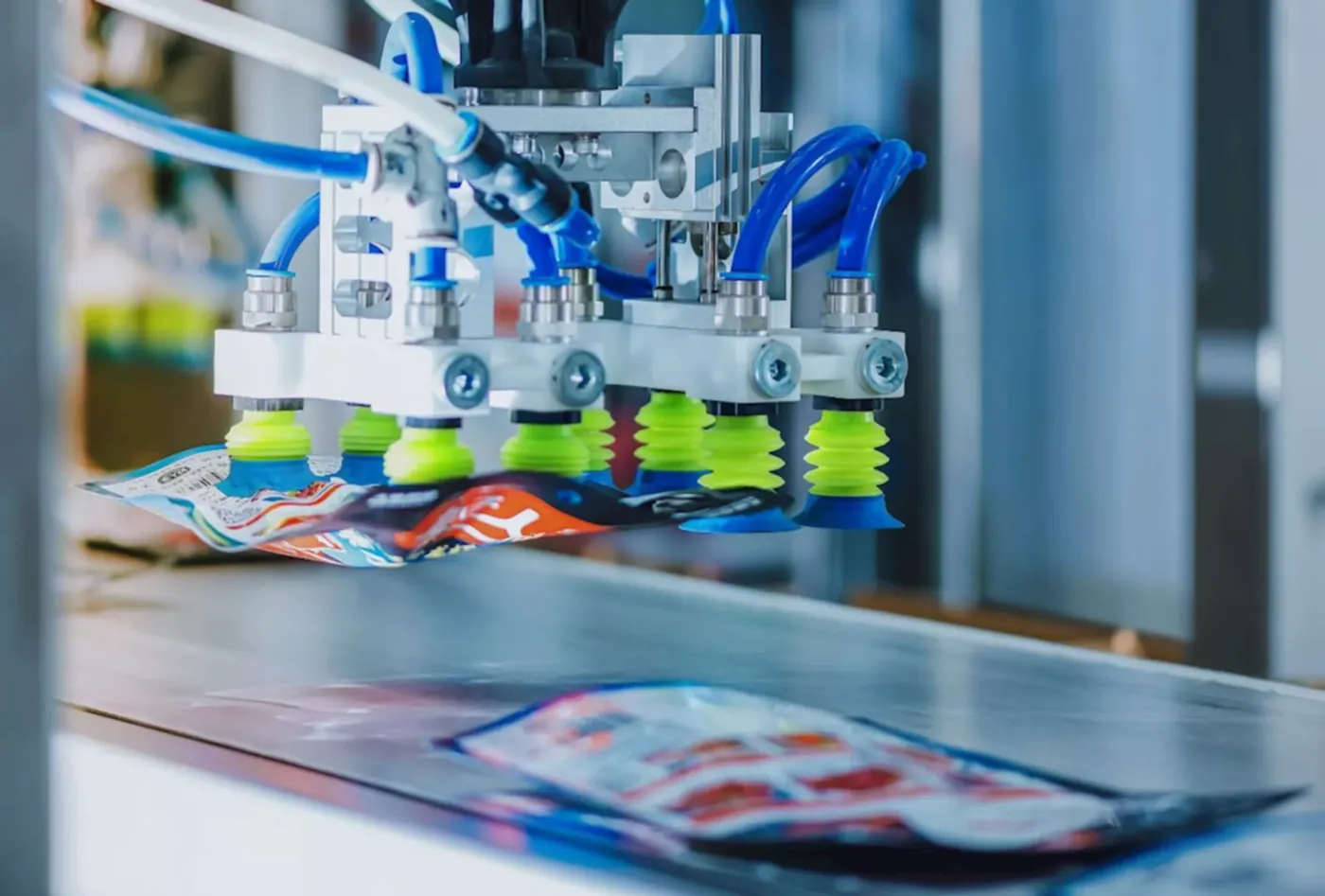
Three industry technology trends:High-speed Delta sortingIt has become the standard for baking, candy, and dairy carton packaging (150–300 grabs per minute);Collaborative palletizingRapid adoption in small and medium-sized food factories (small footprint, no fences required, operators can collaborate);Hygienic design(IP69K flushing protection, food-grade lubrication, stainless steel structure) have shifted from high-end requirements to procurement thresholds—starting in 2025, supplier audits by major food groups will generally include equipment hygiene design clauses.
| Workstation | Equipment type | Hygiene and compliance requirements |
|---|---|---|
| Baking/candy sorting and boxing | Delta parallel + vision | Food-grade end-of-pipe, IP65+, no hygiene dead corner structure |
| Bottled/canned packaging | Six axes + clamping/gripping end | Wash-resistant design, food-grade grease |
| Bag stacking | Palletizing Robot (100–300kg) | Dust protection (explosion-proof dust removal for flour/milk powder applications) |
| Tray wrapping | Wrapping machine + robot palletizing | Interlocked with the palletizing line |
| Dairy/beverage packaging | Delta/six-axis + vacuum suction cup | CIP flushing compatible with condensate protection |
| Meat is divided and transported | Stainless steel six-axis + specialized tool end | IP69K, low-temperature resistant (0–4°C workshop), flushing every shift |
Eight major business areas in the food industry
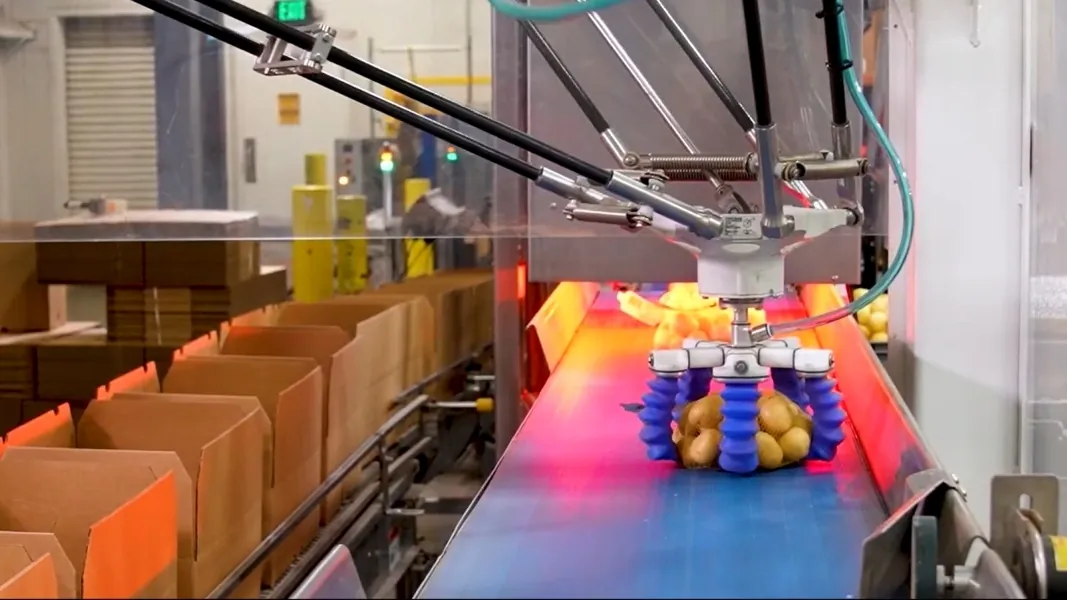
Research and development of automation equipmentIt is key to hygiene compliance: end effectors on food contact surfaces must be customized according to hygiene design guidelines (316L stainless steel, rounded transitions, liquid-free structure, food-grade seals). Common fixtures on the market often do not meet factory inspection requirements—our fixture design lines are drawn according to EHEDG/FDA contact material requirements, and documentation supports customers in passing BRC/IFS system audits.
Maintenance and repairAdapting to production rhythm: During peak season, food factories operate 24/7 continuous production, and maintenance can only be done whenever possible; We perform preventive maintenance according to customer production schedules (off-season centralized maintenance + peak season emergency protection), and keep wear parts (suction cups, belts, seals) in stock according to food-grade specifications.
Robot rentalResponding to seasonal fluctuations: Renting Delta and palletizers during peak production before Mid-Autumn/Spring Festival and returning after the holiday — For bakery and gift box companies with highly seasonal orders, leasing is several times more efficient than purchasing assets.
Industry Q&A
What are the requirements for the washing environment of food factories?
By zone: Direct contact zone requires IP69K (high-temperature and high-pressure washing) + 316L stainless steel + food-grade lubrication (NSF H1 certified); Packaging area IP65–IP67 is sufficient. When selecting models, we match protection levels based on flushing frequency and method (low-pressure spray/high-pressure water gun/steam). Over-configuration wastes investment and insufficient configuration shortens lifespan—we prepare configuration sheets based on on-site measured rinsing conditions.
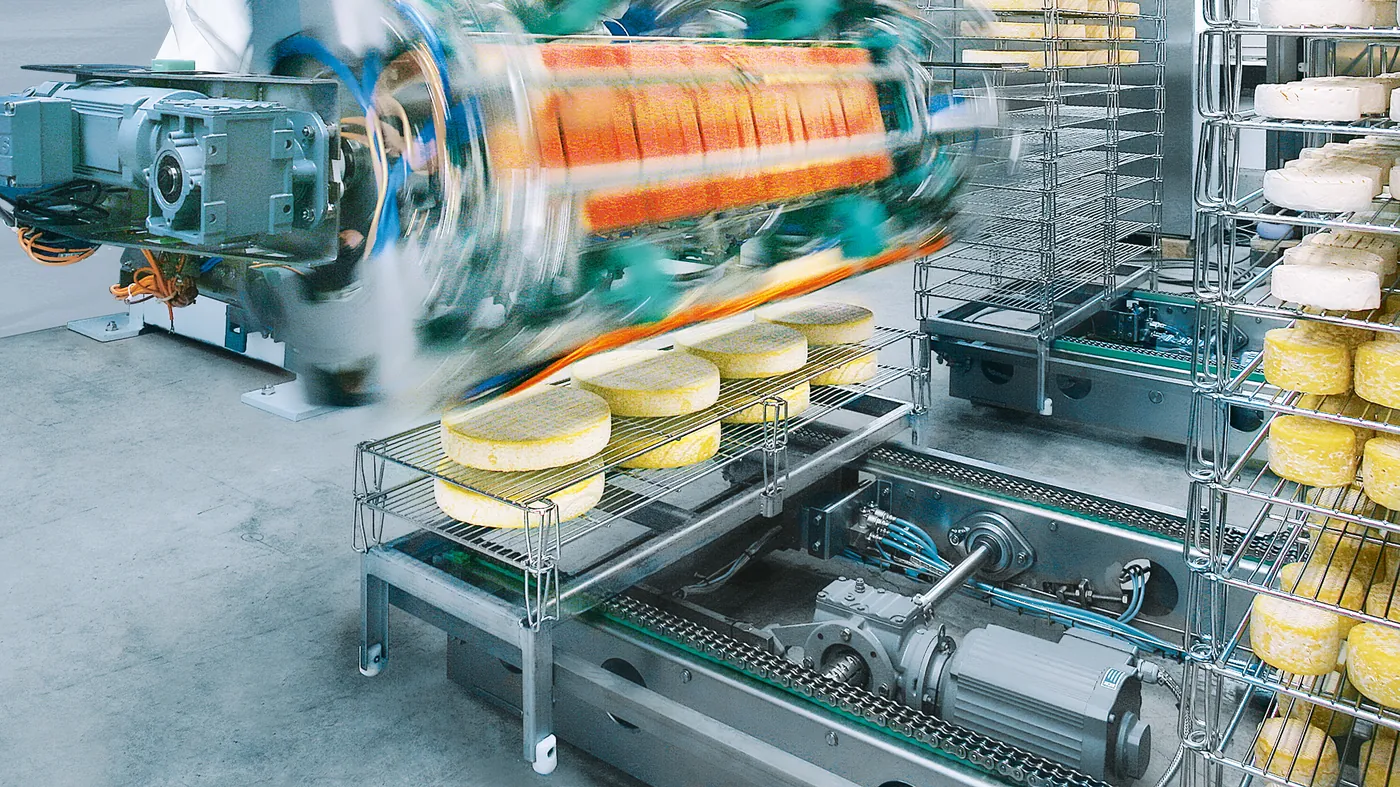
How to prevent dust explosions in flour/formula workshops?
The combustible dust environment should follow GB 15577: equipment should be equipped with explosion-proof certification models or positive pressure explosion-proof retrofits, dust removal systems equipped with explosion-relief/explosion-proof devices, electrical circuit explosion-proof laying, grounding for anti-static conditions. Before renovation, conduct dust explosion characteristic tests (Kst value), and ensure the explosion-proof plan aligns with safety supervision filing requirements. This is a prerequisite for acceptance, not an additional item.
How do you connect data from food traceability equipment requirements?
Data points in the packaging stage (batch number inkjet, cartoning quantity, palletizing position) are collected by PLC and integrated with the customer's existing MES/WMS (OPC UA/database intermediate table); For small and medium-sized food factories without a system, we offer a lightweight Kanban + batch recording solution, first meeting the traceability baseline (batch-time-line-quantity), and reserving upgrade interfaces.
Does equipment in the food and beverage industry require technical support?
Tell us your brand model, processes, and equipment status. Henghuan offers robot maintenance, servicing, second-hand sales, and selection advice for the food and beverage industry. Rooted in Yilong, focused on Sichuan and Chongqing, serving the vast Southwest.
Contact Henghuan View all industries