From a diversified Japanese heavy-industry group — NACHI robots, the full series
From the tool factory in 1928 to a family of robots covering loads from 1 to 500kg: MZ universal six-axis, SRA spot welding, LP palletizing, MC overload and CMZ collaborative robots, and multi-generation compatibility of control cabinets with FD/CFD/CFDS.
A comprehensive heavy industry technology system from cutting tools to robots
Nachi-Fujikoshi leverages materials, machine tools, bearings, and hydraulic technology to support robot design. The MZ series body features high rigidity and high protection, and SRA/LP/MC continues over forty years of engineering experience in spot welding and handling machine models.
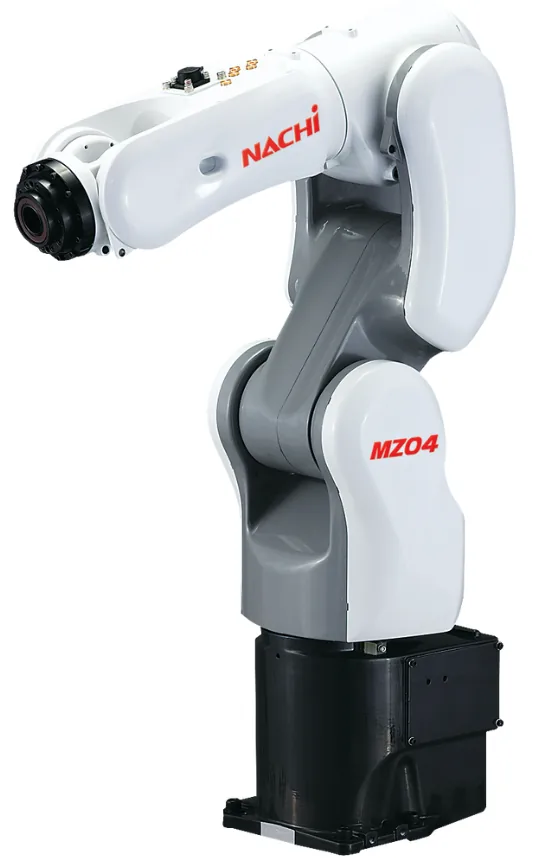
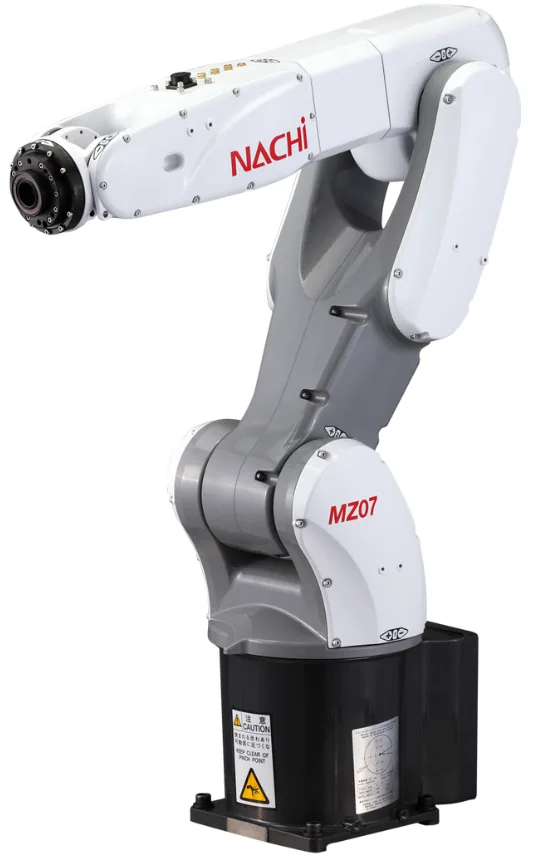
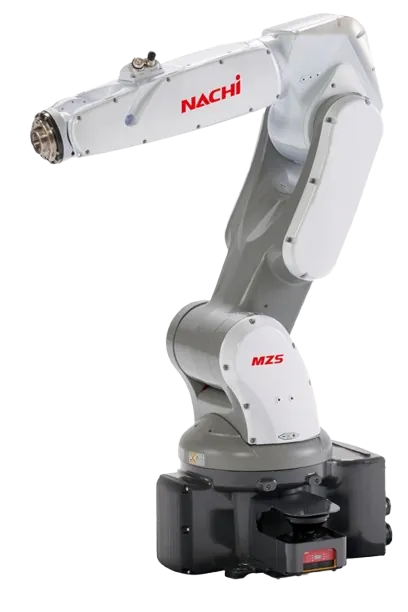
The device is IP67 and supports upside-down and angled mounting. The MZ07 is the flagship model of this series.
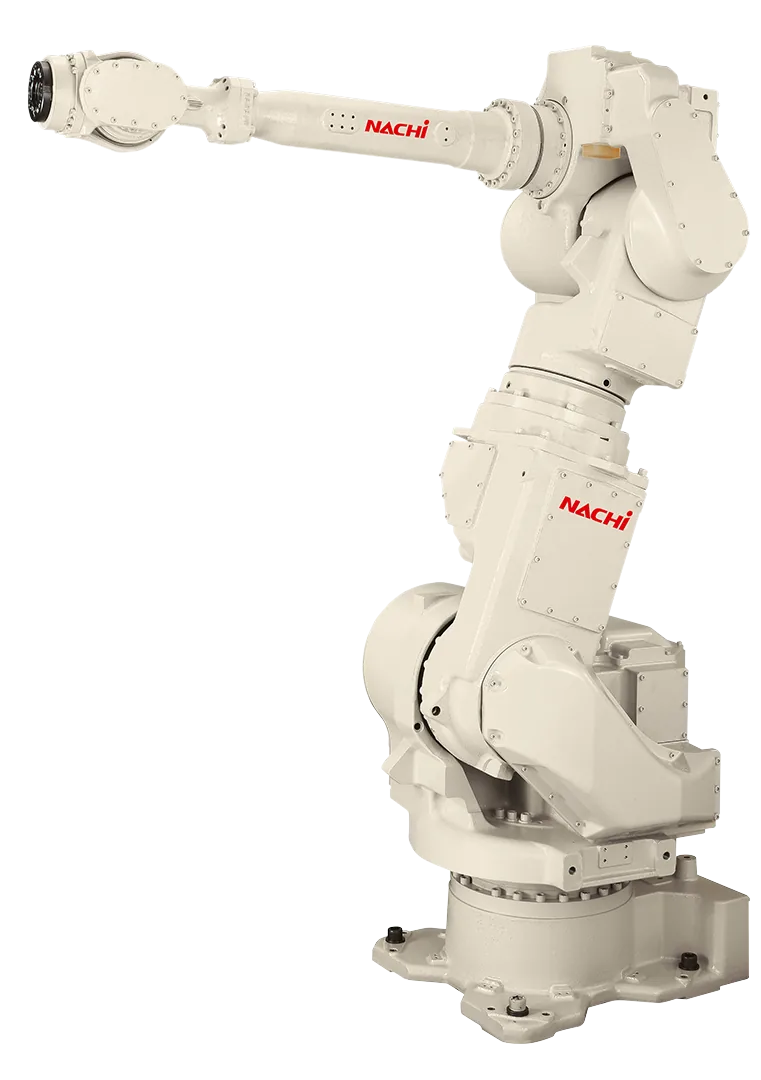
Originating from the world's first servo spot welding robot in 1979, the technology lineage is aimed at automotive welding.
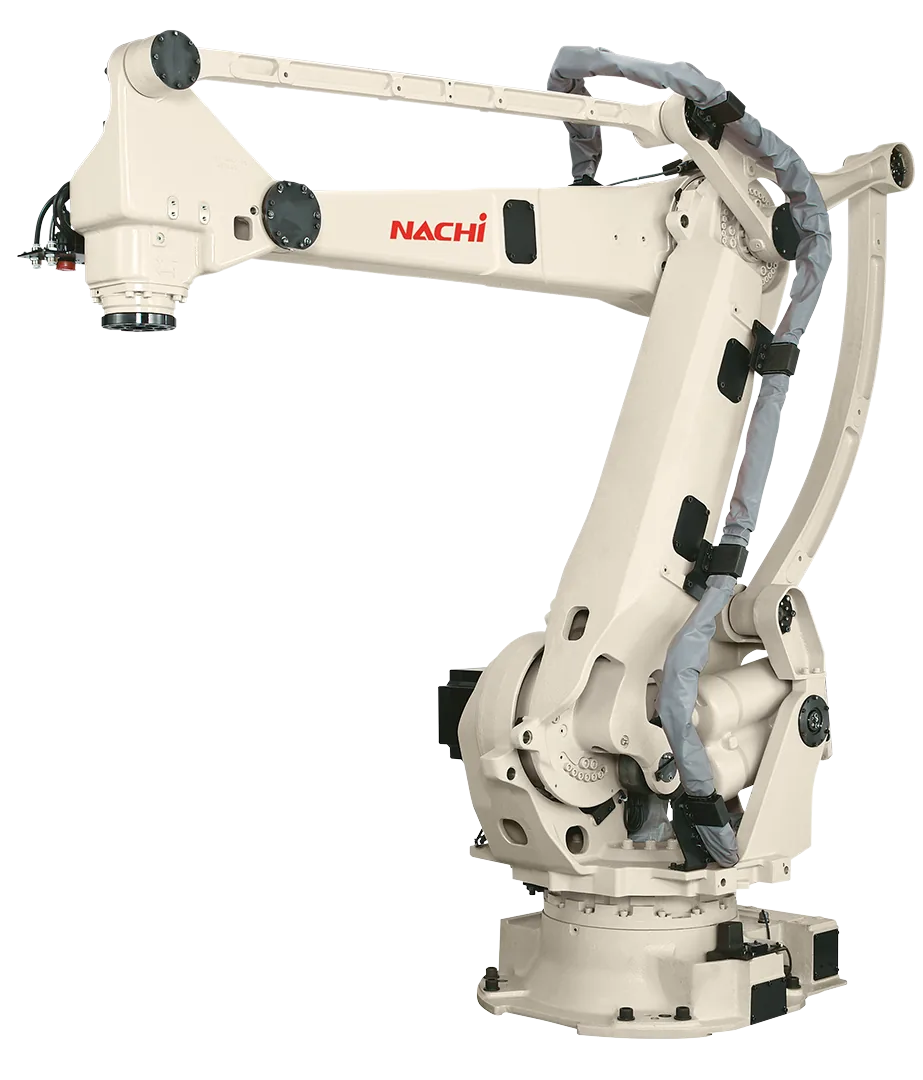
4-axis palletizing machine model, with a reach of 3210mm, designed for heavy-duty palletizing in packaging logistics.
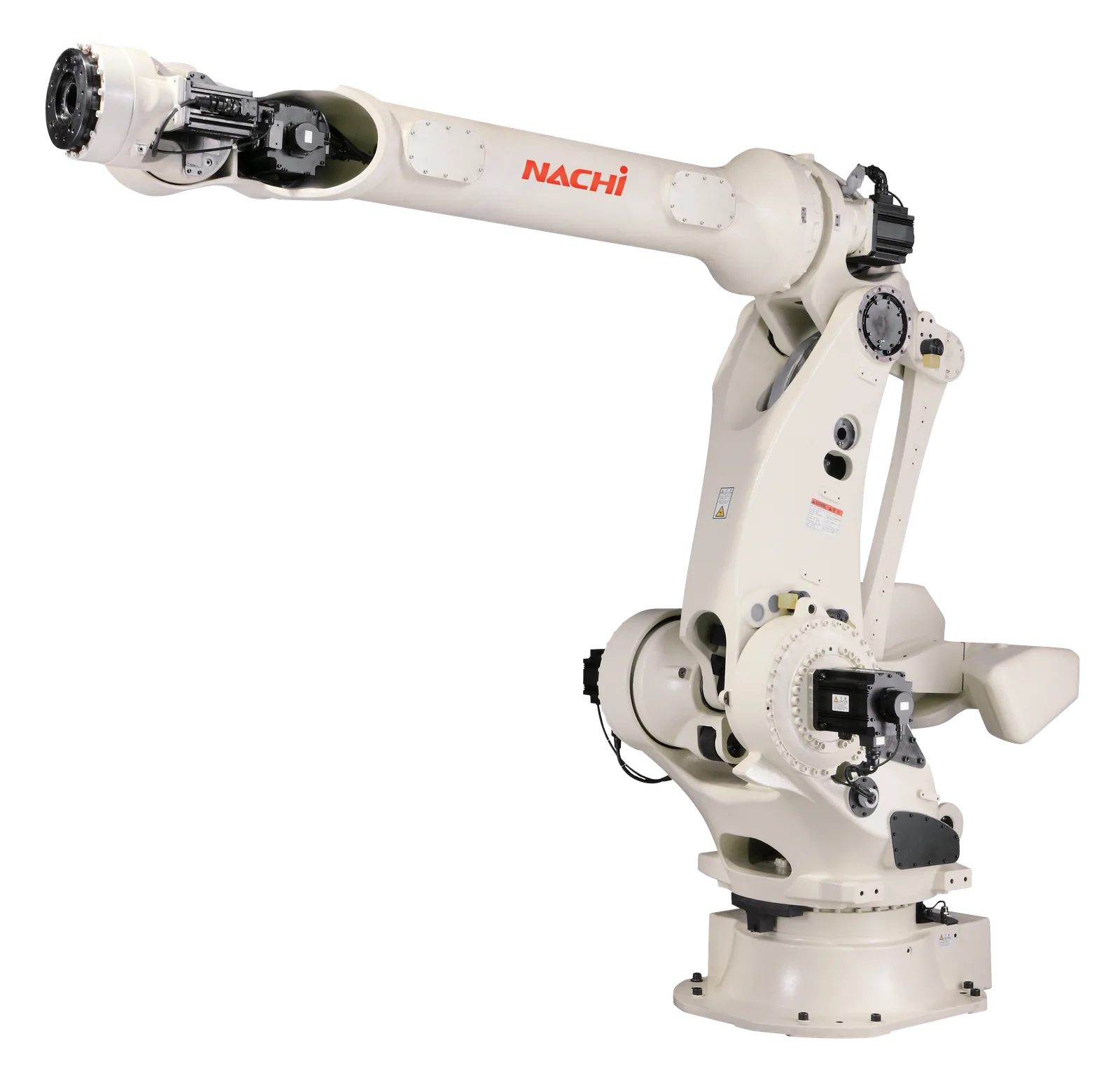
Maximum reach of 3756mm, covering large workpiece handling and machine tool loading/unloading.
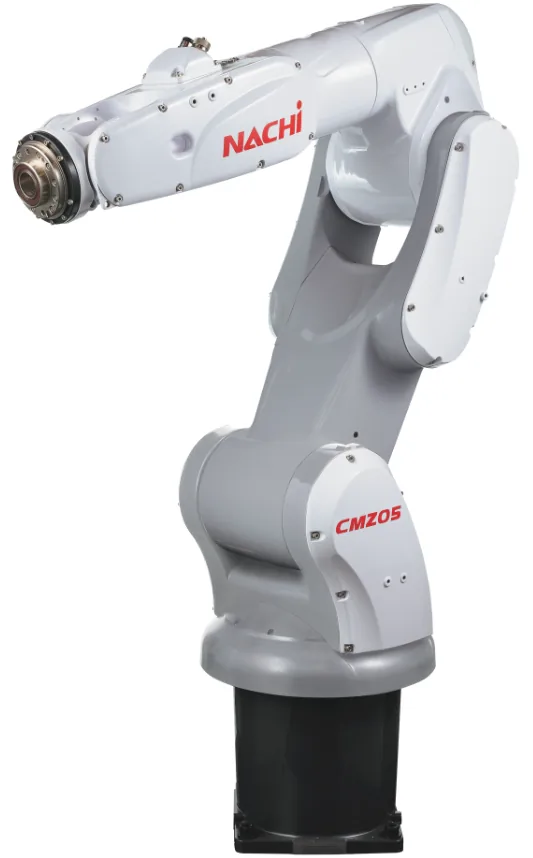
Load capacity 5kg, repeatability ±0.020mm, clean ISO Class 5, human-machine collaboration without fences.
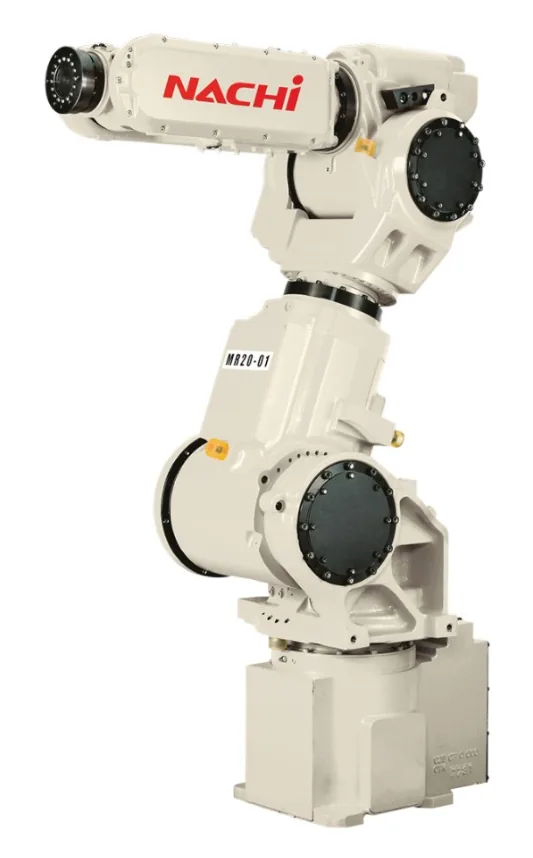
7-axis redundant body designed for arc welding/handling applications involving avoidance and complex trajectories.
Product series and specifications
The following specifications are compiled from the official Nachi-Fujikoshi (NACHI) website (load capacity, reach, footprint, body weight) for model selection comparison.
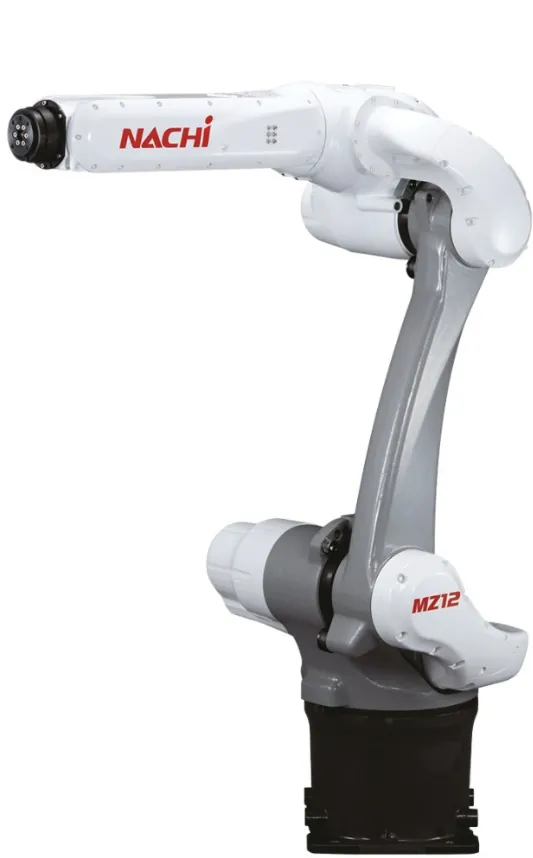
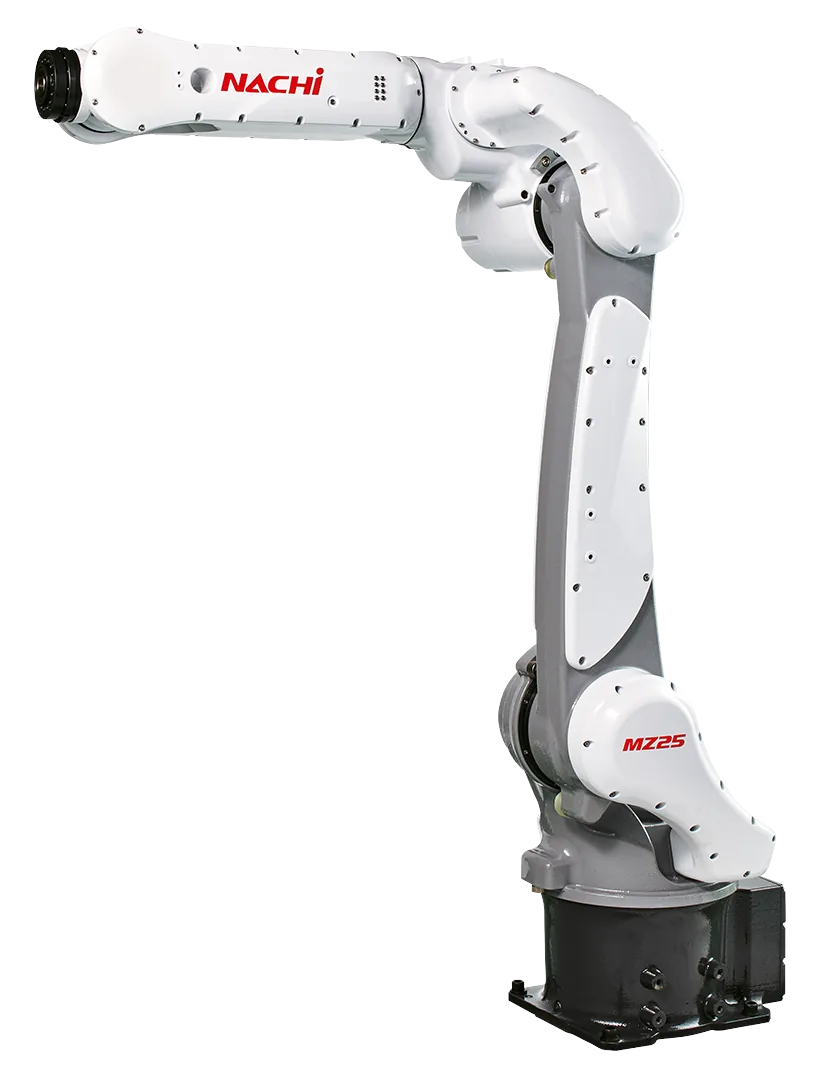
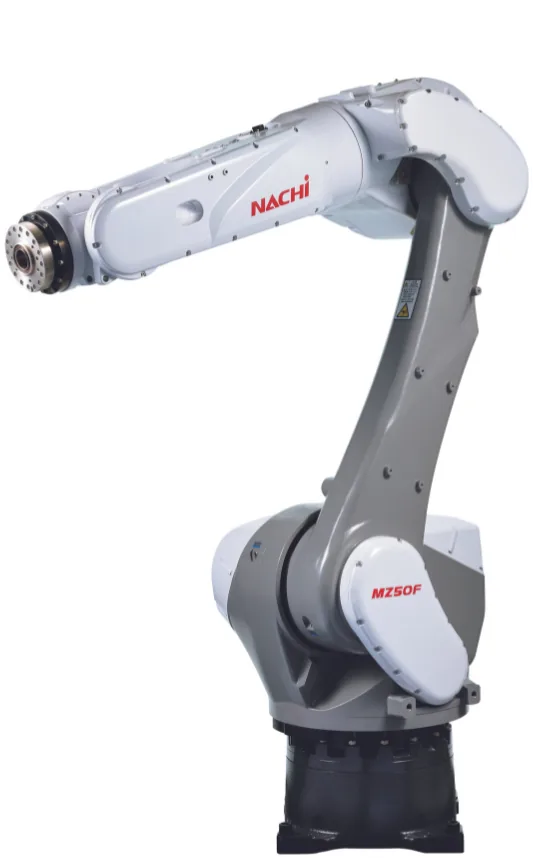
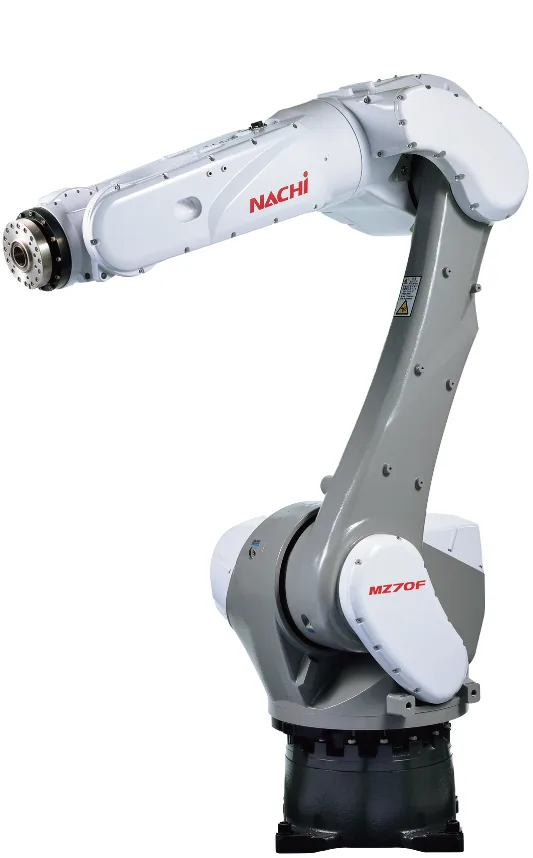
MZ series general-purpose six-axis robots
4-70kg · IP67 · Multi-posture installation
The MZ07 was launched in 2017 under the title "World's Fastest Small Compact Robot" (official timeline).
Sample marked IP67 equivalent (dust- and liquid-resistant), suitable for machining workshops.
Supports floor-standing, countertop, wall, upside down, and inclined installation.
The MZ series includes a Cleanroom option to meet the needs of cleanroom production lines.
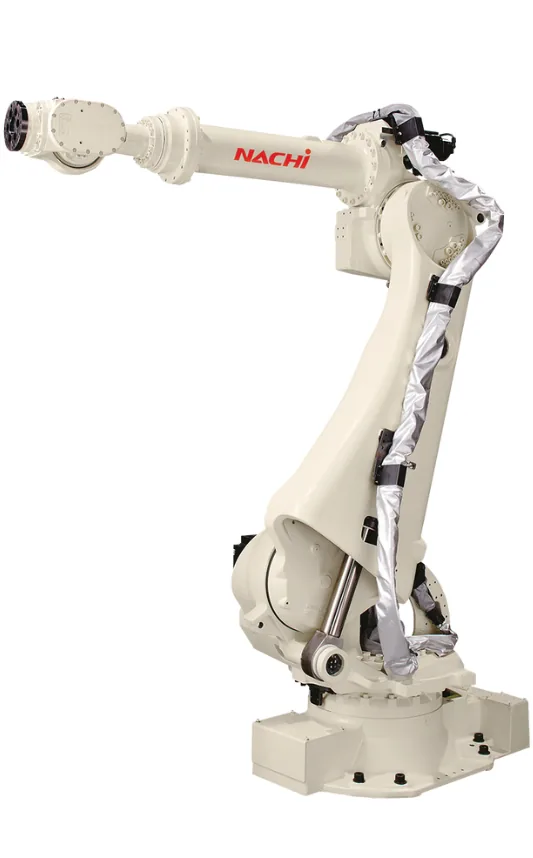
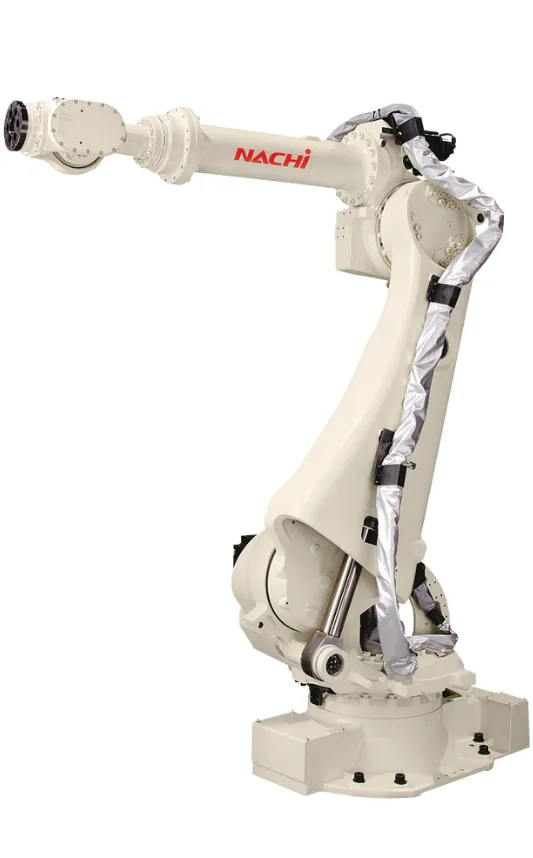
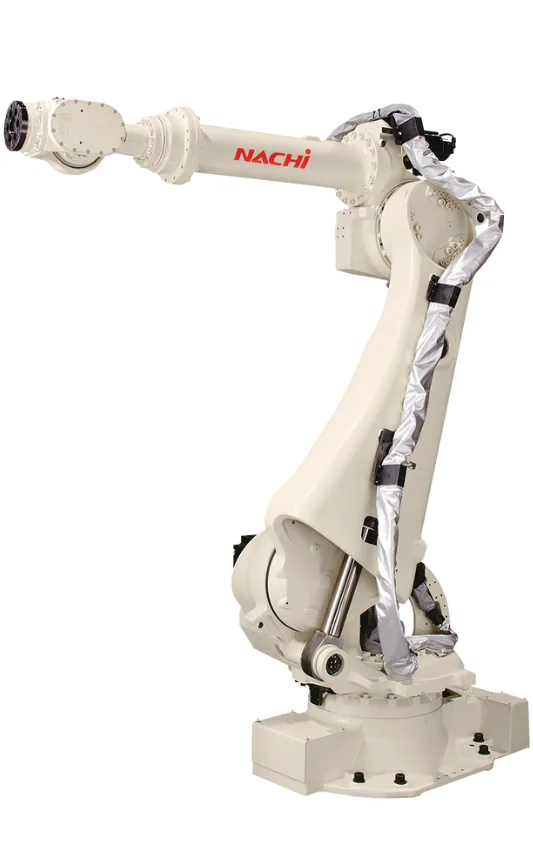
SRA series spot welding robots
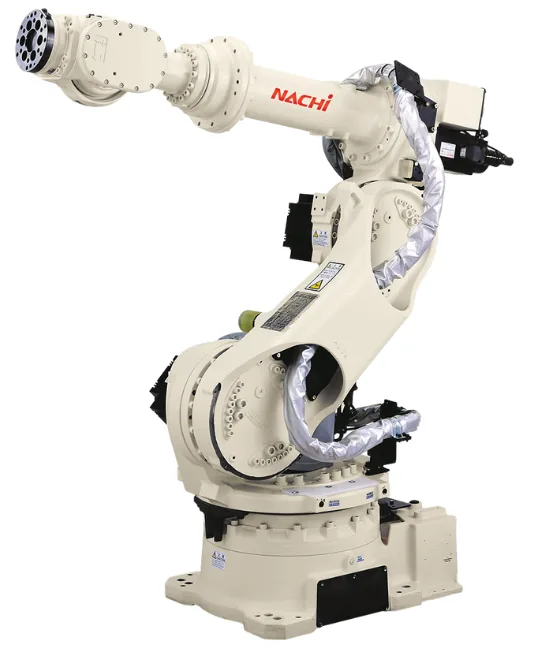
100-250kg · Automotive welding
Originating from the world's first servo motor spot welding robot in 1979.
SRA100J Short-arm high-speed design, SRA210/250 long arm covers large welding areas.
Wrist space supports welding machine cable packs, ensuring stable beats.
LP / MC series palletizing and oversized loads
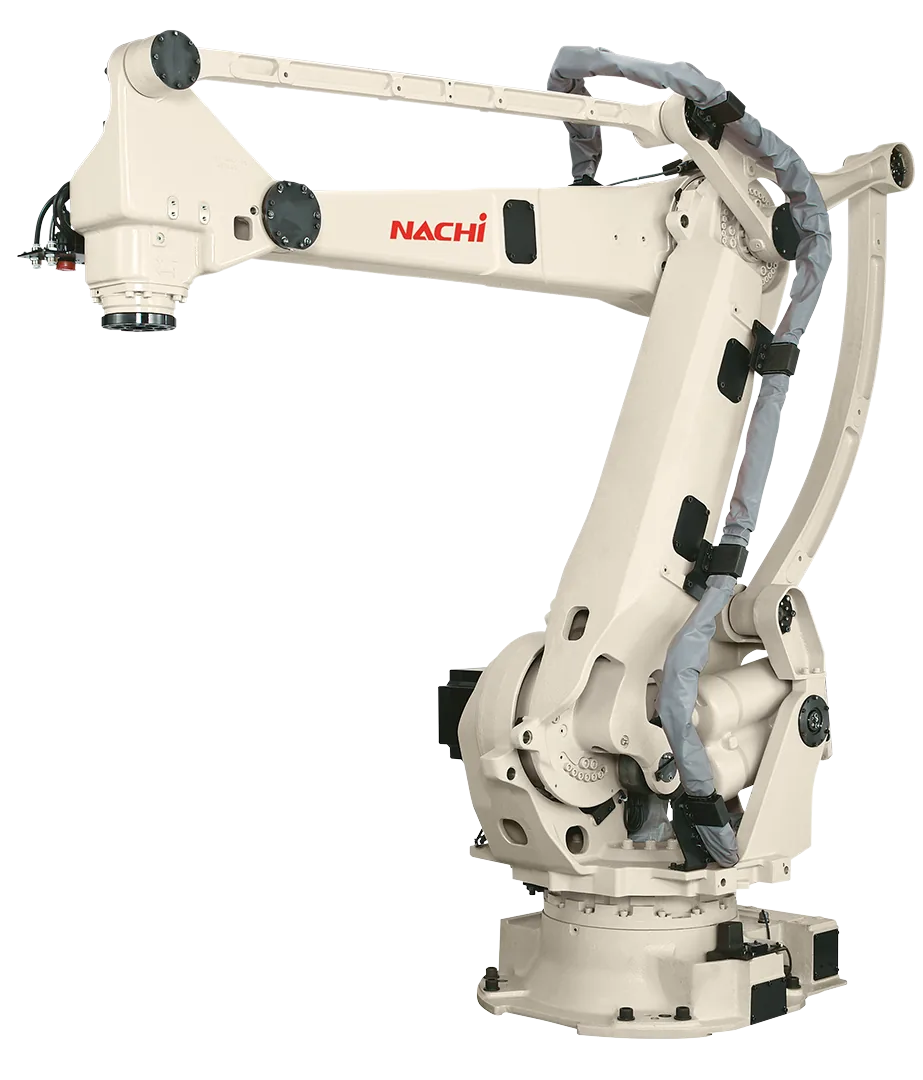
180-500kg · Reach reaches 3756mm
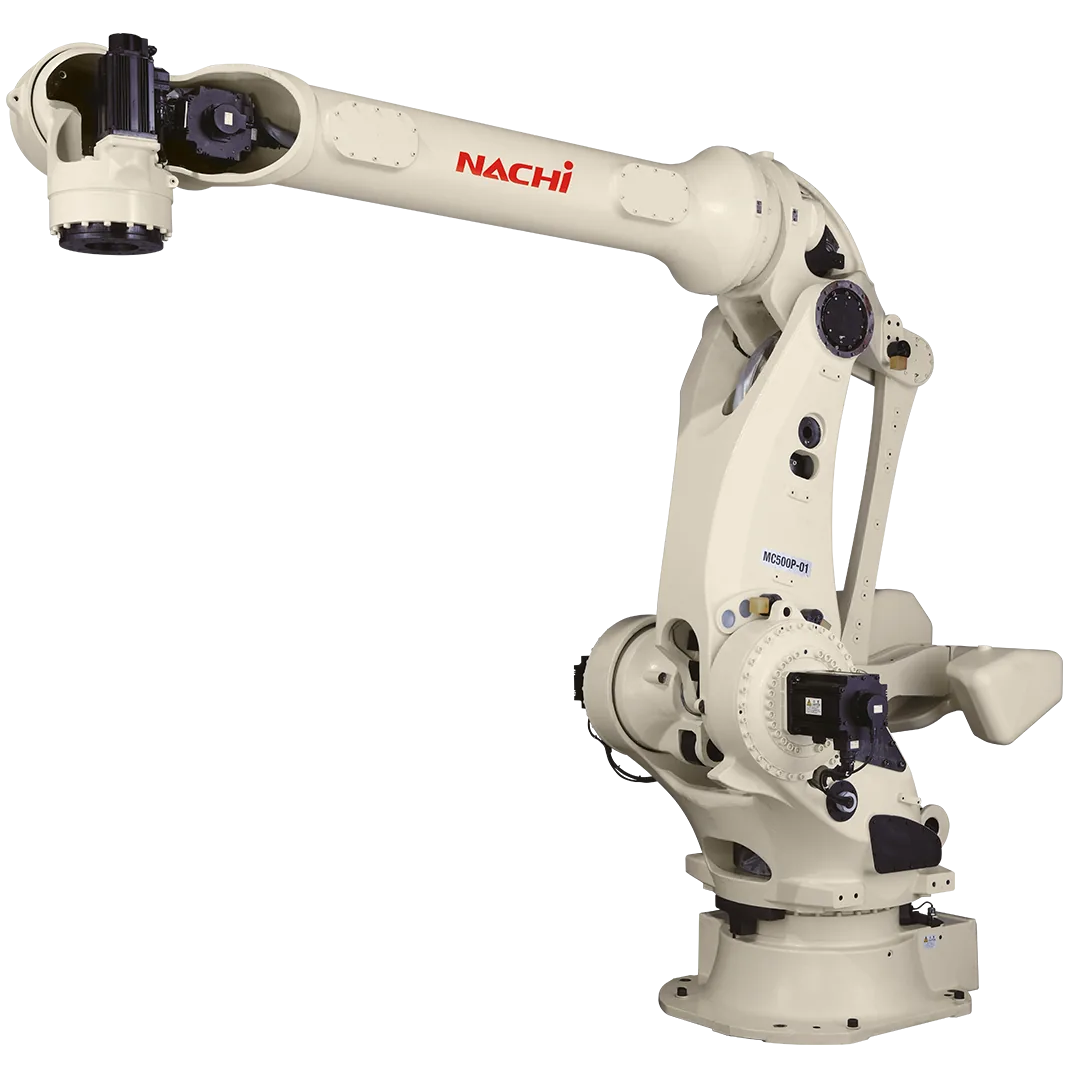
MC500P supports a 500kg load capacity, covering oversized workpieces and mold handling.
LP series 4-axis structure, 3210mm reach facing bag box palletizing.
MC400L has a 3756mm reach, suitable for wide-range operation.
CMZ / MZS / MR collaboration with seven-axis series
5-50kg · Human-machine collaboration/redundancy axis
CMZ05 collaborative speed 1000mm/s, non-collaborative 2500mm/s dual-mode (sample).
CMZ05 meets ISO Class 5 standards, suitable for the electronics and food industries.
MR series 7-axis body with strong avoidance capability, suitable for complex trajectory arc welding.
Core technical features
Comprehensive Heavy Industry · Six Enterprises Collaborate
From special steel materials and bearings to bodies and controllers, Nachi-Fujikoshi has completed the development of key robot components internally.
The MZ series protection reaches IP67 rating (CMZ05 standard) and supports harsh conditions such as cutting fluids and dust.
FD (FD11/FD18), CFD, and CFDS controllers coexist for a long time, and FlexGUI teaching software is cross-generationally compatible.
In 1979, the world's first servo motor spot welding robot was put into production, with the SRA series continuing this process expertise.
CMZ05 features collaborative mode (TCP speed collaboration 1000mm/s) and ISO Class 5 cleanliness rating.
Application scenarios
From palletizing and welding to machine tool maintenance, assembly, dispensing, grinding, and quality inspection, Nachi-Fujikoshi (NACHI) can be quickly deployed to various processes.
Service industry
Nachi-Fujikoshi (NACHI) is widely used in the following industries, and we can provide model selection and implementation support tailored to local industry characteristics.
Why choose Nachi-Fujikoshi (NACHI)?
Six major business segments—tools/machine tools/bearings/hydraulics/materials/robotics—are collaborating, with in-house production of key components.
In 1979, the world's first servo spot welding robot was launched, with the SRA series serving automotive welding lines.
MZ series IP67 protection and multi-posture installation adaptable to harsh machining environments.
Multiple generations of controllers coexist, complete data on discontinued models, facilitating maintenance of existing equipment.
Trusted by global customers
Nachi-Fujikoshi (NACHI) serves many globally renowned companies (brand logo copyright belongs to each individual).
Nachi-Fujikoshi Robot Professional Service
As a third-party industrial robot technology service provider, Henghuan provides full lifecycle support for NACHI's full range of robots, including selection, integration, maintenance, and spare parts.
Process validation, workstation solutions, programming and teach-in and production ramp-up support, and turnkey delivery of robot applications.
Learn more → Sales of new industrial robotsAuthorized-style sales of brand-new mainstream robots with selection support for new production lines and capacity expansion.
Learn more → Research and development of automation equipmentResearch, development, integration, and delivery of end-effectors, conveyor positioning, safety peripherals, and complete control systems.
Learn more → Research and development of algorithms and control systemsMotion planning, machine vision, and PLC/SCADA system development to address takt-time bottlenecks, accuracy, and data interconnection.
Learn more → Robot rentalShort-term rental, long-term rental and lease-to-own for in-stock models, long-term rental, and lease-to-purchase transfer, including transportation, installation, commissioning, and lease-term maintenance.
Learn more → Software and hardware upgrade servicesController retrofits, software and firmware upgrades, mechanical refurbishment, and safety upgrades restoring performance to older equipment.
Learn more → Maintenance and repairOn-site inspection, fault diagnosis and repair, and annual maintenance contracts covering 1,310 models from 21 brands.
Learn more → Used & in-stock robot salesWe buy back used robots and handle inspection, refurbishment and resale; every unit ships with inspection records and a warranty, and trade-ins can offset new purchases.
Learn more →Nachi-Fujikoshi (NACHI) FAQ
Focusing on the selection, maintenance, parts, and second-hand distribution of Nachi-Fujikoshi (NACHI) equipment, we answer the most frequently asked questions from customers.
What are the common generation control systems of NACHI robots? How do you distinguish during maintenance?
The main controller series disclosed on the official website include the FD series (FD11/FD18, with FlexGUI teaching software, plus the FD On Desk desktop version), CFD, and CFDS series. Older models mostly used CFD/CFDS control cabinets, while since 2015, new models have commonly adopted FD controllers. The method of differentiation is to check the control cabinet nameplate model and the teaching software interface (FlexGUI is FD series). Spare parts and program formats are not interchangeable across generations; upgrades and upgrades require evaluating the compatibility of the encoder interface.
NACHI robot reports encoder alarms or missing positions. Which directions should it generally check?
Common issues: insufficient battery power of the main encoder (loss of origin data after long-term power outage), encoder cable wear (especially inside the J1/J2 drag chain), and moisture contamination of the motor-side encoder. You can first check the battery voltage inside the control cabinet and perform the origin reset procedure; If recurring occurs, combine on-site diagnosis to confirm cable continuity and encoder body status, and if necessary, perform oscilloscope-level signal detection.
How often should the NACHI body reducer (RV/harmonic) be maintained?
A common practice is to set cycles based on operating hours and lubrication status: RV reducers typically undergo an initial grease change of 1000-2000 hours, followed by intervals of 8000-10000 hours or a year (first come, first served); Harmonic reducers are mostly managed according to the manufacturer's grease lifespan. The specific cycle varies with load rate and start/stop frequency, based on actual operating conditions and the NACHI random maintenance manual. Abnormal noises, temperature rise, and increased backlash are preemptive maintenance signals.
How to handle a teach pendant button malfunction or screen abnormalities?
Common faults in FD-type teaching boxes include aging of membrane buttons, poor contact of LCD screen flex cables, and failure of micro switches in the emergency stop circuit. You can back up the program before removing the inspection cable; Emergency stop circuit faults will trigger servo alarms; do not short-circuit emergency stop during use. If the teach pendant shows no display at all, check the power supply circuit inside the control cabinet and recommend on-site diagnosis.
Old CFD/CFDS control cabinets often trip or have a burnt smell. Can they still be repaired?
These situations are mostly related to aging of the driver module capacitor or fan shutdown causing overheating. CFDS control cabinets are quite old, with modules repairable but spare parts tending to be discontinued; If there is no burnt smell and only an overtemperature alarm, you can clean the air duct and replace the fan first. If protective components or PCB carbonization occur, an overall assessment is recommended, and controller upgrades (retaining the body and motor) may be considered.
What should be noted for protection when using the NACHI MZ series for machine tool loading and unloading?
MZ samples are marked with protection rating IP67 equivalent (dust and liquid resistance), which can withstand cutting fluid splashes but does not guarantee submersion. When installing upside down, pay attention to the direction of the wrist oil seal and the wiring seal; Models exposed to high-pressure spraying for extended periods require a protective cover and shortened lubrication and maintenance intervals.
What inspections should be done before purchasing a used NACHI robot?
Recommended tests: full-axis zeroing and positioning accuracy retest (repeat positioning with laser tracker or dial indicator), abnormal noise and backlash on each axis, reducer temperature, cable and battery status, program and parameter backup integrity, teach pendant emergency stop and safety loop function verification. For spot welding SRA series, also check for wear on the wrist through-hole cable pack. Be cautious with devices that cannot be powered on or are password-locked.
Nachi-Fujikoshi Robot Professional Service
Henghuan offers selection consulting, integrated commissioning, maintenance, and spare parts supply for the full NACHI robot series, covering FD/CFD/CFDS controller models, supported by third-party OEM-level technical documentation.
Contact Henghuan