New energy and lithium battery photovoltaics
Industry Robot Application Solutions · 12 Covered Brands · 5 types of typical processes
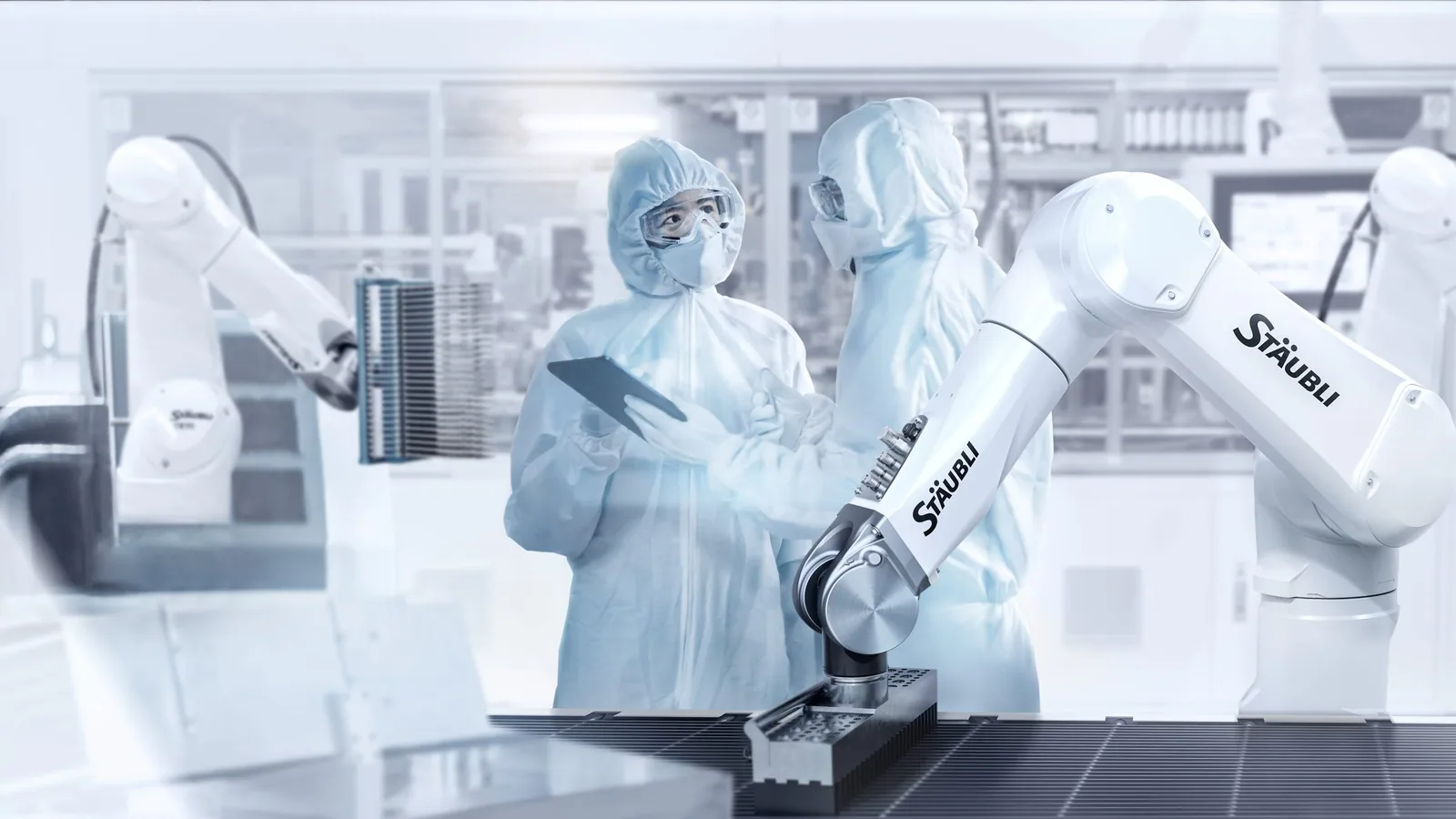
Robotic applications in the new energy and lithium battery photovoltaic industries
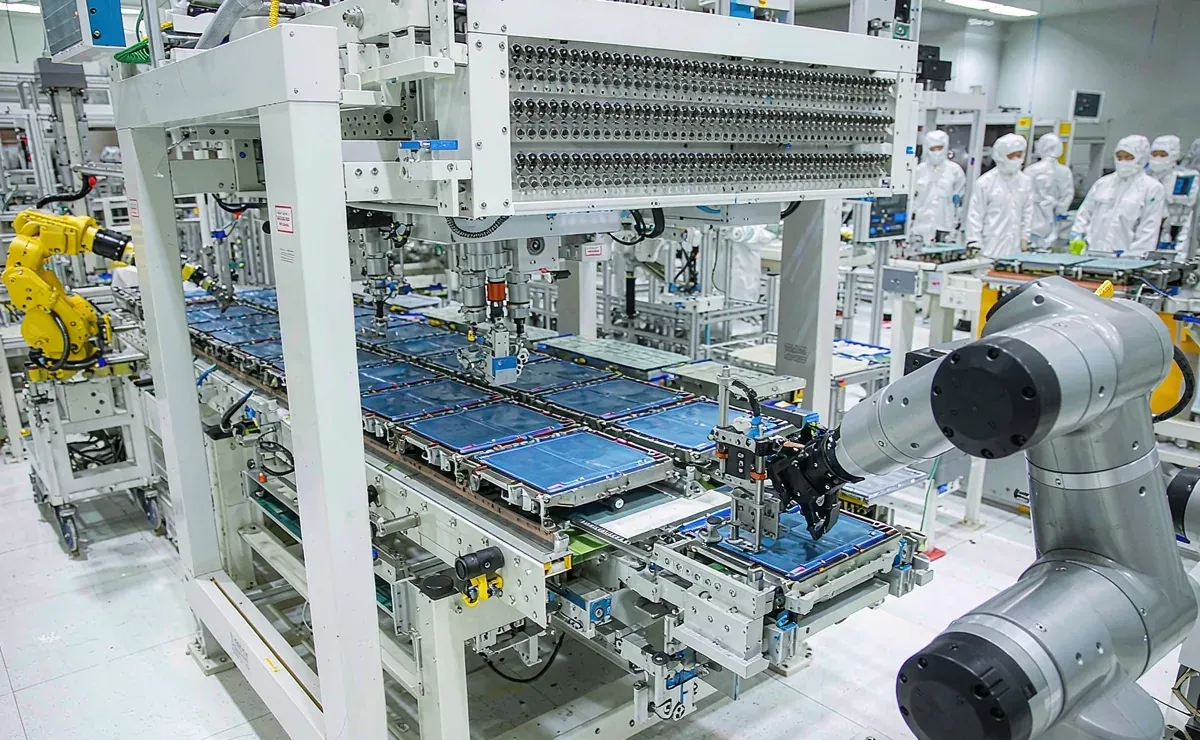
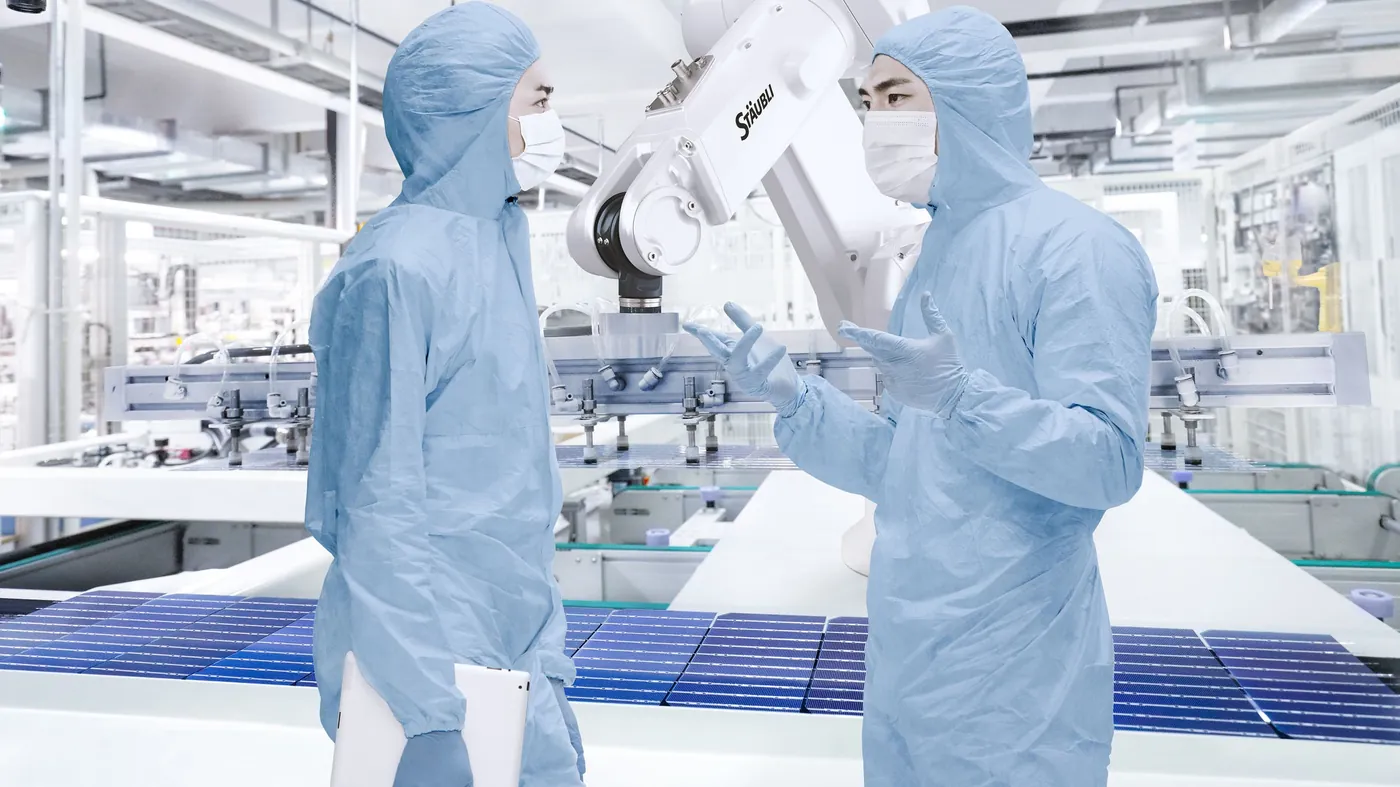
Lithium batteries (cell assembly, module packaging) and photovoltaics (wafer handling, string soldering and unloading) have seen the fastest growth in robot demand in recent years. The process features high-speed pick-and-place, precision assembly, and cleanliness requirements. Collaborative robots like JAKA and AUBO are increasingly used in cell inspection stations. Henghuan keeps pace with the industry's equipment update pace, providing repair and second-hand circulation services.
Typical automated processes
Common robotic processes in this industry—click to view key application points, customer cases, and applicable brands.
Sorting involves first grabbing small parts or food that move at high speed on a conveyor belt before sorting them, requiring high-speed movement. Kawasaki's YF series sorting robots can achieve high-precision, high-speed movements. It can be combined with the visuals developed by our company...
View process details → AssemblyAutomation of challenging assembly processes using Kawasaki's latest technology. Advances in automation control technology enable robots to complete complex assembly processes that were previously impossible. Over the past 40-plus years, Kawasaki has continuously improved its technology to meet the high...
View process details → Material handlingReducing labor costs through automation Material Handling (MH) utilizes the simple capabilities of robots to transport objects. By fitting the robot with the appropriate end-of-arm tooling (for example, a gripper), the robot can efficiently and accurately transfer products from a position...
View process details → Quality inspectionZero tolerance, hard power! With collaborative robots, a safer, more efficient, and more precise quality inspection process is achieved, ensuring product quality is always on the line and consistency is impeccable. Equipped with an economical yet agile robotic arm, it not only standardizes operation processes but also...
View process details → Wafer handlingWafer handling is a crucial step in the pre-production process of semiconductor manufacturing equipment, especially requiring high precision and high speed. Kawasaki's wafer handling robots can provide high-quality, high-performance clean robots, ranking among the top in global market share. …
View process details →Covering branded equipment
Robot brands within Henghuan's service scope that have practical applications in the new energy and lithium battery photovoltaic industries. Click to enter the brand page to view series and model specifications.
 FANUC104 models
 ABB45 models
 Inovance Technology58 models
 Estun71 models
 Stäubli30 models
 Epson112 models
 Siasun Robotics26 models
 EFORT32 models
 JAKA19 models
 TOPSTAR24 models
 HSR Robotics23 models
 QJAR Robotics40 models
Henghuan can provide services for the new energy and lithium battery photovoltaic industries
All six core businesses can be procured independently or in combination.
Process validation, workstation solutions, programming and teach-in and production ramp-up support, and turnkey delivery of robot applications.
Learn more → Sales of new industrial robotsAuthorized-style sales of brand-new mainstream robots with selection support for new production lines and capacity expansion.
Learn more → Research and development of automation equipmentResearch, development, integration, and delivery of end-effectors, conveyor positioning, safety peripherals, and complete control systems.
Learn more → Research and development of algorithms and control systemsMotion planning, machine vision, and PLC/SCADA system development to address takt-time bottlenecks, accuracy, and data interconnection.
Learn more → Robot rentalShort-term rental, long-term rental and lease-to-own for in-stock models, long-term rental, and lease-to-purchase transfer, including transportation, installation, commissioning, and lease-term maintenance.
Learn more → Software and hardware upgrade servicesController retrofits, software and firmware upgrades, mechanical refurbishment, and safety upgrades restoring performance to older equipment.
Learn more → Maintenance and repairOn-site inspection, fault diagnosis and repair, and annual maintenance contracts covering 1,310 models from 21 brands.
Learn more → Used & in-stock robot salesWe buy back used robots and handle inspection, refurbishment and resale; every unit ships with inspection records and a warranty, and trade-ins can offset new purchases.
Learn more →Industry Status: Automation demand driven by the expansion wave of lithium battery photovoltaic capacity
The new energy industry has seen the fastest growth in robot sales over the past five years: production lines for lithium batteries (cells-modules-PACK-cell trays) and photovoltaics (silicon wafers-cells-modules) have nearly 100% automation, and almost all new capacity is built on automated lines. At this stage, the trend has shifted from "land expansion" to "quality and efficiency improvement": differentiated capacity utilization is forcing cost reduction, upgrading and upgrading of old production lines is increasing, and overseas factory construction is driving equipment exports and service exports abroad.

The characteristics of lithium battery manufacturing processes determine the form of equipment:Electrode sheet processing(Coating/roll pressing/slitting) Specialized machines are the main focus, while robots are concentrated inBattery cell assembly(winding/stacking loading and unloading, shell insertion, sealing welding) and Module PACK(cell sorting, stacking, laser welding, bolt tightening, EOL testing); The applications of photovoltaic robots are concentrated inCell string soldering loading and unloading, component layout, frame gluing, and laminating loading and unloading。 Laser welding of copper and aluminum distinct materials, welding of cell explosion-proof valves, and flexible handling of large silicon wafers (prone to fragmentation) are each a process challenge.
| Link | Robot applications | Key technical barriers |
|---|---|---|
| Battery cell assembly | Winding/stacking material and unloading, shell insertion, and liquid injection | Clean drying room (dew point below -40°C) equipment adaptation and aluminum shell non-destructive handling |
| Module stacking | Cell sorting, picking, stacking, and applying thermal conductive adhesive | Battery cell surface intact (protected by insulating film), adhesive consistency CV≤5% |
| PACK welding | Busbar laser welding and bolt tightening | Copper-aluminum laser welding process window and full traceability of tightening data |
| Battery tray | Aluminum alloy MIG/CMT welding and friction stir welding | Helium inspection and deformation control of weld airtightness |
| Photovoltaic string welding | Cell loading, loading, and layout | Ultra-thin silicon wafer (≤150μm) flexible handling, fragmentation rate: <0.1% |
| Component packaging | Frame gluing, laminating loading and unloading, EL inspection and online operation | Online inspection of large-size glass handling and continuous inspection of sealing strips |
| Warehousing and logistics | Pole coil/module handling, AGV docking | Heavy-duty handling (pole coil tonnage) and logistics system scheduling |
Eight major business areas in the new energy sector
Suitable drying room for maintenance and repairIt's a hard threshold: the liquid injection and sealing processes on the lithium battery production line operate in drying rooms below dew point -40°C, with strict procedures for personnel entry and exit and equipment maintenance (buffer room, time control)—our engineers work according to customer drying room procedures, with maintenance windows coordinated with production schedules to avoid delays in production capacity.
Software and hardware upgradesConnecting with the wave of technological upgrades: Early lithium battery production lines (built between 2018 and 2021) faced the need for tap tap potential and precision recovery; the combination of motor optimization + mechanical refurbishment usually saved over 60% of the investment compared to replacement lines; Production lines with discontinued control systems are replaced with the same brand, with complete migration of programs and process parameters.
Robot rentalService capacity fluctuations: temporary capacity during order ramp-up periods, capacity continuation during technological transformation transitions, and testing equipment during new process validation periods. The leasing model makes cash flow in heavy-asset industries more flexible; New energy customers are sensitive to equipment delivery speed; our inventory-based models can be delivered within a week.
Industry Q&A
What special requirements do maintenance robots have in the drying room?
Three things: personnel change clothes according to drying room procedures (buffer process), pre-dry tools and spare parts (to avoid moisture bringing in and affect dew point), and dew point recovery time after maintenance must be included in the schedule. Our drying room maintenance SOP covers these details, scheduling with the customer's equipment department before operation to minimize the impact of dew point recovery on production.
What is the difference between robotic maintenance at laser welding stations?
The core of the laser workstation is the coordination between the robot's trajectory accuracy and the laser head: trajectory drift directly affects weld position and penetration depth. PM projects include TCP calibration (using laser trackers or calibration balls), protective lens contamination inspection, and wire feeding mechanism (wire feeding welding) maintenance. We work in collaboration with laser equipment suppliers, and the responsibility interface between the robot and laser sides is clearly defined in the maintenance contract.
How to control the fragmentation rate during photovoltaic wafer transport?
Dual approach to end and process: flexible suction cup (low-hardness silicone/foam) + graded vacuum control (large suction cup with wide low vacuum distribution, avoiding stress concentration), handling acceleration limitation (S-curve design, suppressing sheet vibration), visual correction of incoming material position (avoiding hard alignment and extrusion). The fragmentation rate indicator (<0.1%) is written into the acceptance criteria and verified using continuous production data.
Do new energy and lithium battery photovoltaic industry equipment require technical support?
Tell us your brand model, processes, and equipment status. Henghuan offers robot maintenance, servicing, second-hand purchase, sales, and selection advice for the new energy and lithium battery photovoltaic industries. Rooted in Yilong, focused on Sichuan and Chongqing, serving the vast Southwest.
Contact Henghuan View all industries