Epson · Industrial Robots (Robotic Arms/Manipulators), the full range
With over 40 years of precision manufacturing experience, EPSON's SCARA robots have consistently ranked among the top in global shipments. Our products cover SCARA, six-axis, and collaborative robots, renowned for high speed, high precision, and cost-effectiveness, widely used in 3C electronics, semiconductors, automotive parts, medical, and laboratory automation.
Epson product family
The cost-effective flagship SCARA covers 400-1000mm arm length, battery-free motor unit.
High-rigidity vibration damping design, with a cycle time as fast as 0.33 seconds and an accuracy of ±0.008mm.
The classic product line powered by PowerDrive servo technology has a large supply base.
RS hoisting model and LA lightweight economy model, meeting special layout requirements.
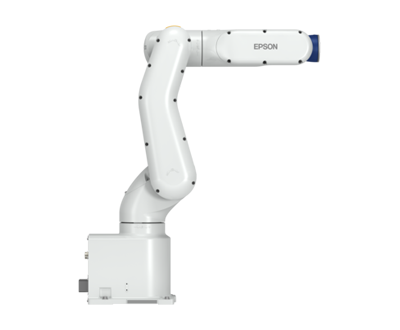
Compact six-axis and C12XL medium-duty payload models, with a reach of up to 1400mm.
The N series folding arm enters tight spaces, while the VT6L is oriented toward clean handling.
Likong Security Collaboration, supports Python/ROS2, and adapts AMR integration.
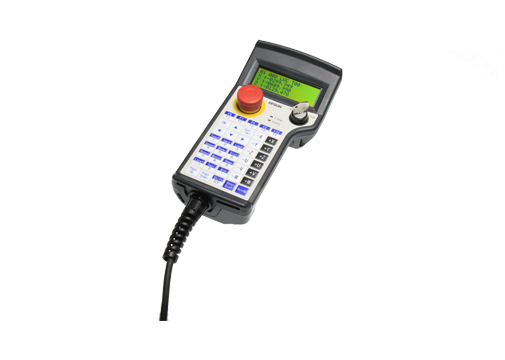
RC+ programming software, RC700/RC800/RC-A101 controllers, and a full set of automation accessories.
Product series and specifications
The following specifications are compiled from the official Epson website information (load, reach, footprint, body weight) for model selection comparison.
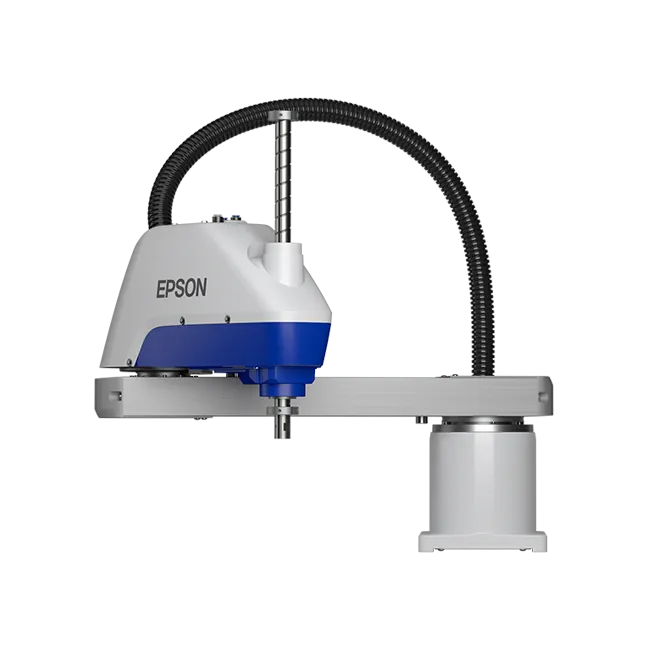
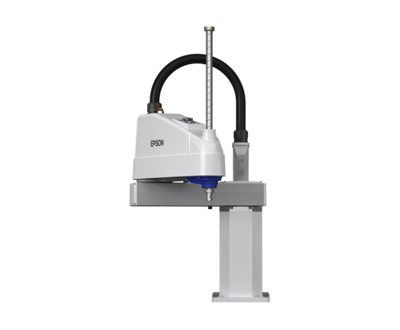
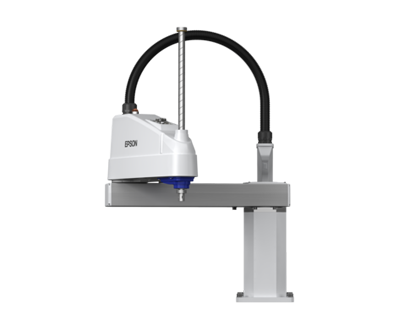
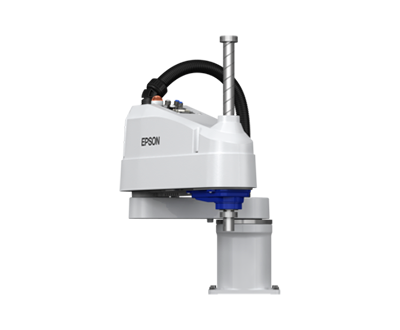
LS / T Series SCARA · Economical main force
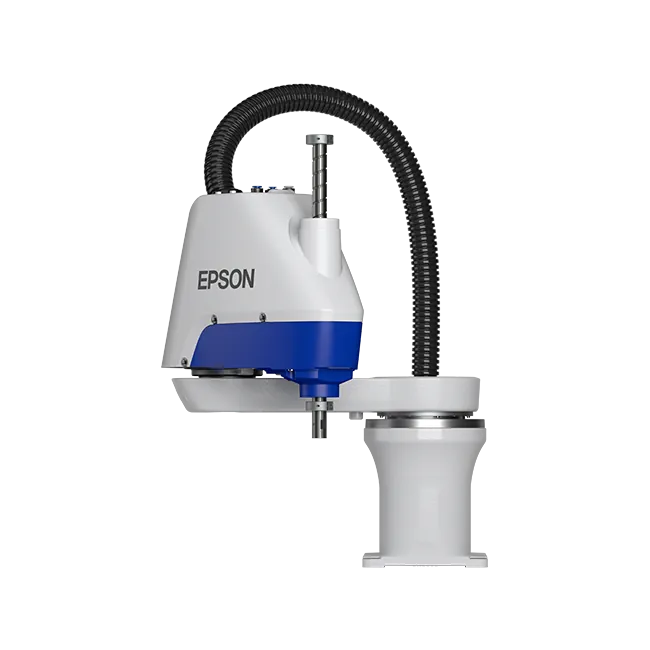
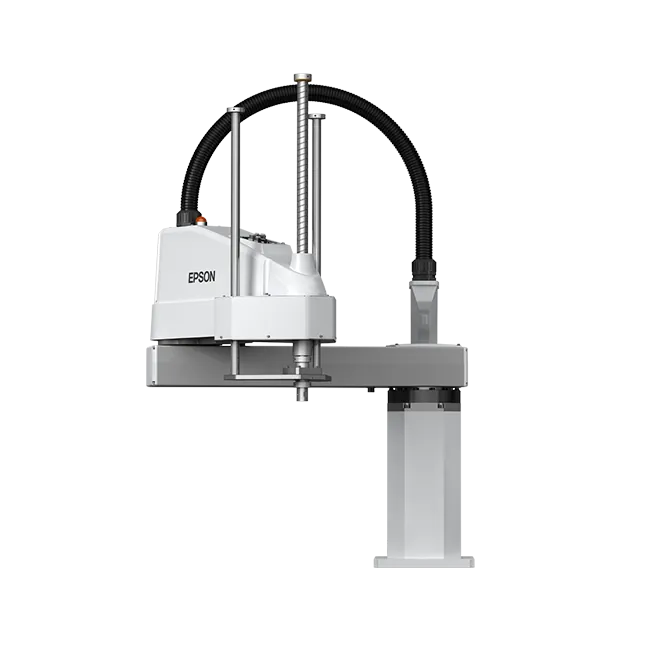
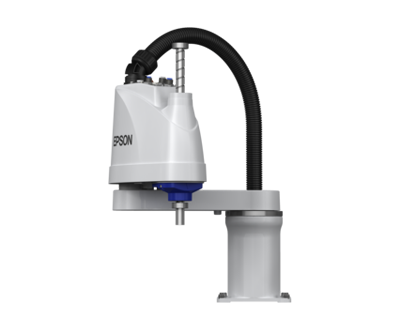
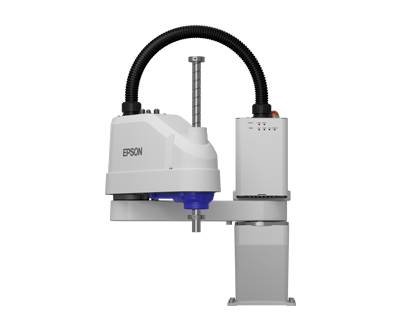
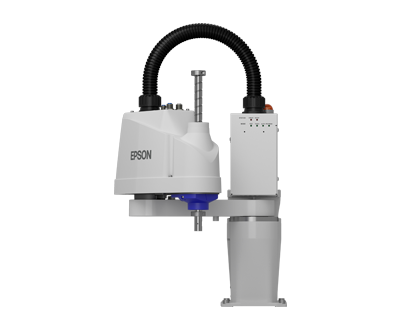
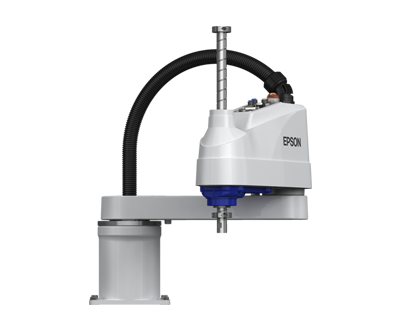
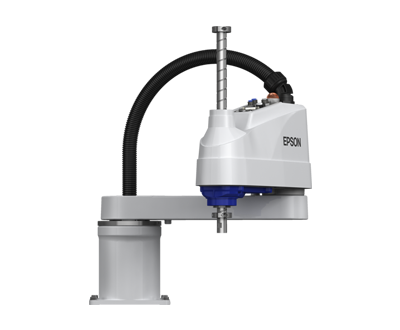
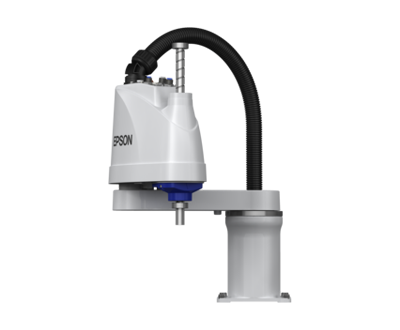
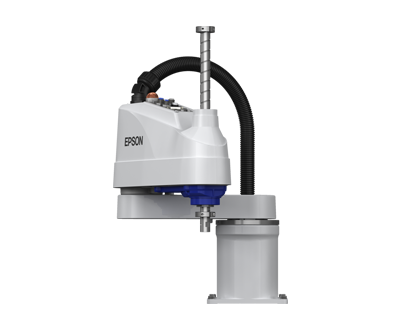
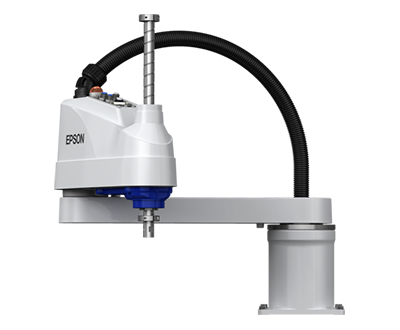
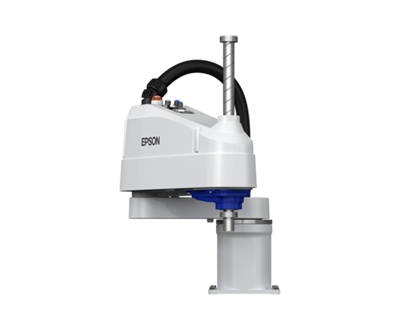
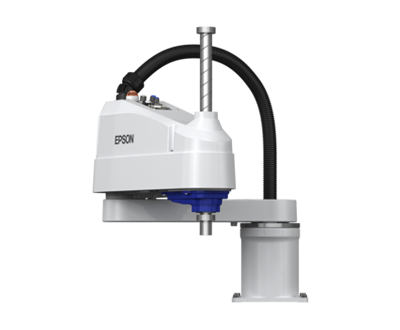
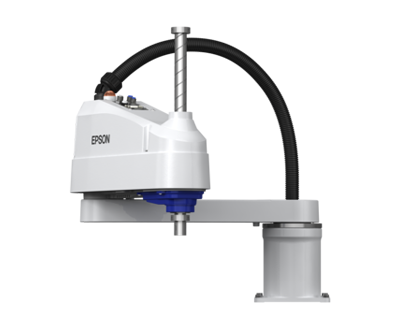
The Epson LS series is the economical flagship model for the SCARA market, covering arms of 400-1000mm and loads of 3-20kg. It comes standard with a battery-free motor unit, suitable for large-scale applications such as 3C electronic assembly, plug-in insertion, and handling. The T3/T6 are compact all-in-one machines, further reducing installation space and cost.
The LS series delivers Epson-quality speed and precision at competitive costs, making it the preferred choice for mass deployment.
No need to replace batteries, reducing downtime and maintenance time, and lowering long-term usage costs.
LS3 to LS50 cover mainstream loads and arm length combinations, offering flexible selection.
Versions compliant with ISO cleanliness standards and ESD anti-static are available, suitable for the semiconductor and medical industries.
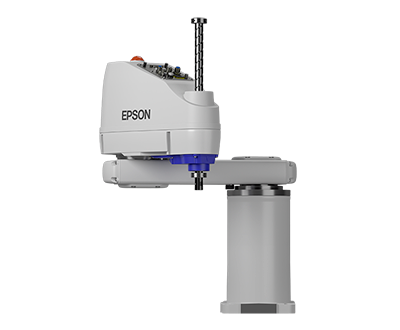
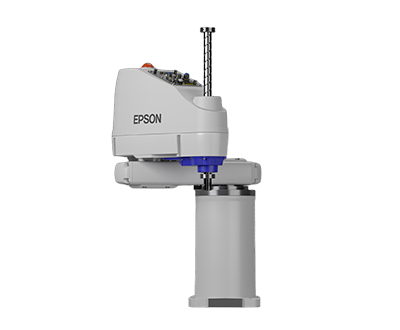
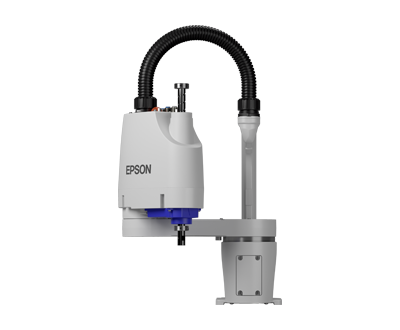
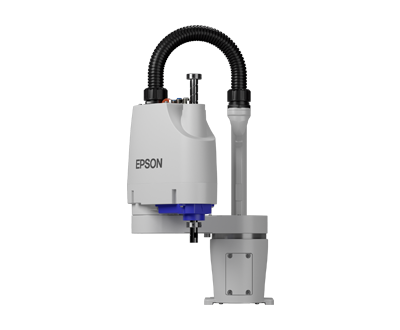
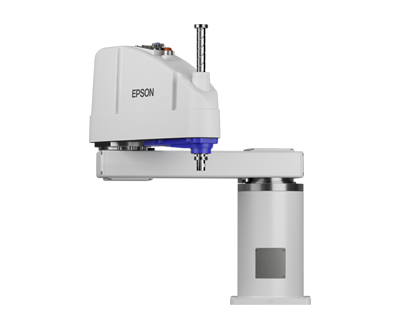
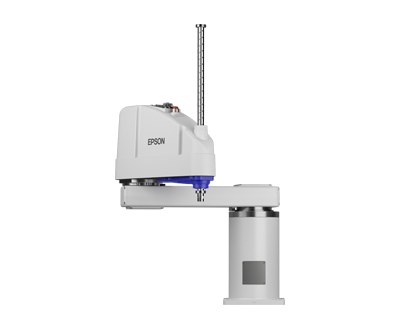
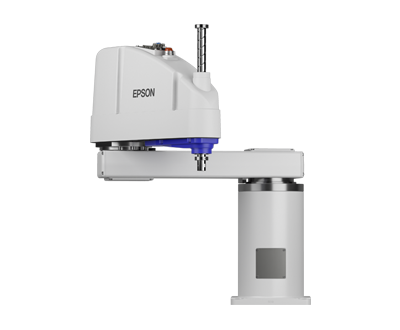
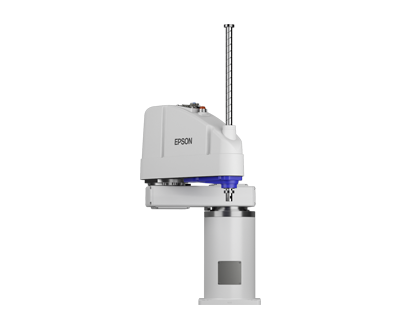
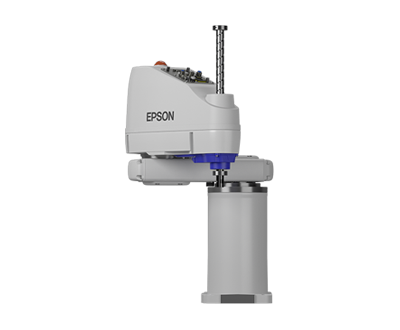
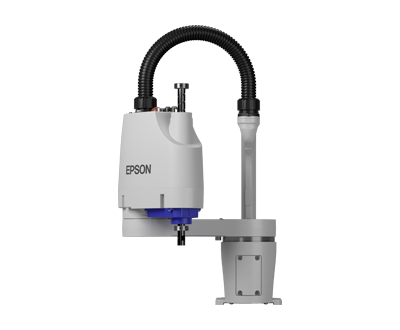
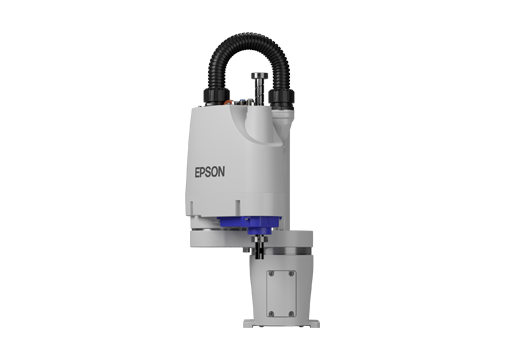
GX Series SCARA · High-performance flagship
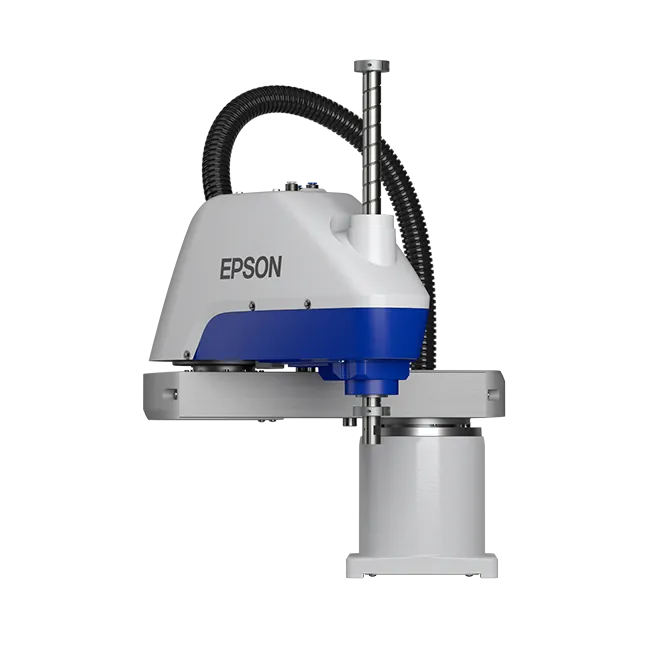
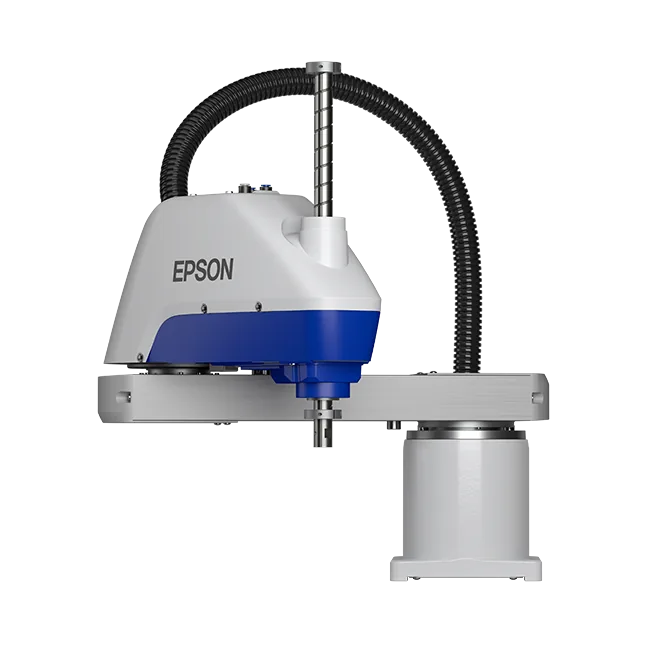
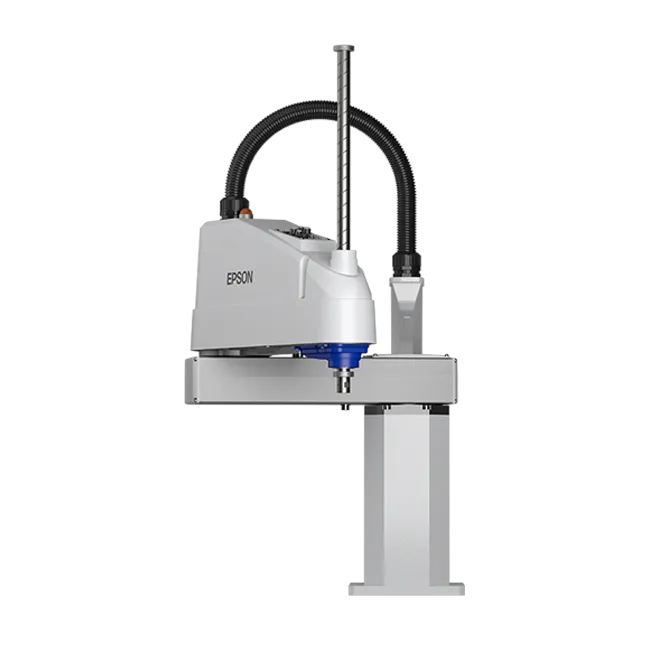
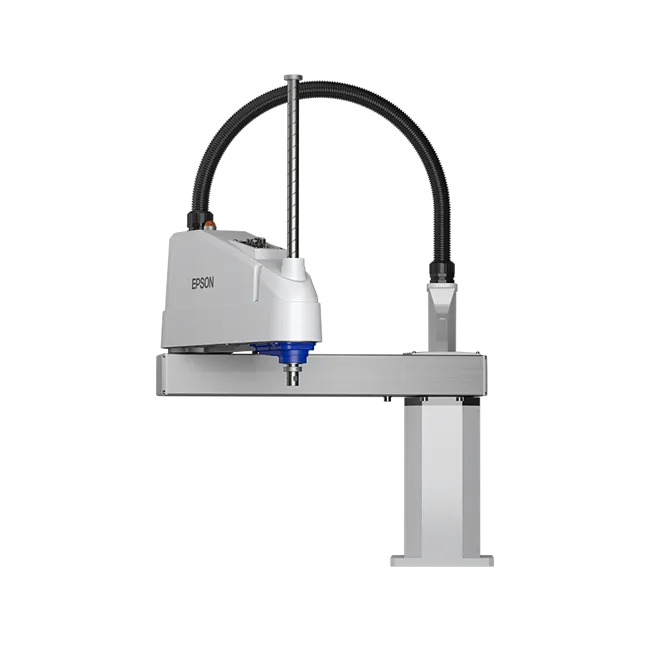
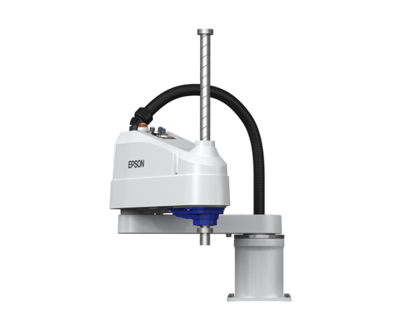
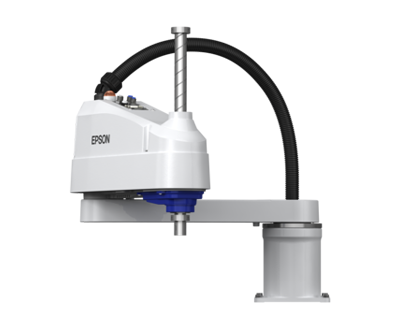
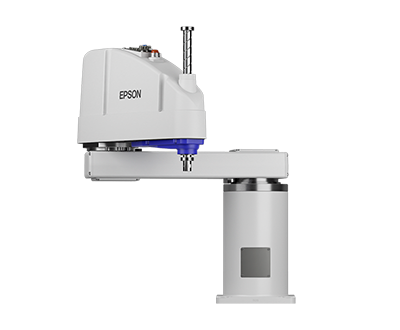
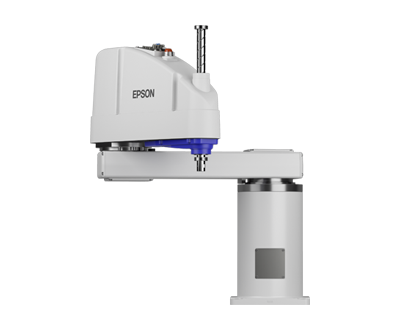
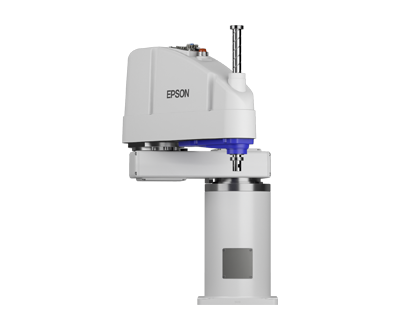
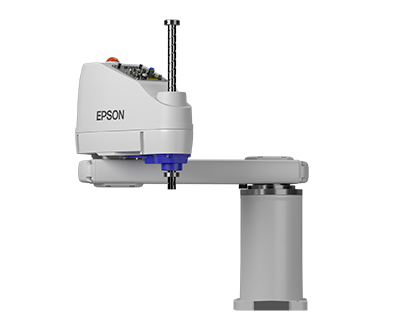
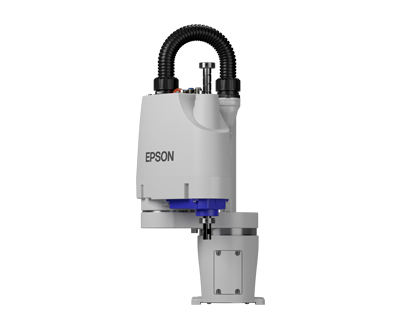
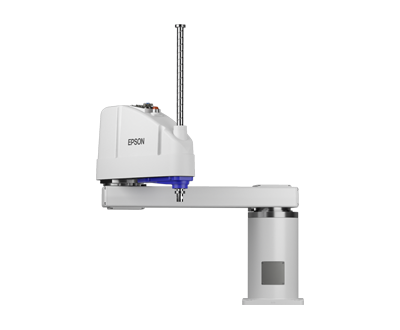
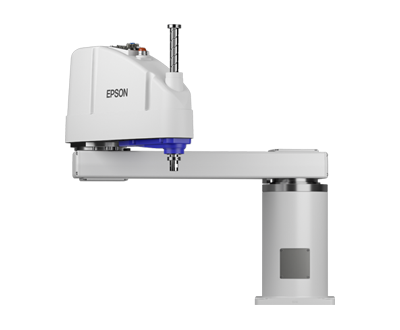
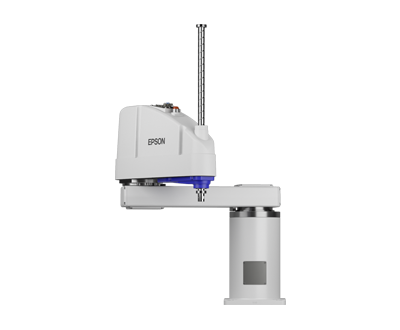
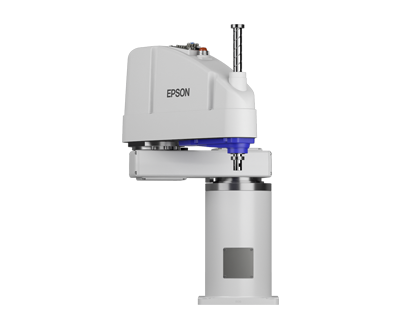
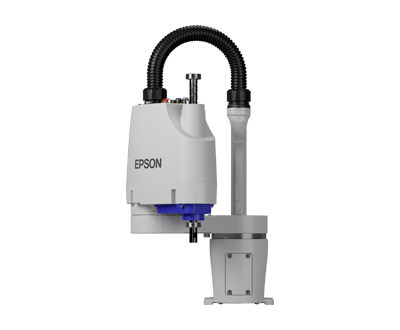
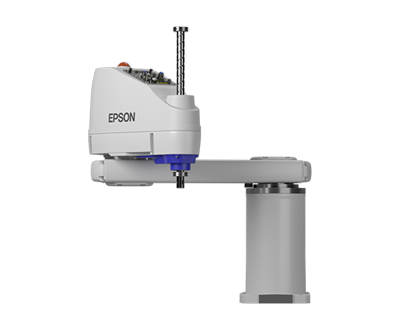
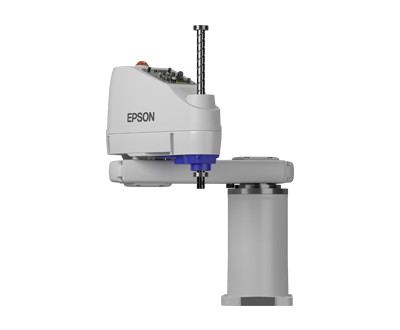
The GX series is Epson's high-performance SCARA flagship, with a maximum load capacity of 20kg, a high-rigidity arm and GYROPLUS vibration suppression technology, and a cycle time as fast as 0.33 seconds, designed for high-end assembly applications that require strict beats and precision.
In high-power mode, the cycle time is as low as 0.33 seconds, resulting in higher output per unit time.
The unique high-rigidity arm design combined with GYROPLUS Technology delivers low residual vibration and high stability.
The repeatability of the 1st-2nd joint can reach ±0.008mm, reducing production losses.
Five levels from GX1 to GX20, with multiple installation options for countertops, ceilings, and sidewalls.
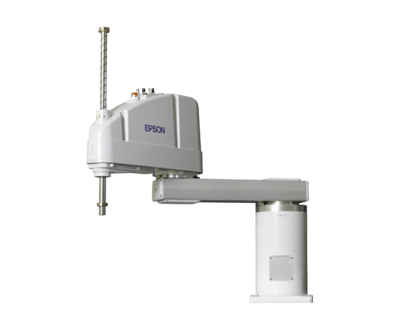
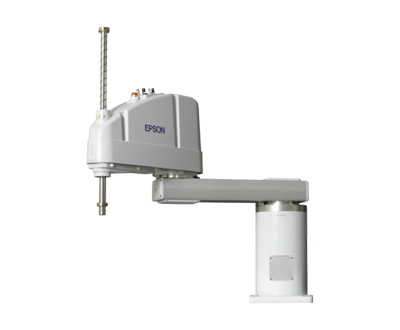
G Series SCARA · Classic high reliability
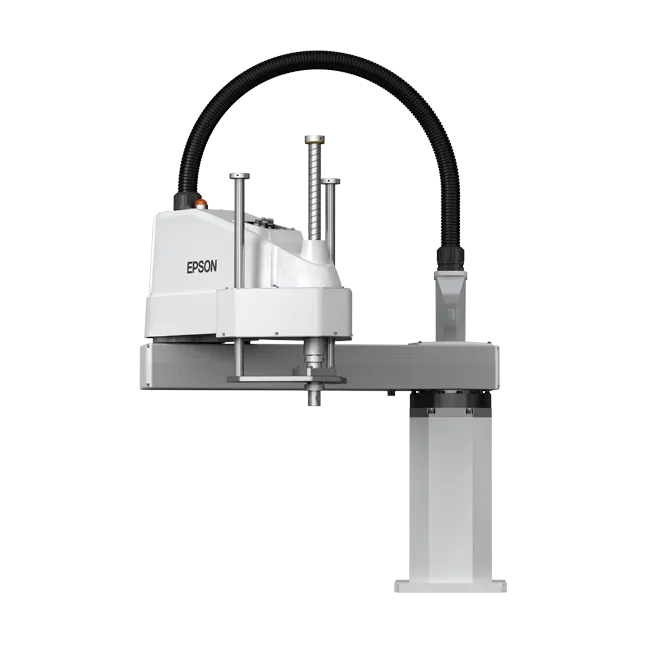
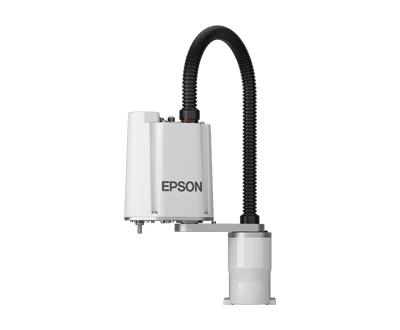
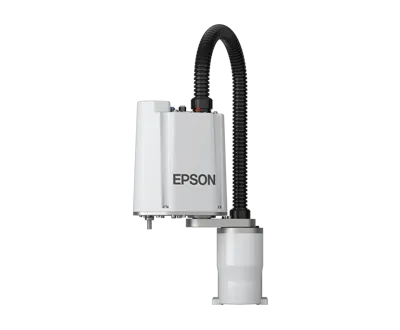
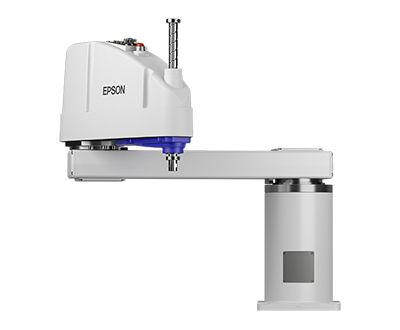
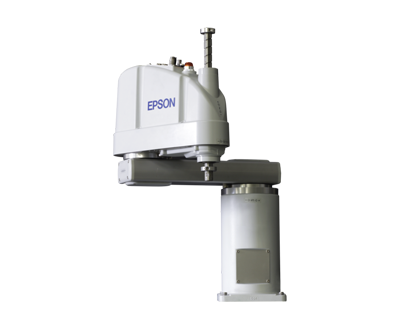
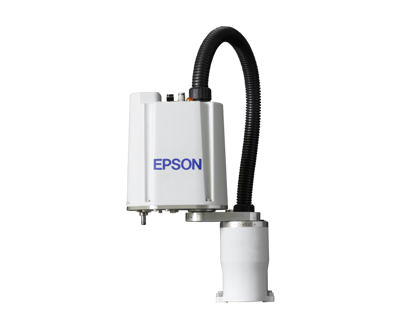
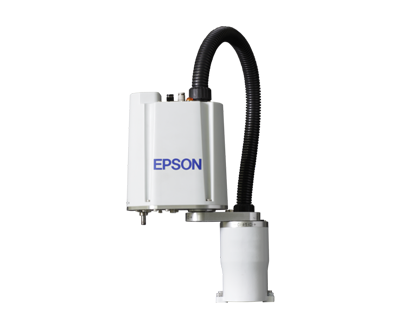
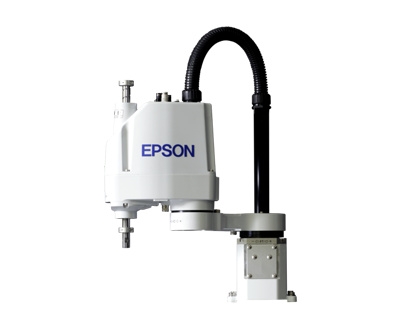
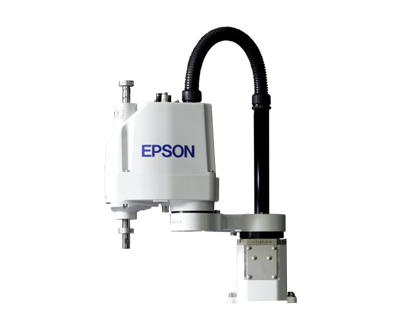
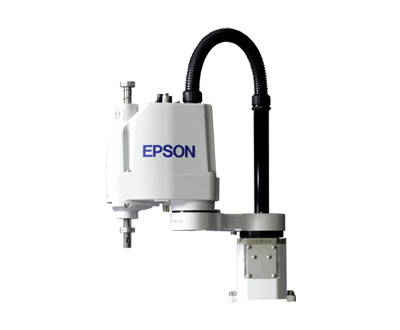
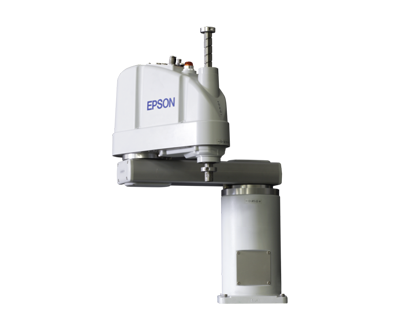
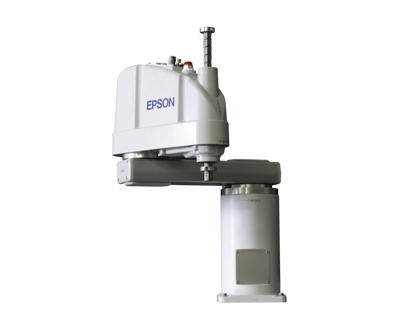
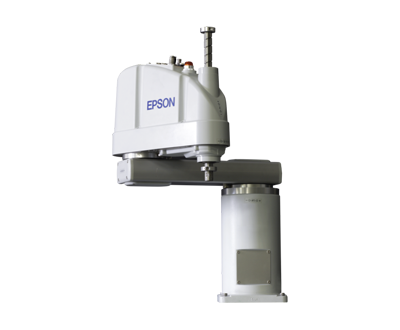
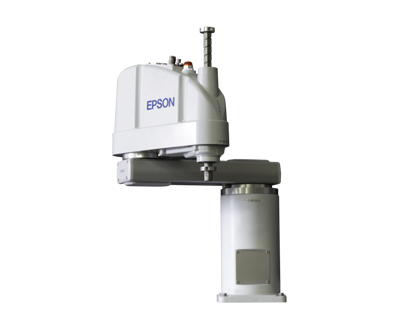
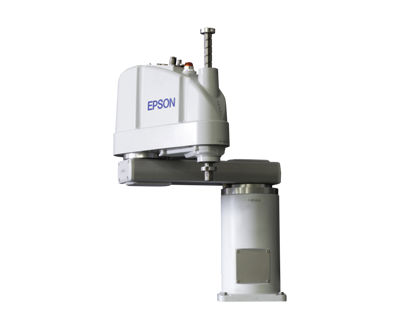
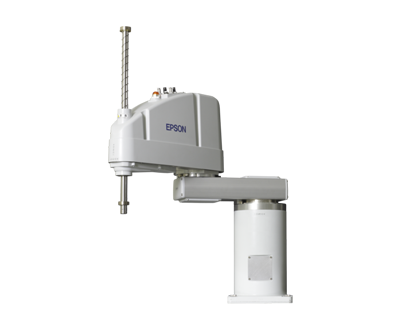
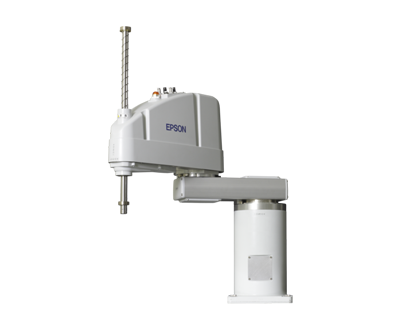
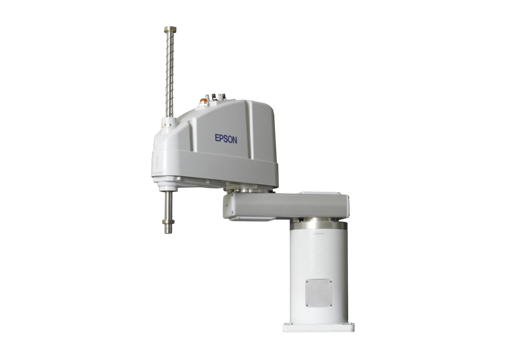
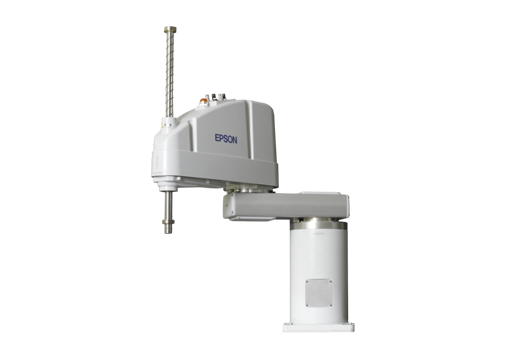
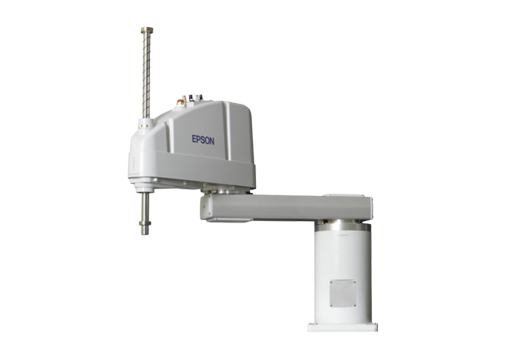
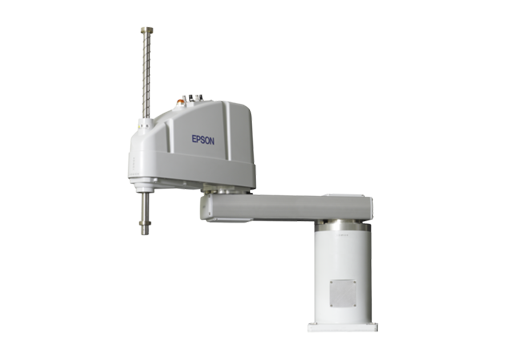
The G Series is Epson's classic SCARA product line, covering loads ranging from G1 to G20 weighing 0.5-20kg, known for its PowerDrive servo technology and high-rigidity arm design, and has long dominated precision manufacturing production lines.
Epson's self-developed servo technology enables high-speed, smooth start/stop and excellent acceleration and deceleration characteristics.
The G Series has large shipments and high inventory, with abundant maintenance documentation and spare parts resources.
Countertop, ceiling, and sidewall mounting models are fully available to suit different production line layouts.
High-performance or economical controllers can be selected as needed, balancing performance and cost.
RS Series SCARA · Dedicated for hoisting
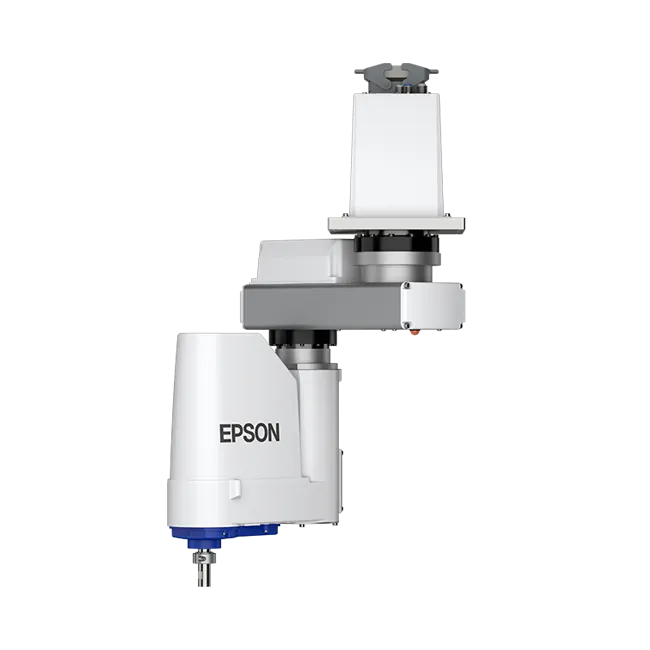
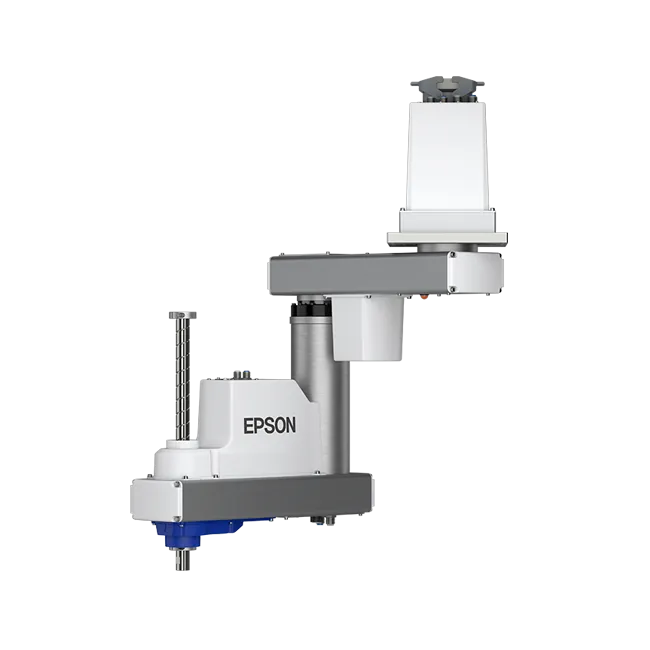
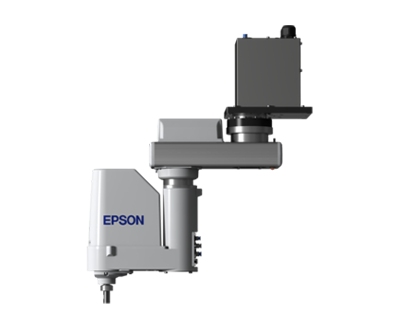
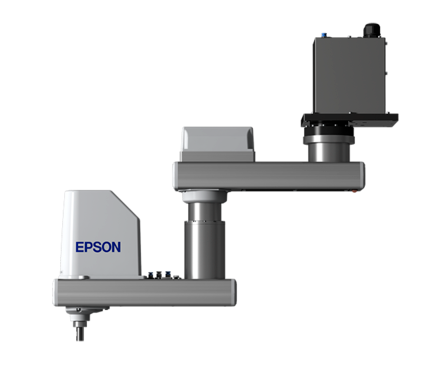
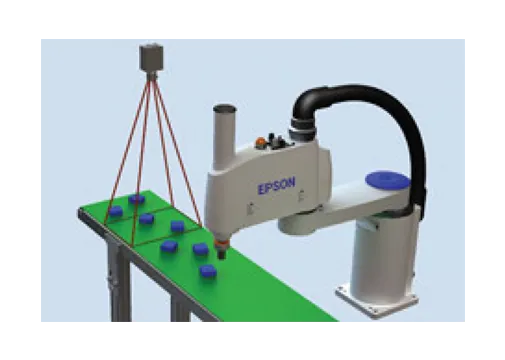
The RS series is a SCARA robot installed in a suspended (upside-down) setting, entering the work area from above, suitable for pick-and-place and assembly scenarios where there are obstacles below the workpiece and you need to avoid it.
Inverted installation frees up desk space, facilitating conveyor lines and multi-station layout.
RS3/RS4/RS6 cover the needs for light and medium-sized pick-up, place, and assembly.
Sharing the RC+ programming environment with a vision and I/O option ecosystem.
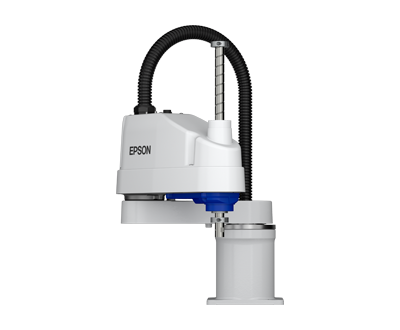
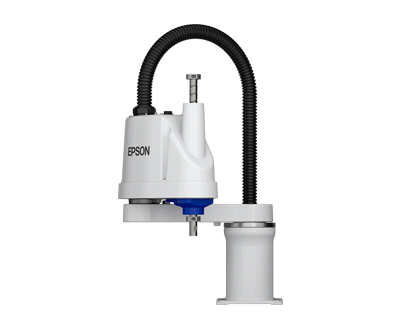
LA Series SCARA · Lightweight economy model
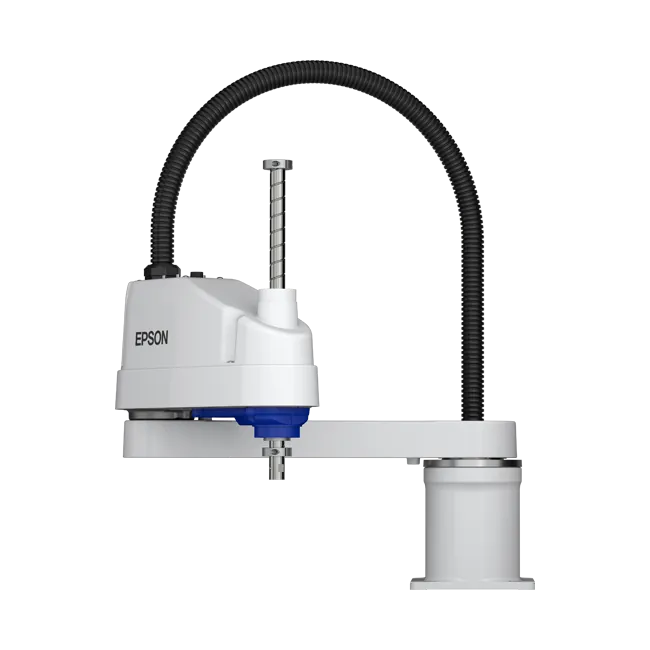
The LA-A series is Epson's lightweight SCARA designed for cost-sensitive applications, featuring a streamlined structure and rapid deployment, suitable for simple handling, sorting, and loading/unloading processes.
Lightweight design reduces the cost of the main unit, making installation and integration simpler.
Designed for standard pick-and-place processes, it can be quickly put into production as soon as it opens the box.
LA3/LA6 cover common light and medium-duty handling needs.
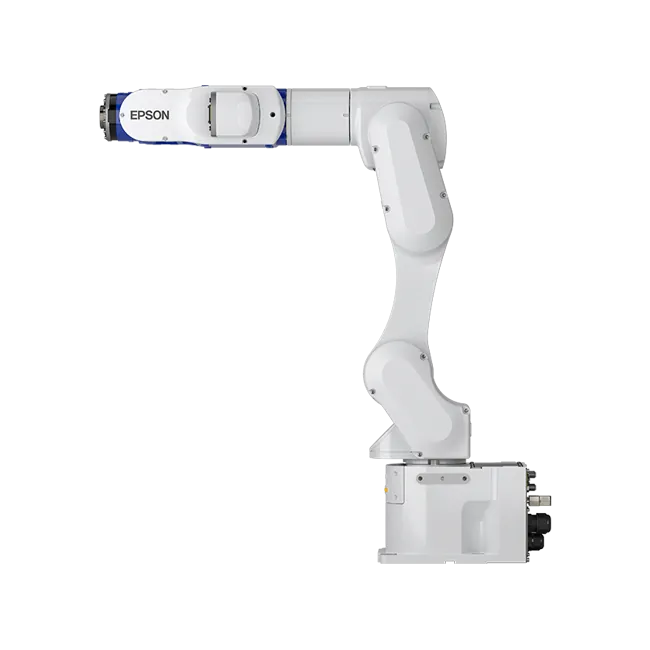
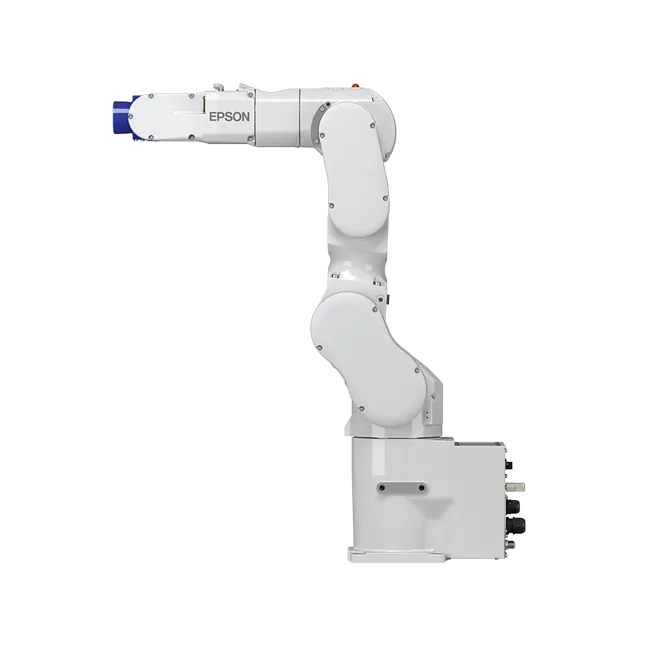
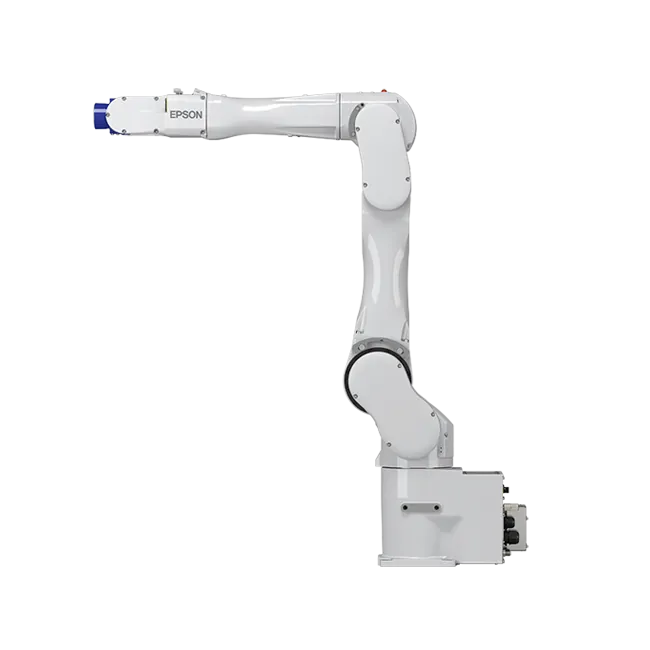
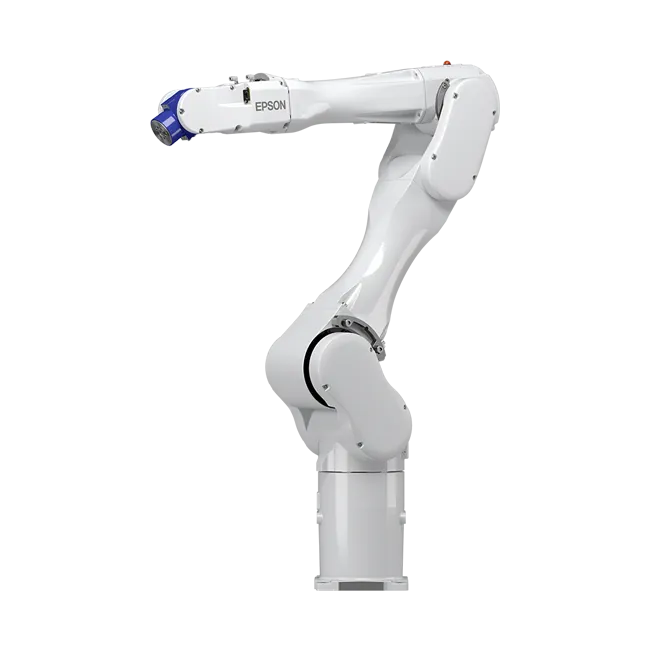
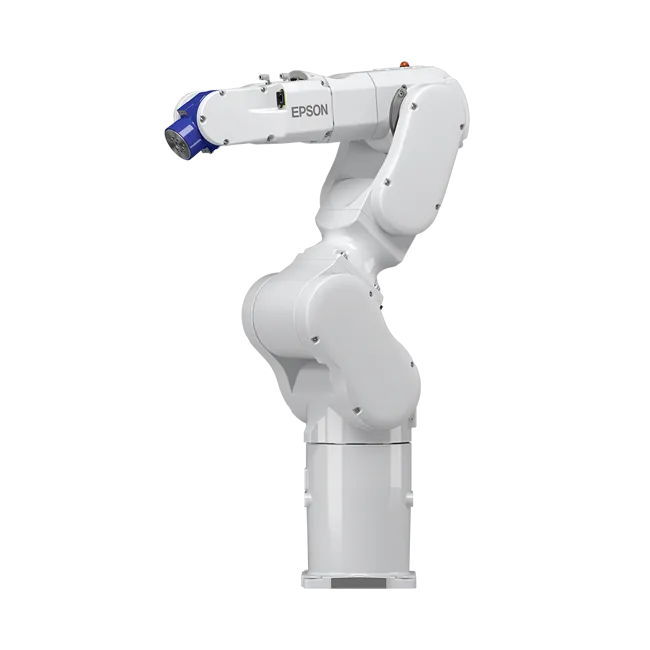
C / CX Series Six-axis · Compact
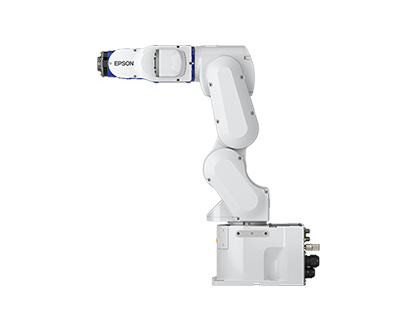
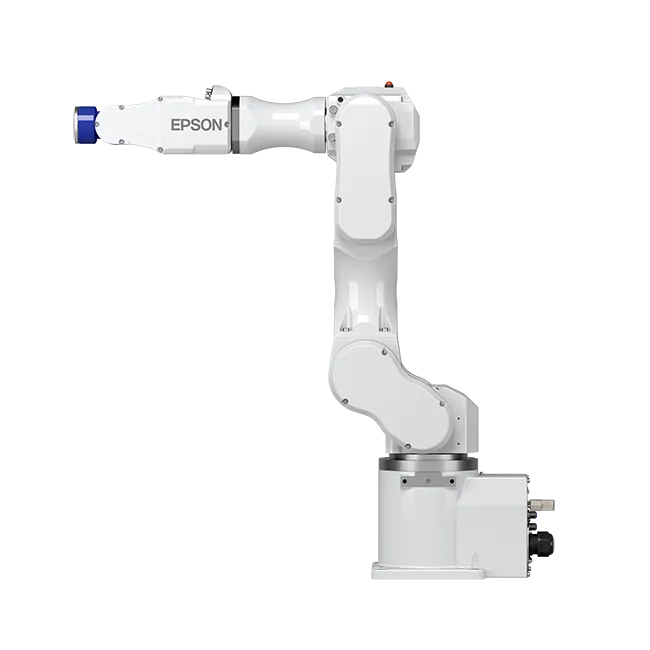
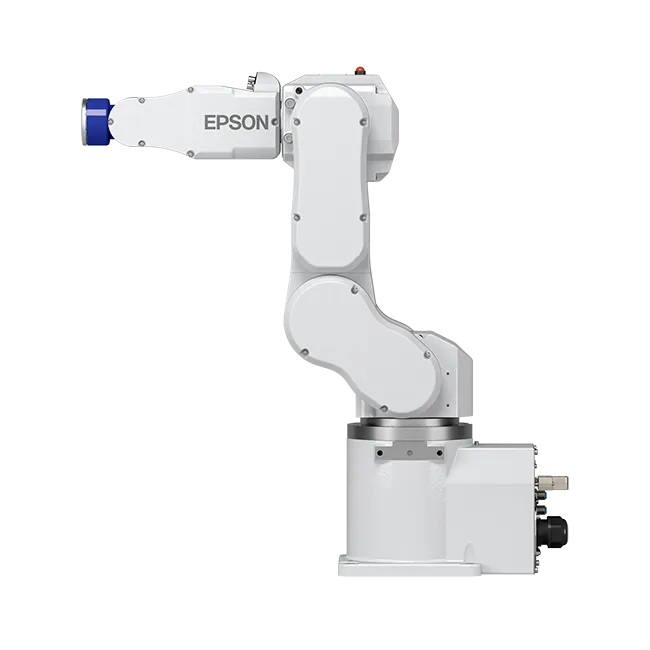
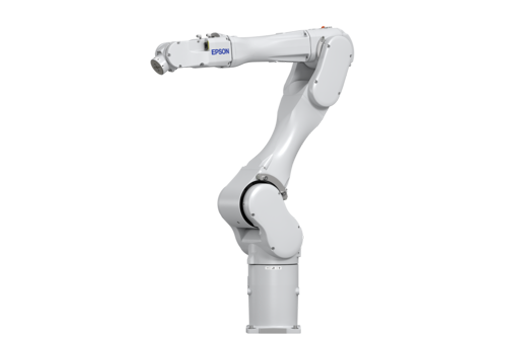
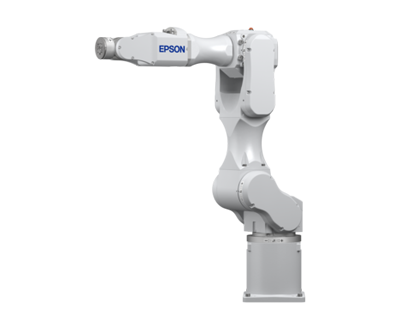
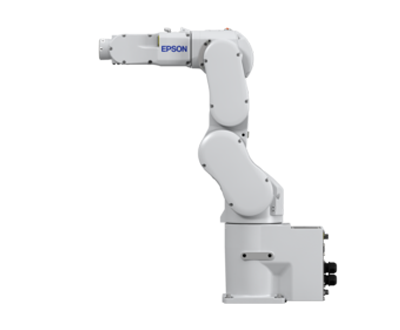
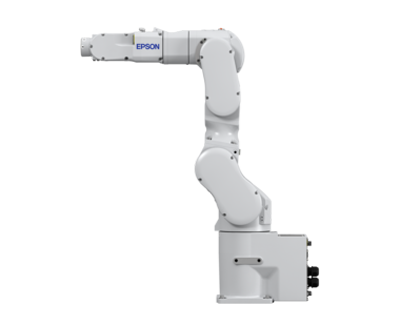
The C4/C8 and CX4/CX7 are Epson's compact six-axis robots, with payloads ranging from 3 to 8kg, compact size, and flexible installation, designed for space-constrained applications such as electronic assembly, inspection, and small handling.
Miniaturized body design suitable for space-constrained production lines and internal integration with equipment.
Six degrees of freedom can perform actions that SCARA cannot handle, such as tilting pick-and-place and multi-angle assembly.
Maintaining Epson's cost advantage in six-axis models is suitable for mass deployment.
C12 Series Six-Axis · Medium-duty loads
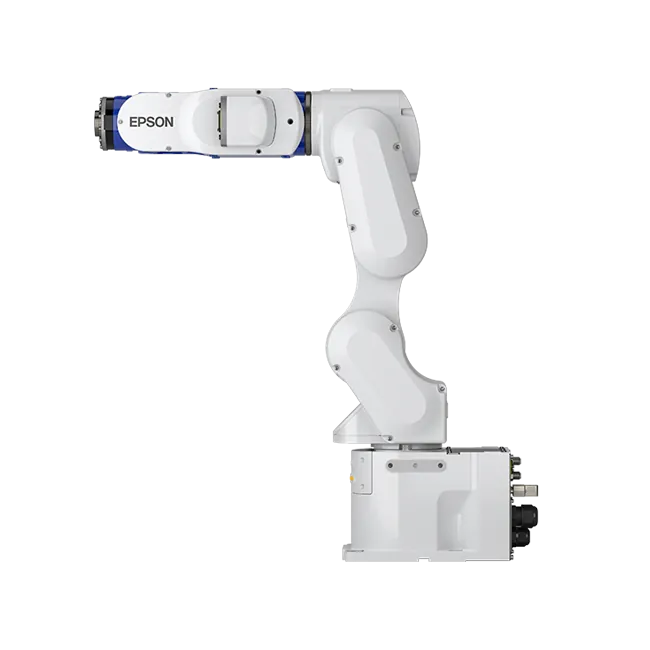
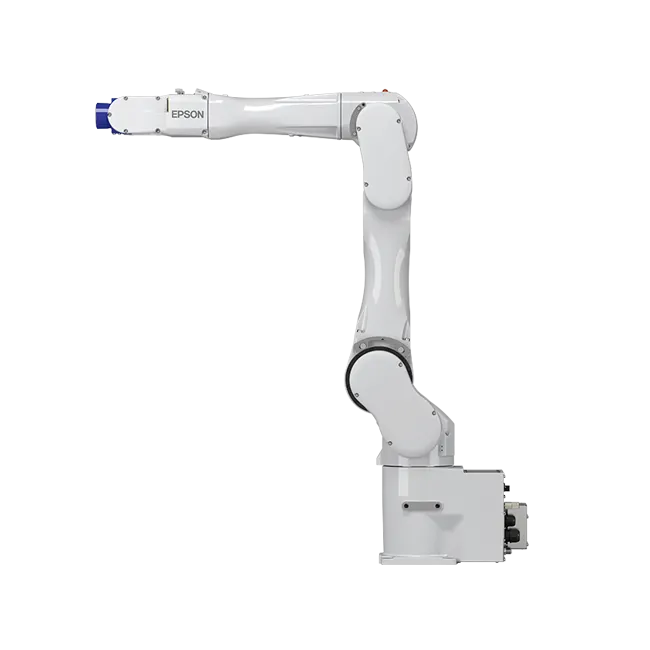
The C12XL series is Epson's medium-duty six-axis robot, with a payload capacity of 12kg and an armspan of up to 1400mm, designed for medium-duty handling, palletizing, and machine tool loading/unloading applications.
Covers load blanks above the C series, suitable for handling medium-sized workpieces.
The C8XL/C12XL long boom versions expand the working range and are suitable for wider workstations.
Continuing the high rigidity and easy-maintenance design of the Epson six-axis platform.
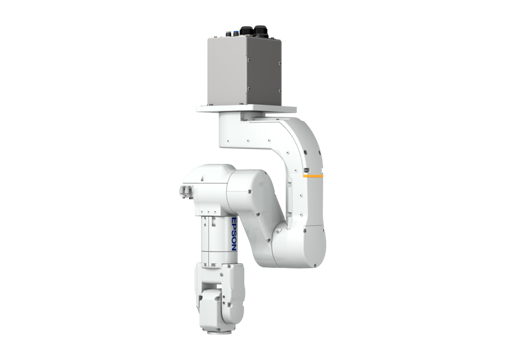
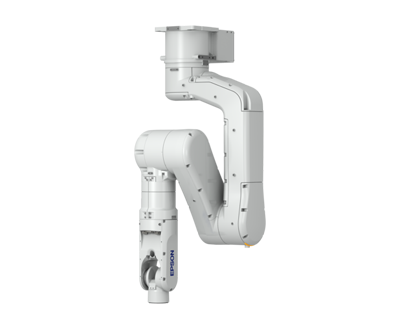
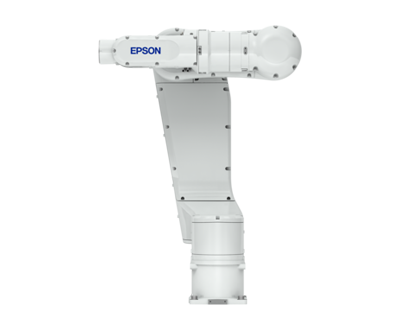
N Series Six-Axis · Folding arms
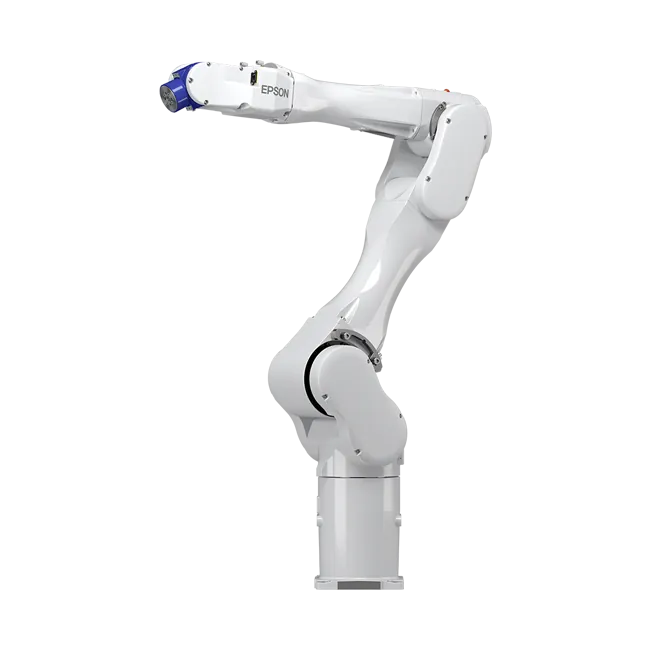
The N2/N6 feature a unique foldable arm structure, allowing flexible expansion and retraction in tight spaces, making them a distinctive model for internal equipment loading and unloading and dense layout scenarios.
The arm can be folded for storage, allowing operation in tight equipment spaces with strong expandability.
Suitable for automatic loading and unloading inside machine tools and inspection equipment.
N2/N6 covers handling of light to medium-sized workpieces.
VT Series Six-Axis · Clean handling
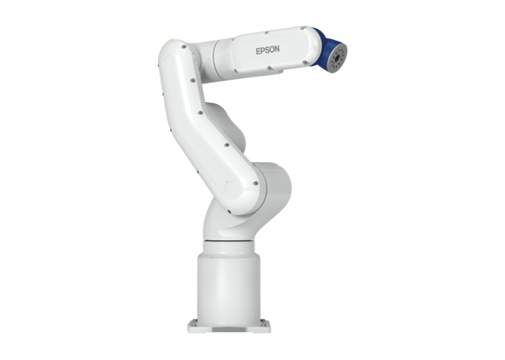
The VT6L is Epson's six-axis handling robot designed for clean environments, supporting AC/DC power supply and commonly used in handling processes requiring cleanliness, such as semiconductors and medical equipment.
Designed for cleanroom environments to meet semiconductor and medical handling needs.
The VT6-A901S-DC supports DC power supply, adapting to mobile platforms and special power environments.
6kg load combined with six-axis flexibility enables multi-posture pick-and-place operation.
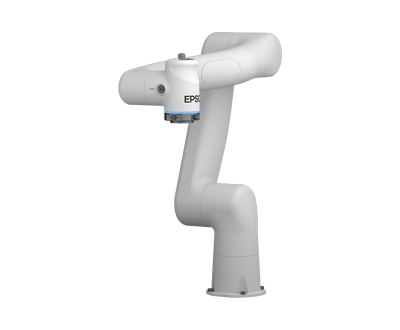
AX6 collaborative robot
The AX6 is Epson's first collaborative robot, with a payload of 6kg and a 900mm arm length. It supports force control safe collaboration, AC/DC power supply, and Python/ROS2 development, designed for flexible workstations that closely integrate humans and machines.
Supports safety functions such as PFL, SOS, SLS, SLP, reducing the need for security fences.
The main body weighs only 18 kg and can be installed by a single person, making it suitable for AMR/AGV integration.
Supports Python development and simplified programming and commissioning with ROS/ROS2 and AX Portal.
Complies with ISO Class 5 cleanliness standards and IP54 protection, suitable for pharmaceuticals and semiconductors.
RC+ software and control system
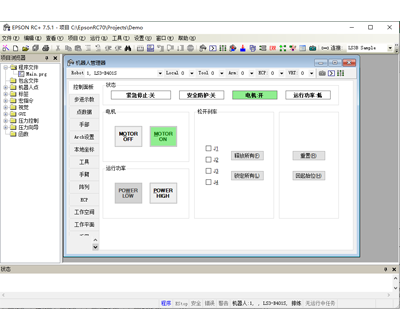
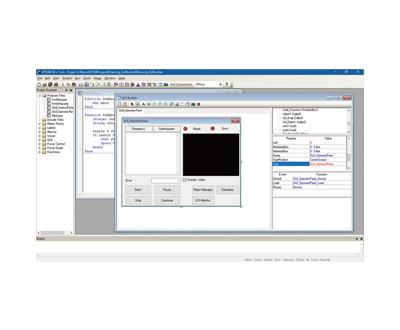
Epson RC+ is industry-leading robot programming software that works with RC700/RC800/RC-A101 controllers, offering intuitive SPL+ language and rich commissioning tools.
RC+ is renowned for its ease of use, shortening development time and lowering programming barriers.
Standard development environment supports simulation, commissioning, and multi-machine coordination.
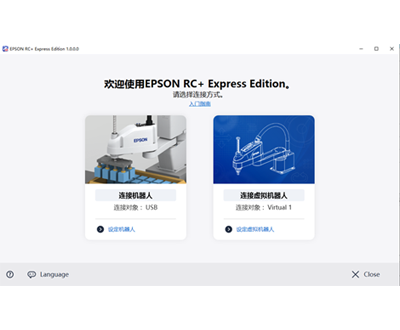
The lightweight version meets both basic teaching and simple application needs.
Vision and automation options
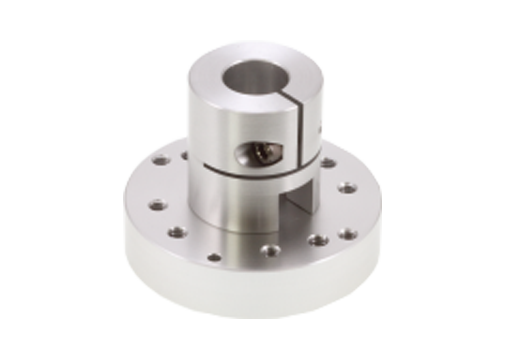
Epson offers a full set of options including visual guidance, force sensing, conveyor track tracking, and I/O expansion, deeply integrated with robot controllers to quickly build complete automation units.
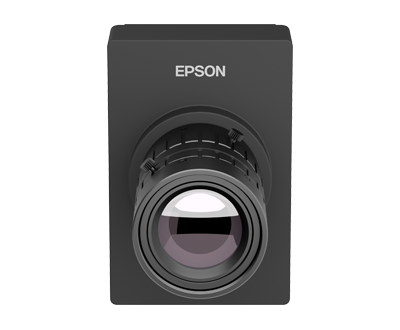
Epson's vision system guides positioning, detection, and recognition out of the box.
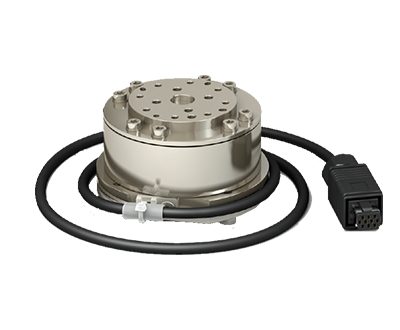
Force Sensor enables precise assembly and force control operations.
Conveyor Tracking supports dynamic grabbing of assembly line workpieces.
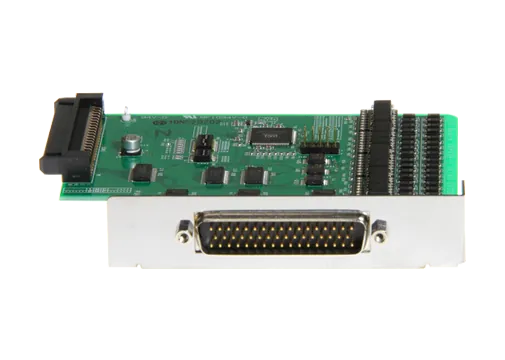
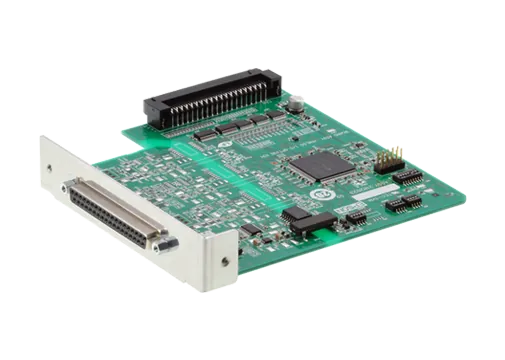
Extensive options for expansion I/O, analog gauge boards, and fieldbus.
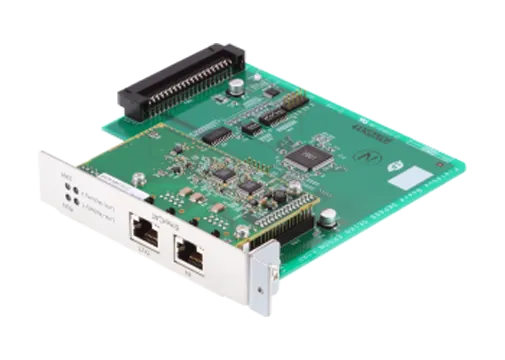
Epson Robotics Platform Technology
RC+ programming software, RC series controllers, and visual and force options form a complete ecosystem.
Industry-leading ease of use, intuitive and efficient SPL+ language, built-in simulation and commissioning tools, significantly reducing development time.
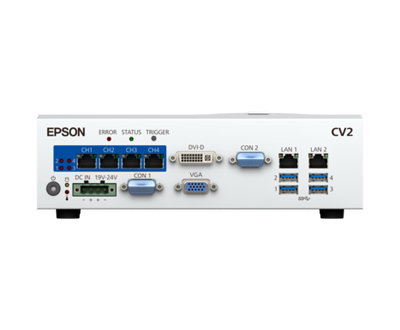
High-performance controller platform supporting OPC-UA, Ethernet, and various fieldbuses, capable of connecting to PC/PLC master stations.
Compact and lightweight design (5.5kg), AC/DC powered, specially designed for the AX6 collaborative robot.
Epson's native vision solution seamlessly integrates guidance, detection, recognition, and controllers.
Combined with a high-rigidity arm design to suppress residual vibration, it achieves stable positioning at high speeds.
No need to replace batteries, reducing downtime and maintenance, and lowering lifecycle costs.
Application scenarios
From palletizing and welding to machine tool maintenance, assembly, dispensing, grinding, and quality inspection, Epson can be rapidly deployed to all types of processes.
Service industry
Epson is widely used in the following industries, and we can provide model selection and implementation support tailored to local industry characteristics.
Why choose Epson?
Epson's SCARA robots have consistently ranked among the top in global shipments and enjoy high market recognition in the precision assembly field.
With a cycle time as short as 0.33 seconds and a repeatability of ±0.008mm, it provides solid assurance for cycle time and yield.
Offering competitive purchase and usage costs while maintaining Epson's quality, suitable for large-scale deployment.
RC+ software leads the industry in ease of use, with options such as vision, force sensing, and conveyor belt tracking deeply integrated with controllers.
Trusted by global customers
Epson serves numerous globally renowned companies (brand logo copyrights belong to each company).
We provide third-party technical services to Epson users
As a third-party robotics technology service company, Henghuan maintains independence from Epson's official company and provides a full set of technical services for Epson Robotics:
Process validation, workstation solutions, programming and teach-in and production ramp-up support, and turnkey delivery of robot applications.
Learn more → Sales of new industrial robotsAuthorized-style sales of brand-new mainstream robots with selection support for new production lines and capacity expansion.
Learn more → Research and development of automation equipmentResearch, development, integration, and delivery of end-effectors, conveyor positioning, safety peripherals, and complete control systems.
Learn more → Research and development of algorithms and control systemsMotion planning, machine vision, and PLC/SCADA system development to address takt-time bottlenecks, accuracy, and data interconnection.
Learn more → Robot rentalShort-term rental, long-term rental and lease-to-own for in-stock models, long-term rental, and lease-to-purchase transfer, including transportation, installation, commissioning, and lease-term maintenance.
Learn more → Software and hardware upgrade servicesController retrofits, software and firmware upgrades, mechanical refurbishment, and safety upgrades restoring performance to older equipment.
Learn more → Maintenance and repairOn-site inspection, fault diagnosis and repair, and annual maintenance contracts covering 1,310 models from 21 brands.
Learn more → Used & in-stock robot salesWe buy back used robots and handle inspection, refurbishment and resale; every unit ships with inspection records and a warranty, and trade-ins can offset new purchases.
Learn more →Epson Frequently Asked Questions
Focusing on the selection, maintenance, spare parts, and second-hand distribution of Epson equipment, we answered the most frequently asked questions from customers.
How to choose between Epson SCARA and six-axis robots?
For inserts, screw locking, dispensing, pick-and-place, and precision assembly within the plane, prioritize SCARA: LS series (LS4-C401S, LS20-C804S, etc.) covers 3-20kg with arm length of 400-1000mm; For beats, use the GX series (GX4, GX8, GX10, GX20), with a fastest cycle time of 0.33 seconds and repeatability of ±0.008mm. Six axes require flipping, tilting to pick and place, and around obstacles: C4/C8 and CX4/CX7 cover 3-8kg, C12 has a reach of 1400mm. If you only move the workpiece in a flat plane, choose SCARA.
What controllers and programming software does Epson use for robots? Is it easy to learn?
Epson uses RC+ programming software, currently running RC+ 7.0 and SPL+ languages, with built-in simulation and commissioning tools. Its ease of use in SCARA is widely recognized. The mainstream controllers are the RC700-D and RC800-A, supporting OPC-UA, Ethernet, and various fieldbuses, allowing direct connection to a PC or PLC master station. The collaborative model AX6 is equipped with an RC-A101 controller, weighing 5.5kg and powered by AC/DC. Vision uses native Vision Guide, integrated with controllers, so there's no need to build a separate set. We can provide on-site programming training.
How to recover a lost Epson robot at zero point? Should you replace the battery?
Epson is quite worry-free here: both the LS and GX series come standard with battery-free motor units, so after a power outage, you don't have to rely on the battery to keep the battery at zero, and you don't have to shut down to replace the battery when it's time, saving on maintenance costs. If the position still reports abnormalities, first check for collisions, Z-axis lead screws or spline wear and slippage, or timing belt skipping gears—these mechanical issues are more common than loss of zero position. If you really want to re-mark the zero point, use the calibration process in RC+ combined with mechanical zero marking, which is different from the four major families.
How accurate can Epson SCARA be? How is cycle time calculated?
Official specifications: GX series joints 1-2 have repeatability up to ±0.008mm, standard cycle time is as fast as 0.33 seconds, GX1 model is rated at 0.288 seconds; LS and G series have accuracy ranging from ±0.01 to ±0.02mm, such as the LA6-A702S 1-2 joint ±0.02mm, standard cycle 0.428 seconds. Note that cycle times are measured at rated load and standard stroke; actual takt time depends on load weight, travel distance, and acceleration/deceleration settings. Don't just use the nominal value set for production scheduling.
What are the common faults of Epson robots? Is it easy to find accessories?
Epson is widely used in 3C factories, and faults are concentrated: the SCARA Z-axis lead screws and splines wear back and forth over time, leading to reduced repeatability and abnormal operating noises; Timing belt loosening or breakage; The end of the cable bends and breaks along with the movement; RC700 and RC800 controller fans and capacitors are aging. LS, GX, and G series have relatively smooth spare parts channels. The G series has large shipments and high inventory, making disassembly parts the easiest to find. We are not an authorized Epson agent, but a third-party technical service provider. Fees are determined according to the plan after testing.
Do Epson's second-hand robots have a high resale value? Is a used SCARA worth buying?
Epson SCARA has large installed capacity in the 3C and semiconductor industries, with good second-hand circulation, especially for the G series and LS series, which have high ownership; The GX series is a high-performance model, with a more resilient, second-hand price. Before buying a used unit, check three key points: wear clearance of the Z-axis lead screw and spline, the running time counter for each axis, and the controller model (RC700 and RC800 have different optional compatibility). We conduct item-by-item second-hand testing and attach test records. The service center is in Nanchong, serving Sichuan, Chongqing, Yunnan, and Guizhou; Guangzhou Henghuan Technology Co., Ltd. provides business and technical support.
Does Epson have clean and anti-static versions of the robot? How to choose?
For semiconductors and medical applications, Epson offers clean and anti-static versions: the LS series includes versions that meet ISO cleanliness standards and ESD anti-static features, and the six-axis VT6-A901S is designed specifically for clean handling. When selecting models, first clarify the workshop's cleanliness level and electrostatic requirements, then reverse the model suffix—for the same load arm length, the price difference between the standard and clean versions is quite significant. Installing it on a production line with cleanliness requirements means buying the wrong version and later modifications are much more expensive than choosing the right one at first.
Need technical support or model selection for Epson Robotics?
Please tell us about the equipment series, load, arm length, application processes, and current status (new/in-use/used), and we will provide targeted third-party solution recommendations.
Contact Henghuan