
Cutting
Industrial robot cutting process: application points, process essentials, and practical cases
Application Overview
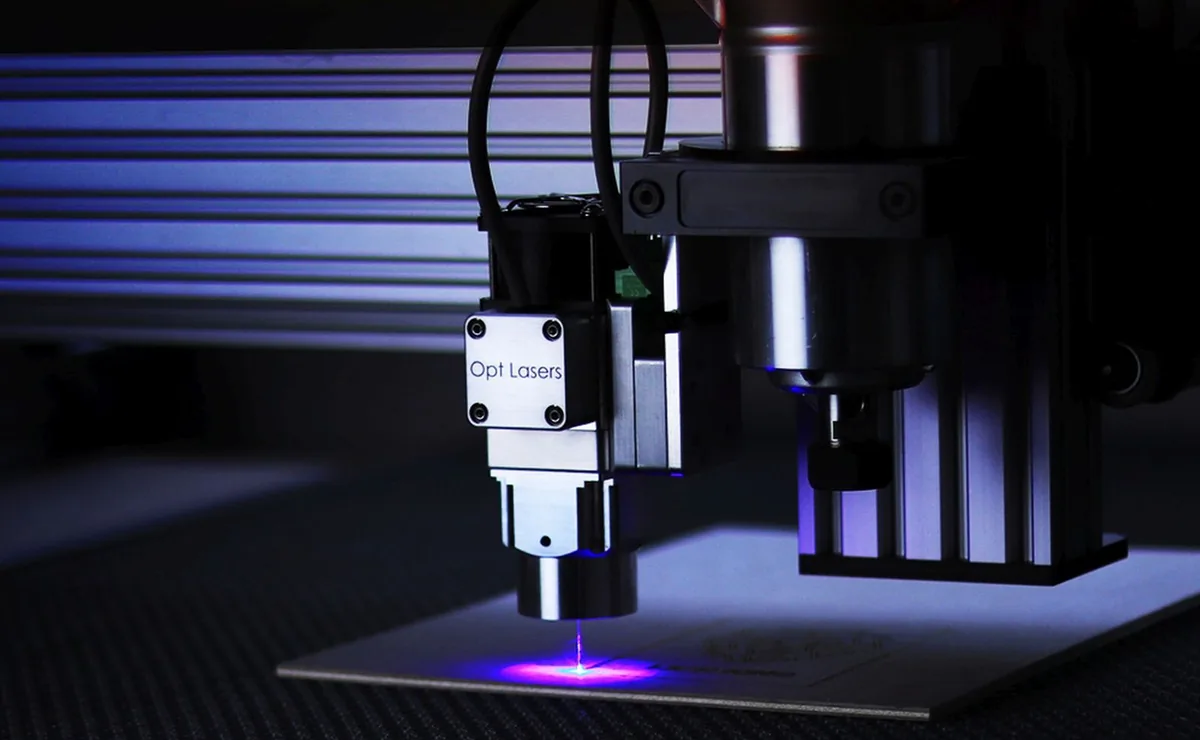
Robot cutting covers a spectrum of hot and cold cutting processes such as plasma, laser, flame, and waterjet cutting—compared to specialized cutting machines, the core advantage of robotic cutting is its three-dimensional capability: bevel cutting, opening, and trimming can all be completed in one stop on spatial curved surfaces, making it especially suitable for 3D cutting and trimming of formed, cast, and composite parts.
Key points of application
Compiled from official brand application materials, source has been annotated.
Process validation, workstation solutions, programming and teach-in and production ramp-up support, and turnkey delivery of robot applications.
Learn more → Sales of new industrial robotsAuthorized-style sales of brand-new mainstream robots with selection support for new production lines and capacity expansion.
Learn more → Research and development of automation equipmentResearch, development, integration, and delivery of end-effectors, conveyor positioning, safety peripherals, and complete control systems.
Learn more → Research and development of algorithms and control systemsMotion planning, machine vision, and PLC/SCADA system development to address takt-time bottlenecks, accuracy, and data interconnection.
Learn more → Robot rentalShort-term rental, long-term rental and lease-to-own for in-stock models, long-term rental, and lease-to-purchase transfer, including transportation, installation, commissioning, and lease-term maintenance.
Learn more → Software and hardware upgrade servicesController retrofits, software and firmware upgrades, mechanical refurbishment, and safety upgrades restoring performance to older equipment.
Learn more → Maintenance and repairOn-site inspection, fault diagnosis and repair, and annual maintenance contracts covering 1,310 models from 21 brands.
Learn more → Used & in-stock robot salesWe buy back used robots and handle inspection, refurbishment and resale; every unit ships with inspection records and a warranty, and trade-ins can offset new purchases.
Learn more →Typical application scenarios for cutting automation
Below are representative cutting automation scenarios from the Henghuan team and industry practice (client names are usually omitted), organized by "Background Pain Points → Implementation Plan → Implementation Results" for reference and evaluation by enterprises with similar needs.
| Scene | Background and pain points | Implementation plan | Implementation results |
|---|---|---|---|
| Chongqing Automotive Hot-Formed Parts Factory · 3D laser cutting | Hot-formed door rings require trimming and openings, while traditional stamping trimming dies cost high (hundreds of thousands of yuan per set) and have long model update cycles. | The six-axis robot is equipped with a fiber laser and five-axis cutting head, with offline programming generating trajectories, and cutting parameters are called by plate thickness zones. | The new model does not require trimming edge molds, has a program preparation period of less than 2 days, meets the quality of cuts meeting direct welding requirements, and reduces the cutting cost per piece by about 40%. |
| A heavy equipment company in Deyang · Thick plate plasma bevel cutting | The thick plates of excavator structural components require X-shaped grooves, resulting in large angle errors and slow speeds during manual flame cutting, and harsh dust environments. | Heavy-duty robots are equipped with fine plasma power and groove cutting heads, with nesting software for unified programming and production scheduling, and zoned dust extraction. | The groove angle error is controlled within 1°, cutting efficiency is three times that of manual work, welding assembly clearance is significantly improved, and the return rate decreases. |
| A composite materials company in Yibin · Waterjet cutting station | Cutting carbon fiber composite panels should not have heat-affected zones, and mechanical milling faces dual issues such as delamination and rapid tool wear. | The waterjet cutting robot is equipped with a five-axis worktable, with closed-loop control of abrasive flow and cutting speed, and the trajectory optimized for layering to prevent delamination. | The cut surface is non-delamination and non-ablation, fundamentally improving dust environments. Cutting precision is ±0.1mm, and it has passed on-site customer quality system audits. |
Industries that commonly use this process
Click to view the overall robot application plan for the industry.
Robotic cutting: a flexible solution for three-dimensional surface cutting
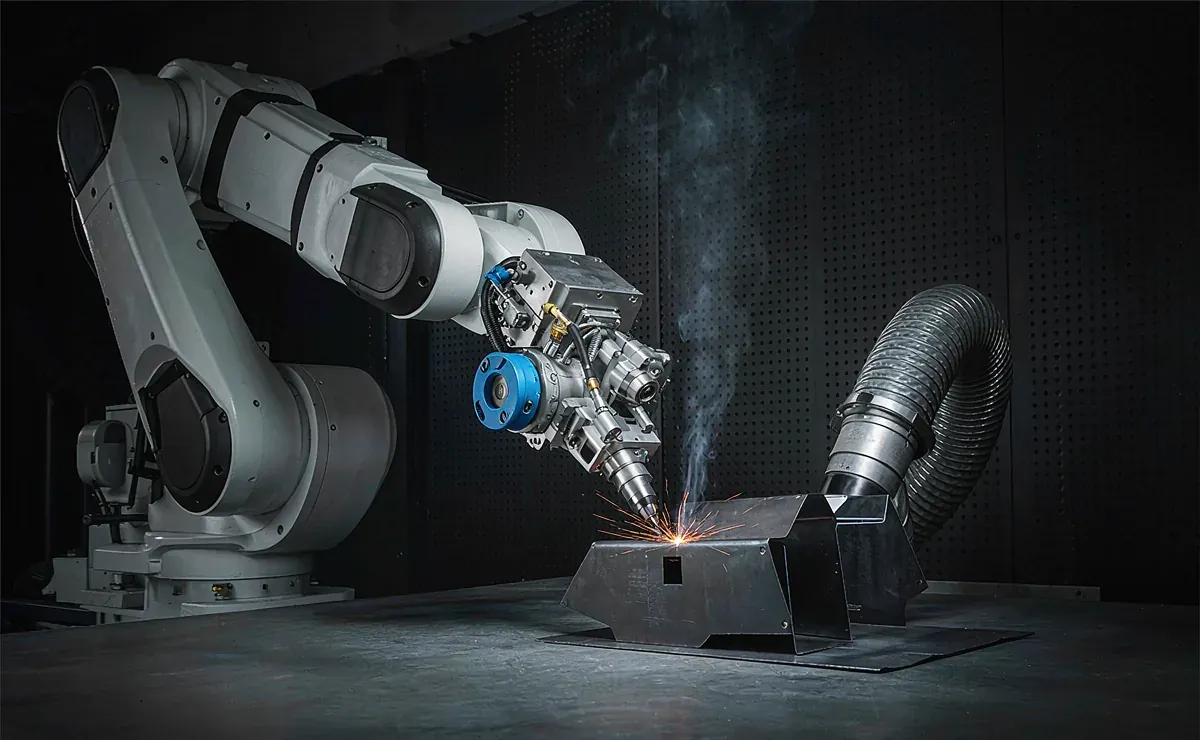
Flat sheet cutting is the domain of laser cutting machines, while robots are the main arena3D workpiece: trimming and punching for automotive interior parts (dashboard, door panels, bumpers), gate and riser cutting for castings, contour processing for composite material products, and groove cutting for intersection lines of steel sections. The common feature of these scenarios is that the cutting trajectory is a spatial curve, which specialized machine tools are difficult to cover or too costly, highlighting the flexibility advantages of six-axis robots + cutting technology.
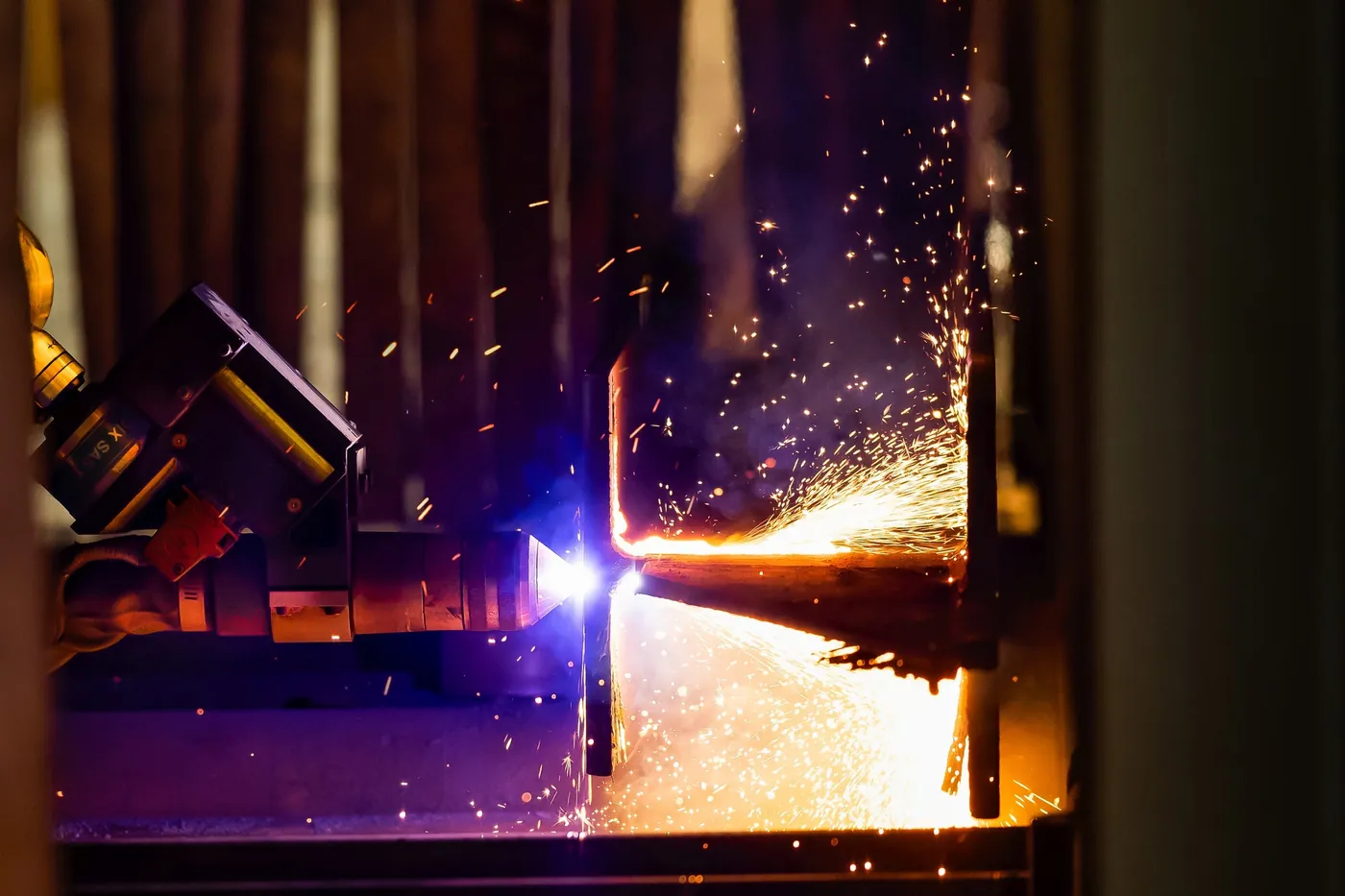
Divided into four main energy cutting routes:Laser cutting(High precision, small heat-affected zone, suitable for thin plates and non-metallic types),Plasma cutting(Medium and thick metal, fast speed, moderate cost),Flame cutting(Thick plate carbon steel, simple equipment),Water-cutting(Cold processing does not cause thermal deformation, suitable for composite materials and food, but requires high equipment investment). Selection is made based on four key factors: material, thickness, precision, and batch size.
| Craftsmanship | Applicable materials and thicknesses | Cutting precision | Typical applications |
|---|---|---|---|
| Robotic laser | Metal ≤6mm, non-metal ≤20mm | ± 0.1mm class | Automotive interior trimming and 3D body metal cutting |
| Robot plasma | Conductive metal: 1–40mm | ± 0.5mm class | Steel section grooves, casting cutting, ship dismantling |
| Robot flame | Carbon steel 6–200mm | ± 1mm class | Cutting of thick plate bevels and large cast and forging parts |
| Robotic watercutting | Almost all materials, ≤100mm | ±0.1–0.3mm | Composites, rubber, food, stone |
Key points of robotic cutting engineering
Trajectory and Speed Coupling:Cutting quality is extremely sensitive to speed fluctuations—corner deceleration can cause overburning and slag adhesion, so forward-looking speed planning must be used to keep the cutting speed constant, and the power at small holes and sharp edges is adjusted in tandem with speed; This is the core value of the robotic cutting process package.
Gun cutting posture management:Bevel cutting (V/X/Y/K bevels) requires the cutting gun to swing in real time according to the groove angle, with five-axis linkage (robot + positioner) enabling constant speed and angle cutting of complex intersecting lines; Posture mutation zones are planned in advance to avoid singularities.
Fixtures and Positioning:Thermal deformation and clamping stress of cut parts directly affect profile accuracy; thin-walled parts use profile supports + distributed clamping point design; If the workpiece positioning deviation is large, use visual or contact locating for program compensation.
Dust removal and protection:Plasma/flame cutting produces large amounts of dust and splash; a segmented dust removal workbench + robot protective suit (splash-resistant material) is standard; Laser cutting is designed separately for the bending radius of reflected light and fiber traces.
Craft Q&A
We cut a wide variety of workpieces with different shapes. How do we maintain the trajectory?
Two paths: import the model into offline programming software for workpieces with CAD models and automatically generate the model trajectory (new product imports within 1–2 days); Physical objects without models are reconstructed using 3D scanning + trajectory reconstruction. The program library is managed by type; operators can scan codes to tune programs, and no programming knowledge is required.
Can robotic cutting replace specialized cutting machines?
Flat batch cutting is not recommended—specialized machine tools are faster and cheaper. The value of robots lies in three-dimensional surfaces, multiple varieties, and bevel cutting scenarios; Many factories combine "specialized machine feeding + robot 3D cutting," each doing what they do best.
How to troubleshoot for substandard cut cross-section quality?
Check four things in order: whether the cutting speed is constant (slag hanging often causes slowing and overburning), whether energy parameters match the material thickness, gas purity and pressure (plasma/flame sensitivity to gases), and trajectory accuracy (use external axes or compensation algorithms when the robot's absolute positioning error is large). Our process engineers can conduct on-site diagnostics according to this checklist.
In-depth analysis of cutting processes
Process selection has clear boundaries:Fiber laserSuitable for high-precision cutting of thin plates (carbon steel 20mm, stainless steel up to 10mm, most economical), with high cut quality and a small heat-affected zone;PlasmaSuitable for medium-thick plates (10–50mm) and non-ferrous metals, balancing investment and speed, with fine plasma capable of laser-grade cutting;Flame cuttingSuitable for large groove operations on thick carbon steel (over 30mm), lowest cost;WaterjetIt is cold-cut, with no heat-affected zone or hardened layer, suitable for explosive materials, composite materials, and thick stone glass. The quality of robot cutting depends on the coordination of four key elements: trajectory accuracy, matching cutting speed with torch height, joint compensation, and dust protection.
Henghuan offers robot cutting station solution design and integration—selecting cutting power supplies, torch height control and collision prevention integration, offline programming and on-site teaching, while also undertaking maintenance and modification of cutting robots (such as adding cutting process packages to used robots).
The technological evolution of cutting automation and the Southwest market
Trends in cutting automation: First,3D 5-axis laser cuttingRapid adoption of trimming lines for automotive thermoformed parts—replacing traditional trimming and punching molds—saving over 60% in mold costs, and shortening the cutting process for model facelifts from months to days; SecondBevel cutting became widespread— The robot's bevel cutting head completes V/X/K bevel preparation in one go, directly connecting to subsequent welding processes, eliminating the need for secondary clamping and manual groove grinding; Third,Offline programming is mature— Dedicated software automatically generates cutting trajectories from 3D models and performs collision inspection and beat simulation, greatly reducing on-site teaching time and enabling quick switching between small-batch, multi-variety cutting tasks.
Cutting demand structure in the southwest market: 3D laser cutting in the automotive and parts industries is growing fastest; demand for thick plate plasma bevel cutting in construction machinery and agricultural machinery remains stable; waterjet cutting for stone, glass, and composite materials is a segmented but sustained market. Upgrading the control system and adding cutting process packages to existing cutting robots is Henghuan's specialty business—many companies have old cutting robots in good condition but are left idle due to system aging and outdated software.
Key engineering points and operation and maintenance management of cutting workstations
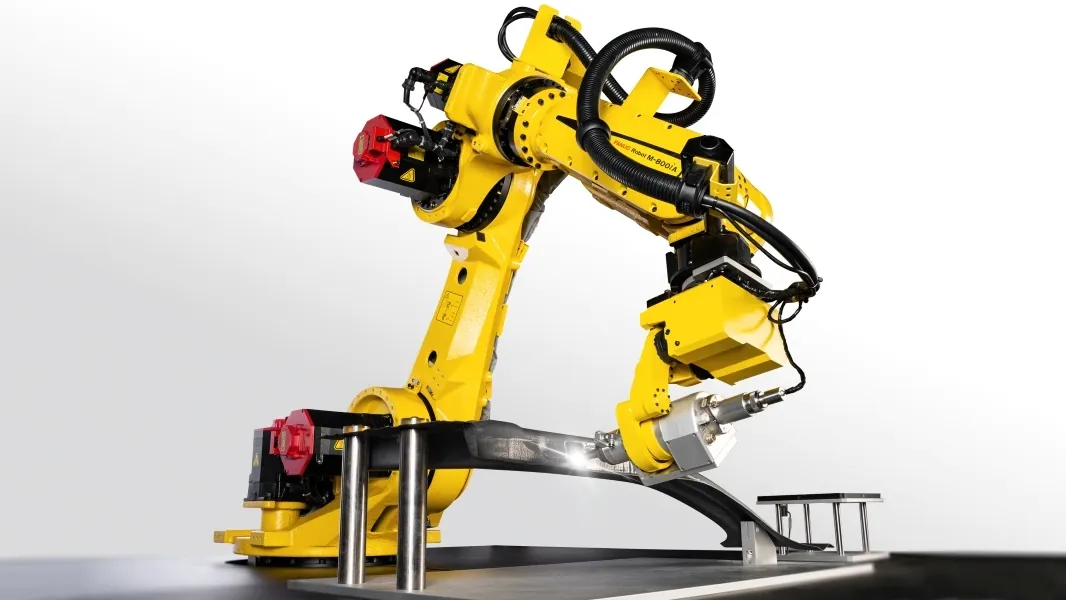
The three main engineering points of the cutting station: First,Collision-resistant— In 3D cutting, the nozzle collides with workpieces and fixtures, which is a high-frequency accident. The mechanical separation cutter (automatic disengagement and alarm after collision) + software collision detection + interference zone deceleration triple protection is indispensable; SecondPollution protection— Cutting smoke, metal vapor, and splashes into robot joints and electrical cabinets requires positive pressure protective suits, wrist protection kits, and high-efficiency dust removal linkage (cutting arc signal linked to dust dampers); Third,Accuracy maintained— Thermal deformation and reducer wear causing trajectory drift and excessive groove angles. It is recommended to conduct quarterly trajectory accuracy sampling checks (standard bats or laser trackers).
Key points for cutting station operation: Establish a lifespan ledger for cutting consumables (nozzles, electrodes, protective mirrors, focusing mirrors) and replace them by count to avoid damage to the torch body from overuse; Regularly clean the dust removal system filter element and the cutting table grating to maintain negative exhaust pressure; Regularly check the rotational accuracy and straightness of the positioner and guide rails. Henghuan provides annual maintenance contracts for cutting stations and supply chain support for consumables.
Need localization solutions for cutting processes?
Whether it's selecting solutions for new projects, upgrading production lines, or operating and maintaining in-service equipment, Henghuan can provide third-party technical support for cutting applications. Please tell us about material specifications, production cycles, and the on-site environment, and we will provide targeted solution recommendations.
Contact Henghuan View all application processes