
Palletizing
Industrial robot palletizing process: application points, process essentials, and practical cases
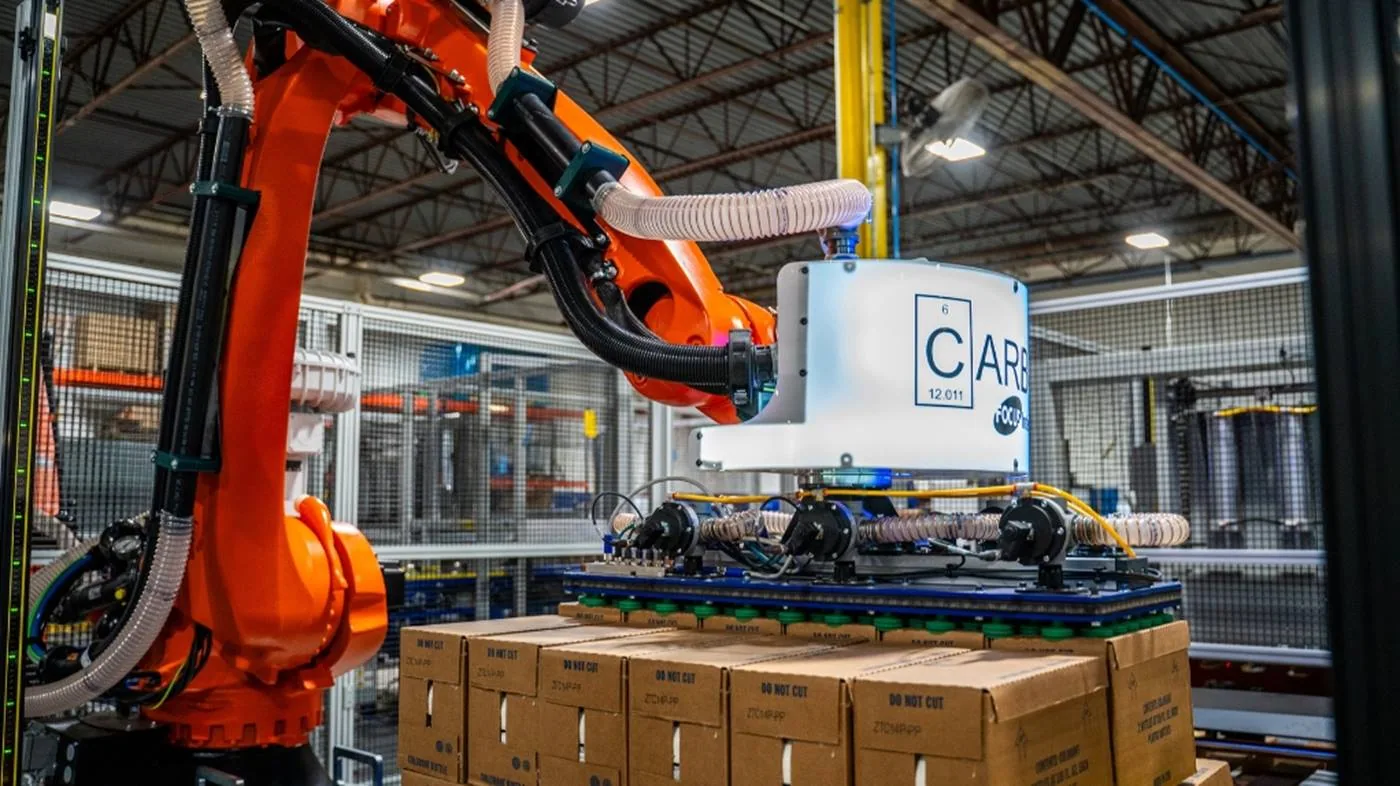
Application Overview
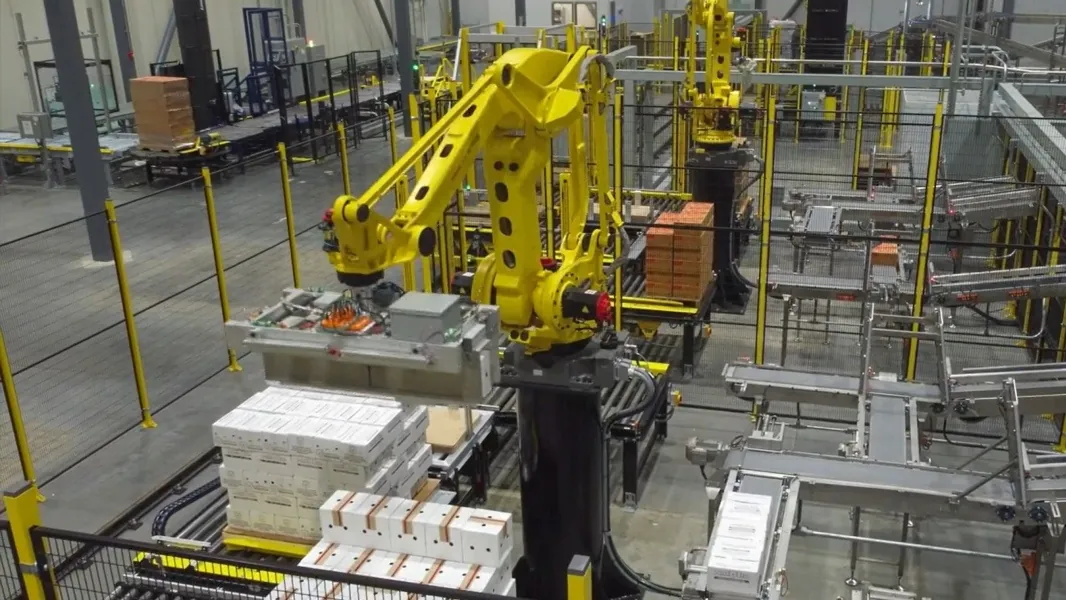
Palletizing is the final step at the end of the production line—stacking boxes, bags, barrels, and bags neatly according to the pallet shape rules. It is one of the most standardized and fastest-payback applications among handling robots: in the food and beverage, grain and oil, chemical, building materials, and logistics industries, almost all finished products require palletizing for outbound shipments. Manual palletizing is the most physically demanding position on the production line. Recruitment difficulties and workplace injury risks have made palletizing robots the first automation stop for many enterprises.
Key points of application
Compiled from official brand application materials, source has been annotated.
Process validation, workstation solutions, programming and teach-in and production ramp-up support, and turnkey delivery of robot applications.
Learn more → Sales of new industrial robotsAuthorized-style sales of brand-new mainstream robots with selection support for new production lines and capacity expansion.
Learn more → Research and development of automation equipmentResearch, development, integration, and delivery of end-effectors, conveyor positioning, safety peripherals, and complete control systems.
Learn more → Research and development of algorithms and control systemsMotion planning, machine vision, and PLC/SCADA system development to address takt-time bottlenecks, accuracy, and data interconnection.
Learn more → Robot rentalShort-term rental, long-term rental and lease-to-own for in-stock models, long-term rental, and lease-to-purchase transfer, including transportation, installation, commissioning, and lease-term maintenance.
Learn more → Software and hardware upgrade servicesController retrofits, software and firmware upgrades, mechanical refurbishment, and safety upgrades restoring performance to older equipment.
Learn more → Maintenance and repairOn-site inspection, fault diagnosis and repair, and annual maintenance contracts covering 1,310 models from 21 brands.
Learn more → Used & in-stock robot salesWe buy back used robots and handle inspection, refurbishment and resale; every unit ships with inspection records and a warranty, and trade-ins can offset new purchases.
Learn more →Typical application scenarios for palletizing automation
Below are representative palletizing automation scenarios from the Henghuan team and industry practice (client names omitted by convention), structured by "Background Pain Points → Implementation Plan → Implementation Results" for reference and evaluation by enterprises with similar needs.
| Scene | Background and pain points | Implementation plan | Implementation results |
|---|---|---|---|
| A food company in Meishan · Snack food box-type palletizing | Mixed delivery of multiple sizes of cartons, heavy manual palletizing labor, unstable pallet shapes, and unstable stacking during transport lead to heavy labor shortages. | The four-axis palletizing robot is equipped with zoned vacuum suction cups and a 3D vision mixed coding system, performing online palletizing calculation and automatic pallet storage storage. | Mixed-code cycle 900 boxes/hour, palletizing rate to zero, no need for last-minute personnel additions during peak seasons, and palletized loading rate increased by about 12%. |
| A grain and oil processing plant in Nanchong · Stack the bagged flour | Manual palletizing of 50kg woven bags is a physically demanding position, and occupational health inspections in dust environments are becoming stricter, making summer recruitment extremely difficult. | Heavy-duty palletizing robots are equipped with splint-type ends (suitable for soft package deformation), IP67 protection + reinforced joint sealing, and are placed outside the explosion-proof zone. | The palletizing workstation is unmanned, with a stable output of 500 bags per hour, eliminating occupational health risk points and passing special dust explosion-proof inspections. |
| An e-commerce warehouse in Chengdu · Depalletizing and mixed palletizing | Partial splitting of full shipments and multi-order mixed re-stacking relies on manual labor, resulting in low efficiency and a high rate of misshipment. | The six-axis robot is equipped with visual depalletizing recognition and mixed code algorithms, and integrates with the WMS for automatic order-based setup. | Depalletizing efficiency is 600 boxes per hour, with a mixed code order accuracy rate of over 99.9%. Manual operations have shifted to exception handling and verification. |
Industries that commonly use this process
Click to view the overall robot application plan for the industry.
Palletizing: The "last meter" automation at the end of the production line
Palletizing is one of the most automated scenarios in manufacturing—fixed action modes, clear beat requirements, and direct substitution of labor (such as the labor intensity and risk of work injury when handling heavy objects). From palletizing food and beverage bags to stacking building materials by ton, palletizing solutions have become highly standardized:Palletizing specialized robots with loads of 50–700kg + vacuum/gripper/fork-type end + palletizing program + conveyor line linked with winding machines。
Palletizing specialized models (such as various brands' P series/palletizing series) are optimized for this condition: hollow routing on the fourth axis, large arm covering the entire pallet, high rigidity with low inertia structure, 15%–25% faster than general six-axis under the same load, and lower cost—choosing the right model type makes the return on investment for palletizing projects more calculable.
| Elements | Design Points | Typical values |
|---|---|---|
| Beat | Designed based on maximum production line output + margin | 600–1800 boxes/hour (depending on load and pallet type) |
| Stack type | Interleaved joint pressing ensures stack stability and programmable stacking warehouses | 5 layers× 8 boxes/layer, etc., according to pallet specifications |
| Pallet specifications | European standard 1200×800 / Chinese standard 1200×1000 is the main standard | Includes automatic pallet warehouse supply |
| End-of-the-line selection | Carton vacuum suction cups, bagged clamp type, barrel type fork/gripper type | Composite terminals for multi-specification mixing |
| Safety | Stack area fence + entrance grating + pallet warehouse interlock | Automatic deceleration/shutdown when personnel enter |
Engineering details of the palletizing system
Pallet stability:Staggered joint pressing (brick-masonry staggered joints per layer) is fundamental to stack stability; the compressive strength of carton determines the upper limit of the number of layers; For scenarios where stack height exceeds 1.8m or transport is bumpy, winding machines or strapping tapes are installed for online reinforcement.
Mixed Line Palletizing:When multiple varieties and specifications are co-linear, visual recognition of varieties + program formulas automatically cuts molds, with incoming material sequence optimized by upper-level systems to reduce idle time during changeovers; Unsorted random mixing, using 3D vision + adaptive stacking algorithms.
Conveyor Line Linkage:The front section of the palletizer buffers (backlog conveying) absorbs upstream cycle fluctuations, while the rear section full stack signals link the pallet warehouse and forklift dispatch; The interlock logic of the winding machine, labeling machine, and strapping machine is managed by the central control PLC.
Heavy load conditions:For palletizing tons of packages and building materials over 200kg, the foundation load-bearing capacity, robot base rigidity, and end structural strength are separately verified, and the positioning accuracy of forklift connection points is ensured by ground guidance.
Craft Q&A
How long is the payback period for palletizing robots?
Standard container bag palletizing station (robot + terminal + conveyor linkage + fence) requires an investment of 200,000–400,000 yuan to replace 2–4 handling positions (including night shifts), with a typical recovery period of 12–24 months; Positions with high labor intensity and difficulty in recruiting have shorter turnaround periods. We prepare a calculation table based on your actual shift and salary level.
What are the special requirements for palletizing bagged materials (flour/fertilizer)?
The unstable shape of bagged parts is a core challenge: clamping end + shaping and conveying (flattening before palletizing) is standard; In dusty environments, robots provide positive pressure protection and electrical cabinet dust prevention; food-grade materials must also meet hygiene design requirements (stainless steel ends, washable structure).
Can it be connected to our existing conveyor line?
Yes. The existing conveyor line is in good condition and can be directly reused; install a spot detection and stop mechanism at the interface; Control logic is integrated into the new master program. Before renovation, the on-site survey will issue a "Utilization Assessment Checklist," specifying which items can be used and which must be added.
In-depth analysis of palletizing processes
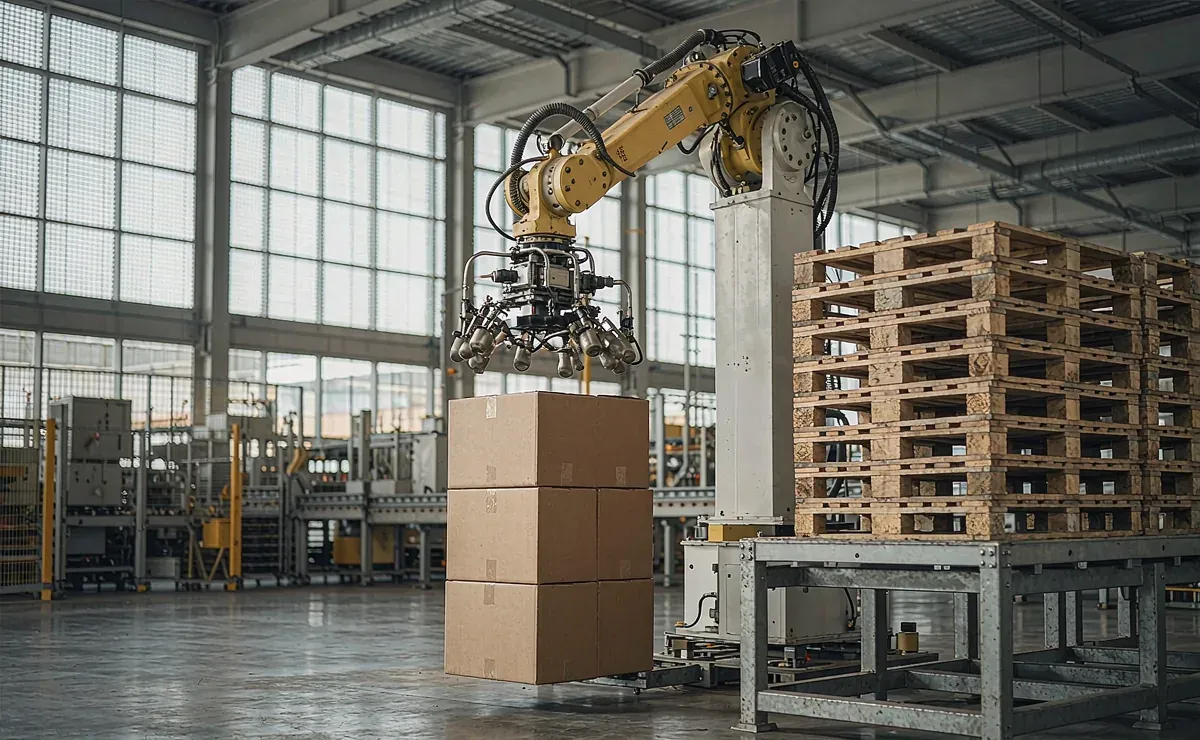
The performance of a palletizing station is determined by four factors:Stack-type program— The staggered stack design directly affects stacking stability and pallet space utilization; the same box can differ by 10%–20% in loading capacity depending on the stack type;Fixture selection— Vacuum suction cups are suitable for cartons (requiring smooth and sealed surfaces), clamp type for soft woven bags, clamp type for barrel packaging, and quick-change combination type for multi-category mixing;Beat-matching— Balancing feeding capacity, robot speed, and pallet supply means any shortcomings determine the overall line output;High stack accessibility— When the stack height is 1.8–2.4 meters, the robot's arm reach and end posture must cover the top-level box placement position. During selection, calculations should be based on the highest stack rather than just nominal parameters.
Henghuan has established numerous palletizing stations in the food, grain and oil, and chemical industries of Southwest China: four-axis heavy-duty palletizers, six-axis flexible palletizers, collaborative arm light-load palletizers, and hybrid SKU visual palletizing, providing palletizing program development, custom fixture manufacturing, conveyor line integration, and complete station delivery.
The technological evolution of palletizing automation and the Southwest market
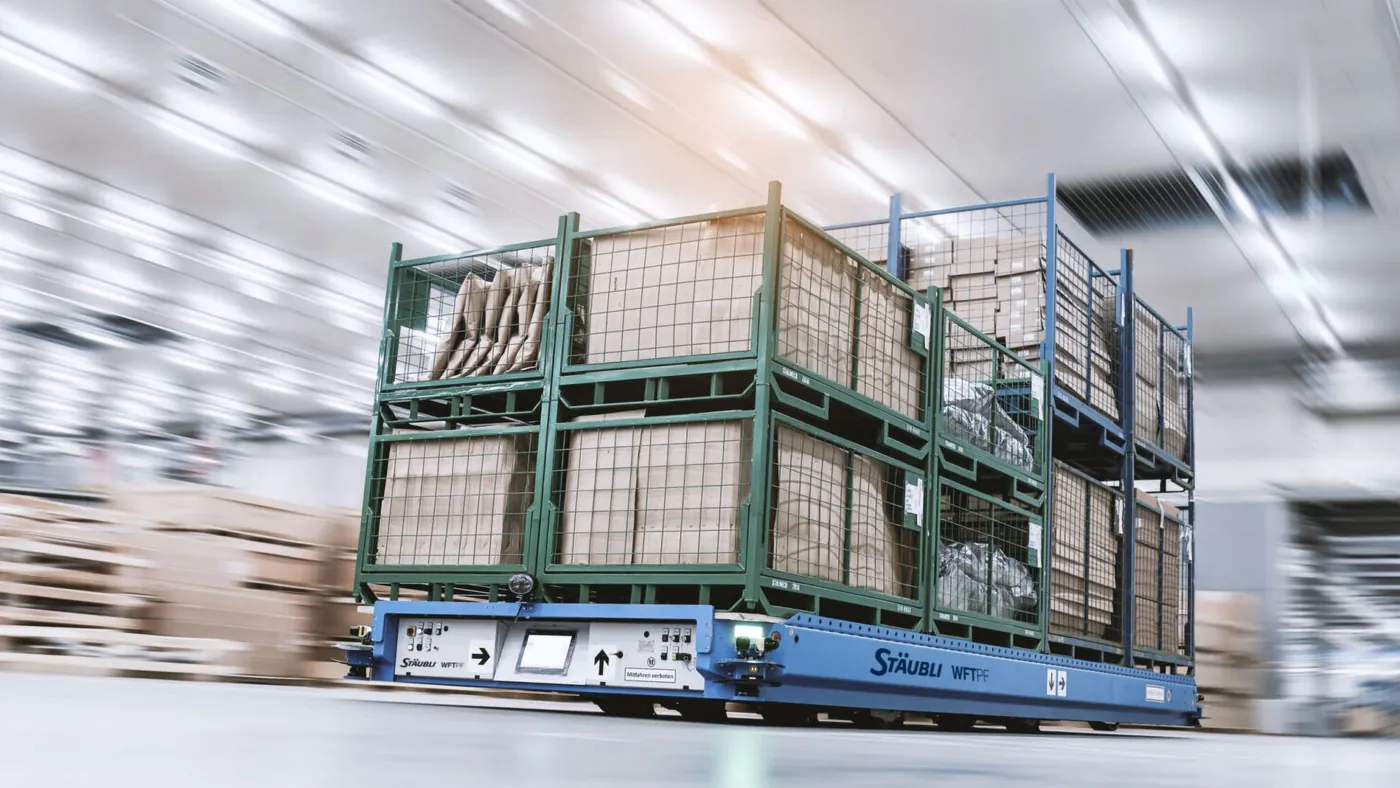
Trends in palletizing technology: First,Hybrid palletizing is on the rise— The multi-variety mixed pallet demand of e-commerce and fast-moving consumer goods drives 3D vision + online palletizing calculation: boxes of different sizes arrive randomly, the system calculates the optimal palletizing and picking sequence in real time, and the stability and loading rate of mixed pallets reach the level of experienced manual laborers; SecondCollaborative palletizing penetration at the end of the production line— For light-load palletizing under 20kg, collaborative robotic arm + suction cup, fence-free and human-machine co-inlay, greatly lowering the automation threshold for small and medium-sized production lines; Third,Palletizing and AGV linkage— After palletizing, AGV is automatically called for transfer and warehousing, connecting with the warehouse WMS, and the entire finished goods warehouse process is fully unmanned.
The Southwest food and beverage industry (Chengdu, Meishan, Suining) and grain and oil processing (Nanchong, Dazhou) are the largest markets for palletizing robots. Seasonal capacity fluctuations (three-shift shifts during peak seasons, idle during off-season) drive strong demand for leasing models. Henghuan offers short-term, long-term, and lease-to-purchase palletizer services, allowing peak season expansion without the need for one-time heavy asset investment.
Key points and operation and maintenance management of palletizing workstations
Common Issues and Countermeasures at Palletizing Stations:Dropped the box— Insufficient vacuum on the suction cup (carton surface with printed film that is not breathable or moisture-contained), and the adsorption zoning logic does not match the actual box surface; The countermeasures are online vacuum monitoring + zoned adsorption + incoming material control of box surface quality.Stack-shaped collapse— Insufficient joint pressing, uneven load-bearing of the box, uneven pallets; The countermeasure is stack design review (heavy boxes underneath, staggered seam pressing) + top-layer compaction logic.Rhythm fluctuations— Feed blockage causing the robot to wait idly, or the stack program failing to optimize its trajectory; The countermeasure is feed buffer design and smooth movement trajectory optimization, which usually extracts more than 15% of the beat allowance.Dust deteriorates in working conditions— Grain, oil, flour, and dust invade joints, lubricating grease contamination and failure accelerates wear.
The maintenance focus of heavy-duty palletizers is related to the characteristics of the large boom structure: reducers (RV/harmonics) are inspected by oil sampling by operating hours, annual seals of balancing cylinders or counterweight systems, visual and flaw detection of stress parts in the metal structure of the body (such as the base of the boom and wrist flanges), and replacement of wear parts in suction cups and vacuum generators according to the records. The four-axis palletizer has a simpler structure and fewer failure points than the six-axis, which is one of the reasons it offers high cost-performance in pure palletizing scenarios. Henghuan's palletizing station maintenance contracts are customized according to working conditions (dust level, operating duration), with customized items and frequency.
Need a localization solution for palletizing processes?
Whether it's selecting new project solutions, upgrading production lines, or operating and maintaining in-use equipment, Henghuan can provide third-party technical support for palletizing applications. Please tell us about material specifications, production cycles, and the on-site environment, and we will provide targeted solution recommendations.
Contact Henghuan View all application processes