Cartesian coordinate manipulator
Cartesian coordinate manipulators (commonly known as truss manipulators, gantry manipulators, or injection molding manipulators) move along a linear axis, featuring a simple structure, good rigidity, and large stroke. This page explains its structural principles, key parameters, applicable processes, advantages, and disadvantages in detail, along with an index of the 0 models in our database.
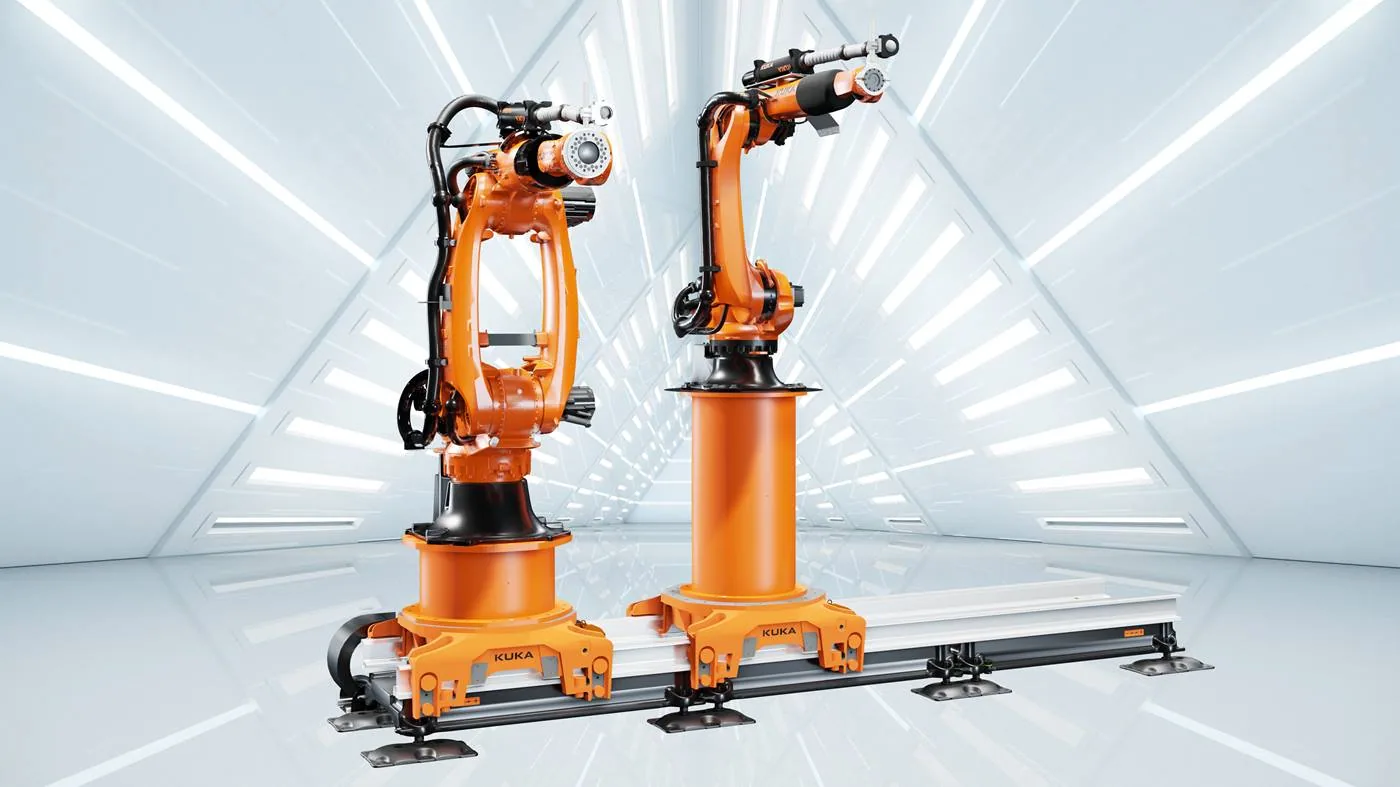
"Industrial Manipulator" Moving Along a Linear Axis
What is a Cartesian coordinate maniplicator?
Cartesian coordinate robotic arm (commonly known as "truss manipulator," "gantry manipulator," "injection molding manipulator," English: Cartesian / Gantry Robot) is the most intuitive type of manipulator: it is along the edge X, Y, and Z are three mutually perpendicular straight axesMovement is like the crane or gantry crane in a factory, with the end moving in a straight line within a three-dimensional Cartesian coordinate system.
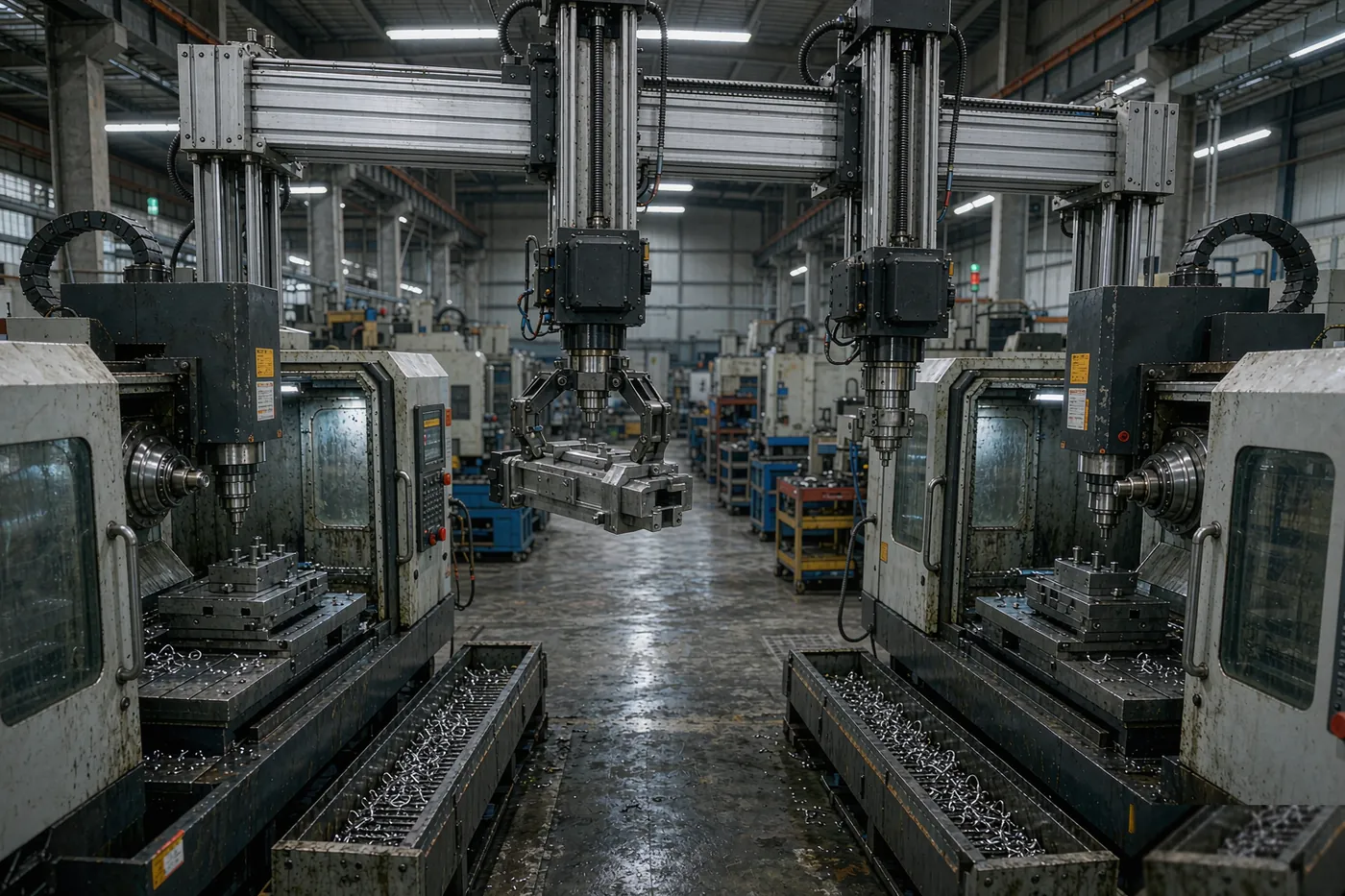
This is exactly the public's most naive image of a "robotic arm"—a gripping device that can move in straight lines, up, down, left, right, forward, and backward. It is hereInjection molding machine parts pickup(Horizontal Injection Molding Robot),Machine tool truss loading and unloading、Large-stroke, straight line transportand other scenarios, making it one of the most common references to the term "manipulator" in workshops.
| Dimension | Cartesian coordinate manipulator | Comparison with six-axis robotic arms |
|---|---|---|
| Exercise methods | Along the X/Y/Z linear axes | Joint rotation, spatial curves |
| Rigidity | High (linear guide rail support) | medium (cantilevered structure) |
| itinerary | Can be very long (from several meters to several tens of meters) | Limited by reach (usually ≤3.5m) |
| Flexibility | Low (posture restricted) | High (arbitrary orientation) |
| Cost | Low (simple structure) | Medium and high school |
| Typical scene | Injection molding part removal, truss loading and unloading, linear handling | Welding, complex assembly, and flexible handling |
Advantages and limitations
Advantages:Simple structure, strong rigidity, high positioning accuracy, long travel capability, low cost, and easy maintenance; It is especially suitable for "linear reciprocating" pick-and-place operations. Injection molding robots can quickly pick up products and embed inserts, while gantry robots use them to load and unload materials across multiple machines.
Limitations:Minimal posture freedom (the ends usually can only be flipped and cannot be oriented arbitrarily); occupying the space above (gantry structure); Not suitable for complex spatial trajectories (welding, surface grinding). When flexible posture is required, six axes are still needed.
The main battlefield for Cartesian coordinate manipulators
| Application process | Explanation |
|---|---|
| Injection molding for part removal and insert | Horizontal injection molding robot for product pickup, insert inserts, and cut water outlets |
| Machine tool truss loading and unloading | Multiple CNC linear feeding, with multiple pull-up machines |
| Large-stroke, straight line transport | Travel from several meters to several tens of meters, transferring across workstations |
| Palletizing (linear type) | Combine with the lifting shaft for simple palletizing |
| Dispensing/Inspection (Linear Trajectory) | Dispensing and inspection of planar straight trajectories |
Supply instructions
Cartesian coordinate robots (especially injection molding robots and trusses) are mostly used for this purposeCustomized according to equipment and process, with a lower level of standardization than six-axis/SCARA. Our warehouse mainly uses six-axis, SCARA, and collaborative robotic arms. Truss and injection molding robots are supplied to order or by usResearch and development of automation equipmentCustom lines. If you need injection molding machine connections or machine tool truss loading and unloading, feel free to contact us. We will provide solutions based on your equipment model and workshop conditions.
Frequently Asked Questions
Is an injection molding robot the same as a Cartesian coordinate robot?
Most of the time. The horizontal walking robot equipped with injection molding machines mainly adopts a Cartesian coordinate structure (X horizontal stroke + Y draw + Z vertical), which quickly picks up products along a linear axis. There are also inclined arm types (simpler) or six-axis types (more flexible), but the most typical example of the "injection molding robot" is the rectangular coordinate design.
How to choose between truss manipulators and six-axis loading/unloading?
Check stroke and flexibility: long-distance linear feeding across multiple machine tools, large-batch → trusses with fixed cycle times (good rigidity, low cost, long stroke); The process is complex, requiring a flipped posture, and there are many varieties → six-axis system. Many machining workshops combine "truss for main line feeding + six-axis for complex workstations."
Do Cartesian coordinate robots count as industrial robots?
Count. It is a basic form of industrial robot classification based on structure, meeting the definition of "programmable, multiple degrees of freedom, automatic execution." Although not as flexible as six-axis models, they are efficient and economical in linear pick-and-place scenarios, making them irreplaceable.
Supply instructions for Cartesian coordinate manipulators
Supplied on demand
The main models in the station in inventory are six-axis robotic arms, SCARA, and collaborative robotic arms. Cartesian coordinate robotic arm equipment (such as injection molding machine horizontal walking manipulators and truss loading and unloading) is mostly customized by process or supplied to order. We have corresponding selection, procurement, and integration channels. If you have any requirements, please contact us. We will provide configuration plans tailored to your equipment and process conditions.
Need robot selection, maintenance, or application solutions?
Tell us about workpieces, procedures, beats, and budgets. Local teams in Nanchong will connect with us, and on-site inspections are available in Sichuan, Chongqing, Yunnan, and Guizhou. Robotic arm (manipulator) selection, second-hand purchase and sale, maintenance and repair all in one place.
Contact usView all varieties