Research and education
Industry Robot Application Solutions · 5 Brands Coverage · 3 types of typical processes
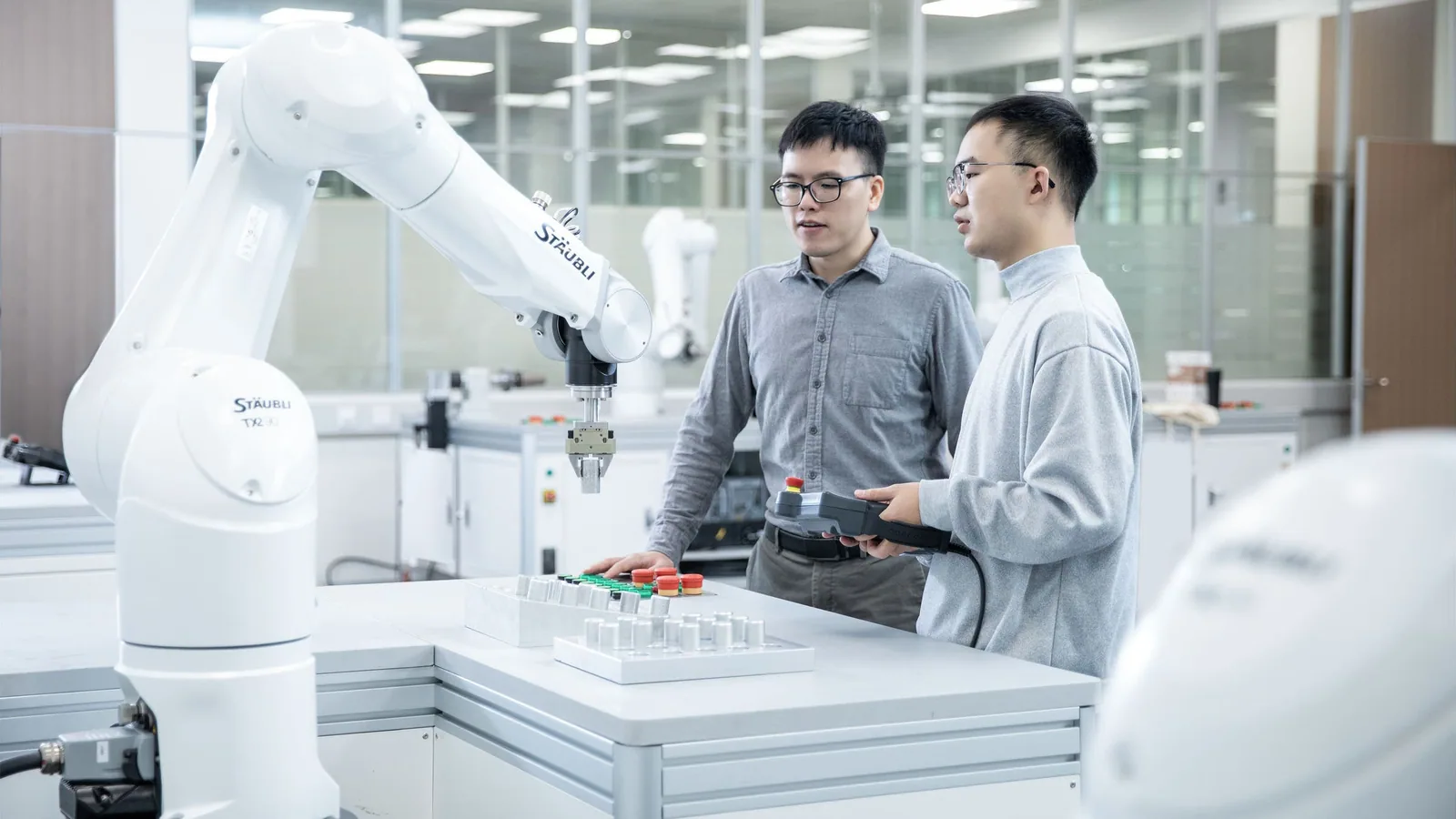
Applications of robots in research and education
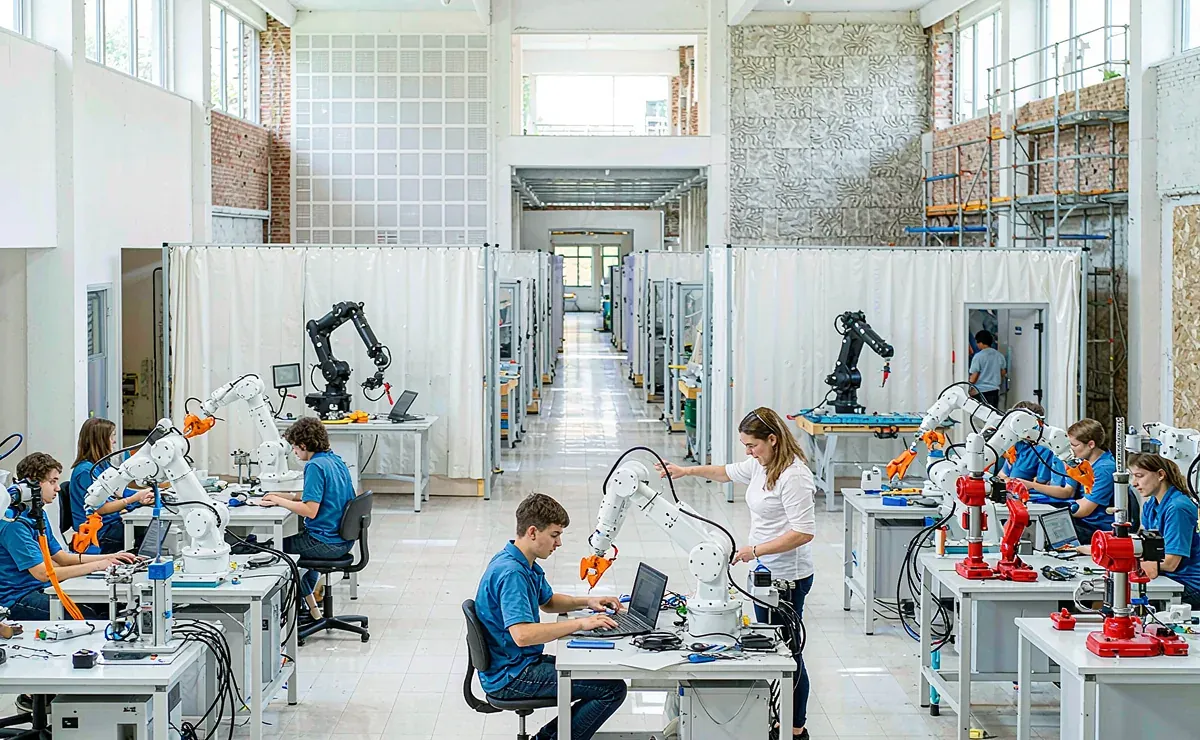
Robot training rooms in universities, vocational schools, and research institutes commonly use small six-axis and collaborative robots (UR, JAKA, AUBO, QJAR). Teaching equipment is used frequently, operators have varying experience levels, and failure rates are higher than production line equipment. Henghuan provides educational institutions with second-hand procurement channels for training robot maintenance, maintenance kits, and teaching equipment.
Typical automated processes
Common robotic processes in this industry—click to view key application points, customer cases, and applicable brands.
Automation of challenging assembly processes using Kawasaki's latest technology. Advances in automation control technology enable robots to complete complex assembly processes that were previously impossible. Over the past 40-plus years, Kawasaki has continuously improved its technology to meet the high...
View process details → SortingSorting involves first grabbing small parts or food that move at high speed on a conveyor belt before sorting them, requiring high-speed movement. Kawasaki's YF series sorting robots can achieve high-precision, high-speed movements. It can be combined with the visuals developed by our company...
View process details → Machine tool loading and unloadingRobotic loading and unloading can be a simple automated process for handling products to adapt to the manufacturing process. However, reducing cycle time is crucial, as the robotic loading and unloading process cannot add value to the product. Kawasaki is continuously developing new products to reduce...
View process details →Covering branded equipment
Robot brands within Henghuan's service scope that have practical applications in the research and education industry can click to enter the brand page to view series and model specifications.
 KUKA456 models
 Universal Robots9 models
 Epson112 models
 JAKA19 models
 AUBO24 models
Henghuan can provide services for the research and education industry
All six core businesses can be procured independently or in combination.
Process validation, workstation solutions, programming and teach-in and production ramp-up support, and turnkey delivery of robot applications.
Learn more → Sales of new industrial robotsAuthorized-style sales of brand-new mainstream robots with selection support for new production lines and capacity expansion.
Learn more → Research and development of automation equipmentResearch, development, integration, and delivery of end-effectors, conveyor positioning, safety peripherals, and complete control systems.
Learn more → Research and development of algorithms and control systemsMotion planning, machine vision, and PLC/SCADA system development to address takt-time bottlenecks, accuracy, and data interconnection.
Learn more → Robot rentalShort-term rental, long-term rental and lease-to-own for in-stock models, long-term rental, and lease-to-purchase transfer, including transportation, installation, commissioning, and lease-term maintenance.
Learn more → Software and hardware upgrade servicesController retrofits, software and firmware upgrades, mechanical refurbishment, and safety upgrades restoring performance to older equipment.
Learn more → Maintenance and repairOn-site inspection, fault diagnosis and repair, and annual maintenance contracts covering 1,310 models from 21 brands.
Learn more → Used & in-stock robot salesWe buy back used robots and handle inspection, refurbishment and resale; every unit ships with inspection records and a warranty, and trade-ins can offset new purchases.
Learn more →Industry Status: The education equipment market driven by industry-education integration
The robotics education equipment market continues to expand alongside industry-education integration policies: enrollment in robotics engineering and intelligent manufacturing at undergraduate and vocational colleges, widespread adoption of industrial robot application and maintenance in secondary vocational schools, and the extension of science and innovation education in primary and secondary schools—all levels of institutions are comparedTeaching robot workstations, training stations, virtual simulation softwareDemand is clearly layered. Another growth driver is corporate training: training in robot programming and maintenance skills for in-service manufacturing engineers has grown rapidly as automation penetration increases.
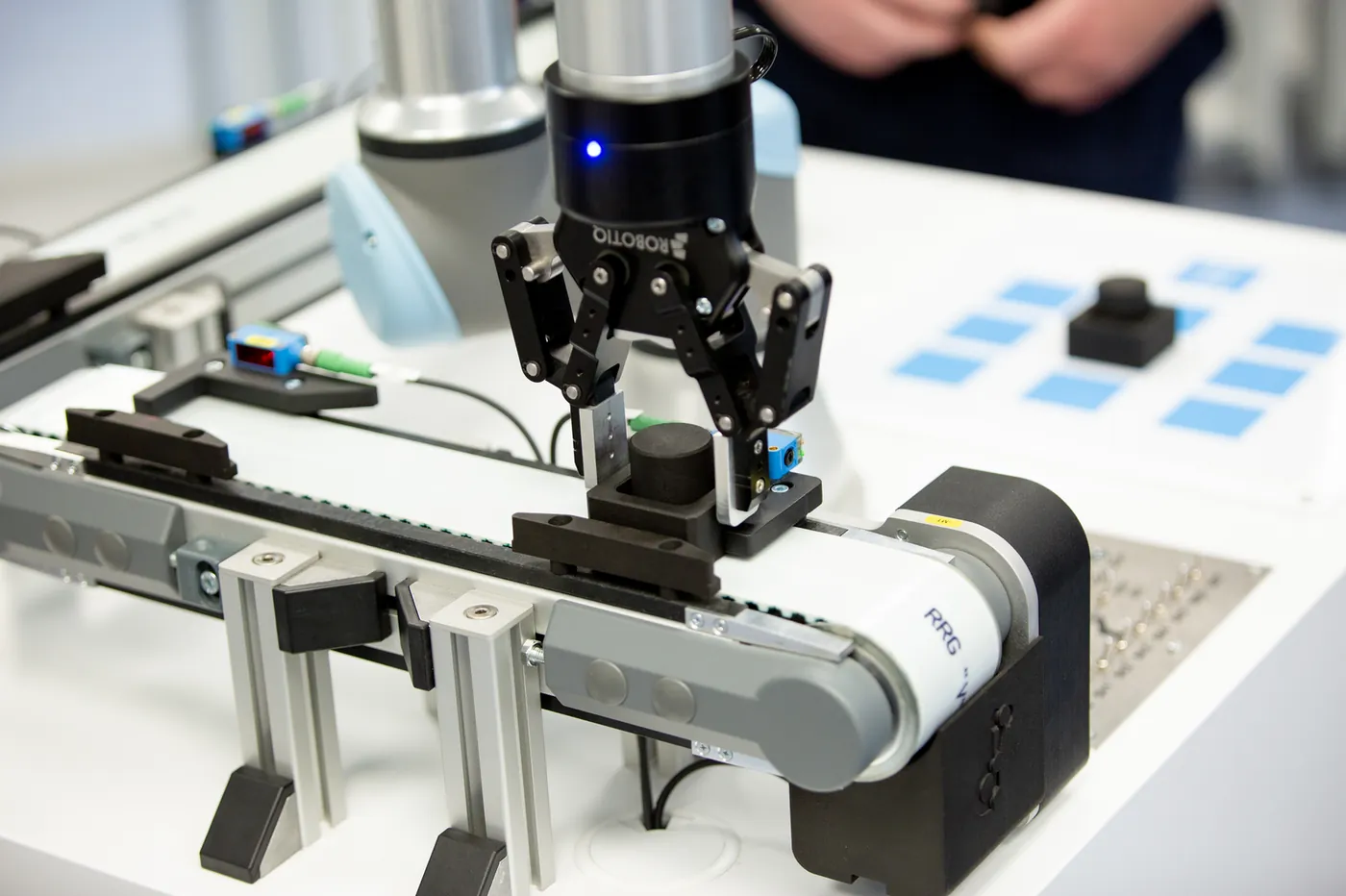
The uniqueness of educational scenarios lies in the "teaching attributes first": equipment must be user-friendly (frequent misuses), courses must be matched (textbooks, courseware, assessment standards), and safety redundancy (safety design levels for beginner environments are higher than those in factories); At the same time, university procurement isRealistic industrial scenesRequirements are getting higher — pure educational toy machines are out of touch with factory reality, students have to relearn after graduation, and "industrial-grade teaching equipment" has become the mainstream procurement direction.
| Scene | Typical configuration | Key points |
|---|---|---|
| Industrial Robot Training Room | 4–8 industrial six-axis + workstations (handling/welding/vision modules) | Industrial-grade equipment, redundant safety fences, and course facilities |
| Collaborative robot teaching | Collaborative arm + multi-process modules (screwing/dispensing/inspection) | Deployed without fences, students can access it directly for safety |
| Machine Vision/Algorithm Research | Six-axis + vision kit + development interface (ROS/SDK) | Open APIs, computing power support, and research scalability |
| Virtual simulation training | Offline programming software + digital twin platform | Multi-brand simulation, virtual-real linkage, and assessment system |
| Intelligent manufacturing micro-production line | Complete set of robot + PLC + MES teaching edition | Complete restoring of information flow, detachable and reorganizable |
| On-the-job training for enterprises | Customized by position (operation/programming/maintenance) | Real case teaching, assessment and certification |
The eight major business areas are the focus of education and research scenarios
Sales of new industrial robots + R&D of automation equipmentCombined service for training room construction: Teaching workstations are customized according to the course syllabus (modular tooling, replaceable process units), with supporting textbooks, courseware, and teacher training—we understand the actual needs of institutions to "reiterate and re-accept," and provide documentation to support the acceptance of training room construction projects.
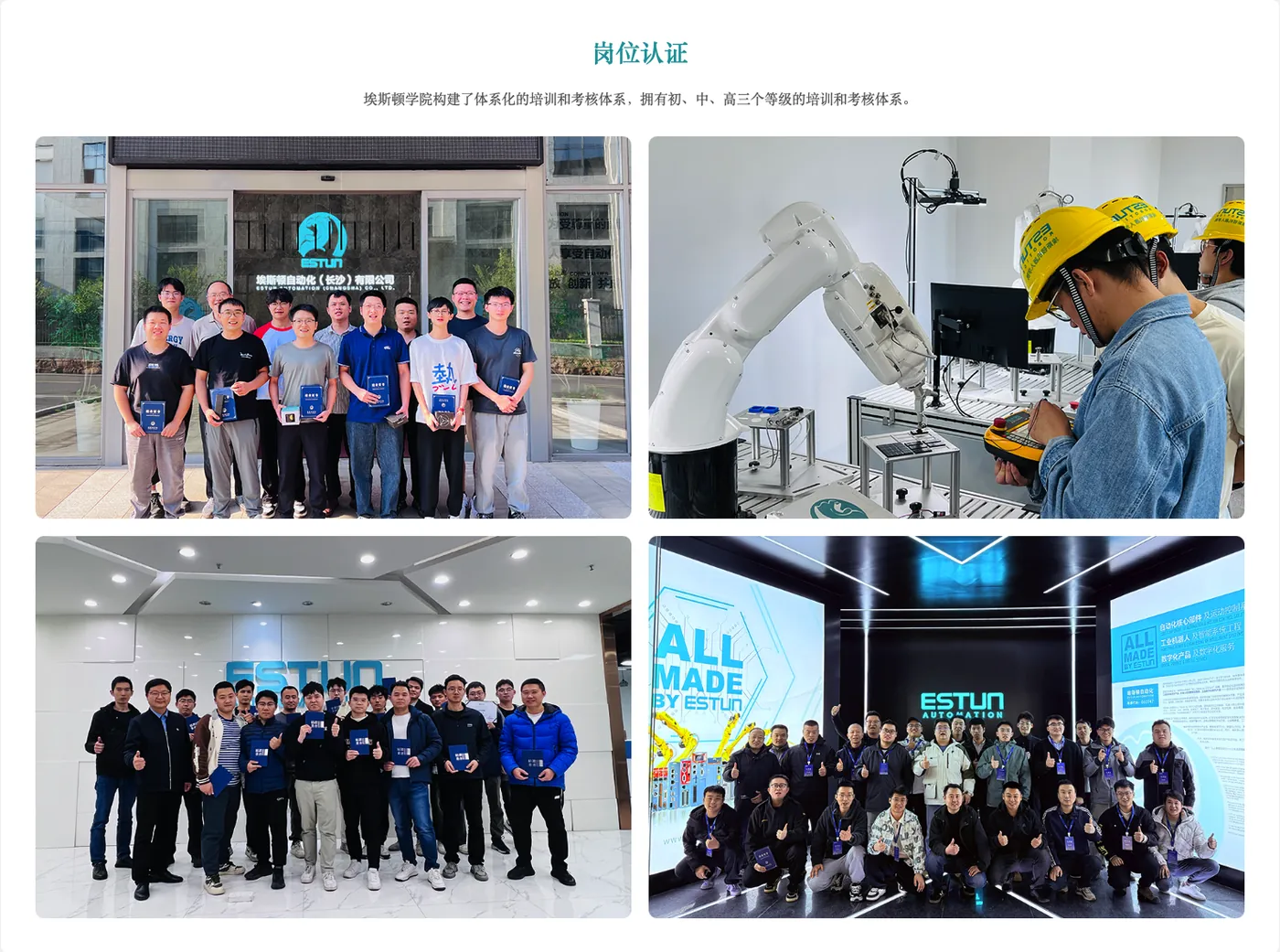
Used & in-stock robot salesInstitutions with limited service budgets: teaching scenarios are not sensitive to equipment age (mainly process demonstrations), and qualified second-hand industrial robots allow schools to build twice as many workstations with the same budget, and students are exposed to models actually used in factories.
Applied technology servicesExtending corporate training services: Robot operation/programming/maintenance training for manufacturing enterprises, using our equipment and engineer resources, with customized courses (2–5 day short-term classes) — both faculty continuing education for institutions and pre-job training for enterprises are available.
Industry Q&A
What supporting facilities can be provided for the construction of training rooms in schools?
Comprehensive delivery: equipment selection and layout design, customized teaching workstations, textbooks and courseware (including assessment standards), teacher training (2 sessions), and acceptance document support; Subsequent maintenance and course upgrades are under annual service contracts. We have a configuration template for training room construction (graded by major direction and budget), which can be directly used in application plans.
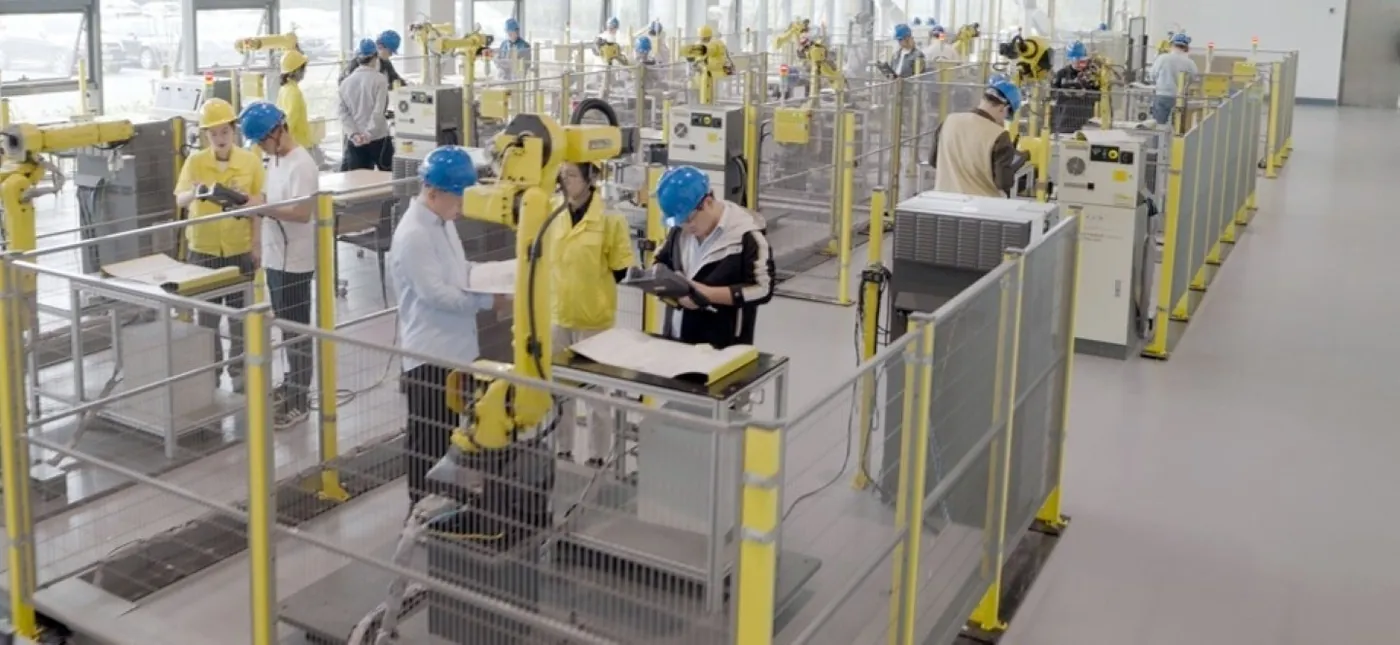
What should you do if a student accidentally damages the equipment?
Pre-designed protection for teaching scenarios: software limit + workspace fence dual protection, increased collision detection sensitivity, and redundant emergency stop arrangement; The course design starts with simulation before actual operation, and slows down before normal speed. The maintenance rate for teaching equipment is separately stipulated in the maintenance contract (lower than commercial rates), and is accompanied by a quick replacement channel for common damaged parts.
Customized development of scientific research projects?
Continued. Secondary development of robots for university projects (SDK/ROS interfaces, special process experiment platforms, custom test benches) is conducted under a research contract model; Our engineers can participate in the equipment support part of joint experiments and papers, and the budget items for horizontal projects (equipment costs/testing/processing fees) match the financial requirements of the institution.
Does equipment in the research and education industry need technical support?
Tell us your brand model, processes, and equipment status. Henghuan offers robot maintenance, servicing, second-hand sales, and selection advice for the research and education industry. Rooted in Yilong, focused on Sichuan and Chongqing, serving the vast Southwest.
Contact Henghuan View all industries