Kawasaki Heavy Industries · Kawasaki industrial robots
As a long-established Japanese industrial robot manufacturer, Kawasaki Heavy Industries has accumulated over 50 years of experience in the robotics field, expanding from simple loading and unloading to today's human-machine collaboration, cleanrooms, and semiconductor handling, continuously expanding its technology and product line.
Kawasaki KAWASAKI product family
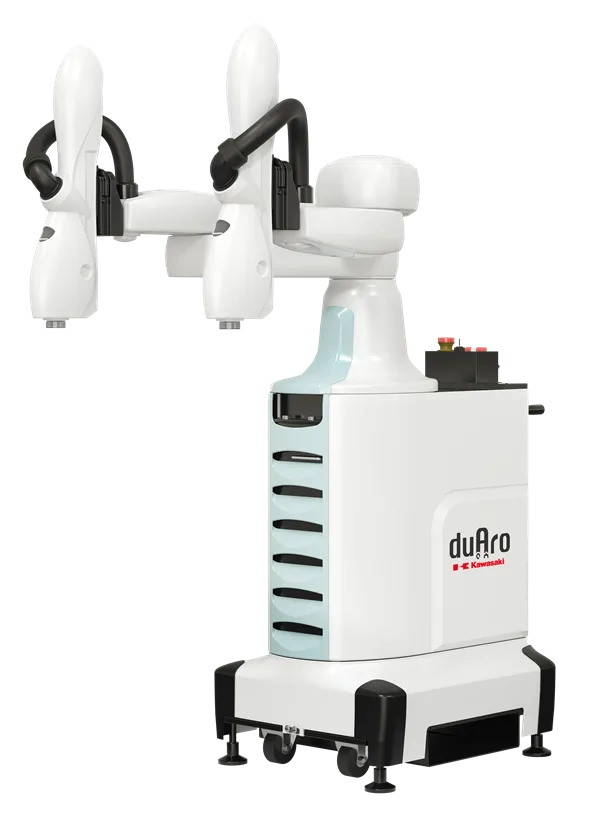
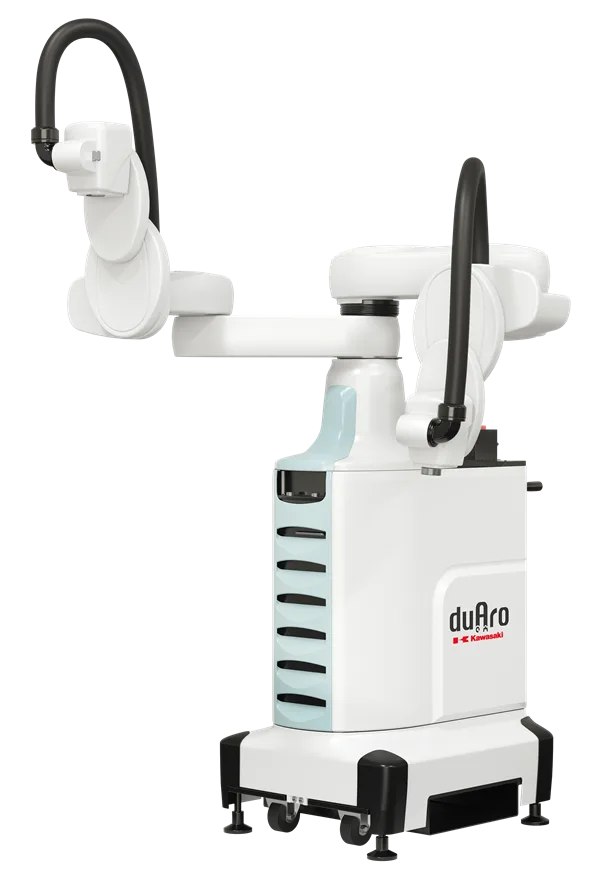
Dual arms are horizontally multi-jointed, requiring no safety barriers for human-machine collaboration.
Covers loads from 3 to 80kg, flexibly applicable for assembly, loading and unloading, handling, and gluing.
100-300kg load capacity, applicable in automotive, spot welding, handling, and other fields.
Loads ranging from 350 to 1500 kg, handling vehicle bodies and large workpieces.
80-700kg load capacity, palletizing cartons, bags, barrels, and bottles.
Specialized for arc welding and cutting, with built-in cables for easy introduction.
From small to large parts, explosion-proof spraying applications.
Load range from 3 to 20 kg, with a reach of 400 to 1000 mm.
Clean robots that meet SEMI standards.
High-speed picking and discharging, suitable for food-grade lubricants.
ISO Level 5 cleanliness, compatible with VHP sterilization.
15kg load, specially designed for sealing and coating operations.
Product series and specifications
The following specifications are compiled from the official Kawasaki website (load, reach, footprint, body weight) for comparison and selection.
duAro collaborative robot series
A collaborative dual-arm horizontal multi-joint robot independently developed by Kawasaki can operate at close range with human operators without the need for safety barriers. It makes the implementation of human-machine collaboration simpler and easier to operate, meeting diverse automation needs.
With advanced safety features, it can coexist with humans in environments without safety barriers, making the introduction of small-batch, high-mix-level production lines easier.
Both arms can operate independently or in coordination, working together like a person to complete assembly, handling, loading, and unloading tasks.
Supports tablet teaching or direct teaching, with a low programming threshold and no need for professional robotics engineers.
The compact body design occupies a small footprint and can be flexibly deployed on crowded production lines or test benches.
Small and medium-sized general-purpose robots RS/CF series
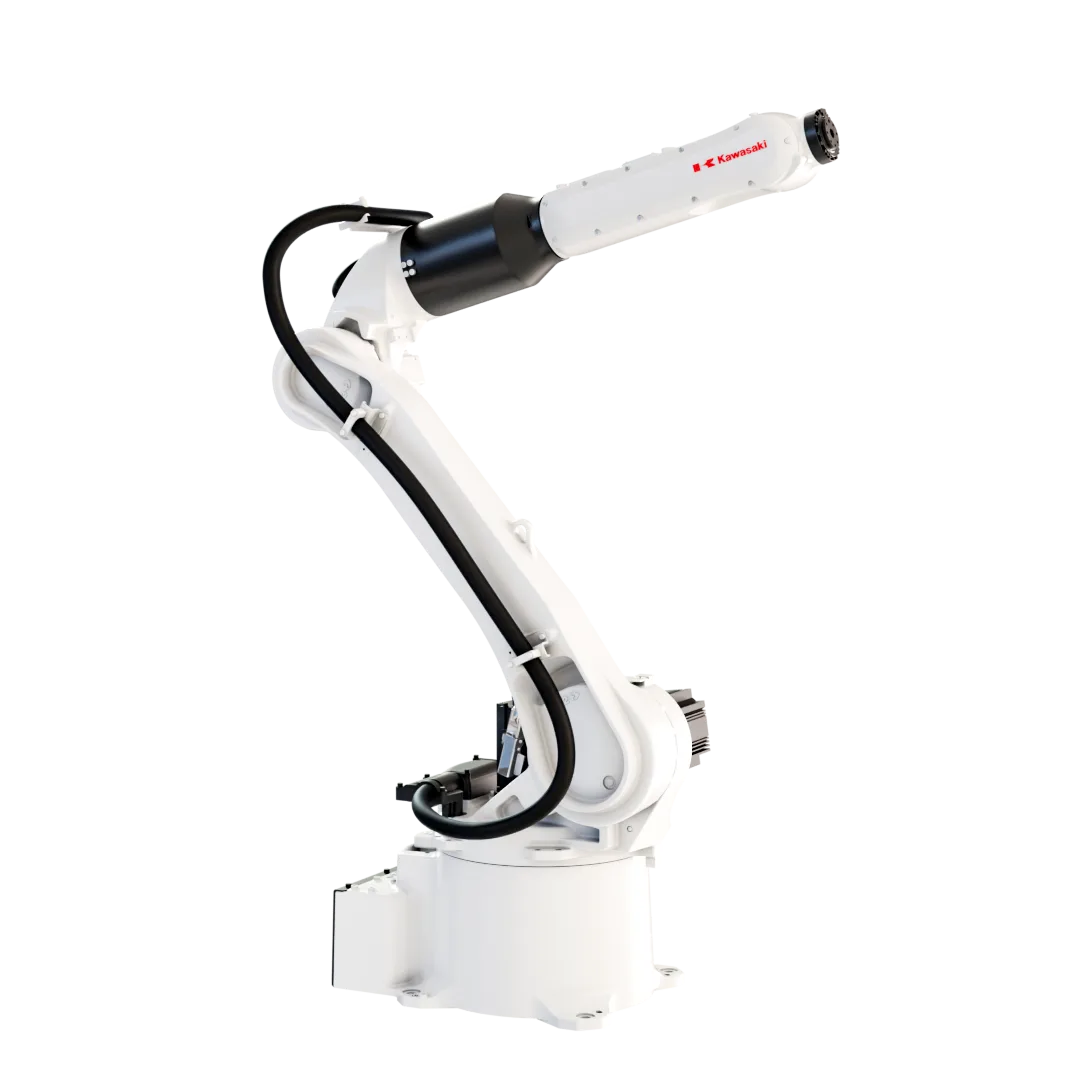
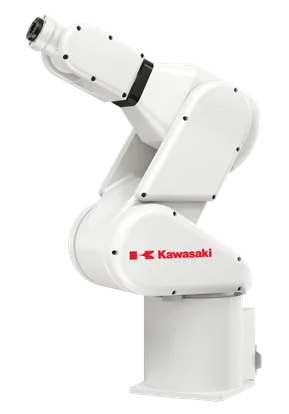
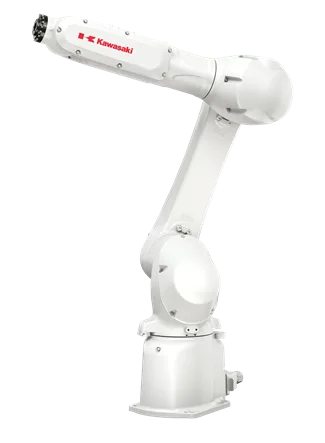
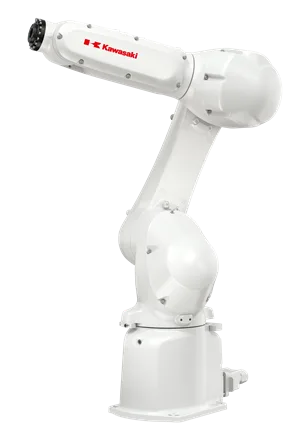
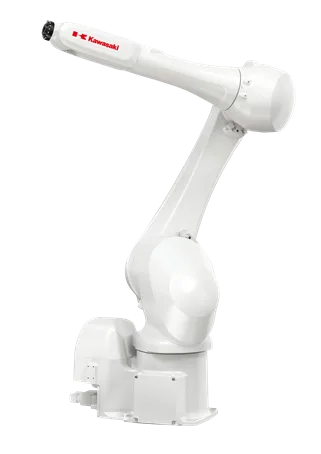
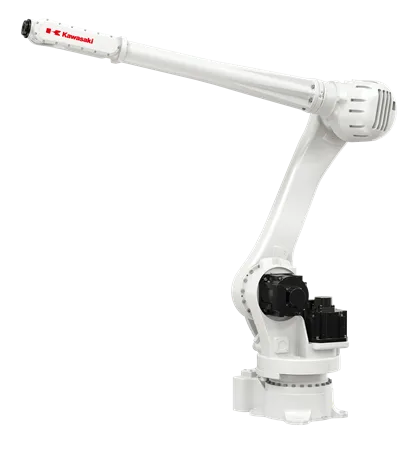
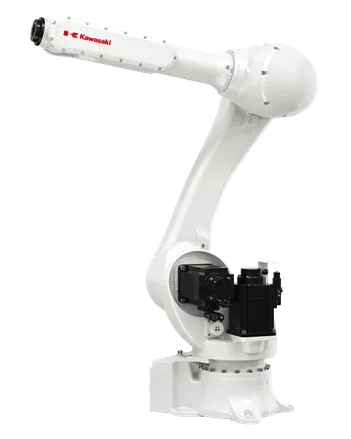
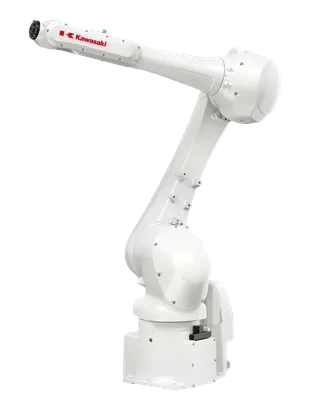
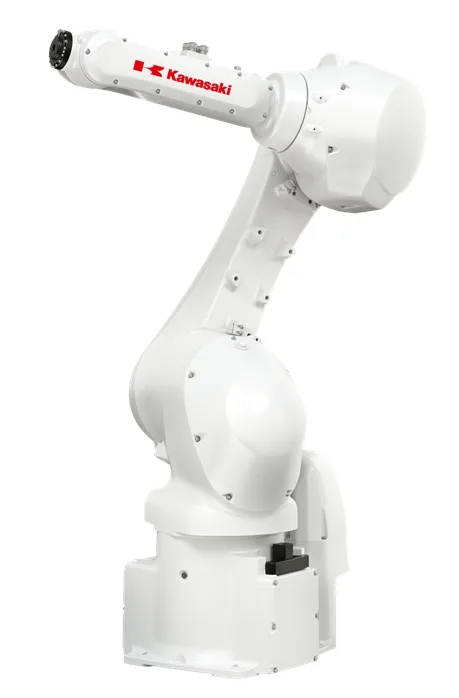
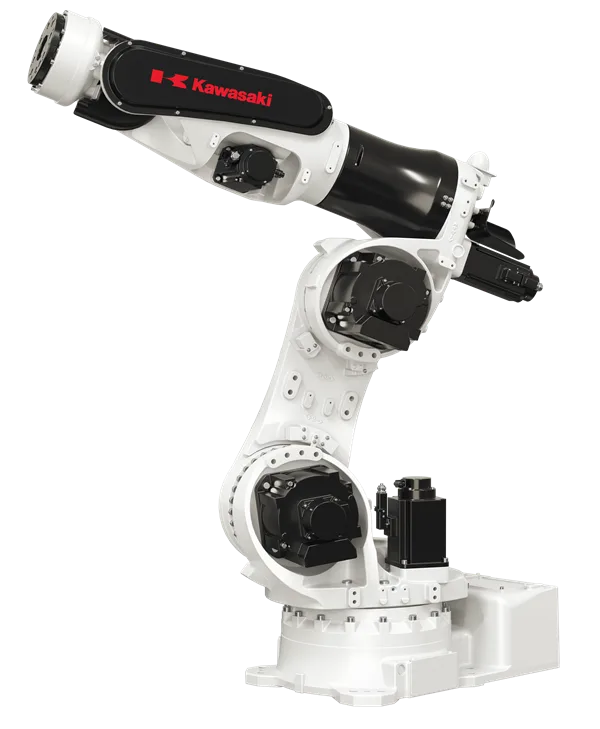
The R Series distills the essence of Kawasaki's technology and experience, with a load capacity of 3-80kg and a working radius of 620-3150mm. The RS series supports various installation methods including floor, ceiling, and wall-mounting. The CFX series cable conduits are built-in for high-density installation.
Covering a load range from 3kg to 80kg, it is compatible with a wide range of processes from precision assembly to medium handling.
The Kawasaki R Series uses advanced servo and motion control algorithms, leading repeatability and faster working cycles.
The RS series supports multiple installation methods including floor, ceiling, and wall mounting, adapting to production line space constraints.
The CF series integrates cable conduits, making the robotic arm more compact and easier to maintain, suitable for high-density installation scenarios.
Large general-purpose robots BX/ZX/BXP/BTP series
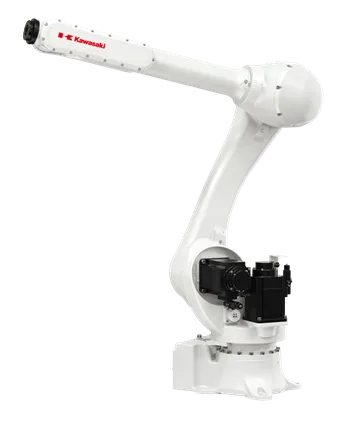
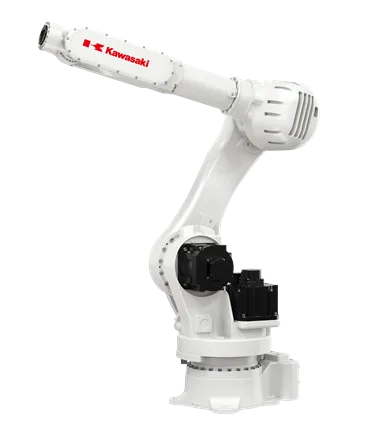
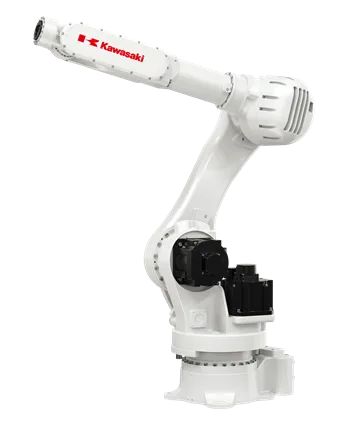
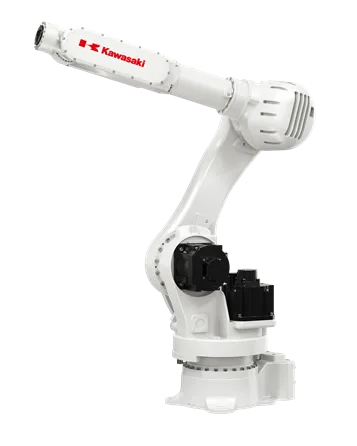
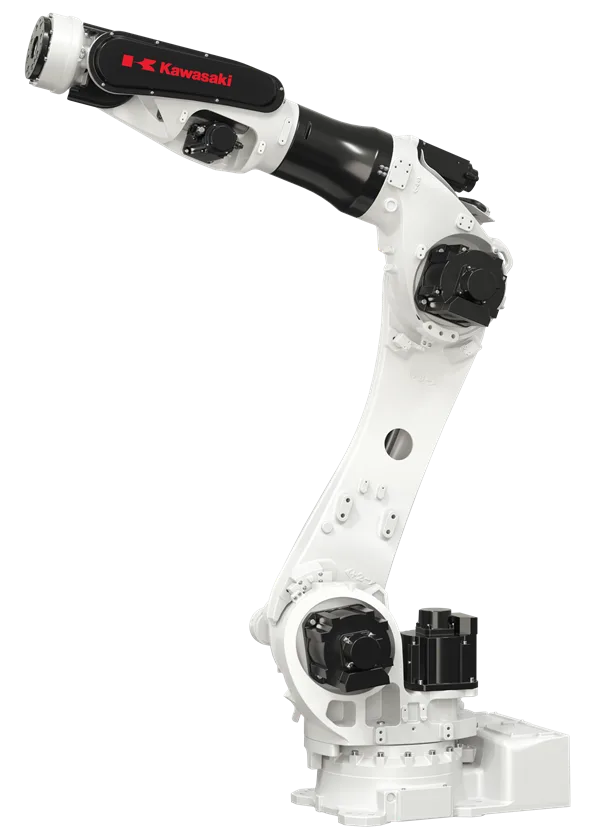
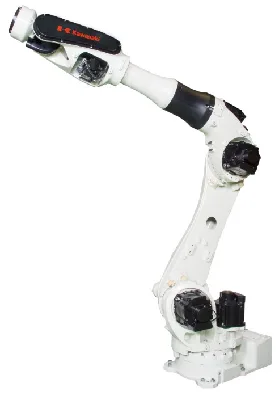
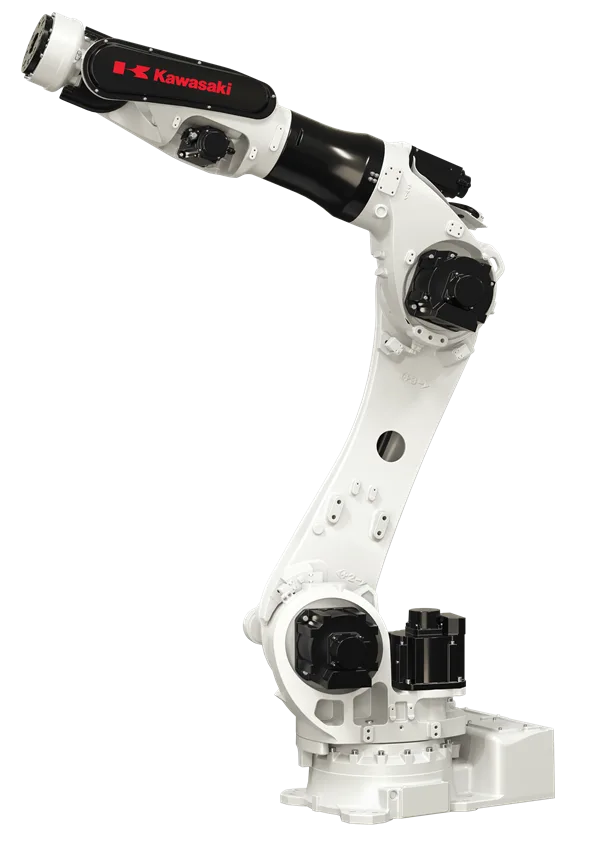
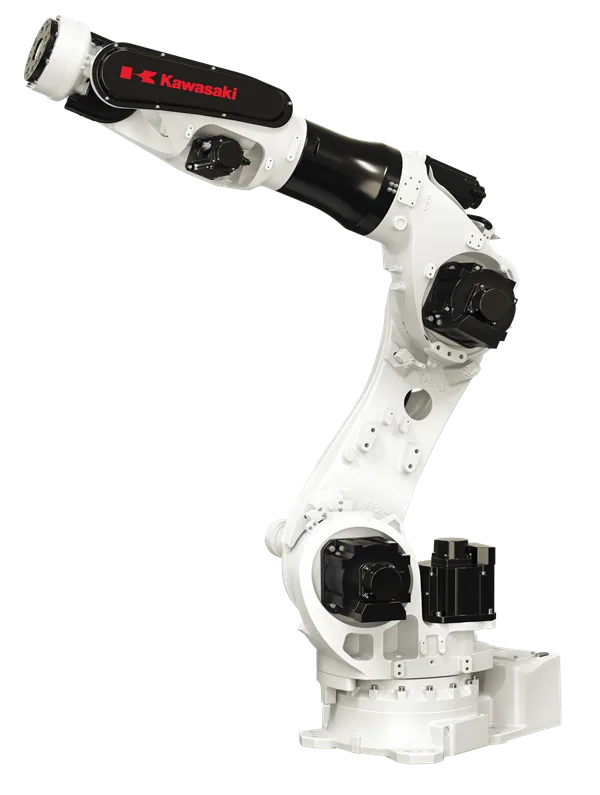
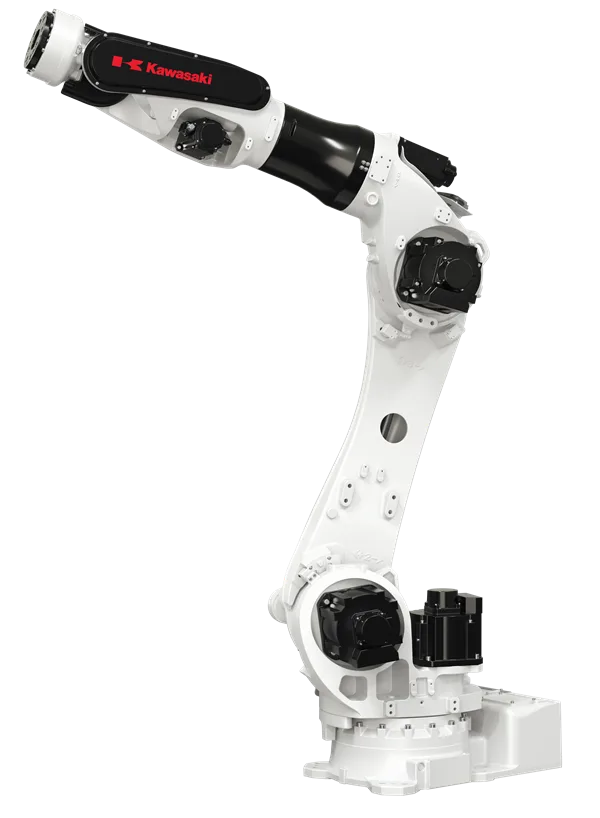
Kawasaki's large general-purpose robot B Series offers a rich product lineup, covering loads of 100-300kg and working radius of 1500-3400mm, and is widely used in industries such as automotive, aerospace, machinery, metals, electrical and electronics, and food.
Multiple subseries including BX/ZX/BXP/BTP cover medium, heavy, and heavy loads with different arm spans, precisely matching various large-scale operation requirements.
The BX/BXP series cable conduits are built-in, enabling high-density installation, and the robotic arm structure is more compact.
The BX/ZX series is widely used in automotive spot welding operations and has been proven by the automotive industry over time.
The BXP series is lighter and more compact than the BX series, and when paired with the F series control cabinets, it delivers faster motion control.
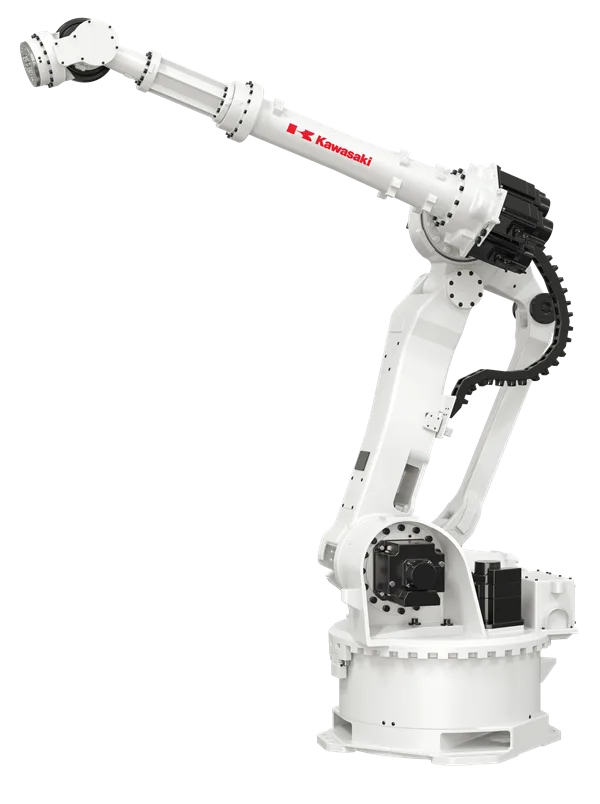
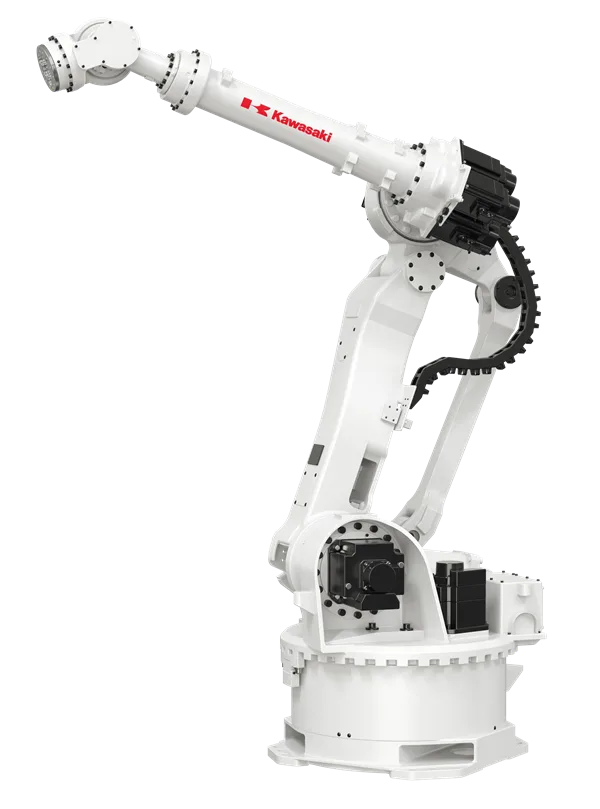
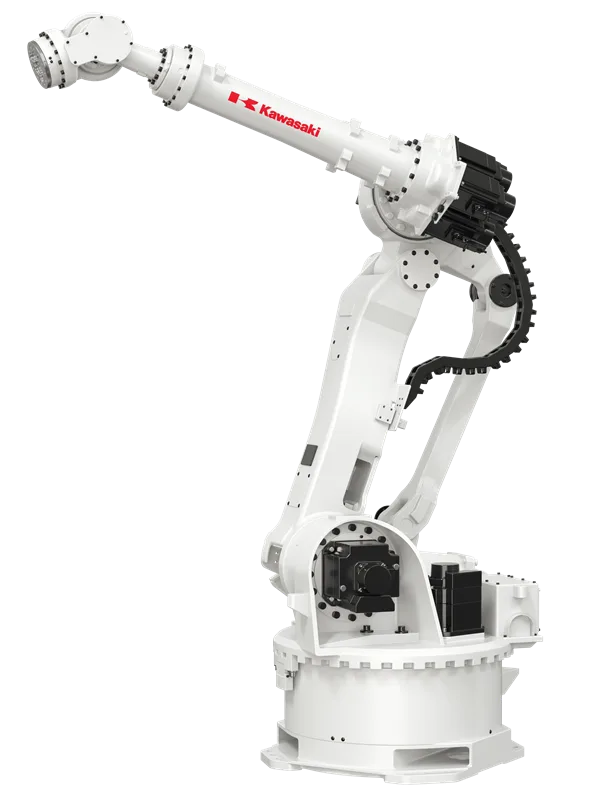
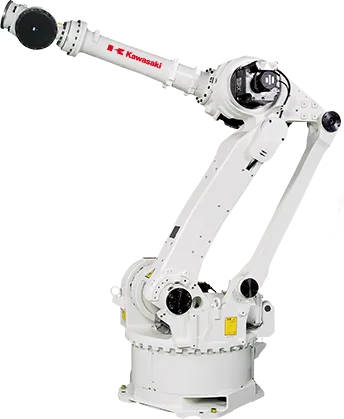
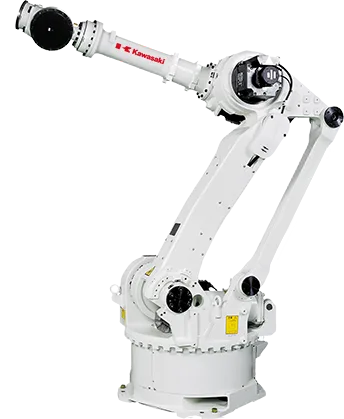
The ultra-large general-purpose robot M/MXP series
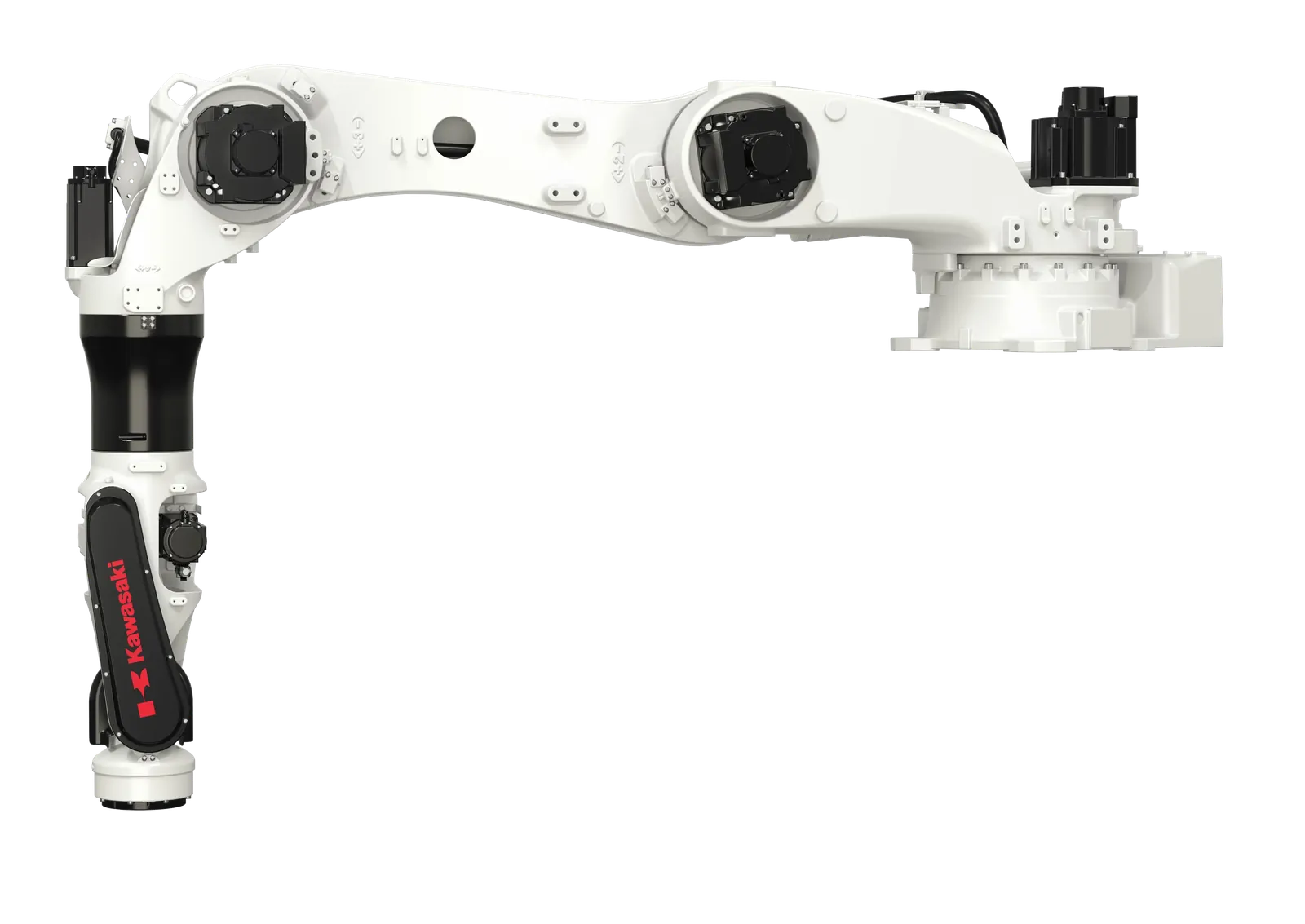
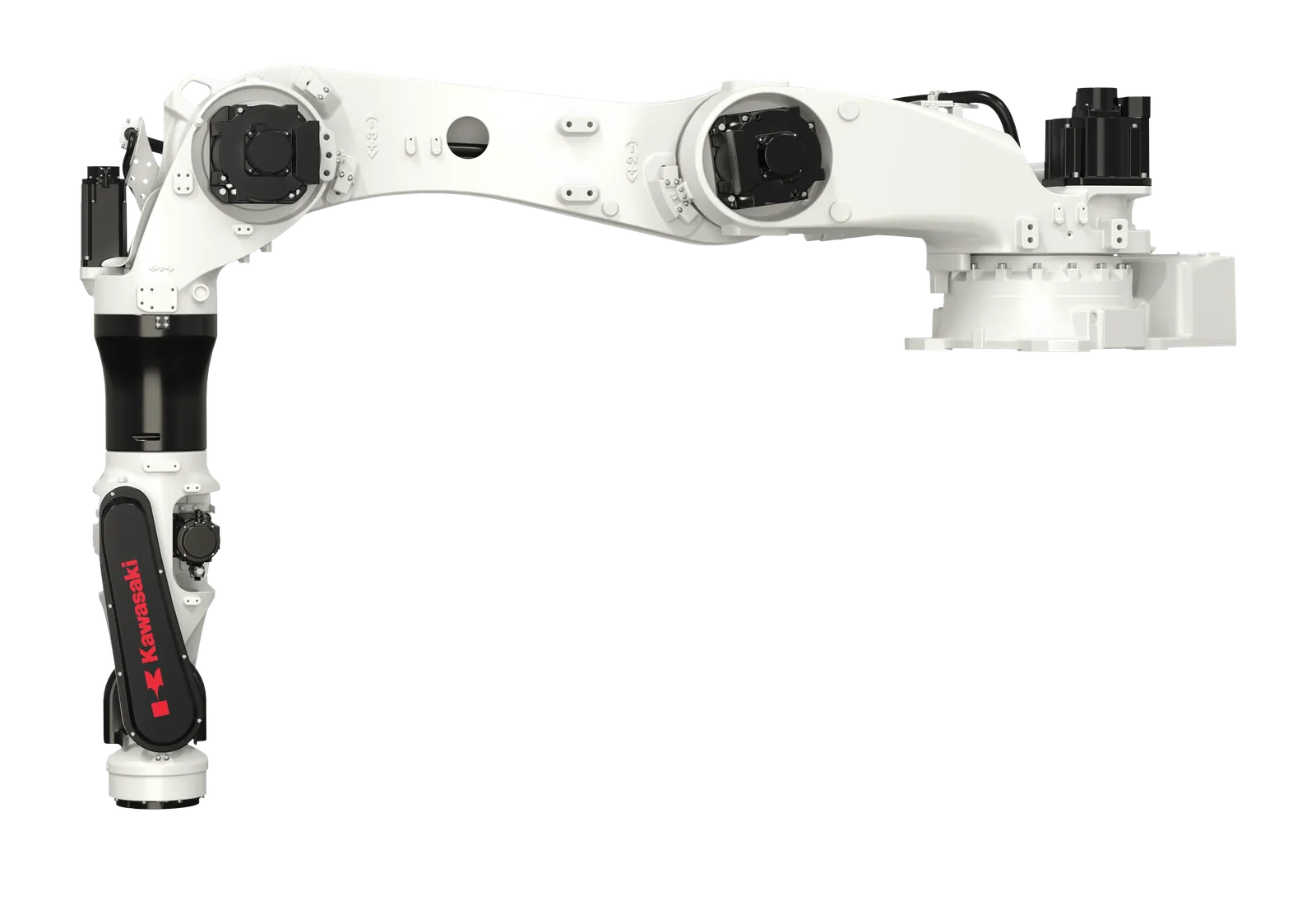
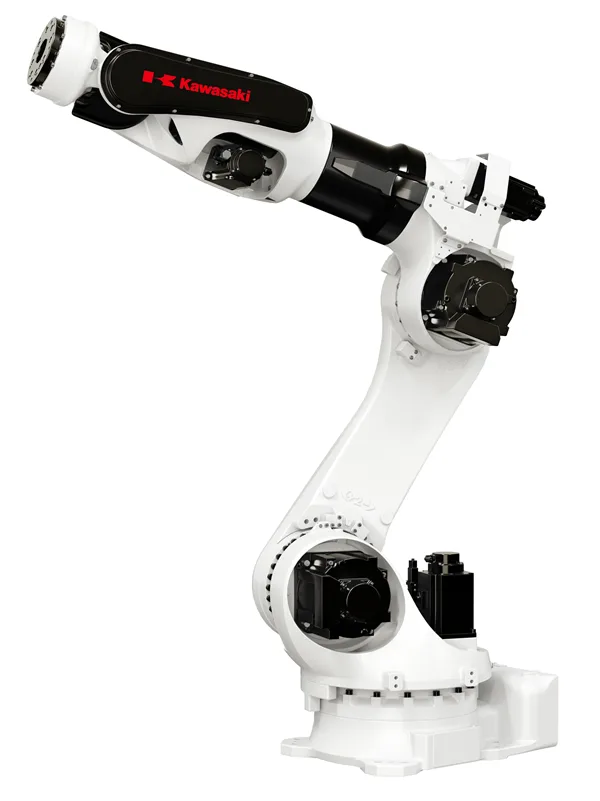
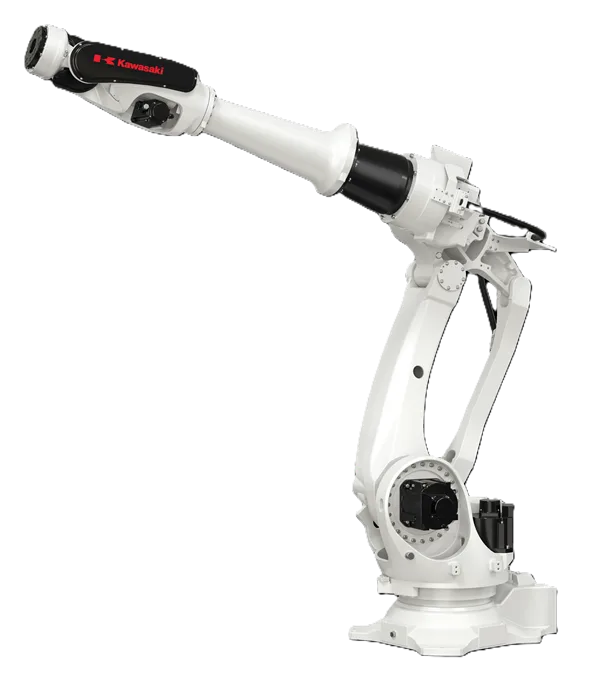
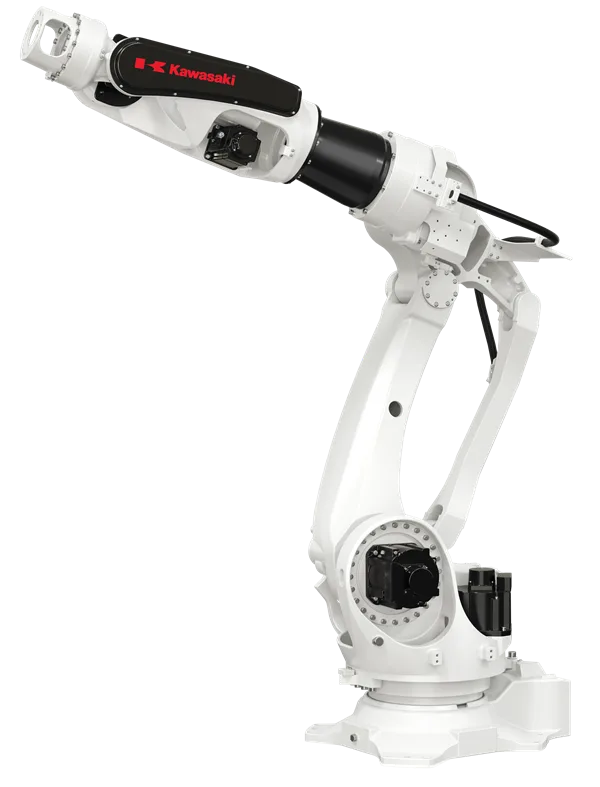
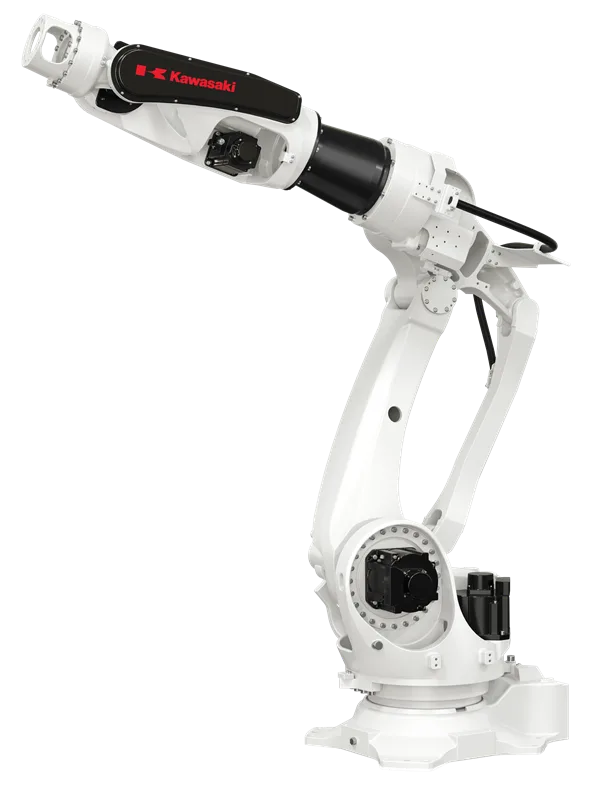
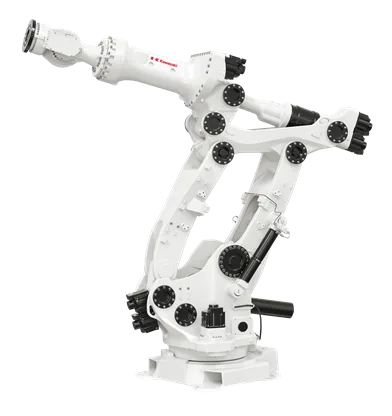
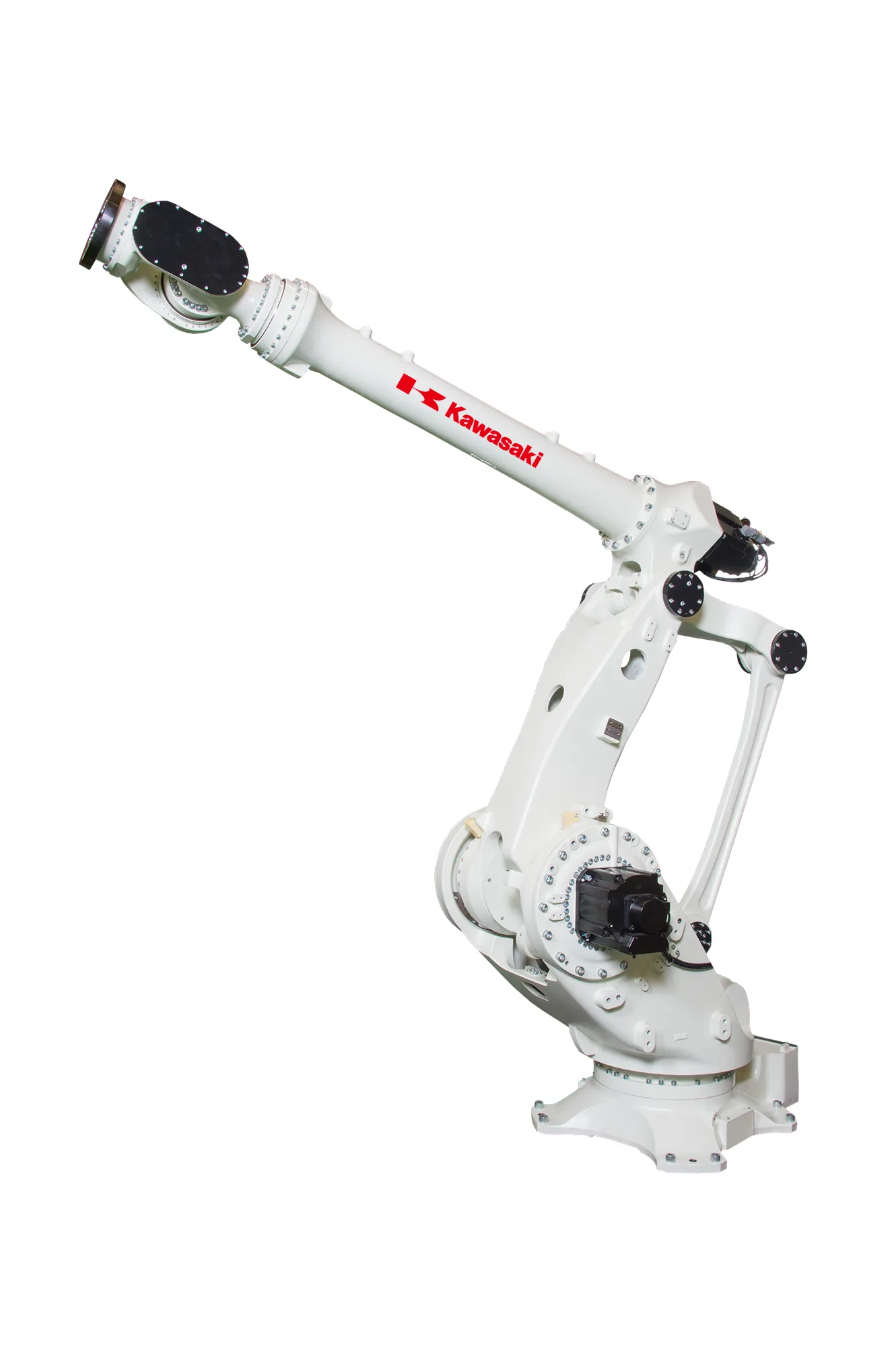
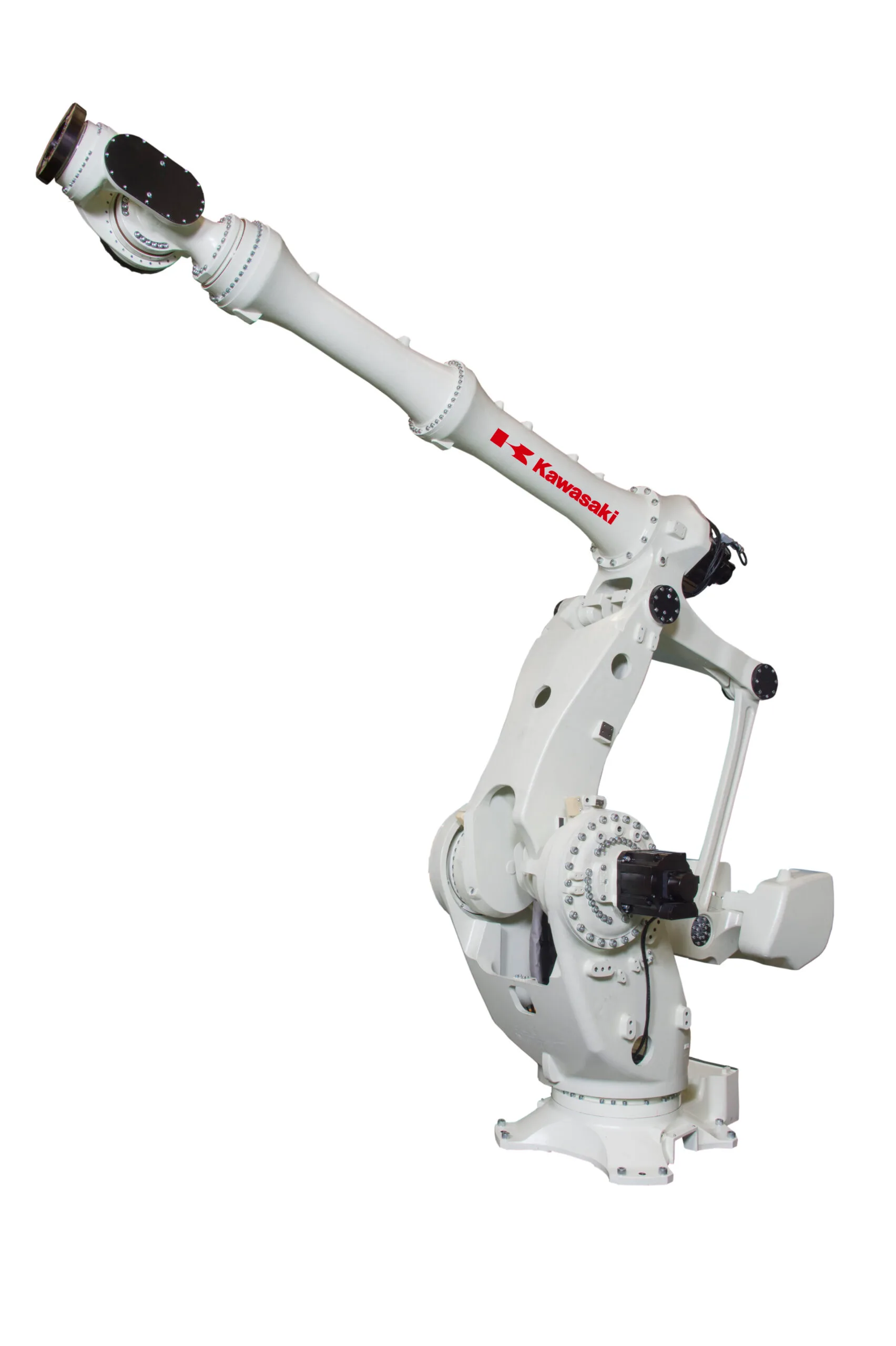
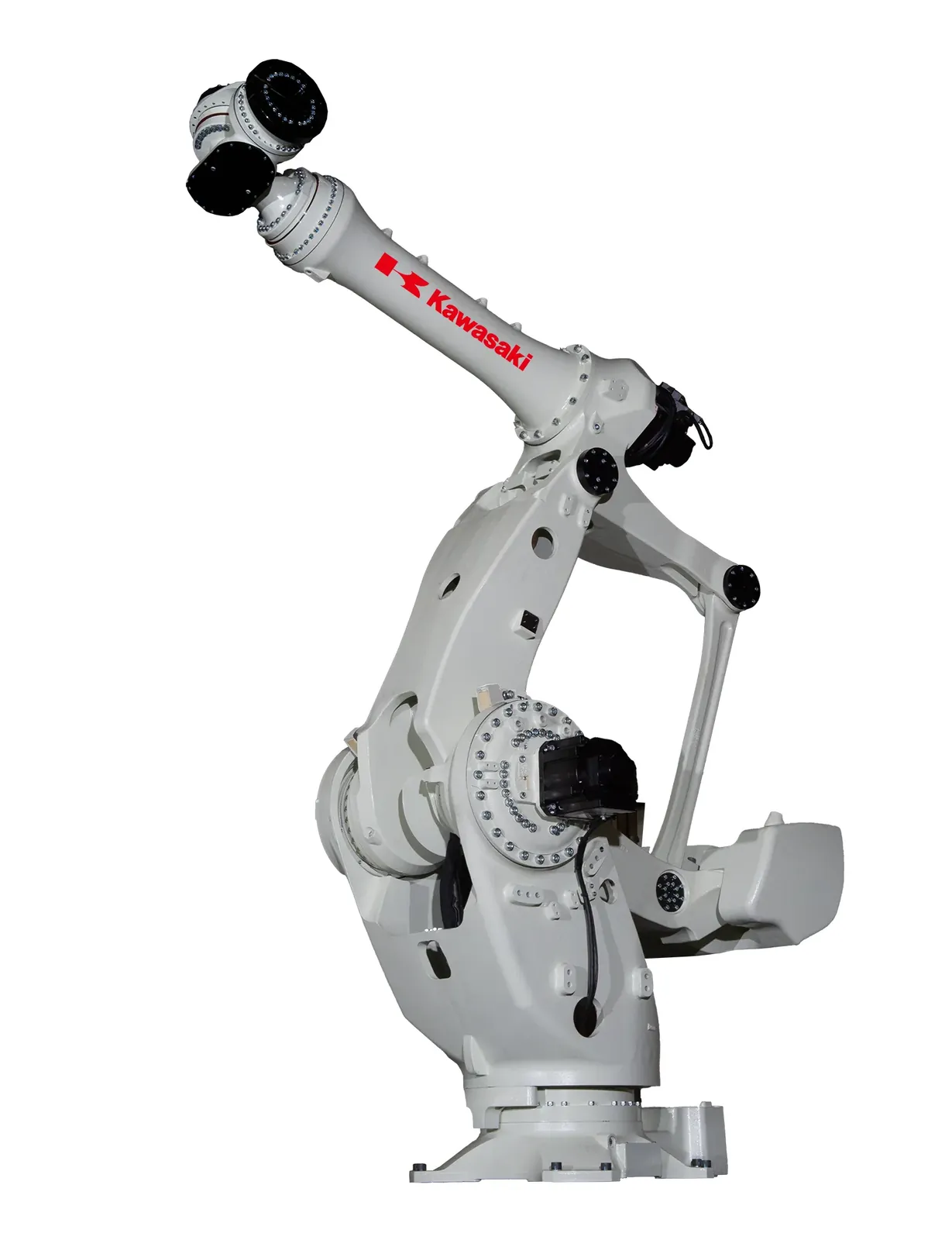
The M Series is an ultra-large general-purpose robot developed by combining Kawasaki's past technology and experience, capable of handling heavy objects such as vehicle bodies with ease. With an innovative architecture, the body is compact yet offers high positioning accuracy, achieving a payload weight ranging from 350kg to 1500kg.
The MG15HL can carry up to 1500kg, easily handling extremely heavy objects such as car bodies and large castings.
The compact body without counterweights enables precise repeatability, with powerful and precise movements.
Featuring an original architecture, the body is compact yet highly rigid, maintaining stable movement under heavy loads.
The MX/MXP series has a working radius covering 2.9-4.0m, covering a wide working area around large workpieces.
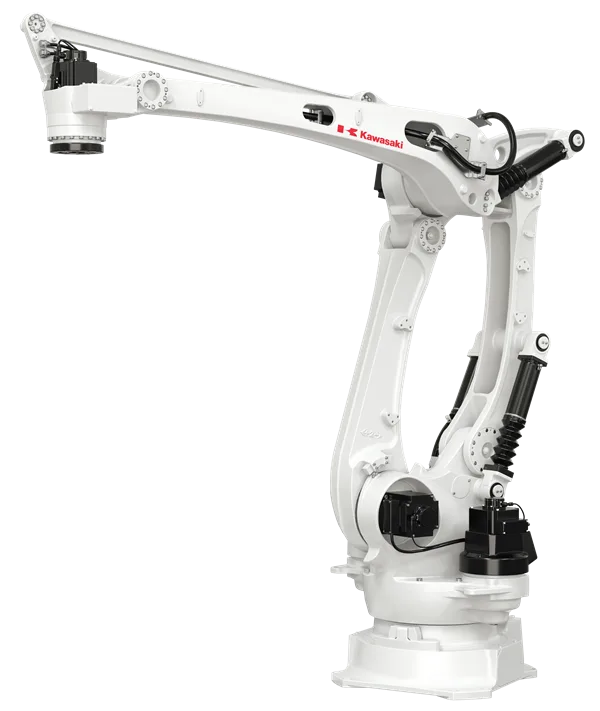
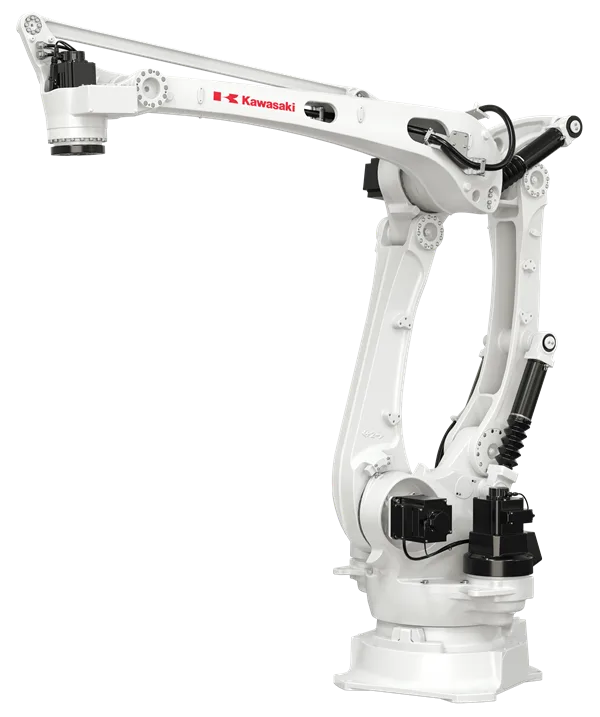
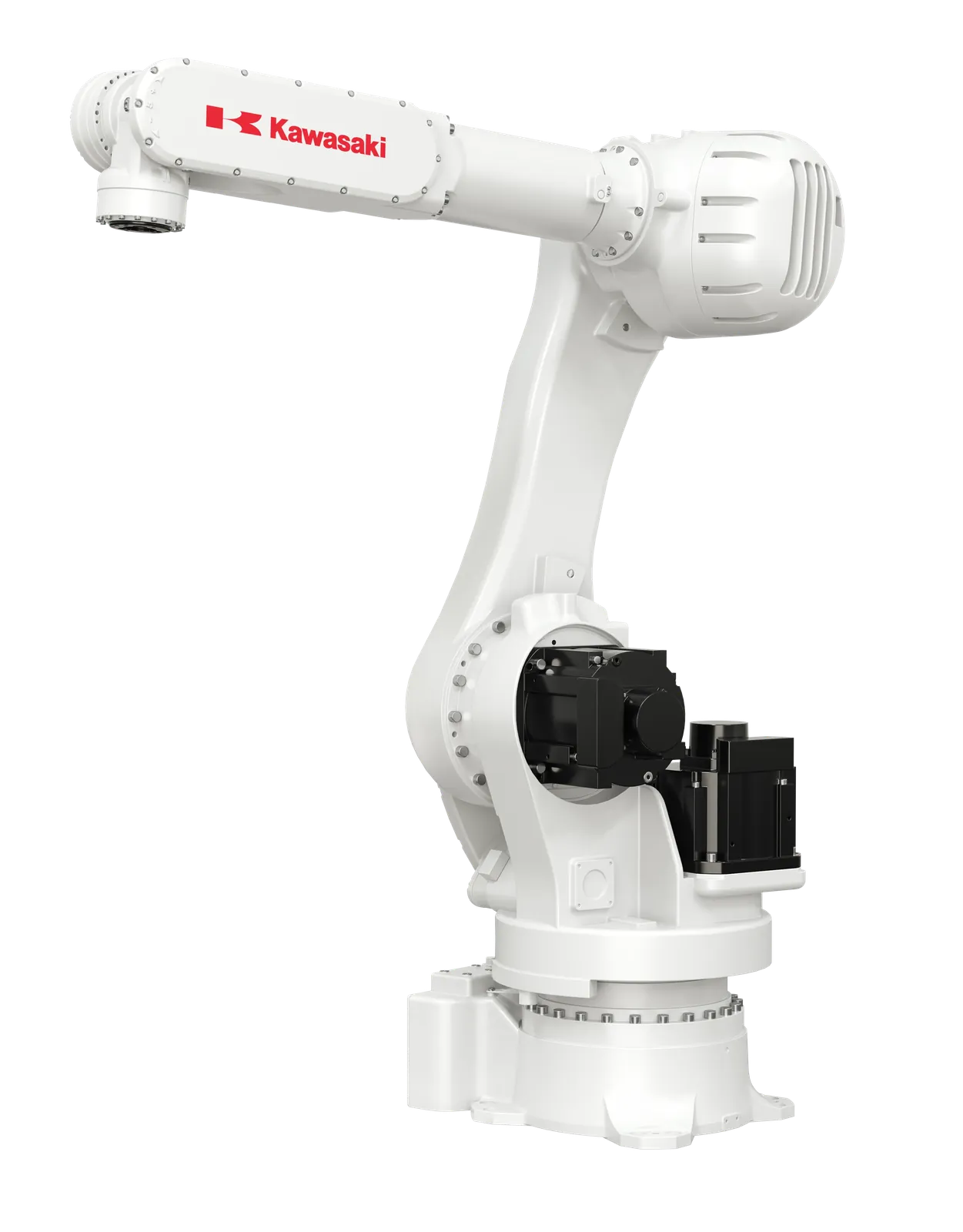
Palletizing robot CP/RD series
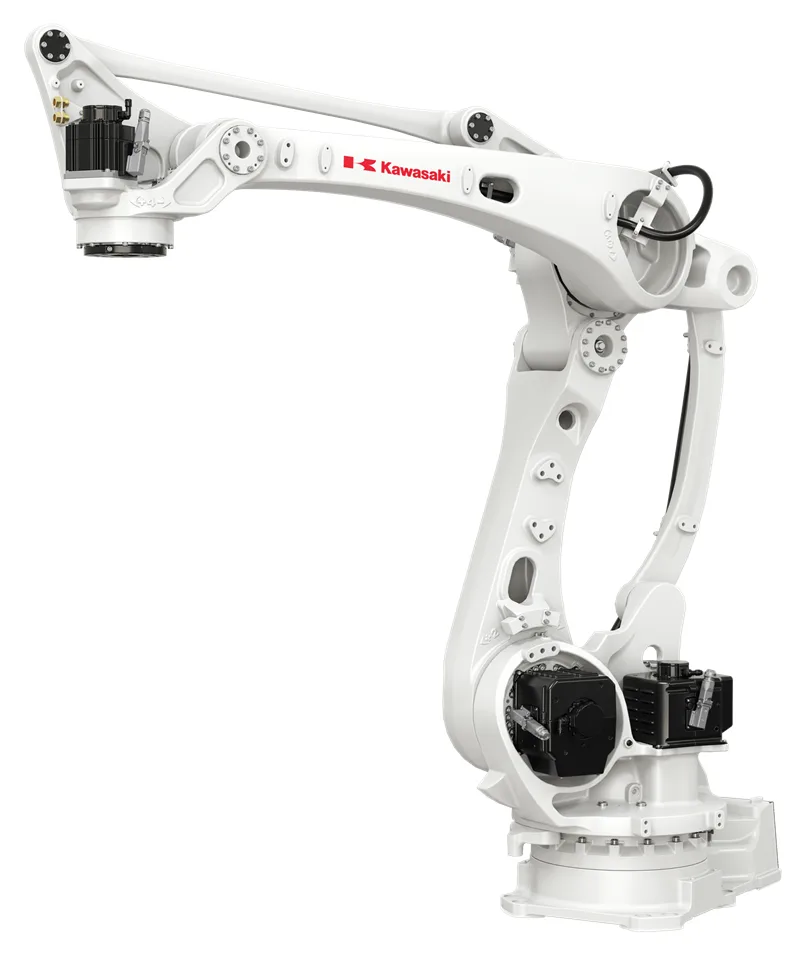
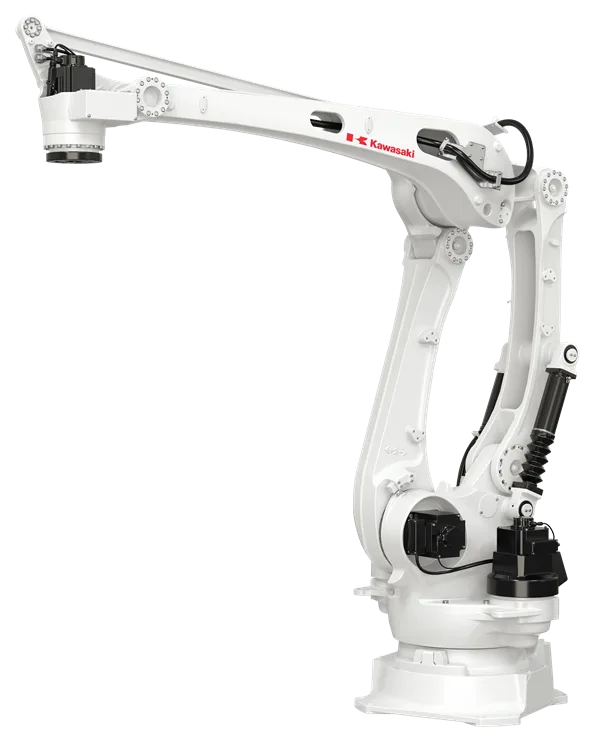
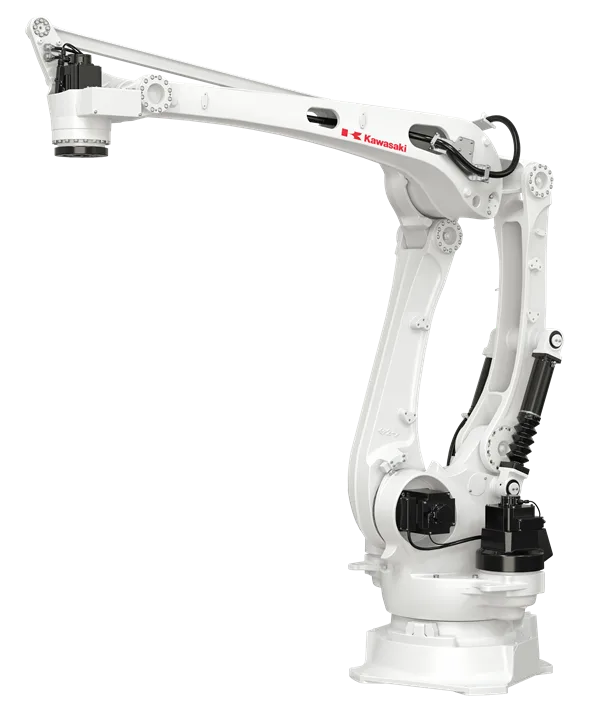
Kawasaki's high-speed palletizing robots support a load weight range from 80kg to 700kg, contributing to alleviating labor shortages in the logistics industry and factory logistics and improving production efficiency.
The CP series covers loads ranging from 110kg to 700kg, while the RD series covers 80kg, suitable for palletizing everything from light cargo to large heavy workpieces.
Supports high-speed round-trip mobility and provides pallet mode generation and monitoring systems.
Optional robot movement safety monitoring allows for safer and more space-saving palletizing systems.
Kawasaki has extensive experience in palletizing cardboard boxes, bags, barrels, small buckets, glass bottles, and frozen foods.
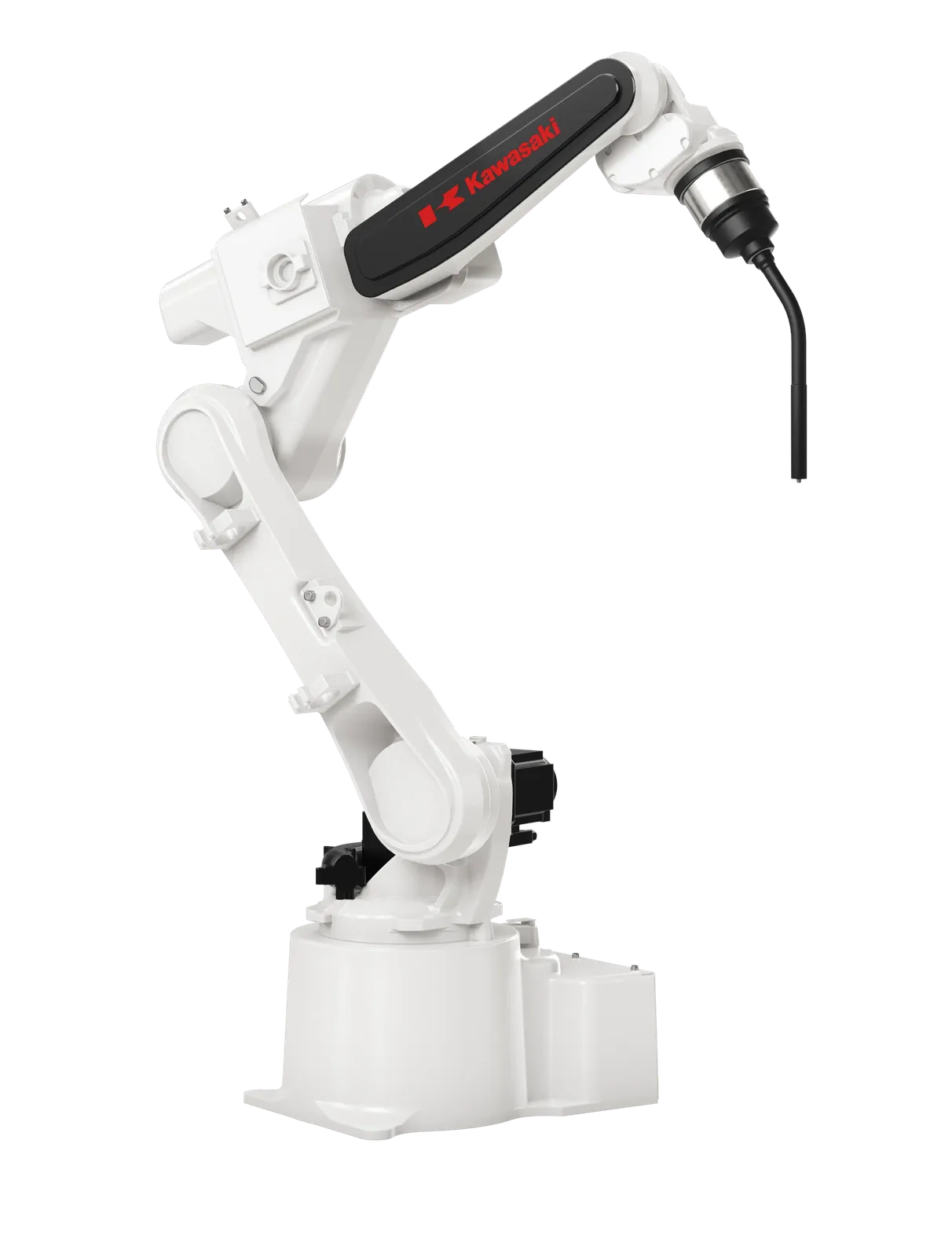
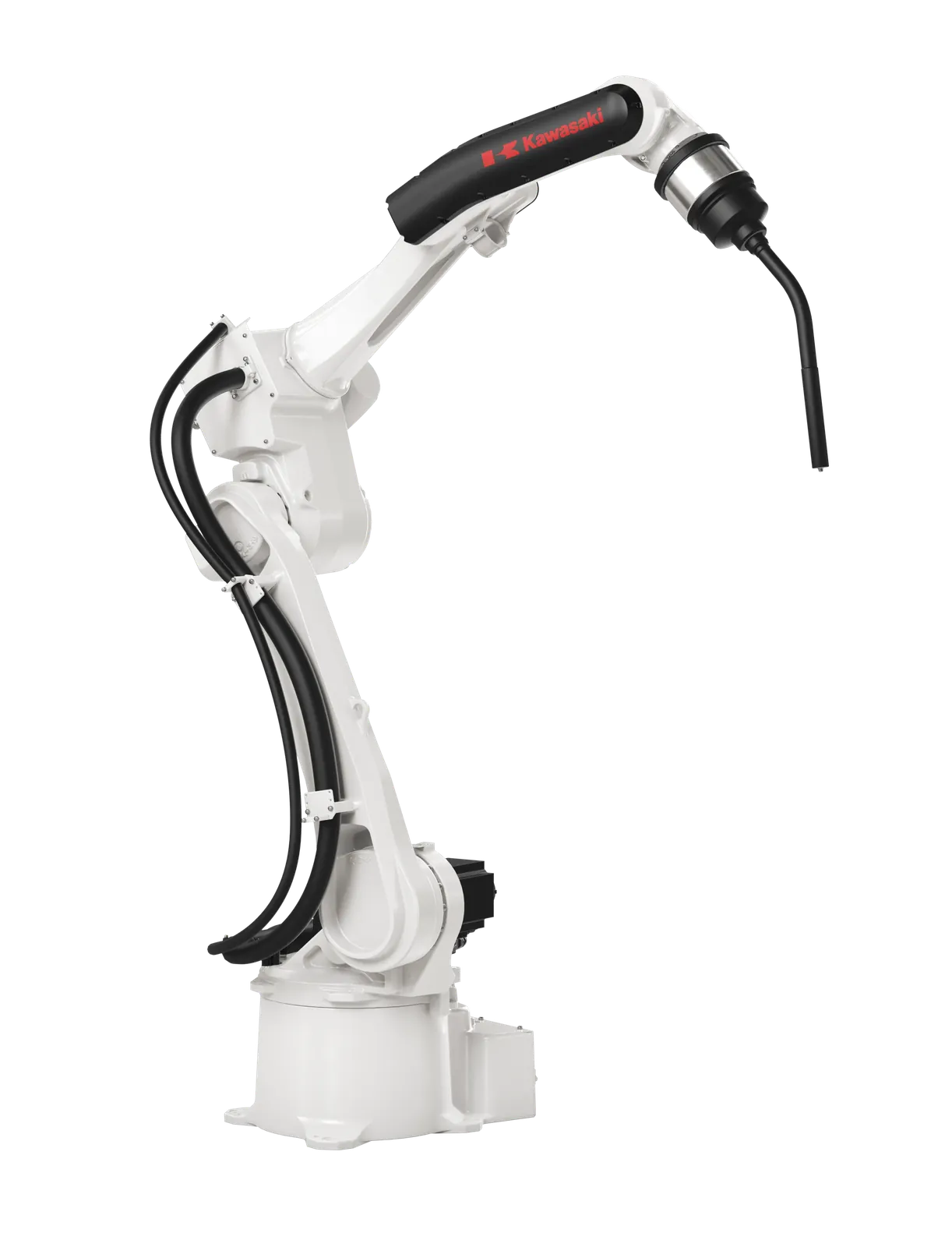
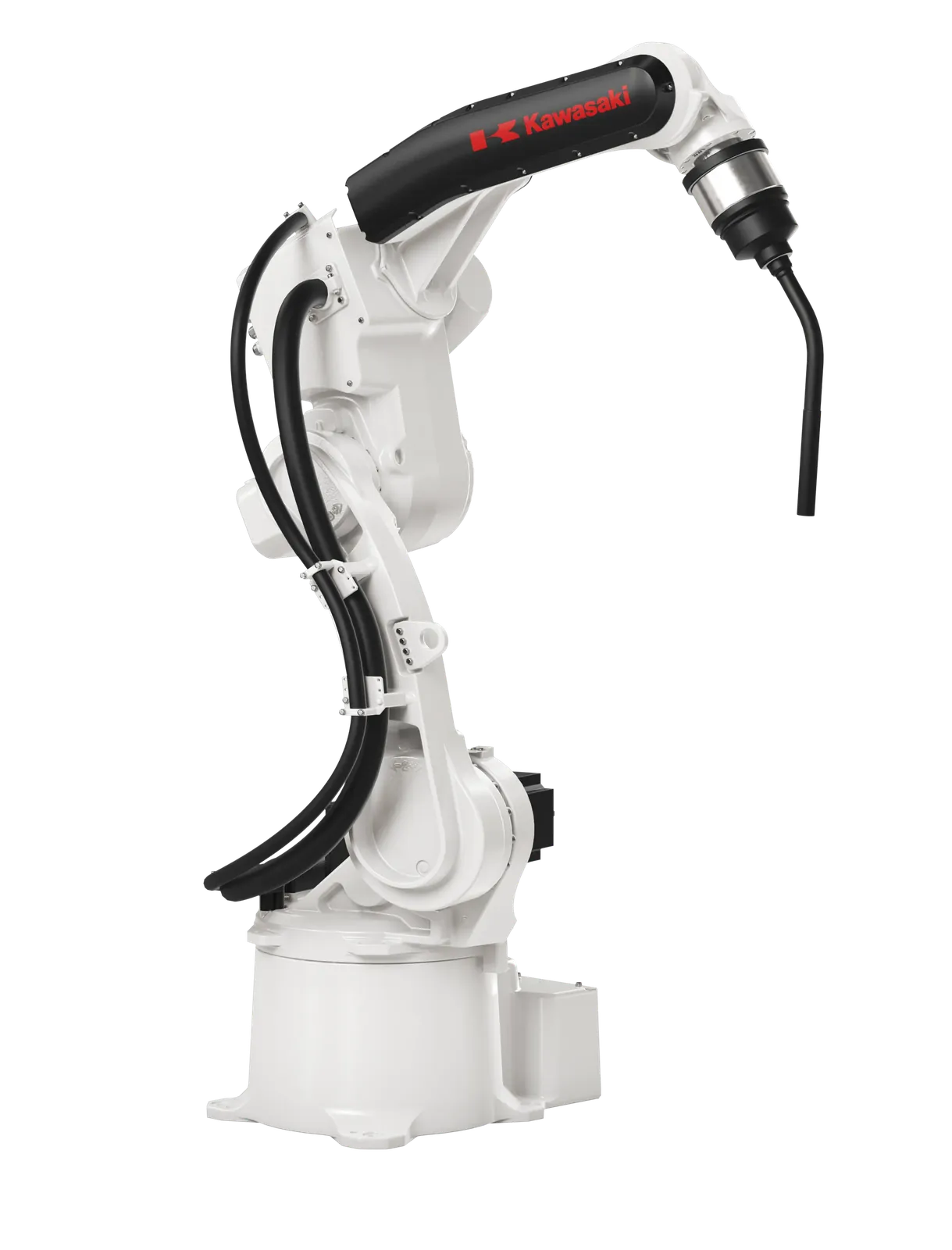
Welding/cutting robots BA/RA series
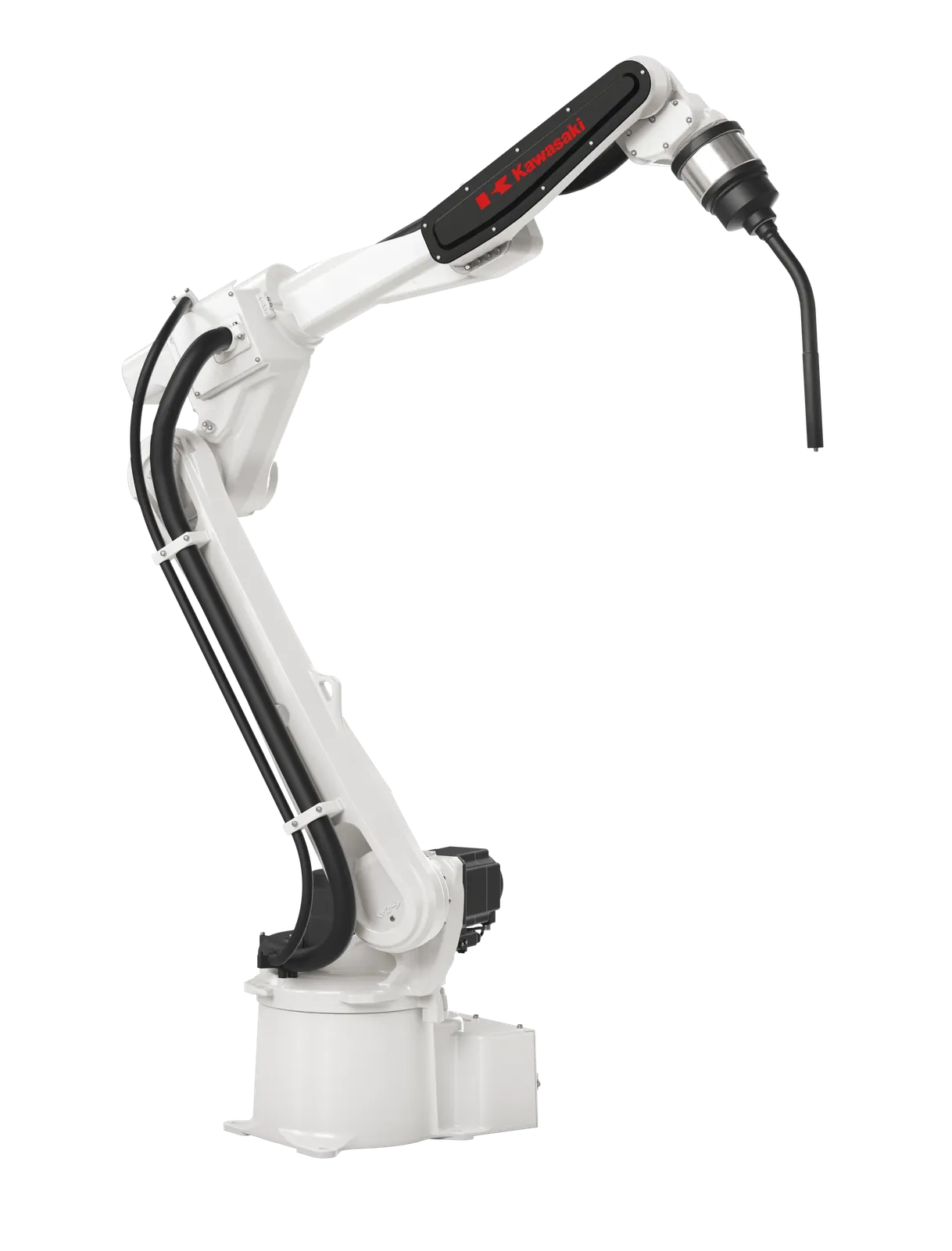
Kawasaki embodies the concept of simple and friendly arc welding robots in the BA and RA series. Only one cable is needed to connect the robot to the welding machine, making the introduction relatively simple. A wide range of options (software and hardware) can help improve the quality of arc welding operations.
The BA series robot body has built-in welding cables, requiring only one cable to connect the welding machine and robot, making installation easy.
The BA series covers 6-13kg, and the RA series covers 5-20kg, suitable for welding small workpieces to medium-sized structural parts.
Can be used with welding power supplies produced by leading manufacturers, paired with K-type positioners and K-type track travel devices.
Supports options such as activation sensing, touch sensing, and adaptive filling technology, significantly enhancing welding quality and stability.
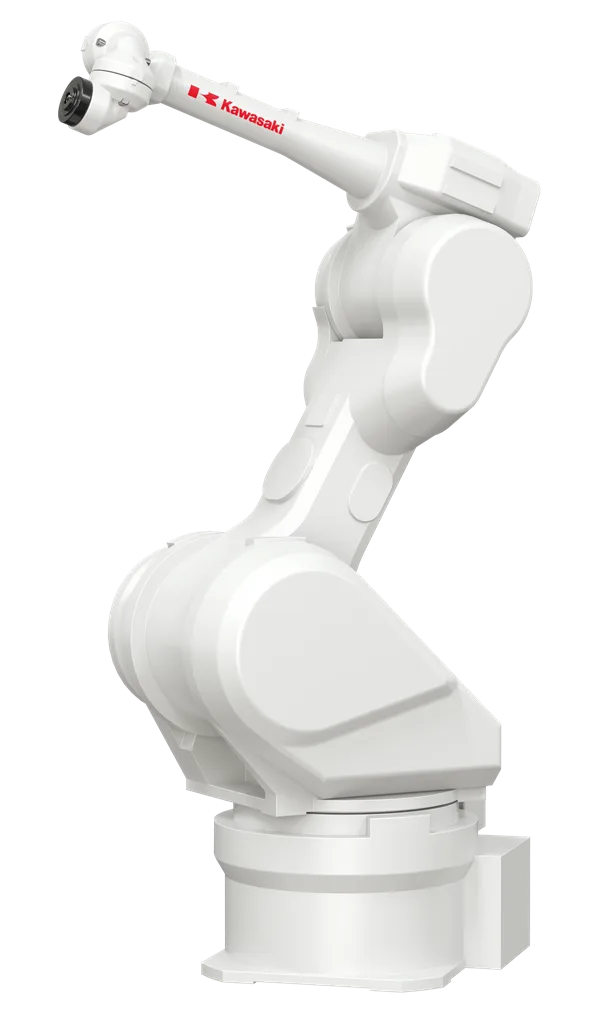
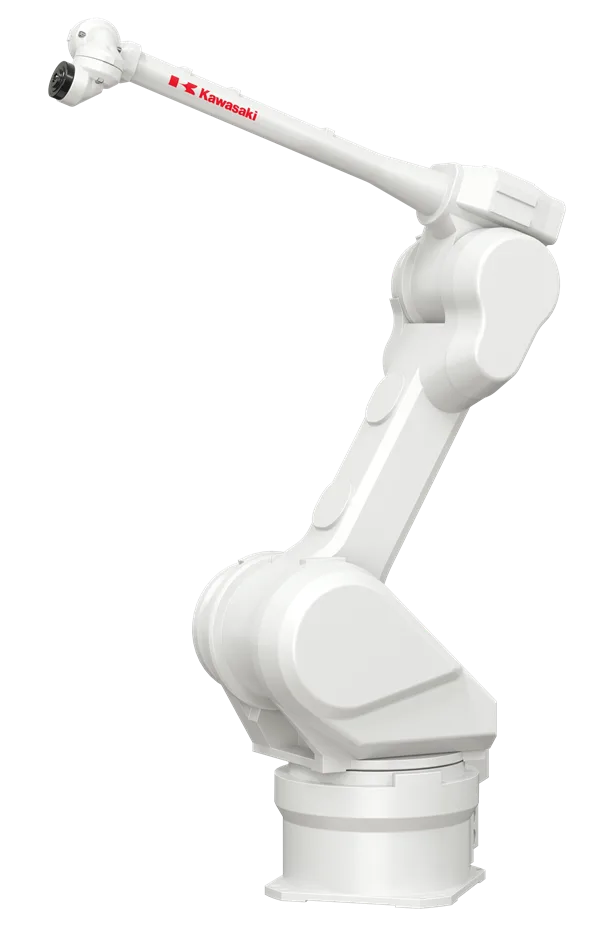
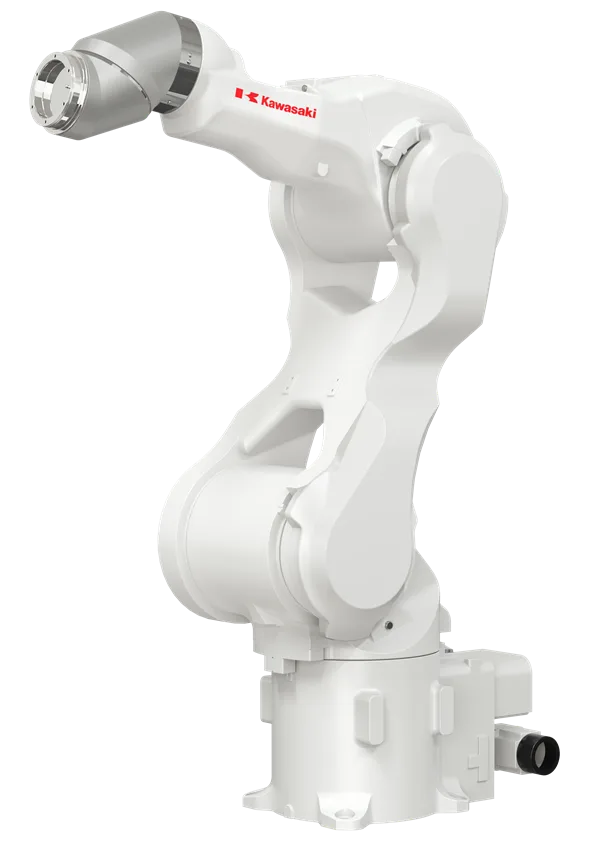
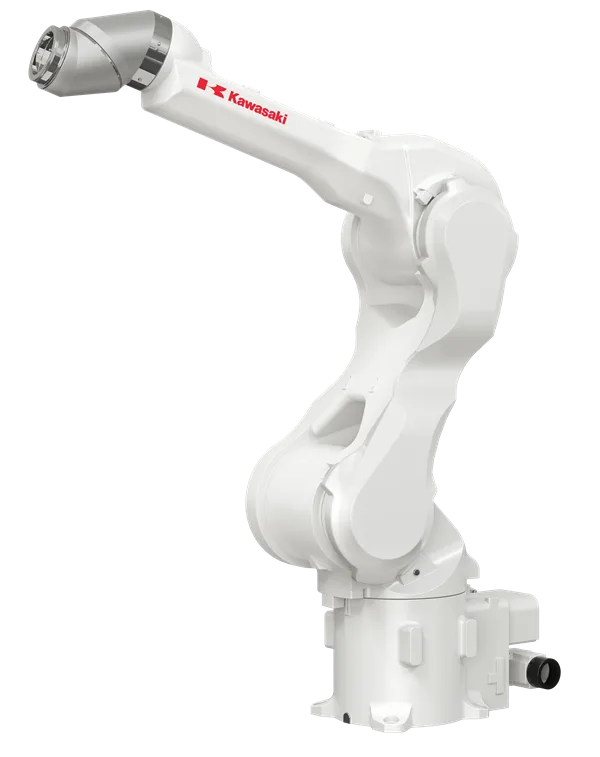
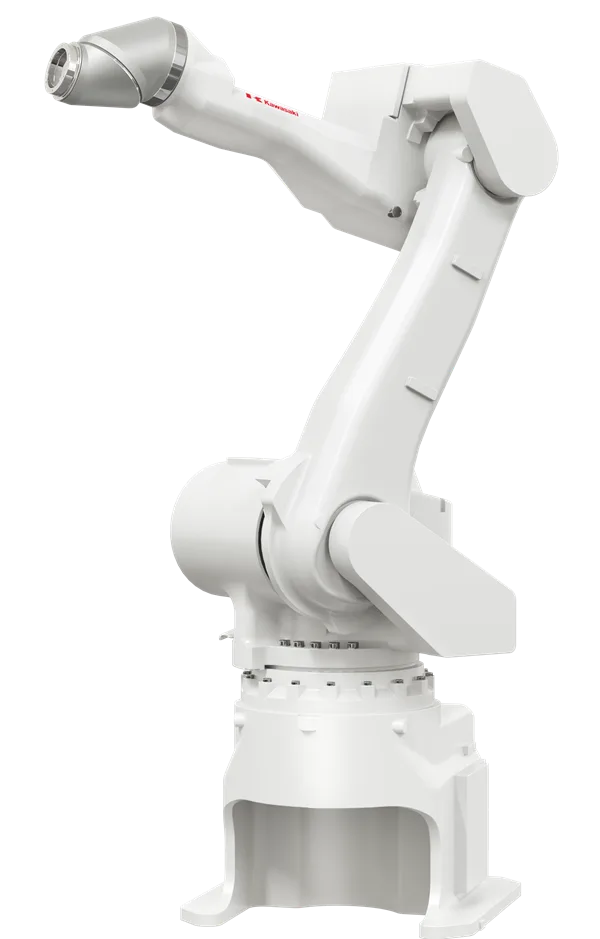
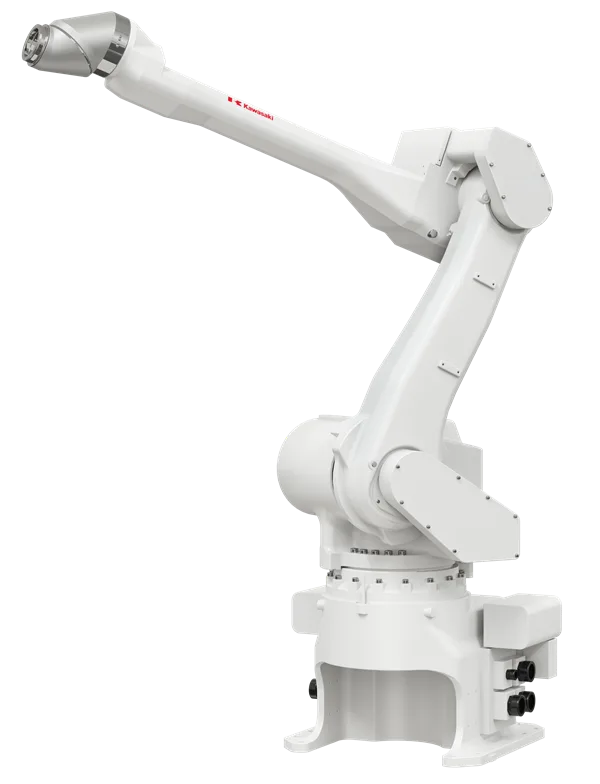
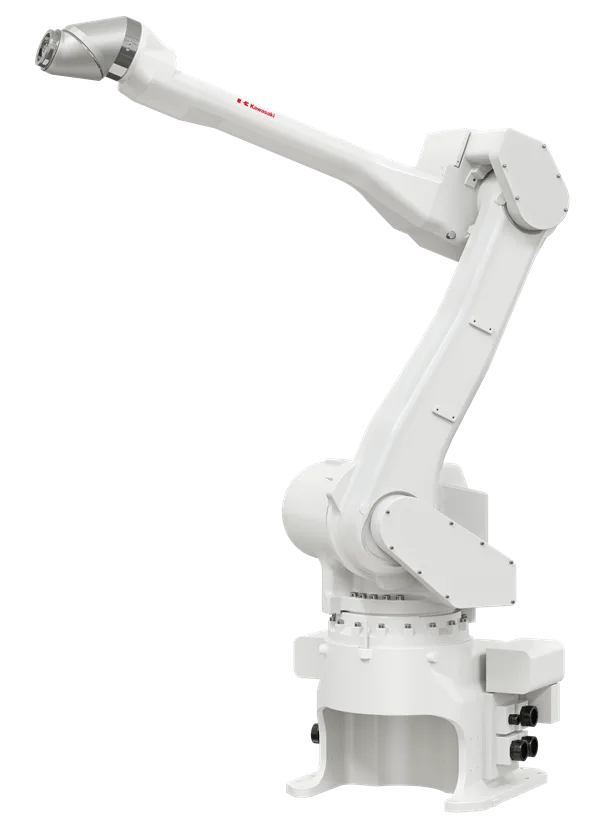
Spray Painting Robot K Series (KF/KJ)
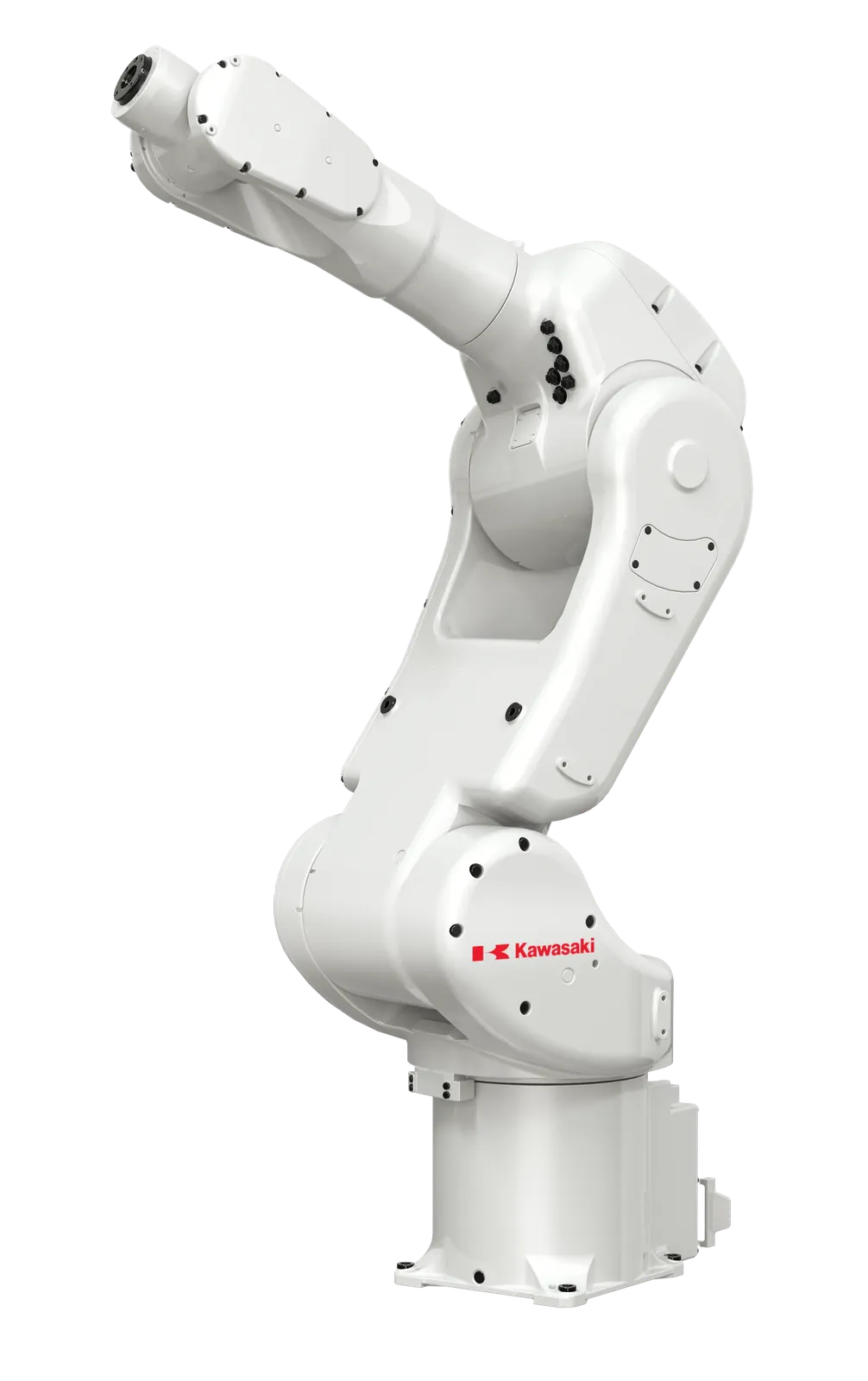
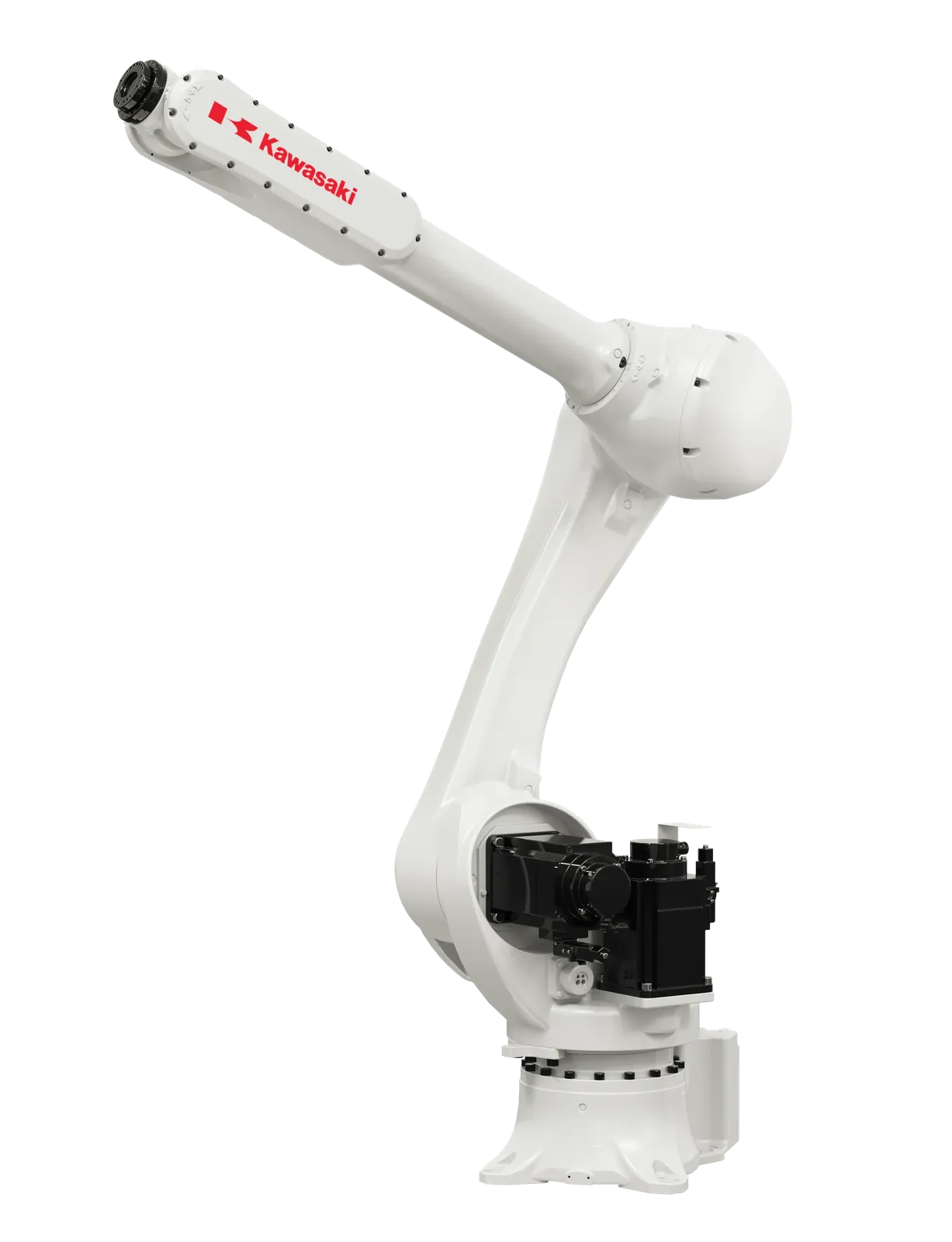
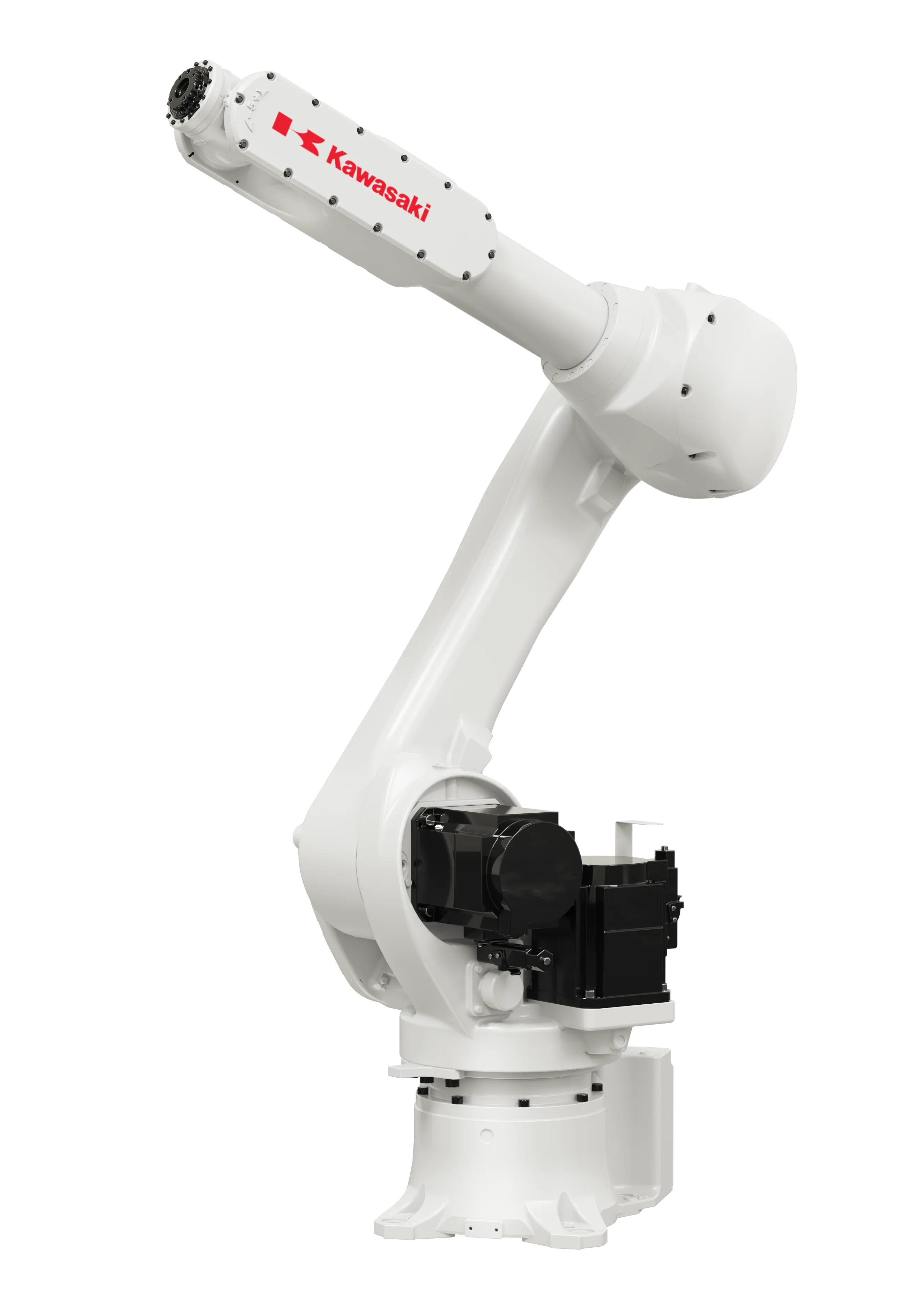
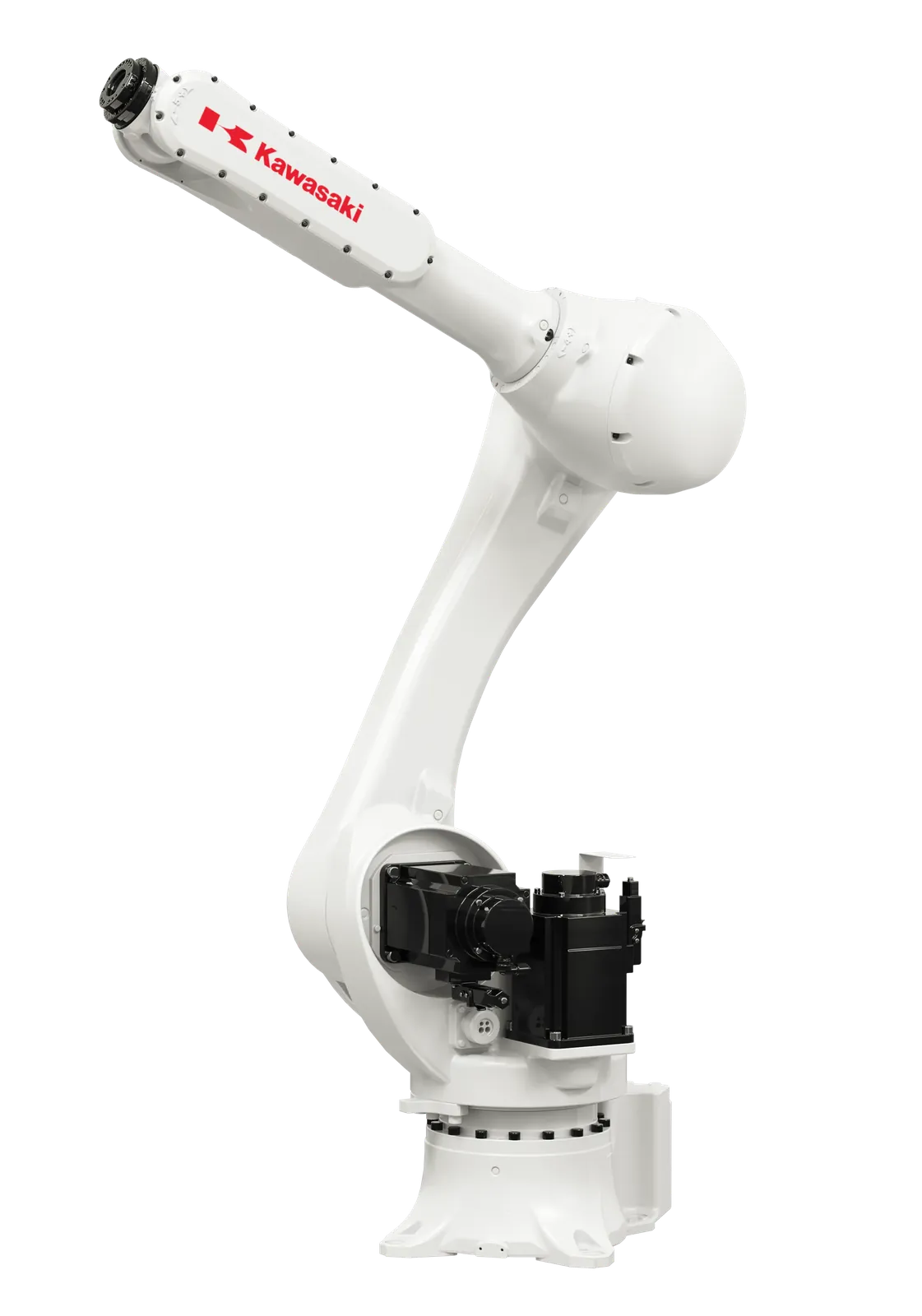
Kawasaki spray robots can handle a wide range of coatings from small to large products, and their extensive lineup of spraying series contributes to automating the coating process.
The KF and KJ series cover loads ranging from 5 to 15 kg, with a working radius of 1.2 to 3.1 meters, supporting workpieces of various sizes.
Supports multiple installation methods including floor, wall-mounted, and bracket, allowing for more flexible layout when paired with spraying stations.
Paired with Kawasaki explosion-proof E control cabinets, it can be applied in flammable and explosive painting workshops.
Kawasaki has accumulated extensive experience in the automotive finishing field, enabling uniform and high-quality spraying results.
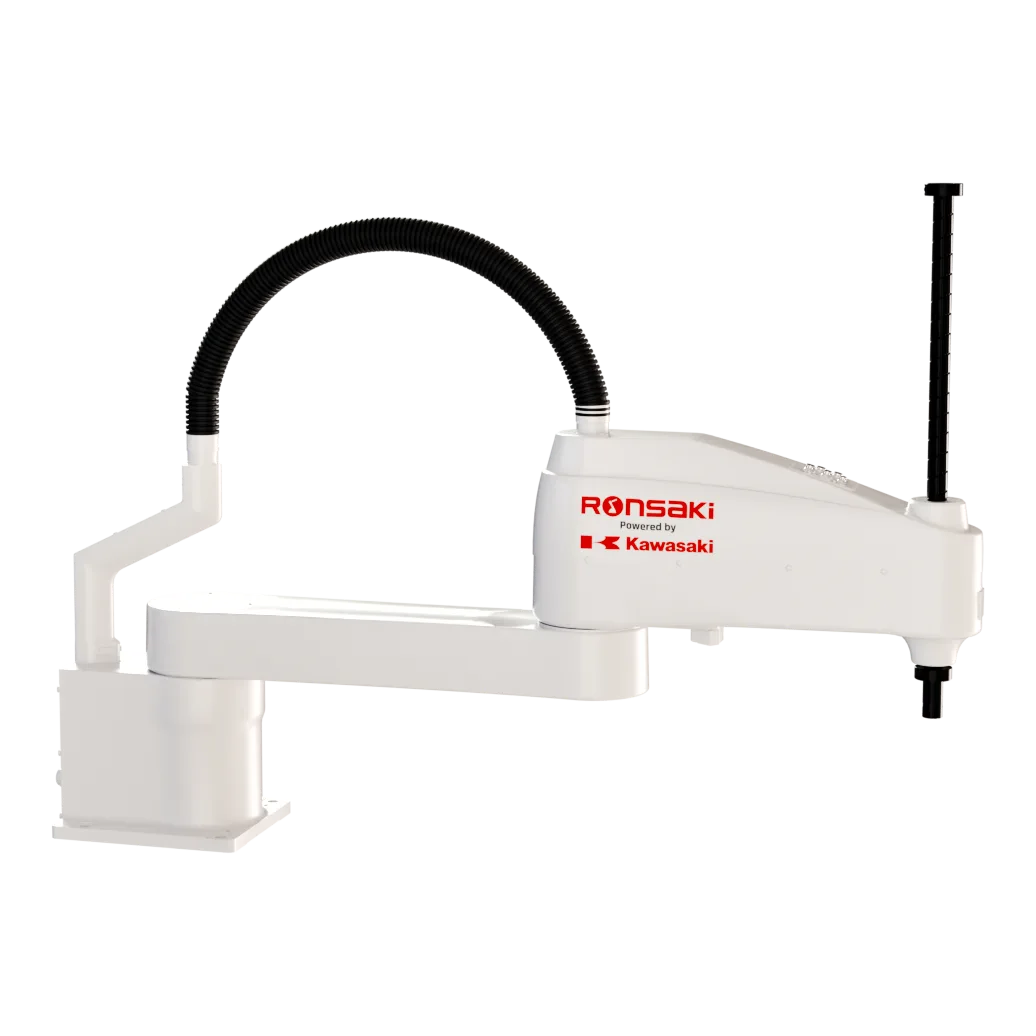
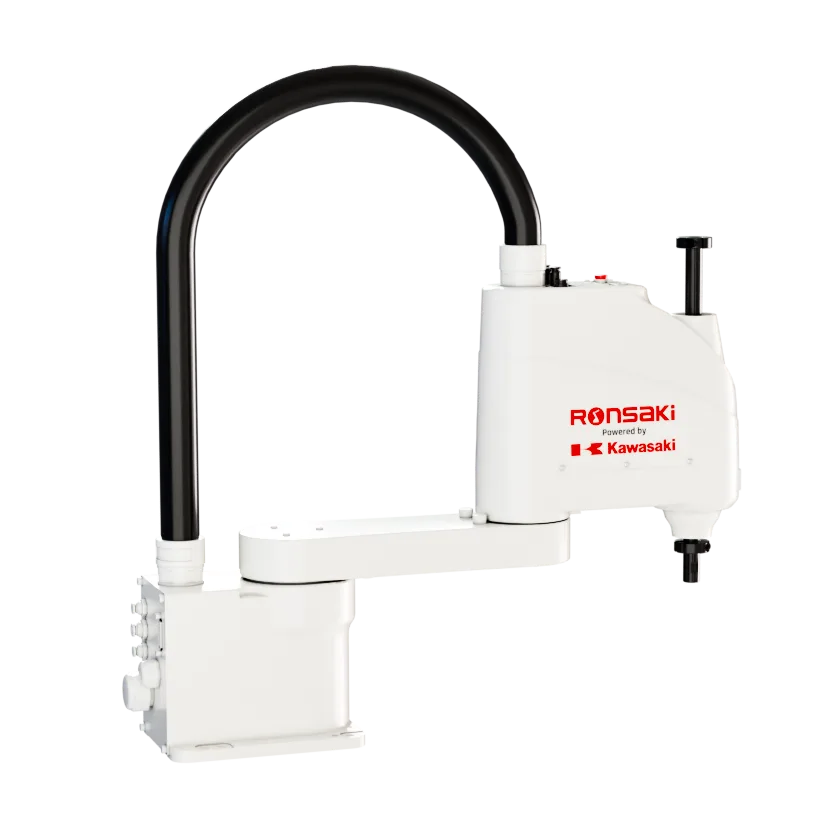
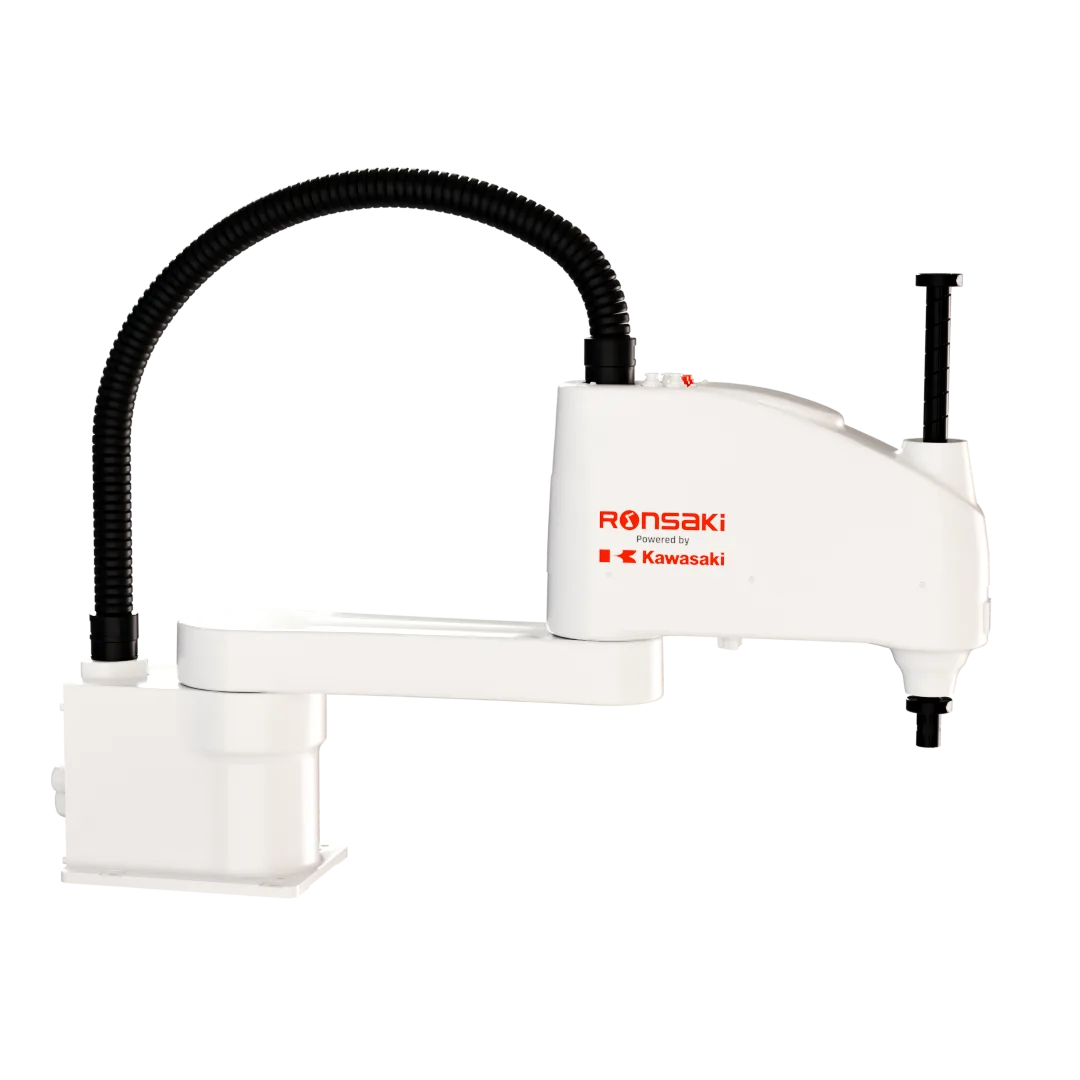
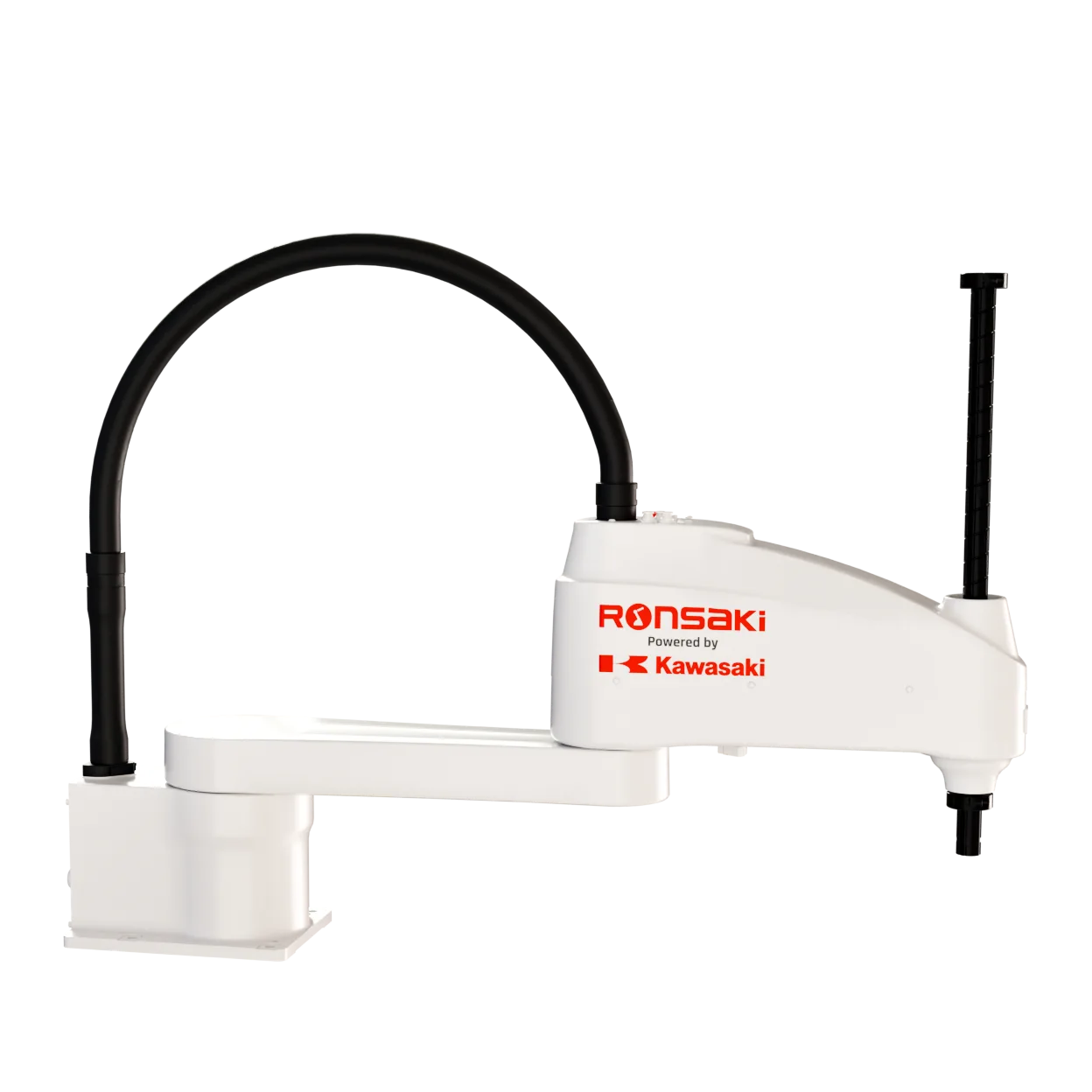
SCARA Robot KLS Series
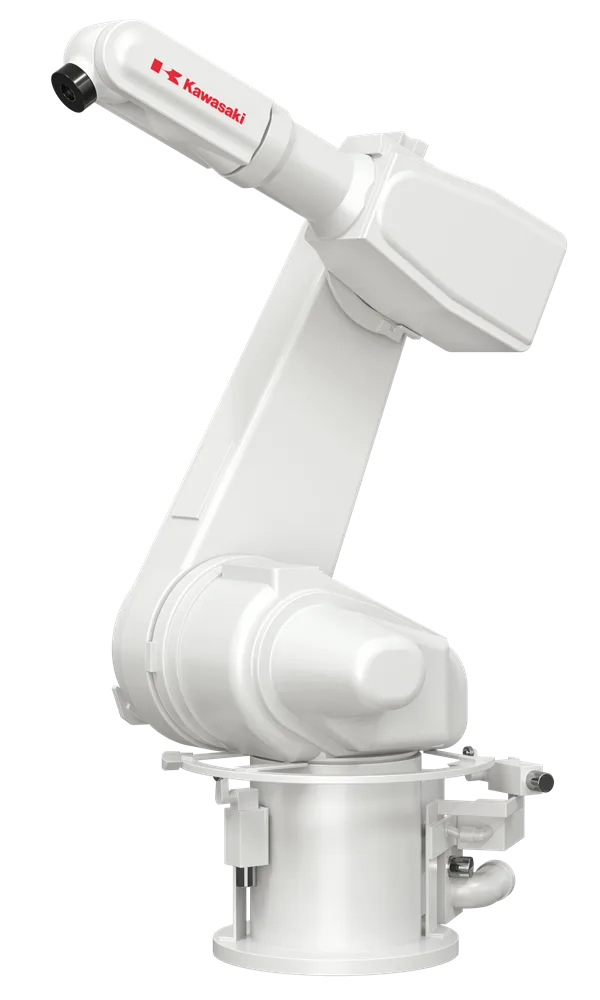
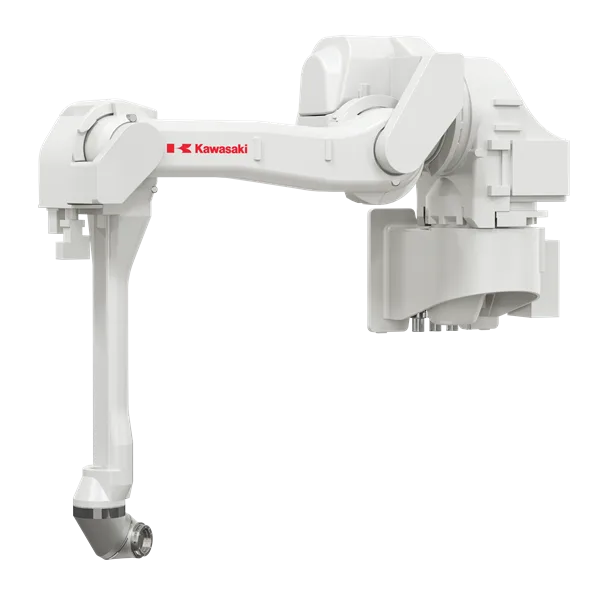
The Kawasaki SCARA KLS series robots cover a load range of 3-20kg, with a working radius of 400-1000mm, and are widely used in assembly, loading and unloading, handling, sorting, inspection, gluing, and various other applications.
Four load modes: 3kg/6kg/10kg/20kg, with three working radius levels (400/600/800/1000mm).
The highly rigid body structure and advanced motion control algorithms are especially suitable for high-speed pick-and-place applications.
The compact design of the SCARA body allows flexible integration into compact production lines and automated equipment.
Suitable for various application processes including assembly, loading and unloading, handling, sorting, inspection, and gluing.
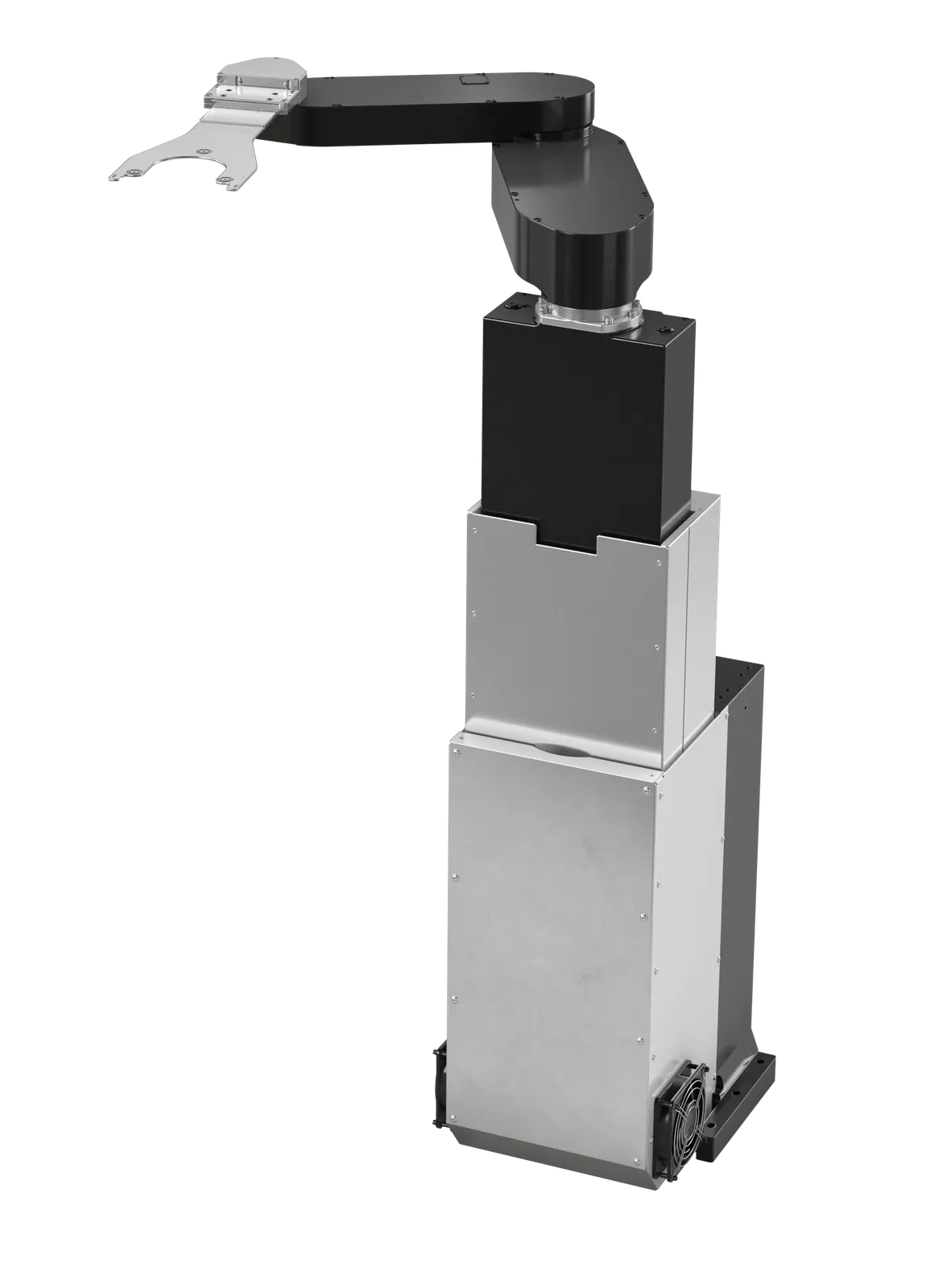
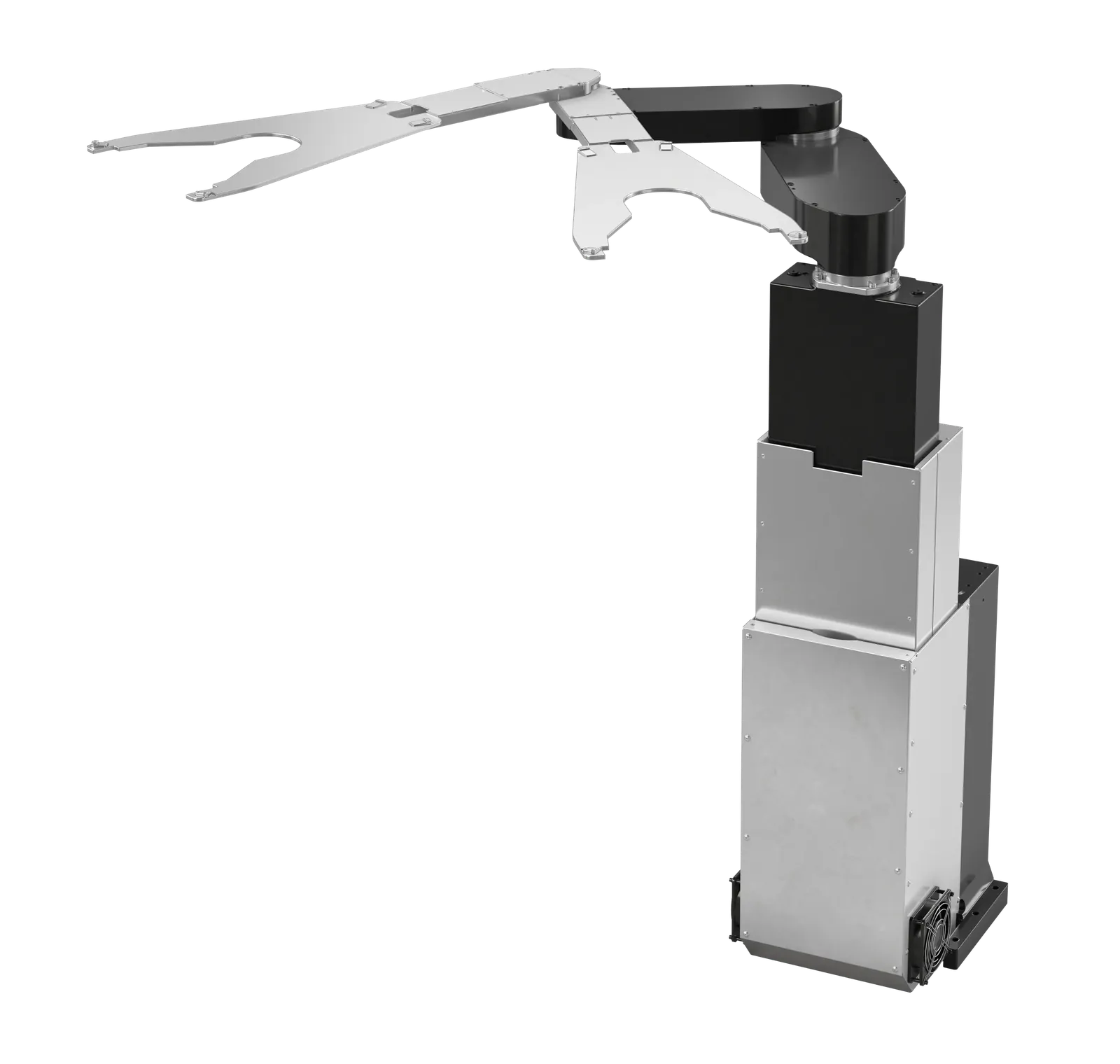
Wafer handling robots NTJ/TTJ/NTH/NX series
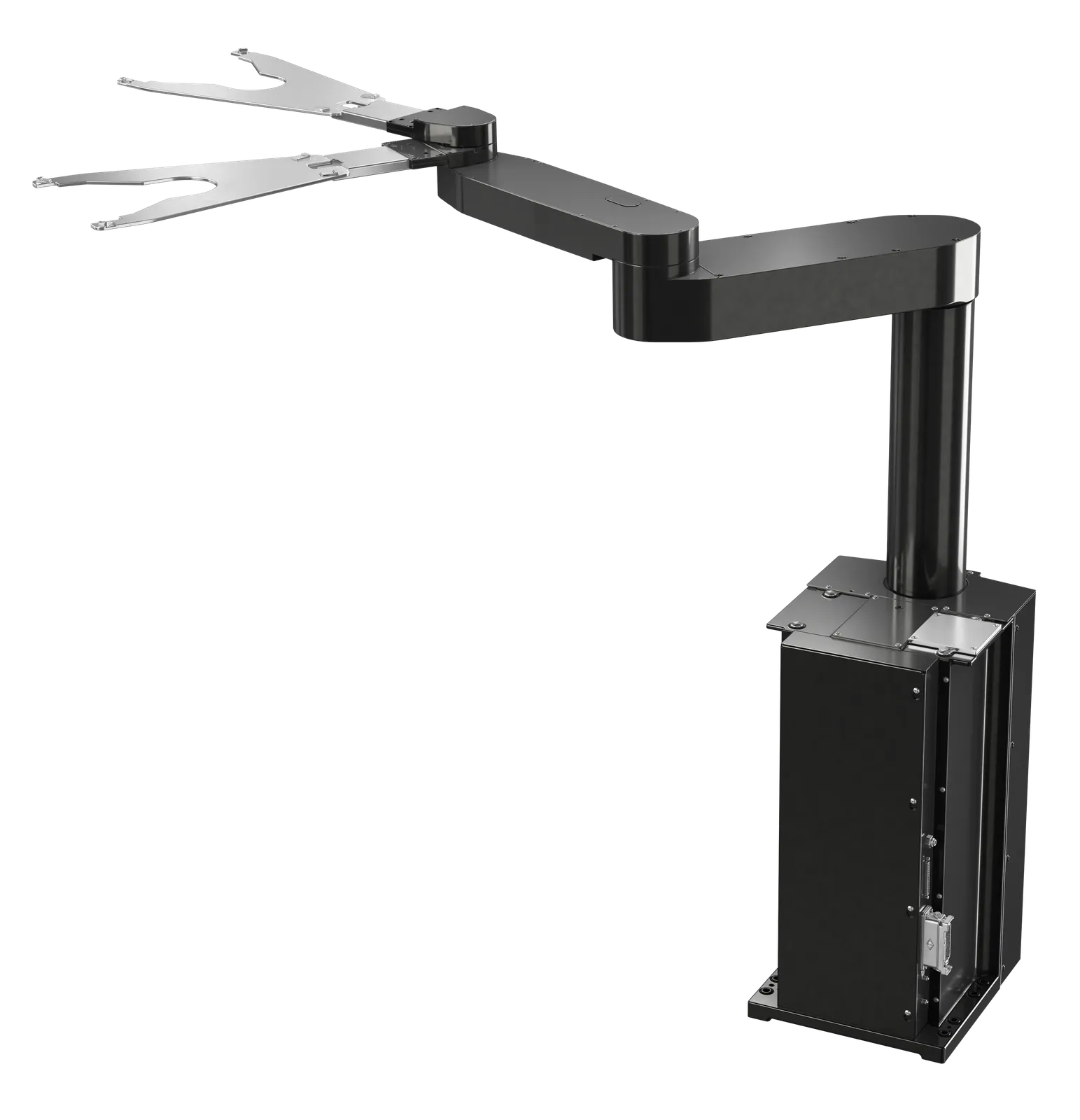
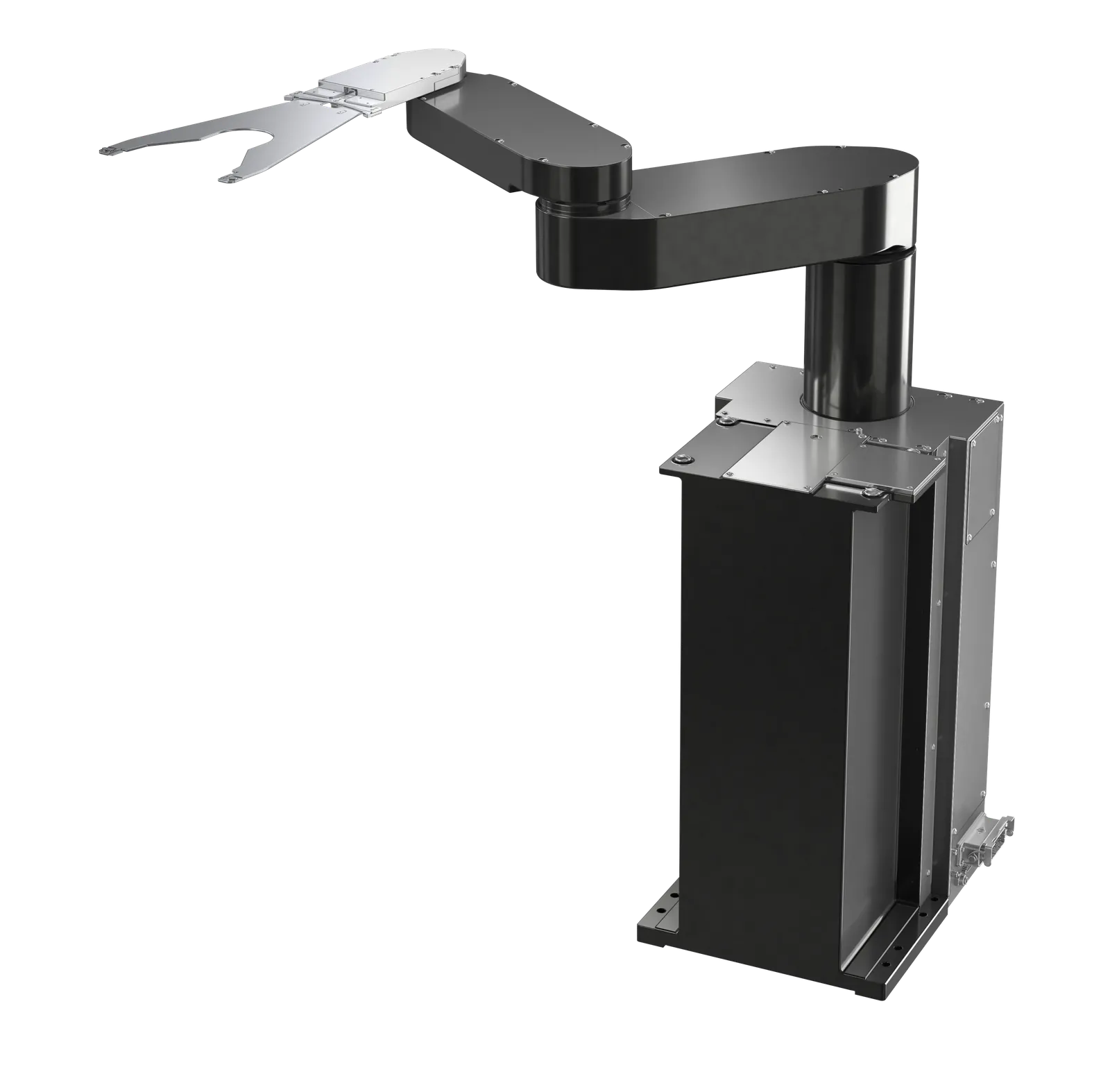
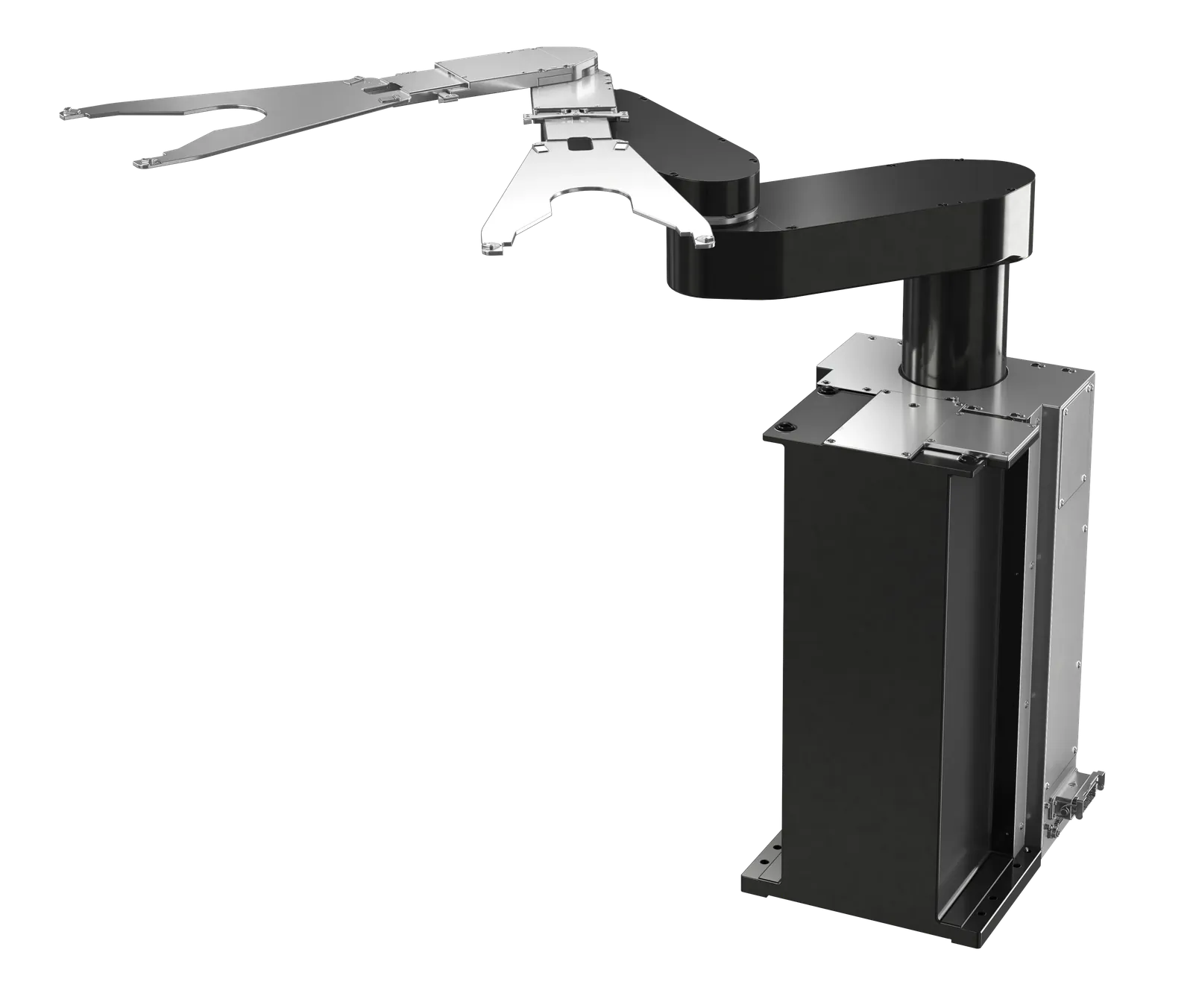
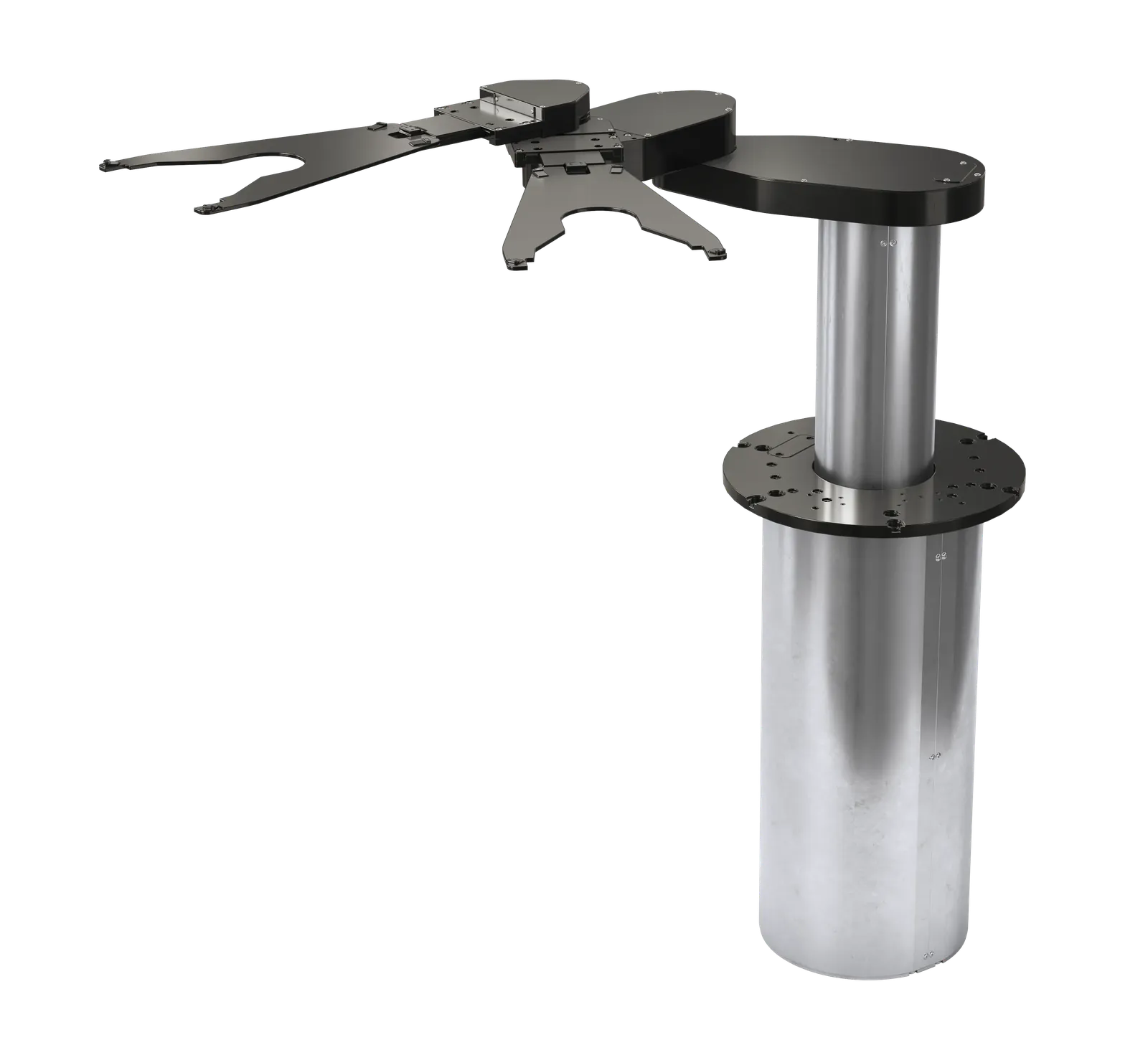
Kawasaki's wafer handling robots comply with SEMI-F47 and SEMI-S2 standards, handling up to 4FOUP standard EFEM without the need for running gear, handling wafers in the upstream processes of semiconductor manufacturing equipment.
Compliant with SEMI-F47 and SEMI-S2 standards, it adapts to the voltage fluctuations and safety requirements of semiconductor factories.
Through Kawasaki's developed drive structure, it achieves the high-precision, smooth, and smooth operation required for wafer handling.
Supports EFEM with up to 4 FOUP specifications without a running gear, saving equipment space.
The NX series features a compact arm design, further saving installation space for semiconductor equipment.
High-speed sorting robots YF series
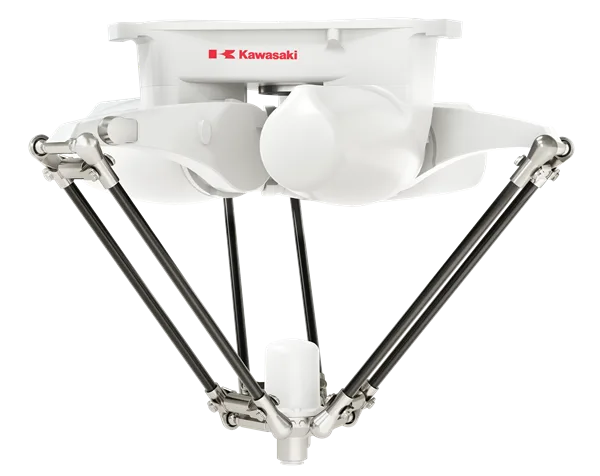
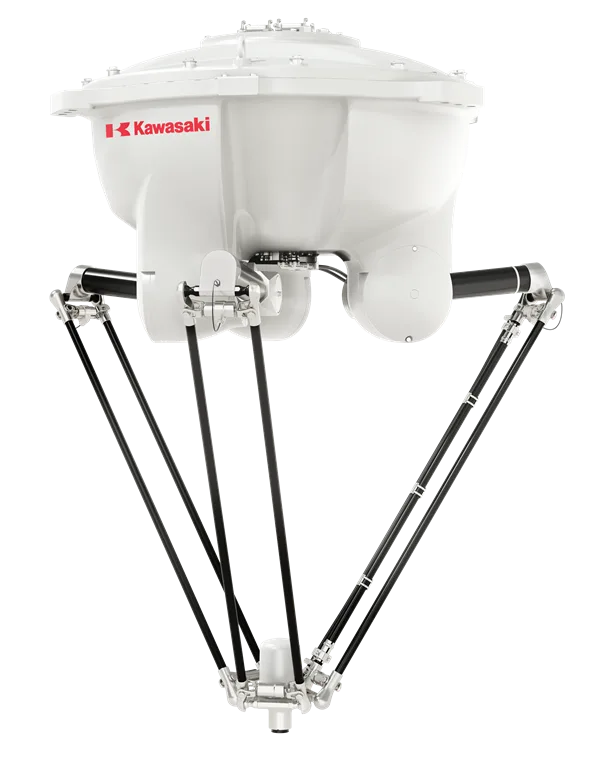
The YF series is a high-speed sorting robot widely used in industries such as food, pharmaceuticals, cosmetics, motors, electronics, and mechanical components.
The YF series is specially designed for high-speed pick-and-place with fast cycles, significantly increasing sorting line capacity.
The YF series features a compact body that can be cleaned with both acidic and alkaline detergents, meeting the needs of food and pharmaceutical cleanliness.
Uses food-grade lubricants, meeting safety standards in the food industry.
Supports ceiling installation, and together with conveyor belts or chutes, efficient sorting production lines can be built.
Pharmaceutical clean robot MC series
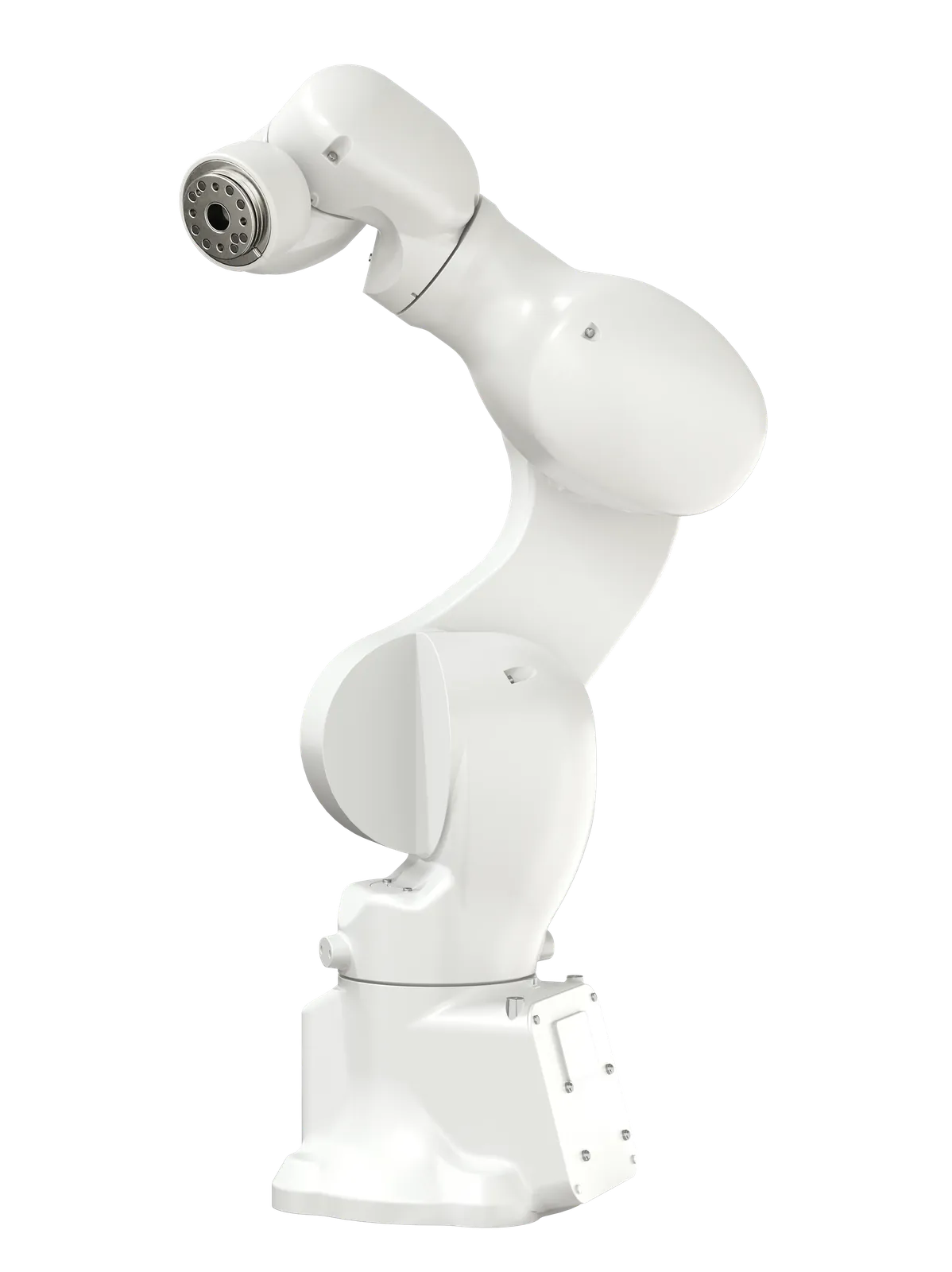
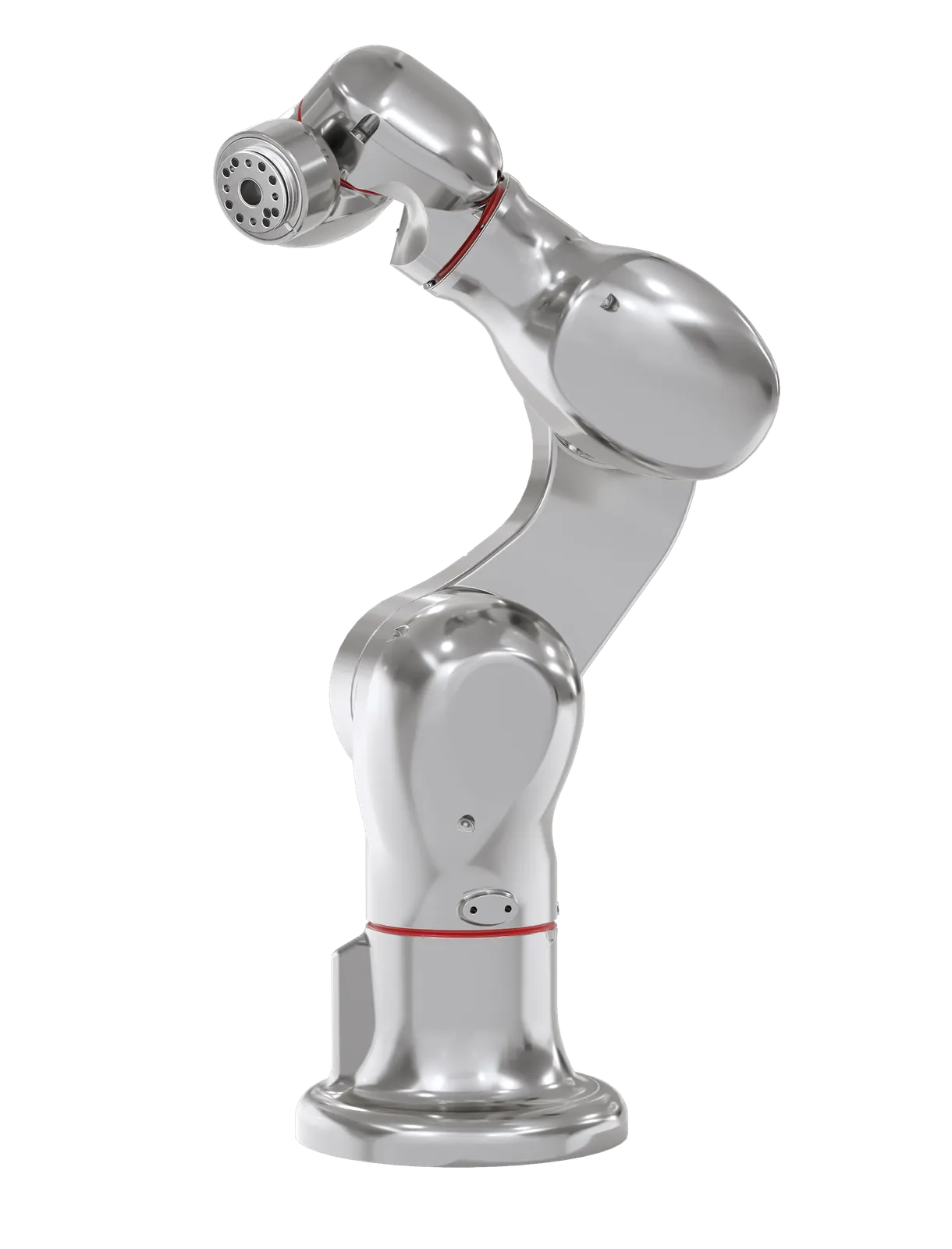
In pharmaceutical and new drug R&D sites, the risks of microbial contamination and operator explosions are eliminated, achieving operational efficiency. A clean robot that achieves ISO Level 5 (Fed Level 100) cleanliness.
No vacuum piping, cleanliness can achieve ISO Level 5 (Fed Level 100), meeting pharmaceutical cleanliness requirements.
Special sealing materials are used, enabling VHP (vaporized hydrogen peroxide) sterilization treatment.
Built-in cable hoses further reduce the risk of particulate matter falling out in cleanrooms.
The MC series is specially designed for pharmaceutical and new drug R&D laboratories, significantly reducing contamination risks.
BU series gluing robots
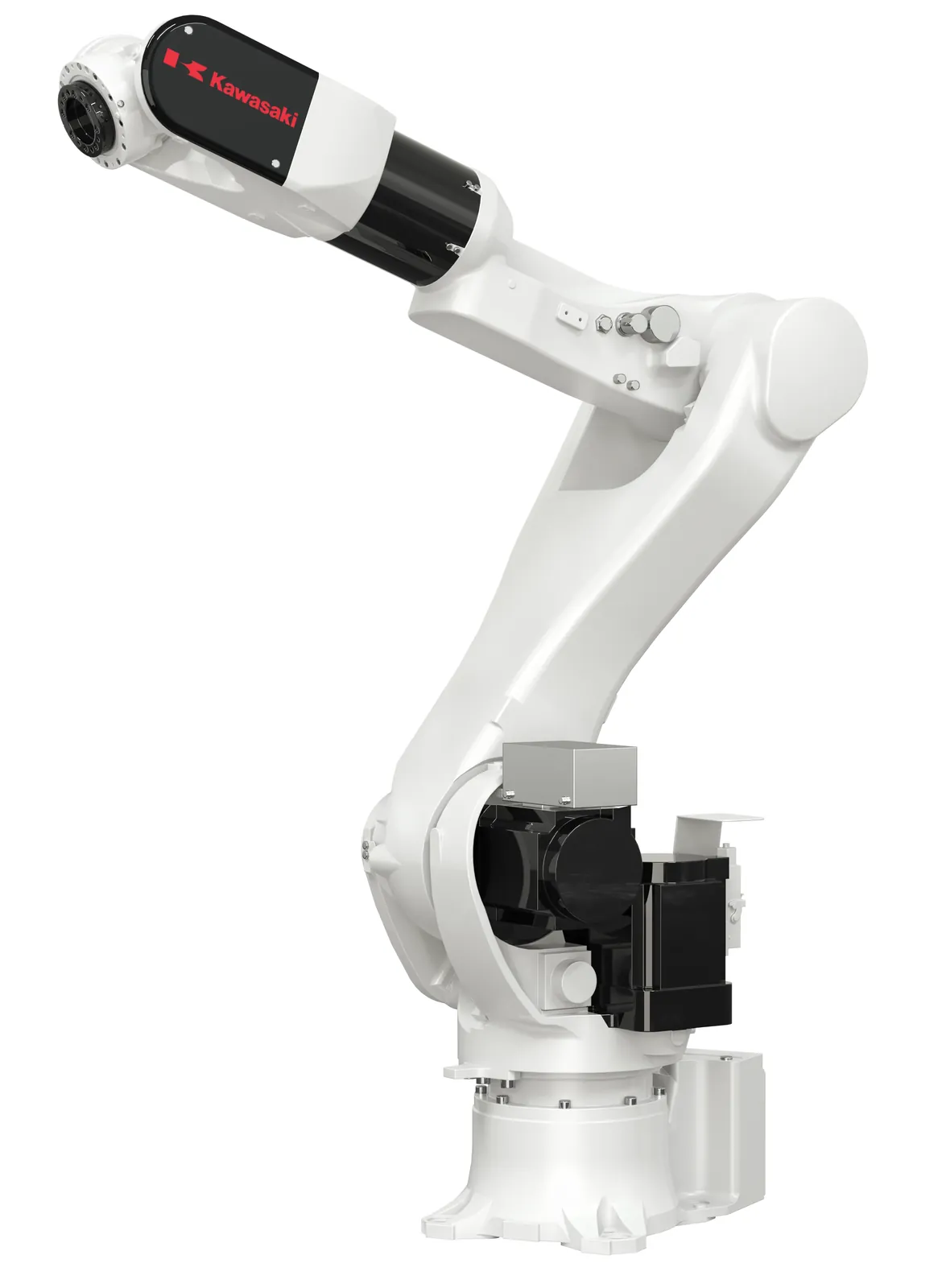
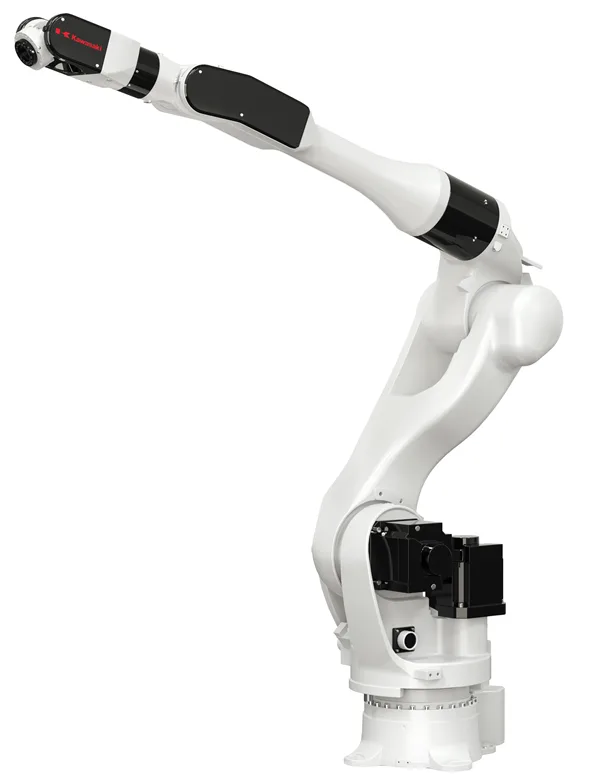
The Kawasaki BU series gluing robots have a load capacity of 15kg and working radii of 1550mm and 2887.5mm, suitable for sealing and coating operations of automotive, home appliance, and other products.
BU015N (1550mm) and BU015X (2887.5mm) have two arm reach ranges to accommodate workpieces of different sizes.
Combined with glue guns and coating heads, uniform and continuous glue application trajectories can be achieved, ensuring sealing quality.
Widely applicable to the manufacturing of products requiring sealing operations, such as passenger cars, home appliances, and electronics.
Kawasaki's teaching system supports graphical programming to quickly generate glue application paths.
Kawasaki Robotics Platform Technology
F control cabinet, E control cabinet, next-generation teach pendant, and K-AddOn device interconnection platform.
The new generation F Series control cabinet evolves based on the globally standard E control cabinet, offering faster and smarter motion control algorithms, perfectly matching Kawasaki's BXP series robots.
The universal control cabinet with global standard specifications can be adapted to all Kawasaki models of small, medium, large, and extra-large robots, serving as the command tower for Kawasaki robots.
The explosion-proof coating specification control cabinet developed for explosion-proof coating robots, paired with KJ/KF series spraying robots, can meet the explosion-proof requirements of automotive painting workshops.
The Kawasaki teach pendant supports graphical and block-style programming, and when paired with AS language, it can quickly achieve complex paths and multitasking.
K-AddOn is Kawasaki's platform with equipment partners, and its products can easily connect with Kawasaki robots to build complete application solutions.
Provides offline programming (OLP) and 3D simulation tools to verify workstation layouts, beats, and collision detection in virtual environments.
Application scenarios
From palletizing and welding to machine tool maintenance, assembly, dispensing, grinding, and quality inspection, Kawasaki KAWASAKI can be quickly deployed to various processes.
Service industry
Kawasaki KAWASAKI is widely used in the following industries, and we can provide model selection and implementation support tailored to local industry characteristics.
Why choose Kawasaki KAWASAKI
Kawasaki Heavy Industries has been involved in the industrial robot field since the 1960s, with over 50 years of accumulated research and development, manufacturing, and after-sales service.
As a comprehensive construction machinery manufacturer with land, sea, and air technologies, Kawasaki possesses a comprehensive industrial foundation in robotics technology that other manufacturers cannot match.
From selection, installation, commissioning to operation, Kawasaki supports the entire lifecycle of robots and provides a comprehensive after-sales service system.
The K-AddOn platform collaborates with numerous device partners, enabling rapid integration of supporting peripheral devices to build complete workstations.
Trusted by global customers
Kawasaki KAWASAKI serves many globally renowned companies (brand logo copyright belongs to each individual).
We provide third-party technical services to Kawasaki users
As a third-party robotics technology service company, Henghuan remains independent from Kawasaki Robotics (including Kawasaki Robotics (Tianjin) Co., Ltd.). We provide a full range of technical services for Kawasaki equipment, including:
Process validation, workstation solutions, programming and teach-in and production ramp-up support, and turnkey delivery of robot applications.
Learn more → Sales of new industrial robotsAuthorized-style sales of brand-new mainstream robots with selection support for new production lines and capacity expansion.
Learn more → Research and development of automation equipmentResearch, development, integration, and delivery of end-effectors, conveyor positioning, safety peripherals, and complete control systems.
Learn more → Research and development of algorithms and control systemsMotion planning, machine vision, and PLC/SCADA system development to address takt-time bottlenecks, accuracy, and data interconnection.
Learn more → Robot rentalShort-term rental, long-term rental and lease-to-own for in-stock models, long-term rental, and lease-to-purchase transfer, including transportation, installation, commissioning, and lease-term maintenance.
Learn more → Software and hardware upgrade servicesController retrofits, software and firmware upgrades, mechanical refurbishment, and safety upgrades restoring performance to older equipment.
Learn more → Maintenance and repairOn-site inspection, fault diagnosis and repair, and annual maintenance contracts covering 1,310 models from 21 brands.
Learn more → Used & in-stock robot salesWe buy back used robots and handle inspection, refurbishment and resale; every unit ships with inspection records and a warranty, and trade-ins can offset new purchases.
Learn more →Kawasaki KAWASAKI Frequently Asked Questions
Regarding the selection, maintenance, parts, and second-hand distribution of Kawasaki equipment, we answered the most frequently asked questions from customers.
How do you recover a lost Kawasaki Robot's Zero Point?
First, check the backup battery voltage of the encoder; if power is lost, the origin abnormality is usually due to the battery. After replacing the battery, go to the origin setting in the teach pendant's auxiliary menu, align each axis with the origin marker (marked lines or pin holes) on the machine body, log in the absolute values for each axis, then turn off the power and restart to verify again. Before starting, export the program and user coordinate system for backup. After reverting, re-check software limits and interference areas, otherwise collisions are very likely.
What are the differences between Kawasaki E-Series and F-Series control cabinets?
The E Series is a universal standard cabinet worldwide, suitable for everything from small machines like RS003N to ultra-large M Series models, making it Kawasaki's universal cabinet. The F series is a new generation evolved from the E-cabinet, featuring faster motion control algorithms and mainly paired with the BXP series. Most compatible cabinets for available models are labeled as "F Series (partial)/E Series," meaning both cabinets of the same model can be used. The hardware and programs of the two are not interchangeable; the cabinet nameplate must be checked before ordering. There is also an explosion-proof E cabinet, dedicated to KJ and KF sprayers.
Is it easy to find Kawasaki robot parts? Is the maintenance cycle long?
To be honest, Kawasaki's presence in the southwest is not as strong as Fanuc and Yaskawa, and its parts channels are not as dense. Consumables like batteries, fans, and fuses are decent, but large items like boards and servo modules often require orders, with longer delivery times than other Japanese brands. Our approach is to first identify the specific faulty part, then decide whether to repair or replace it—if it can be repaired at the board level, we don't wait for orders. The service center is in Nanchong, and on-site testing is available in Sichuan, Chongqing, Yunnan, and Guizhou. The cycle is estimated according to the plan, without just reporting the number of days.
What working conditions are suitable for Kawasaki robots? Which series have advantages?
Kawasaki loads range from 2kg to 1500kg, with a maximum reach of 4005mm. Several distinctive directions: injection molding for part pickup, the RS series has always had a good reputation in this scenario; Palletizing includes CP and RD series, 80-700kg; Automotive interior assembly is a traditional strength; Semiconductor and clean environments include NTJ, TTJ, NTH, NX wafer handlers, compliant with SEMI-F47 and SEMI-S2 standards; The pharmaceutical product has the MC series, which meets ISO Level 5 cleanliness and is compatible with VHP sterilization; Dual-arm collaboration is duAro.
Why are Kawasaki used robots so cheap? Is it worth buying?
Kawasaki used cars usually cost a bit lower than FANUC and Yaskawa in the same load range, mainly because domestic ownership is small and awareness is low. It's not that the machine itself is lacking, but Japanese models have both structure and craftsmanship. Worth buying? Usage: Fixed operations like injection molding for picking up parts and stacking, Kawasaki offers great value for money; But if you expect frequent modifications, vision and bus additions later, the cost of acquiring accessories and data should be factored in in advance. Prices are determined based on equipment model, fault status, and maintenance plan, and a quotation will be issued after inspection.
What are the common types of faults caused by Kawasaki robots?
Relatively concentrated categories: encoder battery depletion causing origin loss; The RS series has long been used for injection-molded parts, resulting in frequent wear on J2 and J3 axis reducers and fatigue breakage in arm wiring harnesses; Aging of synchronous belts and cylinder components in CP and RD palletizers; The seals and pipelines of KF and KJ sprayers that have been operating in explosion-proof zones for extended periods have aged. Another situation isn't hardware failure, but old AS code written in the AS language that no one can understand, and when changing the production line, the original programmer can't be found.
How to choose between Kawasaki and domestic robots (Inovance, Estun)?
It depends on what you're sensitive to. If you're on a tight budget and want the lifespan of Japanese structures, Kawasaki second-hand is a cost-effective option, especially for injection-molded parts pickup and palletizing. If it's a new production line, a fixed cycle, and fast delivery requirements, domestic brands have advantages in procurement costs and service response under the same load, and parts are also cheaper. What really matters is not the brand, but the ongoing maintenance—Kawasaki rarely repairs in the southwest, so before choosing, think carefully about whether the factory can handle it or if there is stable third-party support.
Need technical support or selection from Kawasaki Robotics?
Please tell us about the equipment series, load, working radius, application process, and current status (new/in-use/used); we will provide targeted third-party solution recommendations.
Contact Henghuan