Deep welding DNA — Panasonic arc welding robots, a complete lineage
Centered on TAWERS welding power fusion technology, the TS/TM/TL series covers an 841-2011mm arm span, the LA series multipurpose robot payload is 26kg, and the SP-MAGII. Low splash control and flying arc initiation functions are designed for high-strength welding production lines.
TAWERS welding power supply integration technology system
Panasonic integrates the fully digital inverter welding power supply with the robot controller into a single control architecture, with welding waveforms directly controlled by software. Combined with a rich welding method library, it forms a complete solution from thin plates to medium-thick plate welding at high speed.
Reach 841/971mm, body about 55kg, repeatability ±0.05mm, compact and space-saving, multiple installation options for ground, ceiling, and wall mounting.
With an arm span of 1163-2011mm, the average maximum speed of the basic 3-axis is 22% higher than previous models, and the welding torch cable is available in three configurations: external, built-in, or detached.
Reach 1801/1999mm, maximum load 8kg, external welding torch cable, suitable for large-scale welding operations.
Built-in fully digital MIG/MAG power supply (YA-2KD35, 350A; WGH4 is a 450A high-current model), powers on for 30 seconds, controls up to 27 axes, and supports OPC UA communication.
The main unit can be freely combined with fully digital power supplies such as YD-350GZ4/YD-500GZ4/YD-400VP1, and paired with CO2/MAG/MIG/Pulse/TIG power supplies according to the manufacturing method.
The LA-1800 has a load capacity of 26kg and a 1801mm boom, allowing simultaneous installation of tools and welding guns, enabling a hybrid workstation for handling, assembly, and welding.
Product series and specifications
The following specifications are compiled from Panasonic's official website (load, reach, footprint, body weight) for comparison when selecting models.
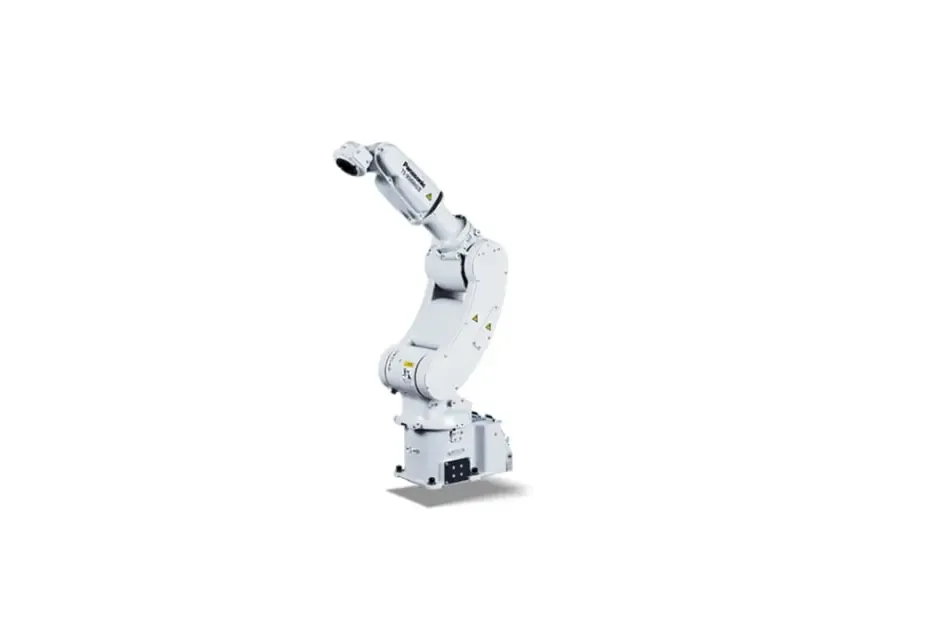
TS series arc welding robots
Short-arm compact · Load 8kg · Reach: 841-971mm
The main body weighs about 55kg, occupies a small footprint, and is suitable for compact welding stations and tight spaces.
Repeatability ±0.05mm, making it the most precise series among Panasonic's arc welding robots.
Supports floor-mounted, ceiling-mounted, and wall-mounted installation (standard is floor mounting; ceiling/wall mounts require consultation), flexible layout.
Maximum synthesis speed is high (average about 540°/s per axis), with the TW axis up to 1040°/s, shortening welding cycles.
TM series arc welding robots
Standard/Medium/Long Arm · Load 4-6kg · Reach: 1163-2011mm
The top speed of the basic 3-axis model is on average 22% higher than previous models, making it the industry's high-speed arc welding robot.
Welding torch cables come in three connection types: external, built-in, and detached, allowing free selection and combination according to workstation requirements.
The robot comes with a built-in TCP reference point, making TCP adjustment simple and improving centering accuracy.
TM-1100 to TM-2000 offers five reachs (1163-2011mm), with precise selection based on workpiece size.
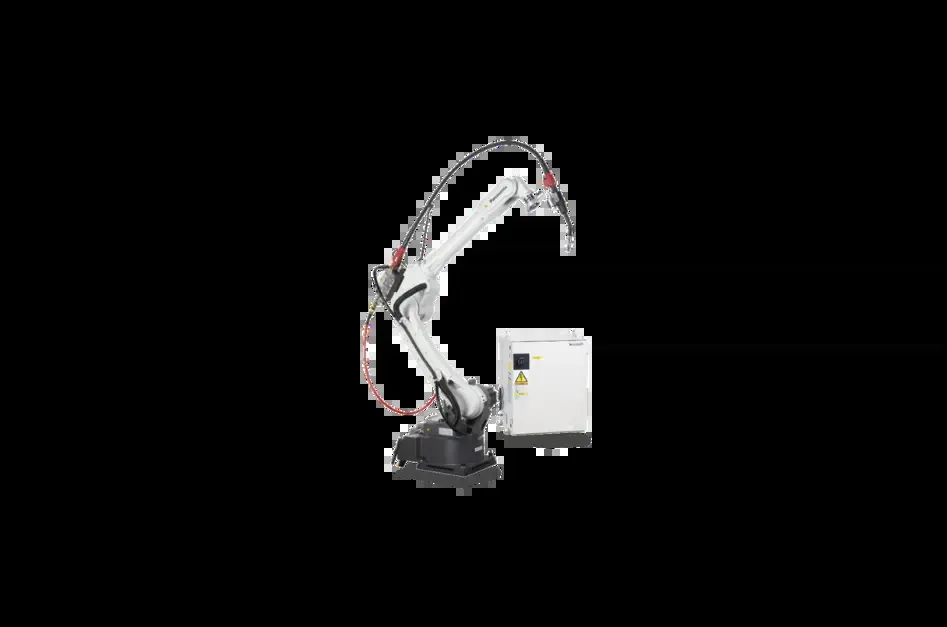
TL series arc welding robots
Long Arm High Load · Load capacity 6-8kg · Reach: 1801-1999mm
With a reach of 1801/1999mm, the maximum front-to-rear working range is 1508mm, covering a 2-meter welding work area.
The TL-1800 has an 8kg load capacity and can carry heavier welding torches and wire cleaning and cutting devices.
The welding torch cable uses an external connection method, offering excellent wire feeding performance and intuitive maintenance.
A highly rigid body suitable for high-speed operation, with a maximum repeatability of ±0.08mm.
LA series multipurpose robots
Mid-range multipurpose · Load capacity 26kg · Reach: 1801mm
With a load capacity of 26kg, it is a medium-range multipurpose platform for material handling, assembly, and processing processes.
Tools and welding guns can be installed simultaneously (mixed workstation), and can also work in collaboration with welding robots.
Can be paired with TAWERS (WG4/WGH4) or external welding power supplies to serve as both welding and handling stations.
The maximum synthesis speed averages about 370°/s across all axes, with a reach of 1801mm, balancing beat time and working range.
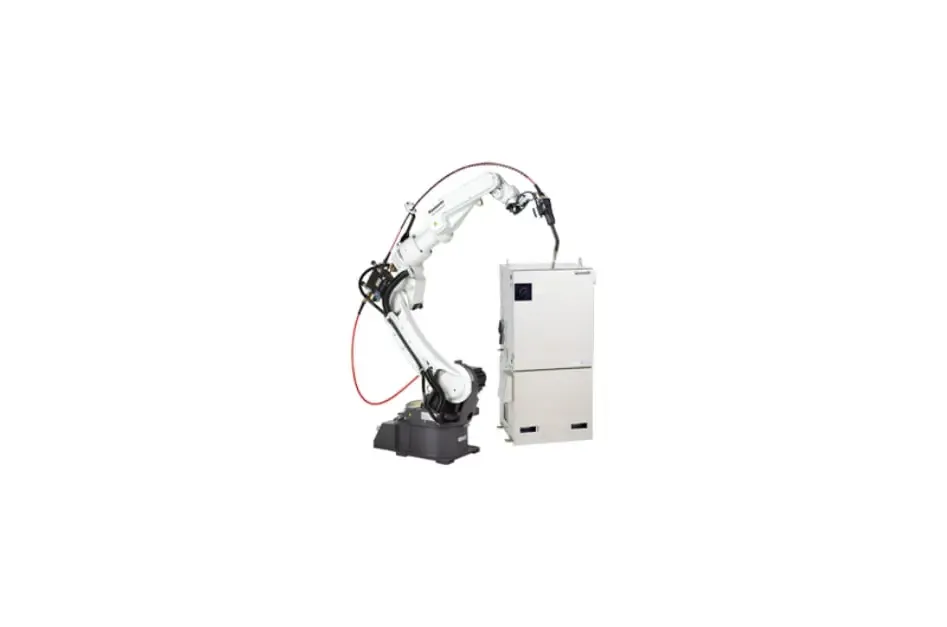
Core technological advantages
Power Fusion · Low splash · High-speed welding
The controller is integrated with the welding power supply, with fully software-controlled 100kHz inverter frequency, direct control of welding waveforms, and can store 40,000 teach pendants (expandable up to 800,000).
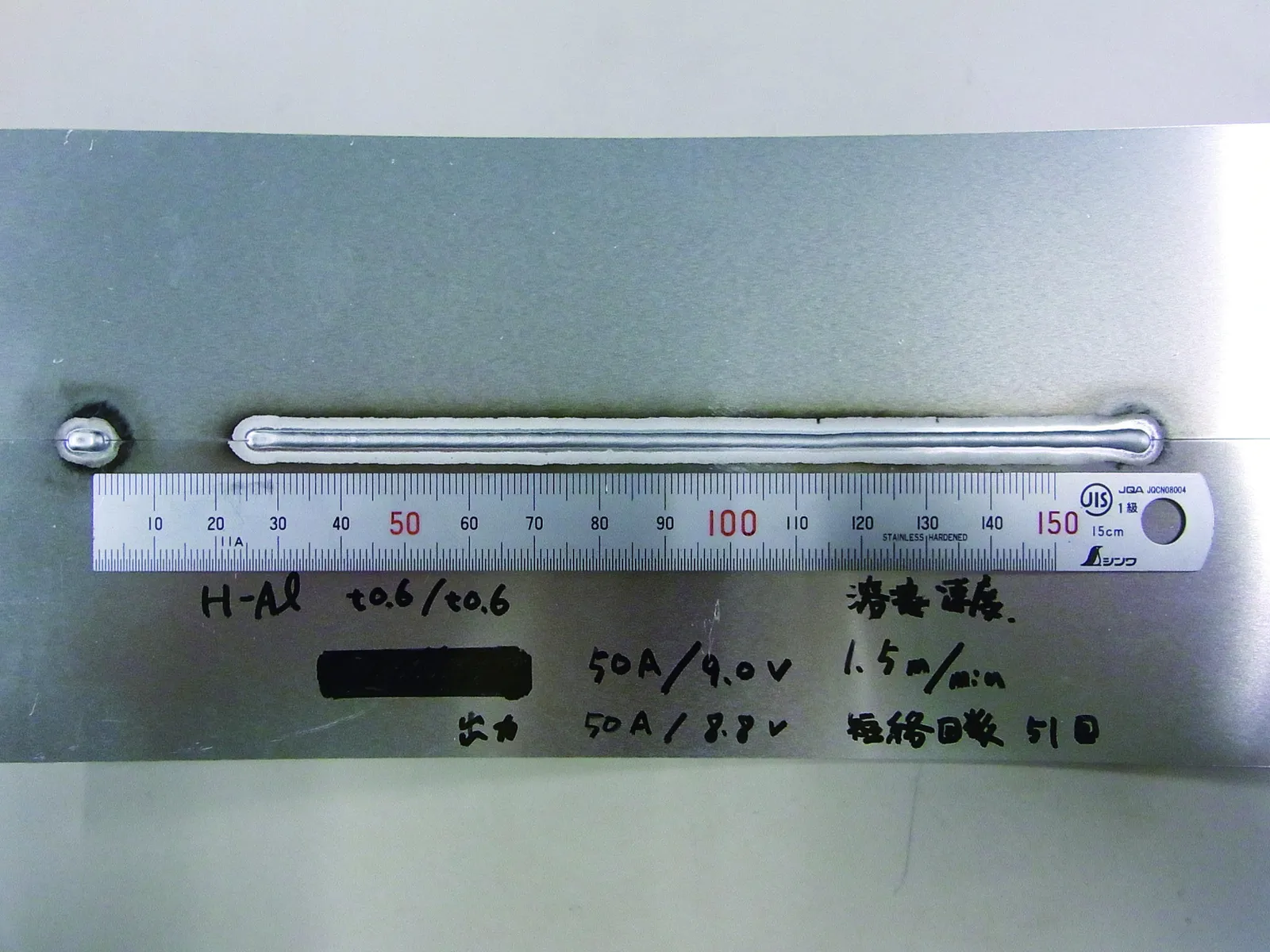
Super-imposition Control significantly suppresses spatter in the short-circuit area, reducing MAG welding spatter by up to 90% within the 150A range.
Metal Transfer Stabilization Control reduces CO2 welding spatter by up to 75%, achieving a stable pot bottom penetration depth.
Before reaching the welding start and end points, pretreatment is performed to initiate and terminate the arc, combined with wire pullback and automatic wire adhesion release functions, shortening the cycle and improving the quality of the start and end points.
Application scenarios
From palletizing and welding to machine tool maintenance, assembly, dispensing, grinding, and quality inspection, Panasonic can be rapidly deployed across all processes.
Service industry
Panasonic is widely used in the following industries, and we can provide model selection and implementation support tailored to local industry characteristics.
Why choose Panasonic?
From the main body and controller to the welding power supply, all are designed for welding conditions, with over 60 years of welding technology and arc research experience distilled into waveform control algorithms.
Methods such as SP-MAGII, MTS-CO2, and HBC thermal balance control reduce spatter and post-treatment costs, resulting in stable weld formation.
The basic 3-axis maximum speed is on average 22% higher than previous models, and the TS series achieves repeatability of ±0.05mm, achieving both rhythm and precision.
Tangshan Panasonic has achieved local manufacturing and R&D, with an annual production capacity of 2,000 robot systems, and nationwide agents and welding technology application centers providing process support.
Trusted by global customers
Panasonic serves many globally renowned companies (brand logo copyrights belong to each individual).
Panasonic Robotics Professional Services
As a third-party industrial robot technology service provider, Henghuan provides full lifecycle technical support and services for Panasonic's full range of arc welding and multipurpose robots.
Process validation, workstation solutions, programming and teach-in and production ramp-up support, and turnkey delivery of robot applications.
Learn more → Sales of new industrial robotsAuthorized-style sales of brand-new mainstream robots with selection support for new production lines and capacity expansion.
Learn more → Research and development of automation equipmentResearch, development, integration, and delivery of end-effectors, conveyor positioning, safety peripherals, and complete control systems.
Learn more → Research and development of algorithms and control systemsMotion planning, machine vision, and PLC/SCADA system development to address takt-time bottlenecks, accuracy, and data interconnection.
Learn more → Robot rentalShort-term rental, long-term rental and lease-to-own for in-stock models, long-term rental, and lease-to-purchase transfer, including transportation, installation, commissioning, and lease-term maintenance.
Learn more → Software and hardware upgrade servicesController retrofits, software and firmware upgrades, mechanical refurbishment, and safety upgrades restoring performance to older equipment.
Learn more → Maintenance and repairOn-site inspection, fault diagnosis and repair, and annual maintenance contracts covering 1,310 models from 21 brands.
Learn more → Used & in-stock robot salesWe buy back used robots and handle inspection, refurbishment and resale; every unit ships with inspection records and a warranty, and trade-ins can offset new purchases.
Learn more →Panasonic Frequently Asked Questions
Focusing on Panasonic equipment selection, maintenance, spare parts, and second-hand distribution, we answer the most frequently asked questions from customers.
How should you choose between Panasonic TAWERS and G4 separate control architectures?
TAWERS (WG4/WGH4) integrates a fully digital inverter welding power supply with a controller. WG4 contains a YA-2KD35 power supply (350A), while WGH4 is a 450A high-current type. The welding waveform is directly controlled by software, making it suitable for production lines that require high welding quality and low spatter. The G4 split type can be freely paired with external power supplies such as YD-350GZ4, YD-500GZ4, YD-400VP1, etc., according to the construction method, offering flexible configurations and independent power replacement. When selecting models, the main considerations are welding methods, current levels, and subsequent power supply upgrade requirements.
How to distinguish and select the Panasonic TS, TM, and TL arc welding body series?
The official website discloses specifications as: TS series (TS-800/950) short-arm compact model, load capacity 8kg, arm span 841/971mm, repeatability ±0.05mm, body weight approximately 55/56kg, supports ground, ceiling, and wall-mounted installation; TM series five-level reach range 1163-2011mm, load capacity 4-6kg, repeatability ±0.08mm (TM-2000 is ±0.10mm); TL series (TL-1800/2000) long-arm type, payload 6-8kg, with a reach of 1801/1999mm. Select based on workstation space, workpiece size, and welding torch configuration; first determine the arm span, then decide on the installation method.
What are the differences between the external, built-in, and detached forms of TM series welding gun cables?
The official TM series page explains that welding torch cables come in three connection modes: external, built-in, and detached, allowing free selection and combination. External cables run outside the body, with high curvature, good wire feeding performance, and intuitive maintenance; Built-in (through arm) type cables pass through hollow arm shafts, reducing interference to surrounding areas, suitable for offline teaching and compact workstations; The separated type combines welding torch cables with external wire feeding tubes. The TW axis range also varies depending on the type: external type ±400°, internal/detachable type ±220°.
What should I do if the TAWERS controller boots up slowly and the teach pendant capacity is insufficient?
The TAWERS product page on the official website states that after CPU performance improvement, the controller boots in just 30 seconds and can store 40,000 teach pendants, which can be expanded to 800,000. If the older controller has tight storage, prioritize clearing redundant teaching points and using the shift function to reduce repeated teaching tasks; When expansion or multi-machine coordination is necessary (controlling up to 7 groups of mechanisms and up to 27 axes), evaluate the controller version and expansion options; it is not recommended to modify storage components yourself.
What are Panasonic's low-splash welding methods for arc welding robots, and where are they used?
The methods disclosed on the official website include: SP-MAGII (Stacked Control), which suppresses spatter in the MAG welding short-circuit area. According to official data, spatter is reduced by up to 90% within the 150A area, suitable for thin and medium plates; MTS-CO2 (Droplet Transition Stabilization Control) reduces CO2 welding spatter by up to 75%, achieving a stable pot bottom shape penetration depth; It also features HBC thermal balance control, Zi-Tech functionality, and AWP4/S-AWP wire feeding control for aluminum. The method is configured with welding power supply and software versions. Before upgrading or modifying, verify the support of the controller and power supply model.
What can the LA-1800 multipurpose robot do on the welding production line?
According to the official catalog, the LA-1800 is a medium-range multipurpose 6-axis robot with a payload of 26kg, a reach of 1801mm, and a repeatability of ±0.07mm. It supports three uses: standalone as a handling/assembly/processing robot; Collaboration with welding robots (such as loading and unloading in coordination with arc welding stations); Hybrid method—both tools and welding torches are installed simultaneously, with the same robot handling and welding. It can be paired with TAWERS (WG4/WGH4) or external welding power supplies, making it ideal for scenarios where handling and welding are combined into one workstation.
What inspections should be done before purchasing a used Panasonic welding robot?
Recommended inspections: full-shaft zeroing and repeatability retest, axial noise and reducer backlash, body cable wear (especially TM internal/detachable wrist cables), encoder battery and origin data, controller version (WG4/WGH4/G4 must match power supply) and program parameter backup integrity, teach pendant emergency stop and safety loop functions, soldering power arc and waveform output status. TAWERS integrated models also need to confirm the output and load duration status of the built-in power supply YA-2KD35. Devices that cannot turn on or are parameter locked should be evaluated carefully.
Panasonic Robotics Professional Services
Henghuan provides selection, consulting, integrated commissioning, maintenance, and spare parts services for Panasonic's TS/TM/TL/LA series robots and TAWERS systems, covering the full lifecycle technical support for welding production lines.
Contact Henghuan