
Spot welding
Industrial robot spot welding process: application points, process essentials, and practical cases
Application Overview
Spot welding is the core joining process in automotive body-in-white manufacturing—a typical sedan body contains 3,000–5,000 weld points, and the body workshop is one of the most densely populated robots in the entire manufacturing industry. The principle of spot welding is resistance heat: the electrode pressurizes and clamps the sheet metal and passes through it with a high current of several thousand to tens of thousands of amperes. The contact surface forms a melting nucleus within 0.1–0.5 seconds, followed by pressure-holding cooling and crystallization.
Key points of application
Compiled from official brand application materials, source has been annotated.
Process validation, workstation solutions, programming and teach-in and production ramp-up support, and turnkey delivery of robot applications.
Learn more → Sales of new industrial robotsAuthorized-style sales of brand-new mainstream robots with selection support for new production lines and capacity expansion.
Learn more → Research and development of automation equipmentResearch, development, integration, and delivery of end-effectors, conveyor positioning, safety peripherals, and complete control systems.
Learn more → Research and development of algorithms and control systemsMotion planning, machine vision, and PLC/SCADA system development to address takt-time bottlenecks, accuracy, and data interconnection.
Learn more → Robot rentalShort-term rental, long-term rental and lease-to-own for in-stock models, long-term rental, and lease-to-purchase transfer, including transportation, installation, commissioning, and lease-term maintenance.
Learn more → Software and hardware upgrade servicesController retrofits, software and firmware upgrades, mechanical refurbishment, and safety upgrades restoring performance to older equipment.
Learn more → Maintenance and repairOn-site inspection, fault diagnosis and repair, and annual maintenance contracts covering 1,310 models from 21 brands.
Learn more → Used & in-stock robot salesWe buy back used robots and handle inspection, refurbishment and resale; every unit ships with inspection records and a warranty, and trade-ins can offset new purchases.
Learn more →Typical application scenarios for spot welding automation
Below are representative spot welding automation scenarios from the Henghuan team and industry practice (client names omitted by convention), structured by "Background Pain Points → Implementation Plan → Implementation Results" for reference and evaluation by enterprises with similar needs.

| Scene | Background and pain points | Implementation plan | Implementation results |
|---|---|---|---|
| An auto parts factory in Chongqing · Seat frame spot welding station | The seat frame assembly has more than 60 weld points; manual welding tongs operate at unstable rhythms and occasionally missed welds. OEM audits require all weld points to be traceable. | The 165kg six-axis spot welding robot is equipped with C-type servo welding pliers and a medium-frequency inverter power supply, automatically monitoring and recording the current-resistance curve of each weld point, with data automatically archived. | Missed solder joints are reduced to zero, solder joint quality data can be directly exported for customer audits, and single-shift cycle times are shortened by about 30% compared to manual operations. |
| A car body supporting factory in Chengdu · Second-hand spot welding robot renovation | After the model change, the original spot welding workstation remains idle and requires low-cost modification for new assembly part production. | Henghuan undertook renovations: quick-change interface for welding tongs, new fixture signal docking, re-teaching of 87 weld point programs, and servo clamp pressure curve calibration. | Mass production resumed three weeks after renovation, weld joints passed chisel inspection and core diameter spot checks, and the renovation investment was about 40% of the newly purchased station. |
| An electrical company in Sichuan · Spot welding of distribution cabinet panels | The panel welds of distribution cabinets are densely poweled, the plates are thin and easily deformed, resulting in low manual welding efficiency and a large workload for deformation leveling. | The medium-load spot welding robot is equipped with a dual-station rotary table, allowing both clamping and welding to operate in parallel, with the welding sequence program optimized to control thermal deformation. | Single-shift output doubled, panel flatness was significantly improved, and most subsequent leveling processes were eliminated. |
Industries that commonly use this process
Click to view the overall robot application plan for the industry.
Spot welding process: The king of beats in automotive and home appliance manufacturing
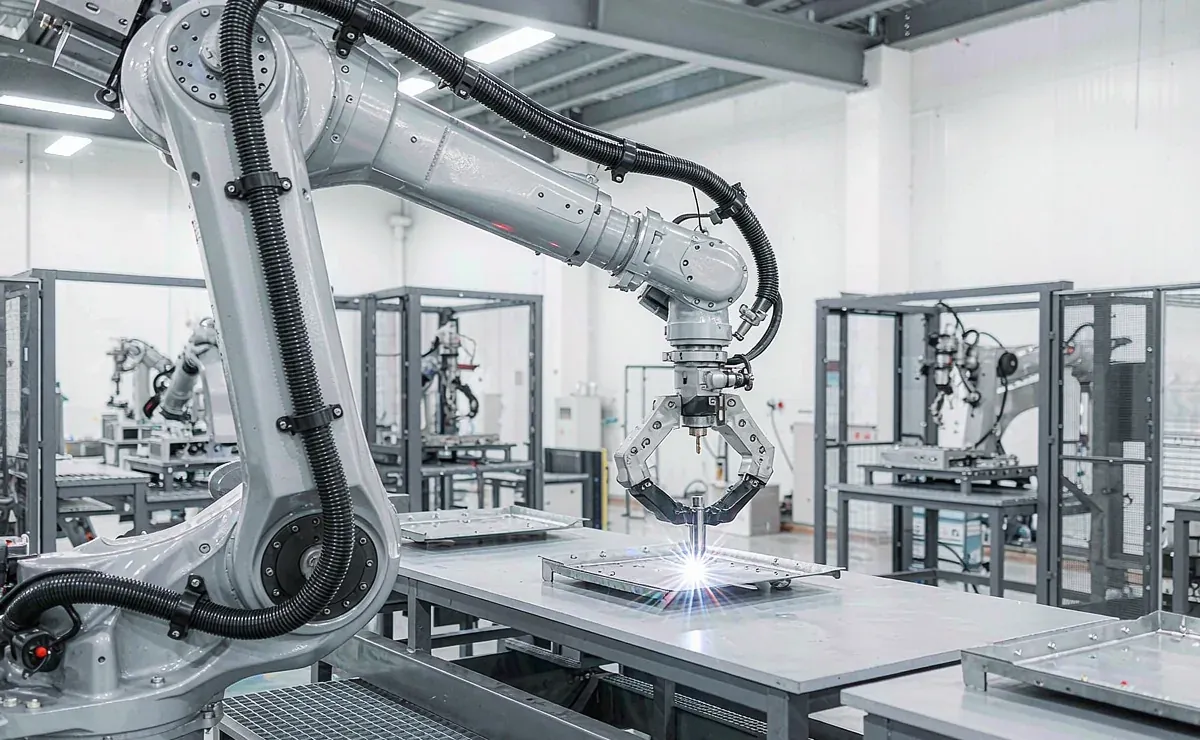
Resistance spot welding relies on electrode pressure and welding current to form a molten nucleus at the contact surface of the board. The solder joint cycle is 0.3–1 second, making it the absolute mainstay process for manufacturing automotive body-in-white bodies (3000–5000 weld points per car) and home appliance housings. The technical core of robotic spot welding is in three areas:Welding pliers selection(C-type pliers/X-type pliers, servo pliers/pneumatic pliers, clamp arm length and reachability),Solder joint process window(Matching of current, time, and pressure; galvanized sheets differ significantly from ordinary sheets),Beating optimization(Idle stroke acceleration, minimized welding clamp opening, multi-robot zoned collaboration).
Servo welding pliers have become mainstream: compared to pneumatic pliers, servo pliers achieve closed-loop pressure control and soft contact, reducing spatter, extending the lifespan of electrode caps by more than 30%, and significantly improving the quality consistency of weld joints; Combined with medium-frequency inverter welding machines (DC output), the welding window between galvanized sheet and high-strength steel is wider.
| Panel thickness combination | Electrode pressure | Welding current | Power supply time | Requirements for the core diameter |
|---|---|---|---|---|
| 0.8+0.8mm | 1.5–2.0kN | 7–9kA | 8–12 frequencies | ≥3.5mm |
| 1.2+1.2mm | 2.0–2.8kN | 9–12kA | 10–14 cycles | ≥4.5mm |
| 2.0+2.0mm | 3.0–4.5kN | 12–15kA | 12–18 frequencies | ≥5.5mm |
| Galvanized sheet (same thickness) | Pressure rise 20%–30% | Current Increase 10%–20% | Extend appropriately | Same specification requirements |
Key points for spot welding quality control and production line integration
Online Quality Monitoring:Modern medium-frequency welding machines come standard with welding current curve monitoring, real-time determination of dynamic resistance curves for each solder joint, automatic alarms for deviation solder joints, and position recording; Sampling inspection combined with weld joint chisel inspection, metallographic and ultrasonic testing forms a dual-layer quality system of "online full inspection + regular spot check."
Electrode Cap Management:The number of grinding cycles and replacement intervals are set according to the type of sheet (ordinary steel plates are 200–400 points per session, galvanized sheets are halved). The robot program has built-in grinding counting and cap replacement reminders to prevent batch quality accidents caused by electrode adhesion.
Accessibility simulation comes first:Collision interference between welding tongs and workpieces, fixtures, and bodies is verified point-by-point during offline simulation, while on-site commissioning only addresses process issues and not "inaccessibility" issues—a common cause of spot welding project failure is insufficient verification of accessibility during the layout phase.
Craft Q&A
Do spot welding robots require high rigidity?
High. The self-weight of welding tongs combined with welding reaction force has a significant impact on wrist loads. For spot welding conditions of the same load class, it is recommended to choose a model with stronger rigidity, leaving a load margin of at least 30%. At high speeds, the vibration of the body is directly converted into solder joint position deviation.
Can aluminum plate spot welding be done?
Yes, but the process window is narrow: aluminum has high electrical and thermal conductivity, requires higher current (about 2–3 times that of steel at the same thickness), higher electrode pressure, and shorter welding time, so the electrode cap is consumed quickly. The medium-frequency DC + toroidal electrode cap solution is recommended. We conduct sample verification first, then submit the proposal.
Can you make the white-to-white body assembly fixture?
Yes. The design of locating pins, clamps, and brackets for spot welding fixtures is fundamental to the dimensional accuracy of the vehicle body. Our automation equipment R&D line undertakes the design and manufacturing of sub-assembly fixtures, delivering them together with spot welding robot programs.
In-depth analysis of spot welding processes
The core challenge of robotic spot welding is not the welding itself, but the system engineering of welding tongs, servos, and scheduling: servo welding tongs enable programmatic control of electrode pressure, adapting to combinations of different plate thicknesses and coated sheets; The quick-change welding tongs device allows one robot to cover multiple welding points; Compared to traditional power frequency AC, medium-frequency inverter DC power supplies reduce splashing by more than half, have a higher power factor, and are suitable for aluminum alloys and high-strength steel. The overall beat and quality consistency of the line depend on the coordinated tuning of these subsystems.
Henghuan provides spot welding system services to car body manufacturers and parts manufacturers in Southwest China: selection and matching of welding tongs, servo welding tongs maintenance, medium-frequency power supply commissioning, secondary circuit maintenance, as well as purchasing, selling, and servicing of used spot welding robots (including special inspection of welding tongs and power supplies).
The technological evolution of spot welding automation in the Southwest market
Currently, spot welding technology has three main directions: first,Lightweight welding tongs— The servo welding tong's weight has been reduced from over 80kg in the early days to below 50kg. Robots with the same load can carry lighter welding tongs, and payload utilization improves synchronously with the beat; SecondDigitizing process monitoring— The adaptive controller monitors the dynamic resistance curve of each weld point in real time, automatically compensates for electrode wear and gap fluctuations, and achieves full traceability of weld quality to replace destructive sampling; Third,New material connection challenges— With the increasing use of aluminum alloy bodies, hot-formed steel, and multilayer coated sheets, medium-frequency power supply + adaptive scheduling have become standard, and cold connection processes (self-drilling riveting, flow drill screws) and spot welding are used together on the same production line.
Used spot welding robots are actively circulating in the Southwest market—coastal body lines release large quantities of high-quality medium and heavy load spot welding robots (150–250kg six-axis + servo pliers) as models evolve, making them a practical choice for component manufacturers to upgrade automation at low cost. All second-hand spot welding machines sold by Henghuan come with special inspection reports for the welding tacp mechanism, transformer, and control system.
Key points and operation and maintenance management of spot welding workstations
High-frequency faults at spot welding stations are concentrated in three areas: First,Electrodes and welding pliers— Electrode cap collapse and mushroom formation lead to reduced current density and increased spatter; grinding cycle management directly affects solder joint quality and cost (usually every 200–400 points, with a counting ledger established); SecondCooling system— Scaling in the transformer and welding pliers in the water passages can cause overheating alarms or even shutdowns. Water temperature management in summer is especially critical, requiring regular water quality and conductivity testing; Third,Servo clamp mechanism— Wear of the screw and guide rail in the pressurizing mechanism causes pressure deviation, resulting in cold welds or excessively deep indentations, which require quarterly calibration.
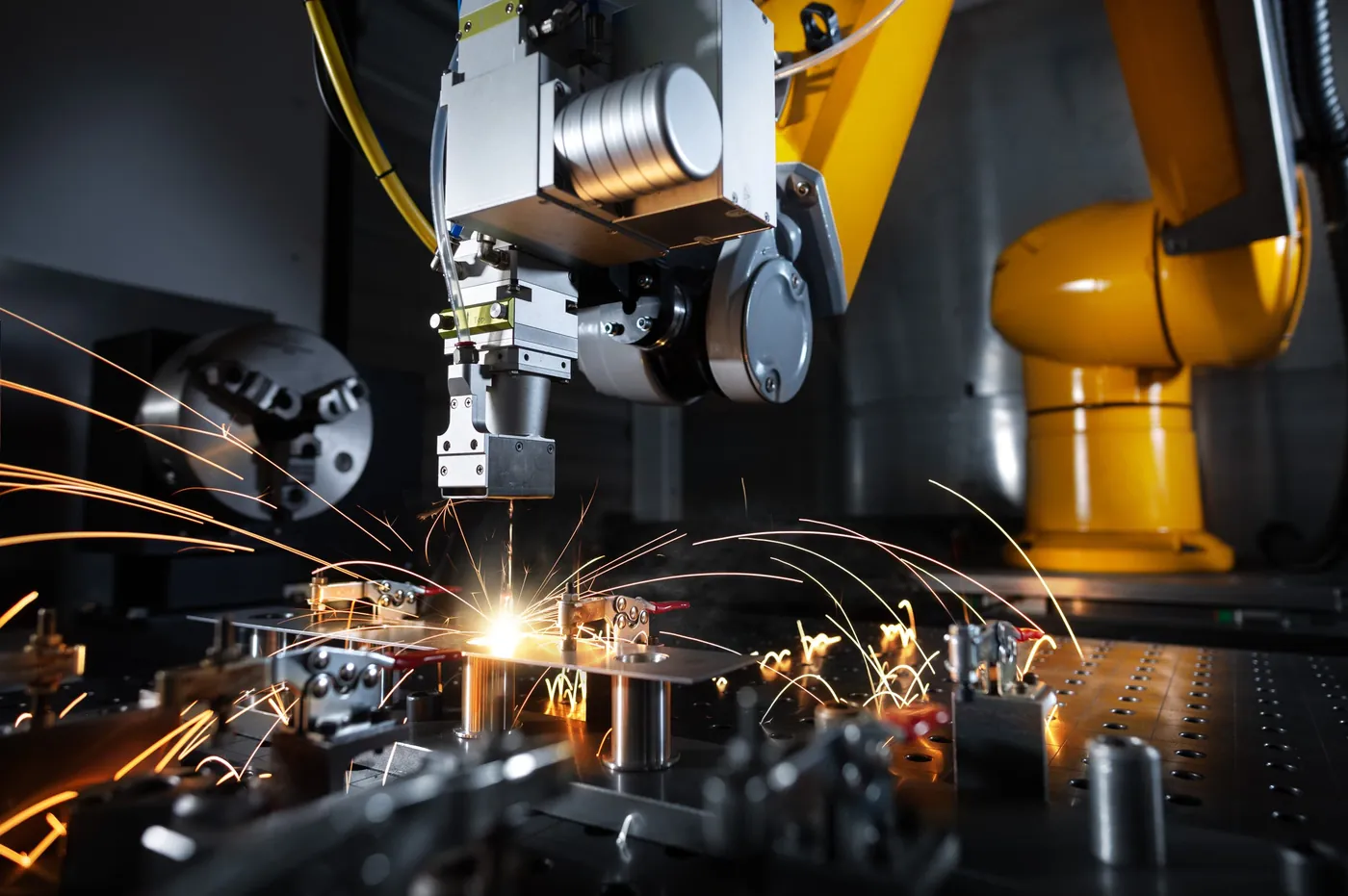
Key points for spot welding quality management: weekly spot checks of welds with chisel inspection or metallographic testing to verify that the core diameter meets the required thickness combinations; Monthly calibration of servo clamp pressure curves; Annually test the resistance of the secondary circuit (the increase in contact resistance of cables and quick-change plate contacts is a hidden cause of energy degradation). Henghuan's spot welding station maintenance contract covers all of the above items, and provides major repair of welding tongs and transformer refurbishment services.
Need localization solutions for spot welding processes?
Whether it's selecting new project solutions, upgrading production lines, or maintaining in-service equipment, Henghuan can provide third-party technical support for spot welding applications. Please tell us about material specifications, production cycles, and the on-site environment, and we will provide targeted solution recommendations.
Contact Henghuan View all application processes