Welding robots
Automated operation systems for arc welding, spot welding, and laser welding—the core is a six-axis robotic arm (manipulator) plus welding power supply and process kit, serving as the main equipment in the automotive and metalworking industries. This page provides a detailed explanation of its system configuration, selection parameters, and common questions, along with an index of the 193 models in our database.
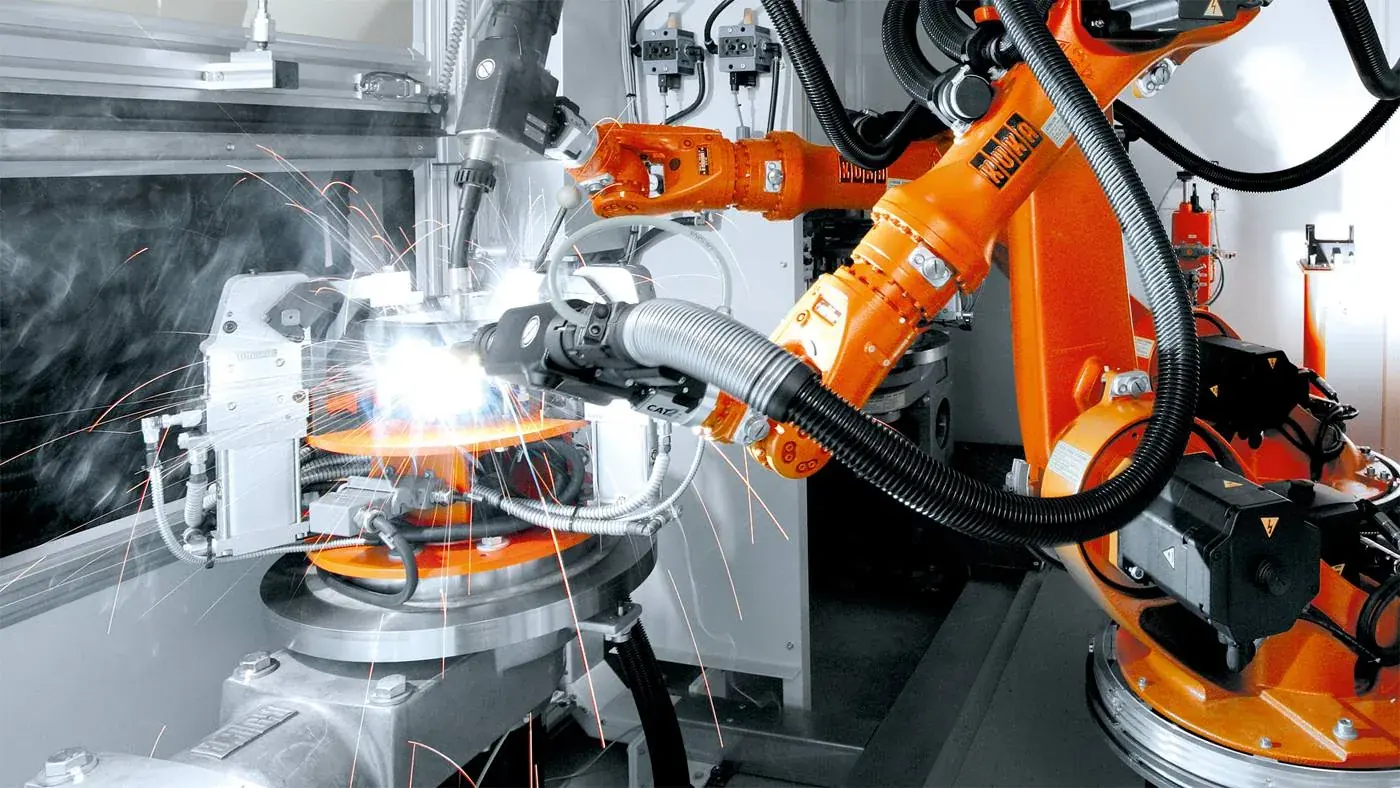
Welding robot = robotic arm (manipulator) body + welding process package
What is a welding robot?
Welding robots areClassified by functional useThe industrial robot category—it is not a new structure, but consists of a "six-axis robotic arm (with a few being trusses/SCARA) + welding torch/welding tongs + welding power supply + process software."Welding operation system。 When Volkswagen refers to the "welding robotic arm" or "welding manipulator," it refers to the most prominent six-axis arm in this system.
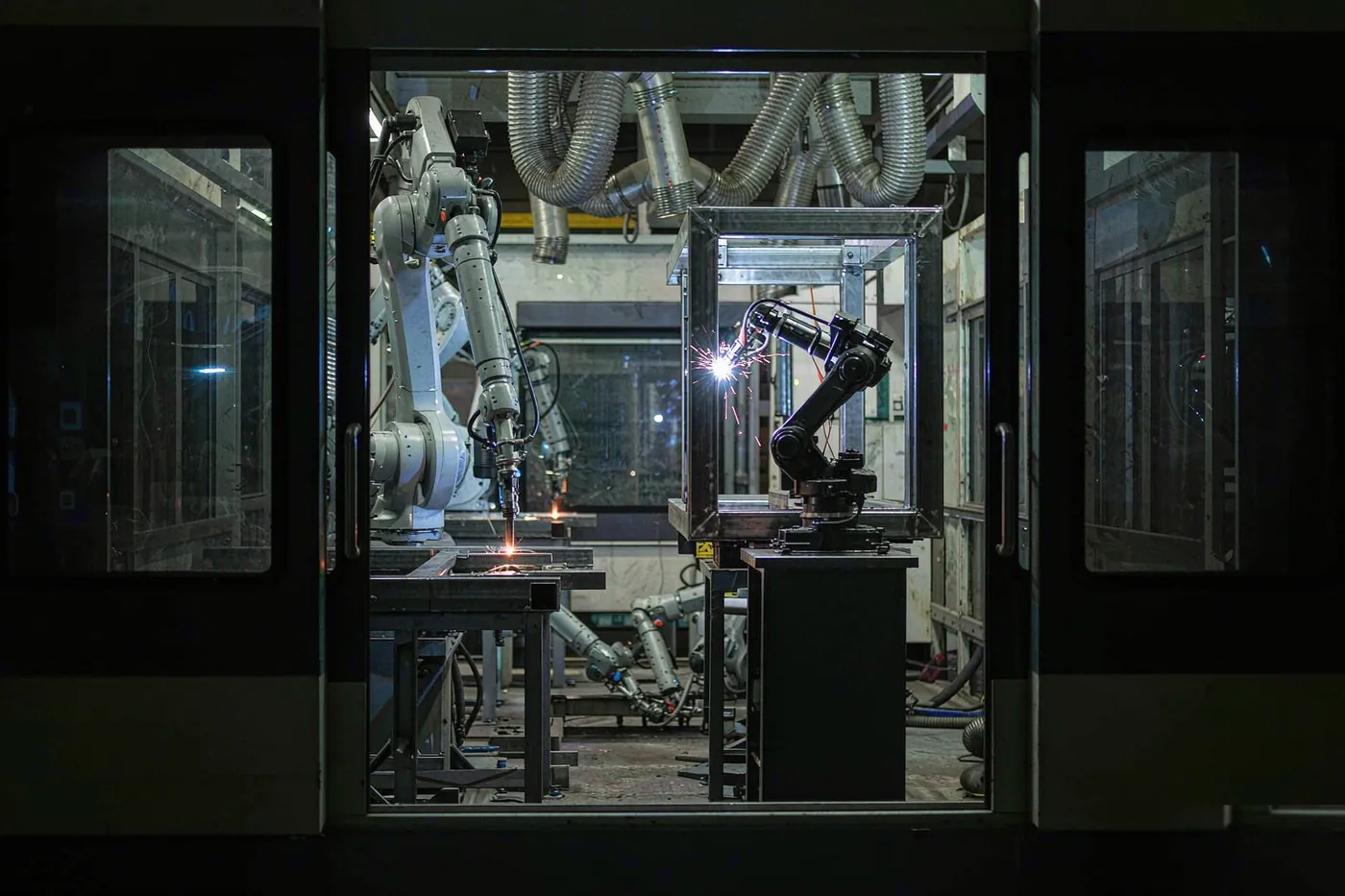
A usable welding robot unit typically includes:The robot itself(Six-axis robotic arm, responsible for moving the welding torch along the trajectory),Welding power supply and wire feeder(Arc welding) orWelding tongs and transformer/medium-frequency power supply(Spot welding),Positioner/Walking Rail(External shaft to rotate the weld seams to the optimal position),Gun cleaning, wire cutting, and splash prevention devices, andArc welding process package(Arc start and end parameters, pendulum welding, interlayer and inter-channel logic).
Divided into three main categories by process:Arc welding robots(MIG/MAG/TIG, the main products for automotive frames, construction machinery, and metal furniture),Spot welding robots(The absolute main force for welding automotive body-in-white vehicles, with C-type/X-type welding pliers installed at the arm ends),Laser welding robots(Precision welds and new energy battery trays have grown the fastest in recent years.)
| Category | Process principles | Typical industries | Key technologies |
|---|---|---|---|
| Arc welding robots | MIG/MAG/TIG Arc welding for melted/non-melting electrodes | Automotive parts, construction machinery, two-wheelers, metal furniture, pressure vessels | Welding parameter coordination, weld tracking, multi-layer, multi-pass operation |
| Spot welding robots | Resistance spot welding: electrodes are pressurized and energized to form weld joints | Automotive body-in-white and home appliance housing | Lightweight welding tongs, servo welding tongs, spot welding program management |
| Laser welding robots | High energy density laser melt welding/brazing | Power batteries, automotive bodies, precision components | Optical path safety, weld gap control, and visual guidance |
Key points for selecting welding robots
| Parameters | Recommended configuration | Project description |
|---|---|---|
| Load | Arc welding 6–20kg; Spot welding 80–250kg | Arc welding load = welding torch + cable + wire feeding tube; Spot welding load = Welding tongs weight (C-type tongs can reach 100 kg) |
| Armspan | Arc welding 1400–2000mm mainstream; Spot welding is done by the body workstation | Cover all weld seams of the workpiece + avoid space, and consider accessibility after the positioner is flipped |
| Repeatability | ± 0.05mm is sufficient (arc welding) | Arc welding does not require very strict repeatability; the key is trajectory stability and process parameters |
| Protection rating | IP65+ wrist protection kit | Essential for welding splashes and smoke environments; Spot welding must prevent cooling water leakage |
| Internal wiring | Hollow wrist / built-in pipeline pack | Welding torch cables, air pipes, and water pipes have built-in wiring, with lifespans several times longer than external pipeline packs |
| Process software | Branded arc welding packages (such as FANUC iRWeld, ABB ArcWeld/WeldGuide, OTC/Panasonic power coordinated) | Arc starting, arc ending, drawback, and anti-stick wire parameterization, with automatic generation of multiple layers and multiple passes |
| External shaft | Positioner (1–3 axes), ground rails, flipping machine | Keeping the weld seams in a boat-shaped position is the primary principle to ensure quality and efficiency |
Robotic solutions for welding quality issues
Stomata: Insufficient protective airflow or strong wind blowing → Install wind baffles and inspect air circuits;Edge: High current, fast welding speed, angle deviation → Correction of welding parameters and gun posture;Not fused: Bevel alignment deviation → Weld tracking (contact/laser/vision);Splashing is huge: Mismatch in parameters or gas ratio → Use low-splash power supply mode (pulse/MIG brazing). The greatest advantage of robotic welding is:Parameter consistency— The same weld seam yields the same quality ten thousand times, which is precisely the hardest thing to achieve by manual welding.
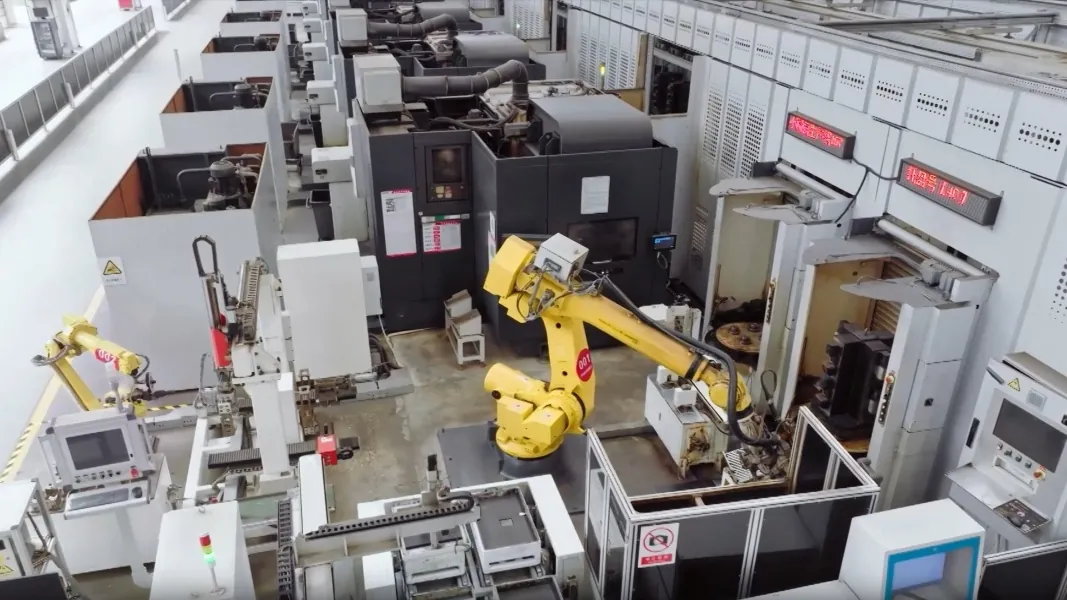
Welding robots cover eight major business areas
What can we do for you?
Applied technology services: Welding workstation solution design, process evaluation, programming and commissioning, weld seam tracking integration—see detailsArc welding applicationsGive meSpot welding applications。
New device sales and second-hand sales: FANUC ARC Mate, Yaskawa AR/MOTOMAN-AR, Panasonic, OTC, Estun, and other arc welding machines in stock and used, with power supply and process package verification included.
Maintenance and repair: Inspection and preventive maintenance of common welding faults such as welding torch cable breakage, poor wire feeding, body splash, and gear reducer wear.
Upgrade and renovation: Upgrade of control systems for older welding robots (such as FANUC S/R series, Yaskawa UP series), addition of weld tracking and cleaning stations, and digital power supply renovation.
Frequently Asked Questions
Are welding robots essentially "welding robotic arms"?
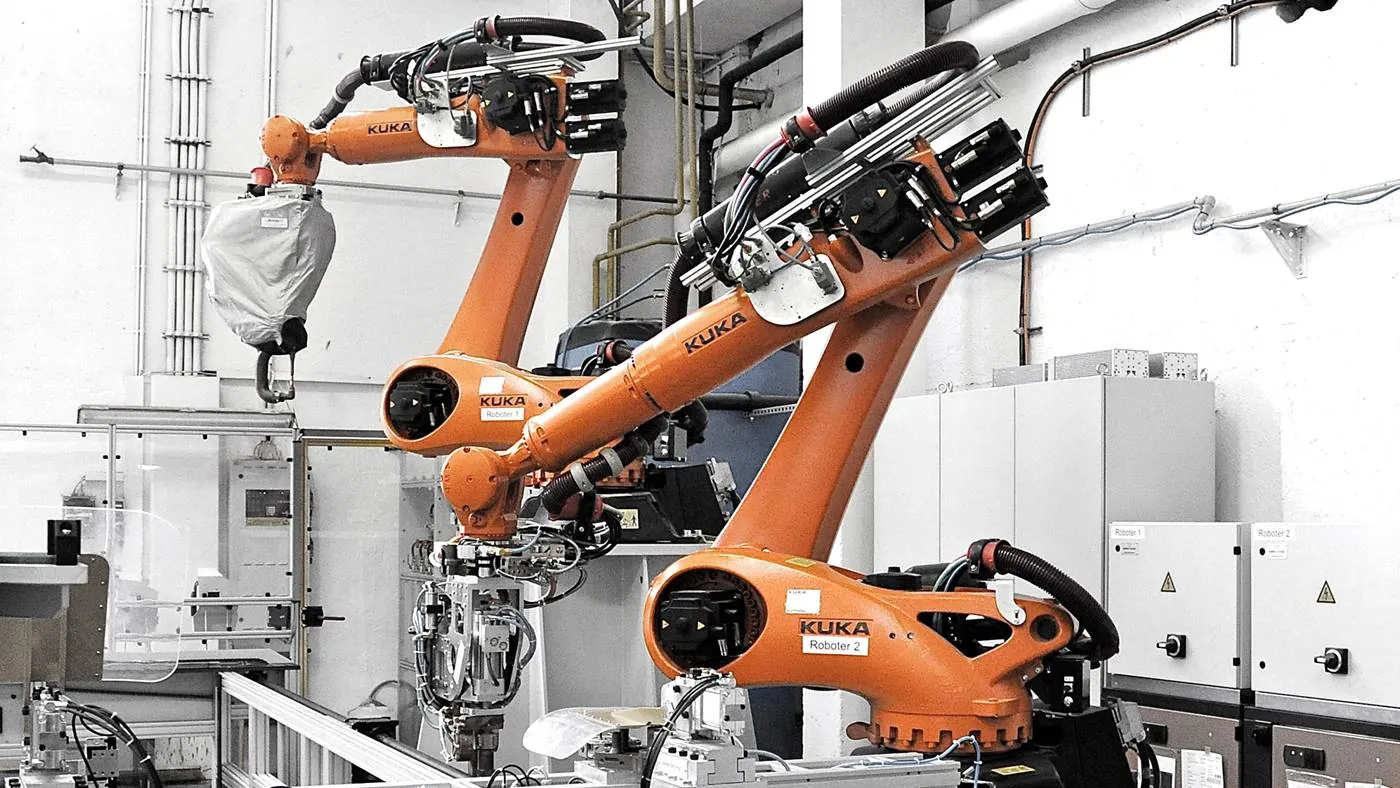
Yes, in everyday contexts, the two can be interchanged—when customers search for "welding robotic arm" or "welding manipulator," they find welding robots. Strictly speaking, welding robots = a complete system of robotic arm body + welding power supply + process package. Buying only the "arm" without the "power supply and process kit" will not work the welding. Be sure to confirm the system's integrity when selecting a model.
Are second-hand welding robots worth buying?
Check three points: (1) Body — Welding conditions produce large dust splashes; focus on wrist seals, reducer backlash, and cable aging; (2) Power supply — Digital power supplies have high residual values; older analog power supplies are recommended to be replaced; (3) Process package authorization—Some branded arc welding software requires separate authorization, and second-hand products require verification. All the second-hand welding robots we sell come with these three inspection reports and warranty.
Which robot is best for thin plate welding?
Thin plates (≤2mm) are preferredPulse/low splash power supplyArc welding robots (Panasonic TAWERS, OTC, FANUC with Lincoln power supplies, etc.) have low heat input and minimal deformation; Thinner precision parts can consider laser welding or CMT-type cold metal transition processes. The key is not the "arm," but the "power and process."
Is programming welding robots difficult? Do you need a dedicated welder certificate?
The teach pendant itself is not difficult (drag/key recording trajectory points); the difficulty isWelding process parameters— Current, voltage, welding speed, and swing amplitude should be adjusted according to the material and plate thickness, which requires welding process knowledge. Maintenance personnel are advised to hold welding-related skill certifications. When we deliver the process parameter library, we provide operational training. Common issues can be accessed according to the library.
Welding robots in our warehouse (193 models)
Browse by brand
Below are representative models in this functional category in our database (matched by process label, cross-structural form). Click to view specifications, technical explanations, and maintenance points. For the complete model list, please see each brand's page.
ABB (7 models)
KUKA (135 models)
Kawasaki (9 models)
Nachi Fubietsu (4 models)
Comau (6 models)
Panasonic (10 models)
Universal Robots (2 styles)
Inovance Technology (3 models)
Guangzhou CNC (4 models)
HSR Robotics (5 models)
QJAR Robotics (8 models)
Need robot selection, maintenance, or application solutions?
Tell us about workpieces, procedures, beats, and budgets. Local teams in Nanchong will connect with us, and on-site inspections are available in Sichuan, Chongqing, Yunnan, and Guizhou. Robotic arm (manipulator) selection, second-hand purchase and sale, maintenance and repair all in one place.
Contact usView all varieties