Casting, die casting, and forging
Industry Robot Application Solutions · 4 Brands Coverage · 4 types of typical processes
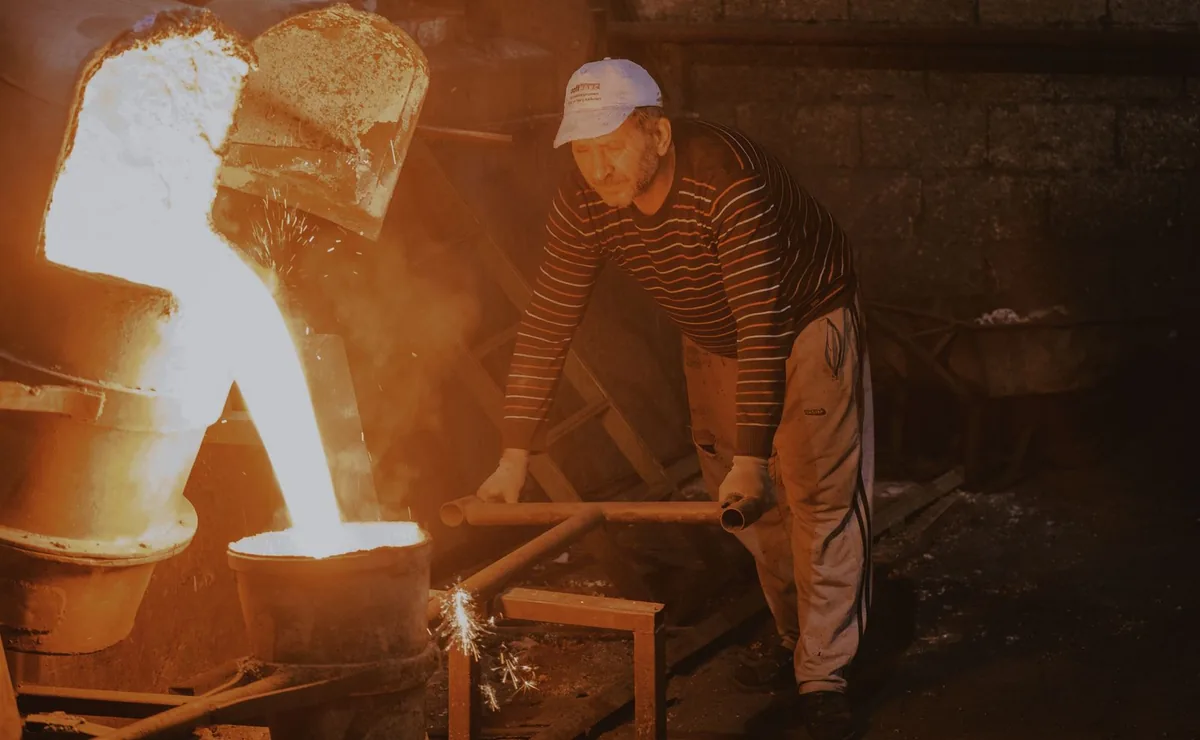
Robotic applications in the casting, die-casting, and forging industries
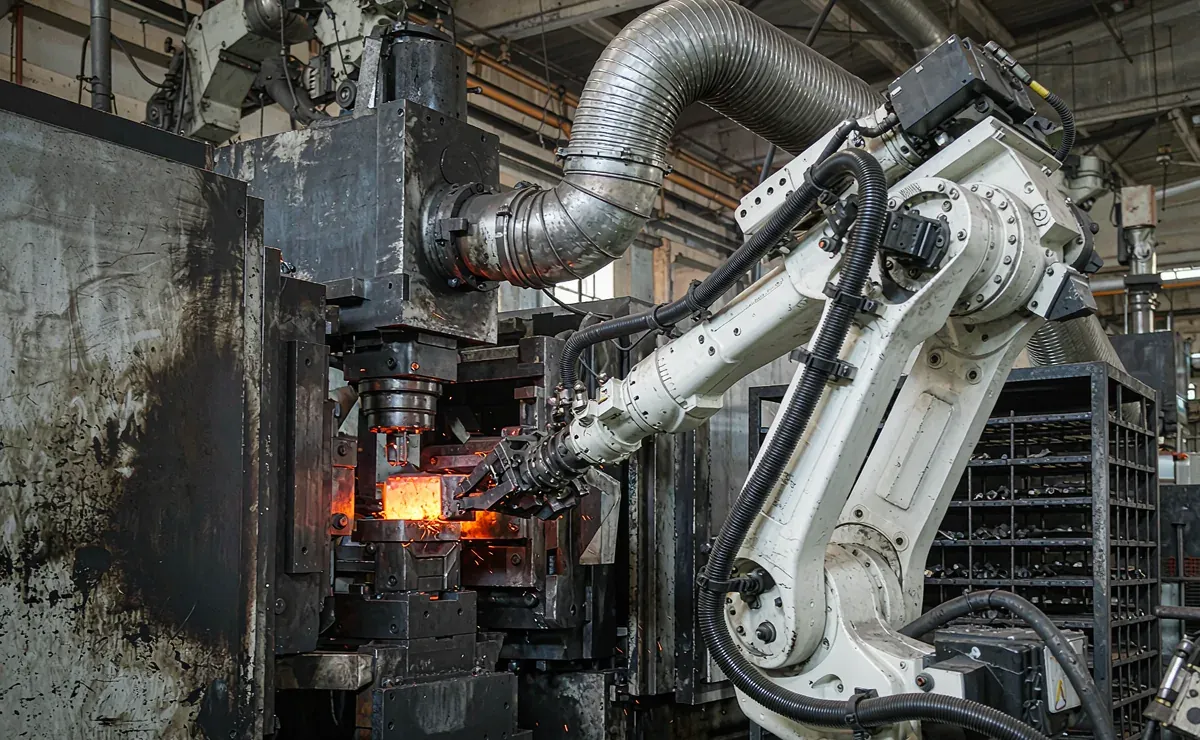
Casting, die casting, and forging workshops face harsh environments (high temperatures, dust, oil stains), making them one of the industries most urgently needed for machine substitution. Pick-up robots require heat-resistant protection kits, commonly using Kawasaki MXP, FANUC M-900, Yaskawa MPX, and other series. Henghuan provides die-casting factories with maintenance, replacement of protective kits, and the purchase and sale of second-hand equipment for die-casting factories.
Typical automated processes
Common robotic processes in this industry—click to view key application points, customer cases, and applicable brands.
Robotic grasping is an automated program that uses a robotic arm to fully control an object. Kawasaki leverages robotic products to reduce manufacturing cycle times and offer greater automation flexibility. …
View process details → Material handlingReducing labor costs through automation Material Handling (MH) utilizes the simple capabilities of robots to transport objects. By fitting the robot with the appropriate end-of-arm tooling (for example, a gripper), the robot can efficiently and accurately transfer products from a position...
View process details → Subtractive processingAutomated grinding and polishing applications include polishing, grinding, trimming, cutting, and deburring (to name just a few). These processes are challenging due to factors such as movement and positioning requirements, tool wear errors, and force control. Kawasaki has already developed software...
View process details → Grinding and polishingOperations such as polishing, grinding, and grinding all require precise force control. The Universal collaborative robotic arm equipped with force control technology can automatically adjust its position based on real-time feedback, ensuring the applied pressure remains within the ideal range,...
View process details →Covering branded equipment
Within Henghuan's service scope, robot brands with practical applications in the casting, die-casting, and forging industries can click to enter the brand page to view series and model specifications.
 Inovance Technology58 models
 Estun71 models
 Nachi Fubietsu18 models
 EFORT32 models
Henghuan can provide services for the casting, die-casting, and forging industries
All six core businesses can be procured independently or in combination.
Process validation, workstation solutions, programming and teach-in and production ramp-up support, and turnkey delivery of robot applications.
Learn more → Sales of new industrial robotsAuthorized-style sales of brand-new mainstream robots with selection support for new production lines and capacity expansion.
Learn more → Research and development of automation equipmentResearch, development, integration, and delivery of end-effectors, conveyor positioning, safety peripherals, and complete control systems.
Learn more → Research and development of algorithms and control systemsMotion planning, machine vision, and PLC/SCADA system development to address takt-time bottlenecks, accuracy, and data interconnection.
Learn more → Robot rentalShort-term rental, long-term rental and lease-to-own for in-stock models, long-term rental, and lease-to-purchase transfer, including transportation, installation, commissioning, and lease-term maintenance.
Learn more → Software and hardware upgrade servicesController retrofits, software and firmware upgrades, mechanical refurbishment, and safety upgrades restoring performance to older equipment.
Learn more → Maintenance and repairOn-site inspection, fault diagnosis and repair, and annual maintenance contracts covering 1,310 models from 21 brands.
Learn more → Used & in-stock robot salesWe buy back used robots and handle inspection, refurbishment and resale; every unit ships with inspection records and a warranty, and trade-ins can offset new purchases.
Learn more →Industry Status: The rigid demand for "machine substitution with human labor" under harsh working conditions
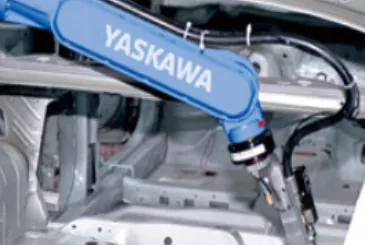
Casting, die casting, and forging are the harshest labor conditions in manufacturing: high temperatures (ambient temperature above 50°C in die casting pickup areas, red-hot forgings at 800–1200°C), dust, noise, heavy physical labor, and young people almost no longer enter these positions—making automation in the industry not a cost-cutting option but a problemEmployment survival questions。 On the policy side, entry requirements and environmental performance grading (A/B/C) for the foundry industry continue to tighten, with automation and environmental investment becoming prerequisites for capacity retention.
The main application thread of robots in this industry is clear:Die casting island automation(Component pickup, spraying, trimming, and inspection all integrated) has become standard for new die-casting capacity;Loading and unloading on the forging line(Heating furnace–press–roller connection line) Moving towards full automation;Post-processing of castings(Remove gate risers, grind, shot blasting, and load loading) Transition from manual to force-controlled robots. High temperature and impact conditions place special requirements on equipment: high-temperature protective clothing, dustproof positive pressure, impact-resistant ends, and reinforced maintenance intervals.
| Workstation | Robot applications | Special requirements |
|---|---|---|
| Die casting part removal spray | Six axes (die-casting dedicated bag) + part pickup/spray end | High-temperature protection and safety interlock with die casting machines (TÜV level) |
| Die casting trimming | Six-axis + trimming die/press connected operation | Rigidity verification under impact conditions, chip protection |
| Forging upper and lower materials | Heavy-duty six-axis + clamp end | Radiative protection for red-hot workpieces, heat-resistant design for clamps |
| The casting is polished to remove burrs | Force-controlled grinding + dust removal and explosion-proof | Dust explosion-proof (aluminum cast grinding produces explosive dust), and tool lifespan management |
| Shot blasting/cleaning line loading and unloading | Six axes + wear-resistant ends | Steel shot environmental wear protection |
| Casting (spheroidizing / lading hot iron) | Heavy-duty robot + pouring end of the pours | High-temperature radiation protection, safety redundancy design (dual circuits) |
| Sand casting molding line | Handling + Spraying (Coating) | Positive pressure protection in dust environments |
Eight major business areas in the casting and forging industry
Maintenance and repair are lifelines: Die-casting forging production lines suffer significant downtime losses and rapid equipment wear due to working conditions (lubricating oil deterioration at high temperatures, accelerated aging of seals), requiring maintenance cycles to be 30%–50% shorter than under normal conditions; Our annual maintenance contract customizes PM plans for harsh working conditions, with ample inventory of wear parts (protective clothing, suction cups, sealing components), and Sichuan-Chongqing responds on the same day.
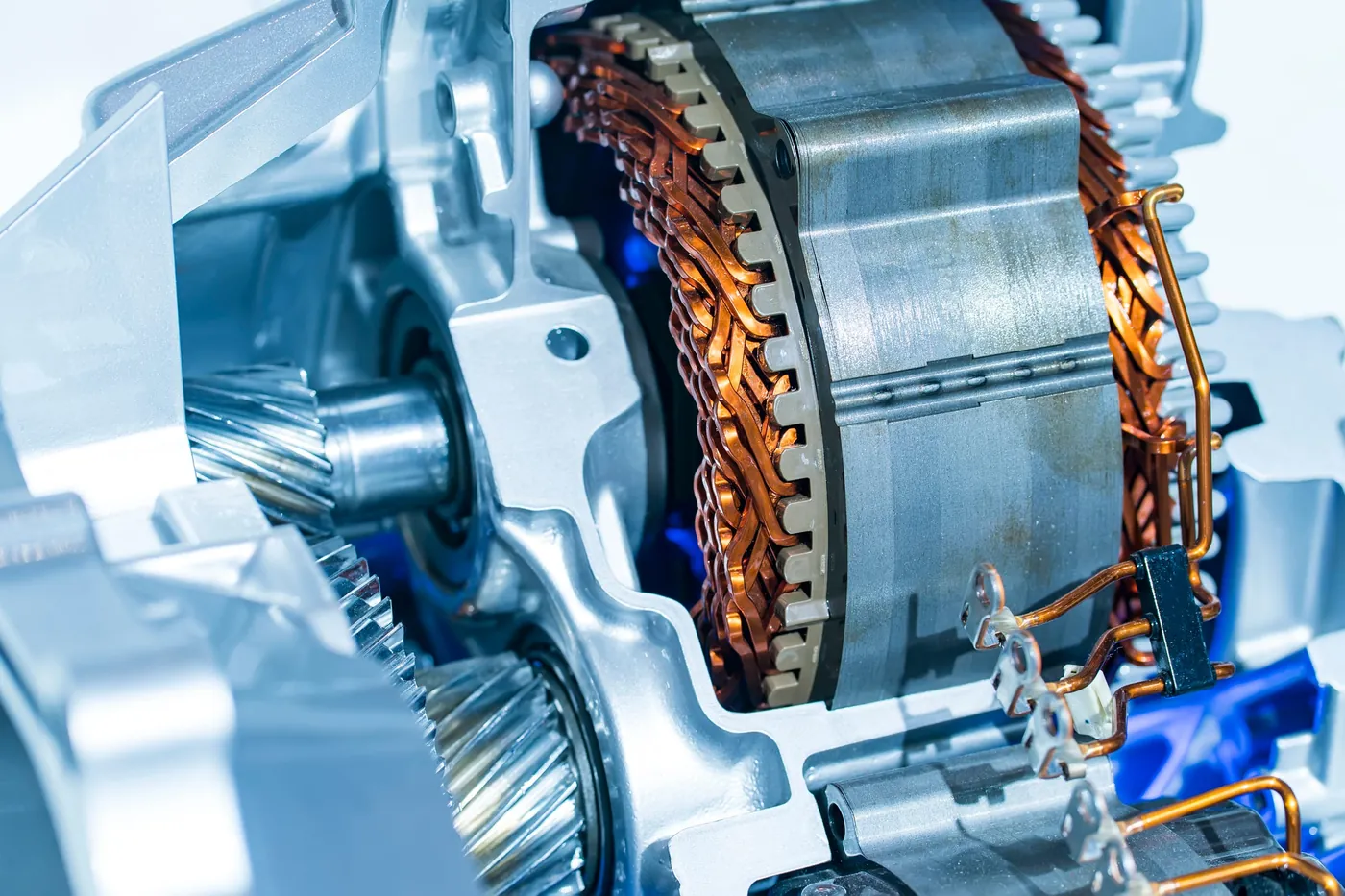
Research and development of automation equipmentTargeting high-temperature tooling: heat-resistant clamps (for casting and forging parts under 600°C contact conditions), block design at the end of pickup parts (quick replacement of worn parts), safety interlock modification at die-casting machine interfaces—these non-standard toolings lack shelf products, and R&D and design capabilities determine project success or failure.
Software and hardware upgradesRevitalizing existing stock: Early die-casting islands' imported robots (mostly Japanese brands) had aging control systems. Replacing with the same brand + updating protective suits allowed the equipment to last another five years, with an investment of about one-third of the new island.
Industry Q&A
How much will the lifespan of robots in high-temperature environments be shortened?
Without protection, the lifespan may be halved; After proper configuration (high-temperature protective clothing, insulation panels, positive pressure ventilation, high-temperature joint grease), the actual lifespan can be restored to 80%–90% of normal operating conditions. The key lies in maintenance discipline: protective clothing is replaced periodically (usually every 6–12 months), lubrication cycles are shortened, and cable drag chains are regularly inspected for flaws—all of which are written into our maintenance SOP.
If casting blanks have large loose discrepancies, how can polishing ensure quality?
This is precisely the value scenario of force-controlled grinding: when the blank's dimensional dispersion is ±2–3mm, the constant trajectory may be missed or over-polished. The six-dimensional force control adaptively follows according to the actual contact force, absorbing the dispersion. We recommend that the first piece perform 3D scanning to evaluate the dispersion distribution, and accordingly set the force control parameter window and grinding allowance strategy.
Are there mandatory standards for die casting safety interlocks?
Yes. The interlocking between the die casting machine and the robot must meet the GB/T 36008 safety standard for die casting machines. The interlock level for emergency stops, door locks, and gratings is usually required to be above PLd level; Safety evaluation and acceptance of newly built die casting islands must be based on interlock design and testing records. Our safety circuit design is executed according to standards and test reports are issued to support customers in passing safety supervision and acceptance.
Does equipment in the casting, die casting, and forging industry require technical support?
Tell us your brand model, process, and equipment status. Henghuan provides robot maintenance, servicing, second-hand sales, and selection advice for the casting, die-casting, and forging industries. Rooted in Yilong, focused on Sichuan and Chongqing, serving the vast Southwest.
Contact Henghuan View all industries