
Grinding and polishing
Industrial robot grinding and polishing process: application points, process essentials, and practical cases
Application Overview
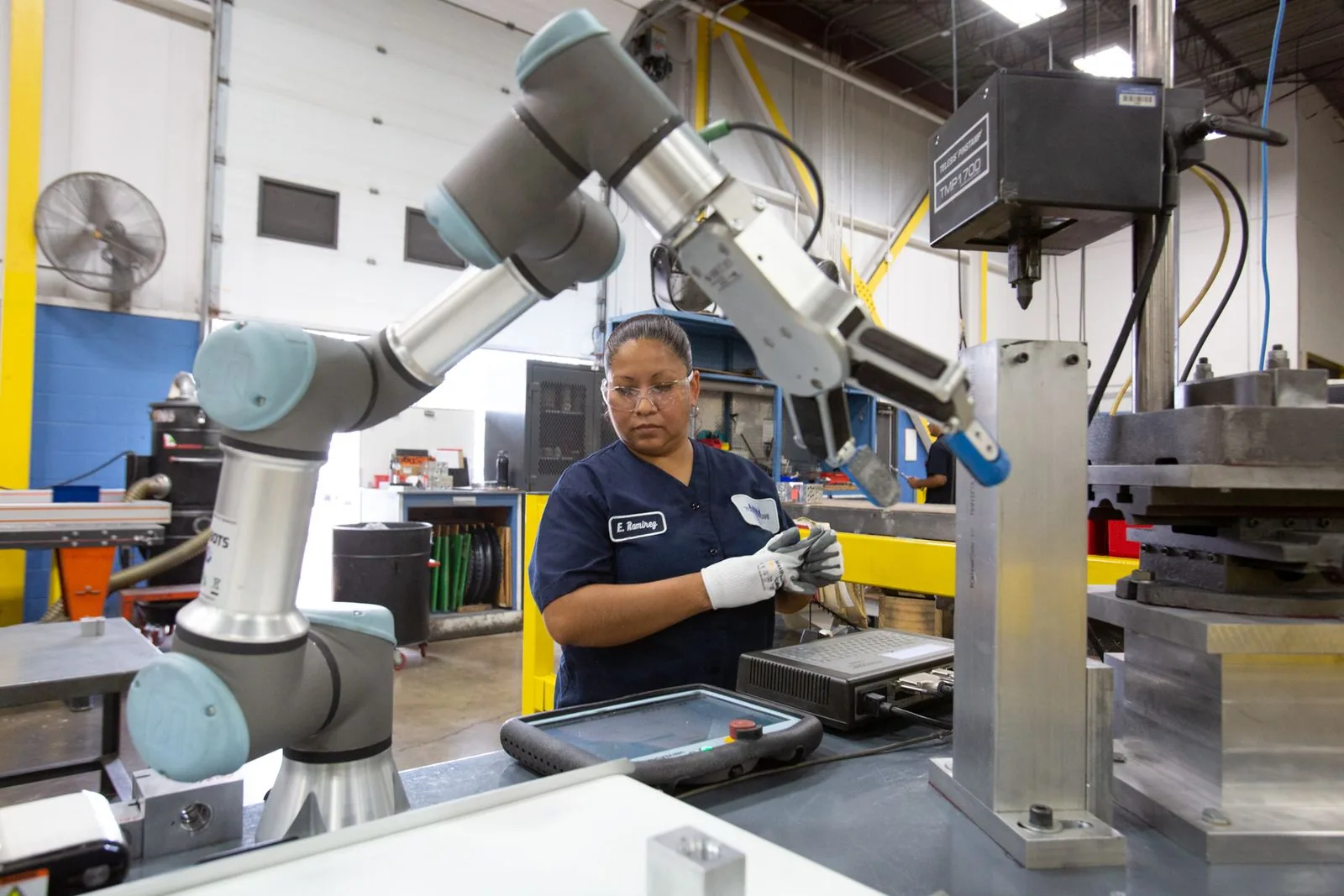
Grinding and polishing are typical "three highs and one low" positions—high dust, high noise, high intensity, low recruitment willingness, and are also a key occupational health supervision category (with high incidence of pneumoconiosis and arm vibration disease). The value of robotic grinding and polishing lies first in removing people from this position, and secondly in quality: constant force control ensures grinding pressure consistency far exceeds manual labor, greatly reducing batch fluctuations in surface roughness, and turning the craftsman's skills into replicable parameters.
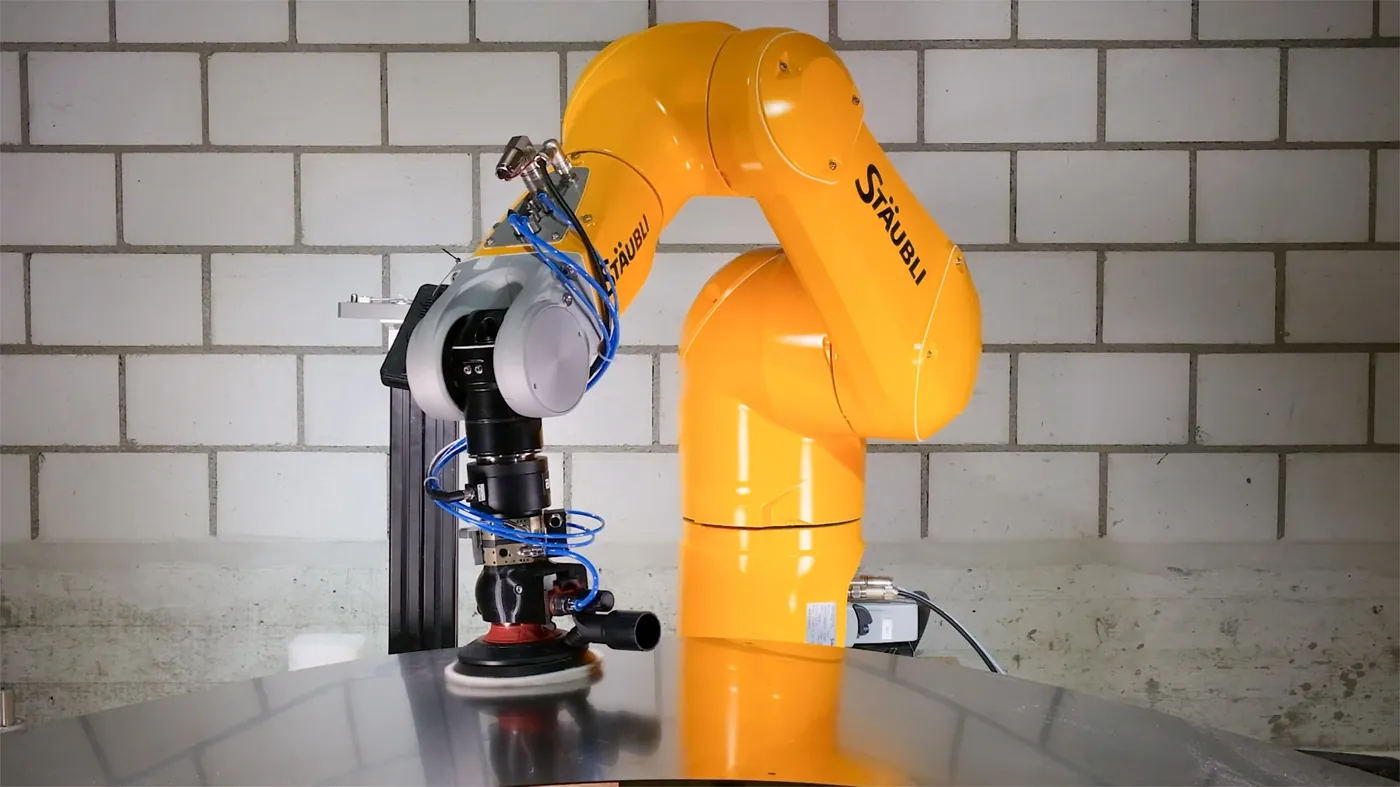
Key points of application
Compiled from official brand application materials, source has been annotated.
Process validation, workstation solutions, programming and teach-in and production ramp-up support, and turnkey delivery of robot applications.
Learn more → Sales of new industrial robotsAuthorized-style sales of brand-new mainstream robots with selection support for new production lines and capacity expansion.
Learn more → Research and development of automation equipmentResearch, development, integration, and delivery of end-effectors, conveyor positioning, safety peripherals, and complete control systems.
Learn more → Research and development of algorithms and control systemsMotion planning, machine vision, and PLC/SCADA system development to address takt-time bottlenecks, accuracy, and data interconnection.
Learn more → Robot rentalShort-term rental, long-term rental and lease-to-own for in-stock models, long-term rental, and lease-to-purchase transfer, including transportation, installation, commissioning, and lease-term maintenance.
Learn more → Software and hardware upgrade servicesController retrofits, software and firmware upgrades, mechanical refurbishment, and safety upgrades restoring performance to older equipment.
Learn more → Maintenance and repairOn-site inspection, fault diagnosis and repair, and annual maintenance contracts covering 1,310 models from 21 brands.
Learn more → Used & in-stock robot salesWe buy back used robots and handle inspection, refurbishment and resale; every unit ships with inspection records and a warranty, and trade-ins can offset new purchases.
Learn more →Typical application scenarios for automated grinding and polishing
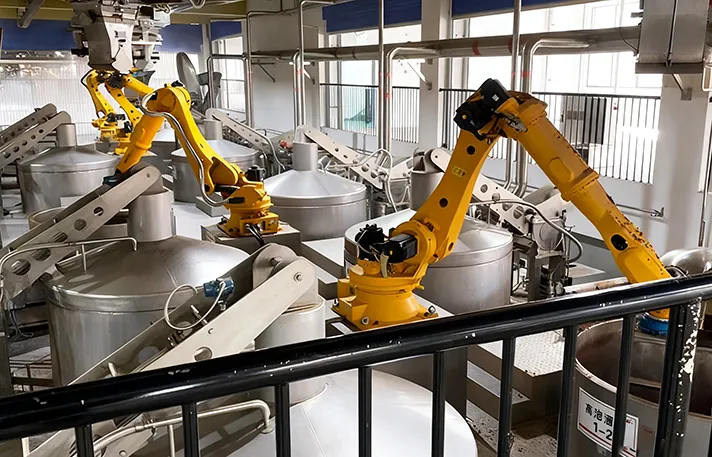
Below are representative grinding and polishing automation scenarios from the Henghuan team and industry practice (client names omitted by convention), structured by "Background Pain Points → Implementation Plan → Implementation Results" for reference and evaluation by enterprises with similar needs.
| Scene | Background and pain points | Implementation plan | Implementation results |
|---|---|---|---|
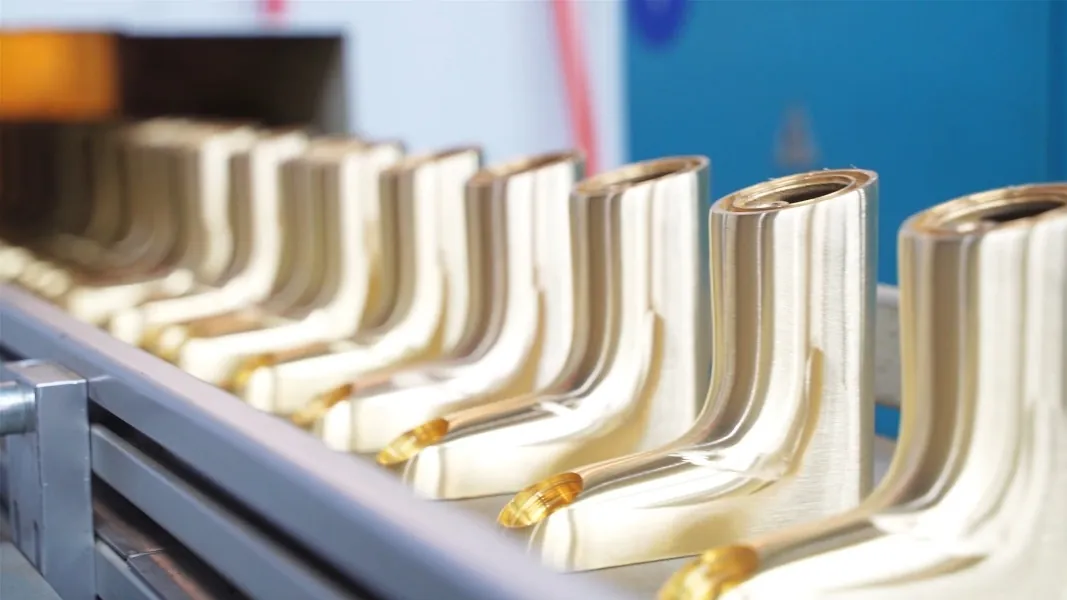
| A bathroom company in Chengdu · Polished faucet body | Polishing curved copper faucets relies on experienced craftsmen, resulting in large fluctuations in surface consistency, and recruitment for polishing dust positions has almost stalled. | The six-axis robot is equipped with a floating polishing spindle and force control system, setting force and speed parameters according to surface zones, with dry explosion-proof dust removal linkage. | Surface roughness fluctuation in batches narrowed by about 70%, one operator managed two stations, and dust concentration at polishing posts met occupational hygiene standards. |
| A cookware factory in Chongqing · The stainless steel pot body is brushed | The consistency of the brushing pattern on the outer wall of the stainless steel pot body is poor, with a rework rate of about 15% for manual wire drawing, and a prominent risk of vibration sickness. | The robot is equipped with a constant force belt grinder, which cures trajectory and pressure parameters, controls pattern overlap rate, and offers offline programming covering the full range of pot types. | Pattern consistency meets standards, rework rate drops below 2%, and the introduction cycle for new pot types is shortened from two weeks to two days. |
| A foundry company in Luzhou · Crude grinding of casting surfaces | Sand-adhesion and flash grinding on casting surfaces cause high dust and noise, making them key occupational health monitoring positions. | Heavy-duty grinding robots are equipped with pneumatic floating grinding heads, wet dust removal and positive pressure protection of the body, and abrasives are replaced by pieces. | The grinding workstation is unmanned, occupational health risks are eliminated, and the surface quality of castings meets pre-coating treatment requirements. |
Industries that commonly use this process
Click to view the overall robot application plan for the industry.
Polishing and polishing: the main battlefield of force control technology
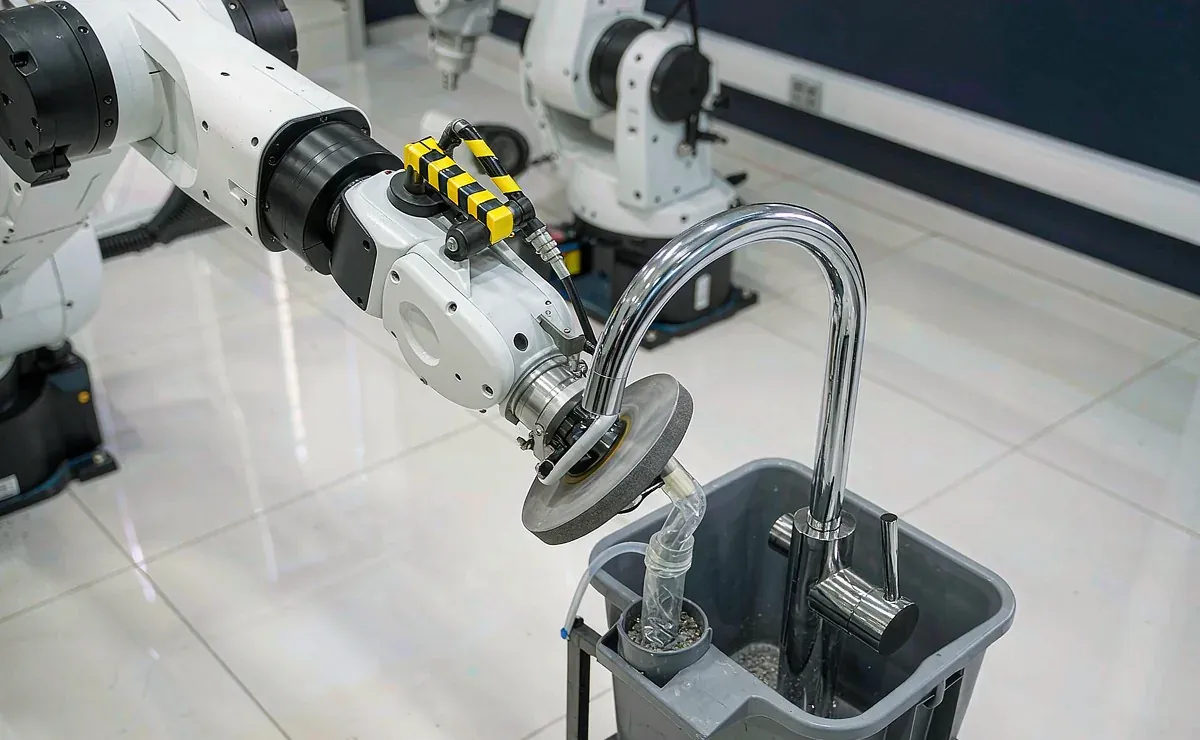
The essential difference between grinding and polishing and cutting is:The removal amount is determined by contact pressure, not by trajectory depth。 The grinding volume of belts, grinding wheels, and polishing wheels changes nonlinearly with pressure, and the dimensional variation of workpiece blanks, changes in curved contours, and abrasive wear all require real-time pressure adaptation—this is the fundamental reason why traditional robots with constant trajectory teaching fail to grind well, and why force control technology has become the watershed for automated grinding.
The current mainstream technology portfolio consists of three layers:Passive and compliant(Floating grinding head, spring/cylinder constant force, low cost, suitable for regular surfaces),Main power control(Six-axis force sensor + closed-loop control, pressure accuracy within ±5N, suitable for curved surfaces and high-precision surface profiles),Constant line speed control(The spindle speed is linked to the curvature of the trajectory, ensuring a process detail that ensures grinding consistency.)
| Workpiece type | Process plan | Grinding tool selection | Key control points |
|---|---|---|---|
| Deburring/parting lines for castings | Force-controlled grinding + belt sanding machine | Zirconia Corundum Sand Belt P40–P120 | Blank dispersion adaptation and overwear protection |
| The weld seams should be polished smooth | Floating grinding head + louver wheel | Blind wheels/grinding discs P80–P240 | Weld residual height detection and layered grinding |
| Brushing/polishing of metal surfaces | Hengli polishing + hemp wheel/cloth wheel | Polishing wax + cloth wheel combination | Constant linear speed and controlled wax amount |
| Curved Surface Precision Grinding (Mold/Blade) | Six-dimensional force control + sanding belt/sanding disc | Stepwise particle size P180–P800 | Surface shape accuracy and grinding volume are closed-loop |
| Woodworking/furniture sanding | Light Floating + Sander | Sponge sand/sandpaper tray | Edge and corner overwear control and dust removal |
The engineering design list for grinding workstations
Abrasive Life Management:Wear of belts/sand discs causes grinding amount drift; constant linear speed spindle + wear compensation algorithm (automatically corrects trajectory compensation based on cumulative grinding time or pressure feedback) ensures batch consistency; Replacement intervals for grinding tools are digitized and incorporated into maintenance procedures.
Dust removal and explosion prevention:Aluminum-magnesium alloy grinding dust is classified as explosive dust (GB 15577) and must be equipped with explosion-proof dust removal systems (explosion-relief/explosion-proof/inert systems), robotic electrical explosion-proof treatment, and dust concentration monitoring linkage—this is not optional, it is a safety supervision red line; Wood dust also carries a risk of explosion, and dust removal design must not shrink.
Workpiece clamping and datum:Grinding requires strong reaction force and variable direction; clamping rigidity is checked as maximum grinding force + safety factor; Multiple varieties use quick-change fixtures + program formulas, with the positioning reference and grinding trajectory forming a closed loop in the calibration stage.
Process validation method:Polishing quality is accepted according to three indicators: "surface shape accuracy + roughness + appearance," with full first-piece inspection and batch spot checks; How much grinding allowance is reserved, how many grinding passes are made, and what particle size is used for each pass, forming the "Grinding Process Card" that solidifies according to the program, so operators do not need to understand force control parameters.
Craft Q&A
How to quantify and inspect the consistency of polishing?
Three hard indicators: roughness (Ra value measured by roughness tester, batch CpK ≥1.33), surface shape/dimensions (removal amount controlled within the drawing tolerance zone, but not under-polished), appearance (no wear marks or discoloration, no burn or discoloration, evaluated according to sample approval). Acceptance uses continuous batch sampling data, without the need for individual demonstrations.
What happens if the force control system breaks down and the grinding is done?
Our design includes a downgrade plan: in case of force sensor failure, it automatically switches to the passive soft mode of the floating grinding head (accuracy decreases but does not stop the line), and an alarm prompts for maintenance; The sensor itself is a mature industrial product (MTBF tens of thousands of hours), and the maintenance contract includes regular calibration and spare parts reserve.
Do you supply consumables like polishing wax and sanding belts?
Supply. Consumables for the grinding station (sanding belts, louver wheels, polishing wheels, wax) are included in the spare parts kit according to the specifications selected for process validation. We can also hand over the procurement specification sheet for customers to purchase themselves—consumable parameters are already solidified on the process card, and products of the same specifications on the market are interchangeable.
In-depth analysis of grinding and polishing processes
The technical system for grinding and polishing revolves around thisStrength controlConstruction: The main force control (six-axis force sensor closed-loop) offers high accuracy but also high cost, while the powered control (floating spindle/floating grinding head mechanical compensation) is economical and practical, suitable for general curved surfaces. The combination covers the entire spectrum from precision mold polishing to rough grinding of castings. Process elements include abrasive tool selection (belt, grinding wheel, flap wheel, wool wheel graded by material and removal amount), three-parameter matching of force-speed-trajectory (grinding pressure, workpiece relative velocity, trajectory overlap rate determines roughness and removal efficiency), and abrasive wear compensation (automatically corrected based on current characteristics or time). Polishing stainless steel products, bathroom hardware, cookware, and molds demands the highest surface consistency, making it the most mature application field for polishing robots.
Henghuan undertakes the design and integration of grinding and polishing stations: force control system solutions, development of abrasive tool process libraries, dust collection and explosion-proof design (metal dust explosion-related management is a mandatory compliance requirement), abrasive parts supply chain, and station maintenance.
The technological evolution of grinding and polishing automation in the Southwest market
Trends in automated grinding and polishing: First,Efforts to control solutions are more accessible to the public— Domestic floating spindles and force sensors have greatly improved cost-effectiveness. Force control grinding, previously only available to major bathroom and mold manufacturers, is now becoming popular among general hardware and foundry companies; SecondAccumulated process libraries— Grinding parameters heavily rely on experience (the combination of material× abrasive ×, force, × speed is vast). Leading companies solidify verified parameters into process libraries, shortening new product introduction cycles from weeks to days; Third,Wet and dust removal compliance— Active metal dust such as aluminum and magnesium must be removed by wet dust, and general metal dust must be designed according to explosion-proof standards. Environmental protection and safety compliance are being phased out from manual grinding workshops, forcing automation upgrades; FourthOffline programming— Extracting surface trajectories from 3D models automatically generates grinding paths, improving programming efficiency for complex surfaces (molds, blades, irregular parts) by a whole magnitude.
In the southwest region, the polishing and polishing demand in plumbing and sanitary ware (Chengdu, Chongqing), pot hardware (Chongqing), and foundry (Deyang, Luzhou) industries is concentrated, with occupational health supervision and dust explosion-proof inspections being the direct drivers of transformation. Henghuan made dust removal and explosion-proof compliance a mandatory design input during the planning stage, avoiding getting stuck in the acceptance stage after renovation.
Key engineering points and operation and maintenance management of the grinding and polishing workstation
The three main points of polishing and polishing stations: First,Dust and explosion-proof— Active metal dust such as aluminum, magnesium, and zinc is classified as explosive dust and must be treated with wet dust or dry explosion-proof dust removal designed according to standards, with matching electrical explosion-proof ratings. The dust collector should be interlocked with the robot (shutting down if dust collection fails); The dust cleaning system in the grinding workshop (to prevent secondary dust explosions) is equally important. SecondAbrasive tool lifespan management— Grinding force drift caused by wear between the belt and leaf wheels is automatically compensated and replaced by piece counting or current characteristics, with the grinding tool ledger linked to process parameters. Third,Body protection— Grinding dust is finer and more abrasive than welding fumes. Standard configuration is positive pressure protective clothing + reinforced joint sealing + independent positive pressure of the electrical cabinet. Cables are managed according to bending lifespan.
The acceptance criteria for grinding stations are recommended to quantify: surface roughness (Ra value distribution and batch fluctuations), consistency of removal amounts, cycle stability, and dust concentration (contact concentration at the post meets occupational health limits). Henghuan conducts delivery acceptance based on these four sets of indicators and establishes a three-month process break-in period tracking — fine optimization of grinding processes often requires a break-in period before reaching full production.
Need a localized solution for grinding and polishing processes?
Whether it's selecting new project solutions, upgrading production lines, or operating and maintaining in-use equipment, Henghuan can provide third-party technical support for grinding and polishing applications. Please tell us about material specifications, production cycles, and the on-site environment, and we will provide targeted solution recommendations.
Contact Henghuan View all application processes