Wafer handling
Industrial robot wafer handling process: application points, process essentials, and practical cases
Application Overview
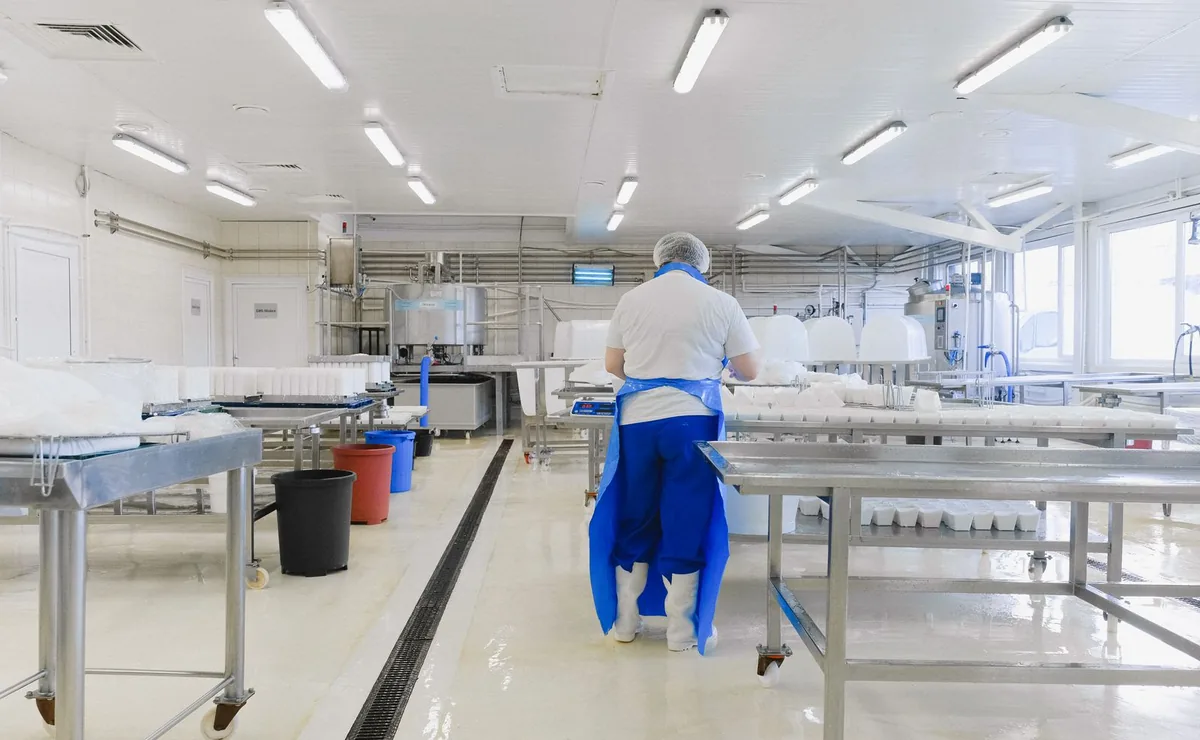
Wafer handling is the infrastructure of semiconductor manufacturing automation—every step of wafer flow—from front-end equipment (photolithography, etching, thin film deposition, ion implantation) to back-end packaging and testing—is completed by automated handling systems. Direct manual handling of wafers is completely prohibited at the front-end factory. Wafer handling demands the highest level of precision (± 0.05mm level), cleanliness (ISO Class 1–5), and reliability (the wafer value is extremely high, with a single 12-inch wafer potentially carrying device value worth tens of thousands of dollars).
Key points of application
Compiled from official brand application materials, source has been annotated.
Process validation, workstation solutions, programming and teach-in and production ramp-up support, and turnkey delivery of robot applications.
Learn more → Sales of new industrial robotsAuthorized-style sales of brand-new mainstream robots with selection support for new production lines and capacity expansion.
Learn more → Research and development of automation equipmentResearch, development, integration, and delivery of end-effectors, conveyor positioning, safety peripherals, and complete control systems.
Learn more → Research and development of algorithms and control systemsMotion planning, machine vision, and PLC/SCADA system development to address takt-time bottlenecks, accuracy, and data interconnection.
Learn more → Robot rentalShort-term rental, long-term rental and lease-to-own for in-stock models, long-term rental, and lease-to-purchase transfer, including transportation, installation, commissioning, and lease-term maintenance.
Learn more → Software and hardware upgrade servicesController retrofits, software and firmware upgrades, mechanical refurbishment, and safety upgrades restoring performance to older equipment.
Learn more → Maintenance and repairOn-site inspection, fault diagnosis and repair, and annual maintenance contracts covering 1,310 models from 21 brands.
Learn more → Used & in-stock robot salesWe buy back used robots and handle inspection, refurbishment and resale; every unit ships with inspection records and a warranty, and trade-ins can offset new purchases.
Learn more →Typical application scenarios for automated wafer handling
Below are representative wafer handling automation scenarios from the Henghuan team and industry practice (client names omitted by convention), organized by "Background Pain Points → Implementation Plan → Implementation Results" for reference and evaluation by enterprises with similar needs.
| Scene | Background and pain points | Implementation plan | Implementation results |
|---|---|---|---|
| A packaging and testing company in Chengdu · Mass maintenance of atmospheric manipulators | Multiple EFEM atmospheric manipulators experienced positioning drift and abnormal noises, with high factory repair fees and periods as long as six weeks. | Henghuan undertakes batch maintenance: robotic arm precision calibration, transmission belt and bearing replacement, clean lubrication treatment, and issuance of inspection reports for each unit. | The maintenance cycle for a single unit is shortened to 5 days, costing about 30% of the OEM, and all equipment restores accuracy and operates stably. |
| A photovoltaic company in Meishan · Vacuum manipulator upgrade | The OEM of the vacuum manipulator supporting the diffusion furnace has ceased production, spare parts supply has been cut off, and after a failure, the entire line faces the risk of shutdown. | Henghuan reverse-engineered key spare parts (magnetic coupling sealing assemblies and end suction cups), established a local spare parts database, and formulated preventive replacement plans. | The risk of spare parts supply interruptions was eliminated, and after preventive maintenance, annual sudden failures dropped from 6 to 1, significantly reducing downtime losses. |
| A display panel factory in Chongqing · Pre-aligner accuracy restored | Angle deviations in glass substrate pre-aligners accumulate, exposure alignment yield declines, and the investigation focus remains on lithography equipment for a long time. | Henghuan specializes in detecting drift in the accuracy of lock-in pre-aligners, recalibrating and replacing worn rotating mechanism components, and establishing a quarterly verification system. | Pre-alignment angle accuracy restored to ±0.02°, exposure alignment yield improved, and quarterly verification systems were incorporated into the equipment management system. |
Industries that commonly use this process
Click to view the overall robot application plan for the industry.
Wafer Handling: Extreme cleanliness and precision conditions
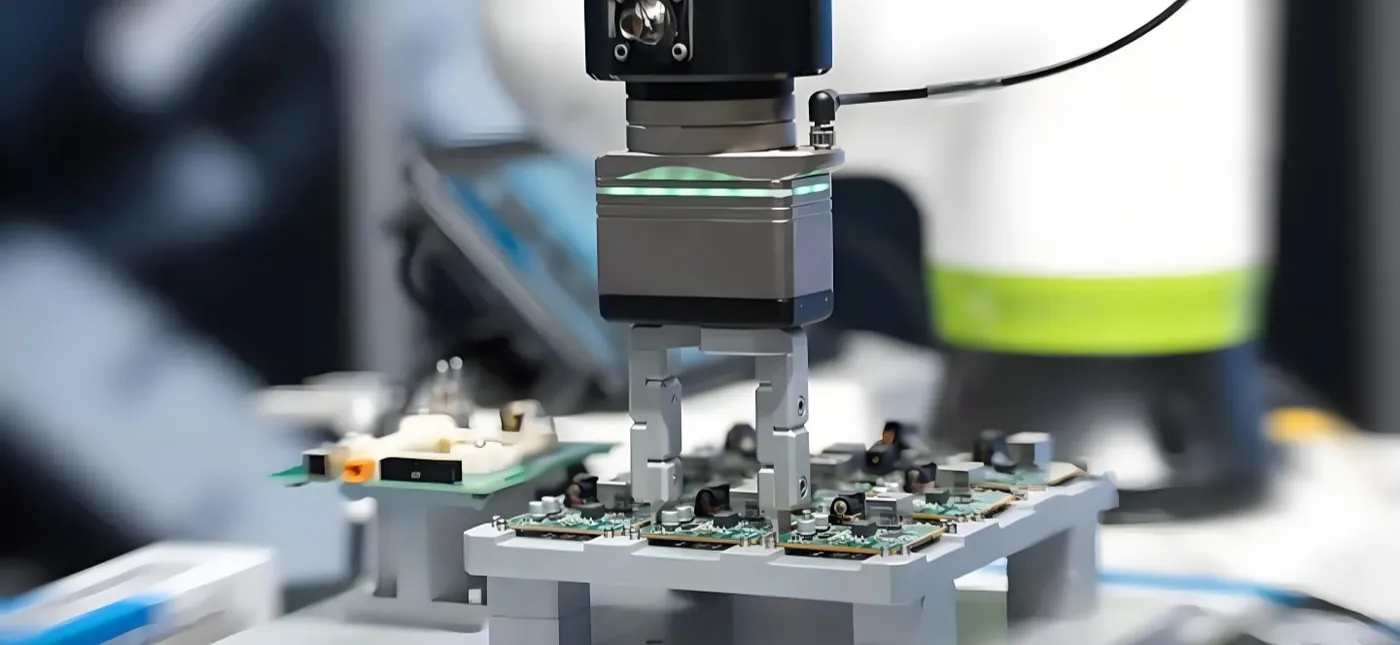
Wafer handling in semiconductor front-end manufacturing is the most demanding scenario for robots:Cleanliness—— In Class 10/Class 100 cleanroom environments, the robot body must not generate dust (oil-free lubrication, sealed joints, low-venting materials), and the entire machine is ISO Class certified;Accuracy— Wafer pick-and-place repeatability on FOUP/stage is within ±0.05mm, with edge aligner deflection controlled at ±0.01°;Reliability— Wafer value ranges from several thousand to tens of thousands of yuan, zero tolerance for fragment accidents, and end-end contact force and vacuum adsorption are fully controlled throughout the process.
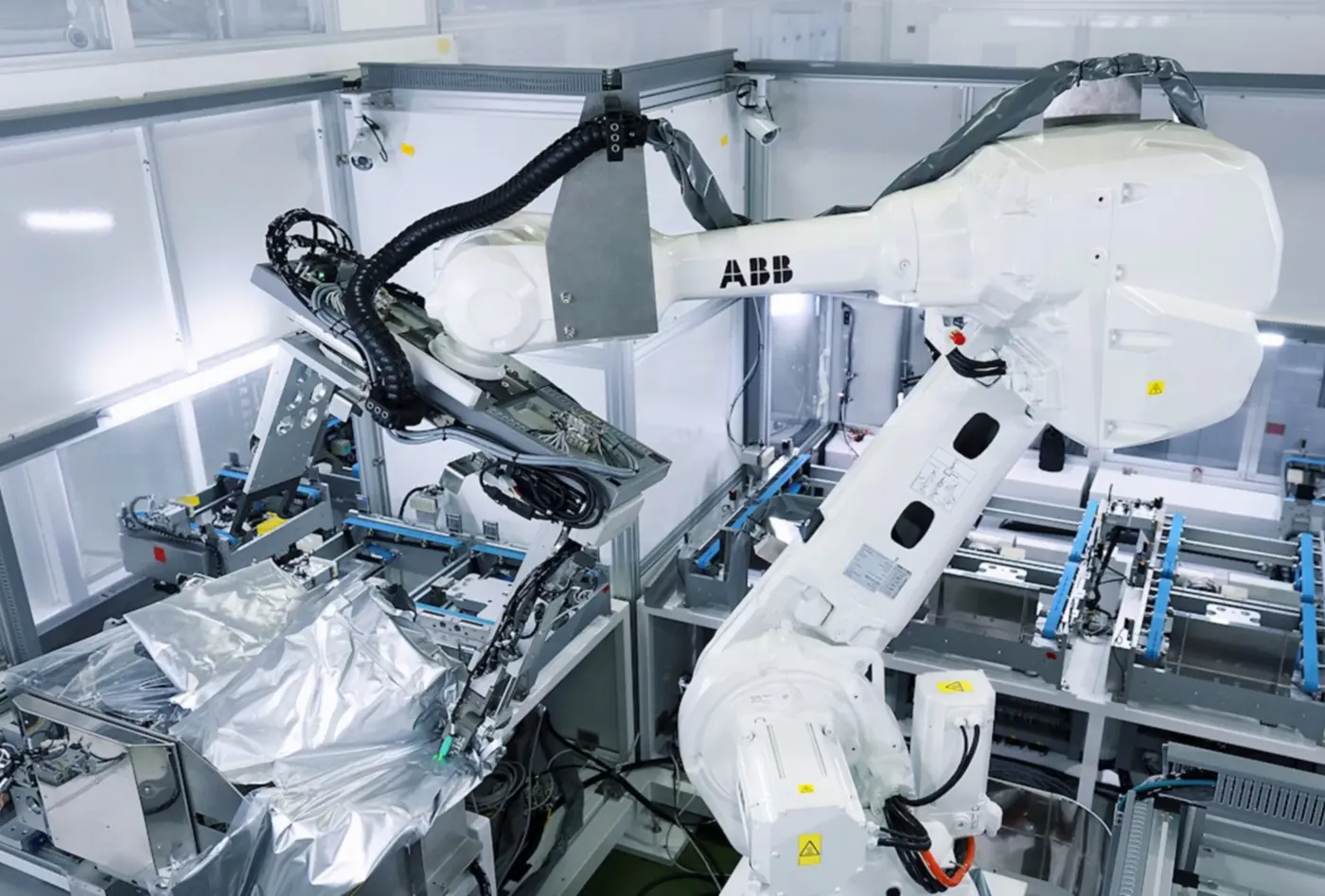
This field has long been dominated by professional clean robot manufacturers (Kawasaki, Epson, Yaskawa, RORZE, Hirata, etc.), with the technical threshold being the integrated design capability of "electromechanical + clean + process." Our service positioning: Providing semiconductor equipment manufacturers and packaging and testing plantsSelection, fitting, installation, commissioning, maintenance, and fault repair of clean robots— Cleanroom maintenance requires special management requirements (entry procedures, tool cleaning, personnel qualifications), and the value of localized service teams is particularly prominent here.
| Indicators | Typical requirements | Safeguard measures |
|---|---|---|
| Pick-up and drop-off repeatability | ± within 0.05mm | High-rigidity SCARA/dual-arm structure + encoder full closed-loop |
| Wafer alignment accuracy | Notch/Flat Deflection Angle ± 0.01° level | Aligner + visual recognition |
| Cleanliness grade | ISO Class 3–5 (by process area) | ISO 14644 certified model + low-venting materials |
| Fragment rate | Zero tolerance (ppm-level control) | Contact force limiting + vacuum degree monitoring + edge detection |
| Carry the beat | FOUP transfer between < 5 s/tablet (including alignment) | Dual-arm coordination + vacuum pre-pick |
Key points for equipment operation and maintenance in clean environments
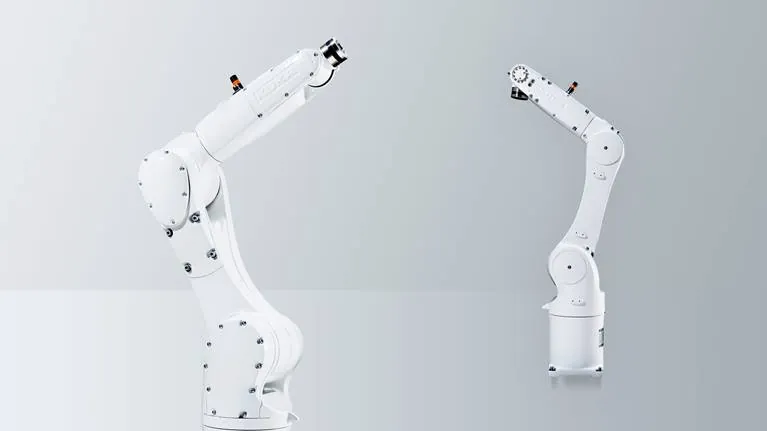
Cleanroom Maintenance Procedures:The cleaning process for maintenance tools and spare parts entering the cleanroom (dust-free wiping, air shower), maintenance personnel changing clothes and behavioral norms, and particle count re-testing after maintenance—if these processes are not properly managed, a single maintenance can contaminate the entire production area. We have developed a dedicated maintenance SOP according to the customer's cleanroom management system.
Key Points of Preventive Maintenance:The failure modes of clean robots differ from those of industrial robots—the three main causes are grease drying and dust generation, seal aging and leaks, and cable casing wear and debris generation. PM plans are formulated based on particle monitoring data and operating hours.
Spare parts strategy:Semiconductor equipment downtime losses are measured by the hour (production line losses range from tens of thousands to hundreds of thousands of yuan per hour). For key spare parts (end effectors, vacuum generators, encoders), it is recommended to keep redundancy in-house. We coordinate with customers' spare parts inventory, and urgent parts in Sichuan and Chongqing are delivered the same day.
Renovation and Upgrades:Upgrades to the controller of existing clean robots, end-of-pipe modifications (to accommodate the new FOUP specification), and adaptation of E84/SECS-GEM communication interfaces are all implemented under clean procedures, with upgrade records and verification reports meeting the audit requirements of semiconductor customers.
Craft Q&A
Can you repair imported brand clean robots?
Yes. We have technical documentation and maintenance experience for clean machine models from brands such as Kawasaki, Epson, and Yaskawa, and can handle common faults (vacuum abnormalities, precision drift, driver alarms, cable breakage); The maintenance process follows clean procedures, and after repairs, accuracy and particle retesting are performed.
What is the difference between wafer handling robots and regular SCARA?
The core difference lies in cleanroom certification and end-point specialization: cleanroom models are designed with low dust generation and ISO certification for materials, lubrication, sealing, and surface treatment; The end is dedicated to wafers (vacuum suction cup/edge clamping + Notch recognition). Ordinary SCARA continuously generates dust when entering the cleanroom, which cannot be detected through particle monitoring.
How can confidentiality requirements for semiconductor projects be met?
We sign NDAs according to customer requirements, conduct background checks for maintenance personnel, ensure on-site documentation is not retained or disclosed, and fault data cannot be processed locally in the cloud; For production lines involving sensitive processes, maintenance operations are carried out under customer supervision, and records are archived according to customer confidentiality policies.
In-depth analysis of wafer handling processes
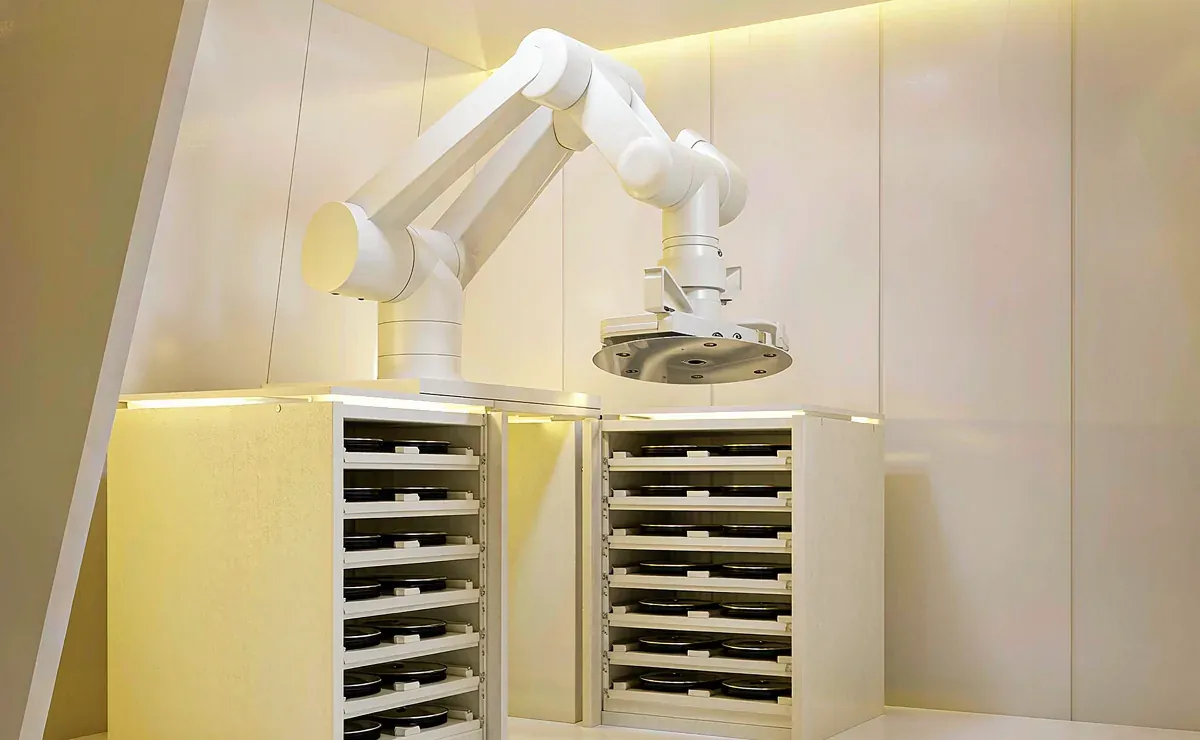
The wafer handling equipment system is clearly layered:Atmospheric side manipulator— Load wafer boxes (FOUP/pre-open wafer trays) and transfer between equipment, often equipped with EFEM (Front-End Equipment Module) for clean transfer;Vacuum manipulator— Handling wafers between the process chamber and the conveyor chamber, with the entire arm operating in a vacuum environment. Core technologies include magnetic coupling drive, low-venting materials, and vacuum lubrication;OHT overhead crane system— Automated transport vehicles on the cleanroom ceiling tracks, responsible for long-distance FOUP transport between equipment, linked with the MCS dispatch system;Wafer pre-aligner—— notch/flat recognition and angle correction ensure wafers enter the process chamber at precise angles.
Henghuan provides maintenance services for clean handling equipment (atmospheric and vacuum manipulators, pre-aligners), second-hand equipment verification and sales, and technical support for clean robot systems for semiconductor and pan-semiconductor (photovoltaics, display panels).
The technological evolution of wafer handling automation and the Southwest market
Trends in wafer handling technology: First,Handling efficiency competition— The number of equipment and process steps in advanced process factories have surged (EUV lithography machines have high rent, causing huge losses from downtime waiting for handling). OHT scheduling algorithms and optimization of robotic arm speeds directly affect factory output, making overhead crane system throughput a key design indicator; SecondMulti-arm vacuum manipulators— Dual-arm or even three-arm vacuum manipulators combined with buffer chambers enable parallel handling of in-chamber and outlets, significantly improving chamber utilization; Third,AMHS Intelligence— The automatic material handling system is deeply linked with the dispatching system (FAB scheduling), dynamically allocating handling resources according to process priority, and the AI scheduling algorithm has entered the practical stage; FourthDomestic substitution accelerates— The localization rate of atmospheric manipulators and EFEM is rapidly increasing, while vacuum manipulators and OHT are still making breakthroughs, highlighting the value of local service capabilities (maintenance response and spare parts).
The semiconductor and pan-semiconductor industries in Southwest China (chip design and packaging and testing in Chengdu, power semiconductors in Chongqing, photovoltaic cells in Meishan and Yibin, and display panels in Mianyang) continue to expand. The equipment inventory in photovoltaic and panel industries is already very large, and demand for maintenance and modification of handling equipment is being released first—vacuum and atmospheric robots in these industries number in the thousands, and professional third-party maintenance capabilities are scarce. Henghuan has made clean handling equipment maintenance a key development direction.
Key engineering points and operation and maintenance management of wafer handling workstations
Key Points for Wafer Handling Equipment Maintenance:Cleanliness management— Maintenance work must be performed in a clean environment (clean booth or cleanroom). Replacement spare parts must be cleaned and treated thoroughly. Lubrication must be made with clean/vacuum grease, as volatile substances from ordinary grease can contaminate the cavity and wafer.Accuracy maintained— The repeatability of the robotic arm drifts with wear, regularly calibrated with standard wafers and micrometers, and the angle accuracy of the pre-aligner is checked quarterly;Special requirements for the vacuum side— Life management of sealing rings in magnetically coupled transmissions, particle monitoring of moving parts inside the vacuum chamber (excessive particle count is an early sign of bearing wear), and spare parts for low-venting materials are irreplaceable (ordinary materials can deflating the vacuum level).
Wafer handling equipment has extremely fast response to failures—losses from front-end plant downtime can be measured in hours, and the value of third-party repair services lies in response speed and availability of spare parts. Henghuan has established a spare parts warehouse for clean handling equipment (magnetic coupling seals, bearings, belts, sensors). The Sichuan-Chongqing region promises same-day response and provides preventive maintenance contracts to convert sudden faults into planned shutdowns.
Need localization solutions for wafer handling processes?
Whether it's selecting new project solutions, upgrading production lines, or maintaining in-service equipment, Henghuan can provide third-party technical support for wafer handling applications. Please tell us about material specifications, production cycles, and the on-site environment, and we will provide targeted solution recommendations.
Contact Henghuan View all application processes