Research and development of algorithms and control systems
Development of motion planning, visual recognition, and control systems for robot applications, solving the problem of "running smoothly, unclear vision, and connection issues."
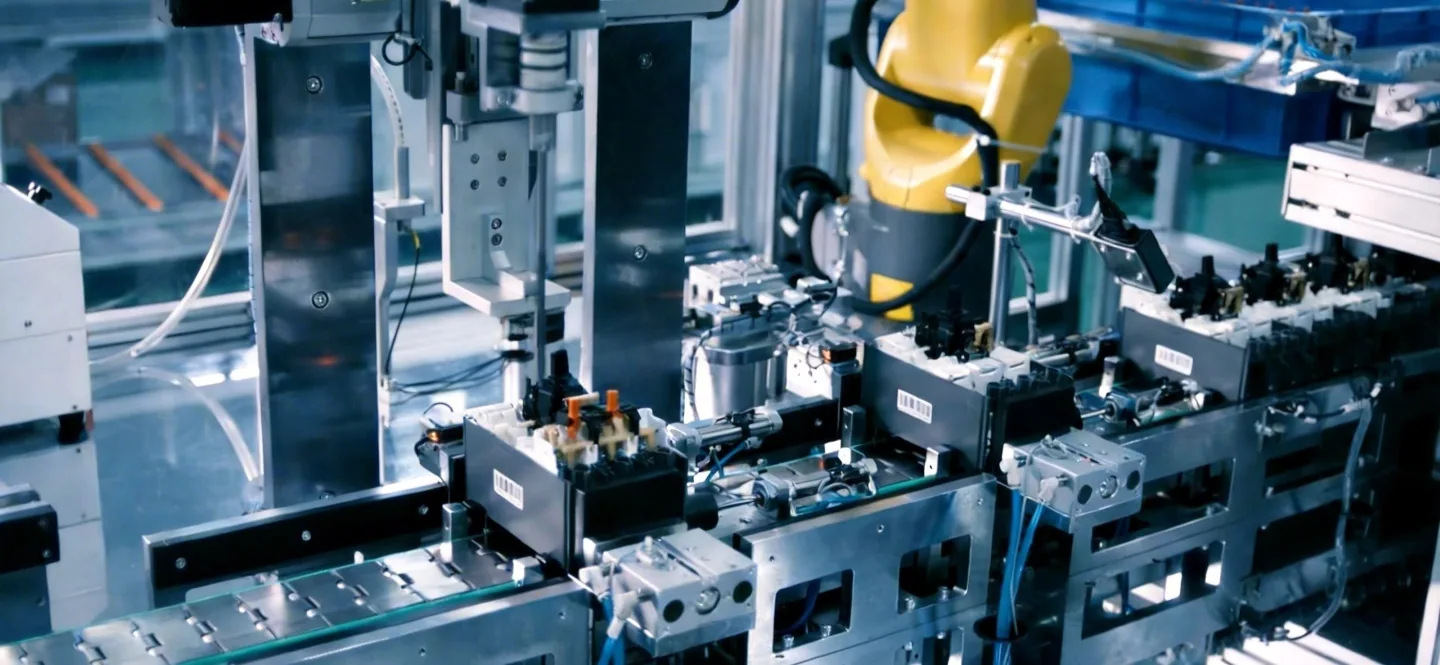
When the production line reaches a certain stage, bottlenecks often lie not in hardware but in software: beats two seconds off, positioning half a millimeter off, data cannot be transmitted up. We do these three types of R&D work, using algorithms and control systems to extract the potential of existing equipment, rather than constantly suggesting equipment replacement.
Three research directions
Vibration suppression, smooth trajectory, beat optimization, and multi-machine collaboration.

Positioning guidance, defect detection, code reading, and measurement algorithm development.
View details → PLC and control system developmentNanchong Henghuan · Local deliveryPLC/HMI/SCADA program development and MES/ERP data integration.
View details →How do we take on R&D projects?
The biggest fear in R&D projects is "a single word of need, no delivery deadline." Our approach is to break requirements down into verifiable small goals: first conduct offline validation or bench validation, then bring them to the production line only after meeting the standards; Each stage has clear acceptance data; if it doesn't meet the target, stop losses and don't delay.
- 01Demand breakdown and indicator definition (quantification of takt rate/accuracy/detection rate, etc.)
- 02Offline or bench verification
- 03Production line deployment and grayscale operation
- 04Data review and iteration
Frequently Asked Questions
Is it okay to just optimize the program without changing the hardware?
Yes, and we recommend doing so first. Most cycle problems can be squeezed out of 10%-20% of capacity through trajectory and logic optimization, at a cost far lower than equipment replacement.
Industry Status: Algorithms and Control Systems Are the "Second Growth Curve" for Robots
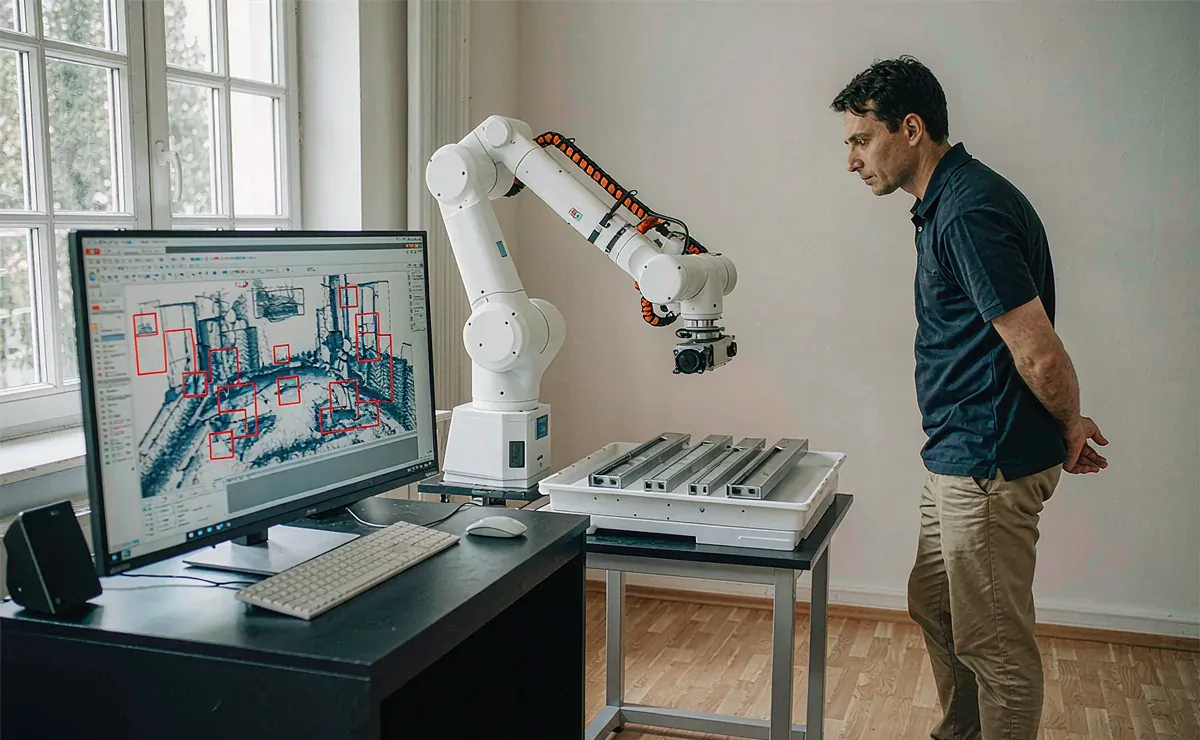
The hardware gap is narrowing—domestic robots generally achieve repeatability within the ±0.03mm range, and the localization rate of core components such as reducers and servo motors continues to rise. What truly sets the gap apart is...Control algorithms and software ecosystem: For the same hardware, motion planning algorithms determine the upper limit of beats, vibration suppression algorithms set the lower limit of accuracy, vision and force control algorithms determine what tasks can be done, and data interfaces determine whether they can be integrated into smart factories.
For manufacturing enterprises, this means three typical types of needs: First,Unlocking the potential of existing equipment— The robot itself is fine, but the beat is a few seconds off, trajectory shaky, and changing models is troublesome. These can be solved through motion optimization and offline programming, without needing to replace the machine; SecondNew process breakthroughs— Sanding, deburring, and complex assembly require force control and visual guidance, and manual programming with a teach pendant is extremely inefficient; Third,Digital transformation— Breaking down equipment data silos and integrating MES for traceability and signage is a fundamental condition for smart factories and applying for intelligent manufacturing projects at all levels.
| Research and development direction | Core technology | Typical applicable scenarios |
|---|---|---|
| Motion control and trajectory optimization | acceleration and deceleration planning, vibration suppression, singularity avoidance, offline programming and simulation | Timing is not up to standard, trajectory shaking, multi-machine interference, and frequent model changes |
| Machine vision and perception | 2D/3D visual positioning, defect detection, visual servo, hand-eye calibration | Random picking, assembly alignment, appearance inspection, weld tracking |
| PLC and industrial software | PLC/HMI/SCADA development, OPC UA/MQTT data integration, MES integration | Production line control, data collection, Kanban traceability, and digitalization of old lines |
How to take on R&D projects: From problem definition to indicator acceptance
Algorithm-based projects should avoid "ambiguous goals." Our acceptance process prioritizes problem definition: how many seconds the beat is off, how many milliseconds is the accuracy difference, what is the required missed detection rate—all quantified asTestable acceptance indicators, written into the technical protocol. Without the need for quantitative indicators, we first conduct diagnostic tests to obtain baseline data, then set goals together.
The development process adopts a dual-track system of "simulation first, real-machine verification": motion planning and visual algorithms are first run in simulation environments (RobotStudio, ROBOGUIDE, Visual Components, etc.), then calibrated and verified on the actual machine, minimizing commissioning time. All delivery procedures come with complete annotations and parameter descriptions, allowing customers' engineers to adjust parameters after training.
In-depth Q&A
How much can you improve by optimizing the beat without changing the hardware?
It depends on the baseline. Through acceleration and deceleration planning, motion overlap, smooth trajectory, and singularity avoidance, single-station takts can typically be compressed by 10%–25%. We first conduct a beat diagnosis, producing a "Beat Analysis Report" listing the time spent and optimization space for each action segment. The optimization range is supported by data before signing the contract.
What are the common reasons for vision project failure?
Eighty percent of the results are optical solutions rather than algorithms: unstable lighting, incorrect lens selection, surface reflections on workpieces, insufficient depth of field. Our process is optical solution validation first—using physical workpieces for lighting testing, producing image quality evaluation reports, and if optics are not feasible, just say so—no need for algorithms to fabricate them.
Our equipment is an old system from over ten years ago. Can we digitize it?
Most can. If the old controller does not support OPC UA, there are three options: IO hard wiring to capture key status, installing a protocol gateway, or directly replacing the controller by combining our control system upgrade services. Compare the selection plan according to the budget and the remaining lifespan of the equipment.
Tell us your production line requirements
Process, cycle, budget, site conditions—the more specific you are, the more executable the plan. Local teams in Nanchong will be coordinated, and on-site inspections will be available in Sichuan, Chongqing, Yunnan, and Guizhou.
Contact usView all services