Pharmaceuticals and medical devices
Industry Robot Application Solutions · 10 Brands Coverage · 4 types of typical processes
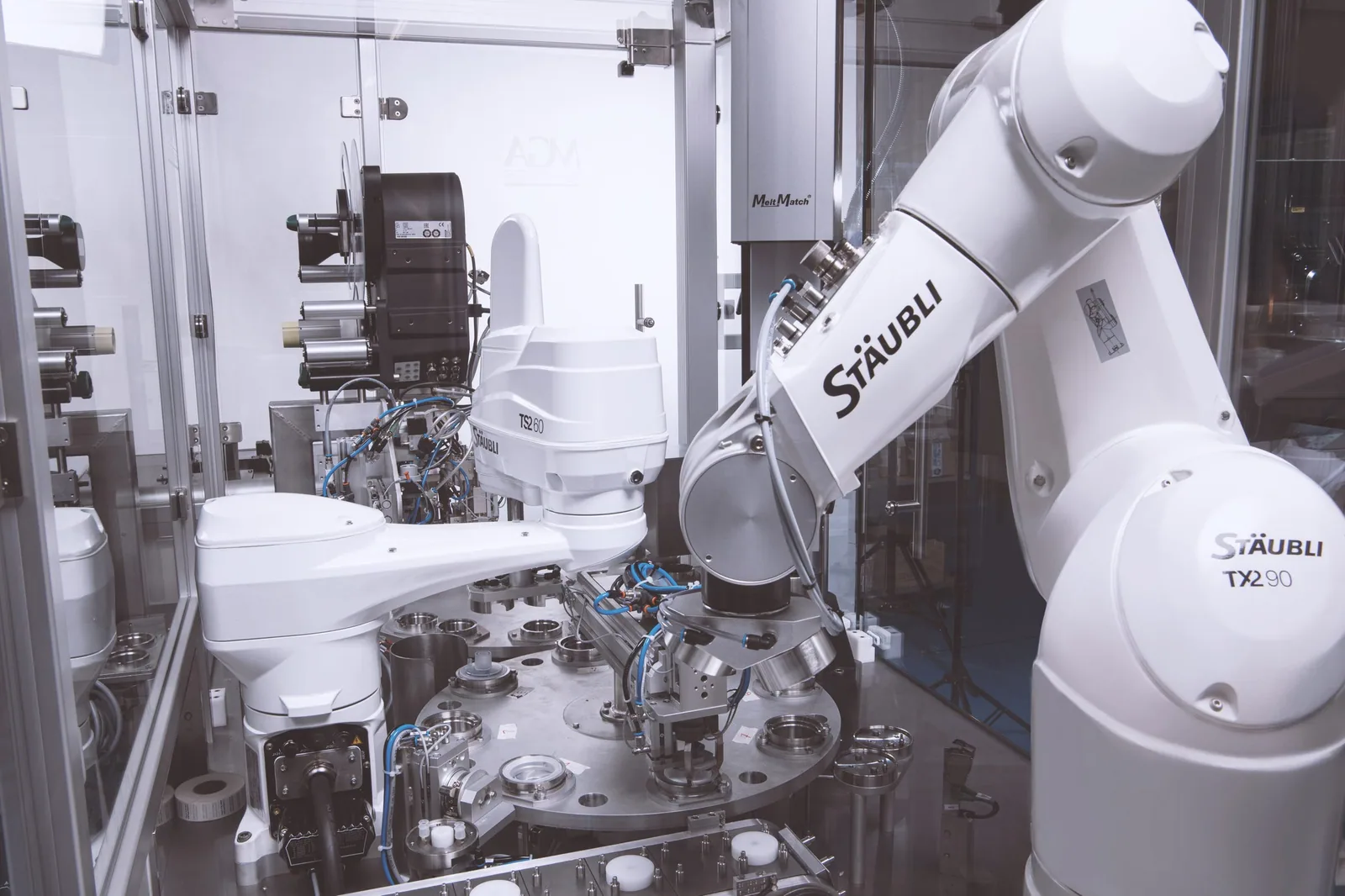
Robotic applications in the pharmaceutical and medical device industries
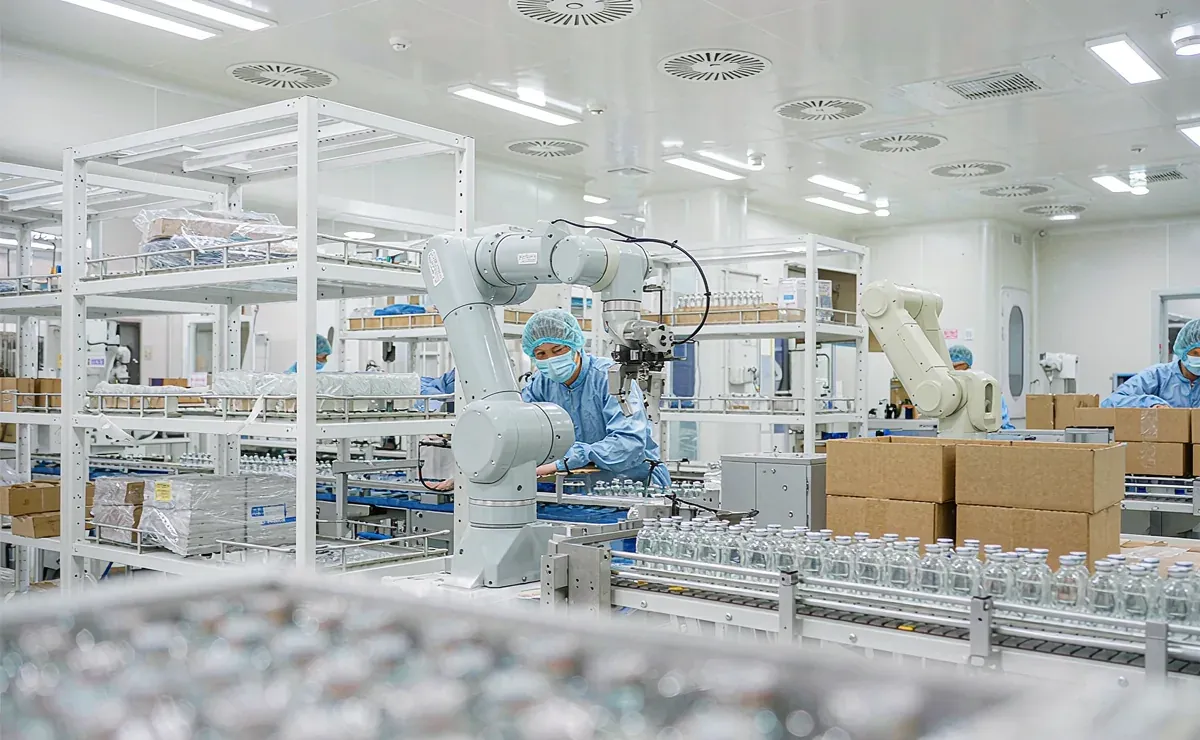
Robots in the pharmaceutical industry are used for filling, packaging, laboratory automation, and medical device assembly, requiring high cleanliness and repeatability accuracy. Collaborative robots (UR, JAKA, AUBO) are widely used in laboratories and light assembly stations; Yaskawa has a dedicated series of biomedical robots. Henghuan provides regular maintenance and precision calibration support for robots in use in the industry.
Typical automated processes
Common robotic processes in this industry—click to view key application points, customer cases, and applicable brands.
Automation of challenging assembly processes using Kawasaki's latest technology. Advances in automation control technology enable robots to complete complex assembly processes that were previously impossible. Over the past 40-plus years, Kawasaki has continuously improved its technology to meet the high...
View process details → SortingSorting involves first grabbing small parts or food that move at high speed on a conveyor belt before sorting them, requiring high-speed movement. Kawasaki's YF series sorting robots can achieve high-precision, high-speed movements. It can be combined with the visuals developed by our company...
View process details → DispensingCollaborative robots add flexibility, efficiency, and freedom to your gluing, sealing, painting, and other dispensing tasks. With built-in force sensing functionality, stable quality and precise positioning are achieved, reducing waste and improving efficiency. …
View process details → Quality inspectionZero tolerance, hard power! With collaborative robots, a safer, more efficient, and more precise quality inspection process is achieved, ensuring product quality is always on the line and consistency is impeccable. Equipped with an economical yet agile robotic arm, it not only standardizes operation processes but also...
View process details →Covering branded equipment
Robot brands within Henghuan's service scope with practical applications in the pharmaceutical and medical device industries. Click to enter the brand page to view series and model specifications.
 FANUC104 models
 ABB45 models
 Yaskawa85 models
 Kawasaki75 models
 KUKA456 models
 Inovance Technology58 models
 Stäubli30 models
 Epson112 models
 AUBO24 models
 TOPSTAR24 models
Henghuan can provide services for the pharmaceutical and medical device industries
All six core businesses can be procured independently or in combination.
Process validation, workstation solutions, programming and teach-in and production ramp-up support, and turnkey delivery of robot applications.
Learn more → Sales of new industrial robotsAuthorized-style sales of brand-new mainstream robots with selection support for new production lines and capacity expansion.
Learn more → Research and development of automation equipmentResearch, development, integration, and delivery of end-effectors, conveyor positioning, safety peripherals, and complete control systems.
Learn more → Research and development of algorithms and control systemsMotion planning, machine vision, and PLC/SCADA system development to address takt-time bottlenecks, accuracy, and data interconnection.
Learn more → Robot rentalShort-term rental, long-term rental and lease-to-own for in-stock models, long-term rental, and lease-to-purchase transfer, including transportation, installation, commissioning, and lease-term maintenance.
Learn more → Software and hardware upgrade servicesController retrofits, software and firmware upgrades, mechanical refurbishment, and safety upgrades restoring performance to older equipment.
Learn more → Maintenance and repairOn-site inspection, fault diagnosis and repair, and annual maintenance contracts covering 1,310 models from 21 brands.
Learn more → Used & in-stock robot salesWe buy back used robots and handle inspection, refurbishment and resale; every unit ships with inspection records and a warranty, and trade-ins can offset new purchases.
Learn more →Industry Status: High-value automation driven by compliance
Automation in the pharmaceutical and medical device industries is supported byCompliance and precisionDual Drive: Mandatory GMP/GSP requirements for production environment and process records, documentation requirements for process validation (IQ/OQ/PQ) under medical device quality management systems (ISO 13485/YY/T 0287), and practical pressure to reduce costs and improve efficiency under centralized procurement. Industry automation penetration is showing a "dumbbell-shaped" pattern—leading pharmaceutical companies and device manufacturers have already reached international levels in automation rates, while many small and medium-sized device manufacturers still rely heavily on manual labor, and the demand for transformation is being released.
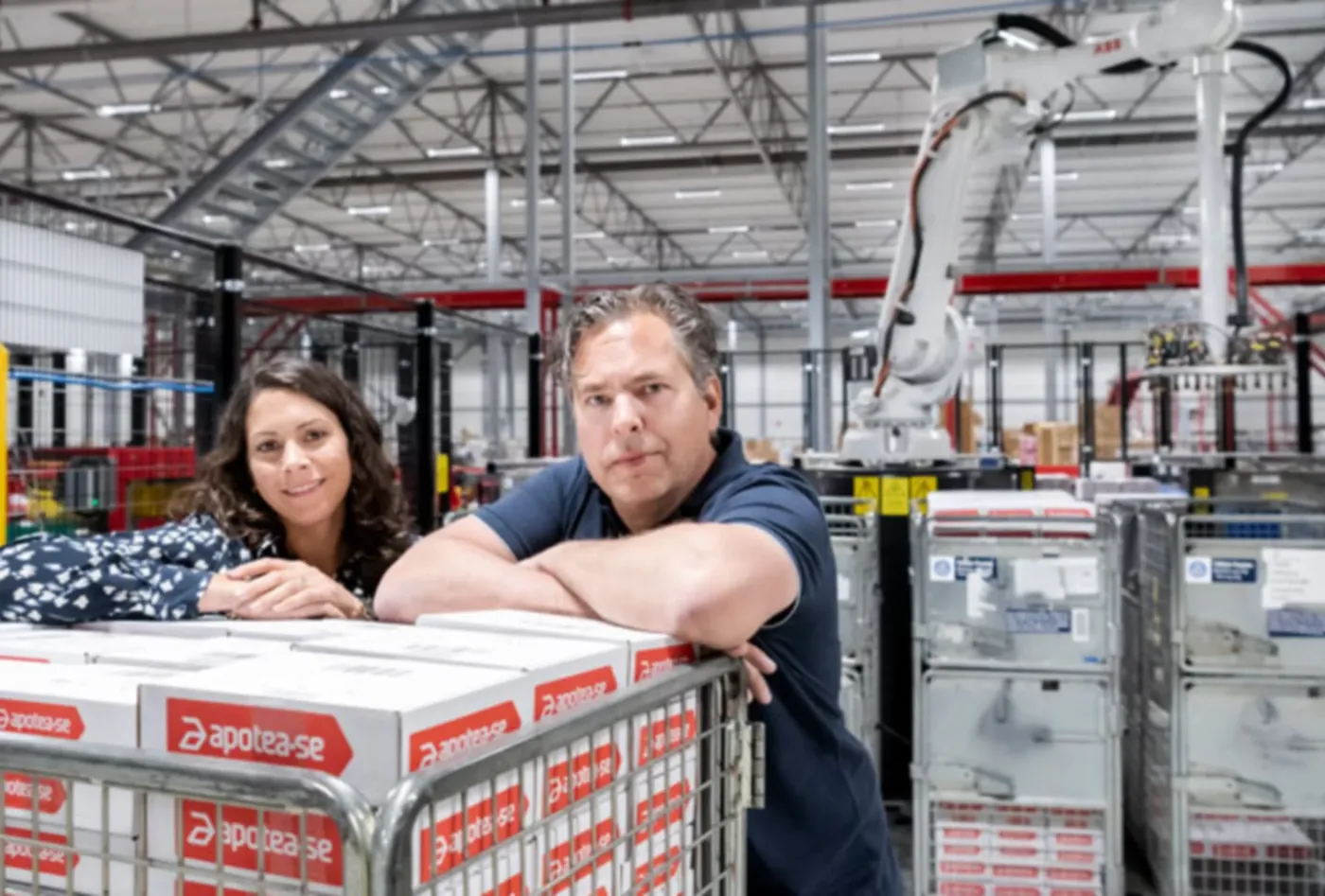
Clear layering of typical application scenarios:Cleanroom operations(Filling and plugging, aseptic transfer, clean cartoning) Requirements for ISO Class 5–8 compliance and compatibility with disinfection;Precision assembly(Syringe assembly, catheter bonding, kit dispensing) relies on force control and visual guidance;Packaging and logistics(Blister packaging, cartoning and coding, warehouse picking) is the most automated process;Laboratory automation(Sample dispensing, pipetting, and online testing) Rapid growth alongside the expansion of third-party testing and CRO.
| Workstation | Technical requirements | Compliance and verification requirements |
|---|---|---|
| Filling/plugging linkage | SCARA/six-axis + visual alignment, RABS/isolator adaptation | VHP disinfection compatibility and aseptic process validation support |
| Precision assembly of instruments | Force-controlled assembly and micro-dispensing | Process parameter recording and process validation IQ/OQ/PQ |
| Blister packaging/boxing | Delta+ visual detection | Code traceability (drug supervision code) and online testing records |
| Reagent kit packaging | The pipetting workstation is connected and cleans SCARA | Batch Records Electronic Compliance (Data Reliability ALCOA+) |
| Warehouse picking | AMR + robotic arm, goods-to-person system | GSP warehouse zoning and shelf life management are first-in, first-out |
| Testing online | Robotic loading and unloading + inspection equipment | Audit trails and electronic signature compliance |
Eight major business areas in the pharmaceutical industry
Verification of documentation capabilities through application technology servicesIt's the ticket to entry: pharmaceutical clients purchasing automation equipment must complete IQ (Installation Confirmation), OQ (Operation Confirmation), and PQ (Performance Validation) three-stage validation. Suppliers must provide corresponding documentation packages (URS response, installation records, test plans, and reports)—we deliver verification support documents for automation systems according to GAMP5 guidelines, a capability most general-purpose integrators do not possess.
Research and development of algorithms and control systemsIntegration with data reliability requirements: electronic batch records, audit trails (who changed which parameters when and when), permission classification, data backup and recovery—ALCOA+ principles (attributability, clarity, synchronization, originality, accuracy) are implemented at the SCADA/PLC level, and we design them according to FDA 21 CFR Part 11 and EU Annex 11 requirements.
Maintenance and repairFollow cleanliness procedures: personnel changing procedures for cleanroom maintenance, tool disinfection, and post-maintenance environmental monitoring coordination, all included in maintenance SOPs; Spare parts redundancy and emergency response time limits for key equipment (filling linkage lines) are written into maintenance contracts to support customers' continuous process verification (CPV).
Industry Q&A
How well can you cooperate with equipment validation (IQ/OQ/PQ)?
Full-process support: provides URS response matrix, equipment installation records, component list and calibration certificate (OQ input), operational test plan and execution (OQ), and performance testing support (PQ and customer process joint testing). Verification documents are classified according to GAMP5 (self-developed systems are managed as Category 4/5), and our engineers are present to defend customer QA audits.
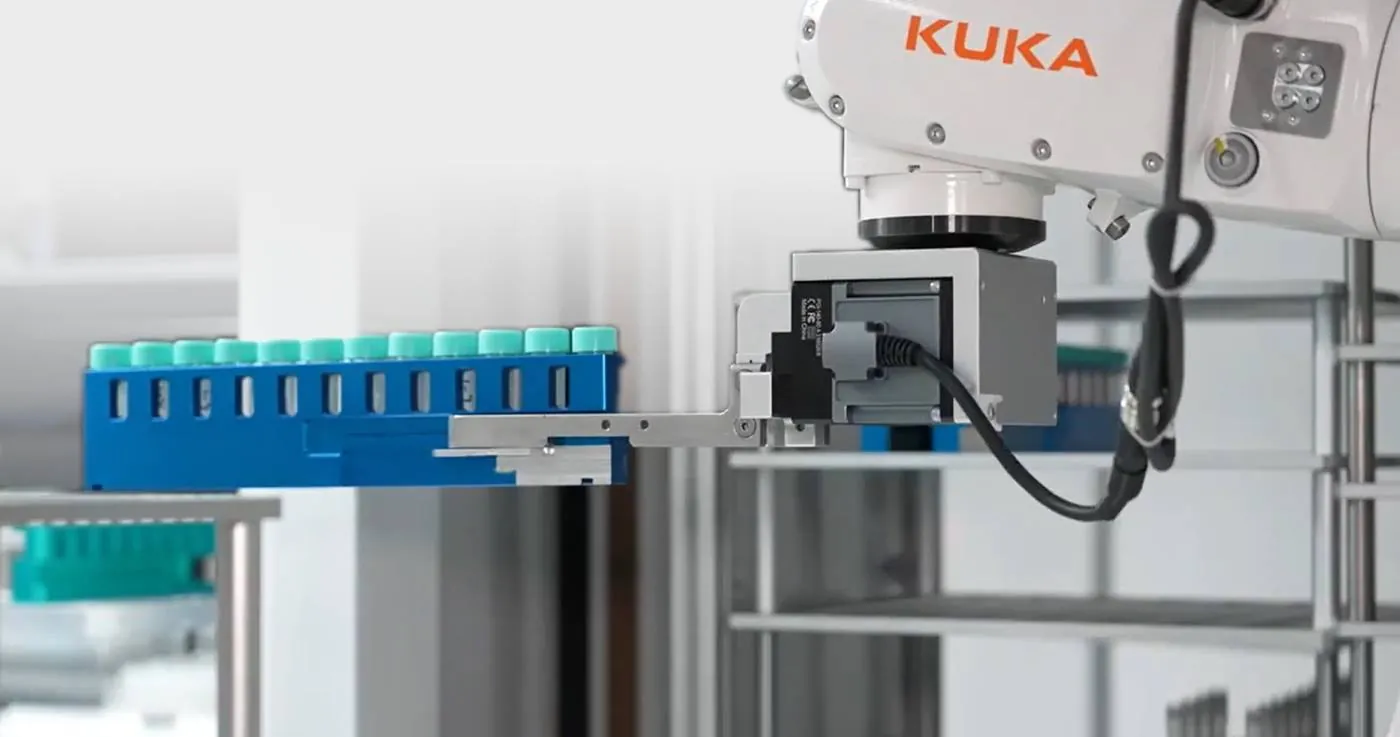
What are the considerations for using robots in cleanrooms (Class 10,000/100,000 class)?
Three points: Choose models certified for cleanliness (ISO Class 5–8, low-dust design), surface resistant disinfectants (VHP vaporized hydrogen peroxide, 75% ethanol wipe compatibility verified), cables and drag chains dust-free (closed wiring). Our selection library displays the certification level of each brand's clean machine models, matching the customer's cleanliness level and disinfection method.
How is data reliability (ALCOA+) implemented at the device level?
Three-level permissions (operation/process/administrator) + electronic signature, full audit trail for parameter modifications (before and after changes + person + time + reason), automatic data backup and restoration of practice records, clock synchronization (NTP) for tamper-proofing. These features are built into the SCADA/PLC programming phase, and are tested item by item during validation and archived—not retroactive.
Does equipment in the pharmaceutical and medical device industry require technical support?
Tell us your brand model, processes, and equipment status. Henghuan offers advice on robot maintenance, servicing, second-hand purchase, sales, and selection for the pharmaceutical and medical device industries. Rooted in Yilong, focused on Sichuan and Chongqing, serving the vast Southwest.
Contact Henghuan View all industries