Automobiles and parts
Industry Robot Application Solutions · 20 Brands Coverage · 6 Types of Typical Processes
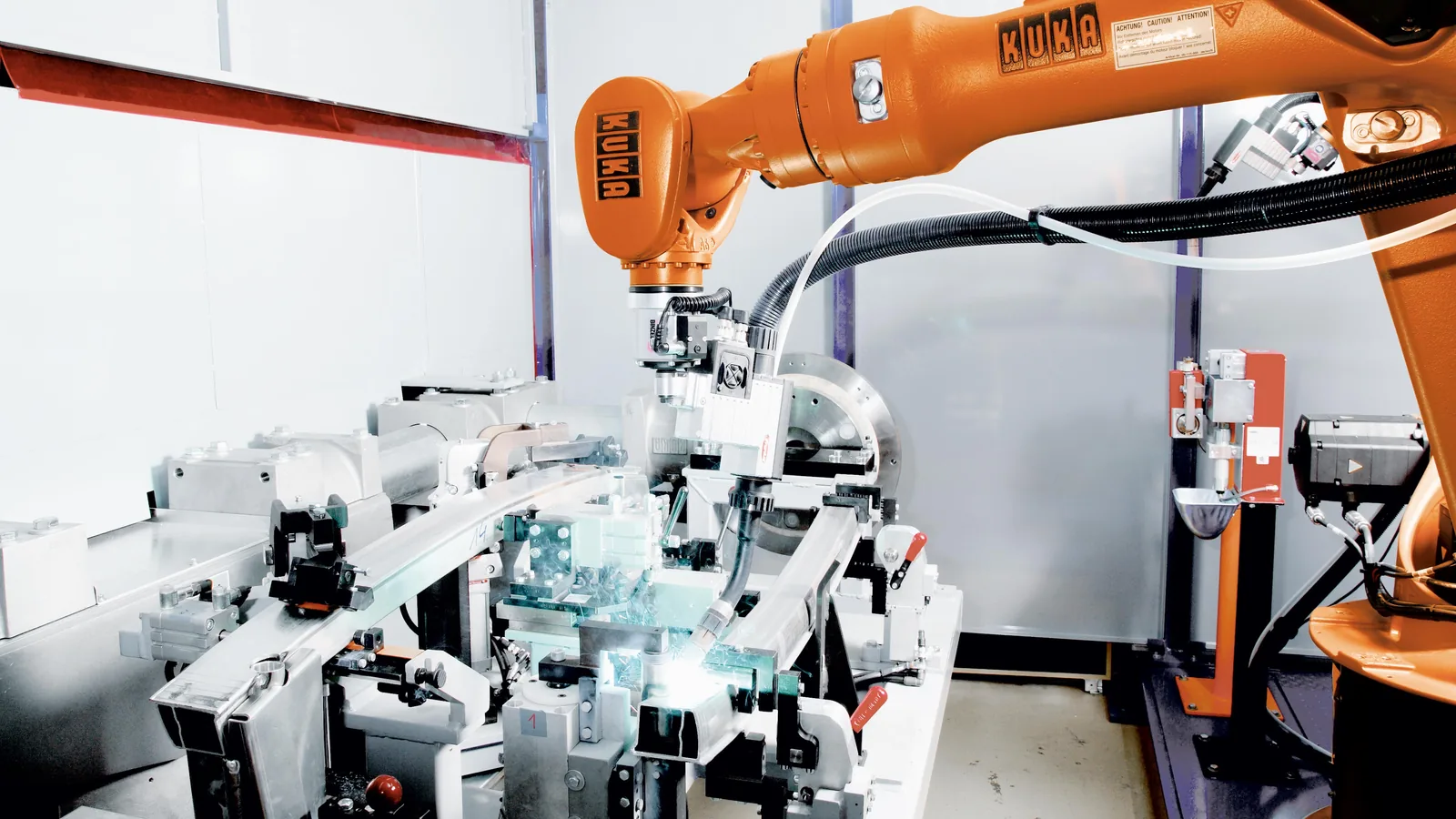
Robotic applications in the automotive and parts industries
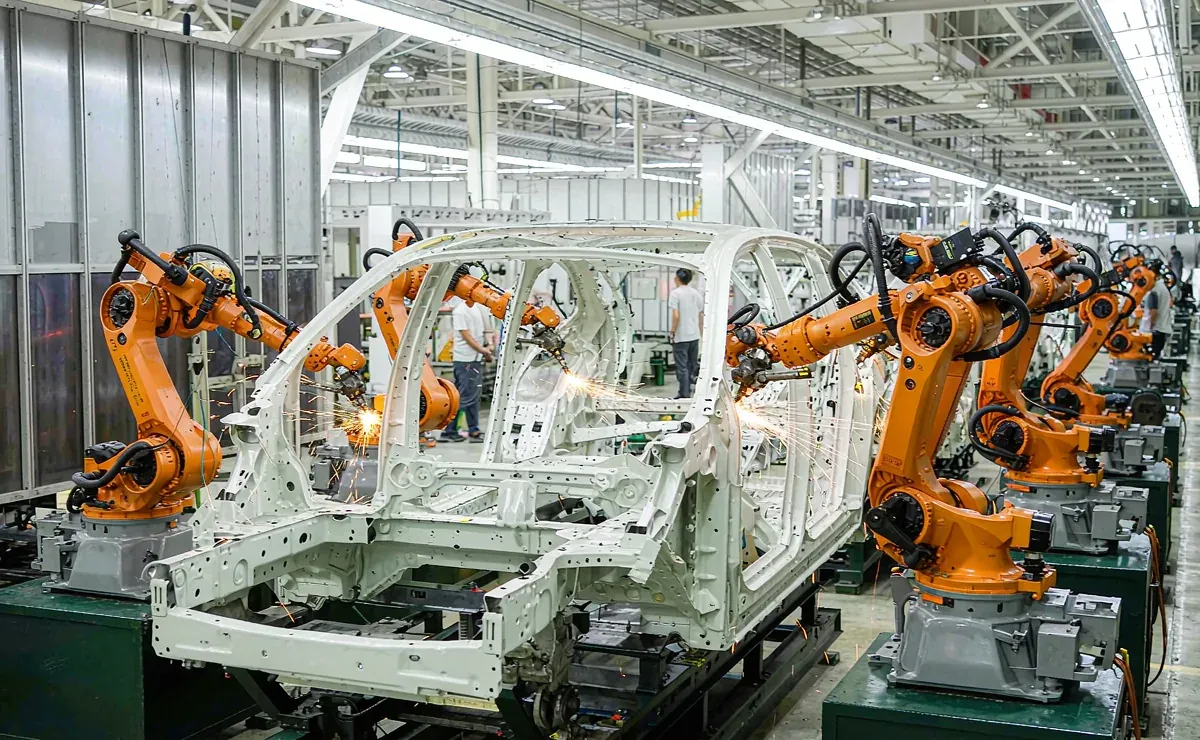
The automotive industry is the sector with the highest density of industrial robots. Automakers' spot welding, arc welding, and painting production lines are dominated by brands such as FANUC, ABB, KUKA, Yaskawa, and Kawasaki; Machine tool loading, unloading, assembly, and inspection processes at parts factories extensively use small six-axis and collaborative robots. Henghuan provides production line robot maintenance, servicing, and second-hand model sales services for vehicle suppliers and parts manufacturers in the Southwest region.
Typical automated processes
Common robotic processes in this industry—click to view key application points, customer cases, and applicable brands.
Better point control reduces cycle time by 20%...
View process details → Arc weldingHigh-quality arc welding requires exceptional operational flexibility and a deep understanding of material and thermal applications. With automated collaborative welding solutions, you can achieve stable and consistent welding results and improve production efficiency. …
View process details → SprayingAchieving customer expectations for process control and coating quality...
View process details → Machine tool loading and unloadingRobotic loading and unloading can be a simple automated process for handling products to adapt to the manufacturing process. However, reducing cycle time is crucial, as the robotic loading and unloading process cannot add value to the product. Kawasaki is continuously developing new products to reduce...
View process details → AssemblyAutomation of challenging assembly processes using Kawasaki's latest technology. Advances in automation control technology enable robots to complete complex assembly processes that were previously impossible. Over the past 40-plus years, Kawasaki has continuously improved its technology to meet the high...
View process details → Material handlingReducing labor costs through automation Material Handling (MH) utilizes the simple capabilities of robots to transport objects. By fitting the robot with the appropriate end-of-arm tooling (for example, a gripper), the robot can efficiently and accurately transfer products from a position...
View process details →Covering branded equipment
For robot brands within Henghuan's service scope that have practical applications in the automotive and parts industries, click to enter the brand page to view series and model specifications.
 FANUC104 models
 ABB45 models
 Yaskawa85 models
 Kawasaki75 models
 KUKA456 models
 Inovance Technology58 models
 Estun71 models
 Stäubli30 models
 Epson112 models
 Nachi Fubietsu18 models
 Comau30 models
 Siasun Robotics26 models
 EFORT32 models
 Guangzhou CNC19 models
 JAKA19 models
 AUBO24 models
 TOPSTAR24 models
 HSR Robotics23 models
 QJAR Robotics40 models
 Panasonic10 models
Henghuan can provide services for the automotive and parts industries
All six core businesses can be procured independently or in combination.
Process validation, workstation solutions, programming and teach-in and production ramp-up support, and turnkey delivery of robot applications.
Learn more → Sales of new industrial robotsAuthorized-style sales of brand-new mainstream robots with selection support for new production lines and capacity expansion.
Learn more → Research and development of automation equipmentResearch, development, integration, and delivery of end-effectors, conveyor positioning, safety peripherals, and complete control systems.
Learn more → Research and development of algorithms and control systemsMotion planning, machine vision, and PLC/SCADA system development to address takt-time bottlenecks, accuracy, and data interconnection.
Learn more → Robot rentalShort-term rental, long-term rental and lease-to-own for in-stock models, long-term rental, and lease-to-purchase transfer, including transportation, installation, commissioning, and lease-term maintenance.
Learn more → Software and hardware upgrade servicesController retrofits, software and firmware upgrades, mechanical refurbishment, and safety upgrades restoring performance to older equipment.
Learn more → Maintenance and repairOn-site inspection, fault diagnosis and repair, and annual maintenance contracts covering 1,310 models from 21 brands.
Learn more → Used & in-stock robot salesWe buy back used robots and handle inspection, refurbishment and resale; every unit ships with inspection records and a warranty, and trade-ins can offset new purchases.
Learn more →Industry Status: The transition to new energy is reshaping the automation landscape of automotive manufacturing
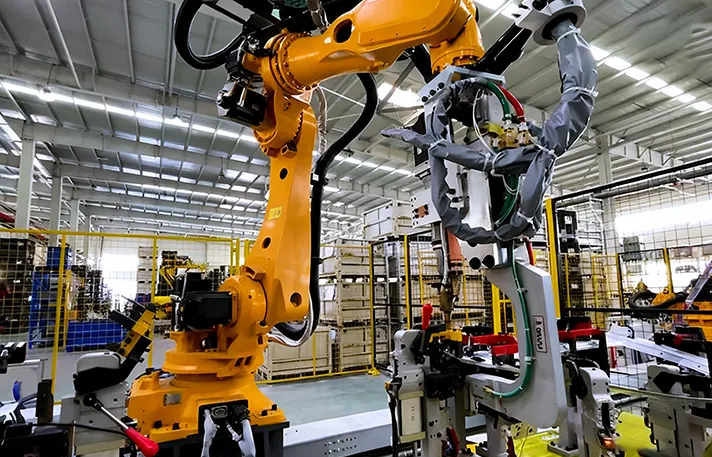
The automotive manufacturing industry is the largest application sector for industrial robots, accounting for about 30% of global robot sales. The current structural changes stem from the transition to new energy: traditional powertrain (engine/transmission) production line automation investment has shrunk, whileBattery trays, electric drive housings, cell modules, integrated die-castingThe explosion of automation demand for four new processes — the robot density on battery module PACK lines even surpasses that on final assembly lines, and integrated die-casting post-processing (trimming, picking, grinding) has given rise to a new market for heavy-load robots.
For parts companies in Southwest China, industrial transfer brings real opportunities: the Chengdu-Chongqing automotive industry cluster is transitioning to electrified support, with rising local demand for battery structural parts, electric drive components, and lightweight aluminum parts; At the same time, OEMs will pay for suppliersProcess control requirements(IATF 16949, Welding Data Traceability, SPC Process Capability) has tightened year by year, and automation transformation has shifted from a "cost-reduction option" to a "supporting qualification."
| Workstation | Mainstream craftsmanship | Quality control requirements |
|---|---|---|
| Body Welding (Body-in-White) | Spot welding is mainly used + arc welding/MIG brazing reinforcement, six-axis + servo welding pliers | All weld points are monitored online, with chisel inspection/ultrasonic spot checks, and destructive testing by batch |
| Battery tray welding | Arc welding (aluminum alloy MIG/CMT cold metal transition) + friction stir welding | Helium inspection of weld airtightness, X-ray spot check, and full recording of welding parameters |
| Coating | Robot spraying (electrostatic rotary cup / air spray gun) | Online film thickness monitoring, colorimeter spot checks, VOC emission standards met |
| Final assembly | Windshield gluing, seat/tire assembly, tightening | Tightening curves are 100% archived, with key torque that can be traced back 15 years |
| Machining of components | CNC loading and unloading, deburring, cleaning | Key dimensions SPC control, Cpk ≥ 1.33 |
| Post-processing of die casting | Pickup, spraying, trimming, sanding | Blank inspection (for missing flesh and cold insulation), mold life management |
Eight major business areas in the automotive industry
Application technology services and research and development of automation equipmentThe entry point: welding fixtures and subassembly tooling design, spot welding accessibility simulation, tightening process solutions—the automotive industry demands higher tooling accuracy and data traceability than general manufacturing, so documentation must be delivered according to IATF 16949 process methods (APQP/FMEA) during the planning phase.
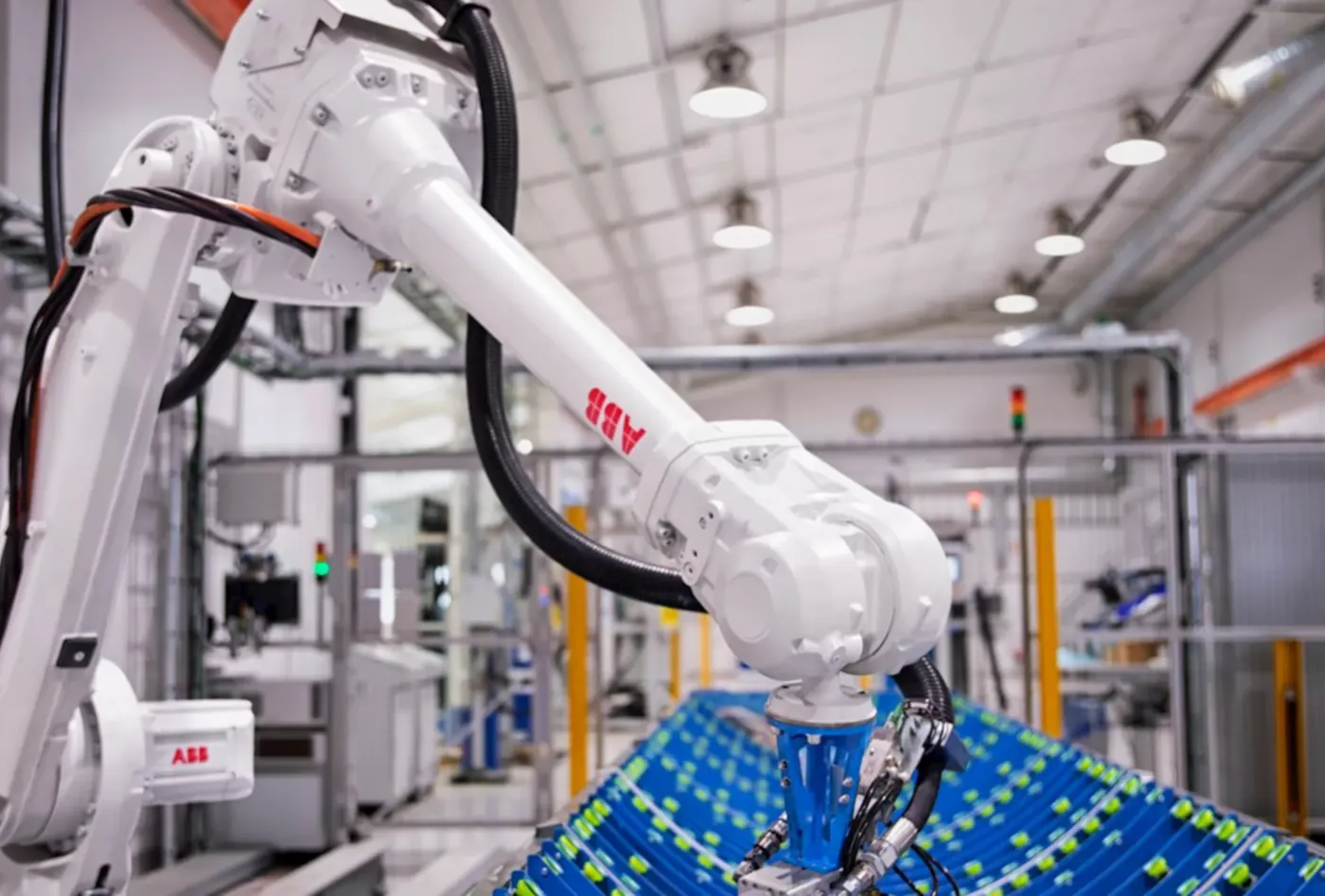
Maintenance and repairIt is a high-frequency necessity: losses from automobile production line downtime are measured in minutes (the final assembly line loses hundreds of thousands of yuan per hour of shutdown), and the emergency response capability for robot sudden faults directly determines supplier qualifications. Our localized team can be on-site in Sichuan and Chongqing on the same day, cooperating with in-house spare parts redundancy strategies to minimize downtime risks.
Software and hardware upgradesServing existing production lines: A large number of robots purchased by automakers from 2010 to 2018 have entered the control system aging phase. Replacing control with the same brand (retaining programs and tooling) saves over 50% of investment compared to full line upgrades, and renovation windows can be completed during the annual maintenance period.
Industry Q&A
Can you cooperate with the audit requirements for entering the automotive supply chain?
Yes. OEMs and Tier 1 suppliers audit equipment suppliers cover: process documentation (solution review, FAT/SAT records), welding/tightening data traceability, maintenance response SLA, and personnel qualifications (welding process evaluation support). We prepare documentation according to automotive industry delivery standards and assist clients in passing their customer audits.
What are the special requirements for welding aluminum bodies/battery trays?
Aluminum alloys have fast thermal conductivity and high oxide film melting points; CMT cold metal transition or pulsed MIG processes are recommended (low heat input, minimal deformation, minimal spatter); Pre-weld cleaning (mechanical/laser) and shielding gas purity (99.99% argon) are prerequisites for quality; Battery trays with high weld airtightness requirements are equipped with helium or differential pressure inspection stations.
How should maintenance response be arranged for 24-hour continuous operation of the production line?
The annual maintenance contract includes a 7×24 response clause: telephone/remote response within 30 minutes, on-site arrival in Sichuan-Chongqing within 4 hours (2 hours in urban areas); Key spare parts are consigned to the customer's factory or our Nanchong warehouse, and replacement faults are repaired the same day. Write the response time limit into the contract; if overdue, there will be a breach of contract clause.
Does equipment in the automotive and parts industry require technical support?
Tell us your brand model, processes, and equipment status. Henghuan offers robot maintenance, servicing, second-hand sales, and selection advice for the automotive and parts industry. Rooted in Yilong, focused on Sichuan and Chongqing, serving the vast Southwest.
Contact Henghuan View all industries