From China's leading CNC systems maker — Guangzhou CNC (GSK) robots, three major series
From the 1991 lathe CNC system to RB handling, RMD palletizing, and RH welding—three major robot series—control systems, servo drives, and reducers are all self-developed and localized, collaborating with GSK's CNC systems.
Gene-driven robotics lineage in CNC systems
Guangzhou CNC's domestically produced technology platform of "control system + servo drive + motor + reducer" extends into three major robot series: handling, palletizing, and welding, characterized by coordinated loading and unloading with its own CNC system machine tools.
Compact high-speed machine loading and unloading models, multi-boom variants, in collaboration with GSK CNC.
Packaging/beverage/chemical/food palletizing and depalletizing, with a large load radius of 3150mm.
RH06B1 seven-axis hollow and RH06A2/A3, widely compatible with welding machine brand communication.
The official website categorizes the models currently on sale; parameters are subject to the official sample.
Product series and specifications
The following specifications are compiled from the official website of Guangzhou CNC GSK (load, reach, footprint, body weight) for model selection comparison.
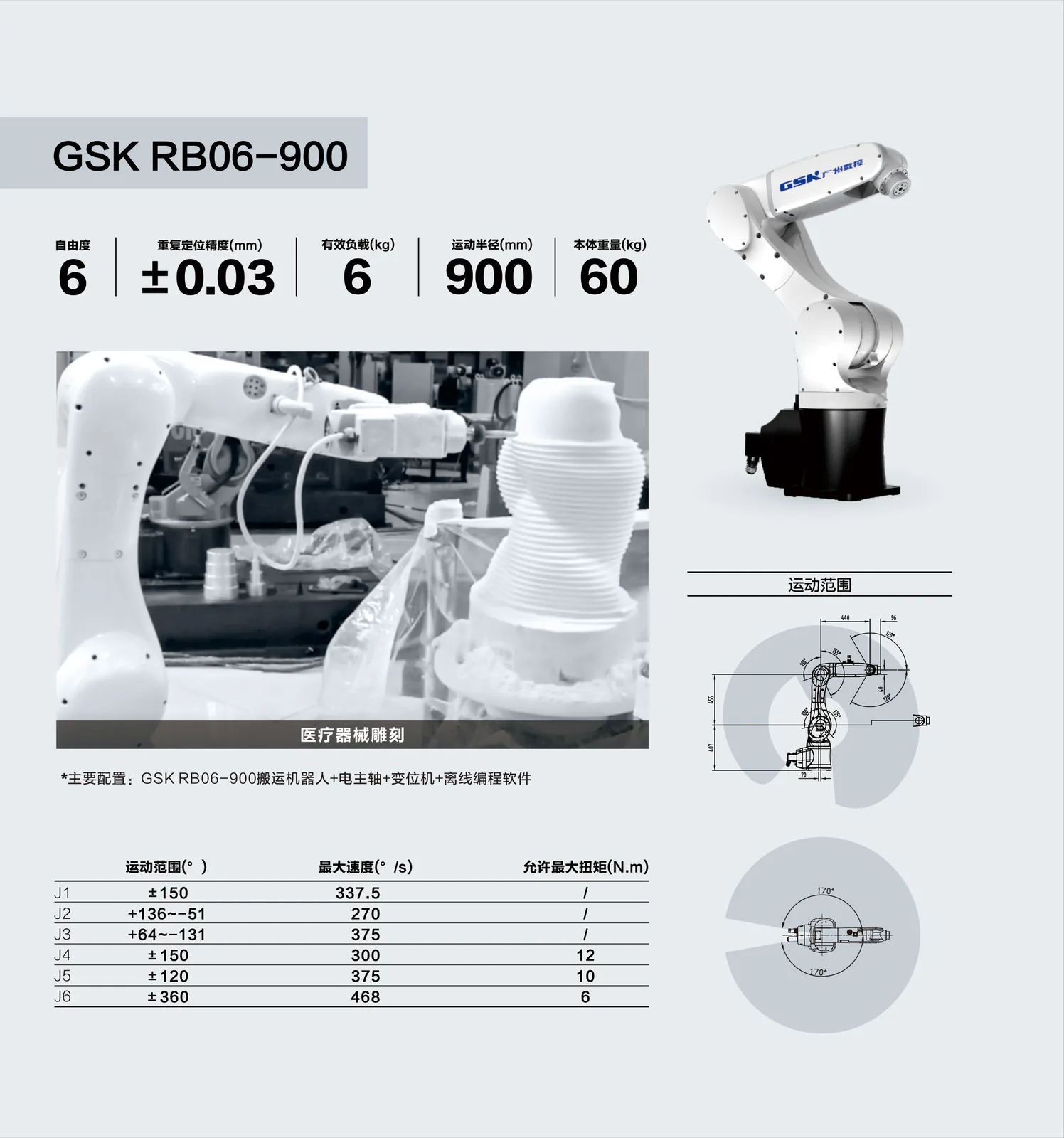
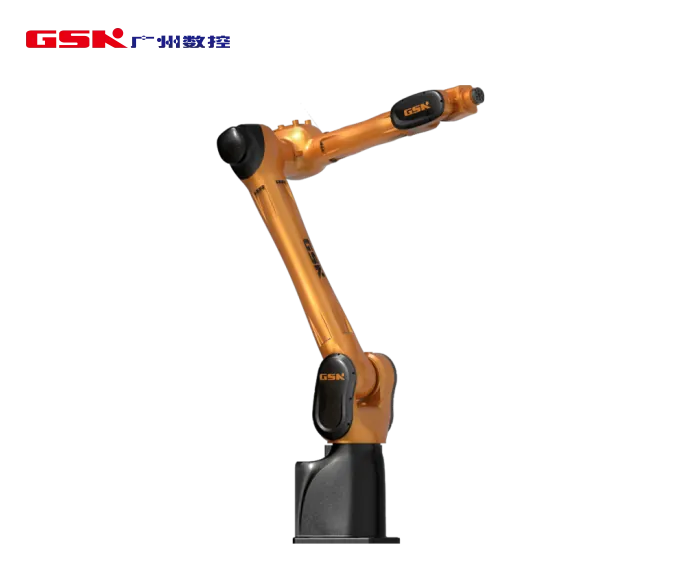
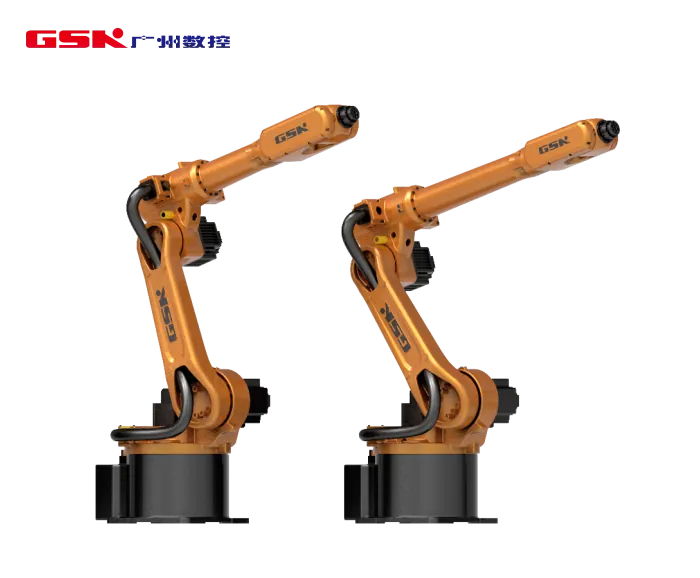
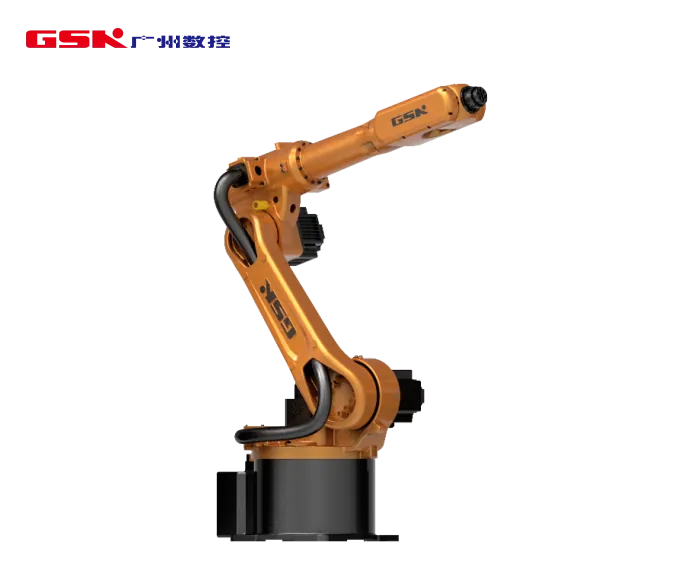
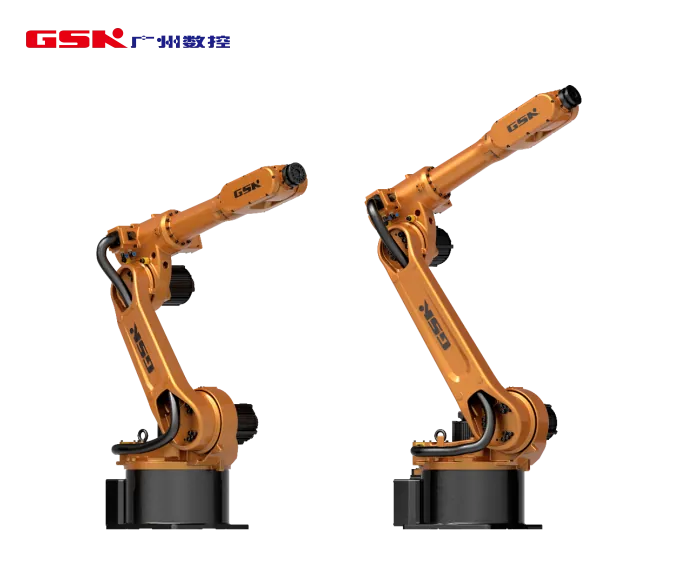
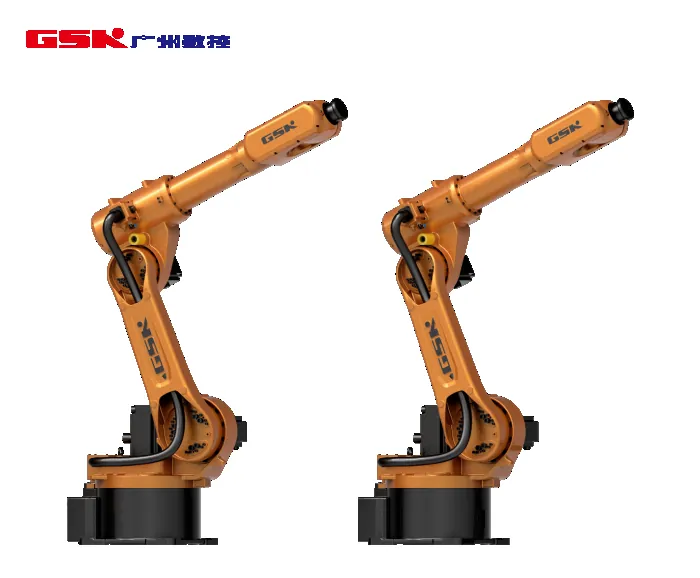
RB Series six-axis handling/loading/unloading robots
Load 3-35kg · AC servo drive
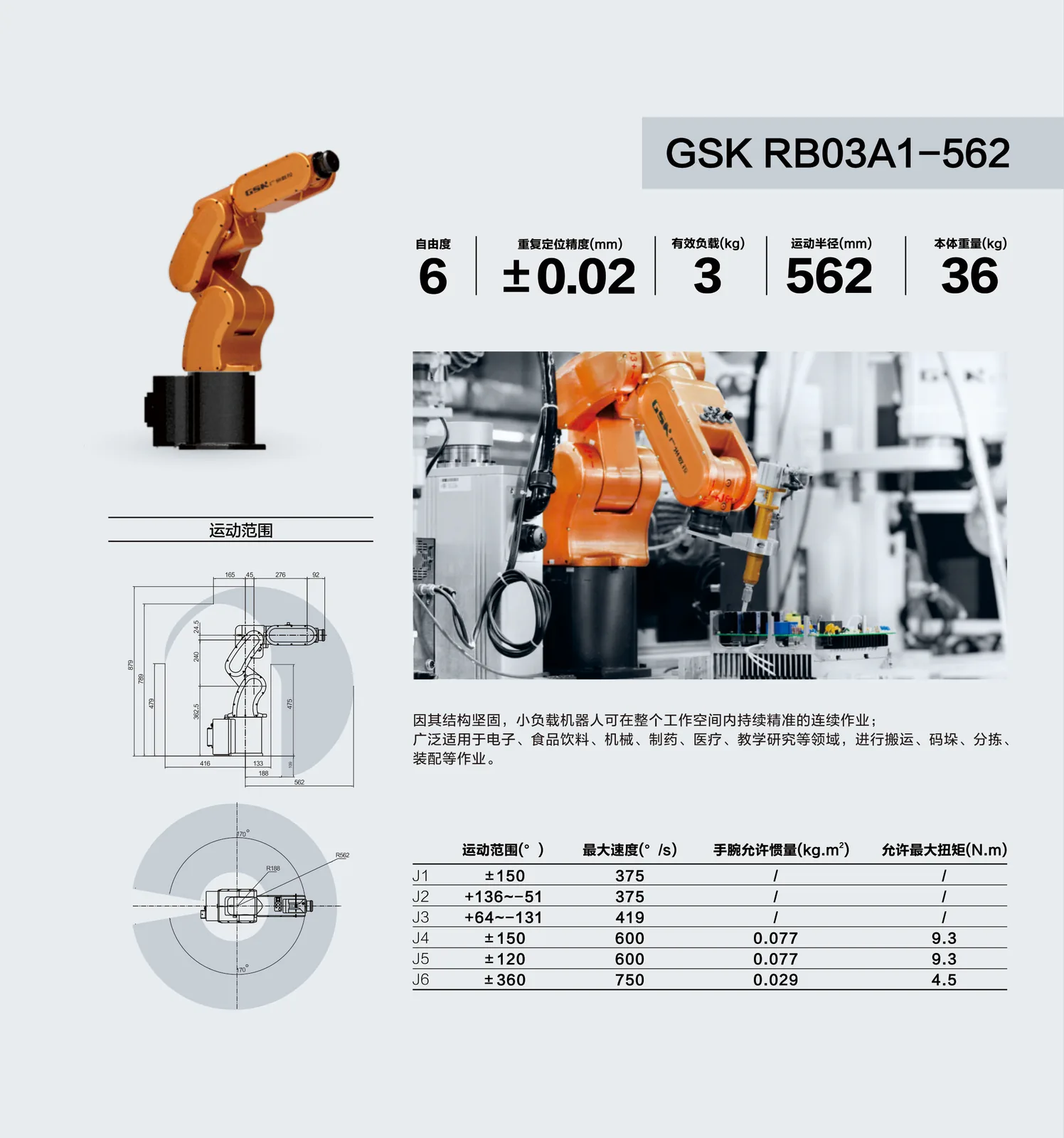
The RB03A1 is officially stated as compact, lightweight, can be used upright or inverted, and the J6 has a maximum speed of 750°/s (reposted specs).
The RB08Q1 is a loading and unloading machine model that works in conjunction with GSK's CNC system, and can be integrated with Haas/FANUC/GSK machine tools (dealer page).
The RB08A3/RB20A3/RB35 each have 2-3 range variants, with long-arm loads reduced accordingly.
Officially, it is said to be suitable for electronics, food and beverage, machinery, pharmaceuticals, grinding and polishing, stamping automation, and more.
RMD series four-axis palletizing robots
Load 8-300kg · Palletizing and depalizing
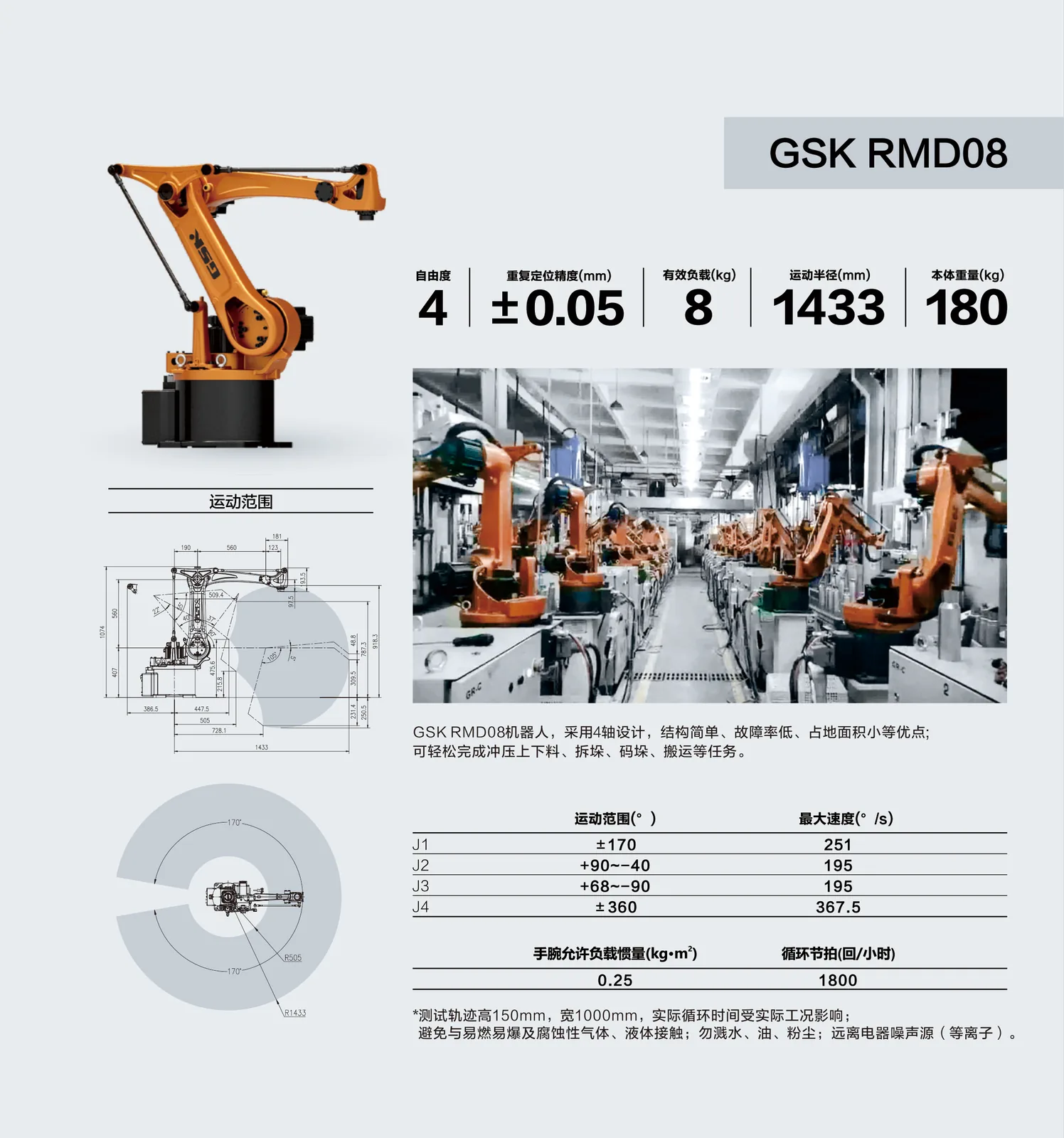
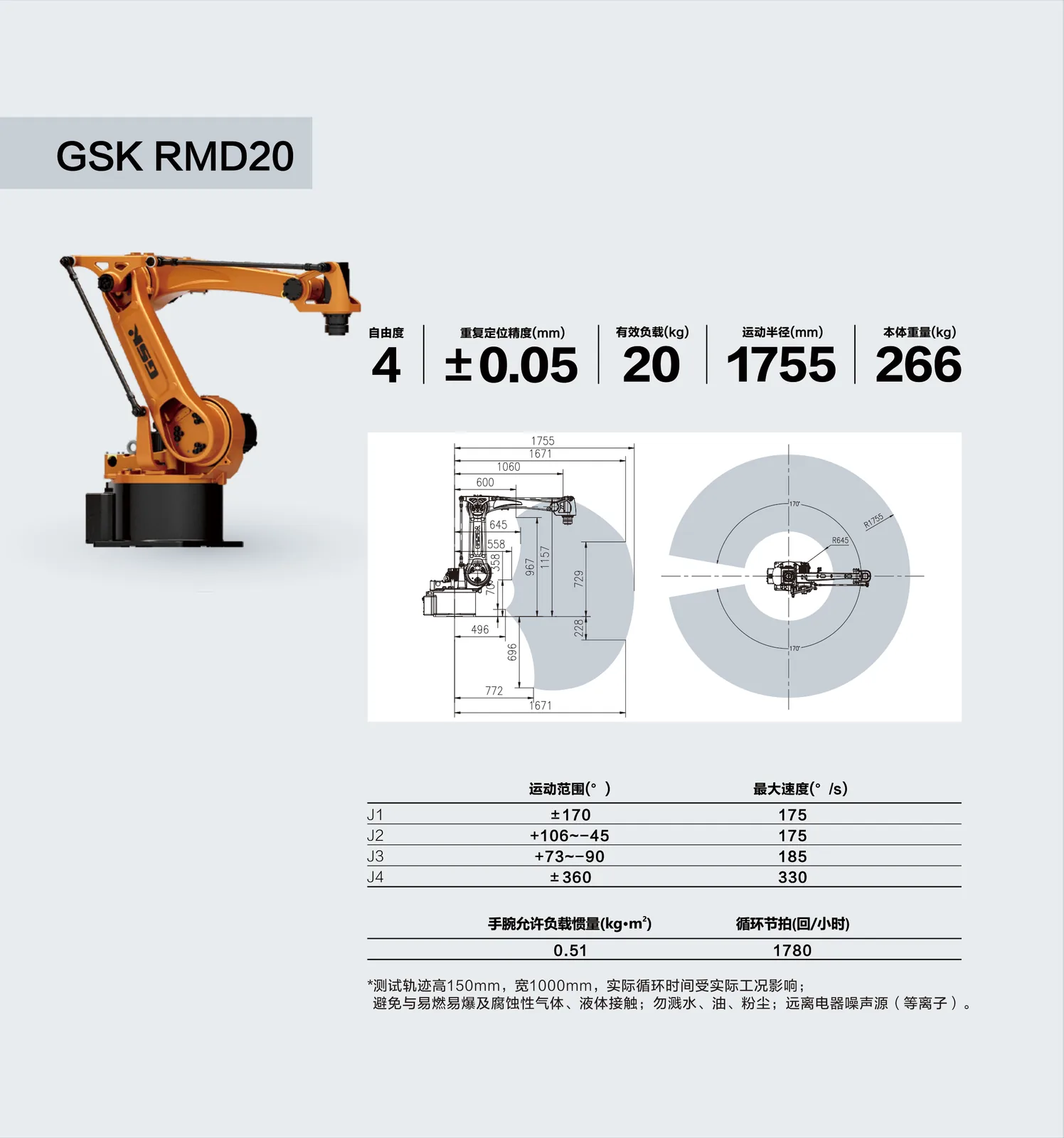
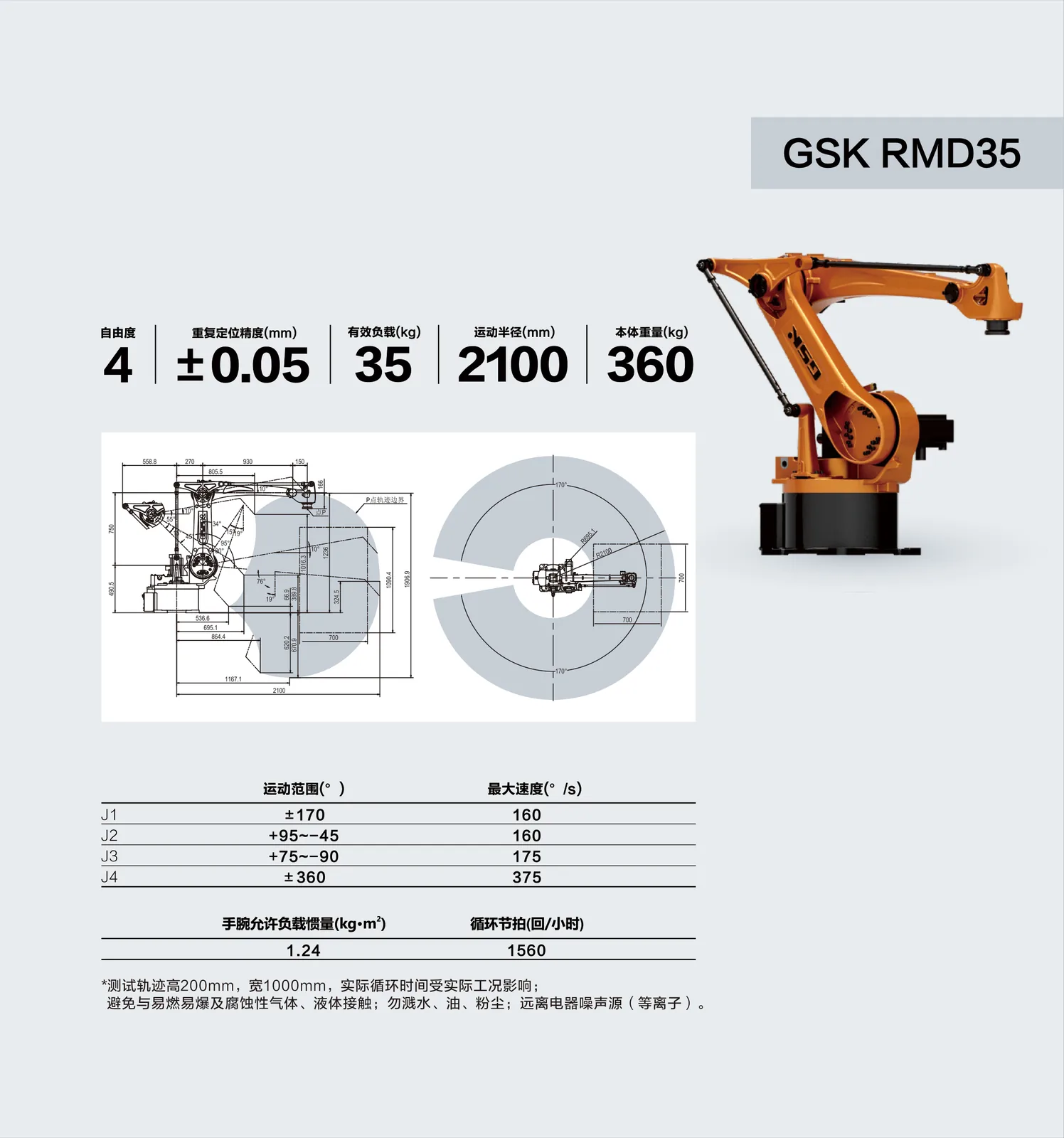
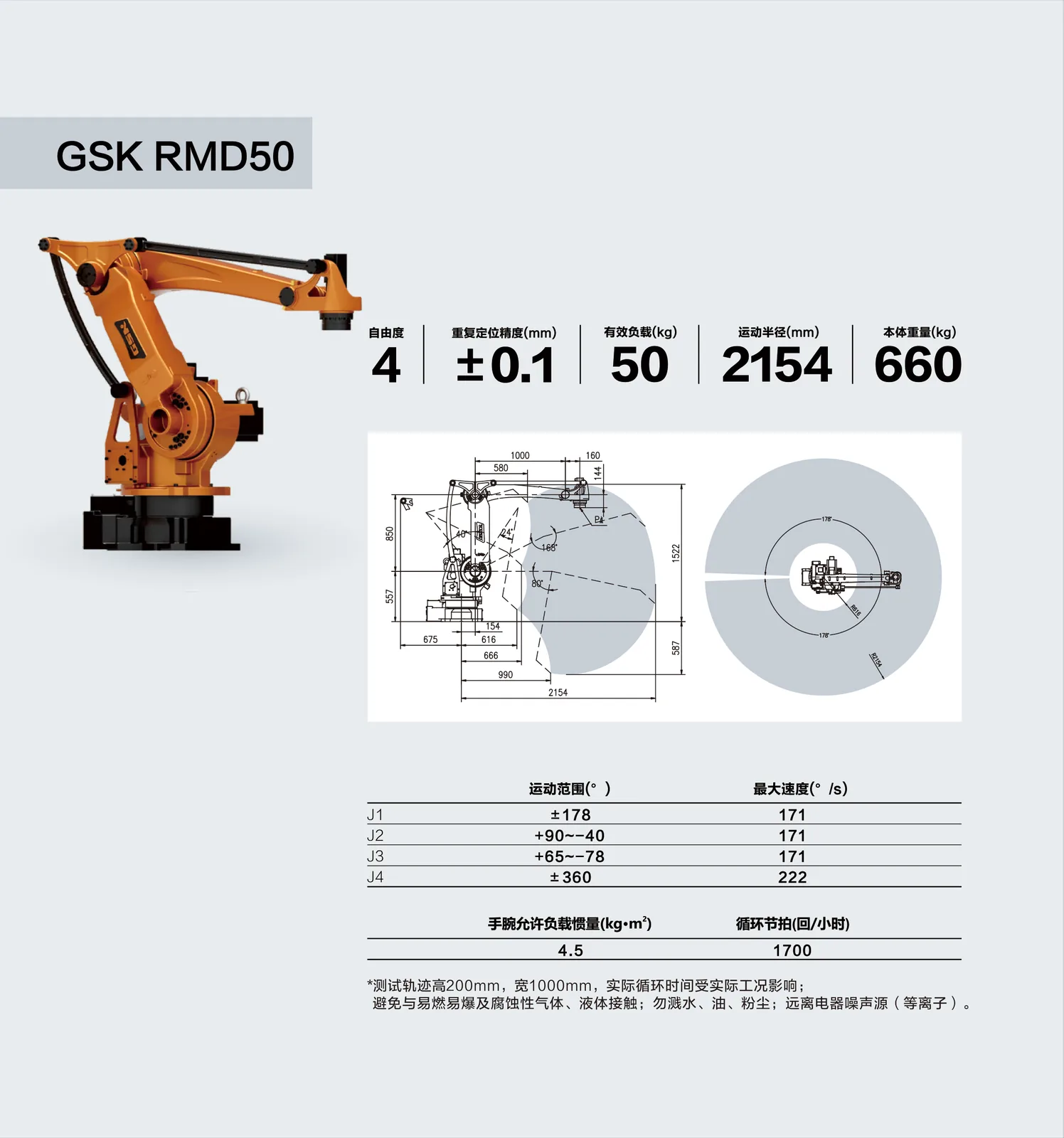
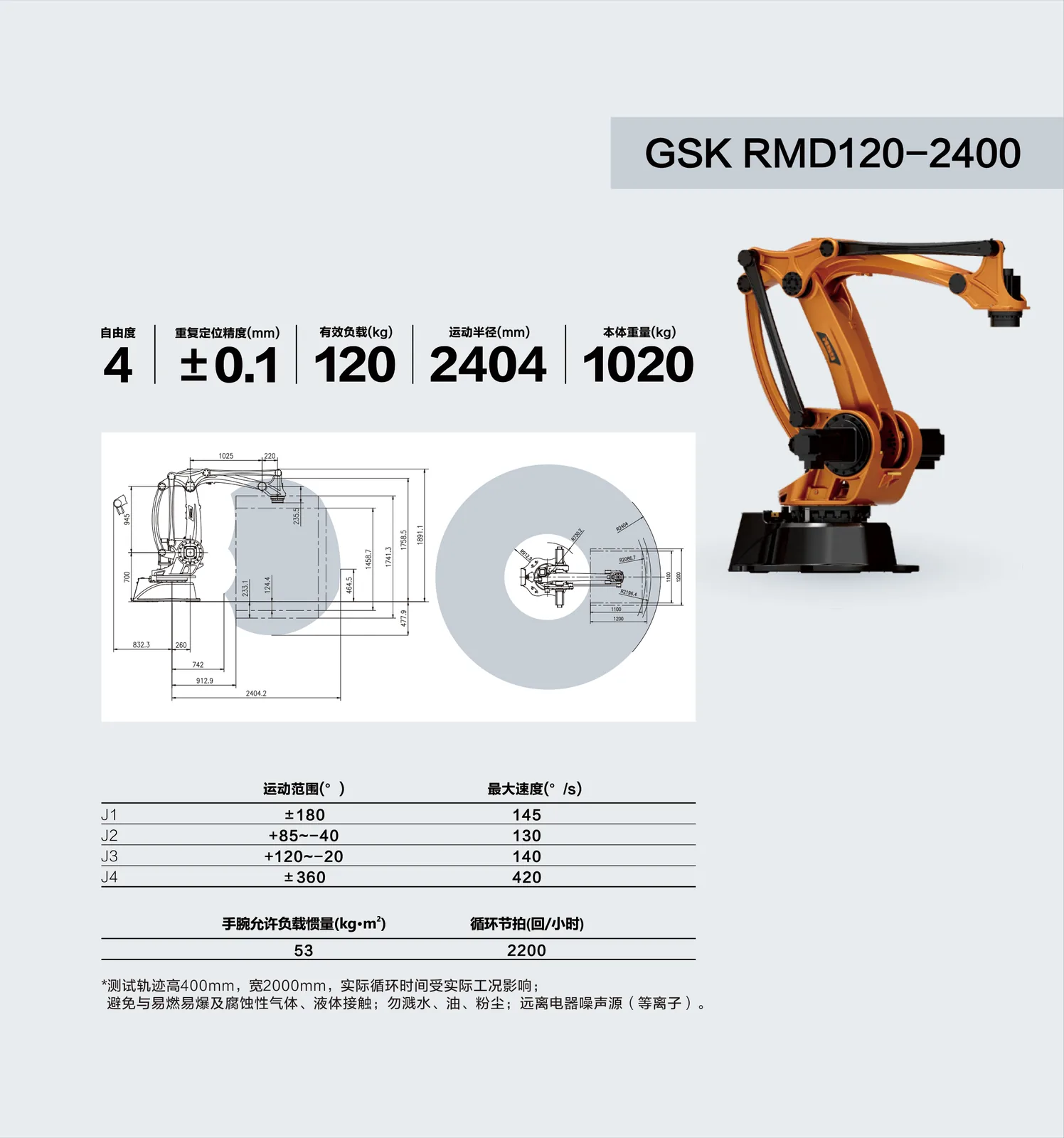
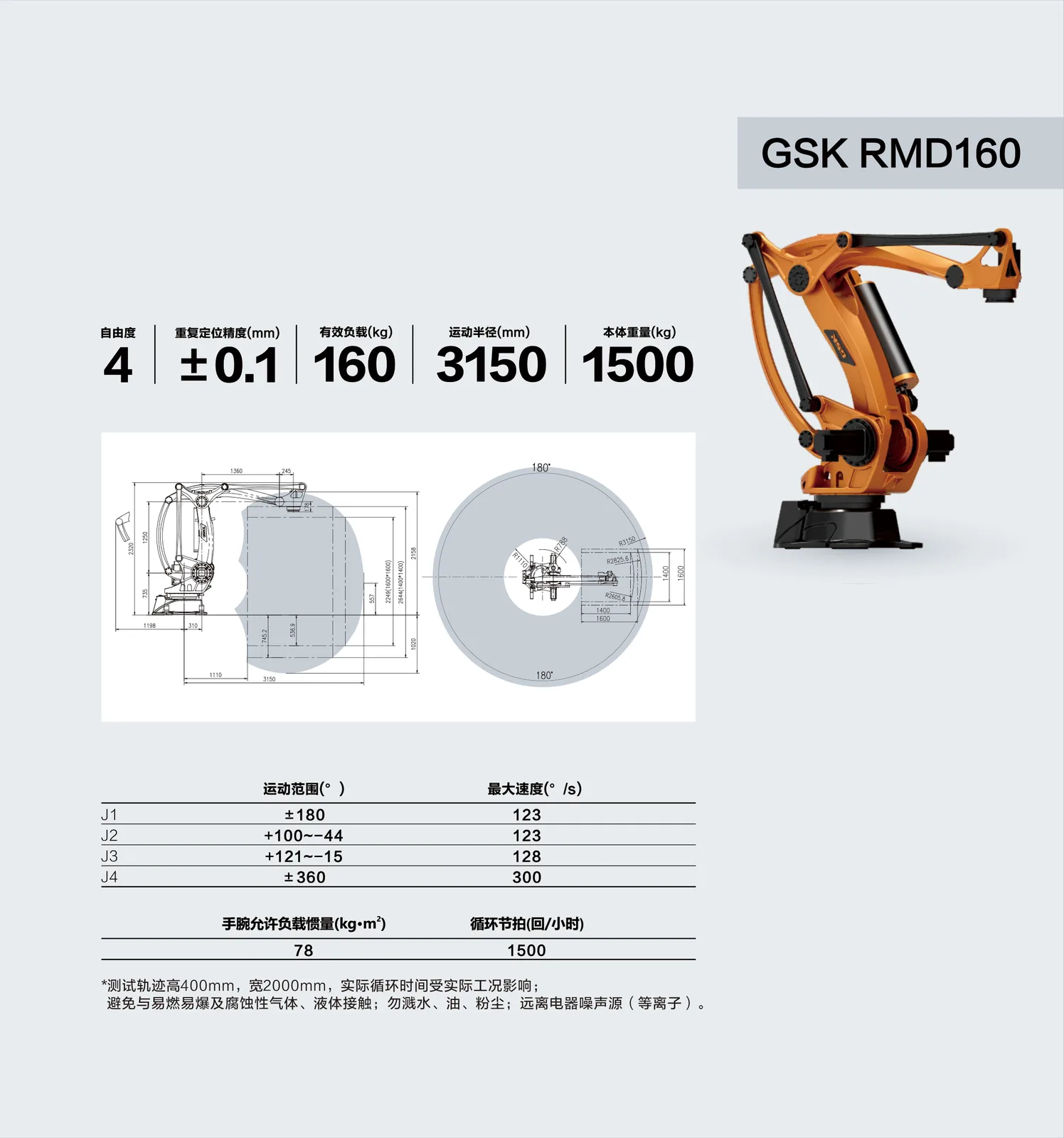
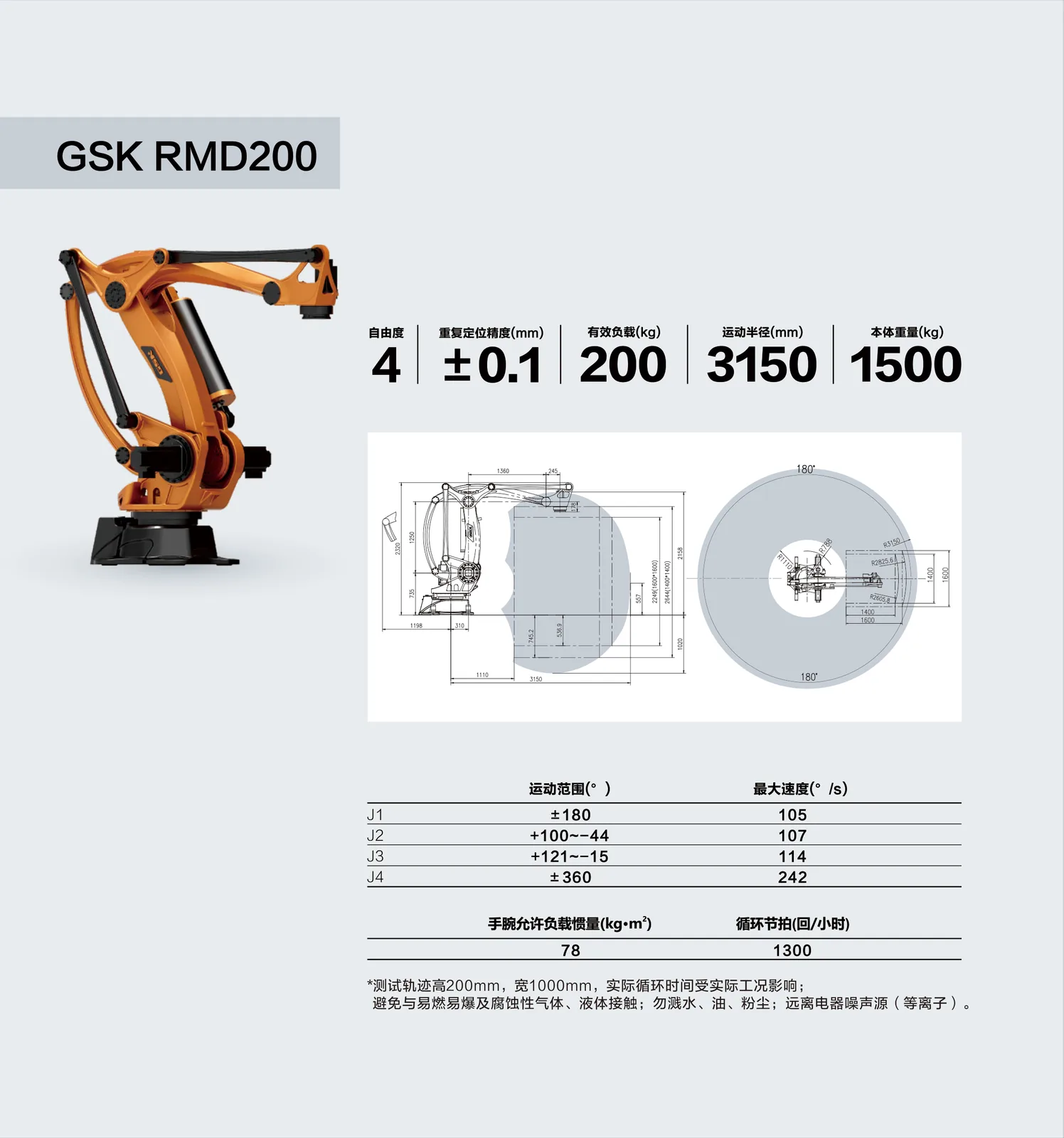
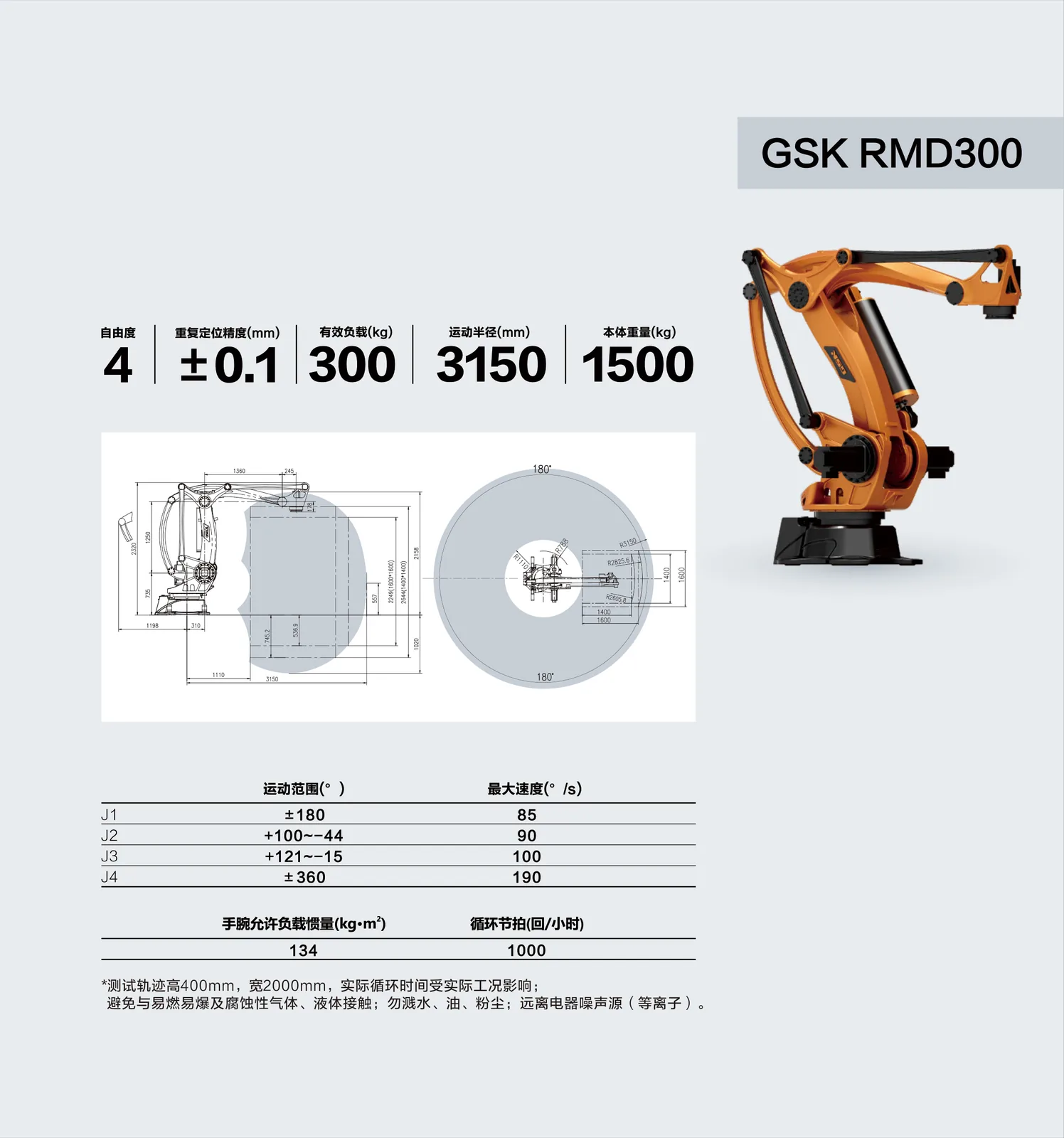
The official palletizing category categorizes 8 models from RMD08 to RMD300, covering light to heavy loads.
RMD120-300 Motion radius 3150mm, body weight 1500kg, cycle time 1000-1560 cycles/hour (reprinted table).
Officially, it is used for palletizing, depalletizing, and handling in packaging, beverage, chemical, food, and other fields.
Background of Guangzhou CNC CNC systems: Robot controllers and GSK systems facilitate convenient coordinated commissioning.
RH Welding Robot · Red Gold Dragon series
6kg Arc Welding · Seven-axis hollow · Featured models
The RH06B1 official product name is labeled "Seven-axis Hollow Welding Robot," with welding torch cables running inside the arm.
Publicly available reprints claim it can communicate digitally with DeviceNet welding machines from Megmet/GSK/EWM/LORCH/KEMPPI/ESAB, and via LINCOLN/OTC/Panasonic I/O communication.
Official sources claim it is widely used in welding hardware for automobiles and parts, motorcycles, agricultural machinery, and construction machinery.
The official website categorizes robot models to be launched in 2024, with technical specifications subject to the official poster and official samples.
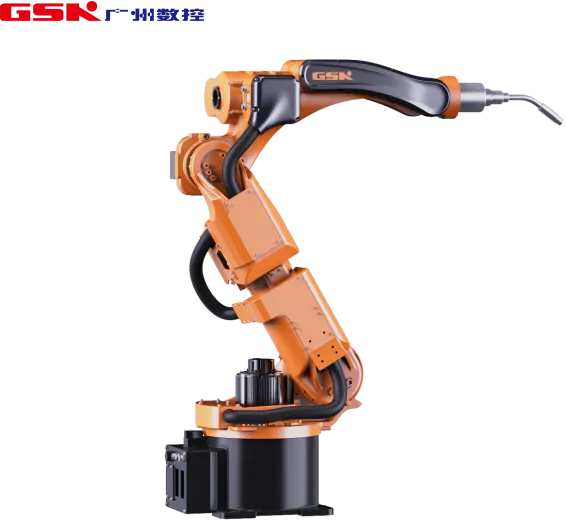
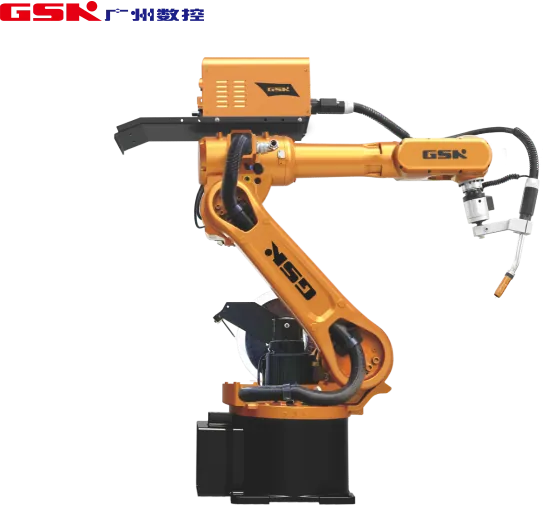
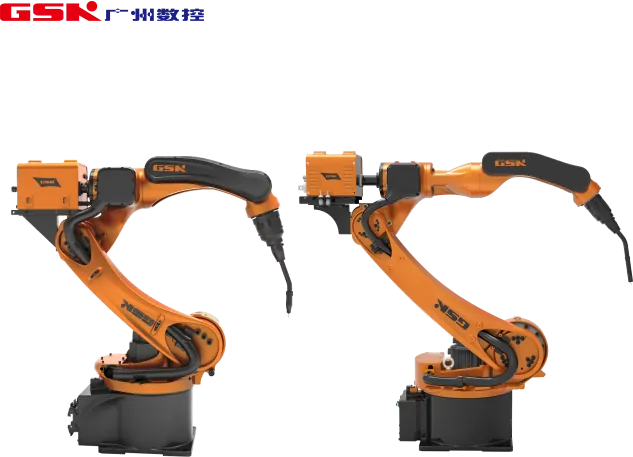
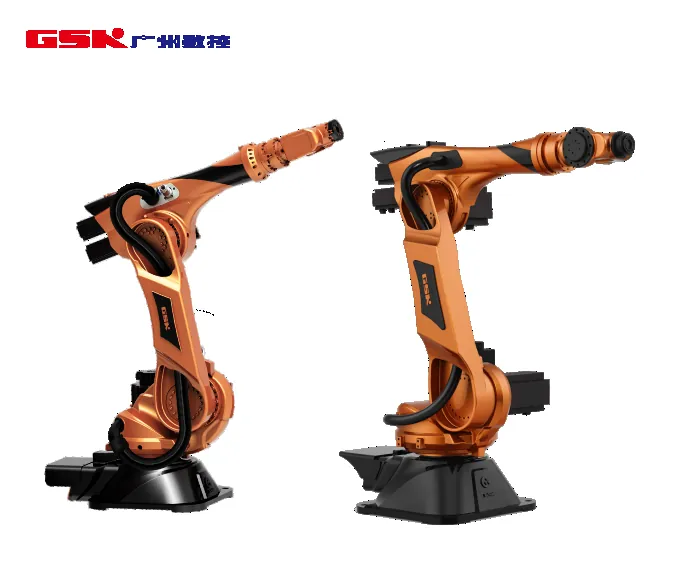
Core technical features
Core components are localized in China
Control system (including core algorithms), driver, servo motor, and reducer are all domestically developed (CMEDC introduction).
The official store states that the GSK-LINK fieldbus enables high-speed, seamless connection between CNC machine tools and robots.
The dealer page states that the RB series wrist J4-J6 meets IP65 standards, suitable for workshop dust and cutting fluids.
The welding model supports DeviceNet digital communication and I/O analog communication to connect with mainstream welding machines.
RH06B1 seven-axis hollow wrist wiring reduces cable interference and wear (official product name).
Application scenarios
From palletizing and welding to machine tool maintenance, assembly, dispensing, grinding, and quality inspection, Guangzhou CNC GSK can be quickly deployed to various processes.
Service industry
Guangzhou CNC GSK is widely used in the following industries. We can provide selection and implementation support tailored to local industry characteristics.
Why choose Guangzhou CNC GSK?
Leading CNC system company, fully self-developed core robot components, with domestically controllable spare parts chain.
Integrated with GSK CNC systems, low cost for lathe/machining center loading/unloading retrofits.
In 2019, it was selected as a manufacturing single champion demonstration enterprise, maintaining stable long-term operations.
Owns vocational training colleges and vocational education product lines, facilitating personnel training and access to materials.
Trusted by global customers
Guangzhou CNC GSK serves numerous globally renowned enterprises (brand logo copyright belongs to each individual).
Guangzhou CNC Robotics Professional Services
As a third-party industrial robot technology service provider, Henghuan provides full lifecycle support for the GSK RB/RMD/RH series, including selection, integration, maintenance, and spare parts.
Process validation, workstation solutions, programming and teach-in and production ramp-up support, and turnkey delivery of robot applications.
Learn more → Sales of new industrial robotsAuthorized-style sales of brand-new mainstream robots with selection support for new production lines and capacity expansion.
Learn more → Research and development of automation equipmentResearch, development, integration, and delivery of end-effectors, conveyor positioning, safety peripherals, and complete control systems.
Learn more → Research and development of algorithms and control systemsMotion planning, machine vision, and PLC/SCADA system development to address takt-time bottlenecks, accuracy, and data interconnection.
Learn more → Robot rentalShort-term rental, long-term rental and lease-to-own for in-stock models, long-term rental, and lease-to-purchase transfer, including transportation, installation, commissioning, and lease-term maintenance.
Learn more → Software and hardware upgrade servicesController retrofits, software and firmware upgrades, mechanical refurbishment, and safety upgrades restoring performance to older equipment.
Learn more → Maintenance and repairOn-site inspection, fault diagnosis and repair, and annual maintenance contracts covering 1,310 models from 21 brands.
Learn more → Used & in-stock robot salesWe buy back used robots and handle inspection, refurbishment and resale; every unit ships with inspection records and a warranty, and trade-ins can offset new purchases.
Learn more →Frequently Asked Questions about Guangzhou CNC GSK
Focusing on the selection, maintenance, spare parts, and second-hand distribution of Guangzhou CNC GSK equipment, we answered the most frequently asked questions from customers.
What is the relationship between GSK robots' controllers and CNC systems? How to troubleshoot during linkage?
Guangzhou CNC itself is a leading domestic CNC system manufacturer. Its robot controllers share the same origin as GSK's own CNC system (servo drive, control algorithms). Official channels claim that CNC machine tools and robots are linked via GSK-LINK fieldbus. Common loading and unloading faults mostly occur in signal interaction rather than the main unit: first confirm that the clamping/door opening signal on the machine tool side matches the robot handshake I/O mapping, then check the bus status light and alarm signal. When cross-brand integration (FANUC/Siemens machine tools), priority should be given to checking the timing and interlocking; the specific alarm meaning should be confirmed in conjunction with on-site diagnosis.
What should be noted for the main body protection and cables when loading and unloading RB series machine tools?
Public information states that the RB series wrist J4-J6 has IP65 protection, capable of handling workshop dust and cutting fluids, but the IP rating only applies to factory sealing conditions. Key maintenance points for machining scenarios: Regularly check whether the wrist and arm seals, as well as cable inlet sheaths, have been aged by cutting fluid; Check for flick breaks in the trail chain/arm wiring of the moving cable; damage will trigger short circuits and interference alarms. After cutting fluid seeps into the body, stop the machine immediately to dry and check the emulsification of the gear reducer oil.
How to troubleshoot vibration and large positioning deviations in RMD palletizing robots?
RMD is a 4-axis palletizing machine, with a heavy load model (RMD120-300) body about 1500kg, high cycle time, common causes of vibration: load/center of gravity exceeding allowable range, increased reducer clearance, poor lubrication. Inspection sequence: Check whether the total weight and center of gravity of the workpiece + fixture exceed specifications, perform full-shaft zeroing and origin calibration, then check the idle return and grease injection status of each shaft reducer. When repeatability exceeds and calibration fails, it is mostly transmission wear. Vibration and metal shavings must be measured before deciding to replace parts, and on-site diagnosis is required.
How is the RH06 welding robot connected to the welding machine? How to check if communication is lost?
Public information states that GSK welding robots can communicate digitally via the DeviceNet bus with Megmeet, GSK, EWM, LORCH, KEMPPI, and ESAB welding machines, and communicate with Lincoln, OTC, and Panasonic via I/O analog communication. Communication fault troubleshooting: first confirm that the bus terminal resistor does not conflict with the line sequence or node address, then check the robot's communication alarm and the welding machine's status code; During simulated I/O docking, check whether the arc start/end signal lines are burned or have weak connections. Replacing the welding machine brand requires re-matching the interface and process parameters, which must be confirmed together with on-site commissioning.
How to recover the telegraph origin/encoder lost on a GSK robot?
Like most robots, the GSK body absolute encoder relies on the battery to maintain the power-off position. Battery depletion manifests as telegraph position loss alarms and requires full-axis zeroing. Battery replacement should be performed while the control cabinet is powered on or within the time limit specified in the manual, to avoid power outages and timeouts; After recovery, the zero point reset and accuracy verification of each axis must be performed according to the manual. Frequent reproduction requires checking whether the battery holder contact, the cabinet holding circuit, and the main encoder cables have been corroded by cutting fluid. The specific alarm number and steps are subject to the included manual.
How to maintain the lubrication of the Guangshu robot reducer?
GSK's official website does not provide complete lubrication intervals for each series (technical parameters are shown in images); actual conditions are subject to the included maintenance manual. General principle: RV/harmonic reducers should check the grease status during operation hours and replace them regularly; perform an initial inspection about 1000-2000 hours after initial operation; For high-cycle and frequent start-stop operations such as palletizing and stamping, the cycle should be shortened. After greasing, check whether the oil seal has bulged or leaked oil. The vent plug must be operated according to the manual, and abnormal temperature rise must be confirmed together with on-site diagnosis.
Are there still parts left for the discontinued old GSK robot control cabinet? How to tell if repairs are possible?
Guangzhou CNC has been producing robots since 2006. Early machine control cabinets commonly used industrial control computers, power modules, and teach pendants for aging. Determination path: First, record the nameplate models of the control cabinet and teach pendant, and verify whether discontinued parts can be repaired at the board level (capacitors, fans, power supplies) or refurbished parts from inventory; Drive and motor can be measured for insulation and back EMF assessment. If the main body reducer/encoder is in good condition, you can also consider upgrading the replacement controller to keep the main unit. Whether it has repair value requires a full machine inspection combined with on-site evaluation.
Guangzhou CNC Robotics Professional Services
Henghuan provides selection consulting, integrated commissioning, maintenance, and spare parts supply for the full range of GSK RB/RMD/RH robots, while also offering third-party technical services for GSK CNC systems and robot linkage upgrades.
Contact Henghuan