
Delta parallel robotic arm
Parallel robotic arm (commonly known as Delta manipulator, spider arm), three- or quadruple-arm parallel drive, excels at extremely high speed, and sets the benchmark for high-speed sorting of small and light items. This page explains its structural principles, key parameters, applicable processes, and advantages and disadvantages, along with an index of the 11 models in our database.
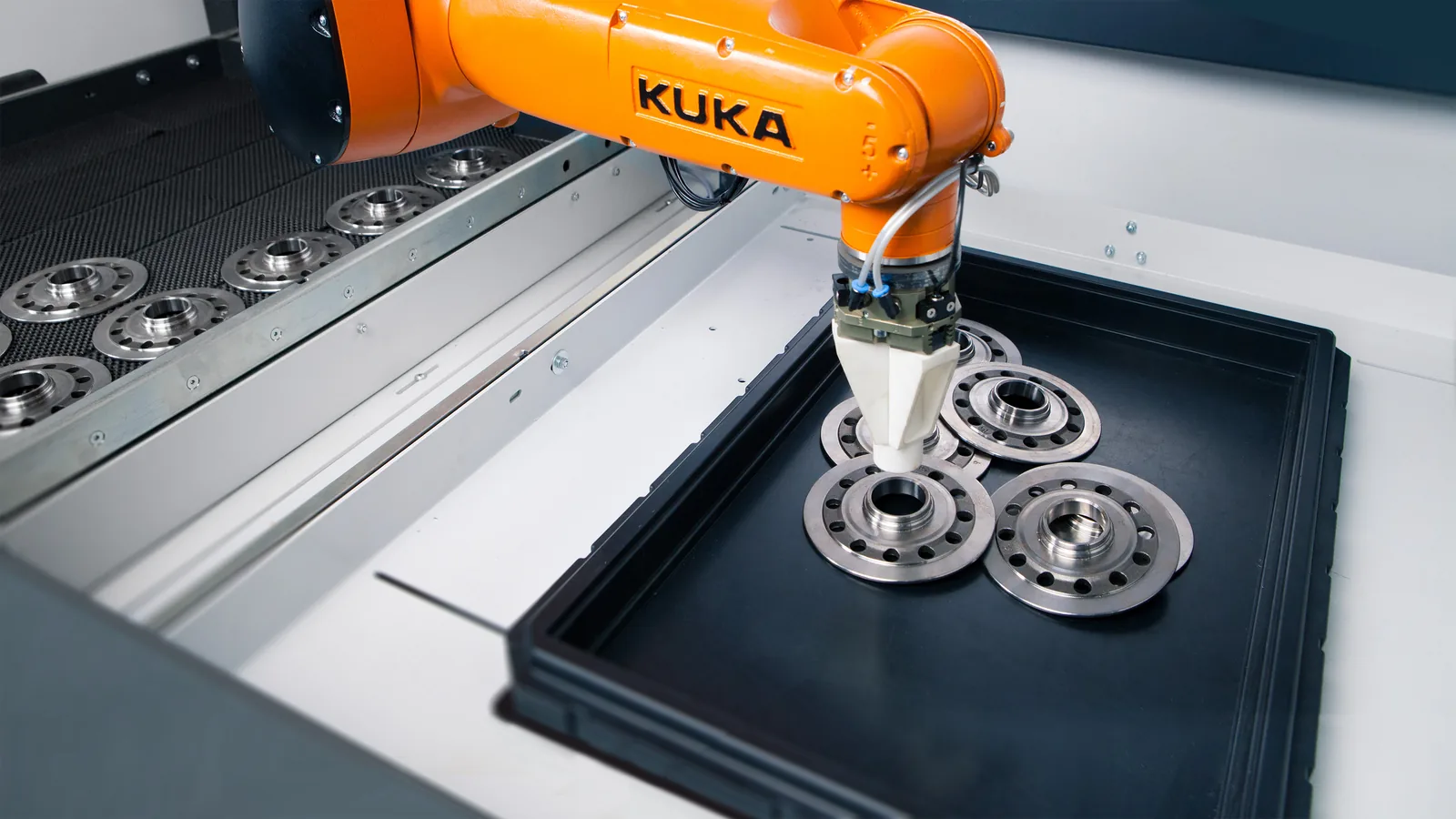
Three arms joined together, the ends as light as flying swallows
What is the Delta parallel robotic arm?
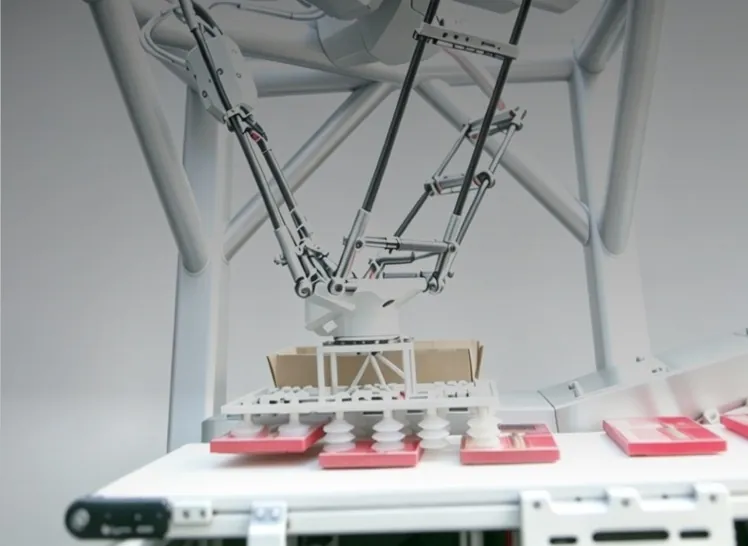
Delta robotic arms (commonly known as "Delta manipulators," "spider hands," or "parallel manipulators") are adoptedParallel structure: Three (or four) sets of parallelogram connecting arm arms, driven by three motors on topSimultaneously driven, jointly controlling the movement of the ends. This is fundamentally different from the six-axis and SCARA "series structure" (joint after joint)—Delta is "multiple arms connected in parallel to support one end."
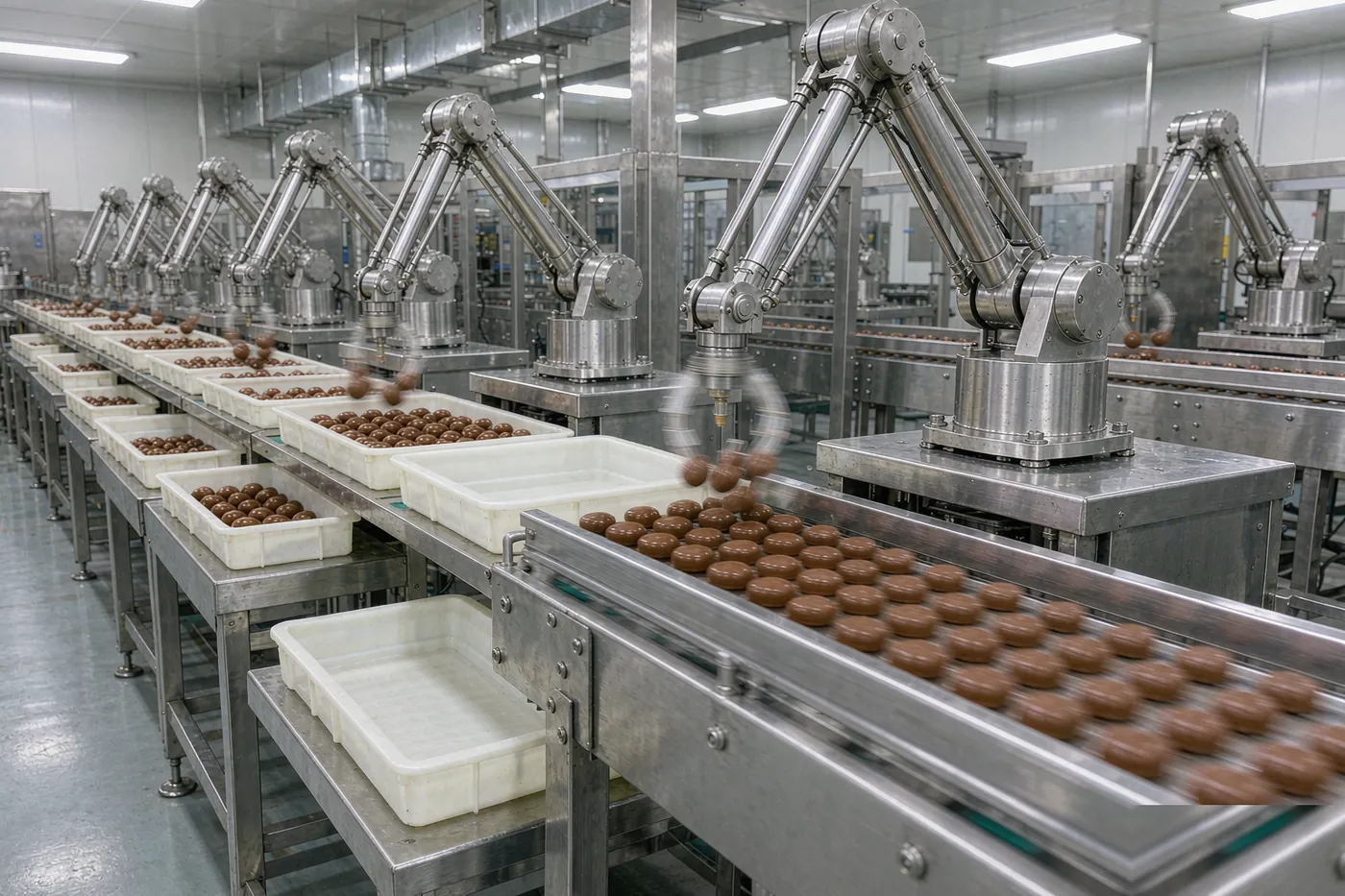
The greatest advantages of parallel structures:All drive motors are fixed on the top baseThe moving arm uses only lightweight carbon fiber/aluminum alloy, with the moving parts at the end extremely light and having minimal inertia, thus enabling itExtremely high acceleration and speed— Grabbing 120–300 times per minute is the norm, far exceeding any tandem robotic arm. The trade-offs are a small workspace (inverted cone), light load, and limited posture freedom.
| Parameters | Typical range | Engineering meaning |
|---|---|---|
| Degrees of freedom | 3 axes (+1 end rotation) | 3. Translation positioning + optional end corner rotation |
| Rated load | 1 – 8kg | Light-load high-speed is its positioning |
| Working diameter | 600 – 1600mm | The inverted conical workspace is the largest in the middle |
| Repeatability | ±0.05 – ±0.1mm | Meets sorting and pick-and-place needs |
| Rhythmic ability | 120 – 300 beats per minute | Core competitiveness indicators |
| Protection rating | IP65 – IP67 | The food industry can be flushed |
Advantages and limitations
Advantages:Unbeatable speed, a benchmark for high-speed sorting of light and small items; Low inertia at the end, low wear, and long service life; Open structure, easy to clean, food-friendly and pharmaceutical-friendly.
Limitations:The workspace is small and inverted conical (poor edge accessibility); Light load (generally ≤8kg); Minimal posture freedom (the end cannot be flipped). It is not a general-purpose robotic arm, but a "high-speed sorting specialized machine."
Delta's main battleground: high-speed sorting and packaging
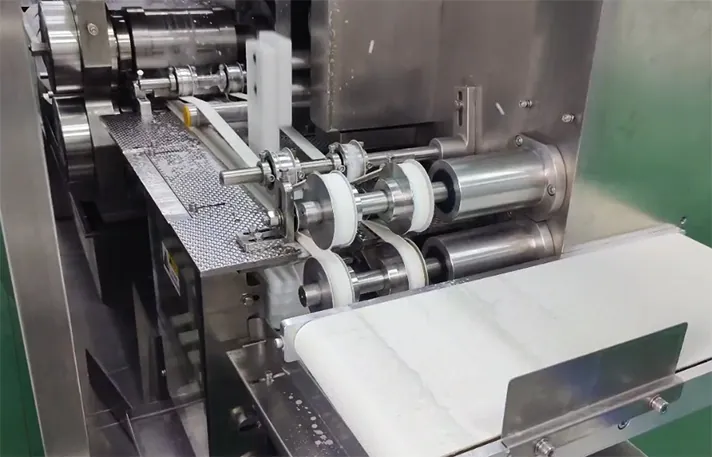
| Application process | Technical Points | Common industries |
|---|---|---|
| High-speed sorting | Visual guidance, queue management, dynamic capture | Food, pharmaceuticals, daily chemicals |
| Boxed and palletized | Trajectory planning and incoming material tracking | Food, electronics |
| Packaging Palletizing (Light Items) | Stack-type programs and beat matching | Food and fast-moving consumer goods |
| Loading and unloading (light small items) | Connect with dedicated aircraft | Electronics and hardware |
Why does Delta with visuals make the experience complete?
Delta's speed advantage is keyVisual system + conveyor belt trackingPerformance: millisecond-level visual recognition of incoming material locations, real-time tracking by conveyor encoders, and Delta dynamic conveyor tracking on moving conveyor belts in queues. Without vision, the Delta can only grab fixed positions, greatly reducing its speed advantage. This is also the technical threshold for Delta sorting lines.
Frequently Asked Questions
Does the Delta robotic arm look like a manipulator?
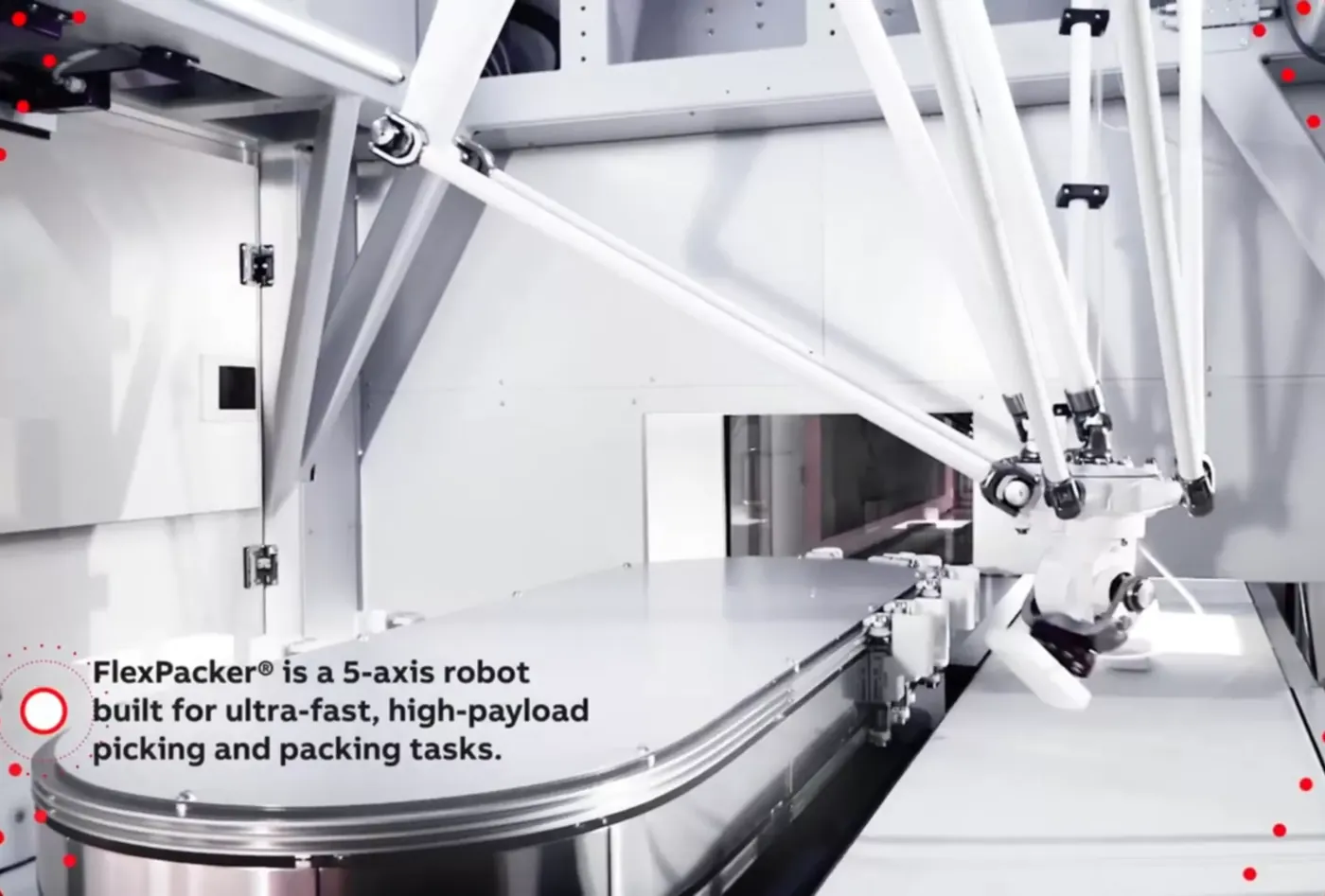
Not quite like it. It looks like three poles supporting a platform, more like a "spider" than an "arm," hence also called the spider hand. But customers still often call it the "Delta manipulator." This clearly shows that industrial robots are not all "arm" shapes; only by structural classification can you see their essence.
Both Delta and SCARA can sort the cattle, so how do you choose?
Speed and load: ultra-high speed (>120 cycles/min), light small items (<3kg), food and pharmaceutical cleanroom scenarios→ Delta; Medium and high speed, requiring a certain load or Z-direction press assembly, electronic precision assembly→ SCARA. Delta is faster but has a smaller workspace, while SCARA is more agile but slightly slower.
Why is the Delta load so small?
Because its value lies in speed, not in power. Light end + high acceleration = high beat; increasing the load means heavier structure and sacrificing speed, losing the significance of Delta. Heavy-duty sorting should use six-axis or palletizer models.
Our site is in the Delta parallel robotic arm (11 models)
Browse by brand
Below are the representative models of this structural form in our database. Click to view specifications, technical interpretation, and maintenance points. For the complete model list, please see each brand's page.
ABB (5 models)
KUKA (5 models)
Inovance Technology (1 model)
Need robot selection, maintenance, or application solutions?
Tell us about workpieces, procedures, beats, and budgets. Local teams in Nanchong will connect with us, and on-site inspections are available in Sichuan, Chongqing, Yunnan, and Guizhou. Robotic arm (manipulator) selection, second-hand purchase and sale, maintenance and repair all in one place.
Contact usView all varieties