
Service industry
View industrial robot applications by industry: 13 industry pages summarize brands, typical automated processes, and Henghuan's maintenance, second-hand sales, rental, and technical support services. From automotive, 3C electronics, to food and logistics, click to enter industry details.
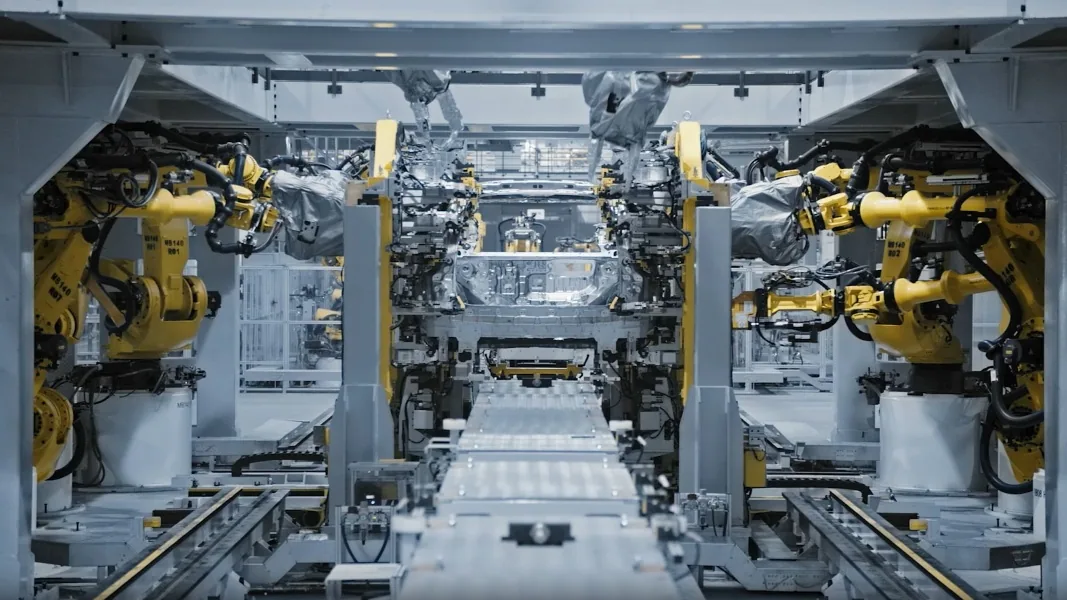
The automotive industry is the sector with the highest density of industrial robots. Automakers' spot welding, arc welding, and painting production lines are dominated by brands such as FANUC, ABB, KUKA, Yaskawa, and Kawasaki; Machine tool loading and unloading at parts factories...
View the industry solution → 3C Electronics and Semiconductors19 brands · 6 types of processesThe 3C electronics industry demands extremely high precision and rhythm: SCARA robots (high-speed models on the level of Epson and Yamaha) handle insertion, screw locking, and dispensing processes; The small six-axis is responsible for inspection and assembly; Clean...
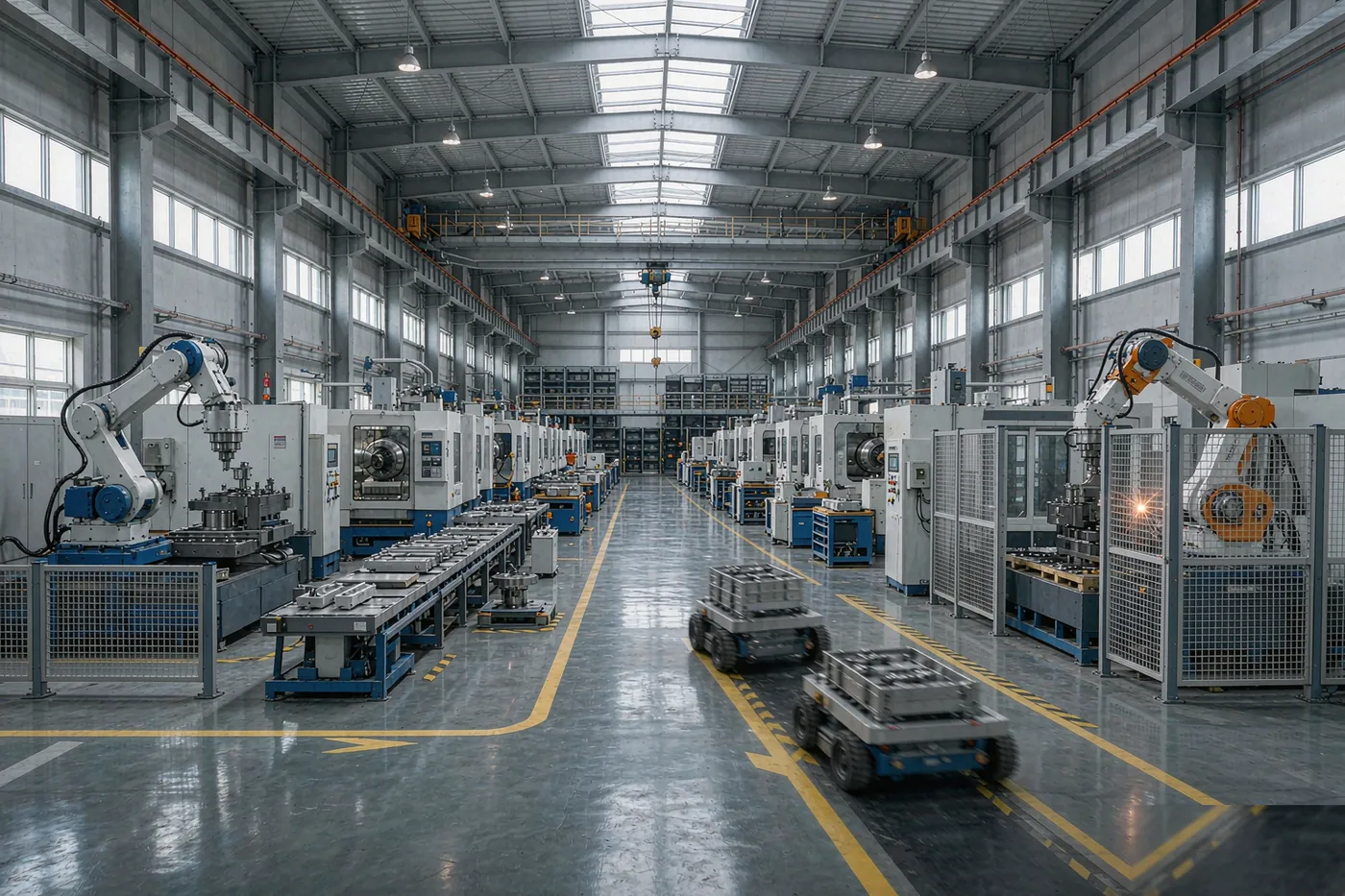
View the industry solution → Metal processing and machinery manufacturing19 brands · 6 types of processesRobots in the metalworking industry are mainly used for machine tool loading and unloading (CNC watching), stamping and wiring, welding structural parts, and deburring and grinding processes. Covers a wide range of loads from 6kg to 500kg, FAN...
View the industry solution → Casting, die casting, and forging4 brands · 4 types of processesCasting, die casting, and forging workshops face harsh environments (high temperatures, dust, oil stains), making them one of the industries most urgently needed for machine substitution. Pickup robots require heat-resistant protection kits, commonly Kawasaki MXP, FANUC...
View the industry solution → New energy and lithium battery photovoltaics12 brands · 5 types of processesLithium batteries (cell assembly, module packaging) and photovoltaics (wafer handling, string soldering and unloading) have seen the fastest growth in robot demand in recent years. The process features high-speed pick-and-place and precision assembly, combining cleanliness requirements, with the need for knotting and galloping...
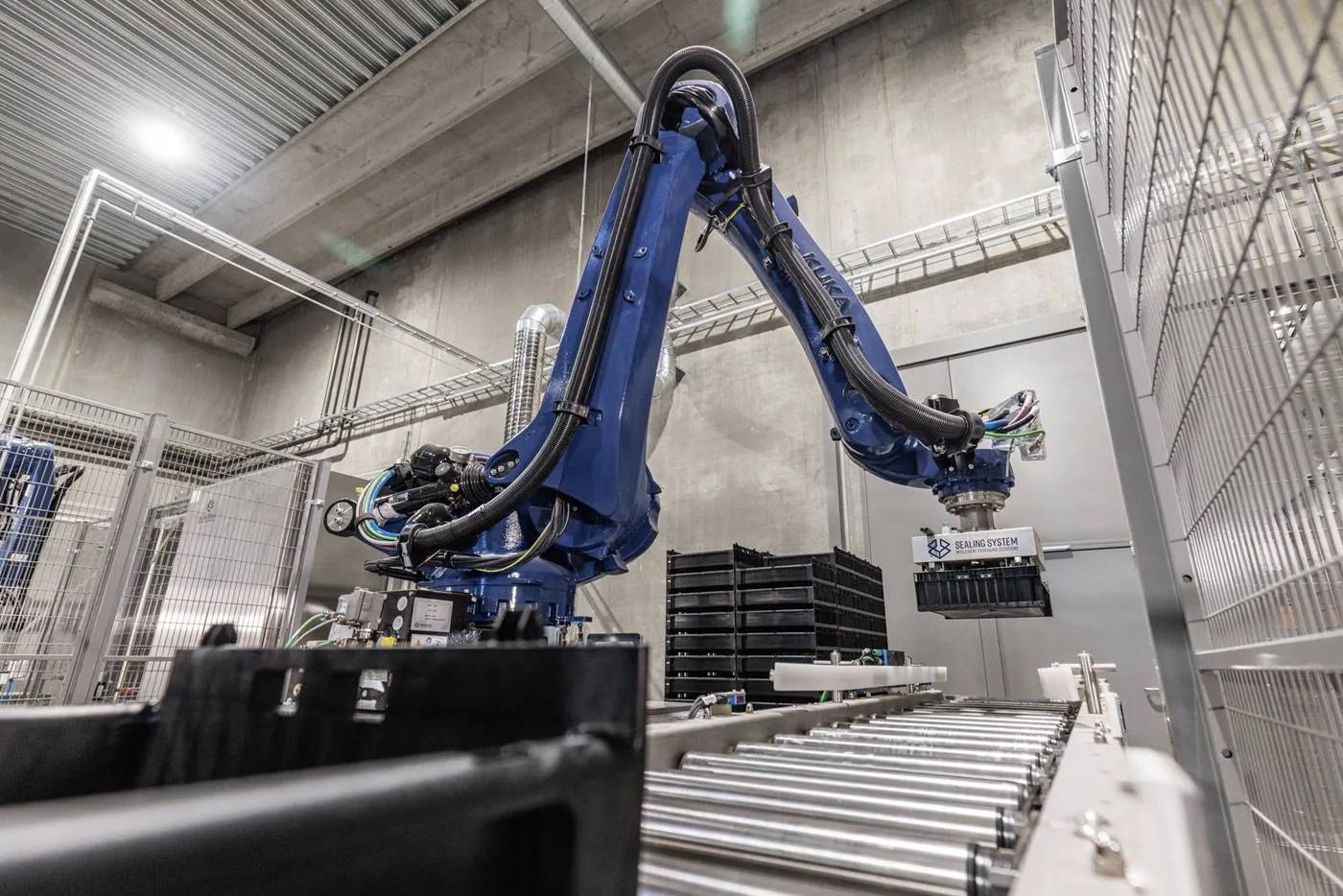
View the industry solution → Food and beverages16 brands · 4 types of processesRobots in the food and beverage industry are mainly used for palletizing, packaging, and sorting, while also meeting cleanliness and hygiene requirements (food-grade lubrication and wash-resistant protection). FANUC DR/3 and DR/6 series have acid and alkali resistance surfaces...
View the industry solution → Pharmaceuticals and medical devices10 Brands · 4 types of processesRobots in the pharmaceutical industry are used for filling, packaging, laboratory automation, and medical device assembly, requiring high cleanliness and repeatability accuracy. Collaborative robots (UR, JAKA, AUBO) should be used in laboratories and light assembly stations...
View the industry solution → Logistics, warehousing, and e-commerce9 brands · 4 types of processesRobots in the logistics industry focus on palletizing, depalletizing, and sorting as core processes, with heavy-load models (FANUC M-410iC, KUKA KR QUANTEC pallet, Yaskawa M...
View the industry solution → Plastics and Chemicals5 Brands · 4 types of processesIn the injection molding industry, the processes of part pickup, embedding, and gate removal are mature applications of robots; Domestic brands like TOPSTAR have a high market share in the injection molding machine supporting sector. The chemical industry focuses on handling and filling in explosion-proof environments. Henghuan is the annotator...
View the industry solution → Home appliances and home building materials10 Brands · 6 types of processesHome appliance manufacturing covers the entire process of sheet metal stamping, welding, painting, final assembly, packaging, and palletizing, making it one of the industries with the highest penetration rate among domestic robots (Estun, Inovance, Siasun, TOPSTAR). Home building materials focus on board handling...
View the industry solution → Aerospace and ship rail transit3 brands · 4 types of processesRobot applications in aerospace, shipbuilding, and rail transit mainly involve welding large structural parts, laying composite materials, and precision hole making, which require high trajectory accuracy and large arm reach (KUKA KR 1000 t...
View the industry solution → Research and education5 Brands · 3. Category 3 processesRobot training rooms in universities, vocational schools, and research institutes commonly use small six-axis and collaborative robots (UR, JAKA, AUBO, QJAR). Teaching equipment is used frequently, operators have varying experience levels, and failure rates are higher than production line equipment...
View the industry solution → General industrial and agricultural machinery11 brands · 4 types of processesIn addition to the above industries, robots have also widely entered traditional industries such as general machining, agricultural machinery manufacturing, feed, and ceramics. These industries have sensitive equipment budgets, and second-hand robots (in good condition, priced around 40-60 for new machines)...
View the industry solution →Industry perspective: Why "understanding the industry" is more important than "selling equipment."
The same six-axis robot is used completely differently in automakers, food factories, and machining plants: the automotive industry demands data traceability and 7×24 reliability, the food industry demands hygienic design and rapid washing, and the machining industry demands machine tool interlocking and changeover efficiency.The equipment is standard, and the craftsmanship is industry-specific— The success or failure of automation projects depends half on model selection and configuration, and half on the depth of understanding of industry process details.
The 13 industries we serve are divided into three tiers based on automation maturity:A mature tier(Automotive, 3C, Home Appliances) — Automation rate above 60%, demand focused on flexible upgrades, stock transformation, and digitalization;Expanding the Tier(New energy, pharmaceuticals, logistics, food) — Rapid increase in penetration rate, simultaneous construction of new production lines and renovation of existing lines;Starting echelon(Metal processing, casting and forging, general industry, agricultural machinery) — penetration rate below 30%, with single-point renovation and second-hand/rental models being the most active. The service focuses, investment logic, and decision-making methods differ significantly across different tiers of clients. Our solution team is grouped by industry to ensure that the engineers we connect with truly understand your jargon.
| Industry tier | Representative industries | Typical needs | Our service focus |
|---|---|---|---|
| A mature tier | Automobiles and parts, 3C electronics, home appliances | Flexible model change, stock upgrade, data traceability | Software and hardware upgrades, algorithm development, and 24×7 maintenance |
| Expanding the Tier | New energy, pharmaceuticals and healthcare, logistics and warehousing, food and beverage | Supporting new production lines, compliance verification, and peak flexibility | Application technology services, leasing, and document verification support |
| Starting echelon | Metal processing, casting and forging, general industry, agricultural machinery, home building materials | Single-site renovation, labor substitution, and budget sensitivity | Second-hand equipment, rental trials, and incremental, fast-rollout solutions |
| Special tier | Aerospace, scientific research and education | High-precision customization and teaching facilities | In-depth research and development, complete education equipment packages, corporate training |
Cross-industry common methodologies
Different industries share the same methodologies for implementation—we distilled project experience from thirteen industries into four disciplines:(1) Process validation comes first, In any industry or process, if the sample test fails, no contract will be signed;(2) Investment recovery quantificationThe proposal must include a payback period estimate (job savings, yield improvement, downtime reduction, and itemized discounting), avoiding empty talk like "enhancing competitiveness";(3) Phased rolling implementationStarting tier customers start with single workstations, while mature tier clients switch in batches according to production lines, avoiding large one-time investments;(4) Empowerment upon delivery, training the client team to operate independently and maintain routines, complete handover of program documentation, and no "black-box binding" business.
For customers in Southwest China, there is another localization dividend: the service radius of coastal integrators does not reach counties, and the response speed of OEM outlets cannot keep up with production line shutdowns—the local team (Yilong base + Nanchong resident engineer) has pushed the full chain response from "survey-plan-implementation-maintenance" to hourly levels, which is our confidence in placing all eight major business operations in northeastern Sichuan.
Industry Q&A
Our industry website doesn't list it—can we provide services?
Yes. The 13 industries are the mainstream summary, and actual projects also cover subfields such as textiles, printing, glass, ceramics, footwear, and apparel—the process logic of industrial robots is interconnected (four major families: handling, connection, removal, and inspection). When entering new industries, we conduct process research and sample validation, using methodologies to fill in industry knowledge, pretending to be familiar with what is not familiar.
How do we determine which process our factory should start automating?
Three-dimensional scoring method: Labor pain points (high scores for recruitment difficulties / high intensity / high turnover rate), quality pain points (high scores for high labor fluctuations / many customer complaints), investment return (number of positions× wages÷ equipment investment, short payback period scores high). We offer free full-plant process scans and generate an "Automation Opportunity Checklist" sorted by score, allowing you to implement step by step according to the list.
Can I visit cases from other companies in the same industry?
Arrangements can be made (subject to customer consent). We have on-site visits for welding, loading, unloading, and palletizing projects in Sichuan and Chongqing. Visiting and exchanging with industry clients helps decisions the most—the way the equipment runs is more convincing than a hundred-page proposal.
Need business cooperation?
Feel free to contact us to explain your specific scenario and needs, and we will communicate and coordinate with you in a timely manner.
Contact us immediately