
Research and development of fixtures and end effectors
From workpiece drawings to finished fixtures: integrated delivery of grabbing solutions, force verification, quick-change design, and machining and assembly.
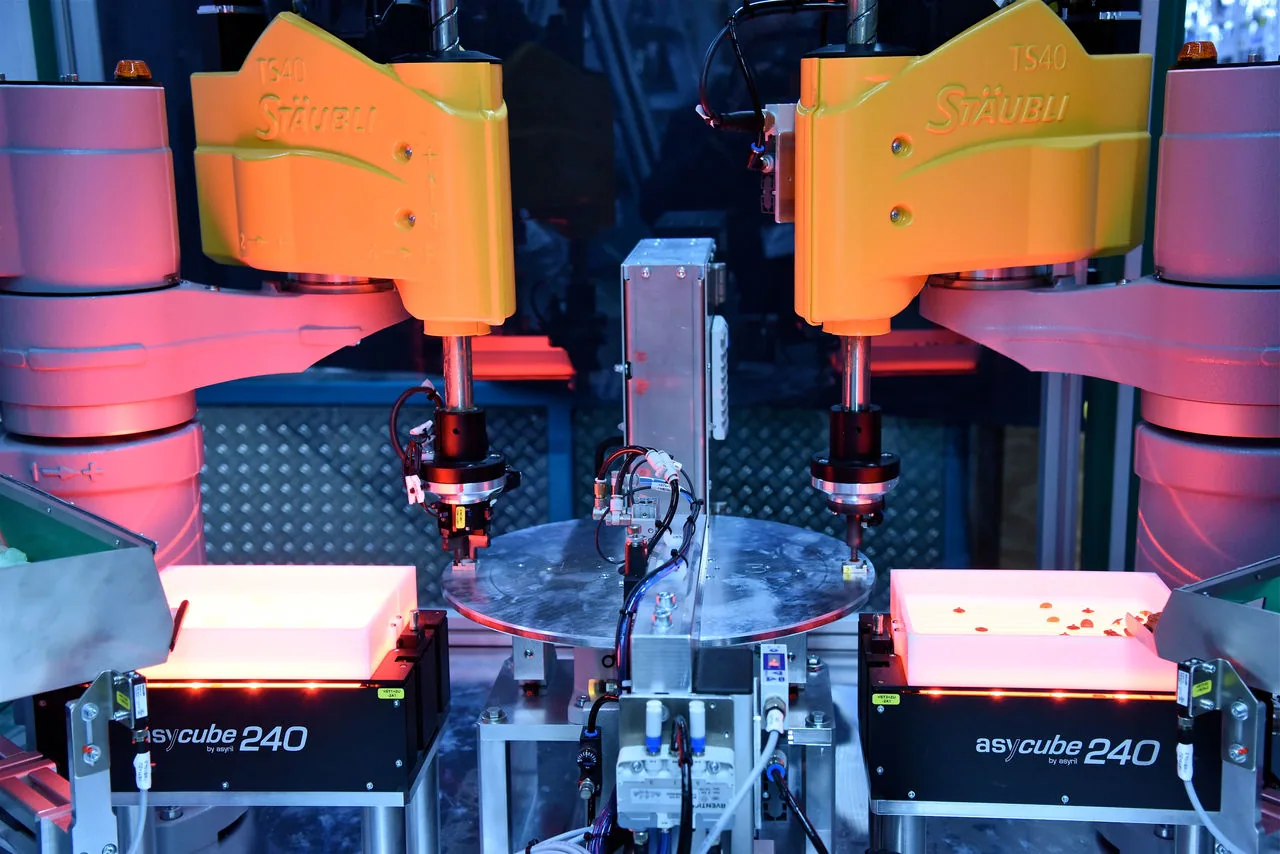
The end effector is the only point of contact between the robot and the workpiece; if not designed well, "the robot is fine, but it just can't hold it securely." We create grabbing plans based on workpiece material, surface condition, beat rate, and attitude changes, verify output calculation reports, and design key fixtures for error prevention and lifespan.
Common terminal types
| Type | Suitable for workpieces | Design Points |
|---|---|---|
| Qi moves hands and claws | Regular rigid parts | Clamping force matches stroke, with fingertip pads to prevent scratches |
| Vacuum suction cup | Boards / Cartons / Smooth surfaces | Suction cup material is redundant with vacuum levels, considering breathable surfaces |
| Magnetic end | Magnetic steel panels | Magnetic disconnection residual control, multi-magnetic circuit anti-bias load |
| Quick change device | Multi-process co-station | Locking signal feedback, with automatic connection of the pneumatic circuit |
| Specialized fixtures | Welding/palletizing/assembly | Unified positioning reference takes into account thermal deformation and slag removal |
Design delivery content
- Grabbing Scheme and Force Verification Calculation Report (including safety factor)
- 3D models and machining drawings, key outsourced parts list
- In-house assembly and load testing video
- On-site installation, teaching cooperation, and maintenance instructions
Frequently Asked Questions
Can you make it with just samples without drawings?
Yes, you can. We perform reverse measurements and produce drawings, first confirming the drawings before processing. Samples are properly stored and returned together with the fixtures.
End effector: the most "close-to-use" part of robot applications
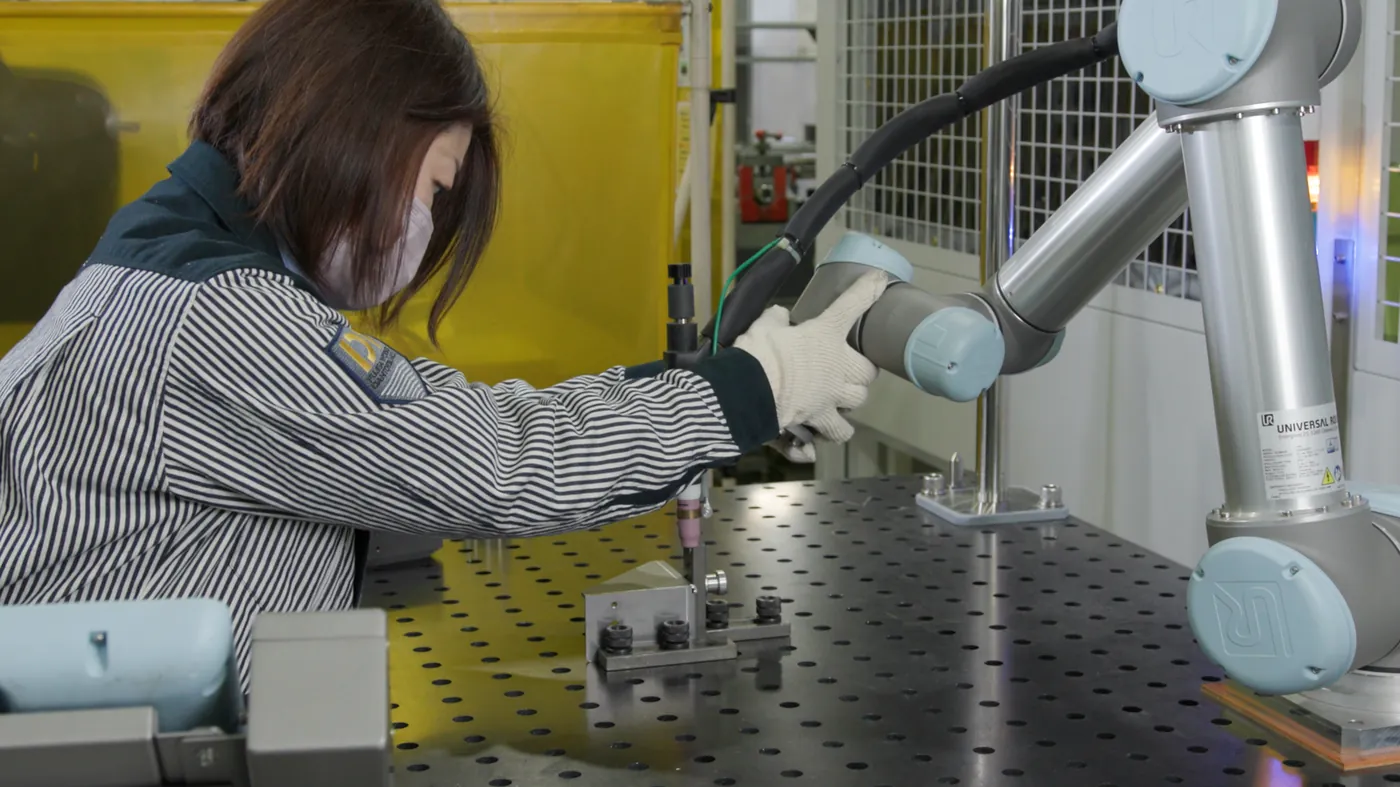
The End Effector (EOAT, End-of-Arm Tooling) is the part of the robot that comes into direct contact with the workpiece. Its design quality directly determines the grasping success rate, upper beat limit, and surface quality of the workpiece. Industry statistics show that about 30 to 50% of shutdown failures in automated production lines are related to the end of the line—suction cup leaks, gripper wear, quick change failure, and signal loss. A fixture with insufficient rigidity or incorrectly selected fixtures will prevent even the most precise robots from producing qualified products.
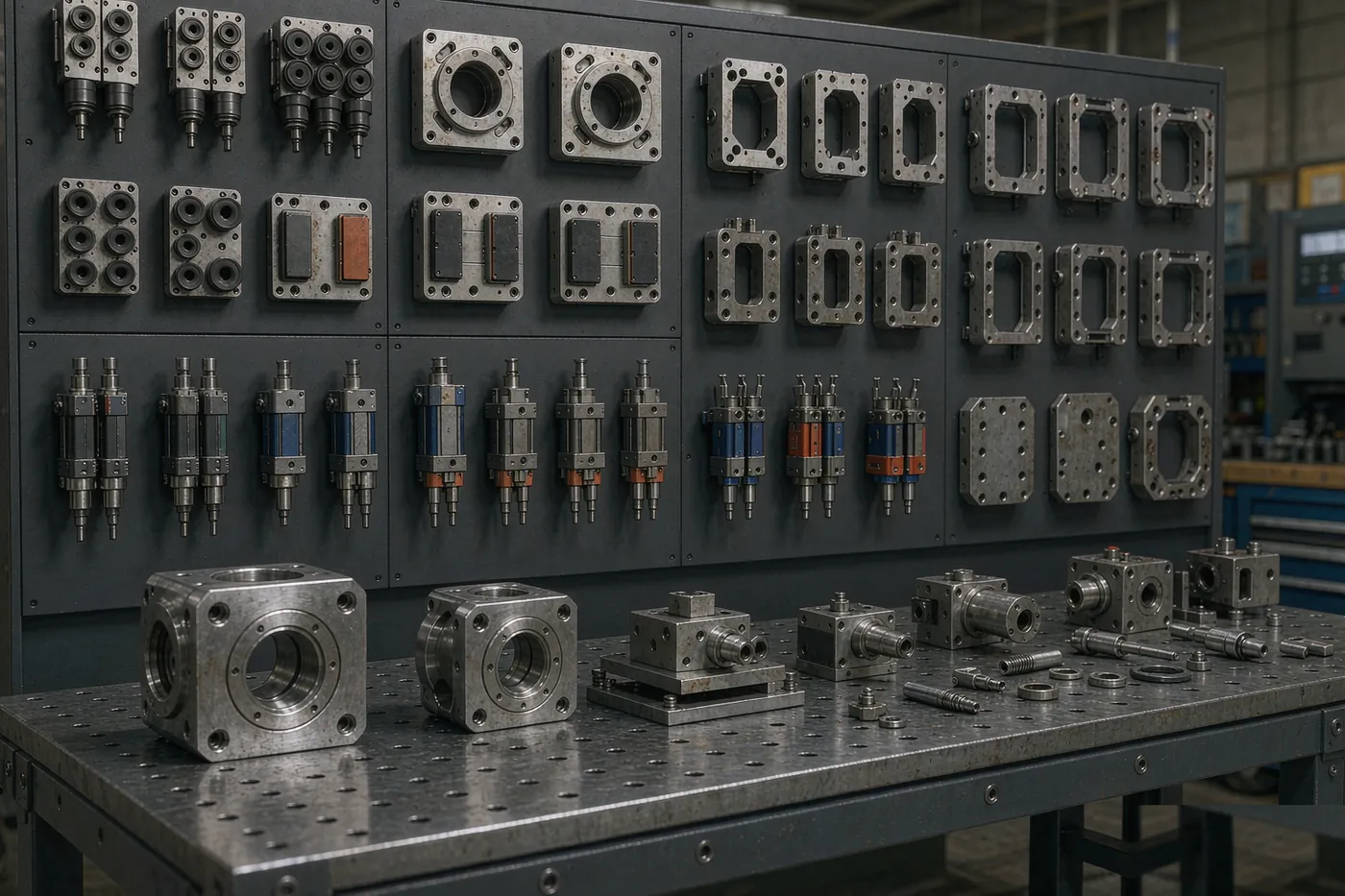
| Terminal form | Applicable scenarios | Key points for model selection | Common failure modes |
|---|---|---|---|
| Vacuum adsorption | Flat surfaces such as plates, cartons, glass, and sheet metal | Suction cup material (nitrile/silicone/fluorogel) matches surface condition; Vacuum degree and response time; Independent control of the porous position | Suction cups are aging, leaking air, dust clogs the vacuum generator, and multiple thin plates can be adsorbed simultaneously |
| Pneumatic claws | Small and medium-sized workpieces with regular shapes | Matching clamping force with workpiece strength; Fingertip material is non-slip and scratch-resistant; Travel and opening speed | Fingertip wear and slipping, cylinder seal aging, and reduced clamping force leading to part drops |
| Magnetic end | Magnetic conductive plates, stamped parts, castings | Permanent magnet/electromagnetic selection; Adsorption force and workpiece weight safety factor: ≥3; Demagnetization treatment | Residual magnetism leads to workpiece adhesion, magnetic attenuation, and demagnetization at high temperatures |
| Flexible/force-controlled ends | Deformable parts, precision assembly, human-machine co-station | Force control accuracy and response; Flexible finger material; Collision detection threshold | Force sensor drift, flexible component fatigue, calibration failure |
Five engineering disciplines in fixture design
Rigidity priority:The deformation of the clamp under maximum load + maximum acceleration is controlled within one-third of the workpiece's positioning tolerance. Lightweight openings should avoid water droplets; steel inserts should be used on key load-bearing surfaces of aluminum alloy bodies.
Unified positioning benchmark:The fixture positioning surface coincides with the workpiece's process reference, avoiding cumulative errors introduced during reference transitions; Multi-station fixtures ensure consistent positioning across all stations.
Failure Safety Design:During gas and power cutoffs, the workpiece does not fall (spring reset clamping or vacuum energy storage), or falls into a controlled area; Detection signals enter the safety circuit in place.
Changeover efficiency:Quick changer for multi-variety mixed lines + programmatic switching, mechanical change time controlled within 5 minutes, zero positioning repeatability within ±0.05mm.
Maintainability:Wear parts (suction cups, fingertips, seals) require no tool replacement; Design detection markings for wear areas; The spare parts list is handed over along with the fixtures.
Our fixture delivery content
- 3D design drawings (STEP/PDF) + machining drawings + BOM list
- Rigidity verification and motion simulation report (key fixtures provided)
- Assembled finished fixtures + in-house gripping test records
- Robot side flange adaptation (matching interface standards of various brands)
- IO signal definition table + co-commissioning with robot programs
- Vulnerable parts list and first spare parts package, operation and inspection training
Frequently Asked Questions
Can it be customized according to the flange interface of our existing robots?
Yes. We have technical documentation libraries for flange and IO interface standards from 21 brands including FANUC, ABB, Yaskawa, Kawasaki, KUKA, Inovance, and Estun. We provide interface diagrams for each model, ready to use as soon as you install them.
If a fixture breaks, can you fix it alone?
Can be repaired separately. Cylinders, vacuum generators, sensors, fingertip suction cups, etc. are standard parts. We perform inspection, replacement, and structural repair, generally completing within 3–5 working days. Urgent parts can be expedited.
How to solve the problem of changing molds across multiple varieties in mixed lines?
Two routes: one is pneumatic quick-change pallets + multiple sets of ends, with robots automatically changing outfits, suitable for small varieties and large batches; Second, adaptive flexible ends (force control + adjustable fingertips), a single end set compatible with multiple varieties, suitable for small batches. We will compare and select solutions based on your number of varieties and your beat requirements.
Tell us your production line requirements
Process, cycle, budget, site conditions—the more specific you are, the more executable the plan. Local teams in Nanchong will be coordinated, and on-site inspections will be available in Sichuan, Chongqing, Yunnan, and Guizhou.
Contact usView all services