Production line automation integration
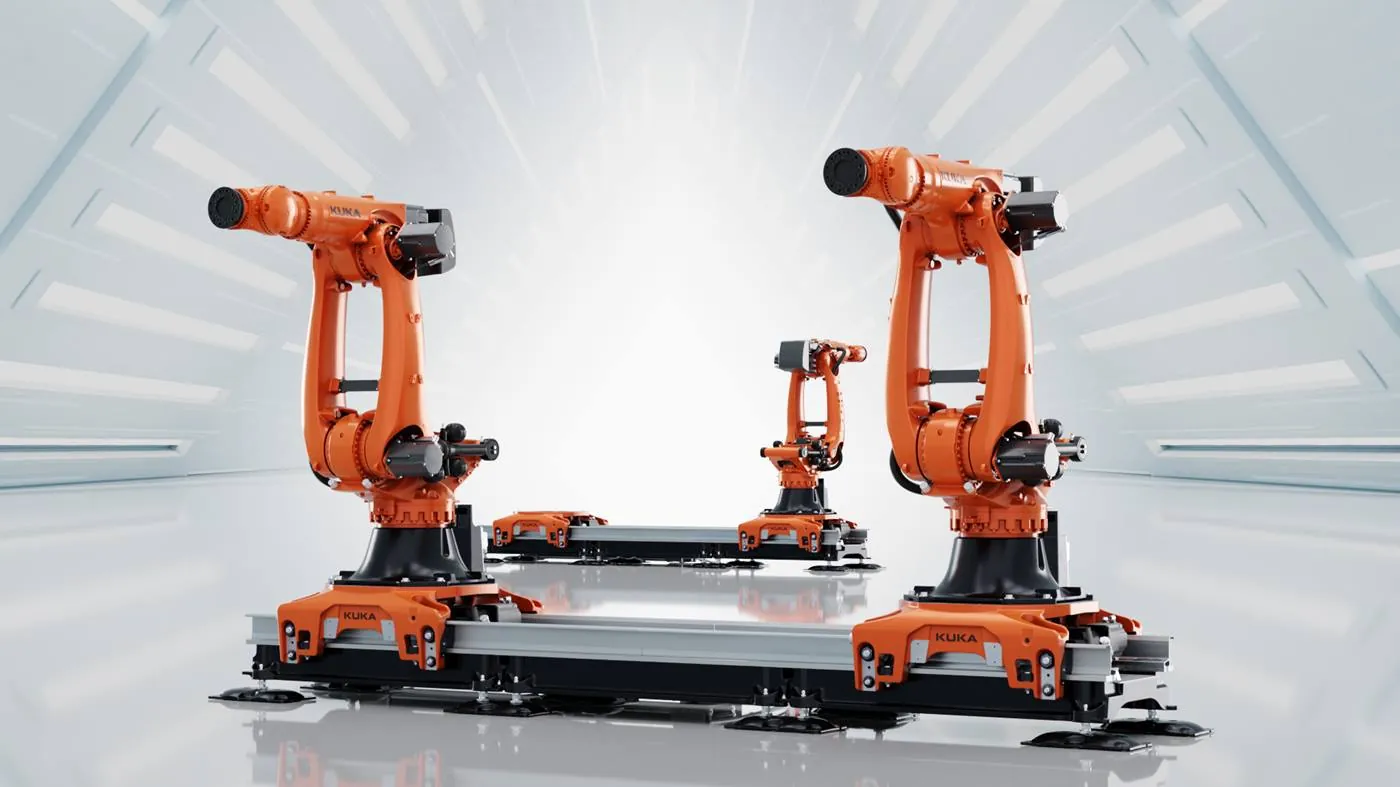
Loading and unloading, conveying positioning, and interlocking integration with machine tools, injection molding machines, and stamping equipment allow robots to truly blend into the production line takt.
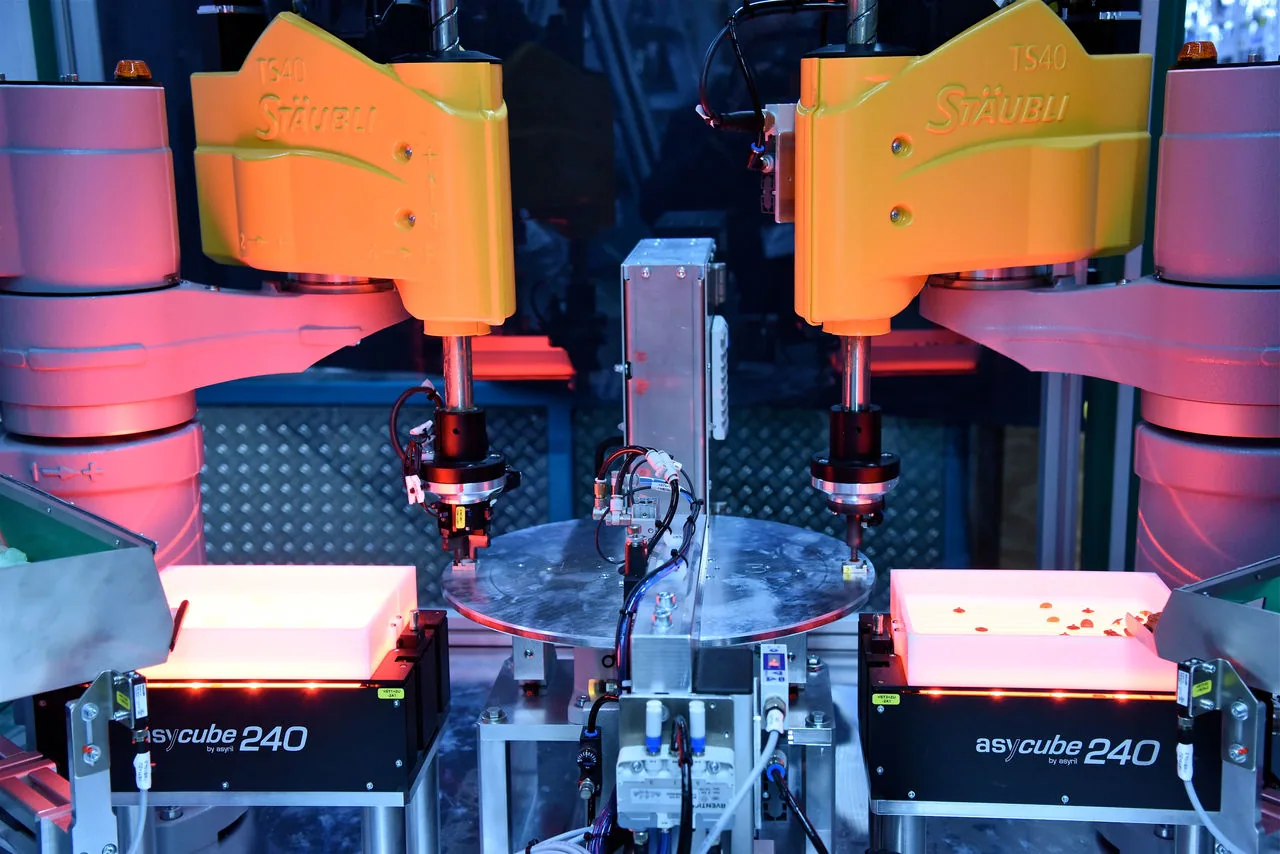
No matter how smoothly a standalone robot runs, if it doesn't match the signal with the host, it's useless. The core of integration work is the interfaces: mechanical interfaces (material platform, positioning, safety door), electrical interfaces (IO/bus/safety circuit), program interfaces (modifying the host program in coordination). Let's clarify the three types of interfaces at once.
Typical integration scenarios
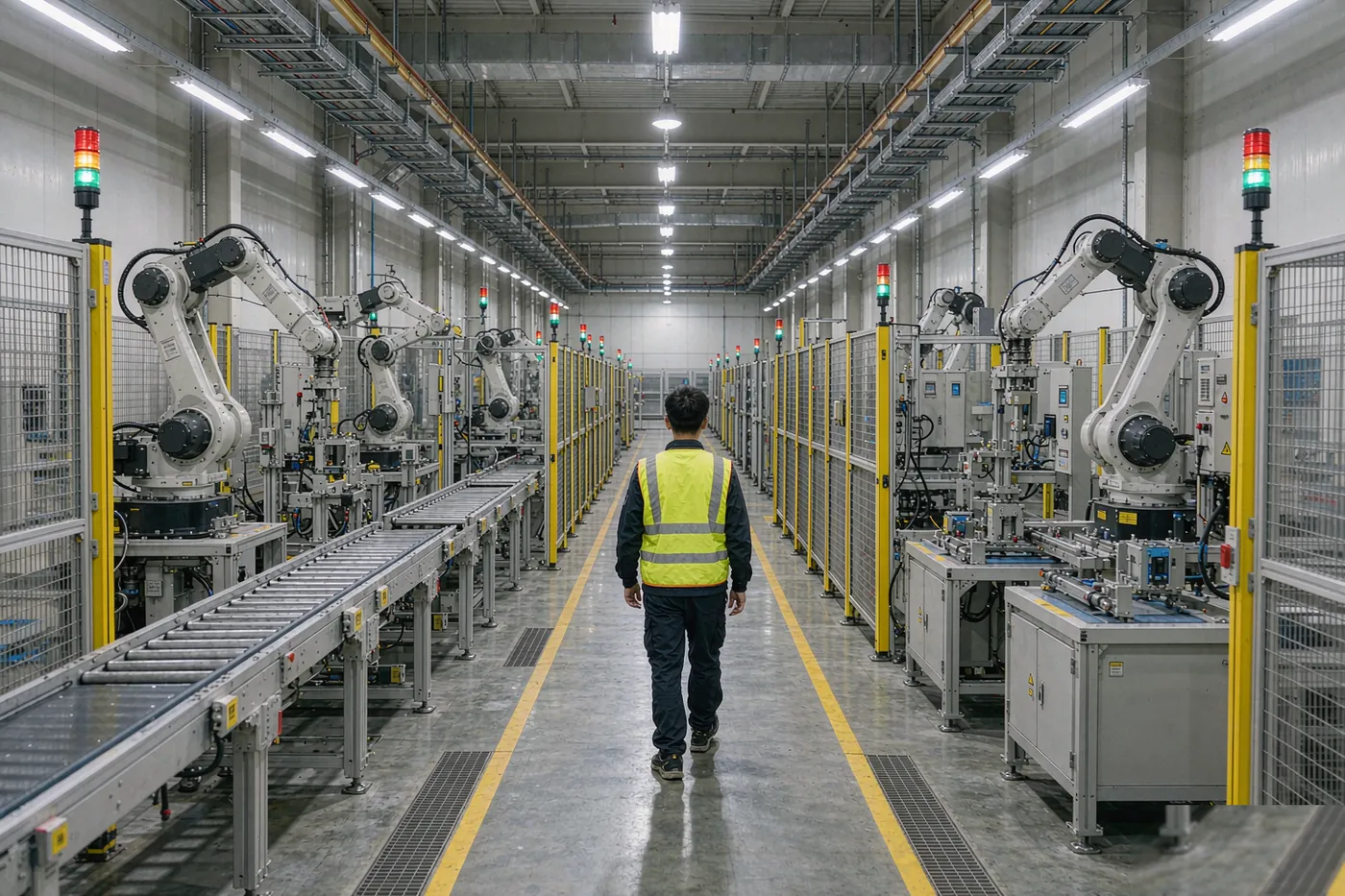
- CNC lathe/machining center loading and unloading: silo + dual-station platform + door interlock
- Injection molding machine part removal: in-mold parting, sprue port separation, placement and conveying
- Stamping wiring: depalletizing, feeding, inter-process handling, palletizing
- Inspection workstation coordination: visual localization, pass/fail diversion
Interlock and safety
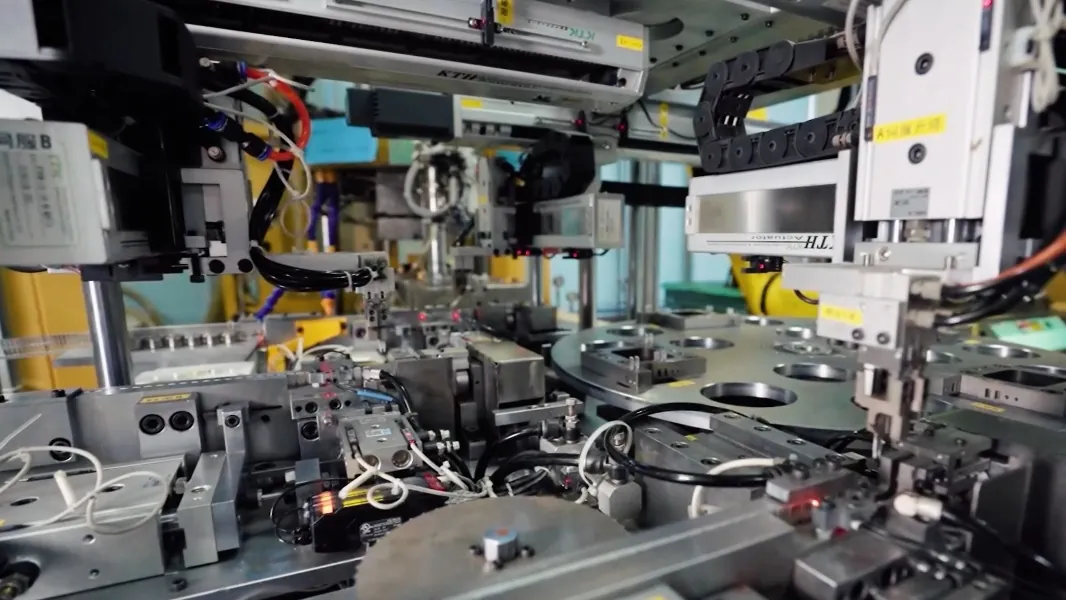
Safety doors, light curtains, and emergency stops are designed according to the circuit rather than stacked by points: any trigger triggers simultaneously with the robot and main unit into a safe state, and the recovery process includes confirmation steps to prevent accidental activation and injury. All safety circuits are archived in drawings and tested point by point during acceptance.
Delivery and acceptance
- 01Interface list confirmation (mechanical/electrical/program signatures among all parties)
- 02In-house pre-commissioning (main unit signal simulator)
- 03Live online and beat verification
- 04Operation and maintenance training, handover of completion documentation
Production line integration: connecting single-point automation into a breathing line
Single-station automation solves "point" problems, while production line integration solves "line" problems: cycle balancing, logistics connection, signal interlock, and fault linkage. A common pain point in the industry is—even single stations are advanced, but when connected, they get stuck in materials, run idle, and stop all at once. The core of integration is not to put devices together, but toUnified control architecture enables full line coordination。
The current main line of integrated technology is "synchronization of information flow and logistics": robots are interlocked with conveyor lines, positioners, silos, AGVs, and vertical warehouses via PLC central control; status and output data are reported to MES via OPC UA / MQTT, and abnormalities are downgraded according to the plan rather than full line emergency stops.
| Integrated scenarios | Key design points | Common Risks and Countermeasures |
|---|---|---|
| Centralized loading and unloading of machine tool groups | One robot manages the scheduling logic, silo cache design, and signal protocols for handshakes with 2–6 machine tools | Machine tool failure causes the robot to wait idly—the design skips logic and cache bits |
| Palletizing, packaging, and warehousing connection lines | Programmized palletizing type, conveyor and flow separation, winding machine linkage, and interaction with WMS inbound information | Stack type switching stuck — programmatic stack type library + first piece confirmation |
| Multi-station linkage on welding production lines | Positioner and robot collaboration, centralized management of welding parameters, and separation of smoke and dust safety | Inter-station interference—layout simulation takes the lead, safety light curtains are zoned interlocking |
| Digital transformation of old lines | Sensors and data collection are installed without moving the main equipment, integrating MES data | Outdated PLCs lack sufficient communication capability—install gateways or partially replace control systems |
Beat-Balance: The first math problem of the integration project
The entire line output is determined by the slowest station. The first step in integrated design is to draw a beat list for each workstation, identify bottleneck stations, and then choose one of the three:Split(Bottleneck processes are divided into two parallel stations),Speeding up(Optimized trajectory overlaps with action, usually squeezing out 10%–20%),Cache(Buffer zones are set before and after the bottleneck to absorb fluctuations.)
Our approach is to conduct beat simulation during the planning phase, using actual equipment speed parameters (not ideal values) to run virtual production and expose bottlenecks in advance. Many projects can identify the basis for decisions like "buying one more piece of equipment" or "buying one less piece of equipment" at this step, avoiding wasted investment.
Interlock and safety design checklist
- Emergency stop zones: Full-line emergency stop and zoned emergency stop graded design to avoid a single fault and full-line stop
- Safety light curtains and door locks: When personnel enter the area, the speed is automatically slowed down or shut down, and the signal is sent to the safety PLC
- Interlock logic documentation: All handshake signals, permitted conditions, and exception plans between workstations are recorded as signal tables and handed over with the equipment
- Downgrade operation plan: In the event of a single-station failure, the entire line should be rerouted or buffered according to the plan to maximize utilization
- Data Reporting: Output, status, and alarms are reported under a unified protocol, supporting MES dashboards and traceability
Frequently Asked Questions
Are you the general contractor or subcontractor for the integration project?
You can either do general contracting or work with them. In the general contracting model, we are responsible for the entire process of planning, equipment, installation, joint commissioning, and acceptance; In the coordinated mode, we handle the robot island and interlock section, and connect with your other suppliers according to the signal meter, with interface responsibilities defined in writing.
How long will the renovation of old production lines be stopped?
Design with "segmented switching": first pre-install and pre-schedule new workstations nearby, then switch during holidays or planned downtime windows; single-segment switching usually takes 1–3 days. Before the upgrade, a shutdown window schedule is issued to minimize production losses.
How can whole-line data be integrated with our existing systems?
Mainstream MES/ERP supports OPC UA, Modbus TCP, MQTT, or database intermediate table integration; For factories without MES, we provide lightweight SCADA boards to run first, with data models reserved for upgrade interfaces.
Tell us your production line requirements
Process, cycle, budget, site conditions—the more specific you are, the more executable the plan. Local teams in Nanchong will be coordinated, and on-site inspections will be available in Sichuan, Chongqing, Yunnan, and Guizhou.
Contact usView all services