
AR1730 Six-axis robotic arm (manipulator)
25kg / 1730mm working radius
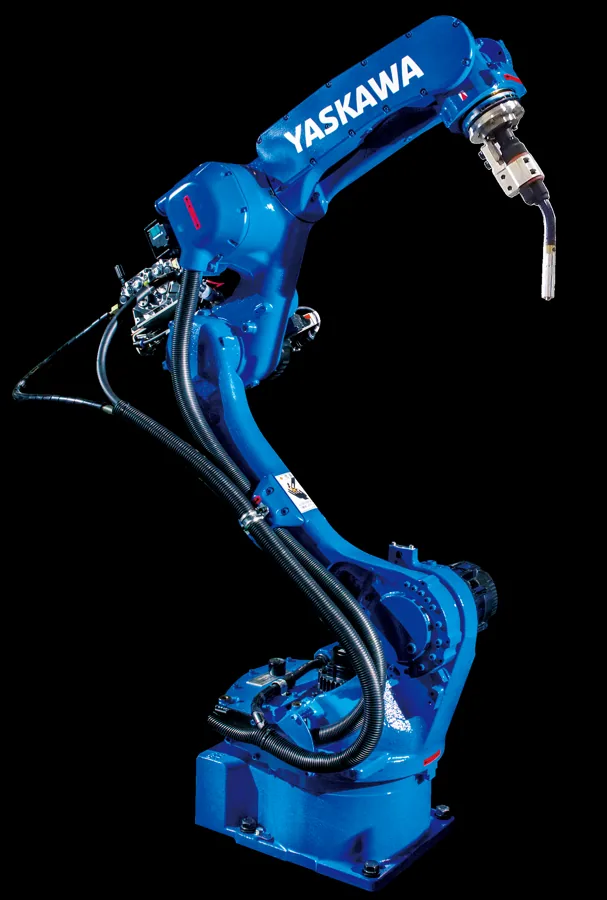
AR1730 Specifications

AR1730 payload capacity 25kg, reach 1730mm, 6-axis multi-articulated type.
AR Series · Series technical features
Specialized for arc welding, high speed and high precision, supporting various welding processes.
Equipped with Yaskawa's self-developed Σ-7 servo system, it operates swiftly and offers high repeatability.
Supports loads from 0.5kg to 800kg, covering welding, handling, palletizing, spraying, and other scenarios.
High IP protection rating, suitable for harsh working conditions such as dust, oil stains, and humidity.
AR Series · Other models in the same series
Compare load and reach to choose the model that best suits your process.
AR1730 model positioning and working condition adaptation

AR1730 An industrial robot model belonging to the Yaskawa AR series, with a rated load of 25kg and a motion radius of 1730mm. Yaskawa's technical foundation is self-developed servo technology, fast motion response, and an open secondary development ecosystem for MotoPlus; The control platform is YRC1000, and the program ecosystem consists of INFORM language + MotoPlus open platform.
From the perspective of working condition adaptation, typical applications for medium-duty load (25kg) positioning are:Welding, machine tool wiring, medium-sized palletizing, and die-casting part removal。 The long reach (1730mm) covers multiple stations and large pallets, reducing robot movement or coordination with ground track expansion. This level is the main stage for welding and loading; when selecting a positioner or dual stations, pay attention to the total cycle time and interference zone planning.
| Parameters | Engineering interpretation and usage recommendations |
|---|---|
| Rated load capacity: 25kg | It is recommended to reserve a load margin of 20%–30%; Verification is made by combining end self-weight + workpiece + imbalanced load inertia, especially sensitive to high-speed conditions |
| Radius of motion: 1730mm | Determine the radius of the workcell layout: bins, tooling, and fences are bounded by maximum arm span + safety distance; Verify the accessibility of each pick-and-place point during cross-station service |
| Number of axes: 6 | Six-axis all-posture capability, the preferred choice for complex trajectory and inclined surface operations |
| Controller YRC1000 | Decide on the process ecosystem, spare parts channels, and second-hand residual value; Currently, spare parts channels are smooth, and repair and upgrade paths are mature |
| Movement radius: 1730mm | Source: official YASKAWA product page |
Control systems and common failure modes
The AR1730 comes with a YRC1000 controller, programming language and development environment based on INFORM + MotoPlus open platform. Maintenance of this generation of control platforms focuses on three basic components: power, storage, and cooling—most "sudden downtime" can be detected in advance when preventive maintenance is in place.
| Failure mode | Typical performance | Disposal recommendations |
|---|---|---|
| Low battery voltage alarm | Low battery voltage alarm (risk of loss of origin data, requires power replacement while powered on) | Included as a mandatory inspection item for annual maintenance, with spare parts stocked in advance |
| Servo driver alarm | Servo driver alarm (overcurrent/overload, often related to motor aging or excessive load) | Initial interpretation of alarm codes by reference with manuals, remote diagnosis allows for early positioning |
| Encoder cable interference or core breakage causing position deviation alarms | Encoder cable interference or core breakage causing position deviation alarms | Daily inspection coverage, with abnormal trends (abnormal noises/temperature rise/errors) recorded |
| High-frequency faults in the teach pendant's buttons and cables | High-frequency faults in the teach pendant's buttons and cables | Quarterly dust removal maintenance and cabinet temperature monitoring |
| Maintenance projects | Cycle recommendations | Key points |
|---|---|---|
| Battery replacement once a year (strict requirement to preserve origin data) | Every year | Battery replacement once a year (strict requirement to preserve origin data) |
| Refuel the gearbox grease according to operating hours | By operating hours | Refuel the reducer grease according to operating hours, paying attention to the grease grade |
| Regularly inspect the servo motor carbon brushes (old model) and brakes | Periodically | Regularly inspect the servo motor carbon brushes (old model) and brakes |
| Cable and drag chain inspection | every six months | Insulation, shielding, and bending radius inspection of power and encoder lines, as well as wear of cables inside the drag chain, are the main causes of intermittent faults |
| Zero point and accuracy retest | Every year | Repeatability measured by dial gauges or laser trackers, drift trend digitization—accuracy degradation can be seen six months in advance |
| Control cabinet dust removal and fans | Every quarter | Filter cleaning, fan speed and noise checks, cabinet temperature recording; Dust environments shorten the cycle |
Henghuan's service capabilities for AR1730
This site is a third-party robotics technology service provider. The AR1730 supports eight major business services (listed by service frequency for each model):

- Maintenance and repair: For AR1730's on-site diagnostics, board-level repairs, and annual maintenance contracts—battery replacement once a year (a strict requirement to preserve origin data), we implemented brand-exclusive items according to SOPs, with Sichuan-Chongqing responding on the same day.
- Used & in-stock robot sales: High residual value second-hand, ample spare parts for YRC1000/DX200; For XRC/NX100 old cabinets, it is recommended to evaluate the control system; AR1730 or equivalent models in the library come with a full functional test report and a 12-month warranty.
- Sales of new industrial robots: When adding new production lines or replacing entire batches, we conduct cross-brand selection comparisons based on process requirements (including Yaskawa models of the same class) and provide configuration and pricing plans.
- Applied technology services: Process programming, trajectory optimization, tap time potential, and mold change formula management for the AR1730, with targeted commissioning according to welding, machine tool wiring, medium-sized palletizing, and die-casting part pickup.
- Research and development of automation equipment: Custom fixture ends, peripheral tooling, and safety fences for AR1730, with interfaces designed according to Yaskawa flange and IO standards.
- Robot rental: For short-term capacity or process validation periods, AR1730 equivalent in-stock models can be rented, including transportation, installation, and commissioning, with flexible lease terms and flexible purchase options.
Common issues with this device
Is it easy to find AR1730 spare parts?
Yaskawa: The spare parts channel for this generation is smooth; we have in-stock or short-cycle channels for standard parts such as drivers, power modules, batteries, and teach pendant components; Replace the battery once a year (a strict requirement to preserve origin data). It is recommended to configure the battery according to the annual maintenance contract.
With a nominal load of 25kg, how much can it actually handle?
The rated load is the static load limit of the flange surface. In actual selection, three factors must be considered: the self-weight of the end fixture (vacuum suction cup groups or grippers often account for 2–5kg), the inertia generated by the workpiece offload (checked according to the inertia ratio when the center of gravity deviates from the flange center), and the dynamic load during high-speed movement. The conventional engineering practice is to keep the "end + workpiece" within 70%–80% of the rated value to ensure cycle time and service life.
If the equipment's accuracy deteriorates after several years of use, how can it be restored?
According to the inspection order: first check whether the zero point is drifting (common after collision or battery depletion), then perform zero calibration; Check the reducer's return error (actual measurement of forward and reverse positioning deviation; if exceeded, disassemble or replace); Then check the installation base fastening and foundation settlement; Finally, trajectory compensation parameter restructuring. Most accuracy issues can be mostly restored after calibration and maintenance, so there is no need to rush into major repairs—we first release the inspection data before deciding on the plan.
Is the used AR1730 worth buying?
Strong residual value on the used market, ample spare parts for YRC1000/DX200; For XRC/NX100 old cabinets, it is recommended to evaluate the control system. Three essential items for second-hand procurement: comprehensive inspection reports (axial accuracy, driver status, insulation and battery), maintenance history and operating hours, controller generation, and software license integrity. Every used machine we sell comes with inspection records and a 12-month warranty, and we can also accept third-party inspections designated by customers.
Need technical support or procurement for this model?
Whether it's model selection comparison, installation and commissioning, or maintenance of in-use equipment, you can contact Henghuan. Tell us about your processes, loads, and equipment status, and we will provide third-party technical support and solution recommendations.
Contact Henghuan Back to the full series