
Mechanical refurbishment and modification
Replacer and precision calibration of gearboxes, bearings, and synchronous belts, as well as safety fences and light curtain upgrades, ensure that old equipment meets safety standards.
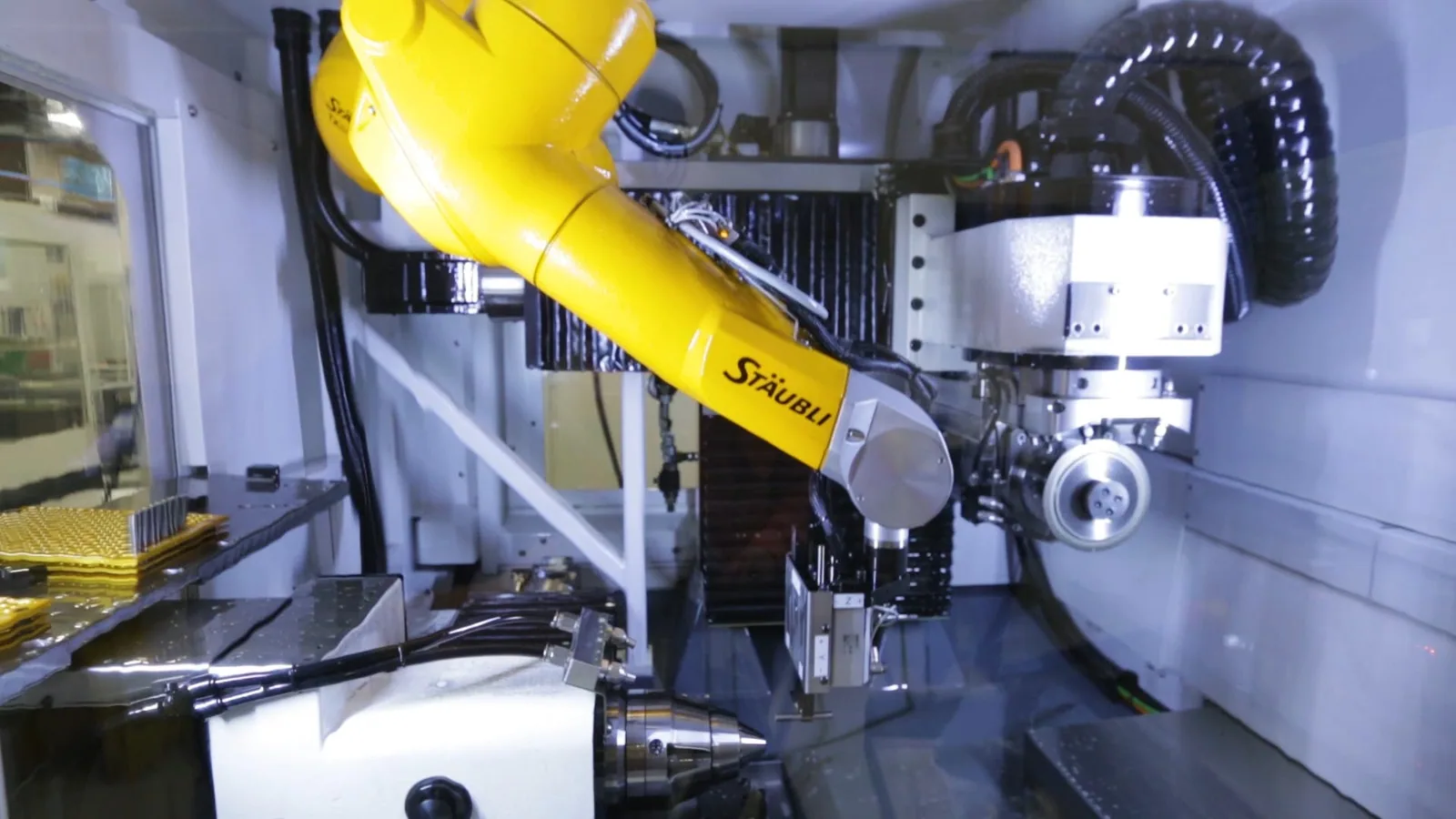
The core of mechanical refurbishment is "replace what needs to be replaced, test what needs to be tested": testing worn parts by vibration, backlash, and accuracy, and only replacing parts that are truly life-of-life; After replacement, perform overall machine accuracy calibration and compensation, and finally supplement protection according to current safety standards.
Renovation inspection items
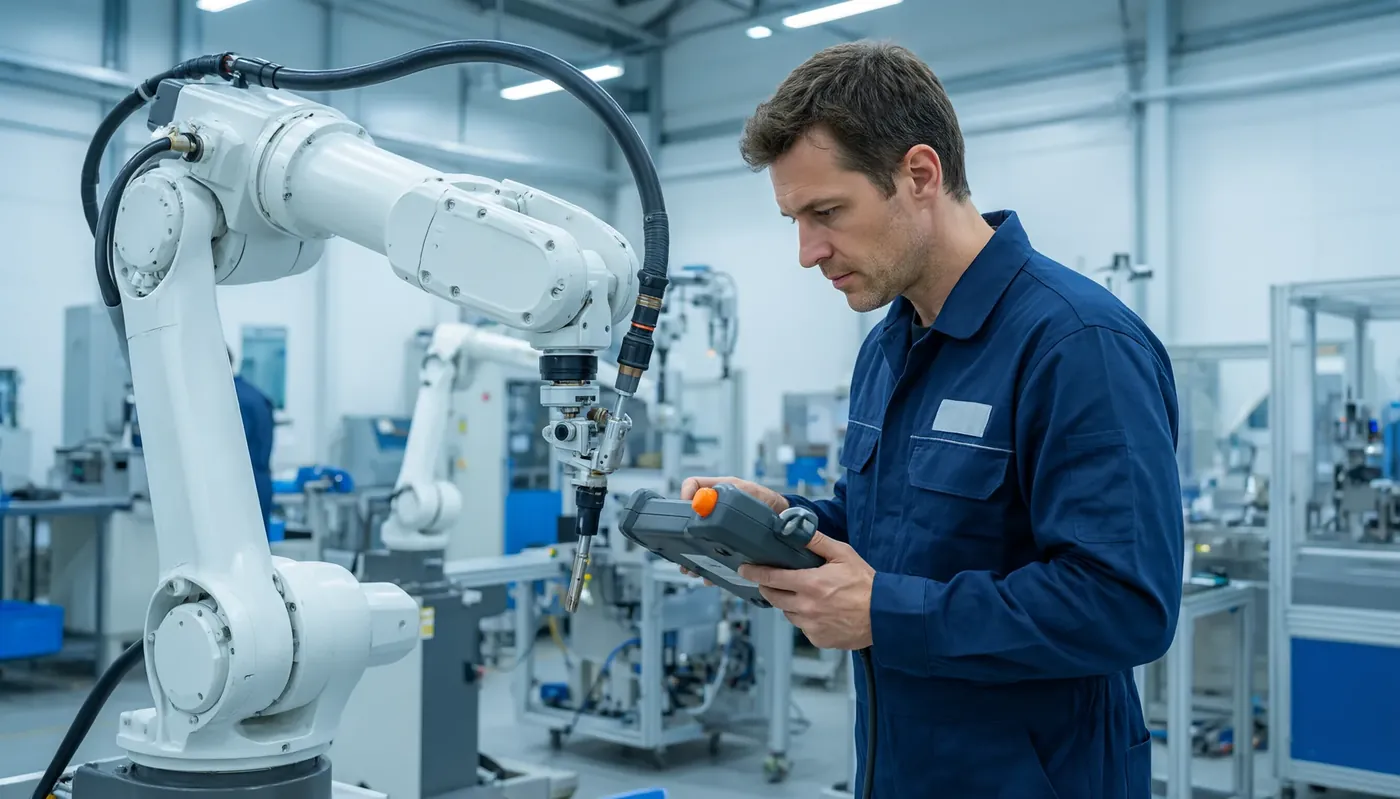
| Test items | Method | Judgment |
|---|---|---|
| Reducer backlash | Measurement using the torque method/angle method | Compare factory standards with wear limits |
| Repeatability | Laser tracker/micrometer | ISO 9283 five-point test |
| Bearings and abnormal noises | Vibration spectrum analysis | Characteristic frequency amplitude |
| Cables and drag chains | Visual inspection + conduction + bending test | Replace if the skin or core breaks |
Safety upgrades
- Safety fences, light screens, and door lock interlocks should be supplemented according to current standards
- Inspection and modification of emergency stop circuits and safety relays
- Limit and anti-collision devices have been installed
- After renovation, a safety function test record will be issued
Mechanical refurbishment: bringing accuracy back to an "acceptable" level
The mechanical lifespan of industrial robots depends on the reducer, bearings, and structural components: harmonic/RV reducers have a rated lifespan of about 80,000–120,000 hours. After exceeding their lifespan, the backlash increases, vibration intensifies, and accuracy drifts intensifies. Deciding whether to renovate depends on three indicators:True measurement of the return difference(The joint forward and reverse alignment deviation exceeds the factory standard by more than 2 times),Vibrations and unusual noises(Characteristic spectrum of reducer wear),Oil condition(Analysis of metal shavings content and particle size).
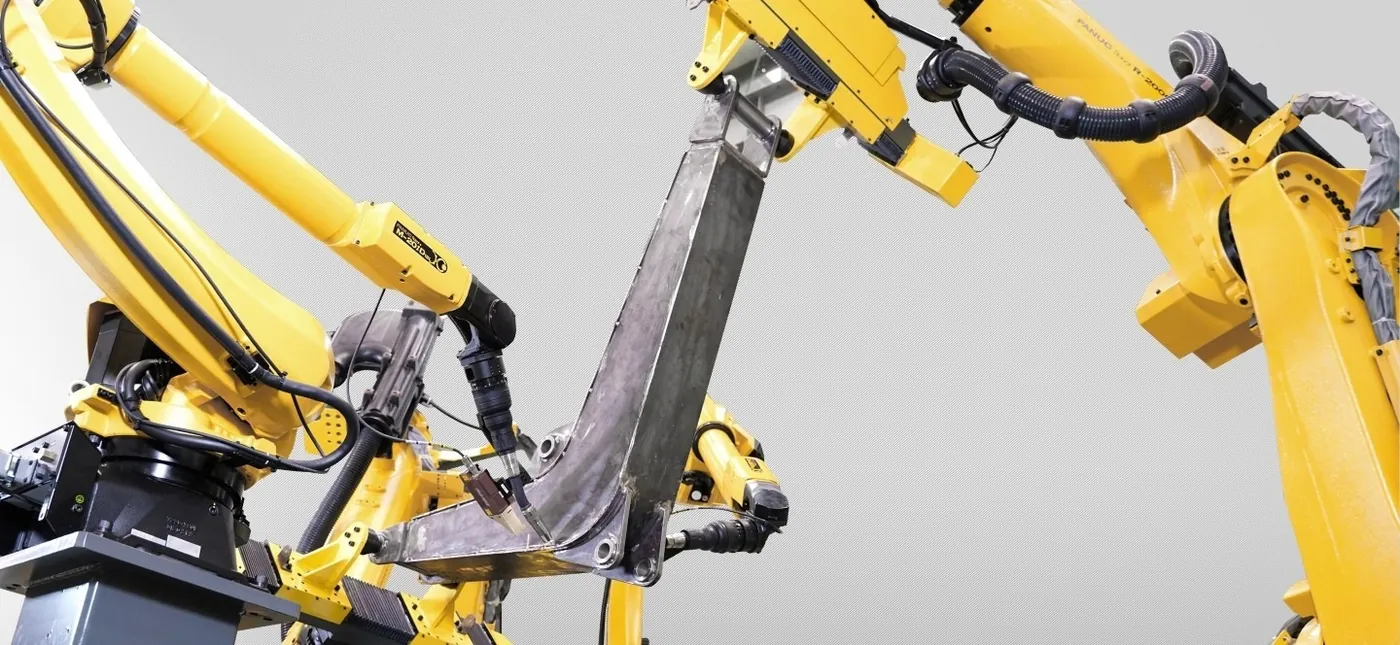
Refurbishment is not about "major dismantling and replacement," but about targeted handling based on inspection results: replacing the reducer with excessively worn parts, cleaning and oil changing those in decent condition, and continuing to use it; Bearings are graded according to life assessment; Structural component flaw detection and inspection; replace cracked parts without welding. Every penny is spent where the data points to.
| Testing items | Detection methods | Disposal standards |
|---|---|---|
| Joint gyrus | Dial indicator/laser tracker forward and reverse positioning measurement | The reducer was disassembled and inspected → twice the factory standard |
| Reducer status | Vibration spectrum analysis + oil metal chip detection | Replace abnormal feature frequencies or → chips exceeding standards |
| Motors and brakes | Insulation testing, brake force testing, encoder feedback inspection | Insulation deterioration or brake slippage → repair or replacement |
| Main structural components | Visual inspection + color flaw detection, focusing on welds and stress-bearing areas | Cracks are found→ structural parts should be replaced |
| Cables and drag chains | Insulation and shielding testing, bending radius inspection | Replace the entire set with a new one → hardening and cracking |
| Repeatability | After calibration of the entire machine, it was tested using the ISO 9283 method | Acceptance standards are written into the contract |
| Appearance and protection | Rust removal, paint touch-up, seal replacement | Implemented according to the customer's factory condition standards |
Safety renovation: Supplement historical debts according to current standards
Early production lines commonly faced safety deficiencies: irregular emergency stop circuit series, no interlocks on safety doors, missing light curtains, and robots without safety speed limit zones. Factory audits and customer audits are becoming increasingly stringent, with safety retrofit needs concentrated in four categories:Safety circuit reconstruction(Designed according to ISO 13849 PLd, implemented with safety relay/safety PLC),Protective fences and interlocking doors(Opening doors to slow down or stopping the machine),Radiant curtains and safety carpets(Personnel entry inspection),Collaborative transformation(Power and force limiting, contact stop configuration, enabling human-machine co-stationing).
After each safety function is upgraded, a functional test is conducted and a test report is issued. The response time and failure modes of the safety circuit are verified and archived item by item—this document is the confidence you have during the factory inspection.
In-depth Q&A
How long does renovation take? Where to do it?
A single unit body overhaul takes 3–6 weeks, completed in our workshop; The production line only has 2–3 days for hoisting and joint commissioning. Multiple machines rotated and sent for repair, with the production line never stopping. Urgent shipments can be processed through the express lane.
What level of accuracy can be restored after refurbishment?
Acceptance standards are written into the contract: repeatability is measured according to ISO 9283 methods, with the goal of restoring the factory nominal value (e.g., ±0.05mm level); Equipment with severe mechanical wear will be truthfully informed of the expected level, without exaggerating promises.
How do you compare renovation and buying second-hand?
Refurbishing owned equipment is usually preferable to replacement—equipment history is clear, tooling procedures are present, and there are no transportation break-in costs; Second-hand procurement is suitable for adding new lines and expanding production. We can provide both for you, and we'll calculate and compare them based on the total holding cost over five years.
Tell us your production line requirements
Process, cycle, budget, site conditions—the more specific you are, the more executable the plan. Local teams in Nanchong will be coordinated, and on-site inspections will be available in Sichuan, Chongqing, Yunnan, and Guizhou.
Contact usView all services