
Technical support and selection
Providing manufacturing enterprises with automated production line diagnostics, robot selection advice, and solution consulting.
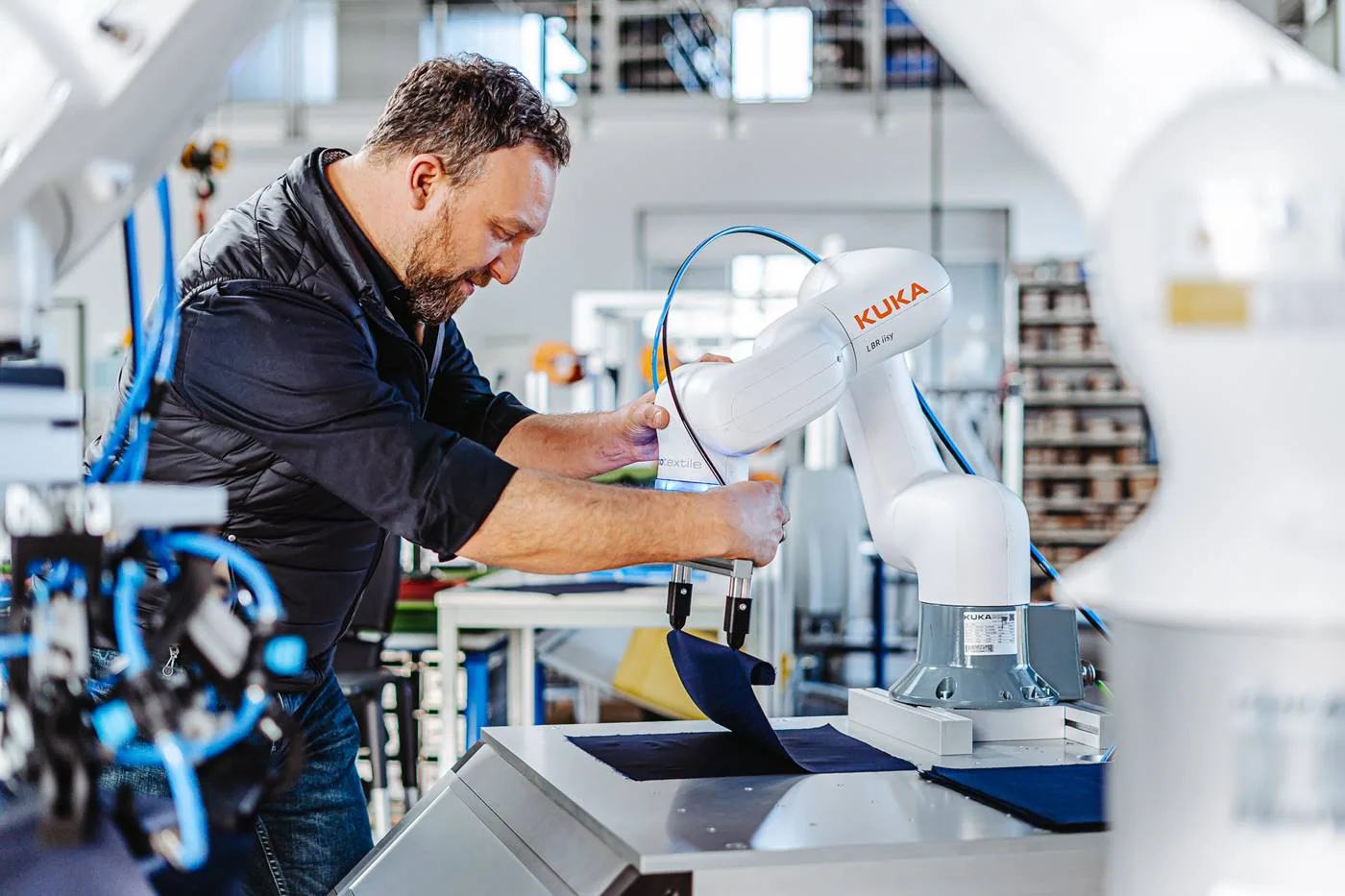
Buying the wrong robot wastes not only equipment costs but also the time and opportunity costs of production line upgrades. Before selecting a model, we clarify your requirements: load, reach, takt time, accuracy, installation space—none can be neglected.
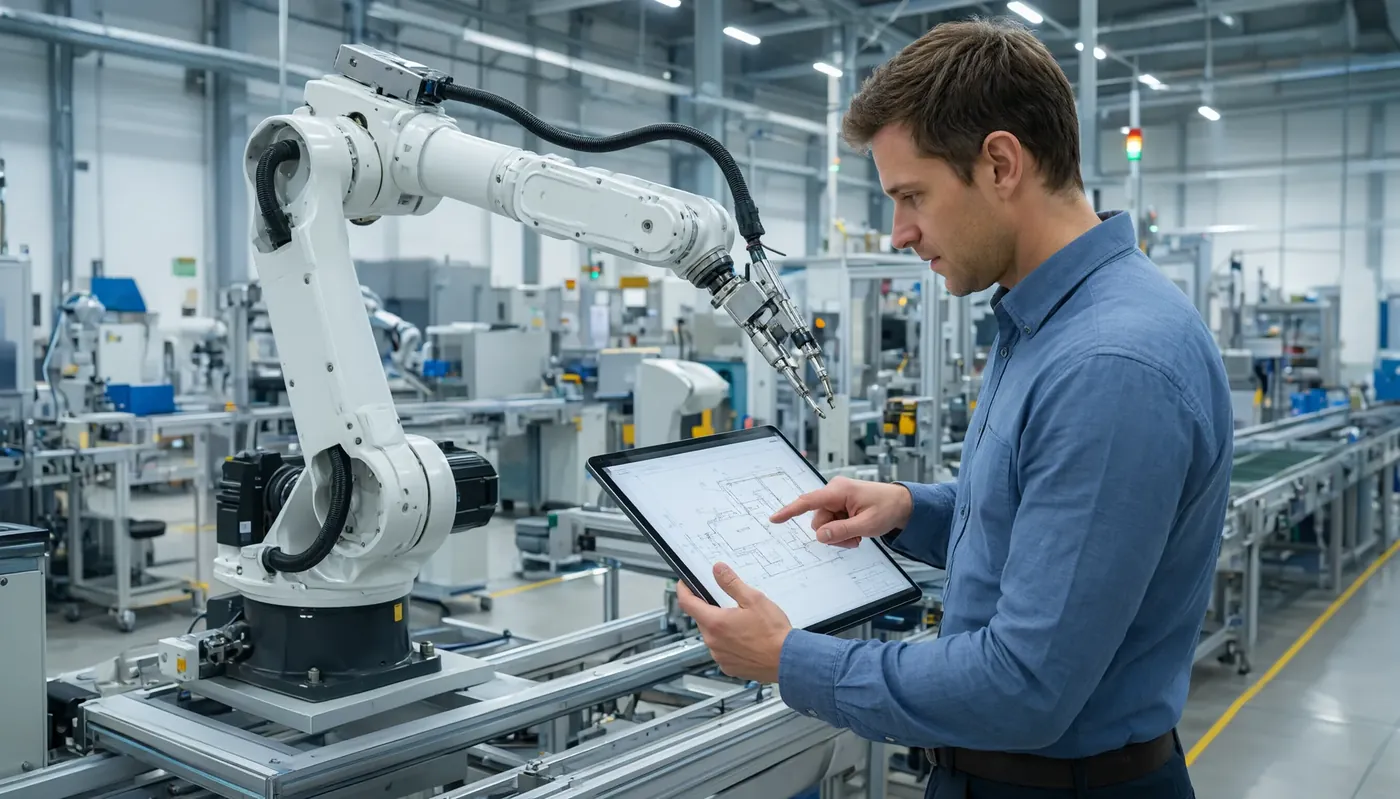
What parameters should be set when choosing a model?
Many companies buy robots with the idea of "the one used in someone else's workshop is great, so I'll get one too," but the result is either insufficient load, slow beats, or insufficient installation space. Essentially, the selection involves solving a constraint equation with six core variables: load, boom (working radius), cycle time, repeatability, protection level, and installation method. The load is not only the weight of the workpiece, but also the self-weight of the end effectors (fixtures, suction cups, welding guns, glue guns), with a safety margin remaining; The arm reach should cover all work points, and attention should be paid to how wrist posture affects the actual reachable range. It's not enough to just draw a circle with the nominal arm span; The beat must be calculated based on the actual action cycle, including pick-up, place, movement, and positioning waiting time; theoretical maximum speed is basically not reached; Accuracy depends on whether it is repeatable positioning accuracy or absolute positioning accuracy; most applications only care about the former; Protection levels are critical constraints in environments such as welding, spraying, cleaning, food, and casting; Installation methods include floor, inverted, wall-mounted, and rail, directly affecting the reachable range and civil engineering costs. With these six criteria, the range of models is basically narrowed down to just a few.
How can you avoid buying the wrong load and reach?
The most common mistake in load selection is looking only at the net weight of the workpiece. The correct algorithm is: robot rated load ≥ workpiece weight + end effector weight + additional cable and air tube weight, with a margin of more than 20%. At the same time, check the inertia — the allowable inertia of the robot's wrist is a commonly overlooked limit. When the fixture is long and heavy, even if the total weight does not exceed the limit, excessive inertia can cause shaking, reduced accuracy, or even alarms. When choosing a reach, consider the effective working range rather than the maximum radius: near the base of the body and at the edges near the maximum radius, the robot's usable posture and load capacity will decrease, and the actual stable operation is often in a circular area. Our approach is to perform a reachability verification using your workpiece dimensions, workstation layout, and pick-and-place points, confirming that the posture does not exceed limits and does not interfere with surrounding equipment, before determining the model.
How to calculate beat time and production capacity?
The beat determines how many robots are needed and whether automation is worth it. The calculation method breaks down the entire action cycle as: pickup, lifting, horizontal movement, descent, positioning, placement, return. Each segment takes time based on actual displacement and allowable acceleration/deceleration, plus fixture action, signal interaction, and upstream and downstream waiting times. Manufacturer samples list the maximum speed and standard cycle time for each shaft, which are numbers under ideal attitude and load; actual operating conditions usually require discounts. If a single machine cannot meet the beat rate, there are two options: increase robot specifications (faster models), or increase workstations and robot numbers in parallel. We will include the calculation process and assumptions in the report, which you can review yourself, rather than just giving a "should be enough" statement.
What's in the diagnostic report?
Production line automation diagnostics are not just a skimming view; the output is an actionable report. The content includes: current status description (manual configuration for each process, bottleneck workstations, existing equipment interface status), automation feasibility assessment (which processes are suitable for robots, input-output ratio, and which processes are temporarily not worth modifying), model recommendations (including comparison of load reach accuracy with candidate models), layout and interference analysis (installation location, reachability, safe distance from surrounding equipment), cycle time calculation (cycle time decomposition and capacity forecasting), risk warnings (consistency of workpieces, incoming material stability, Requirements for personnel skills), and step-by-step implementation recommendations (which workstation to change first, how to retain the rollback plan). The report provides conclusions and evidence, not a bunch of templates and clichés. You can use them to compare prices with other suppliers.
What we don't do
There are a few points to clarify in advance to avoid any gaps between expectations. First, we do not make unfounded promises: the benefits of automation transformation depend on many variables such as incoming material consistency, product replacement frequency, and personnel cooperation. We provide the basis and prerequisites for calculations, but do not guarantee "guaranteed returns." Second, we don't sell products: the diagnostic conclusion might be that robots are not recommended—for example, if the product batch is too small, the model changes too quickly, or the workpiece consistency is too poor. In such cases, forcing robots on the platform would actually increase costs, and we will explain this truthfully. Third, we do not undertake tasks beyond our capabilities: for projects involving full line planning, MES integration, and non-standard special machine design, we will clarify boundaries and recommend suitable partners. The value of diagnostic consultations lies in helping you spend money where it is, rather than facilitating a single device sale.
| Selection factors | Contents to be confirmed | Common misconceptions | How do we calculate it? |
|---|---|---|---|
| Load | Workpiece weight + end effector weight + cable conduit addition, with a 20% allowance | Only consider the net weight of the workpiece, ignoring the fixture weight and wrist inertia limits | After weighing each item, perform inertia checks, including extreme posture verification |
| Armspan | Accessibility of all work points, including wrist posture constraints | Draw a circle based on the nominal maximum radius, ignoring capability attenuation in the edge area | Perform reachability simulation and interference checks based on actual locations |
| Beat | Complete action cycle time, including clamp action and signal interaction | Directly reference the standard cycle time on the sample | Calculate each action segment by segment, with assumed conditions marked for verification |
| Accuracy | Whether the repeatability or absolute positioning accuracy depends on the real process requirements | Blindly pursuing high precision, doubling costs but still not being used | Reverse calculation according to process tolerance requirements, avoiding unnecessary precision redundancy |
| Protection rating | Dust, moisture, cutting fluid, high temperature, cleanliness, and explosion-proof requirements | Neglecting the operating environment leads to a high early failure rate of equipment | Confirm IP rating and special protection options based on actual working conditions |
| Installation method | Ground, inverted hanging, wall mounting, guide rails, foundation, and spatial conditions | The layout plan leaves no room for maintenance, making future maintenance difficult | Based on on-site measurement, determine the installation plan and civil engineering requirements |
Service process
From requirement integration to delivery and archiving, every step has clear outputs, without relying on verbal agreements.
-
01
Initial communication
Understand your industry, products, existing processes, pain points to address, and budget range to determine whether it is worth entering the formal diagnostic phase.
-
02
Data collection
Collect workpiece drawings or physical dimensions and weights, production line layout diagrams, existing cycle data, upstream and downstream equipment interface information, and working conditions (temperature, dust, moisture, explosion-proof requirements).
-
03
On-site Inspection (or Remote Video)
On-site measurements of workstation dimensions, pick-and-place points, human and machine circulation, water, electricity, and gas conditions, and foundation load-bearing capacity; video of the current situation is recorded; detailed communication with on-site operators and process personnel is conducted.
-
04
Comparison of Calculations and Schemes
Perform load inertia calculations, reachability verification, and beat time calculations; compare parameters and costs for candidate models; if necessary, provide two solutions (new machine solution and second-hand machine solution).
-
05
Report delivery and review
Output a written diagnostic report, explain conclusions, basis, and risks face-to-face, answer technical questions, and accept your review and questioning.
-
06
Subsequent implementation (optional)
If you decide to implement this, you may continue to entrust us with equipment procurement, installation and commissioning, process teaching, and personnel training. Diagnosis fees already paid can be deducted from subsequent commission fees as agreed.
This service covers brands and industries
Click to enter the brand page to view model specifications, or view application solutions by industry.
 FANUC
FANUC ABB
ABB YASKAWA
 KAWASAKI
 KUKA
KUKA INOVANCE
 ESTUN
ESTUN STÄUBLI
 Universal Robots
 Epson
Epson NACHI
NACHI COMAU
COMAU SIASUN
 EFORT
EFORT GSK
GSK JAKA
JAKA AUBO
AUBO TOPSTAR
 HSR ROBOT
 QJAR
QJAR Panasonic
Frequently Asked Questions
For the most frequently asked questions from customers, try to be realistic and avoid vague promises.
How much is the consultation and diagnosis charged?
Pricing depends on scope and depth: simple model selection suggestions, and after you provide complete operating information, we can offer preliminary opinions for free; For on-site inspection, calculation, and a complete diagnosis with written reports, a diagnosis fee will be charged per project. The diagnostic fees already paid can be deducted according to regulations when you entrust us with subsequent projects, effectively without additional costs. The specific amount will be quoted after the scope and deliverables are clearly defined; no ambiguous quotes will be made.
I just want to ask, which model to choose, and do I have to pay for it?
If you can clearly state the workpiece weight, dimensions, pick-and-place point distance, cycle requirements, and installation environment, the model recommendations we provide based on this information are free of charge. The fees are for tasks such as on-site measurements, accessibility verification, beat breakdown, and written reporting—that part is the real amount of work. Please provide the full information first, and let's see which situation it belongs to.
Our product models are numerous and small in quantity—are they suitable for robots?
This is the most common and the most cautious situation. The core challenge for small batches and many varieties is the time required for production changeover: if only a few hundred pieces are produced per batch, just teaching and fixture replacement consume most of the revenue. There are three feasible approaches: first, choose collaborative robots or solutions with visual guidance to reduce the difficulty of teaching and positioning; Second, to make quick changeover fixtures to reduce production change time; Third, it starts from the most standardized and relatively large batch processes, rather than fully transforming the entire line. We will first estimate the cost of switching production before giving a conclusion—if it's not cost-effective, we will inform you directly.
Labor is cheaper than robots, so why do we need automation?
This account needs to be calculated on a case-by-case basis. The advantages of robots are not only in replacing labor costs but also in consistency (stable product yield), continuous operation (night shifts and manpower tight periods), and hidden costs caused by recruitment difficulties and personnel turnover. If product consistency is required, cycle times are stable, and batch sizes are large enough, the payback period for automation is usually within an acceptable range. But if products are frequently updated, batch sizes are small, labor costs are low, and supply is sufficient, forcing robots is indeed not cost-effective. Our diagnostic report will document these assumptions and calculation processes, allowing you to judge for yourself rather than draw conclusions for you.
Do I have to buy equipment from you after diagnosis?
Unbound. The conclusions of the diagnostic report belong to you, and you can take it to any supplier to inquire and compare prices. Our logic is simple: objective model selection suggestions make the equipment convincing; If the report contains personal bias, then the report loses its value. Of course, most clients choose to continue cooperating after comparison, as it saves the cost of re-communication during subsequent implementation.
Can remote diagnosis be conducted? Our factory is located elsewhere.
Yes, you can. The process is: you first provide the production line layout diagram, workpiece information, on-site photos and videos, and we conduct a round of desk analysis; If necessary, arrange video connections to guide on-site personnel in retaking key angles and measuring key dimensions. Remote methods require higher information completeness; for complex production lines, it is still recommended to conduct an on-site inspection, as the accuracy varies greatly. In Sichuan, Chongqing, Yunnan, and Guizhou, we can arrange for engineers to be present.
Would you recommend domestic or imported brands?
Recommendations are based on working conditions and budget, not by brand. Imported brands (FANUC, ABB, Yaskawa, Kawasaki, KUKA) have advantages in accuracy stability, software ecosystem, and long-term reputation, with higher prices and longer delivery times; Domestic brands (Inovance, Estun, etc.) have made rapid progress in performance in recent years, offering clear price advantages, fast local service response, and low spare parts, making them fully sufficient for general tasks such as handling, palletizing, and loading and unloading. The key is to match your actual needs—high-precision welding and high-speed sorting may still require imported models, while domestic models for ordinary palletizing offer better cost performance. In our report, we will compare the two options, including initial investment, maintenance costs, and the difficulty of obtaining spare parts.
Need business cooperation?
Feel free to contact us to explain your specific scenario and needs, and we will communicate and coordinate with you in a timely manner.
Contact us immediately