
QJAR District · Industrial Robot Technology Services
 >
Service overview - QJAR District
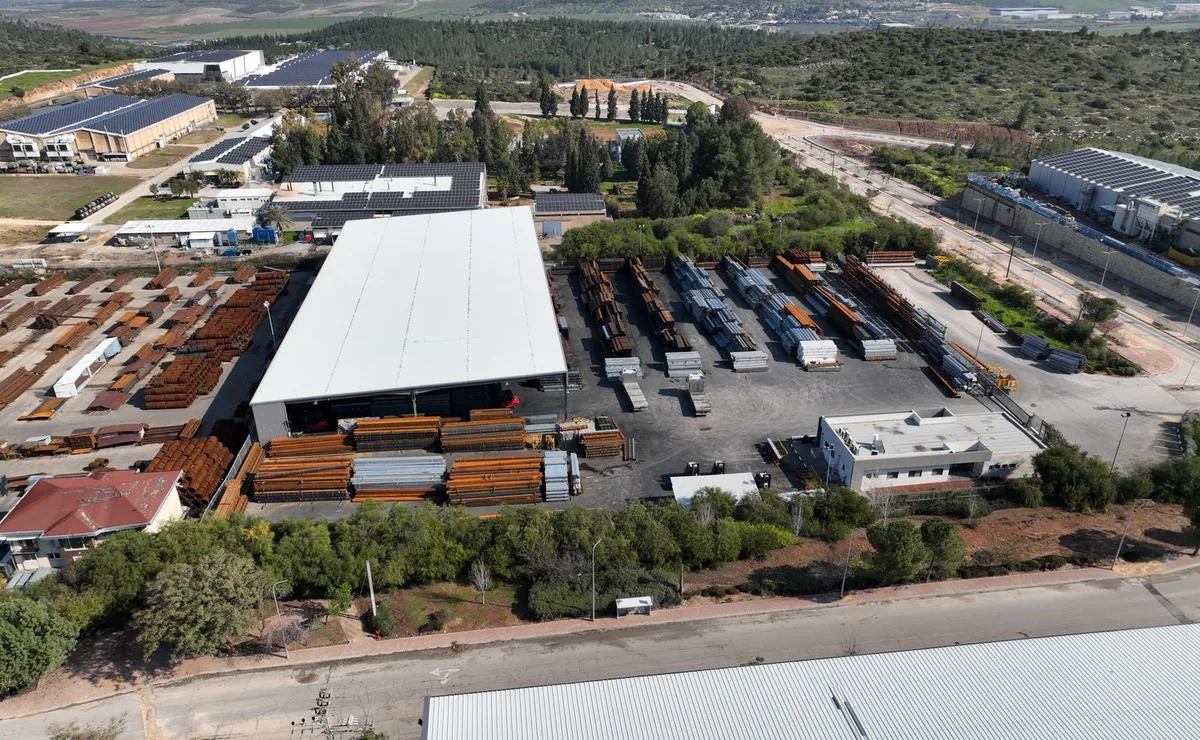
QJAR District has a concentration of equipment manufacturing and machining, where robot applications centre on machine-tending robots, grinding and polishing stations, vision-inspection cells.All the above scenarios are covered by robot repair, maintenance and overhaul, fault diagnosis and application engineering, new robot sales and selection and rental; scheduling follows regional proximity and quotes follow inspection.
Industrial Robot & Automation Applications
QJAR's most concentrated industrial-robot application today is the QJAR Cigarette Factory's new plant after its relocation and technical upgrade. The project broke ground on May 18, 2022; by the end of June 2024 it had completed the overall relocation of over a hundred machines/sets and more than 600 employees and entered full-line commissioning. In the primary-processing workshop, robotic arms handle tobacco-case opening and material blending; AGVs deliver materials and transfer semi-finished products along set routes; in the fully automated high-bay warehouse, stacker cranes move at high speed among three-dimensional racks, forming an automated stereoscopic warehouse; the fully automatic logistics system replaced the former manual unpacking, case-opening and delivery-transfer methods. On the control side, highly integrated automation-control technology based on a star-topology industrial Ethernet enables automatic parameter adjustment for brand changeovers and pre-production simulation; the operation-management center acts as the "digital brain," aggregating production, quality, equipment and energy data across the whole chain in real time with early warnings; the power-and-energy centralized-control center precisely dispatches water, electricity, gas and steam via an energy-management information system; the primary-processing line is also equipped with an industry-leading secondary intelligent photoelectric impurity-removal device, and 13 sets of making-up and packing machines are fitted with automatic monitoring such as cigarette appearance imaging, circumference detection, and inner-frame and foil-paper imaging. Besides tobacco, process-type lines such as aluminum and fiberglass rely mainly on DCS and online inspection. Note: QJAR District's industrial-robot stock, annual new installations, and robot density (units per 10,000 industrial workers) have no public authoritative figures — all three to be verified.
Industrialization History
QJAR's industry began with cigarettes. On December 30, 1974, the county revolutionary committee submitted a "Request Report on Establishing the QJAR Cigarette Factory" to the Fuling Prefecture revolutionary committee. In 1975, trial-made "QJAR brand" cigarettes appeared in three wooden rooms of the QJAR County candy factory; that September, the county finance bureau allocated 5,000 yuan in preparatory funds, assigned more than 100 square meters of wooden buildings as the workshop, and seconded 12 people to form the production team. In May 1976, the QJAR County Cigarette Factory was formally established; construction began on June 1 with total investment of 170,700 yuan, and on October 1 the first batch of machine-made cigarettes rolled off the line - the first mechanized production in the history of QJAR's tobacco industry. Output reached 2,615 standard cases in 1977 with an output value of 1.16 million yuan, and rose to 4,950 standard cases in 1978 with an output value of 2.4 million yuan. In May 1983, the State Council forwarded the Ministry of Light Industry's approval to include the plant in the state-planned cigarette factory list; the first technical retrofit began the same year, lifting annual capacity past 50,000 cases and marking the leap from handicraft workshop to industrialized production. The second retrofit followed in 1986, the third in 2000, and the fourth (relocation) retrofit in 2025. On the park front, the Chongqing Zhengyang Industrial Park was approved by the municipal government in July 2003 as the first municipal-level specialty industrial park in southeast Chongqing; the Qianyong entrepreneurship park launched on December 30, 2008. After years of cultivation, representative enterprises include the QJAR Cigarette Factory, Lvsheng New Materials, Sanlei Fiberglass, Pengjiang Food, and Kerui Nanhai Pharmaceutical; 200,000 tons of recycled aluminum capacity has been built, and 200,000 tons of fiberglass capacity runs at full, stable output.
Current Industrial Development
In 2024, QJAR's GDP reached 39.346 billion yuan, up 5.4%, with the three sectors structured at 9.5:35.0:55.5. Industrial value added was 10.887 billion yuan, up 4.3%, or 27.7% of GDP; above-scale industrial value added grew 5.3% and gross output value grew 12.7%. Key product outputs: cigarettes 355,000 cases (up 0.6%), cement 1.6 million tons (down 9.6%), aluminum products 277,000 tons (up 84.7%), and electricity generation 532 million kWh (down 1.1%). The leading industry system is "one leading, two specialty, one supporting": new materials as the leading industry, cigarettes and related products plus food and agricultural product processing as specialties, and producer services as the support; representative enterprises include the QJAR Cigarette Factory, Lvsheng New Materials, Sanlei Fiberglass, Pengjiang Food, and Kerui Nanhai Pharmaceutical. As for platforms, the former Zhengyang Industrial Park has been upgraded to the QJAR High-Tech Zone, laid out as "one core, three districts, five parks." In 2024 the zone delivered 11.24 billion yuan in above-scale industrial output and 350 million yuan in full-caliber industrial tax revenue, hosting 45 high-tech enterprises, 246 technology-based enterprises, and 27 specialized and innovative SMEs; by the end of 2024 the zone had more than 2,100 market entities. In addition, cocoon output has ranked first in the municipality for 14 consecutive years, with 304,600 dan of cocoons purchased and a full industry chain output value of 3.2 billion yuan. The QJAR High-Tech Zone has established a 3-billion-yuan industry guidance fund and a 500-million-yuan special industrial development fund, targeting above-scale industrial output of more than 40 billion yuan by 2027.
Need business cooperation?
Feel free to contact us to explain your specific scenario and needs, and we will communicate and coordinate with you in a timely manner.
Contact us immediately- QJAR News Net, QJAR Mobile News, issue 2356 (QJAR Cigarette Factory history, 1974–2005)
- Oriental Tobacco Net, "QJAR Cigarette Factory: Four Rounds of Upgrades for the Future" (2025-08-14)
- QJAR Literature & History, Vol. 5 (the cigarette factory's founding, 1975–1978)
- QJAR District People's Government, Chongqing, "Environmental Impact Report for the QJAR Cigarette Factory Relocation & Upgrade Project" (2025) (incl. founding and upgrade timelines)
- QJAR District Bureau of Statistics, Chongqing, "2024 Statistical Communiqué on National Economic and Social Development of QJAR District" (2025-04, PDF)
- Toutiao (repost), "QJAR: Striking Up the March of Regional Center-City Construction" (2024 industrial and system data)
- China Daily Net, "Upgrades supports, Smart Manufacturing Renews: A Chronicle of the Chongqing Tobacco QJAR Factory Relocation Project" (2025-12-05)
- CE Think Tank, "QJAR Cigarette Factory's Smart Turn Sketches the Future of Tobacco Manufacturing" (2025-10-30) (robots, AGVs, stacker cranes)
- Tobacco Online, "Chongqing Tobacco QJAR Factory: New Force Moving Forward" (primary-processing workshop robots and AGVs)
- CE Think Tank, "Chongqing Tobacco QJAR Factory Relocation Project Begins Trial Operation" (2024-12-31) (automated control technology)